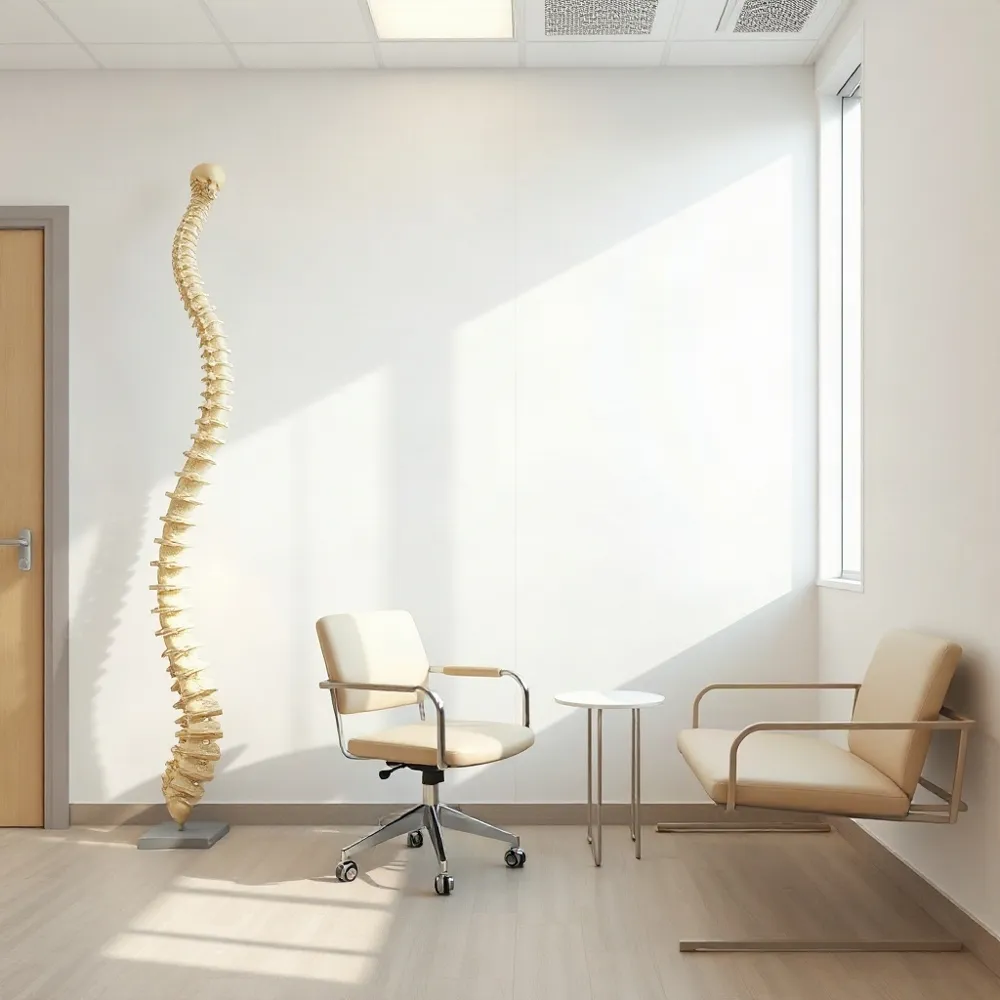
From Stiff Back to Active Life: The Spine Specialist Advantage
Persistent back or neck pain often turns daily activities into significant hurdles. Finding the right medical path can feel daunting, but an orthopedic spine surgeon at the Orthopedic Spine Institute of St. Louis offers a unique combination of musculoskeletal expertise and a patient-first philosophy.
Unlike some providers who may pivot quickly to surgery, this specialized approach prioritizes conservative treatments first, as evidenced by medical research confirming the efficacy of non-operative care. This article explores how a tailored, longitudinal journey helps restore your mobility and function.
What is an Orthopedic Spine Surgeon?
An orthopedic spine surgeon is a medical doctor (M.D. or D.O.) who possesses advanced training in the musculoskeletal system and the complex anatomy of the spine. Their professional path involves a rigorous five-year surgical residency focused on bones and joints, followed by a dedicated spine fellowship of at least one year. This specific training sequence ensures that these specialists have the expertise to manage a wide array of spinal conditions, ranging from degenerative disc disease to structural abnormalities.
While neurosurgeons focus on the nervous system and the spinal cord, orthopedic spine surgeons specialize in managing the bones, ligaments, tendons, and overall alignment of the spinal column. This musculoskeletal focus makes them uniquely qualified to treat common issues like herniated discs, spinal stenosis, scoliosis, and fractures. Their approach often prioritizes stability and long-term functional recovery, aligning with the patient-first philosophy at osistl.com.
At osistl.com, the emphasis remains on conservative care before pursuing surgery. Unlike broader surgical practices where care might feel fragmented, these specialists focus on longitudinal management. By choosing a fellowship-trained surgeon who prioritizes both stability and pain reduction, patients receive a treatment plan customized to their specific anatomical needs and lifestyle goals.
A Clearer Choice: Orthopedic Surgeon vs. Neurosurgeon
Patients often wonder if they should choose an orthopedic spine surgeon or a neurosurgeon for their back and neck care. Both specialists complete rigorous training, but an orthopedic spine surgeon’s focus on the musculoskeletal system may be better suited for spinal alignment and structural issues.
What distinguishes an orthopedic spine surgeon from a neurosurgeon when it comes to spinal care?
An orthopedic spine surgeon at osistl.com focuses on the musculoskeletal system, utilizing specialized training in bone, joint, and spinal alignment to restore function. A neurosurgeon, conversely, originates from a background centered on the nervous system, with specific expertise in intradural tumors and complex spinal cord structures.
When deciding on a specialist, it is common for primary care physicians to refer patients with chronic conditions, such as back or neck pain, scoliosis, or those requiring spinal fusions, to orthopedic experts. This reflects the orthopedic emphasis on the structural integrity of the spinal column.
Ultimately, the choice should be based on your surgeon’s specific fellowship training, their clinical experience with your particular condition, and their personal approach to achieving your best outcome. You can learn more about how to evaluate these credentials and find the right fit for your recovery at osistl.com.
The Power of a Conservative-First Approach
 Many patients assume a visit to a spine specialist leads directly to an operating room, but the reality is quite different. At the Orthopedic Spine Institute of St. Louis, led by Dr. David S. Raskas, we prioritize a patient-first philosophy that emphasizes non-surgical recovery for the vast majority of cases. In fact, up to 90% of all spinal issues can be managed effectively without ever requiring an incision per PMC7031437.
Our team utilizes a range of evidence-based interventions to restore function and alleviate discomfort. Standard first-line treatments typically include physical therapy to strengthen core muscles, targeted anti-inflammatory medications, tailored activity modification, and epidural steroid injections to reduce localized inflammation. Research shows that seeking an early consultation within the first 6 weeks of symptom onset correlates with a 30% higher patient satisfaction rate, often allowing individuals to bypass surgical intervention entirely.
- Physical therapy for core stabilization and improved posture.
- Anti-inflammatory medications to manage acute pain.
- Epidural steroid injections for targeted relief.
- Activity modification to allow natural healing processes.
By focusing on these conservative avenues, we ensure that every patient receives a treatment plan tailored specifically to their anatomical needs. Surgery is reserved only for situations where these methods fail to provide relief or where there is severe, structural instability that threatens long-term health.
What Happens During Your First Visit?
 Your initial consultation begins with a comprehensive review of your medical history and a detailed physical examination. At the Orthopedic Spine Institute of St. Louis, under the guidance of Dr. David S. Raskas, we utilize advanced diagnostic imaging such as MRIs, X-rays, or CT scans to identify precise structural causes of your discomfort. Specialists use these tools to visualize vertebrae, muscles, and tendons, ensuring a diagnosis rooted in verified clinical data.
We prioritize a patient-first approach to ensure you remain fully informed throughout the process. Unlike settings where surgical intervention is pushed, our team views the consultation as a collaborative experience where your specific lifestyle and health goals guide the treatment plan. Per 2020 NIH-funded research, professional consultation is recommended for persistent symptoms to help determine the most effective pathway—whether that involves conservative measures like physical therapy or, if necessary, surgical options.
During this visit, the surgeon will set realistic expectations for your recovery, exploring both operative and non-operative options. While non-surgical treatments effectively resolve the vast majority of spinal issues, we provide transparent details on all available paths. This dedication to individualized care ensures that your choice in treatment aligns with your long-term mobility and function.
Specialized Care for Structural Deformities
Structural irregularities like scoliosis and kyphosis require a deep understanding of the skeletal system. Orthopedic spine surgeons are uniquely qualified to manage these complex conditions because their training focuses on the entire musculoskeletal framework. At the Orthopedic Spine Institute of St. Louis, providers emphasize a patient-centered approach that prioritizes conservative care before considering surgery.
Treatment begins with personalized strategies such as physical therapy to strengthen the surrounding musculature or bracing to stabilize the spine. Research indicates that primary care physicians frequently refer patients with structural pathologies like scoliosis and kyphosis to orthopedic specialists, with studies showing a 90.7% preference rate for this specialty. This trend reflects the high level of trust in the targeted expertise orthopedic surgeons bring to bone and joint alignment.
Do orthopedic surgeons treat scoliosis and other spinal structural deformities?
Yes, orthopedic spine surgeons are expertly trained to evaluate and treat spinal structural deformities, including scoliosis and kyphosis. Treatment plans are highly personalized, often beginning with conservative approaches such as physical therapy or specialized bracing to manage the curvature. If the condition progresses, surgeons provide advanced interventions ranging from traditional spinal fusion to motion-sparing techniques like vertebral body tethering. By utilizing these diverse methods, surgeons aim to correct spinal alignment, manage pain, and restore function for patients of all ages. Your orthopedic specialist will work with you to determine the most effective, evidence-based path for your specific spinal health needs.
Common Surgical Procedures: Laminectomy and Beyond
When diagnostic imaging and clinical evaluation reveal that conservative methods have not restored function, surgical intervention may be the most effective path toward long-term relief. Surgeons at the Orthopedic Spine Institute of St. Louis routinely perform procedures such as laminectomy, discectomy, and spinal fusion. A laminetomy serves as a common decompression technique where a surgeon removes the lamina, the bony arch of the vertebra, to create room in the spinal canal. This process effectively alleviates pressure on pinched nerves caused by spinal stenosis or herniated discs.
Can an orthopedic surgeon perform common procedures like a laminectomy?
Orthopedic surgeons with specialized spine training are not only qualified but frequently perform laminectomy procedures to treat nerve compression. While many orthopedic spine experts prioritize a patient-first approach, starting with physical therapy or targeted injections, they are also prepared for situations where these measures fail to provide relief. If symptoms remain severe or do not improve, the medical team evaluates whether a surgical intervention is the appropriate next step for your specific case of back, neck, or sciatica pain.
When is surgery for an L4-L5 disc condition typically recommended?
Surgery for an L4-L5 disc condition is usually considered when persistent symptoms like radiculopathy or neurogenic claudication significantly hinder daily living. Per PMC research, providers typically require at least six weeks of dedicated non-surgical care, including physical therapy, before moving to operative options. An MRI must confirm that the anatomical findings correlate with reported discomfort. While surgery is often a secondary choice, urgent conditions such as cauda equina syndrome or progressive motor deficits may necessitate immediate surgical intervention to prevent permanent nerve damage.
Minimally Invasive and Precision-Guided Surgery
 When diagnostic evaluation indicates that surgery is the most effective path toward relief, the Orthopedic Spine Institute of St. Louis prioritizes Minimally Invasive Spine Surgery (MISS) techniques. By utilizing small incisions and specialized tubular dilators, surgeons can reach the target area without cutting through the large muscle groups surrounding the spine. This approach minimizes physical trauma to the body, often resulting in less post-operative pain, reduced scarring, and a lower reliance on pain medication compared to traditional open surgery.
Accuracy remains the cornerstone of these procedures. Specialists at this practice utilize advanced Image Guidance Technology to provide real-time, virtual visualizations of the anatomy during the operation. This precision-guided approach improves surgical accuracy and decreases the likelihood of complications. Alongside these methods, modern practice advancements such as robotic-assisted systems and ultra-minimally invasive endoscopic techniques allow for even greater surgical control, ensuring that healthy surrounding tissues remain protected.
Patients who qualify for these refined surgical options often experience significantly shorter hospital stays and a faster return to daily activities. Every surgical program at this clinic is designed to streamline the patient experience, offering clear pathways for pre-operative planning and recovery. By combining fellowship-trained expertise with modern technology, the team helps patients achieve their functional goals while maintaining a focus on long-term spinal stability.
A Lifetime of Care: Why Continuity Matters
Effective spinal treatment relies on a model of longitudinal care where the same specialist follows a patient's progress from the initial diagnosis through rehabilitation and long-term recovery. At the Orthopedic Spine Institute of St. Louis, this continuity ensures that the surgeon maintains a deep understanding of your medical history and specific lifestyle goals, allowing for precise adjustments to your treatment plan as your needs evolve over time.
Comprehensive healing often requires more than a single perspective. Our multidisciplinary team coordinates care alongside physical therapists, pain experts, and dedicated clinical staff to create a unified strategy for every patient. By integrating these services, we eliminate the fragmented experience found in larger healthcare systems.
This patient-first partnership is designed to streamline your journey. Through clear communication and organized support for scheduling and insurance, we reduce the burden of medical bureaucracy. This commitment to continuity results in better long-term functional outcomes compared to models where care is compartmentalized.
Take the First Step Toward Lasting Relief
Effective spinal care relies on specialized training and a steadfast conservative-first philosophy. At the Orthopedic Spine Institute of St. Louis, patients benefit from personalized recovery plans that prioritize non-surgical methods and precision-guided, minimally invasive surgical options when needed.
Do not let chronic pain dictate your quality of life. Seeking expert guidance early is essential for optimal recovery and long-term health. To begin your journey toward mobility, visit osistl.com to schedule an appointment with our team for patient-first care.