
Start With the Cause
Back pain can arise from several sources, including irritated nerves, disc changes, arthritis, or muscle strain. Because similar symptoms may have different causes, a clinician considers your history, symptoms, and examination, with imaging when appropriate, before recommending care. Understanding the likely source helps shape a treatment plan, as Johns Hopkins Medicine explains.
Conservative care uses nonsurgical approaches, such as guided exercise, physical therapy, and medication when appropriate, to ease symptoms and support daily function. Many people with back pain do not need surgery, and treatment can be adjusted to fit the diagnosis and response. At osistl.com, care starts conservatively, with minimally invasive surgery offered when it is appropriate.
Progress may take time, so keep your care team informed about what helps, what worsens symptoms, and how pain affects daily activities. Surgery is generally considered when evaluation identifies a problem it may address and other reasonable treatments have not helped. It is not a guaranteed route to pain relief, and the decision should reflect your individual circumstances.
Build a Nonsurgical Care Plan
 A nonsurgical plan works best when it reflects the likely cause of pain, your symptoms, and how they affect daily life. At Orthopedic Spine Institute of St. Louis, care begins conservatively when appropriate, with minimally invasive surgery considered when an evaluation supports it.
Common options include physical therapy and a personalized home exercise routine to build strength, flexibility, mobility, and posture. A clinician may also recommend activity adjustments, medication when appropriate, or targeted injections based on the diagnosis and your health circumstances. No single treatment suits everyone. See how a personalized nonsurgical spine care plan can bring these approaches together.
For mild back pain without warning signs, try to stay gently active rather than resting in bed. Short walks and a gradual return to usual activities may help. Avoid heavy lifting and twisting while symptoms are acute, and choose comfortable positions for sitting and sleeping.
Ice may help during the first 48 to 72 hours; afterward, try heat if it feels soothing. Over-the-counter pain relief may be an option, but use it only if safe for you and follow label directions. A clinician can help weigh medication choices and other measures, including injections or bracing, against your specific needs.
As pain improves, return to exercise gradually. A physical therapist can guide you toward movements suited to your symptoms and help adjust the routine as your strength and mobility change. Johns Hopkins Medicine also describes tailored, exercise-based physical therapy and consistent home exercise as parts of chronic back-pain care in its guidance on nonsurgical treatment.
Contact a healthcare professional if pain is severe, worsening, or not improving. New bowel or bladder problems, groin numbness, or increasing weakness call for prompt medical assessment rather than continued home care.
Know When to Reassess
There is no universal waiting period before surgery enters the discussion. The decision depends on the diagnosis, symptoms, response to care, neurological findings, and overall health. At osistl.com, care starts conservatively, with minimally invasive surgery considered when appropriate; a consultation is an opportunity to review options, not a commitment to surgery.
A spine specialist evaluation may be appropriate when pain persists or worsens despite suitable nonsurgical care, or continues to limit work, sleep, walking, or other daily activities. Alternatives may include physical therapy, activity or ergonomic changes, medication, and, for some diagnoses, targeted injections. The plan should reflect the cause of symptoms and the person’s health, rather than follow a fixed timeline. Johns Hopkins Medicine’s guidance on chronic back pain describes surgery as an option when a treatable cause is identified and other reasonable treatments have not helped.
Imaging findings matter when they match the symptoms and examination, but a scan alone does not determine treatment. A specialist weighs whether surgery could address the structural problem, while explaining that it cannot guarantee pain relief. A systematic review of lumbar disc herniation likewise emphasizes individualized decisions based on symptoms, neurological findings, imaging, and response to care. Patients can also review how treatment decisions take shape before deciding on next steps.
Do not wait for a routine follow-up if new or progressive weakness, worsening numbness, or difficulty walking develops. Sudden loss of bowel or bladder control, or numbness around the groin, requires emergency evaluation. For other concerns, ask the specialist to compare likely benefits, risks, and alternatives. A discussion can clarify whether to continue nonsurgical care, adjust the plan, or consider a procedure.
Assess Minimally Invasive Options
 A diagnosis such as a herniated disc or spinal stenosis does not automatically mean surgery is needed. When nonsurgical care has not provided enough relief, a spine specialist can assess whether an operation could address the cause of symptoms and whether a minimally invasive approach is appropriate.
That assessment draws on symptoms, a physical examination, medical history, and imaging, along with the location of the problem, spinal anatomy, overall health, prior procedures, and other individual risks. At Orthopedic Spine Institute of St. Louis, care begins conservatively and surgery is offered when appropriate, with evaluation by Dr. David S. Raskas. Candidacy depends on individual evaluation.
Minimally invasive spine surgery uses smaller incisions and specialized instruments to reach the treatment area, but it is not an option for every patient, condition, or procedure. The target must be accessible through a smaller surgical approach, and the potential benefits and risks depend on the individual case. Johns Hopkins Medicine explains minimally invasive spine surgery.
Depending on the diagnosis and anatomy, minimally invasive techniques may be used for discectomy, which removes disc material pressing on a nerve; decompression, including laminectomy, which relieves pressure on nerves; or spinal fusion, which stabilizes the spine. Kyphoplasty may be considered for selected vertebral compression fractures. A specialist can explain whether any of these procedures fits the specific problem, and what alternatives remain.
Weigh Benefits Against Risks
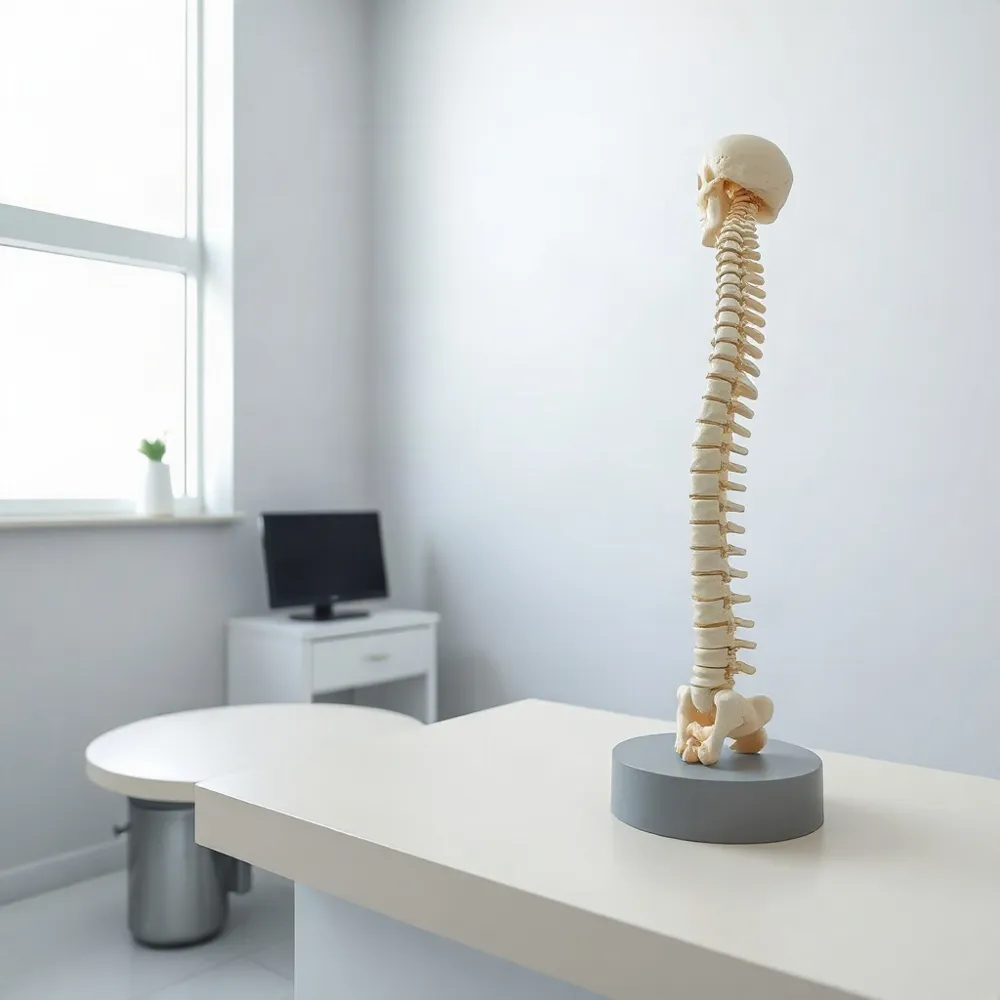 Minimally invasive spine surgery uses smaller incisions and specialized instruments to reach the treatment area. Compared with many open procedures, this approach may disturb less nearby muscle and soft tissue. In selected cases, that can mean less blood loss or postoperative pain, a shorter hospital stay, and a quicker recovery. These are possible benefits, not promises, and the Cleveland Clinic’s overview of minimally invasive spine surgery notes that recovery and results vary.
The smaller incision does not remove the risks of surgery. Possible complications include infection, bleeding, blood clots, anesthesia problems, nerve or blood-vessel injury, and symptoms that continue after the procedure. Some patients may need another operation. The type and likelihood of complications depend on the procedure and the person’s health, so a surgeon should explain which risks apply to the specific case.
There is no single success rate for minimally invasive spine surgery. Outcomes depend on the diagnosis, operation, overall health, and goals, such as reducing pain, moving more comfortably, or returning to daily activities. Smaller incisions alone do not guarantee relief. Orthopedic Spine Institute of St. Louis starts with conservative care and considers minimally invasive surgery when appropriate, giving patients a chance to discuss alternatives as well as expected results. Its guide to recovery after minimally invasive spine surgery offers further context.
Before deciding, ask the surgeon what improvement is realistic, what the operation cannot address, what nonsurgical options remain, and how personal health factors affect risk. Johns Hopkins also advises patients to discuss the procedure’s purpose, alternatives, expected results, and risks before agreeing to surgery (patient guidance on minimally invasive spine surgery).
Prepare for Recovery and Decisions
Recovery after minimally invasive spine surgery varies with the procedure, your overall health, and your surgeon’s instructions. Some people walk on the day of surgery and go home that day or after a short stay. Activity usually increases gradually, and restrictions on lifting, bending, driving, and exercise differ. Recovery may take weeks or months, especially after a fusion, as the bones heal. Ask when you can return to work and begin physical therapy, and contact your care team about unexpected symptoms. Johns Hopkins Medicine’s guide to minimally invasive spine surgery explains that recovery depends on the procedure and the person.
Before surgery, follow the care team’s directions and share a complete list of medicines, vitamins, and supplements. Do not stop or change anything unless your clinician tells you to. Discuss nicotine use, which can affect healing, and arrange a ride home and help with daily tasks. Preparing meals, placing commonly used items within easy reach, and clearing walkways can make the first days at home easier. For more on planning ahead, see these spine surgery recovery expectations.
Age alone does not decide whether surgery is appropriate. A specialist considers overall health, physical function, frailty, the spinal condition, likely benefits and risks, and support during recovery. At osistl.com, care begins conservatively, with minimally invasive surgery offered when appropriate, so the discussion can account for both nonsurgical options and individual goals.
Before agreeing to a procedure, ask what it is intended to address, what results are realistic, what risks and alternatives apply, and what follow-up and recovery will involve. A clear plan should also explain whom to contact with questions or concerns.
Choose Care With Clarity
Back and neck pain care is not a one-size-fits-all choice. When appropriate, conservative treatment can be tailored to your diagnosis and goals, with progress monitored over time. If symptoms persist or change, a spine specialist can review what has helped and discuss whether the plan should change. At osistl.com, care for back, neck, and sciatica pain starts conservatively, with minimally invasive surgery considered when appropriate.
Before deciding, ask what each option is intended to address, what alternatives exist, what risks matter in your case, and what the next step will be. New or worsening weakness, problems with walking or balance, or changes in bowel or bladder control need prompt medical evaluation, not a wait-and-see approach.