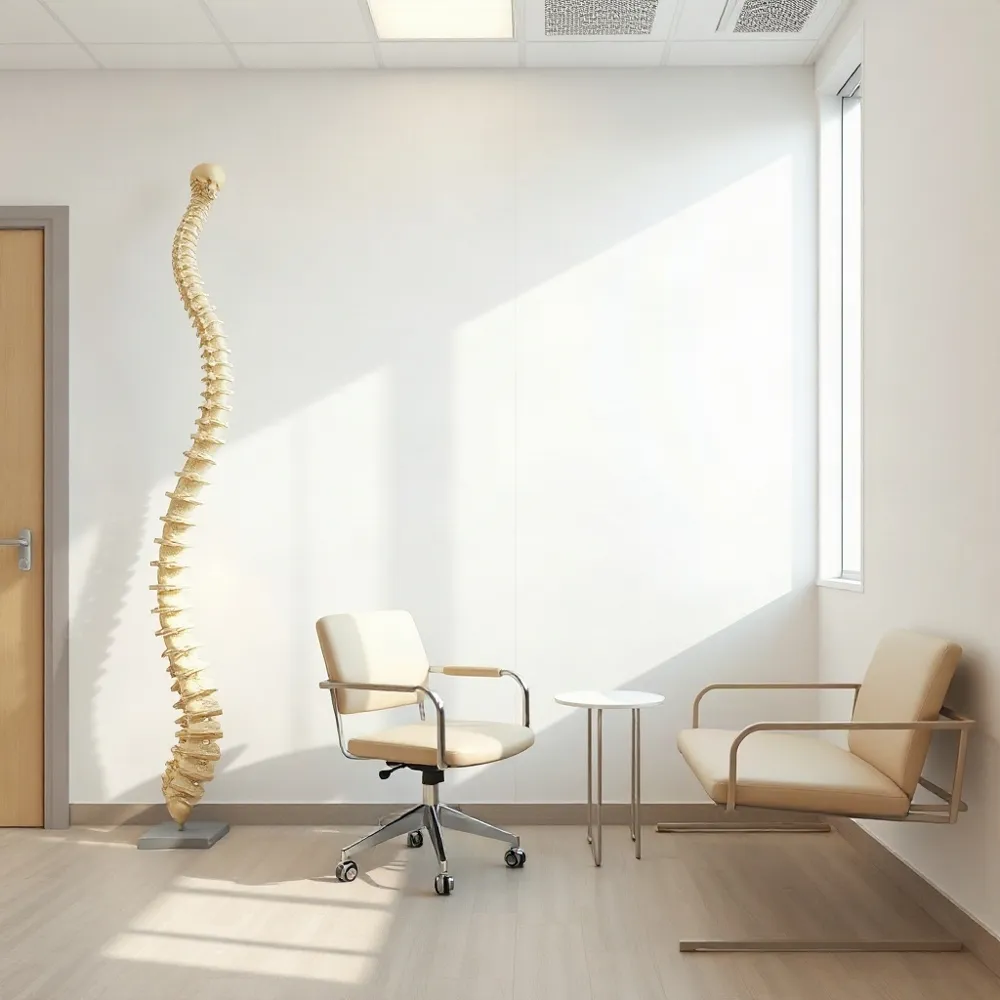
Exploring Motion Preservation for Chronic Back Pain
For patients grappling with persistent back pain, lumbar disc replacement offers a modern alternative to traditional spinal fusion. While fusion intentionally removes movement by joining vertebrae, this procedure preserves natural spinal mechanics and mobility, which may reduce long-term stress on adjacent levels. The Orthopedic Spine Institute of St. Louis supports this motion-preserving approach for eligible individuals.
Dr. David S. Raskas prioritizes a patient-first philosophy, ensuring that invasive options are considered only after conservative methods have been exhausted. According to clinical standards, a successful candidate typically has symptomatic degenerative disc disease that remains unresponsive to at least six months of non-operative care, such as structured physical therapy or medication. By focusing on non-surgical interventions first, the team at the Orthopedic Spine Institute of St. Louis ensures that every surgical decision is both necessary and well-suited to the patient's unique spinal health profile.
Recognizing Signs of Degenerative Disc Disease
 Chronic back trouble often manifests as persistent pain and localized discomfort that resists months of conservative treatment. When foundational care, such as physical therapy or targeted injections, fails to alleviate these symptoms, diagnostic pathways at osistl.com help determine if the source is degenerative disc disease (DDD).
What are the key signs that suggest a patient might need artificial disc replacement surgery?
The primary indicators for lumbar total disc replacement include nagging, localized pain that hinders daily mobility. Patients suffering from this condition may experience radiating discomfort, numbness, or weakness in the extremities, often signaling that a damaged disc at L4-5 or L5-S1 is negatively impacting adjacent nerve roots. Unlike spinal fusion, which permanently bridges vertebrae, disc arthroplasty preserves structural motion.
Candidates at the Orthopedic Spine Institute of St. Louis typically present with limitations in everyday activities, such as difficulty twisting or bending, yet lack severe spinal deformities like scoliosis. Because this surgery is not a revision procedure, patients who have not previously undergone invasive spinal interventions are often the most suitable candidates. Clinicians utilize diagnostic imaging, such as an MRI or CT scan, to confirm that the pain originates from a specific disc level before recommending surgical solutions to restore spinal balance.
Candidacy and Clinical Evaluation Criteria
Determining the right approach to back pain requires a thorough assessment of spinal health. An ideal candidate for lumbar artificial disc replacement typically suffers from chronic pain localized to one or two problematic discs that have not responded to at least six months of conservative treatment. Successful candidates generally maintain a healthy body weight and do not suffer from significant facet joint disease, spinal instability, or osteoporosis. Patients should also be free of severe bony nerve compression or significant scoliosis, as these conditions often require different surgical approaches.
Who is an ideal candidate for lumbar artificial disc replacement?
Because this procedure is designed to preserve range of motion at the operative level as noted by ISASS, candidates are evaluated to ensure their spinal anatomy remains suitable for an implant. While age alone is not a primary disqualifier, many patients who thrive with this technology are between 35 and 45 years old per NIH research. At the Orthopedic Spine Institute of St. Louis, Dr. David S. Raskas utilizes a comprehensive evaluation process to confirm whether this motion-preserving strategy will deliver the most effective path to recovery for your specific, localized pain.
The Role of Diagnostics and Patient Compliance
- Advanced imaging including MRI, CT, and X-ray is critical to rule out fractures or major deformities.
- Provocative discography is often employed to definitively confirm the source of pain generator when standard scans remain inconclusive.
- Psychosocial factors, such as managed anxiety or depression, are assessed to ensure the patient is physically and mentally prepared for the demands of the post-operative recovery period.
- Patient-reported outcomes are prioritized, and those unable to commit to guided physical therapy protocols may be directed toward alternative treatment pathways.
Comparing Arthroplasty and Spinal Fusion Techniques
 For patients seeking relief from degenerative disc disease, choosing between arthroplasty and traditional fusion remains a critical decision. At the Orthopedic Spine Institute of St. Louis, we prioritize a patient-first philosophy that explores conservative management before considering any surgical intervention.
How does artificial disc replacement compare to spinal fusion surgery?
Artificial disc replacement, or total disc arthroplasty, and spinal fusion are both established surgical options, but they function through distinct biomechanical approaches. Traditional spinal fusion resolves instability by permanently joining two or more vertebrae using bone grafts and hardware. This immobilization process stops movement at the affected segment to alleviate pain but can alter the overall mechanics of the spine.
In contrast, total disc replacement replaces damaged tissue with a prosthetic device designed to mimic natural movement. By preserving motion at the operative level, this procedure helps maintain the spine's natural sagittal balance and distribute mechanical loads more evenly across the vertebral column. This difference is essential for preventing adjacent segment disease (ASD), a condition where the discs neighboring a fused segment face increased stress and often deteriorate at an accelerated rate.
| Feature | Disc Replacement | Spinal Fusion |
|---|---|---|
| Motion | Preserved | Eliminated |
| Primary Goal | Restore mobility | Spinal stability |
| Recovery | Faster return | Longer duration |
Each approach serves specific clinical needs. While fusion is often necessary for complex cases of severe deformity or instability, arthroplasty is frequently preferred for younger patients with single-level or two-level disease who wish to maintain physical activity. Determining which path aligns with your anatomy and functional goals is a core part of the evaluation process provided by Dr. David S. Raskas.
Navigating Surgical Contraindications
 Achieving the best results with lumbar disc replacement requires careful patient selection to ensure the spine can accommodate and thrive with an artificial implant. While many patients look to motion-preserving alternatives to avoid fusion, certain anatomical and physiological factors remain strict disqualifiers for the procedure.
What conditions disqualify a patient from being a candidate for lumbar disc replacement?
A primary requirement for candidacy is the maintenance of high-quality bone density. Per ISASS, patients with osteoporosis or osteopenia, characterized by a bone mineral density T-score of -1.0 or lower, are generally excluded because weak bone increases the risk of implant subsidence or spinal fracture. Other clinical contraindications include significant spinal instability, spondylolisthesis greater than Grade 1, active infections, and advanced facet joint arthritis, which can significantly compromise clinical outcomes and mobility.
Beyond bone structure, systemic health significantly influences recovery. The Orthopedic Spine Institute of St. Louis prioritizes patient safety, noting that morbid obesity and active nicotine use remain substantial barriers to surgery. Nicotine is a major risk factor, as it impairs the body's natural healing processes and is linked to higher rates of post-operative complications. Patients with complex spinal deformities like severe scoliosis may also find that standard artificial discs do not sufficiently mimic their required spinal geometry. Because disc replacement is a specialized intervention, Dr. David S. Raskas evaluates each patient's unique history and diagnostic imagery to determine if motion preservation is physically appropriate or if traditional fusion methods remain the safer, more stable choice.
Post-Operative Recovery and Rehabilitation
Recovery following a lumbar disc replacement focuses on minimizing surgical trauma while gradually restoring spinal function. Unlike spinal fusion, which requires time for bone to solidify, this motion-preserving procedure often allows for immediate mobilization. Many patients are encouraged to stand and walk within the first 24 hours to promote circulation and prevent stiffness.
What is the typical recovery process following artificial disc replacement surgery?
The typical recovery process following an artificial disc replacement spans three to five weeks, though individual timelines vary based on your health and the number of levels treated. Because the procedure preserves spinal motion, the healing course is generally faster than that of traditional fusion surgery. Most patients return to light activities and desk-based work within the first week, while full participation in daily routines is often achieved within three months.
Post-operative care involves managing discomfort, following specific incision care instructions, and eventually completing a course of physical therapy to regain strength. At the Orthopedic Spine Institute of St. Louis, we emphasize a patient-first approach to ensure you receive the guidance necessary for a smooth transition back to an active life. While this surgery is designed to significantly improve back, neck, and sciatica pain, it is important to maintain realistic expectations, as long-term success relies on consistent adherence to clinical post-operative protocols.
Durability and Longevity of Disc Implants
The evolution of lumbar disc replacement technology centers on materials designed for long-term endurance. Modern implants typically utilize surgical-grade metals, such as stainless steel or titanium, paired with durable polymer components to create a bearing surface that mimics natural spinal movement. These materials are selected for their biocompatibility and ability to endure millions of cycles of mechanical force without significant degradation.
How long do artificial disc replacements typically last?
Artificial disc replacements are engineered for exceptional long-term durability. While clinical trials often track patient outcomes over 10 to 13 years, these studies frequently demonstrate success rates exceeding 90% when compared to spinal fusion. Rigorous mechanical simulation tests further suggest that these implants can withstand decades of use, positioning them as a robust option for patients seeking motion-preserving alternatives to immobilization.
Actual longevity depends on several factors, including individual activity levels, the structural integrity of the surrounding bone, and the precision of the surgical placement. At osistl.com, our approach prioritizes a comprehensive evaluation to determine if a patient has the requisite bone quality to support an implant. Because these devices are designed to be stiff and chemically inert, they are often viewed as a permanent solution for restoring segmental stability. During your consultation with Dr. David S. Raskas, you can receive a personalized assessment to determine how this technology aligns with your long-term spinal health goals.
Understanding Potential Risks of Surgery
Evaluating the safety of lumbar disc replacement involves balancing the benefits of motion preservation against inherent surgical risks. Like any major procedure, patients should be aware of standard complications, including bleeding, infection, or nerve injury during the operation. At the Orthopedic Spine Institute of St. Louis, the team led by Dr. David S. Raskas utilizes minimally invasive techniques to minimize these risks while addressing chronic pain.
What are the potential risks or complications associated with artificial disc replacement?
While total disc replacement is an alternative to spinal fusion, it is not without potential drawbacks. Beyond immediate surgical concerns, patients must monitor for long-term device-specific complications such as implant subsidence, where the prosthesis settles into the surrounding bone, or device migration. According to HSS, while rare, these occurrences emphasize why surgeon expertise is vital. The team at osistl.com can provide guidance on how to mitigate these specific structural failures.
Successful outcomes often depend on careful patient selection and adherence to post-operative rehabilitation protocols. Because structural issues like osteoporosis can increase the likelihood of device subsidence, a comprehensive pre-operative screening is always required before planning any procedure. Engaging with the osistl.com team allows for this thorough clinical review, ensuring that the chosen approach aligns with your long-term spinal health.
Taking the Next Step Towards Spine Health
Finding the right path to back pain relief requires a treatment plan tailored to your unique anatomy and goals. While motion preservation offers significant benefits for many, achieving long-term health depends on selecting the procedure that matches your specific spinal profile. At osistl.com, we believe that the best outcomes begin with a conservative-first approach.
Whether you are exploring artificial disc replacement or investigating lumbar disc replacement as a proactive measure, understanding your clinical options is essential. Dr. David S. Raskas specializes in minimally invasive surgery and personalized care. Schedule a consultation at the Orthopedic Spine Institute of St. Louis today to review your imaging and discuss which treatment path best supports your mobility.