The Growing Complexity of Workers’ Compensation Claims
Today's workers’ compensation claims are increasingly tangled with comorbidities such as diabetes, hypertension, obesity, and pronounced psychosocial barriers—including depression, anxiety, and fear‑avoidance behavior. Traditional siloed, product‑focused models address each injury in isolation, often neglecting these overlapping factors and leading to disjointed care, longer claim durations, and higher costs. Early, coordinated care—anchored by a dedicated care navigator or multidisciplinary team—aligns medical providers, insurers, employers, and legal counsel from the outset. This approach enables evidence‑based, injury‑specific pathways, timely psychosocial interventions, and continuous functional monitoring, ultimately shortening recovery time, reducing expenses, and delivering more holistic, sustainable outcomes for injured workers.
The Multidisciplinary Advantage
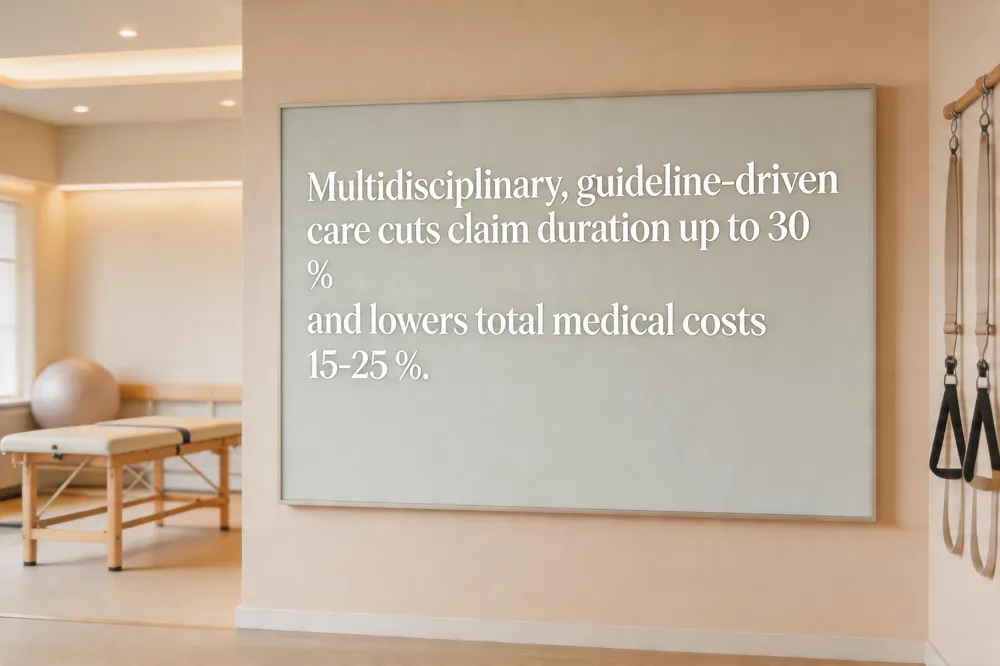 A multidisciplinary team transforms workers‑compensation care by looking beyond a simple return‑to‑work metric. When orthopedic surgeons, physical therapists, pain specialists, psychologists, and vocational counselors collaborate from day one, functional outcomes such as range of motion, gait quality, opioid use, and overall quality of life improve measurably. Evidence from One Call’s CarePath™ model and the 2022 Journal of Occupational Rehabilitation study shows that coordinated care cuts claim duration by up to 30 % and lowers total medical costs by 15‑25 %, largely because early engagement prevents chronic pain, depression, and unnecessary procedures. Standardized, injury‑specific pathways—drawn from ACOEM, ODG, and other evidence‑based guidelines—provide a clear roadmap while still allowing patient‑specific customization. The care navigator ensures that every stakeholder, from the employer and insurer to the attorney and nurse case manager, follows the same protocol, reducing duplication, speeding approvals, and keeping the worker on a fast‑track toward full recovery. In short, multidisciplinary, guideline‑driven care delivers better health, faster returns, and lower expenses for everyone involved.
What Not to Say to a Workers’ Compensation Adjuster
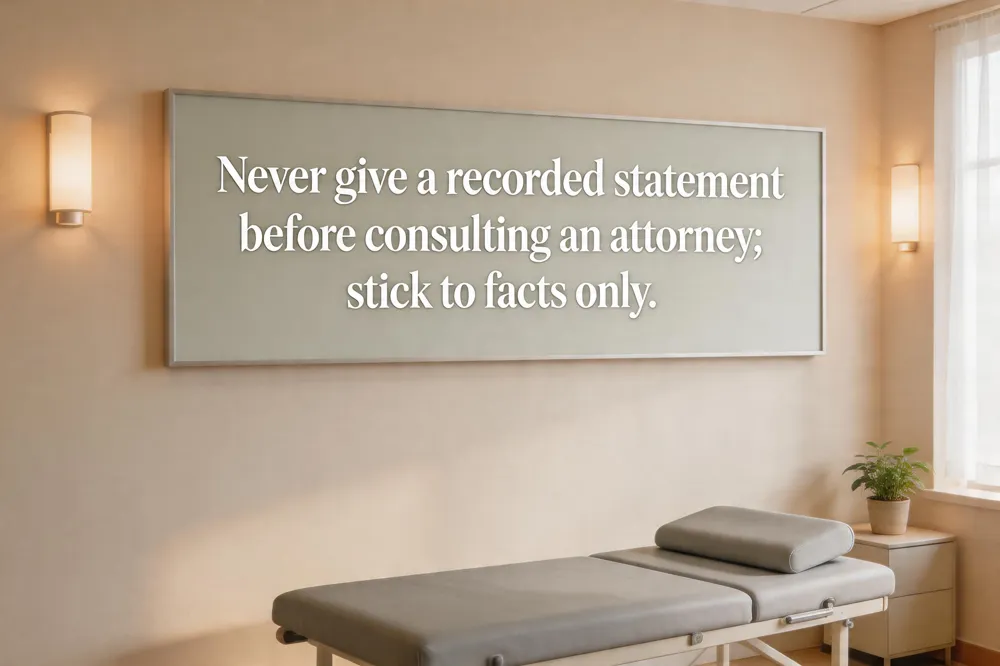 When speaking with a workers’ compensation adjuster, protect your rights by never giving a recorded statement before consulting an attorney. If the adjuster asks for a statement, politely decline and request legal counsel. Stick strictly to the facts you know: describe the incident, the symptoms you experience, and the treatment you’ve received. Avoid guessing, speculating, or offering opinions about how the injury occurred, its severity, or any pre‑existing conditions—if you’re unsure, simply say you don’t know or don’t remember. Do not discuss unrelated medical history, family health issues, or personal details that are not directly tied to the workplace accident. Never admit fault, downplay your pain, or suggest you could have worked through the injury. Keep the conversation focused on the specific questions the adjuster asks, and refrain from volunteering extra information. By following these guidelines you help preserve your claim’s integrity, reduce the risk of adverse statements, and ensure that your communication supports a fair, evidence‑based resolution.
Colorado Workers’ Compensation Rules at a Glance
 Colorado’s Workers’ Compensation Act mandates that any employer with one or more employees carry workers’ compensation insurance, guaranteeing wage‑replacement and medical benefits for work‑related injuries. Employers are exempt only if they employ casual maintenance workers earning under $2,000 a year, private domestic workers, independent contractors without employees, or certain corporate officers who elect to forego coverage.
Key procedural rules: Rule 1 defines the terminology that drives every claim decision; Rule 8 establishes the Authorized Treating Physician (ATP) requirement, insisting that the employer’s carrier pre‑select a qualified provider and that the worker may request one change; Rule 17 outlines condition‑specific medical treatment guidelines—such as for cervical spine injuries—ensuring evidence‑based care and limiting unnecessary procedures.
Benefit caps and medical review: Colorado imposes a combined‑benefits cap that adjusts annually, covering temporary total disability, permanent partial disability and medical expenses. All medical services must pass the state’s Medical Utilization Review, and independent medical examinations are used to verify the need for continued treatment.
Maximum Medical Improvement (MMI): Once a treating physician determines the worker has reached MMI, disability payments cease, making timely, multidisciplinary intervention essential to shorten claim duration and control costs. This integrated framework balances employer obligations, worker protections, and cost‑effective medical management.
OrthoGeorgia: Urgent Care, Spine Care, and Physical Therapy in Central Georgia
 Ortho Georgia Urgent Care
OrthoGeorgia operates walk‑in orthopedic urgent care centers in Central Georgia, with locations in Macon (3708 Northside Drive) and Warner Robins (301 Margie Drive). The clinics are open Monday‑Friday from 7:30 a.m. to 7 p.m. and Saturday from 9 a.m. to 1 p.m., providing same‑day evaluation for injuries such as sprains, fractures, and back or neck pain. Board‑certified orthopedic physicians, nurse practitioners, and physician assistants use digital X‑ray technology to diagnose and treat hand, wrist, elbow, shoulder, knee, foot and ankle injuries. Care is billed as a specialist co‑pay and accepts all major insurance plans, workers’ compensation, and self‑pay. Patients can call (478) 750‑2803 (Macon) or (478) 333‑5960 (Warner Robins) or schedule online.
Ortho Georgia Urgent Care
OrthoGeorgia operates walk‑in orthopedic urgent care centers in Central Georgia, with locations in Macon (3708 Northside Drive) and Warner Robins (301 Margie Drive). The clinics are open Monday‑Friday from 7:30 a.m. to 7 p.m. and Saturday from 9 a.m. to 1 p.m., providing same‑day evaluation for injuries such as sprains, fractures, and back or neck pain. Board‑certified orthopedic physicians, nurse practitioners, and physician assistants use digital X‑ray technology to diagnose and treat hand, wrist, elbow, shoulder, knee, foot and ankle injuries. Care is billed as a specialist co‑pay and accepts all major insurance plans, workers’ compensation, and self‑pay. Patients can call (478) 750‑2803 (Macon) or (478) 333‑5960 (Warner Robins) or schedule online.
Ortho GA Physical Therapy Macon, GA OrthoGeorgia’s physical therapy clinic in Macon, GA is located at 3708 Northside Drive, with Building A (Urgent Care) and Building B (Spine Center). The center offers a full spectrum of orthopedic rehabilitation services, including individualized assessments, manual spine therapy, the McKenzie Spine Method, and aquatic therapy in a HydroWorx pool. Licensed therapists provide specialized treatments such as kinesio taping, dry needling, blood‑flow restriction, and instrument‑assisted soft‑tissue mobilization. A collaborative team approach with OrthoGeorgia physicians ensures seamless continuity of care.
Ortho GA Spine doctors OrthoGeorgia’s Spine Center of Excellence is staffed by four board‑certified, fellowship‑trained spine surgeons—Dr. William Brooks, Dr. William Dasher III, Dr. Wayne Kelley Jr., and Dr. Ryan Schnetzer—each with decades of experience treating a full range of spinal disorders. They practice out of the Macon Spine Center and additional locations, offering advanced diagnostics (MRI, CT, digital X‑ray) and minimally invasive surgical options, including robotic‑assisted procedures. Patients receive comprehensive, personalized treatment plans that combine non‑surgical pain management, interventional injections, and state‑of‑the‑art rehabilitation services.
Injury‑Specific Coverage: Carpal Tunnel, Bursitis, and More
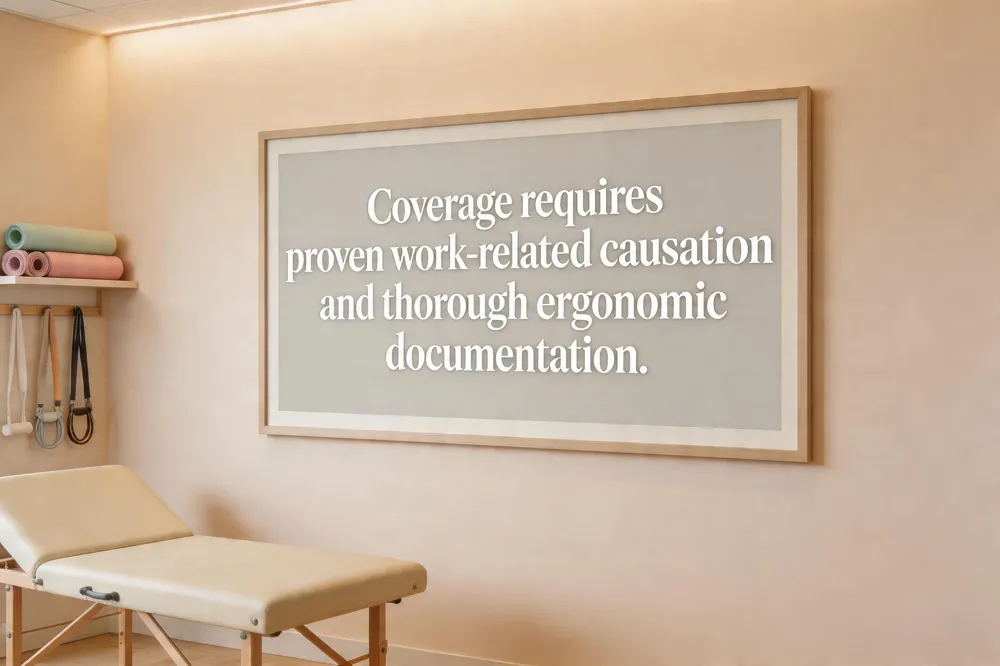 Work‑related causation requirements – Workers’ comp will cover an upper‑extremity injury only when the employee can show that the condition arose or worsened because of job duties. Repetitive hand motions, vibration, forceful gripping, or an acute trauma must be linked to the diagnosis.
Medical documentation and ergonomic evidence – A thorough clinical record (physician notes, imaging, nerve‑conduction studies) is essential. Ergonomic assessments, job‑task analyses, and employer‑provided work‑history logs strengthen the causal argument and help refute pre‑existing or non‑work factors.
Typical benefit structures – Once causation is established, benefits usually include: (1) full medical coverage (consults, therapy, injections, surgery), (2) temporary wage replacement at ~66 % of pre‑injury earnings, and (3) permanent impairment awards or vocational rehabilitation if function does not fully return.
Can carpal tunnel be covered? – Yes, if you prove the job’s repetitive motions or vibration caused the median‑nerve compression. Detailed medical reports and ergonomic data are critical; an experienced attorney can help gather this evidence.
Is bursitis covered? – Yes, when the bursitis is caused or aggravated by work‑related pressure or motion. The claim must include a clear work‑related factor, a medical diagnosis, and timely filing to secure medical and wage‑replacement benefits.
Red Flags, Claim Duration, and Settlement Benchmarks
 A common red‑flag is when an employee insists they cannot work even though the treating physician has cleared them for return‑to‑work or restricted duty. Other warning signs include excessive medical care, lack of objective evidence, recent disciplinary action, or no witnesses to the incident. Early identification protects employers and insurers from unnecessary costs.
How long does workers' Comp last in Colorado? Benefits continue until a legal or medical milestone is reached—return to work, maximum medical improvement (MMI), or settlement. Temporary wage‑replacement stops when full duty resumes or MMI occurs. Medical treatment is paid while the physician deems it necessary. Permanent partial or total disability may last for the worker’s lifetime in severe cases, so claim duration ranges from weeks to a lifetime.
What is the average settlement for a lumbar fusion workers' comp? Settlements typically fall between $80,000–$350,000. Single‑level fusions average $80,000–$175,000; two‑level $120,000–$250,000; multi‑level can exceed $175,000, with some topping $350,000. Complications and chronic pain push amounts higher.
Workers comp settlement chart Colorado The Colorado Settlement Chart lists maximum weekly rates for temporary partial/total disability, scheduled impairment caps, mileage reimbursement, and age‑factor tables for permanent partial disability. Formulas such as AWW × 2⁄3 = TTD help calculate actual payments, allowing claimants to estimate lump‑sum or periodic settlements.
Technology, Legal Resources, and Federal Programs
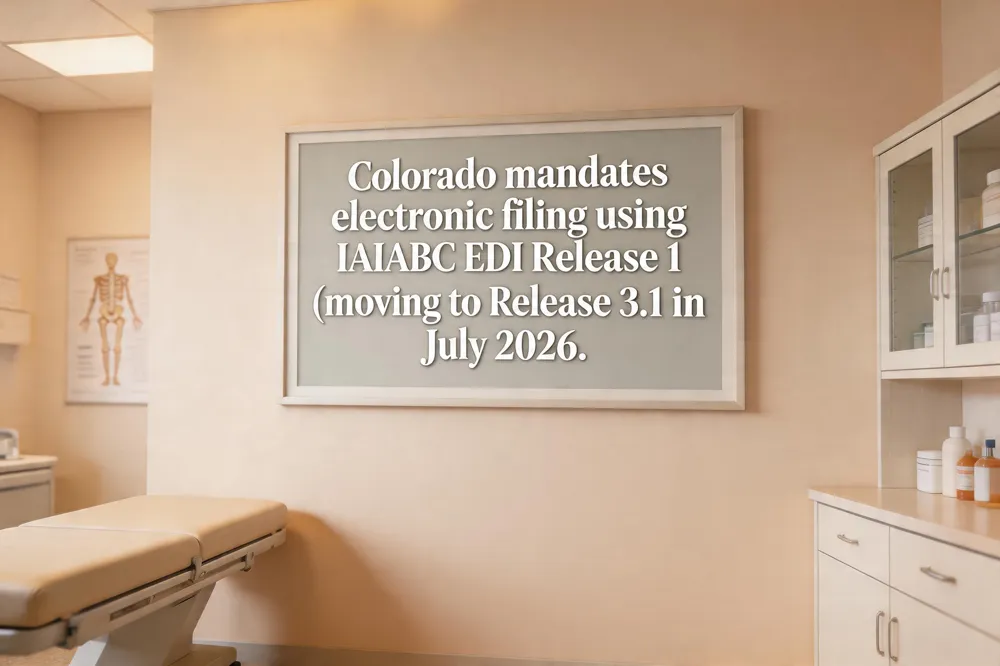 In Colorado, the Division of Workers’ Compensation (DOWC) mandates electronic filing of First Reports of Injury (FROI) and Subsequent Reports of Injury (SROI) using the IAIABC EDI standards. Claims must be submitted in EDI Release 1 format, with a transition to Release 3.1 slated for July 9 2026. Employers and insurers need a signed Sender’s Acceptance Form (WC175) and may file via an authorized EDI vendor, secure SFTP, or the online portal. Required documents include the Trading Partner Profile (WC170) and Transmission Profile (WC169). For updates, join the DOWC EDI mailing list or contact support staff.
When selecting a workers’‑comp attorney in Colorado, consider top‑rated practitioners such as Penny Merkel, Travis D. Barbarick, Mary Ewing, John G. Taussig, and R. Mack Babcock. These attorneys are consistently ranked by Super Lawyers and have extensive experience with medical‑cost and wage‑loss claims. Evaluate factors like years of experience, client reviews, bilingual services, and free‑consultation availability before making a decision.
At the federal level, the U.S. Department of Labor’s Office of Workers’ Compensation Programs (OWCP) administers four major disability‑compensation programs for federal employees, longshore workers, coal‑mine workers, and energy‑industry personnel. Claims are filed through the ECOMP portal using Form CA‑1 (injury) or Form CA‑2 (disease). Private‑sector workers should consult their state board, while federal claimants can track progress online and access provider directories via the Department of Labor website.
A Team‑First Path to Recovery
Complex workers’ compensation claims rarely fit a single‑specialty model. Injuries often involve overlapping physical conditions—such as spinal fractures, disc disease, or chronic pain—plus comorbidities like diabetes, hypertension, and psychosocial stressors that hinder healing. A multidisciplinary team brings together orthopedic surgeons, physiatrists, physical and occupational therapists, pain‑management physicians, psychologists and vocational counselors, ensuring that every facet of the injury is evaluated and treated in sync. Early, coordinated care reduces delays, prevents chronic disability, and shortens claim duration, ultimately lowering costs for both employer and worker. If you’ve been injured on the job, don’t wait for the claim to spiral; request a comprehensive, team‑based plan today. Explore the Orthopedic Spine Institute of St. Louis, where a patient‑first, evidence‑based approach guides you from diagnosis through a safe, rapid return to work.