A New Era Dawns for Spine Care
Artificial intelligence is swiftly moving from research laboratories into the daily operations of spine clinics, marking a fundamental change in how back, neck, and sciatica pain are addressed. This shift is not a distant promise but a present reality, with AI tools already enhancing diagnostic imaging, streamlining clinical documentation, and powering decision-support systems that assist surgeons and patients alike. At the same time, the traditional model of spine care—which often defaults to surgical intervention—is being reshaped by data-driven insights that prioritize conservative, non-operative treatments first. This alignment of advanced technology with a more thoughtful, patient-centered approach sets the stage for a new standard in spine care, one that the Orthopedic Spine Institute of St. Louis is proud to embrace.
From Surgery-First to Data-First
For decades, the path to treating persistent back pain has frequently led straight to the operating room. However, a growing body of evidence, amplified by the analytical power of AI, reveals that many patients are funneled toward surgery without clear indications. Vijay Yanamadala, MD, a system medical director at Hartford HealthCare, notes in a 2026 article that the future of spine care is “AI-powered—and more conservative than you think.” He argues that AI can reverse the trend of surgical over-utilization by providing smarter triage and evidence-based conservative pathways. Machine learning algorithms now analyze MRI and CT scans with remarkable accuracy, flagging subtle abnormalities and predicting which patients are more likely to respond to non-surgical treatments such as physical therapy or digital rehabilitation programs. This data-driven approach supports a fundamental shift: the best back surgery is often no surgery at all, and AI helps clinicians determine when that is the case.
Conservative Care, Supercharged by AI
AI’s role extends well beyond diagnostic imaging. Digital musculoskeletal programs and AI-guided physical therapy protocols have demonstrated outcomes comparable to or better than surgery for many common spinal conditions, all while reducing overall costs. For example, Sword Health, an AI-based physical therapy platform, reports that 55% of its members remained surgery-free after completing its program, and 69% experienced freedom from limiting pain. These platforms use reinforcement learning algorithms to continuously adapt exercise prescriptions as a patient’s condition evolves, providing hyper-personalized care that was previously impossible at scale. This technology empowers the conservative-first philosophy, offering patients effective, non-invasive alternatives that can delay or eliminate the need for surgical intervention.
The Patient-First Philosophy in Practice
The Orthopedic Spine Institute of St. Louis has long championed a patient-first approach, beginning with conservative therapies and only progressing to minimally invasive surgery when absolutely necessary. This philosophy is perfectly aligned with the emerging AI-guided paradigm. AI tools do not replace the clinician’s judgment; instead, they augment it with precise, personalized data. Predictive models can forecast individual recovery timelines, identify risk factors for complications, and rank treatment options—from conservative care to surgical intervention—based on cost-effectiveness, risk profiles, and patient preferences. This allows physicians to craft treatment plans that start conservatively, escalate thoughtfully, and remain centered on each patient’s unique needs and goals. By integrating AI into this framework, the Institute furthers its mission to provide the most effective, least invasive care possible.
| Aspect | Traditional Spine Care | AI-Guided, Patient-First Spine Care |
|---|---|---|
| Treatment default | Often surgery-first | Data-driven, conservative-first |
| Imaging analysis | Manual, variability-prone | Automated, high-accuracy detection of subtle pathology |
| Treatment planning | Generalized protocols | Personalized, predictive analytics for individual outcomes |
| Post-operative monitoring | Periodic clinic visits | Continuous AI-driven wearable and digital therapeutic feedback |
| Decision support | Clinician intuition alone | AI-powered risk stratification and evidence-based pathway ranking |
The Road Ahead
As AI continues to evolve, its integration into spine care promises even deeper personalization and precision. From ambient clinical documentation that reduces physician burnout to robotic-assisted surgery that enhances implant accuracy, the tools are already reshaping the patient experience. For the Orthopedic Spine Institute of St. Louis, the adoption of AI is not about chasing technology for its own sake; it is about building a smarter, safer, and more compassionate system of care. By harnessing AI’s ability to synthesize vast amounts of data and provide actionable insights, the Institute can help patients make informed decisions, avoid unnecessary surgery, and achieve better long-term outcomes. The era of AI-powered spine care has arrived, and it is firmly grounded in the principles of putting patients first.
The AI Diagnosis: Seeing What the Eye Can Miss
A diagnosis is the foundation for the right treatment path. For spine conditions, this often begins with imaging—X-rays, CT scans, and especially MRIs—which are highly detailed but can be challenging to read. Subtle findings like a small disc bulge, an early-stage bone spur, or a fragile non-displaced fracture can be easily missed by a human eye, leading to a delay in care or an incorrect treatment direction. Artificial intelligence is changing this by acting as a super-powered second reader, trained to spot these elusive clues. This also helps link back to the comprehensive diagnostic services offered at the Orthopedic Spine Institute of St. Louis for back, neck, and sciatica pain.
How AI-Powered Imaging to Detect Spinal Problems Faster
AI algorithms learn from thousands of spine images to recognize patterns of disease. This makes them incredibly effective at detecting early problems that might otherwise be overlooked. Research shows AI can detect a range of conditions with high accuracy:
- Fractures: Automated analysis of CT scans can detect spinal fractures with over 95% sensitivity, reducing diagnostic errors. This is crucial because a missed fracture can lead to instability and serious nerve compression.
- Disc Herniations & Stenosis: AI can automatically flag a bulging or herniated disc that is pressing on a nerve root. For spinal stenosis (narrowing of the spinal canal), AI can measure the canal diameter with high precision, making the diagnosis of a pinched spinal cord more objective and consistent.
- Tumors and Infections: AI models can be fine-tuned to identify abnormal lesions that may indicate a tumor or an infection, catching them at a stage where they are more treatable.
- Automated Measurement: Systems can now extract key metrics like disc height and Cobb angles automatically. This not only saves time but also eliminates the variability between different radiologists, ensuring a consistent baseline.
What Conditions Does the Orthopedic Spine Institute of St. Louis Treat?
The Institute treats a wide range of spine conditions, including back pain, neck pain, sciatica, herniated discs, spinal stenosis, degenerative disc disease, spondylolisthesis, scoliosis, bulging or ruptured discs, pinched nerves, and radiculopathy. AI-enhanced imaging helps to precisely identify these conditions early, ensuring a more accurate diagnosis before any treatment—conservative or surgical—is recommended.
Predictive Analytics for Recovery and Risk
The power of AI extends beyond simply identifying a torn disc or a narrowed canal. It can now predict your individual path forward. Using data from thousands of past patients, AI-driven predictive analytics can estimate:
- Recovery Timelines: The algorithm can provide a realistic outlook on how long it might take to return to normal activities based on your specific injury pattern, age, and overall health.
- Risk of Complications: For patients considering surgery, AI can analyze various pre-operative factors to predict the likelihood of infection, blood clots, or the need for a re-operation. This helps both you and your surgeon make a more informed decision.
- Response to Treatment: By analyzing your specific anatomy, the algorithm can sometimes predict whether you are more likely to respond well to physical therapy and injections or if you would benefit from a surgical solution.
A Smarter Start for a Better Outcome
The true advantage of AI-augmented diagnosis is that it supports a patient-first, conservative approach. By identifying the exact nature and severity of a spinal issue earlier and with more precision, clinicians can be more confident in recommending non-surgical care when appropriate. Instead of relying on guesswork or more invasive tests, the path is clear. For the Orthopedic Spine Institute of St. Louis, integrating these tools means patients can be triaged to the best treatment—whether that's a structured therapy program, a targeted injection, or a precisely planned minimally invasive surgery—with greater accuracy and confidence than ever before.
| Feature | Benefit for Diagnosis | Benefit for You |
|---|---|---|
| Fracture Detection | Catches subtle fractures otherwise missed; >95% sensitivity vs. ~50% missed rate for some injuries. | Prevents instability and chronic pain from an undetected break. |
| Automated Measurements | Objectively measures disc height, angles, and canal width. | Reduces diagnostic variability; provides a clear, reproducible baseline for tracking healing. |
| Predictive Analytics | Forecasts recovery time, complication risk, and treatment success. | Allows for realistic expectations and personalized, data-driven treatment choices. |
| Early Pathology Detection | Identifies tumors and infections in early stages. | Enables timely intervention, improving treatment options and outcomes. |
Conservative First: AI as the Gatekeeper to the OR
How AI Decision-Support Systems Guide Patients Toward Conservative Care
Artificial intelligence is fundamentally reshaping the initial approach to spine care. Instead of immediately considering surgery, AI-powered clinical decision-support systems now analyze a wide array of patient data—including detailed imaging (MRI, CT), functional status, psychosocial risk factors, and treatment history—to identify those who are most likely to benefit from a structured, conservative-first pathway. This technology acts as an intelligent triage tool, ensuring that surgery is reserved for patients who have clear surgical indications, while guiding others toward non-operative care. As one leading spine surgeon notes, the best back surgery is often no surgery at all, and AI is the key to making that judgment more precise and evidence-based.
This approach directly challenges the historical trend of funneling patients with mild or ambiguous imaging findings toward unnecessary operations. By synthesizing complex, nonlinear patterns in a patient's health profile—patterns that are often invisible even to experienced clinicians—AI can distinguish between individuals who will respond to conservative therapy and those who truly require surgical intervention. This data-driven method enhances clinical judgment, reduces subjectivity, and helps avoid costly, invasive procedures that may not be needed.
The impact is already being demonstrated at scale. For example, Sword Health, a leading provider of AI-guided digital physical therapy, reports that 55% of its members who enrolled in its musculoskeletal program remained surgery-free. Further, 69% of its members became free of limiting pain. The company attributes these outcomes to an AI Care platform that pairs licensed clinicians with algorithmic guidance to deliver hyper-personalized exercise regimens and real-time feedback. This platform uses a patented reinforcement-learning engine to adapt treatment intensity as a patient’s condition evolves, providing a continuous, scalable care loop that was previously impossible in traditional clinic settings. Such findings underscore that for many common spinal conditions—including herniated discs, spinal stenosis, and degenerative changes—AI-powered conservative care can achieve results comparable to or better than surgery while reducing overall costs and avoiding the risks of an operation.
Home-Based AI Guidance: Results Equivalent to a Clinic Visit
The effectiveness of AI-guided care is not confined to a clinical setting. A randomized clinical trial involving 52 subjects studied the impact of an AI-guided resistance-training device for low back pain. The trial compared outcomes for patients using the device in a supervised clinic versus those using it at home. Remarkably, the study found that the setting did not significantly influence the results. Both home-based and clinic-based AI-guided resistance training led to similar improvements in pain intensity, physical function, and fear of movement, and these benefits were maintained throughout a full year of follow-up.
This finding has powerful implications for patient access and convenience. An AI-guided home program can serve as a cost-effective supplement to traditional therapy, allowing patients to manage their condition on their own schedule while still receiving personalized, algorithm-optimized care. The AI can increase or decrease the difficulty of exercises based on real-time feedback, maintaining engagement and safety, and can alert clinicians if a patient’s progress stalls or deteriorates. This removes significant barriers to care—such as travel time and clinic availability—while delivering outcomes that rival in-person treatment.
What Conservative Treatments Are Offered Before Considering Surgery?
The Orthopedic Spine Institute’s patient-first philosophy is built on a comprehensive, non-surgical plan that starts with proven conservative therapies. Before any discussion of an operation, patients explore a full range of options, including:
- Physical Therapy: Targeted exercises and manual therapy to strengthen supporting muscles, improve flexibility, and correct movement patterns.
- Chiropractic Care: Spinal adjustments and manipulations to improve alignment and reduce nerve irritation.
- Epidural Steroid Injections: Powerful anti-inflammatory medication delivered directly to the affected nerve root to reduce pain and inflammation.
- Massage Therapy: Relaxation of tense muscles that may be contributing to pain and restricted movement.
- AI-Guided Exercise Programs: Personalized, data-driven protocols that track progress and adapt in real time, often available for use at home.
AI now acts as the orchestrator of this pathway. Instead of a one-size-fits-all prescription, AI platforms can analyze a patient’s specific pathology, activity level, and response to initial therapy to dynamically refine their conservative treatment plan. For common conditions like disc herniation or spinal stenosis, these AI-personalized programs frequently achieve outcomes equivalent to surgery, allowing many individuals to avoid the operating room entirely and return to their daily lives more quickly and safely. This represents a major shift: AI is not just a tool for the operating room; it is the new, intelligent gatekeeper that ensures conservative care is fully optimized before any surgical option is considered.
| AI-Guided Conservative Strategy | How It Works | Clinical Outcome / Example |
|---|---|---|
| Digital Physical Therapy (e.g., Sword Health) | AI pairs licensed clinicians with a patented reinforcement-learning engine to deliver personalized exercise regimens. Monitors progress in real-time and adapts treatment intensity. | 55% of members remained surgery-free; 69% became free of limiting pain. Average annual savings of $3,177 per member on MSK-related care. |
| Home-Based AI Resistance Training | An AI-powered resistance-training device provides guided exercises at home, adjusting difficulty based on patient performance and reported pain. | A randomized trial showed equivalent improvements in pain, function, and fear of movement compared with clinic-based use, sustained over a 1-year follow-up. |
| AI-Integrated Clinical Decision Support | AI algorithms synthesize MRI findings, functional status, psychosocial factors, and history to recommend an optimal conservative or surgical pathway, acting as a triage tool. | Helps identify patients who are likely to respond to conservative therapy vs. those who truly need surgery, reducing unnecessary operations and improving the efficiency of care. |
| AI-Personalized Conventional Therapy | AI analyzes patient-specific imaging and lifestyle data to tailor the intensity, type, and frequency of physical therapy, chiropractic adjustments, or injections. | Achieves outcomes comparable to surgery for common spinal conditions by ensuring conservative care is optimized before considering a more invasive approach. |
Precision Surgery: When the Scalpel Is the Right Choice
What Minimally Invasive Spine Surgery Surgeries Are Available at the Institute?
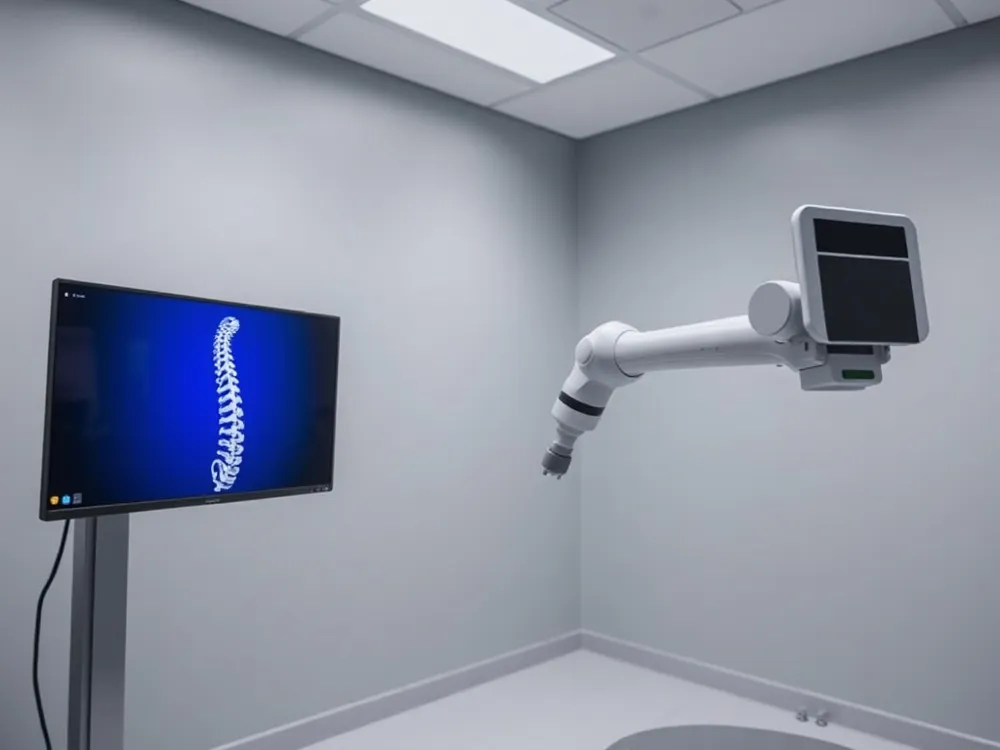
The Orthopedic Spine Institute offers a full spectrum of modern minimally invasive spine surgery, including microdiscectomy, percutaneous vertebroplasty/kyphoplasty, endoscopic decompression, and minimally invasive lumbar fusion. These procedures use sub-centimeter incisions, specialized instruments, and advanced imaging to access the spine with far less muscle and tissue disruption than traditional open surgery. This approach translates into less postoperative pain, reduced blood loss, shorter hospital stays, and faster return to daily activities.
AI‑Driven Pre‑Operative Planning: A Personalized Blueprint for Every Patient
Before the first incision, artificial intelligence (AI) is transforming how surgeons plan these delicate operations. Rather than relying solely on static two-dimensional scans, AI algorithms now create detailed three-dimensional (3D) anatomical models from a patient’s MRI and CT data. These high-fidelity digital replicas enable surgeons to map the optimal trajectory for pedicle screws, select the ideal implant size and type from a library of modular hardware, and simulate the entire procedure in a virtual environment. This process, described by researchers at Northwestern Medicine and the University of Maryland Medical System, moves surgical planning from a one-size-fits-all approach to a patient-specific, data-driven blueprint. The result is enhanced precision, a lower margin for error, and a surgical plan that is uniquely tailored to each individual’s spinal anatomy and pathology.
Robotic Navigation and Augmented Reality: Achieving Near-100% Accuracy
In the operating room, this pre-planned blueprint is executed with the assistance of robotic navigation systems and augmented reality (AR) tools. Platforms such as the Mazor X, ExcelsiusGPS, and ROSA Spine act as intelligent co‑pilots, guiding the surgeon’s instruments along the pre-determined optimal path. By integrating pre-operative 3D imaging with real-time intra-operative data, these systems can track the position of every instrument relative to the patient’s anatomy with millimeter-level accuracy. Recent systematic reviews have reported that robotic-assisted pedicle screw placement now achieves near-100% accuracy, dramatically reducing the risk of nerve injury or implant misplacement. This precision also minimizes the need for multiple intra-operative X-rays, reducing radiation exposure for both the patient and the surgical team. Augmented reality takes this a step further by overlaying crucial anatomical information—such as color-coded vertebral segments and planned screw trajectories—directly onto the surgeon’s field of view through special glasses. This reduces cognitive load, freeing the surgeon to focus on the delicate task at hand without constantly shifting attention between the patient and separate monitors. While the AR system suggests the ideal path, the surgeon retains ultimate decision-making authority, ensuring that human judgment and experience remain at the center of care.
AI‑Based Postoperative Monitoring Platforms: Predicting Complications and Guiding Recovery
The role of AI does not end when the patient leaves the operating room. Post-operative monitoring platforms powered by machine learning continuously analyze a wealth of data, including vital signs, pain scores, activity levels captured from wearable devices, and laboratory results. These AI systems are designed to detect early signs of complications—such as infection, deep vein thrombosis, or delayed wound healing—often before they become clinically apparent. By alerting the care team to subtle changes in a patient’s recovery trajectory, AI enables timely, proactive interventions that can prevent minor issues from escalating into major problems. Furthermore, AI-driven rehabilitation tools can personalize physical therapy protocols based on a patient’s real-time progress, adjusting exercise intensity and frequency to optimize recovery while respecting surgical limitations. This continuous, data-driven feedback loop ensures that each patient’s post-operative journey is as safe, efficient, and tailored as their surgical plan.
AI‑Guided Spine Surgery: The Institute’s Advantage
The Institute’s commitment to a patient-first philosophy is naturally amplified by these advanced AI technologies. For a patient undergoing a minimally invasive lumbar fusion, AI-powered planning tools can pre-select the optimal cage size and screw trajectory to restore spinal balance while minimizing adjacent segment stress. During an endoscopic decompression for a herniated disc, robotic navigation ensures that the working channel is placed precisely on the target pathology, allowing the surgeon to remove the offending fragment while preserving the surrounding healthy anatomy. By integrating AI from the planning phase through execution and into recovery, the Institute offers a level of precision and personalization that enhances the benefits of its established minimally invasive procedures. The end result is a surgical experience that is safer, more accurate, and better aligned with each patient’s unique anatomy and recovery goals—a seamless fusion of human expertise and the power of modern technology.
| Technology | Pre-Operative Role | Intra-Operative Role | Post-Operative Role | Key Benefit for Patients |
|---|---|---|---|---|
| AI Surgical Planning | Creates patient-specific 3D models; selects optimal approach, implant size, and trajectory | Guides instrument placement via navigation/robotic platform | - | Personalized, high-precision surgical plan from the start |
| Robotic Navigation | - | Executes plan with millimeter accuracy for screw placement | - | Near-100% screw accuracy; fewer complications; less radiation |
| Augmented Reality (AR) | - | Overlays anatomical guidance onto surgeon’s view; reduces cognitive load | - | Improved visualization for complex anatomy; better situational awareness |
| AI Post-Op Monitoring | - | - | Analyzes wearables, vitals, labs; predicts complications; personalizes rehab | Early detection of problems; safer, faster recovery; tailored rehabilitation |
Your Personalized Roadmap: AI-Guided Treatment Plans in Action
How does AI create a continuous loop of care for my spine condition?
AI is not a single tool but an integrated system that works in a continuous loop. Your care is guided from the moment you first describe your symptoms, through diagnosis, and across every stage of your recovery. This process begins with AI‑powered diagnostic imaging, which analyzes your MRI or CT scans to detect subtle abnormalities in discs, vertebrae, and nerves that might otherwise be missed. The same system then recommends a conservative, non‑surgical pathway tailored to your specific condition. If surgery becomes necessary, the AI refines its recommendations to help you and your surgeon choose the most precise, least invasive procedure. Post‑operatively, it guides your rehabilitation. This continuous loop ensures that your plan evolves with you, not as a one‑time decision but as a dynamic, ongoing process.
Can AI predict my individual surgical risks and outcomes before I decide on treatment?
Yes, AI is already highly accurate at calculating personal risk. Models trained on large datasets can predict your likelihood of complications, length of hospital stay, and even your expected recovery time. For example, a validated AI algorithm from the International Spine Study Group achieved 89 % accuracy in forecasting post‑operative risk for over 1,600 patients. Other models have predicted outcomes like recurrent disc herniation or the need for re‑operation with over 90 % accuracy. These predictions, which your surgeon will review directly with you, make the decision to proceed with surgery a fully informed one. For patients with complex spinal deformities, AI models analyzing over 500 variables have predicted major complications with up to 92.5 % accuracy, providing a clear roadmap of what to expect. This allows you to weigh the potential benefits against the specific risks for your unique anatomy.
Does my treatment plan change in real time based on my recovery progress?
Absolutely. AI‑powered care plans are not static. Through wearable sensors, smart braces, and weekly patient‑reported outcome (PRO) surveys, the system receives constant feedback on your pain level, mobility, and function. This data feeds into a continuous learning cycle—much like the patented reinforcement‑learning technology used by Sword Health. If your pain decreases, your exercise regimen might automatically progress to a heavier load or more complex movement. If your progress stalls, the AI may adjust your therapy protocol or alert your care team to intervene early, preventing a minor setback from becoming a major complication. This real‑time adaptation means your treatment is never one‑size‑fits‑all; it is a living plan that responds to your body's needs, week by week and day by day.
Does AI replace my surgeon's judgment?
No. AI is designed to be an intelligent co‑pilot that augments, not replaces, your surgeon's expertise. Every AI‑generated recommendation—whether it is a suggested implant size, a screw trajectory, or a risk prediction—must be verified by your surgeon, who retains full clinical authority. As stated in the medical literature, physicians remain the ultimate safety layer, analogous to a pilot who benefits from extensive instruments but makes the final decision. AI enhances a surgeon's ability to see subtle clues in imaging and predict outcomes, but it cannot replace the human judgment required to understand your personal goals, concerns, and lifestyle. Your care team at the Orthopedic Spine Institute of St. Louis combines these advanced tools with decades of clinical experience to provide you with a level of precision and personalization that neither the surgeon nor the algorithm could achieve alone.
| AI Application | What It Does for You | How It Personalizes Your Care |
|---|---|---|
| Diagnostic Imaging | Analyzes MRI/CT to detect disc degeneration, stenosis, fractures, or tumors | Flags subtle abnormalities earlier, reducing misinterpretation |
| Predictive Risk Models | Uses thousands of past cases to forecast your complication and readmission risk | Provides personalized risk profile to guide decision for surgery vs. conservative care |
| Intra‑operative Navigation | Guides robotic tools and implants with sub‑millimeter precision based on your 3D spinal map | Reduces need for intra‑operative X‑rays and lowers chance of nerve injury |
| Wearable + PRO Monitoring | Collects real‑time data on your pain, activity, and mobility after treatment | Adapts rehabilitation protocol in real time and alerts your care team early if healing stalls |
| AI‑Driven Conservative Therapy | Recommends and adjusts digital physical therapy exercises based on your progress | Helps 55% of patients avoid surgery entirely while reducing pain and improving function |
How can I schedule an appointment with Dr. David S. Raskas?
To start your personalized AI‑guided care journey, visit the Orthopedic Spine Institute of St. Louis website and use the online appointment request form, call the patient‑services desk, or ask your physician to submit a referral. Your AI‑enhanced diagnostic and treatment plan begins with a comprehensive evaluation—the first step toward a recovery that is as unique as you are.
The Road Ahead: Ethical, Accessible, and Always Evolving
 The journey of artificial intelligence in spine care is not without its hurdles. While the potential is immense, ensuring these tools are safe, fair, and accessible is paramount for a truly patient-first future. As AI becomes more integrated into clinical decisions, addressing these challenges head-on is the only path forward, and the Orthopedic Spine Institute of St. Louis is closely watching this evolution to ensure the best possible care for our patients.
Challenges: What Are the Hurdles to Widespread AI Adoption?
Before AI can become a standard tool in every spine clinic, several critical challenges must be overcome. As highlighted in a comprehensive review of AI in orthopaedic surgery, key issues include data-privacy and security concerns, the need for models to work accurately across diverse patient populations, and difficulties integrating new AI tools with existing electronic health record (EHR) systems. The Navigating AI article similarly emphasizes that high-quality, standardized data and compliance with privacy regulations like HIPAA are non-negotiable.
One of the most significant technical hurdles is the lack of rigorous external validation. A scoping review of AI in spine surgery found that while 76% of AI studies performed some form of validation, only 19% conducted external validation—testing the model on data from a different patient group or institution. This is a major gap, as a model that works well in one hospital may not perform reliably in another. The expert team behind the FAU/Baptist Health automated spine model also underscores this, noting that eliminating manual steps that cause variability is essential for creating a truly scalable and trustworthy solution. Algorithmic bias—where an AI model may perform differently for certain demographics due to imbalances in its training data—is another serious concern that must be actively mitigated to ensure equitable care for all.
Regulatory Landscape: How Is the FDA and Other Organizations Guiding Safe AI Use?
To build trust and ensure patient safety, robust regulatory frameworks are essential. The U.S. Food and Drug Administration (FDA) has already approved several AI-powered medical devices, including screening tools for imaging and robotic surgical platforms. As noted in sources on AI in spine surgery, recent FDA guidance emphasizes the importance of transparency, data governance, and clear intellectual-property considerations for AI-driven software. This regulatory clarity is a positive step, providing a pathway for safe innovation.
Beyond government regulation, the medical community is developing its own best practices. The scoping review on AI in spine surgery recommends using the TRIPOD (Transparent Reporting of a multivariable prediction model for Individual Prognosis Or Diagnosis) guidelines as a standard for reporting AI model performance. Adhering to such guidelines helps clinicians evaluate the trustworthiness of an AI tool before using it in their practice, ensuring that the recommended treatment plans are backed by solid, well-documented evidence.
Future Directions: What’s Next for AI in Spine Care?
The future of AI in spine care is both exciting and transformative. Researchers at institutions like Rothman Orthopaedics project the integration of AI with advanced robotics to create “intelligent co-pilots.” This means moving beyond simple pre-operative planning to AI-enhanced platforms that provide real-time intra-operative decision support, adjusting robotic trajectories to avoid critical nerves and automatically recommending implant adjustments. The goal is a proactive, precision-based approach to healing.
Another promising frontier is the development of multi-arm robotics, which could further automate hardware placement and decompression procedures. These systems, orchestrated by sophisticated AI algorithms, promise even greater accuracy and consistency. Furthermore, future AI systems are expected to be dynamic, continuously learning from new clinical data—a concept known as the “data half-life.” This means AI-guided treatment plans will constantly update with the latest evidence, providing personalized recommendations that stay current with evolving medical knowledge, ensuring patients always have access to the most advanced and effective care pathways.
Your Next Step: A Consultation at the Forefront of Innovation
The AI revolution in spine care is not a distant future—it is unfolding now. At the Orthopedic Spine Institute of St. Louis, we are committed to being at the forefront of this change, preparing to integrate these powerful tools to enhance our conservative-first, patient-centered philosophy. Our goal is to harness AI's diagnostic and predictive power to refine our treatment decisions, making them more personalized, less invasive, and more effective than ever before. We believe that the best surgery is often the one you don’t need, and AI is a powerful new ally in making that possible.
Are you ready to explore how the latest advances in spine care can help you? Book a consultation with our specialists today to discuss your condition and discover a personalized treatment plan that puts your well-being first.
| Aspect of AI in Spine Care | Key Challenge | Regulatory/Validation Response | Future Direction |
|---|---|---|---|
| Data Privacy & Security | Protecting sensitive patient information from breaches. | HIPAA compliance is mandatory. FDA guidance emphasizes data governance. | Development of secure, federated learning models that don't centralize patient data. |
| Algorithmic Bias | AI models may not perform equally for all patient demographics. | Transparency reports and diverse training datasets are required. | Use of explainable AI (XAI) to identify and correct bias in algorithms. |
| External Validation | Most models are not tested on data from different populations. | TRIPOD-AI guidelines published to standardize reporting and validation. | Creation of public, multi-institutional datasets for robust model testing. |
| Integration | Difficulty merging AI tools with existing EHR and workflow systems. | FDA approval processes ensure interoperability and seamless implementation. | Development of AI “co-pilots” that function as intuitive, plug-and-play modules. |
| Continuous Learning | Static models can become outdated as new treatments and data emerge. | Dynamic regulatory frameworks are being considered for “learning” AI systems. | Development of AI platforms with a “data half-life” that learn from every new case. |
Your Spine, Your Future
The future of spine care is arriving faster than many realize, and it is built on a foundation of artificial intelligence (AI) that prioritizes precision, personalization, and a conservative-first approach. This transformation perfectly aligns with the patient-first mission of the Orthopedic Spine Institute of St. Louis, where advanced technology enhances, rather than replaces, compassionate, individualized care.
A New Standard of Care
AI is no longer a futuristic concept; it is actively reshaping how spinal conditions are diagnosed and treated. The Institute is at the forefront of this evolution, integrating AI tools throughout the care continuum. From the moment you walk in, AI-powered systems are working to improve your experience and outcomes.
Smarter Diagnostics, Earlier Intervention
AI algorithms can analyze MRI and CT scans with remarkable accuracy, often detecting subtle signs of disc degeneration, stenosis, or instability earlier than traditional methods. This early detection enables more timely and often less invasive treatment. AI-driven platforms can also automate measurements like disc height and spinal alignment, reducing variability and providing your surgeon with a clearer, more consistent picture of your unique anatomy.
Personalized, Conservative-First Treatment Plans
The best spine surgery is often no surgery at all. Leading research indicates that AI is a powerful ally in identifying which patients are true candidates for surgery versus those who will achieve excellent results with conservative care. By synthesizing your imaging, functional status, and lifestyle factors, AI-powered clinical decision-support systems recommend the most effective, least invasive pathway first. This may include AI-guided physical therapy, digital rehabilitation programs, or other non-surgical interventions proven to produce outcomes comparable to surgery for many common conditions.
Enhancing Surgical Precision for Those Who Need It
When surgery is necessary, AI elevates precision to new heights. AI-driven surgical planning tools create detailed, patient-specific 3D models, optimizing implant size, trajectory, and fixation points before you enter the operating room. During the procedure, AI serves as an “intelligent co-pilot,” providing real-time guidance to robotic navigation systems. This collaboration allows for hardware placement with near-perfect accuracy, smaller incisions, less tissue trauma, and faster recovery times.
The Future, in Practice Today
The true power of AI in spine care lies not in replacing the surgeon’s judgment but in augmenting it with unparalleled data analysis. This allows your care team to move from a reactive approach—treating problems after they appear—to a proactive, predictive model. By analyzing thousands of similar cases and outcomes, AI can forecast your individual recovery timeline, highlight potential risks, and tailor a post-operative plan that gets you back to your life sooner.
Your Partner in Care
The Orthopedic Spine Institute of St. Louis is dedicated to blending these cutting-edge AI tools with the compassionate, one-on-one attention you deserve. We believe the future of spine care is not just about technology; it is about using that technology to provide a more personalized, less invasive, and more effective journey for every patient.
Experience the future of spine care. Schedule an appointment today and discover how personalized, conservative-first treatment can help you reclaim your life without unnecessary surgery. Your future starts now. Contact us to book your consultation.
| Phase of Care | AI Tool/Application | Benefit to You |
|---|---|---|
| Diagnosis | AI analysis of MRI/CT scans | Earlier detection of subtle pathology, more accurate diagnosis |
| Treatment Planning | Clinical decision-support systems | Personalized recommendations prioritizing conservative care first |
| Pre-Operative | AI-driven 3D surgical planning | Customized implant selection and trajectory for maximum precision |
| Intra-Operative | AI as intelligent co-pilot for robotic navigation | Near-perfect hardware placement, smaller incisions, faster recovery |
| Post-Operative | AI-powered monitoring and rehabilitation | Tailored recovery plans, early detection of complications |