Introduction
The Widespread Reality of Back Pain
Low back pain is a near-universal experience, with over 80% of adults encountering significant discomfort in their lifetime. It represents one of the most common reasons for clinical visits, creating a substantial public health and economic burden. Given that most cases are not linked to serious structural damage, a thoughtful, measured approach to initial care is crucial for both individual recovery and broader healthcare efficiency.
A Patient-First, Conservative-First Philosophy
Modern, evidence-based spine care champions a conservative management philosophy. This approach prioritizes the body’s inherent ability to heal, utilizing a wide array of non-invasive and non-surgical methods as the foundational first step. The core goals are to reduce inflammation, alleviate pain, and restore normal function while minimizing risks and preserving natural spinal anatomy.
Building a Foundation for Informed Care
These principles are not merely a treatment checklist; they form an essential framework for navigating spine health. By starting with conservative strategies—such as education, guided activity, and hands-on therapies—patients are empowered to take an active role in their recovery. This foundation supports informed decision-making, helps avoid unnecessary interventions, and sets the stage for achieving sustainable, long-term spinal wellness.
Key Facts: Conservative Spine Care Principles
- Conservative spine care views low back pain as a recurrent, often nonspecific condition, with 85-90% of cases lacking a specific identifiable cause like serious disease or fracture.
- Clinical guidelines strongly advise against routine imaging (X-rays, MRI) for nonspecific low back pain without 'red flag' symptoms, as incidental findings are common and often misleading.
- First-line symptom control for acute low back pain includes advising patients to remain active, apply superficial heat, and use short courses of over-the-counter medications like acetaminophen or NSAIDs.
- Spinal manipulation is a recommended first-line treatment for both acute and chronic low back pain, providing modest pain relief, improving function, and reducing fear-avoidance behaviors.
- Therapeutic exercise is the cornerstone of long-term management for chronic low back pain, with evidence supporting trunk strengthening, aerobic conditioning, aquatic exercise, and multimodal programs.
- Risk stratification tools like the STarT Back Screening Tool categorize patients by risk of persistent pain and disability, guiding personalized treatment intensity from low-risk reassurance to high-risk multimodal care.
- Surgery is considered a last resort only after a failed trial (typically 6+ weeks) of conservative care and is reserved for specific anatomic problems like severe nerve compression or spinal instability.
- Structured conservative spine care pathways are linked to significant cost savings, with episodes starting with conservative-first providers costing nearly 40% less than others.
- A significant 'know-do gap' exists between evidence-based guidelines and clinical practice, such as high rates of unnecessary imaging and low rates of recommended spinal manipulation for low back pain.
- The first healthcare provider choice heavily influences care pathways; starting with primary care or chiropractic often leads to more guideline-concordant, conservative care and lower costs compared to starting with some specialists.
1. Principle 1: View Spine Pain as a Recurrent, Often Nonspecific Condition
The Natural Course of Back Pain
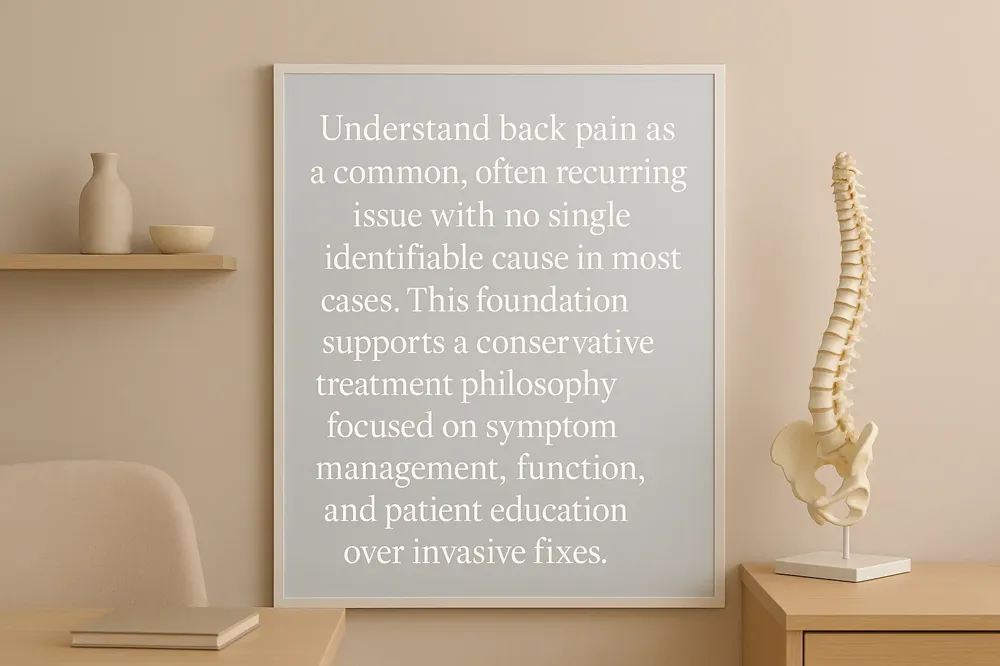
Acute episodes of low back pain are extremely common, with a high prevalence of back pain in adults, experiencing significant back pain at some point in their lives. Most acute episodes improve relatively quickly. However, it is more accurate to view low back pain as a recurrent condition. For some individuals, this can develop into a persistent, chronic issue, where treatment for acute low back pain becoming chronic is a key concern.
Understanding 'Nonspecific' Pain
Approximately 85% to 90% of patients seeking care are diagnosed with 'nonspecific' low back pain. This means the pain is not linked to a specific, identifiable cause like a serious disease, spinal fracture, or major nerve compression. The pathology is often obscure, not revealed by standard clinical exams or imaging, warranting a cautious approach for low back pain with obscure causes.
The Implication for Care
This understanding is foundational for a conservative treatment philosophy. Since most back pain is not tied to a specific structural problem requiring surgical correction, applying conservative spine management principles focuses on symptom relief, functional improvement, and addressing risk factors. A patient-first approach to spine care begins with education, reassurance, and evidence-based guidance, allowing the body's inherent ability to heal with non-invasive interventions, rather than rushing to more invasive interventions.
| Key Concept | Clinical Significance | Management Focus |
|---|---|---|
| High Prevalence | Back pain is a leading reason for clinical visits, making effective conservative spine care widely applicable. | Patient education and public health strategies. |
| Recurrent Nature | Pain often fluctuates between mild and severe, requiring self-management strategies for chronic low back pain. | Building resilience and preventing flare-ups. |
| Nonspecific Diagnosis | Imaging findings (like disc bulges) are common in people without pain, so they don't always explain symptoms, and surgery is not always indicated for disc bulging. | Treating the patient, not just the scan; focusing on function and pain triggers. |
| Conservative Foundation | The majority of cases improve without surgery, supporting non-surgical first treatment for back pain as the logical first step. | Utilizing physical therapy for back pain, activity modification, and self-management as primary tools. |
2. Principle 2: Prioritize Education, Reassurance, and Self-Management from Day One
Clinical guidelines strongly recommend reassuring patients of a good prognosis for acute nonspecific LBP.
Initial consultations for back pain often involve significant worry. Clear communication is essential. Clinical best practices confirm that for most people, acute low back pain improves quickly. Reassuring patients of this favorable outlook is a crucial first treatment step. This reduces fear and anxiety, which can themselves worsen pain perception.
Educating patients in self-care strategies and encouraging them to remain active are foundational first steps.
Effective care empowers patients. Education should cover safe movement, basic body mechanics, and simple pain-relief methods like applying heat. A key directive is to advise patients to stay as active as possible. Prolonged bed rest is discouraged, as it can lead to muscle weakening and increased pain. Even light activities like walking are encouraged to maintain function and promote natural healing. The goal is to prevent the transition from acute to chronic pain.
Active patient education focusing on biopsychosocial factors and self-management (like pacing activities) is more effective than passive strategies.
Modern education goes beyond anatomy. It includes discussing how thoughts, emotions, and daily habits influence recovery. This is the biopsychosocial model. Teaching active self-management skills is vital. Patients learn to pace their activities, recognize early warning signs, and modify tasks to avoid flare-ups. This approach is more effective than simply giving patients a pamphlet. It fosters independence and long-term resilience, making patients active partners in their own recovery journey.
| Key Action | Patient Benefit | Practical Example |
|---|---|---|
| Providing Reassurance | Reduces fear/anxiety, improves pain coping | “Most back pain improves within a few weeks with simple care.” |
| Self-Care Education | Empowers patient, promotes safe activity | Teaching proper lifting technique and use of heat therapy. |
| Active Pacing Strategies | Prevents overexertion, manages flare-ups | Breaking up a long task into shorter segments with rest breaks. |
| Biopsychosocial Focus | Addresses full pain experience, not just structure | Discussing how stress or sleep impacts their back symptoms. |
3. Principle 3: Avoid Unnecessary Imaging for Nonspecific Pain
Guideline Recommendations for Imaging
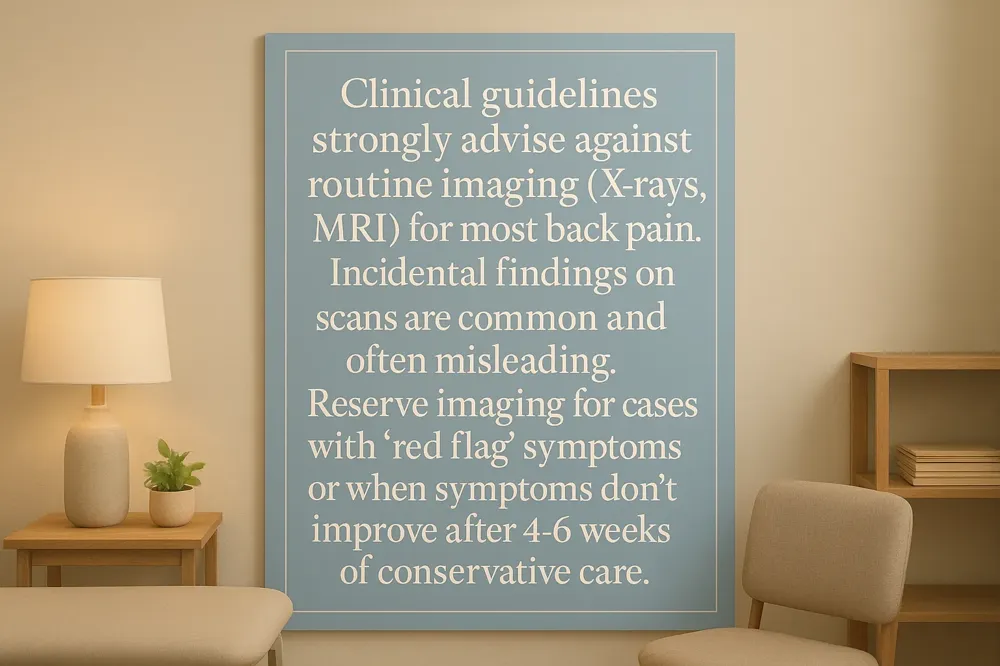
Clinical practice guidelines for low back pain consistently advise against avoiding unnecessary imaging for back pain—including X-rays, CT scans, and MRIs—for patients with nonspecific low back pain who do not present with 'red flag' symptoms.
These red flags include significant trauma, unexplained weight loss, fever, nighttime pain, or neurological deficits like bowel or bladder incontinence. For the vast majority of patients without these signs, imaging does not improve outcomes and can lead to unnecessary procedures and costs.
The Problem of Incidental Findings
A key reason to avoid routine imaging is the high prevalence of abnormal findings in individuals without any pain. For example, disc bulging is a common observation on MRI scans of people who are completely asymptomatic.
This creates a significant dilemma: identifying a structural abnormality on an image does not necessarily mean it is the cause of a patient's pain. Acting on these incidental findings can lead to misdirected treatments, including unnecessary referrals for surgery when the issue may be unrelated to the symptoms.
Implementing a Delayed Imaging Strategy
A prudent, evidence-based approach is to delay imaging. Guidelines suggest waiting at least one to two months for patients with nonspecific pain and no red flags before considering even basic X-rays.
For more advanced imaging like MRI or CT, the recommendation is to reserve it for cases where radicular symptoms (such as sciatica) do not spontaneously resolve after approximately six weeks of conservative management. This strategy ensures imaging is used as a targeted diagnostic tool rather than a routine screening method.
Why This Principle Matters
Adhering to this principle prevents patients from undergoing unnecessary radiation exposure and avoids the anxiety and potential harm of investigating irrelevant findings. It also represents a significant opportunity to improve the value of spine care by reducing low-yield expenditures and focusing resources on effective, active treatments like education, exercise, and manual therapy.
| Common Imaging Types | Typical Use in Spine Care | Why Routine Use is Not Recommended for Nonspecific LBP |
|---|---|---|
| X-rays | Show bone alignment, fractures, arthritis. | Limited value for muscle pain; findings often don't guide treatment. |
| CT Scans | Detailed 3D bone images; can show some soft tissue. | High radiation dose; often reveals incidental, non-painful findings. |
| MRI Scans | Excellent detail for discs, nerves, and soft tissues. | Very common to find disc bulges/degeneration in pain-free individuals. |
4. Principle 4: Start with First-Line Symptom Control: Activity, Heat, and Basic Medications
For acute LBP, initial management includes advising to remain active with minimal rest, applying superficial heat, and using short courses of over-the-counter medications like acetaminophen or NSAIDs.
When acute low back pain strikes, the instinct to rest completely is common. However, prolonged inactivity can lead to muscle weakening and increased pain sensitivity. Modern guidelines against imaging for low back pain and principles of damaging effects of bed rest strongly advise patients to remain as active as their pain allows, minimizing bed rest to no more than a day or two.
Staying mobile, even with gentle walking, helps maintain circulation, prevents stiffness, and supports the body's inherent ability to heal with non-invasive interventions. Alongside activity, applying superficial heat—such as a heating pad or warm bath—can soothe tight muscles and provide temporary pain relief by improving blood flow to the area.
For managing discomfort, short courses of over-the-counter (OTC) medications are a first-line option. Nonsteroidal anti-inflammatory drugs (NSAIDs), like ibuprofen or naproxen, reduce inflammation and pain. Acetaminophen is another effective analgesic. These medications should be used at the lowest effective dose for the shortest duration necessary to control symptoms.
Acetaminophen and NSAIDs are recommended as first-line medications for chronic LBP.
For individuals with chronic low back pain, where pain persists beyond three months, medication management often begins with the same foundational options. Acetaminophen and NSAIDs remain the recommended first-line pharmacological treatments, though evidence notes the minimal benefit of acetaminophen for osteoarthritis and low-back pain, supporting a conservative care first approach.
Their role is to help break the cycle of pain and inactivity, making it easier for patients to engage in essential rehabilitative activities like exercise and physical therapy. It's important to use these medications judiciously. For NSAIDs, patients should be mindful of potential gastrointestinal or cardiovascular side effects, especially with long-term use.
If pain persists despite these measures, a physician may consider adjunctive medications, such as certain antidepressants or anti-seizure drugs, which can help modulate nerve-related pain. However, the initial step is consistently maximizing the benefit from these safer, widely available OTC options.
The goal is to manage symptoms to facilitate movement and participation in daily life.
The ultimate objective of first-line symptom control is not complete pain elimination but functional improvement. Effective management reduces pain to a level that allows patients to move safely and participate in their normal daily routines, work, and family life.
This approach aligns with a broader biopsychosocial model of care. By controlling symptoms with activity, heat, and basic medications, patients build confidence in their body's ability to function despite discomfort. This reduces fear-avoidance behaviors, where patients avoid movement due to pain, which can perpetuate disability.
Creating this 'window of opportunity' is crucial. It enables patients to progress to more active treatments—like structured exercise and physical therapy—which are fundamental for long-term recovery and building spinal resilience.
| Treatment Component | Primary Action | Key Patient Instruction |
|---|---|---|
| Remaining Active | Prevents deconditioning, maintains function | Avoid prolonged bed rest; try gentle walking daily. |
| Superficial Heat | Relaxes muscles, improves local blood flow | Apply for 15-20 minutes several times a day as needed. |
| Acetaminophen | Reduces pain perception (analgesic) | Use as directed; do not exceed maximum daily dose. |
| NSAIDs (e.g., Ibuprofen) | Reduces pain and inflammation (anti-inflammatory) | Take with food if possible; monitor for stomach upset. |
| Combined Approach | Facilitates movement & daily participation | Use these tools to stay engaged in work and home life. |
5. Principle 5: Incorporate Spinal Manipulation as an Evidence-Based Option
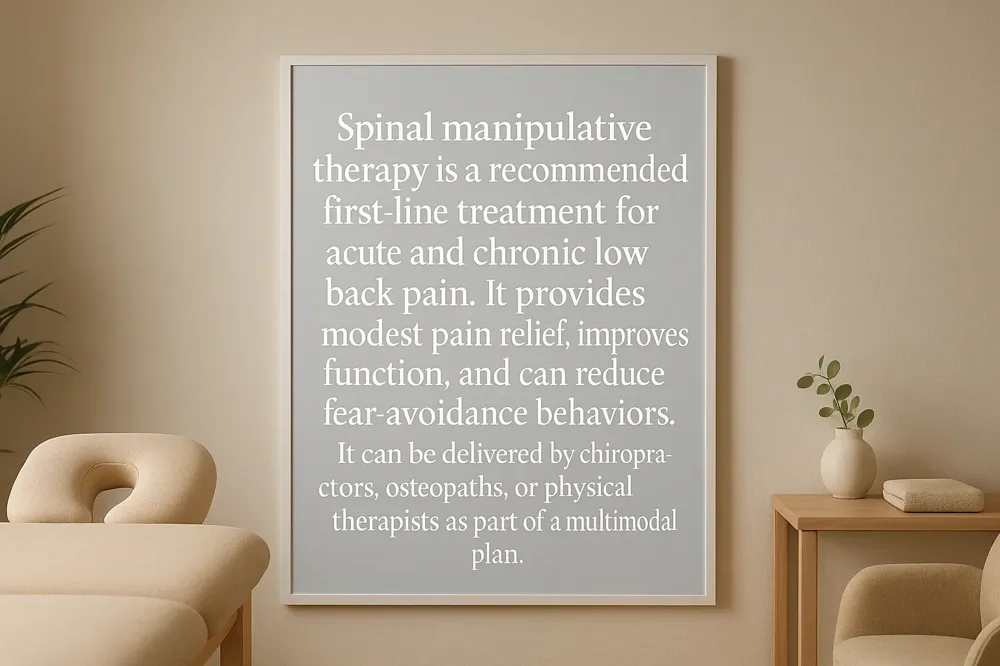
Guidelines recommend spinal manipulation (or mobilization) as a first-line treatment option for acute and chronic LBP.
Clinical practice guidelines for low back pain from leading organizations, such as the American College of Physicians, strongly endorse spinal manipulative therapy (SMT) as an initial, evidence-based intervention for both acute and chronic low back pain. This recommendation is based on numerous randomized controlled trials demonstrating its efficacy. For acute, nonspecific low back pain, guidelines advise patients to remain active and use over-the-counter medications or spinal manipulation—or both—for first-line symptom control.
The recommendation applies even when a specific structural cause for the pain is not identified. This aligns with the understanding that most back pain is 'nonspecific,' and effective conservative management for acute LBP focuses on symptom management and functional improvement rather than targeting an elusive anatomical diagnosis. By prioritizing SMT, guidelines support a conservative-start approach that avoids unnecessary and potentially harmful interventions like avoiding unnecessary imaging for back pain or strong opioids for this common condition.
Spinal manipulation provides modest short- and long-term relief, improves psychological well-being, and increases functioning.
Research consistently shows that spinal manipulation for chronic low back pain offers meaningful benefits beyond simple pain relief. In the short term, it can reduce pain and disability, helping patients resume daily activities more quickly. Studies indicate these positive effects can persist long-term, contributing to sustained functional improvement.
A significant advantage of SMT is its positive impact on a patient's psychological state. By alleviating pain and restoring movement, it can reduce fear-avoidance behaviors—where patients fear activity due to pain—and decrease catastrophizing, which is the tendency to magnify the threat of pain. This improvement in psychological well-being is crucial, as such factors are strong predictors of whether acute low back pain might become chronic.
The therapy's mechanism is multifaceted. It may stimulate the nervous system to modulate pain signals, improve joint mobility in restricted spinal segments, and reduce muscle tension. Importantly, outcomes from SMT are similar whether provided by chiropractic or osteopathic practitioners, highlighting that the technique itself, delivered by a trained professional, is the key active component.
It can be performed by chiropractors, osteopathic physicians, and some physical therapists.
Spinal manipulative therapy is a skill practiced by several types of licensed healthcare providers. Chiropractors are extensively trained in high-velocity, low-amplitude thrust techniques. Osteopathic physicians utilize osteopathic manipulative treatment (OMT), which includes a range of manual techniques. Many physical therapists are also trained in joint mobilization and manipulation, often incorporating it into a broader physical therapy for back pain program.
The choice of provider can influence the overall care pathway. Data shows that patients whose first provider for low back pain is a chiropractor or primary care physician are more likely to receive guideline-adherent care, including SMT, and are less likely to undergo unnecessary imaging or be prescribed opioids. This underscores the importance of the initial provider in steering care toward conservative, evidence-based options.
When integrated into a treatment plan, SMT is often most effective as part of a multimodal conservative treatment for back pain. It can be combined with patient education for spine health, exercise therapy for chronic low back pain, and other modalities to address pain, improve function, and prevent recurrence. This collaborative approach ensures that manipulation is not an isolated intervention but a component of comprehensive, patient-centered conservative care.
| Aspect of Care | Role of Spinal Manipulation | Typical Provider Types | Common Clinical Goals |
|---|---|---|---|
| First-Line Treatment | Recommended initial option for pain control. | Chiropractor, Osteopath, Physical Therapist | Reduce acute pain, improve function quickly. |
| Chronic Pain Management | Provides sustained relief and functional gain. | Chiropractor, Osteopath | Decrease disability, improve psychological outlook. |
| Mechanism of Action | Improves joint mobility, modulates pain signals. | All trained providers | Restore normal spinal segment motion. |
| Integrated Care | Used alongside exercise and education. | Often coordinated among providers | Prevent recurrence, promote self-management strategies for chronic low back pain. |
6. Principle 6: Make Therapeutic Exercise the Cornerstone of Long-Term Management
 For chronic low back pain, exercise training is strongly supported by high-quality evidence [18]. A broad range of programs are beneficial, including:
- Trunk Muscle Strengthening and Endurance: Exercises like planks and side bridges build stability [18].
- Aerobic Exercise: Walking, swimming, or stationary cycling improve overall fitness [18].
- Aquatic Exercise: Water-based programs reduce spinal loading while building strength [18].
- General and Multimodal Exercise: Comprehensive programs often combine different exercise types [18].
These interventions consistently help reduce pain and improve daily function. They are widely recommended as a first-line treatment for managing chronic spinal conditions [24].
Evidence strongly supports exercise training interventions for chronic low back pain, including trunk muscle strengthening/endurance, aerobic exercise, aquatic exercise, and general multimodal programs.
Clinical practice guidelines for low back pain from leading orthopedic and physical therapy organizations provide strong, consistent recommendations for exercise [2, 3]. Multiple randomized controlled trials confirm that exercise is more effective than passive treatments for long-term relief [18].
For specific conditions, targeted approaches are recommended:
- Chronic Low Back Pain with Leg Pain: Movement control and specific trunk muscle activation for LBP with leg pain exercises are beneficial [18].
- Older Adults: Exercise for older adults with chronic low back pain is strongly recommended to reduce pain and disability [18].
The key is personalization; the most effective program is one tailored to the individual's symptoms, fitness level, and specific functional goals [2, 11, 13].
Exercise should be started as rapidly as possible, provided it does not induce pain, to prevent de-conditioning.
Prolonged inactivity is harmful [4]. Studies recommend limiting rest after back injury to no more than two days. After this initial period, movement and exercise should begin to prevent muscle weakening, stiffness, and a cycle of increased pain [1, 18, 19].
Starting exercise early has critical benefits:
- Prevents De-conditioning: Maintains muscle strength and cardiovascular health [1, 4].
- Strengthens Tissues: Makes muscles and supporting structures more resistant to future strain [1, 11].
- Promotes Healing: Increases blood supply for back healing, aiding recovery [4].
A crucial guideline is that exercises should not cause back, neck, or extremity pain. The goal is to find movements that are challenging but safe, allowing for gradual progression [4, 17].
| Therapy Type | Primary Goal | Key Examples & Notes |
|---|---|---|
| Strengthening & Endurance | Build spinal stability and muscle stamina | Planks, side bridges, dead bugs; focus on endurance over max strength [18]. |
| Aerobic Conditioning | Improve overall fitness and circulation | Walking, swimming, stationary biking; low-impact options preferred [18]. |
| Aquatic Exercise | Reduce spinal load while exercising | Water walking, swimming; ideal for pain exacerbated by weight-bearing [18]. |
| Multimodal Programs | Address multiple factors for comprehensive care | Combines strength, flexibility, aerobic, and functional movement training [1, 18]. |
Integrating a consistent, long-term home exercise program for back pain is essential for maintaining gains and preventing recurrence [5, 13, 29]. While drugs or manual therapy can provide initial pain relief, only exercise can fundamentally strengthen the musculature supporting the spine for lasting health [1, 9].
7. Principle 7: Progress Rehabilitation in Phases Based on Criteria, Not Just Time
Effective Conservative Management Follows a Phased Rehabilitation Protocol
A structured, phased approach is fundamental to successful conservative spine care. Instead of a one-size-fits-all plan, rehabilitation is divided into distinct stages, such as Acute, Subacute, Advanced Strengthening, and Return to Activity. Each phase has specific goals tailored to the body's healing timeline. For instance, the initial Acute phase (often weeks 0-6) prioritizes pain control and symptom centralization in acute phase, reducing inflammation, and safely engaging in daily activities. This structured progression ensures that treatment aligns with gradual tissue healing in spine care, building a solid foundation before advancing to more demanding exercises.
Progression Depends on Meeting Specific Clinical Criteria
Moving from one phase to the next is not automatic after a set number of weeks. Advancement is contingent on the patient meeting clear, objective clinical benchmarks. Common criteria include demonstrating improved pain tolerance during movement, achieving full or pain-free spinal range of motion, and showing proper activation of core stabilizer muscles like the transverse abdominis and multifidus. For example, progressing from early strengthening to advanced phases may require a patient to perform repeated lumbar flexion and extension without pain or aberrant motion. This criterion-based progression in spine care ensures rehabilitation is patient-centered and responsive to individual recovery rates.
The Criterion-Based Approach Prevents Re-injury
By requiring patients to meet specific milestones before advancing, this approach safeguards against returning to activity too soon. It ensures the spine and supporting musculature have developed adequate stability, strength, and motor control to handle increased load. This reduces the risk of re-injury and setbacks. For instance, a patient may only begin sport-specific training after they can demonstrate proper lumbopelvic control during dynamic activities like squats or deadlifts. This careful, criteria-driven progression is key to achieving long-term functional restoration and a successful return to sport after spinal rehabilitation.
| Phase Name | Primary Goals | Example Criteria to Progress to Next Phase |
|---|---|---|
| Acute (0-6 weeks) | Control pain/inflammation, centralize symptoms, safe daily activities. | Improved pain tolerance, normal gait, ability to activate core muscles. |
| Subacute / Early Strengthening (6-12 weeks) | Improve mobility, enhance trunk/hip strength and endurance. | Full spinal range of motion, pain-free with daily activities, good core activation. |
| Advanced Strengthening (12-16 weeks) | Progress strength with integrated movements, improve cardiovascular conditioning in rehabilitation. | No pain with loaded movements, successful gym-based program, passing endurance tests. |
| Return to Sport/Activity (16+ weeks) | Maximize sport-specific function, demonstrate control during dynamic tasks. | Proper mechanics at full intensity, return to sport after spinal rehabilitation without pain. |
8. Principle 8: Focus Early Rehabilitation on Mobility and Foundational Core Control
Establishing a Secure Foundation
In the acute phase of recovery, the primary focus is on symptom management and establishing a stable base. Goals center on pain control, improving mobility in stiff joints (hips, thoracic spine), and establishing low-load core muscle activation (e.g., Transversus Abdominis, Multifidus).
The Importance of Spine-Supported Positions
Exercises are performed in spine-supported positions (like hook-lying) to rebuild neuromuscular control without strain. These controlled environments allow for the safe re-education of muscles that provide fundamental spinal stability.
Creating a Platform for Progression
This careful initial work creates a stable platform for later strengthening. By first restoring mobility and foundational control, the body is better prepared to handle the progressive demands of functional exercise without re-injury.
9. Principle 9: Advance to Integrated, Functional Strength and Stability
Integrating Strength for Daily Function
As patients move past the initial stages of pain management and basic stabilization, the focus of conservative rehabilitation shifts significantly. The principle is to build upon the foundational core control and mobility work by advancing to integrated, functional strength training. This phase is not about isolated muscle building; it is about teaching the body to use its strength in coordinated, practical ways that protect the spine during life's demands.
The Shift to Functional Movement Patterns
The exercise progression moves deliberately from simple, supported positions to complex, multi-joint movements. Rehabilitation protocols commonly transition patients into closed-chain exercises—where the hand or foot is fixed against a surface—as these promote co-contraction of muscles around joints and enhance proprioceptive feedback. This approach systematically loads the spine in a controlled manner to build resilient support structures.
Key Exercises for Integrated Stability
A hallmark of this advanced phase is the introduction of compound movements that mimic real-world activities. These exercises are carefully graded and form-critiqued to ensure spinal health.
| Exercise Category | Primary Movement Pattern | Key Stability Benefit | Precautions for Spinal Health |
|---|---|---|---|
| Squat Progressions | Hip & knee flexion/extension | Builds leg & glute strength, teaches trunk bracing | Maintain neutral spine; avoid excessive forward lean or rounding. |
| Lunge Variations | Unilateral stance & stepping | Improves dynamic balance, targets hip stabilizers | Ensure controlled descent; knee should not pass far beyond toes. |
| Hip-Dominant Lifts (e.g., Deadlifts) | Hinging at the hips | Strengthens posterior chain (hamstrings, glutes) | Initiate movement with hips, not spine; keep bar close to body. |
| Plank Progressions | Anti-extension core hold | Enhances global core & shoulder girdle endurance | Prevent sagging lower back or hiking hips; modify to knees if needed. |
| Anti-Rotation Drills (e.g., Pallof Press) | Resisting rotational force | Trains core to stabilize spine against twisting loads | Initiate press from center; move arms only while trunk stays still. |
Translating Strength to Real-World Resilience
The ultimate objective is to translate gains in the clinic to resilience in daily life. By training the body to manage load, maintain balance, and resist uncontrolled forces through these integrated patterns, patients develop a robust 'armor' for their spine. This functional strength is what allows a safe return to recreational sports, physically demanding work, and active hobbies without fear of re-injury. Successful conservative care culminates in this empowered, active independence.
Summary of Functional Strength & Stability Principles
| Core Concept | Clinical Application | Patient Goal | Common Progression Criteria |
|---|---|---|---|
| Integrated Movements | Compound exercises (squats, lunges, deadlifts) | Perform daily tasks safely & efficiently | Full pain-free spinal ROM, good baseline core control |
| Closed-Chain Training | Weight-bearing exercises with fixed limbs | Improve joint coordination & proprioception | No pain with daily activities, proper muscle activation |
| Anti-Movement Core Training | Planks, Pallof presses, carries | Stabilize spine under external load | Pass basic endurance tests (e.g., 40-sec front plank) |
| Motor Control & Form | Emphasis on technique over heavy load | Move with confidence during dynamic activities | Execute loaded movements without compensatory motions |
| Activity-Specific Prep | Tailored exercises for sport or job demands | Return to desired recreational or work activities | Demonstrate proper mechanics at increased intensity |
10. Principle 10: Maintain Cardiovascular Conditioning with Spine-Safe Activities
Cardiovascular fitness should be maintained from the outset using low-impact methods that avoid aggravating the spine.
When recovering from back pain, keeping your heart and lungs healthy is crucial. Stopping all exercise can slow healing and weaken your body. The key is to choose activities that get your blood pumping without jarring or straining your spine.
Low-impact options minimize stress on your spinal joints and discs. This approach allows you to stay active safely, which is better for recovery than complete rest. Consistent, gentle movement helps maintain your overall fitness level during non-surgical treatment for back pain.
Recommended options include walking, stationary/recumbent biking, elliptical machines, and aquatics (with modified strokes).
Several safe and effective exercises can fit into your routine. A simple walking program, if pain-free, is an excellent place to start. Using a stationary or recumbent bike is also beneficial, as the seated position supports your back.
Aquatic therapy or swimming with modified strokes reduces spinal pressure through buoyancy. The elliptical trainer provides a smooth, gliding motion that is easier on the back than running. These activities are staples in early-phase rehabilitation protocols and support exercise for chronic back pain.
This supports overall health, circulation, and aids in recovery.
Maintaining cardio conditioning does more than just help your heart. It promotes better blood circulation, which delivers essential nutrients and oxygen to injured tissues. This aligns with understanding the blood supply for back healing. Improved circulation can help reduce inflammation and support the healing process.
Staying active also helps prevent deconditioning, a cycle of stiffness and weakness that can worsen pain. Furthermore, cardiovascular exercise releases endorphins, your body's natural pain relievers. This holistic support makes it a vital component of a comprehensive conservative spine care plan and multimodal conservative treatment for back pain.
| Activity | Primary Benefit | Special Consideration for Spine Safety |
|---|---|---|
| Walking | Improves circulation, easy to start | Use supportive shoes; stop if pain radiates |
| Stationary Bike | Builds endurance with seated support | Adjust seat to avoid rounding the lower back |
| Aquatic Exercise | Supports body weight, reduces joint load | Modify strokes to avoid excessive spine extension; part of aquatic exercise for chronic LBP |
| Elliptical Trainer | Low-impact, full-body motion | Maintain upright posture; use handles for balance |
11. Principle 11: Use a Multimodal Toolkit - There Is Rarely a Single Cure
Effective recovery requires combining multiple treatment modalities.
Back and neck pain rarely stem from a single cause. A modern, effective strategy involves a multimodal toolkit for back pain recovery. This multimodal approach combines different therapies to address pain from multiple angles, improving overall outcomes.
Pair passive care from clinicians with active care from patients.
Effective programs often integrate two key types of care. Passive care is performed to the patient by a clinician to reduce pain and improve mobility. Examples include manual therapy, spinal manipulation, acupuncture, or massage therapy.
These interventions create a 'window of opportunity' by calming pain and increasing movement. They prepare the body to engage safely in the second, crucial component: active care.
Active care is performed by the patient. This includes prescribed exercises, stretching, nerve mobility drills, and endurance training. The goal is to build lasting resilience, strength, and stable movement patterns that protect the spine long-term.
Consistency in active care is more important than complexity.
The most sophisticated exercise plan fails without regular practice. Lasting improvement in spine health depends far more on patient consistency than on complex routines.
Simple, targeted exercises done regularly integrate the gains from passive therapy into strong, automatic movement habits. A home exercise program is essential for maintaining spinal strength and preventing future flare-ups.
This multimodal approach is a collaborative process. It empowers patients with tools for self-management while using professional expertise to guide and facilitate healing.
12. Principle 12: Empower Patients with a Tailored Home Exercise Program
The Foundation of Long-Term Recovery
A prescribed, individualized home exercise program for back pain is more than a supplement to formal therapy; it is a critical, long-term solution. This tailored plan provides a cost-effective way for patients to actively manage their spine health beyond the clinic. It targets the specific impairments and functional goals unique to each person's condition, embodying a patient-centered conservative care approach.
Bridging Clinic Gains to Daily Life
The work done during formal physical therapy for back pain sessions establishes a foundation. However, the consistent, daily practice of a home program is what translates those gains into lasting change. It is essential for maintaining improvements in strength and flexibility and for achieving sustained pain relief and functional restoration. Exercise for chronic back pain is the only intervention that can fundamentally strengthen and support spinal tissues to prevent future strain and is a cornerstone of self-management strategies for chronic low back pain.
Strategies to Enhance Patient Adherence
Adherence to a home program can be challenging. Success improves significantly when healthcare providers actively engage with the plan during follow-up visits. Reviewing exercises, addressing difficulties, and updating the regimen based on progress keeps the program relevant and manageable. This ongoing support empowers patients in conservative spine care, turning exercise from a chore into an integral part of their daily routine for spine health.
| Program Component | Primary Goal | Key for Adherence |
|---|---|---|
| Individualized Prescription | Targets specific deficits & goals | Exercises feel relevant & effective |
| Proper Initial Education | Ensures correct, safe technique | Builds confidence & prevents injury |
| Regular Provider Review | Updates plan based on progress | Maintains engagement & addresses hurdles |
| Clear Long-Term Rationale | Connects daily effort to life goals | Fosters internal motivation & commitment |
13. Principle 13: Address Psychosocial 'Yellow Flags' Early
Effective conservative spine care looks beyond physical symptoms. Psychological factors, known as 'yellow flags in low back pain evaluation', can significantly influence recovery.
Common examples include:
- Fear of movement (kinesiophobia)
- Catastrophizing thoughts about pain
- Persistent low mood or anxiety
- Job dissatisfaction or stressful work environments
Evaluating for these factors helps identify patients at higher risk for pain becoming chronic. A holistic assessment that considers these elements is essential for accurate prognosis and personalized care in a 'patient-centered conservative care' model.
| Psychological Factor | Potential Impact on Recovery | Early Intervention Strategy |
|---|---|---|
| Fear Avoidance | Leads to inactivity, muscle weakening, increased pain sensitivity | Pain neuroscience education (PNE), graded activity exposure |
| Catastrophizing | Magnifies pain perception, increases stress, reduces coping ability | Cognitive-behavioral therapy (CBT), mindfulness techniques |
| Low Mood/Anxiety | Reduces motivation for therapy, negatively affects pain processing | Integrated psychological support, combined with physical rehab |
Early intervention is key. Combining active treatments like 'physical therapy for back pain' with cognitive-behavioral therapy or structured pain neuroscience education can improve both pain levels and functional outcomes. This integrated approach helps patients develop better coping strategies and reduces the risk of long-term disability.
14. Principle 14: Utilize Risk Stratification Tools to Guide Care Intensity
14. Principle 14: Utilize Risk Stratification Tools to Guide Care Intensity
Providing effective care for low back pain requires moving beyond a generic approach. Patients have different prognoses and needs. Risk stratification tools, like the STarT Back Screening Tool (SBST), offer a scientific method to personalize care from the outset.
The STarT Back Tool is a validated questionnaire. It quickly categorizes patients with nonspecific low back pain into three prognostic groups: low, medium, or high risk of developing persistent pain and disability. This classification is based on a combination of physical symptoms and psychological factors, such as fear of movement or low mood.
By identifying a patient's risk group early, clinicians can match the intensity and type of treatment to their specific profile. This targeted treatment for low back pain is more efficient and effective than applying the same treatment to everyone.
For patients in the low-risk category, the focus is on reassurance, education, and encouraging safe, gradual return to activity. Extensive therapy is often unnecessary, as these patients have a favorable natural prognosis.
Those at medium risk typically benefit from more hands-on guidance. A treatment plan may include manual therapy (like spinal manipulation) combined with a tailored exercise program. The goal is to address physical impairments and build confidence in movement.
High-risk patients present with more complex barriers to recovery, often including significant psychological distress. For this group, the most effective approach integrates physical treatments with cognitive-behavioral strategies. A [multidisciplinary team conservative spine care cost-effectiveness](. /how-conservative-spine-care-can-change-your-life-without-surgery#comprehensive-non-surgical-treatments-options-and-benefits) may be involved to address both the physical and psychosocial obstacles simultaneously.
Clinical trials demonstrate that this risk-stratified treatment for LBP model leads to better patient outcomes. Compared to standard, non-stratified care, patients experience greater reductions in disability and higher satisfaction. Importantly, this approach also reduces overall healthcare costs by directing resources where they are most needed and avoiding overtreatment in low-risk cases.
Implementing risk stratification is a cornerstone of modern, value-based spine care. It ensures that conservative management is not only patient-centered but also evidence-informed and efficient.
| Risk Stratification Level | Primary Clinical Focus | Typical Treatment Components | Expected Outcome Goals |
|---|---|---|---|
| Low Risk | Reassurance & Education | Self-management strategies for chronic low back pain, activity guidance, minimal intervention. | Prevent fear, promote normal activity, avoid unnecessary care. |
| Medium Risk | Physical Rehabilitation | Manual therapy, targeted exercise, movement retraining. | Improve function, reduce pain, address specific physical deficits. |
| High Risk | Multimodal Biopsychosocial Care | Combined physical therapy for back pain and psychological (e.g., CBT) interventions. | Manage complex pain, address psychological barriers, improve coping and function. |
15. Principle 15: Understand the 'Joint-by-Joint' Approach to Spinal Function
The Mobility and Stability Pattern
The human body is designed with a specific, alternating pattern of joint function. Some joints are primarily built for mobility. This includes the ankles, hips, and the thoracic spine (your upper and mid-back).
Others are designed for stability. Key stable joints are the knees, the lumbar spine (lower back), and the cervical spine (neck). This pattern allows for efficient and safe movement.
How Stiffness Leads to Pain
Low back pain is a common result when this natural pattern breaks down. If a mobile joint, like the hips or thoracic spine, becomes stiff or restricted, the body must compensate.
The stable lumbar spine is then forced to move more than it should. This excess, compensatory motion can irritate tissues, lead to overload, and ultimately cause pain. The stable joint is doing a job it was not designed to do.
The Key Rehabilitative Strategy
A core strategy in conservative spine care is to restore proper mobility to the joints above and below the painful area. For low back pain, this means specifically improving hip and thoracic spine mobility.
By freeing up these mobile joints, you allow the lumbar spine to return to its natural role as a stable, strong force-transfer center. This approach addresses the root cause of dysfunction rather than just treating the site of pain.
| Joint Region | Primary Functional Role | Common Issue | Conservative Focus |
|---|---|---|---|
| Hips | Mobility | Stiffness limits motion | Improve flexibility & range of motion |
| Thoracic Spine | Mobility | Stiffness from poor posture | Enhance rotational & extension mobility |
| Lumbar Spine | Stability | Pain from compensatory motion | Build core endurance & control |
| Cervical Spine | Stability | Pain from poor head support | Strengthen deep neck stabilizers |
16. Principle 16: Train the Core as a 360-Degree Stability 'Canister'
Redefining the Core for Spinal Health
For decades, the term "core" was synonymous with six-pack abs. A modern, evidence-informed principle redefines this concept, shifting the focus from appearance to a fundamental role in spinal protection. The core should be envisioned as a 360-degree cylindrical canister or container. The diaphragm forms the roof, the pelvic floor muscles form the floor, and the deep abdominal and back muscles like the Transversus Abdominis and Multifidus form the walls. This integrated unit is designed for one primary purpose.
Building a Stable Platform for Movement
The core canister's main job is not to create motion but to prevent unwanted spinal motion. It acts to create stiffness and stability around the spine, providing a solid, safe platform from which your arms and legs can move powerfully and efficiently. This principle is crucial because a stable spine is a resilient spine. When the core is functioning properly as a unified system, it protects the spinal discs, joints, and nerves from excessive and damaging forces during daily activities, work, and exercise.
Focusing on Endurance Over Repetition
Traditional "core workouts" often involve repeated bending and flexing of the spine. According to this principle, effective core training should prioritize endurance and the ability to maintain spinal stability, especially during challenging limb movements. foundational exercises for core endurance like the Dead Bug, Side Plank, and Pallof Press teach your body to resist unwanted rotation, bending, and extension. The goal is to build the muscular stamina needed to keep your spine safe and supported throughout the day, not just during a workout.
| Core Component | Anatomical Structure | Primary Stability Function |
|---|---|---|
| Roof | Diaphragm | Provides superior pressure and stability, integrates breathing with core bracing and breathing training. |
| Floor | Pelvic Floor Muscles | Creates a base of support, works synergistically with abdominal muscles. |
| Anterior Wall | Transversus Abdominis | Draws abdominal wall inward, acts like a natural back support belt. |
| Posterior Wall | Multifidus | Provides deep segmental stability to each vertebra of the lumbar spine. |
| Lateral Walls | Internal/External Obliques | Resists rotational and side-bending forces on the trunk. |
17. Principle 17: Limit Inactivity and Bed Rest to Prevent De-Conditioning
Prolonged bed rest or immobilization leads to muscle weakening, stiffness, and a vicious cycle of more pain and weakness.
Historically, extended bed rest was a common prescription for back pain. This approach is now understood to be counterproductive. Inactivity causes muscles supporting the spine to weaken and lose endurance. It can lead to increased stiffness in joints and soft tissues. This combination of weakness and stiffness often worsens pain, creating a difficult cycle where pain discourages movement, and lack of movement intensifies pain.
Studies recommend limiting rest after a back injury to no more than two days.
Modern clinical research provides clear guidance. For most cases of acute low back pain, complete rest should be brief. Evidence shows that limiting inactivity to a maximum of two days following an injury leads to better outcomes. This recommendation applies to nonspecific low back pain without serious neurological symptoms. The goal is to prevent the negative physical and psychological effects associated with prolonged immobilization.
After this, movement and exercise should begin to strengthen muscles and aid recovery.
After the initial short rest period, gentle movement is crucial. Starting with activities like short walks helps maintain blood flow and prevent de-conditioning. Gradually introducing specific exercises for back pain to strengthen core and back muscles builds resilience. This active approach supports the body's natural healing processes. It helps tissues become more flexible and resistant to future strain, promoting long-term back pain relief.
| Activity Phase | Recommended Duration | Primary Goal | Sample Actions |
|---|---|---|---|
| Initial Rest | 0-2 Days | Pain & Inflammation Control | Limit strenuous activity, use heat/ice. |
| Early Movement | After Day 2 | Restore Gentle Mobility | Short walks, light stretching. |
| Guided Exercise | 1-2 Weeks Onward | Build Strength & Function | Core stabilization, controlled strengthening. |
18. Principle 18: Apply Therapeutic Injections Judiciously to Facilitate Rehabilitation
Injections (e.g., epidural steroid, facet joint) can provide diagnostic information and therapeutic relief by reducing inflammation.
Therapeutic spine injections, such as epidural steroid injections (ESIs) and facet joint injections, serve a dual purpose in conservative care. They can be diagnostic, helping pinpoint the exact source of pain when the origin is unclear. Therapeutically, they deliver anti-inflammatory medication, like corticosteroids, directly to the affected nerve root or joint. This targeted approach reduces local swelling and irritation, providing significant pain relief that oral medications may not achieve.
Their primary conservative role is often to 'bridge' patients from severe pain to active participation in physical therapy.
A key principle is using injections not as an endpoint, but as a strategic tool. When acute or severe pain limits a patient's ability to move, an injection can create a crucial 'window of opportunity'. By alleviating intense pain and inflammation, it allows the patient to engage effectively in the active, foundational work of physical therapy. This bridge enables patients to perform strengthening exercises, improve flexibility, and retrain movement patterns that are essential for long-term recovery.
They are typically not long-term solutions; steroid-based injections are usually limited to 3-4 per year due to risks.
Injections are considered a short- to medium-term intervention within a comprehensive plan. Due to potential side effects—such as tissue weakening, bone density changes, or elevated blood sugar—the use of steroid-based injections is judiciously limited. Guidelines typically recommend no more than three to four injections per year in a given area. The focus remains on using this temporary relief to make meaningful progress with active therapies like exercise, which address the root causes of pain and build lasting spinal resilience.
| Injection Type | Primary Target | Common Use Case | Key Consideration |
|---|---|---|---|
| Epidural Steroid Injection (ESI) | Spinal nerve roots, epidural space | Radicular pain (sciatica) from herniated disc or stenosis | Temporary relief; facilitates start of physical therapy for back pain program |
| Facet Joint Injection | Synovial joints of the spine | Axial back pain from arthritis or joint degeneration | Often diagnostic; confirms pain source before ablation |
| Sacroiliac (SI) Joint Injection | Sacroiliac joint | Pain in lower back/buttock from SI joint dysfunction | Can provide months of relief; part of multimodal plan |
| Medial Branch Block (MBB) | Nerves supplying facet joints | Diagnostic test for facet-mediated pain | Positive response may lead to radiofrequency ablation |
19. Principle 19: Incorporate Mind-Body Therapies for Holistic Pain Management
Why are mind-body practices considered essential in modern back pain treatment?
Chronic back pain is rarely just a physical sensation; it intertwines with emotional and psychological states. Feelings of frustration, anxiety, and depression are common companions to persistent pain, and they can, in turn, amplify the pain signal itself. This creates a challenging cycle where pain worsens mood, and low mood lowers pain tolerance. Modern, holistic spine care recognizes this intricate connection. Addressing only the physical structure without considering the mental and emotional experience often leads to incomplete recovery. Therefore, integrating therapies that work on both the body and the mind—such as stretching and controlled breathing for back pain and tai chi and yoga for spine health—is not an alternative addition but a fundamental component of a comprehensive conservative spine care plan aimed at lasting relief and improved quality of life.
How do mindfulness and meditation directly influence pain perception?
Mindfulness and meditation practices train the brain to relate to pain differently. Instead of reacting with alarm or avoidance, patients learn to observe painful sensations with a sense of curiosity and non-judgment. This mindful awareness helps disentangle the raw physical sensation from the emotional suffering and catastrophic thoughts that usually accompany it. Over time, this practice can reduce activity in brain regions associated with pain processing and emotional reactivity. Essentially, it provides a tool for patients to exert conscious control over their nervous system's response, reducing the overall intensity and distress of the pain experience. Regular practice can decrease perceived pain levels and improve self-management strategies for chronic low back pain.
What role do movement-based practices like yoga and tai chi play?
Yoga and tai chi are powerful because they combine gentle, controlled movement with focused breathing and mental attention. This triad addresses several key aspects of chronic pain simultaneously:
- Physical: They improve flexibility, core strength, and balance, which are crucial for spinal support.
- Psychological: The emphasis on breath and present-moment awareness induces a relaxation response, counteracting stress.
- Neurological: The slow, deliberate movements enhance body awareness (proprioceptive stimulation and pain control and can help retrain movement patterns that may contribute to pain.
These practices teach patients to move with awareness and within safe limits, empowering them to rebuild confidence in their bodies. They are particularly valuable for maintaining gains made in formal physical therapy for back pain and for long-term pain prevention as part of a multimodal conservative treatment for back pain.
How does biofeedback provide a window into the body's stress response?
Biofeedback uses electronic sensors to give patients real-time, visual or auditory information about physiological functions they are normally unaware of, such as muscle tension, heart rate, and skin temperature. For a patient with back pain, sensors might be placed on paraspinal muscles to show when they are involuntarily clenched. By seeing this tension represented on a screen, patients can learn, through guided practice, how to consciously relax those muscles. It demystifies the body's stress response, proving that it is controllable. This direct feedback loop helps patients develop skills to manage muscle tension and stress reactivity, which are common pain amplifiers, leading to a greater sense of mastery over their symptoms. This technique is an example of biofeedback for pain management within a conservative and gentle pain treatment approach.
| Therapy | Primary Mechanism | Key Benefit for Back Pain | Typical Application |
|---|---|---|---|
| Mindfulness & Meditation | Alters cognitive & emotional response to pain signals. | Reduces pain-related distress & catastrophic thinking. | Daily seated or walking practice; often guided. |
| Yoga & Tai Chi | Integrates gentle movement, breathwork, & mental focus. | Improves flexibility, strength, & body-mind connection. | Group or individual classes 1-3 times per week. |
| Biofeedback | Provides real-time data on physiological states (e.g., muscle tension). | Teaches voluntary control over involuntary stress responses. | Clinic-based sessions with a therapist guiding skill acquisition. |
| Guided Imagery & Breathing | Engages the parasympathetic nervous system to induce relaxation. | Lowers overall stress & anxiety, which can modulate pain intensity. | Can be practiced independently anywhere using audio guides. |
20. Principle 20: Leverage Acupuncture as an Effective Adjunct Therapy
Acupuncture as a Key Adjunct in Chronic Low Back Pain Management
Acupuncture is a valuable, evidence-supported component of a multimodal conservative treatment for back pain. Clinical guidelines give it a strong recommendation for providing short-term pain relief and improving function. Its greatest benefit is realized when used alongside other conventional therapies, such as physical therapy or exercise, rather than as a standalone treatment, often as part of a multidisciplinary conservative care model.
Modern understanding suggests the therapy works by stimulating the nervous system. This stimulation is thought to trigger the release of the body's natural pain-relieving chemicals, like endorphins. This provides a drug-free method for pain modulation, supporting using acupuncture for chronic low back pain as an acupuncture as an adjunct for pain relief. The goal is to enhance a patient's overall pain control and functional capacity, creating a better environment for active rehabilitation and self-management strategies for chronic low back pain.
| Treatment Modality | Primary Role in Care | Key Mechanism of Action | Typical Treatment Context |
|---|---|---|---|
| Acupuncture | Adjunct therapy for pain relief | Nervous system stimulation, endorphin release | Combined with physical therapy or exercise |
| Conventional Exercise | Foundational active treatment | Strengthens muscles, improves stability | Core of most chronic LBP management plans, part of tailored exercise options and exercise for chronic back pain |
| Manual Therapy | Adjunct for mobility & pain | Joint mobilization, soft tissue release | Used early to facilitate movement for exercise, applying integrating manual therapy into conservative treatment principles |
| Pain Neuroscience Education | Adjunct for mindset & coping | Changes pain perception and beliefs | Delivered alongside active physical treatments |
21. Principle 21: Utilize Massage Therapy Combined with Exercise and Education
Massage, particularly when combined with exercise, stretching, and education, is mildly helpful for reducing chronic LBP, with benefits lasting up to one year.
Combining therapeutic massage with structured exercise and patient education forms a synergistic approach to managing chronic low back pain (LBP). Research indicates this multimodal conservative treatment for back pain can yield mild but meaningful reductions in pain and disability, with positive effects potentially extending for up to twelve months. The integration addresses both the physical tissue tension and the functional deficits often associated with persistent back pain.
It can aid rehabilitation by increasing circulation, releasing muscle toxins and endorphins, and reducing inflammation.
Therapeutic massage supports the body's natural healing processes through several physiological mechanisms. By applying manual pressure and movement, it enhances local blood circulation, which delivers nutrients and removes metabolic by-products. This mechanical stimulation for fascial abnormalities also promotes the release of endorphins, the body's natural pain-relieving chemicals, and helps reduce localized inflammation and muscle spasms that contribute to discomfort.
Therapeutic massage should be targeted to specific muscles and tissues related to the pain.
Effective massage for spinal rehabilitation is not a generic relaxation treatment. It involves assessment to identify hypertonic muscles, myofascial restrictions, and specific pain-generating tissues. A skilled practitioner then applies targeted techniques—such as myofascial release therapy for low back pain or trigger point therapy—to those areas. This focused approach aims to break down adhesions, alleviate specific muscular imbalances, and directly address the sources of referred or localized pain.
| Treatment Component | Primary Action | Clinical Benefit for Chronic LBP |
|---|---|---|
| Therapeutic Massage | Increases circulation, releases endorphins, reduces muscle tension | Reduces pain, decreases inflammation, improves tissue mobility |
| Prescribed Exercise | Strengthens core, improves flexibility, enhances endurance | Builds spinal stability, corrects movement patterns, prevents recurrence |
| Patient Education | Teaches body mechanics, pain neuroscience, self-management strategies for chronic low back pain | Empowers active recovery, reduces fear-avoidance, improves long-term adherence |
22. Principle 22: Adopt Lifestyle Modifications as a Foundational Pillar
Lifestyle modifications are a fundamental component of long-term spine health, empowering patients to take an active role in their own recovery and prevention lifestyle modifications for back pain, lifestyle modifications for spinal health. These changes provide the necessary support for other conservative treatments to be successful and aim to reduce the daily strain on your spine lifestyle changes for spine health, lifestyle modifications for spine health.
23. Principle 23: Use Medication as a Tool, Not a Destination, with Caution Around Opioids
Medication Management Aims to Alleviate Symptoms to Enable Participation in Active Therapies Like Physical Therapy.
Medication in conservative spine care serves a specific, supportive role. Its primary purpose is to reduce pain and inflammation sufficiently so a patient can effectively engage in rehabilitative activities. This creates a vital bridge. By managing acute symptoms, medications help patients start and adhere to essential treatments like physical therapy, therapeutic exercise, and daily movement.
This approach treats medication as a temporary tool, not a permanent solution. The goal is to use pharmacologic support to facilitate the body's natural healing processes and the strengthening work of active therapies. When pain is controlled, patients are better able to perform the exercises that build lasting spinal stability and function.
In Light of the Opioid Crisis, Non-Opioid Options (NSAIDs, Muscle Relaxants, Neuropathic Agents) Are Prioritized. If Opioids Are Used, It Is with Monitoring, Short-Term, Low-Dose Protocols.
Given the significant risks associated with opioid medications, a cautious, stepwise approach is fundamental. Treatment typically begins with maximum recommended doses of over-the-counter or basic prescription non-opioid medications.
First-line options often include:
- NSAIDs (e.g., ibuprofen, naproxen): To reduce inflammation and pain.
- Acetaminophen: For pain relief.
- Muscle relaxants: For acute muscle spasms.
- Neuropathic agents (e.g., certain antidepressants, anti-seizure medications): For nerve-related pain.
If opioid therapy is considered necessary for severe breakthrough pain, it is implemented with strict safeguards. These protocols emphasize the shortest possible duration, the lowest effective dose, and careful monitoring for signs of tolerance or dependency. This minimizes risks while addressing acute pain needs.
Prescription Medications Are Best Suited for Short-Term Management of Breakthrough Pain, Not as a First-Line Long-Term Solution.
The evidence-based principle is clear: medication alone does not resolve the underlying causes of most spine pain. Long-term reliance on prescription pain medications, especially opioids, is associated with poor functional outcomes and significant health risks without addressing core issues like weakness or faulty movement patterns.
Clinical guidelines consistently recommend non-drug treatments as the first and primary approach. Prescription medications are reserved for specific situations—managing moderate to severe pain flares to help a patient get through a difficult period and back into their active treatment plan. The treatment focus remains on building resilience through exercise, education, and lifestyle modifications for sustainable, long-term spine health.
| Medication Type | Primary Role | Notes on Use |
|---|---|---|
| NSAIDs & Acetaminophen | First-line for pain, inflammation | Often OTC; use at max recommended dose per guidelines. |
| Muscle Relaxants | Address acute muscle spasm | Typically for short-term use (a few days to weeks). |
| Neuropathic Agents | Manage nerve-related pain (e.g., sciatica) | Require prescription; often used for chronic conditions. |
| Opioid Analgesics | Severe, short-term breakthrough pain | Use with caution, monitoring, and low-dose/short-duration protocols. |
| Oral Steroids | Reduce significant inflammation | Short-term prescriptions (e.g., 5-7 day taper). |
24. Principle 24: Recognize That the First Provider Choice Heavily Influences the Care Pathway
Why the First Contact Matters
The first healthcare provider a patient consults sets the trajectory for their entire care experience. This initial decision heavily influences the treatments pursued, the number of other specialists seen, and the overall cost and efficiency of care. Research highlights the influence of the first healthcare provider for low back pain on the entire care pathway.
The Conservative-First Advantage
Evidence shows a clear pattern: patients who begin their care with a primary care physician (PCP) or a chiropractor often experience a more streamlined and conservative pathway. This aligns with the broader principle of applying conservative spine management principles from the start.
- They tend to see fewer different healthcare providers overall.
- They are less likely to receive imaging tests that are not recommended by guidelines, as clinical practice guidelines for low back pain advise avoiding unnecessary imaging for back pain.
- They are prescribed fewer medications.
- They are more likely to receive first-line, evidence-based recommendations like advice to stay active, education, and spinal manipulative therapy for uncomplicated low back pain.
A Comparative Look at Care Paths
The contrast is significant when compared to starting care with certain specialists. Episodes initiated with more procedure-oriented specialists can lead to more tests and interventions early on, even for straightforward cases of nonspecific low back pain.
| First Provider Type | Typical Care Trajectory | Likelihood of Early Imaging | Adherence to First-Line Guidelines |
|---|---|---|---|
| Primary Care Physician (PCP) | Conservative, guideline-based | Lower | Higher |
| Chiropractor | Manual therapy, exercise focus | Lower | Higher |
| Some Specialists (e.g., Orthopedist) | May include more procedures | Higher | Can be lower |
Seeking the Right Starting Point
This principle underscores a critical action for patients: intentionally seek a first point of contact known for a patient-centered conservative care, conservative-start philosophy. This approach is foundational to improving quality of back pain management and exploring conservative spine care opportunities. Choosing a provider or clinic that emphasizes education, activity, and non-surgical first treatment for back pain as the initial step can help avoid unnecessary, costly, and potentially ineffective interventions. It steers the care episode toward a more efficient and often more successful recovery path from the very beginning.
25. Principle 25: Understand That Surgery Is a Last Resort for Specific, Anatomic Problems
Surgery Follows a Failed Conservative Trial
An appropriate course of non-surgical care must be completed before surgery is considered. Clinical practice guidelines for low back pain and spine specialists consistently recommend a dedicated six-week trial of conservative care. This period allows time for the body's natural healing processes and for structured therapies, like physical therapy and medication management for pain, to take effect.
Reserved for Clear Anatomic Causes
Spine surgery is not a first-line treatment for general back pain. It is reserved for specific, identifiable anatomic problems. Common surgical indications include:
- Severe nerve root compression causing persistent leg weakness or pain.
- Significant spinal instability from conditions like spondylolisthesis.
- Spinal cord compression.
- Progressive neurological deficits.
Surgery aims to correct these structural issues. It is not typically performed for nonspecific low back pain where imaging findings do not clearly correlate with symptoms.
A Small Percentage of Cases
Extensive clinical evidence shows that only a very small minority of patients with low back pain will ultimately require surgery. The vast majority—often cited as over 90%—will improve with time and appropriate conservative care. This statistic underscores the importance of exhausting non-invasive options first.
Setting Realistic Expectations
Even when surgery is indicated, it is not a guaranteed cure for pain. Surgical outcomes are most successful when there is a clear structural problem to address, the correct procedure is chosen, and the timing is right. The primary goals often shift to improving function and quality of life, rather than eliminating all discomfort.
| Surgical Consideration | Typical Criteria | Conservative Pre-Requisite |
|---|---|---|
| Trial Period | Persistent symptoms after 6+ weeks of guided care. | Completed physical therapy, medication trial. |
| Anatomic Problem | Confirmed nerve compression, instability, stenosis. | Imaging correlates with specific symptoms. |
| Functional Goal | To alleviate disability or halt neurological decline. | Non-surgical options failed to restore function. |
| Patient Selection | Realistic expectations, understanding of risks/benefits. | Comprehensive education on surgical and non-surgical paths. |
26. Principle 26: Value a Thorough History and Physical Exam Over Routine Imaging
A patient's detailed history and a thorough physical examination are often more valuable for diagnosing back pain than routine imaging.
Clinical practice guidelines for low back pain strongly emphasize that a comprehensive history and physical exam are the most critical initial steps in diagnosis. This patient-first approach prioritizes understanding the individual's experience—such as pain location, quality, and aggravating factors—over immediately ordering tests.
Routine imaging like X-rays or MRIs is frequently not indicated for nonspecific low back pain. Research shows that many people without any pain have incidental findings like disc bulges on MRI scans. These findings often do not correlate with symptoms and can lead to unnecessary concern or inappropriate treatment paths if over-interpreted.
Modern assessment focuses on identifying specific pain triggers (motions, postures) and faulty movement patterns, rather than just anatomical labels on an MRI.
A contemporary, evidence-informed assessment moves beyond simply naming a structural issue seen on a scan. Instead, clinicians focus on functional diagnosis: identifying specific pain triggers and movement patterns.
This process involves evaluating how a patient moves, looking for compensations or weaknesses in the kinetic chain. For example, stiffness in the hips or thoracic spine may force the lower back to move excessively, leading to strain. The goal is to uncover the underlying faulty mechanics causing tissue stress.
This leads to practical, movement-based treatment strategies.
Identifying the true mechanical triggers allows for highly targeted and practical treatment. The therapeutic strategy becomes focused on teaching 'spine-sparing' movement strategies and correcting the identified dysfunctions.
Treatment may involve integrating manual therapy into conservative treatment to improve joint mobility in stiff areas, coupled with specific exercises to restore stability and motor control. Patient education on proper body mechanics for daily activities is a cornerstone. This functional approach aims to resolve pain by addressing its cause in movement, not just its appearance on an image.
| Assessment Focus | Traditional Imaging Approach | Modern Clinical Approach | Key Outcome |
|---|---|---|---|
| Primary Data Source | MRI/CT Scan Findings | Patient History & Physical Exam | Identifies functional cause vs. incidental finding |
| Pain Source | Anatomical label (e.g., 'bulging disc') | Specific motion/posture triggers | Targets reproducible aggravating factors |
| Treatment Derivation | Based on structural abnormality | Based on movement pattern correction | Creates personalized, active rehab plan |
| Patient Role | Passive recipient of diagnosis | Active participant in assessment | Empowers self-management strategies for chronic low back pain and understanding |
27. Principle 27: Teach 'Spine-Sparing' Movement Strategies and Posture
Integrating Smart Movement into Daily Life
Managing back pain effectively goes beyond clinic visits. True recovery and long-term spine health depend on how you move throughout your day. A core principle is integrating 'spine-sparing movement strategies' into all daily activities. This means retraining your body to perform common tasks in a way that minimizes strain on your spinal structures.
For many patients, pain can be triggered or worsened by simple motions like lifting a grocery bag, bending to tie a shoe, or sitting at a desk. The goal of spine-sparing education is to identify these problematic patterns and replace them with safer alternatives. This approach treats movement as a form of daily prevention, a key part of a 'comprehensive conservative spine approach'.
Foundational Elements of Spine-Sparing Mechanics
Effective instruction typically focuses on three key areas:
-
Proper Lifting Technique: Instead of bending at the waist, the focus is on a hip-hinge movement. You keep your back straight, bend your knees, and use the powerful muscles of your legs and hips to do the work. This is a fundamental component of a 'home exercise program for back pain' and 'body mechanics and activity modification education'.
-
Dynamic Sitting and Standing: Prolonged static postures, whether sitting or standing, can increase disc pressure and muscle stiffness. The strategy involves taking frequent micro-breaks to shift position, stretch, and walk briefly. Using ergonomic furniture that supports the natural curves of your spine is also crucial, falling under 'lifestyle modifications for spinal health' and 'ergonomic adjustments'.
-
Safe Bending and Reaching: For tasks like loading a dishwasher or making a bed, you learn to avoid twisting your torso while bent over. The movement comes from your feet, turning your whole body as a unit. This is part of learning 'safe engagement in daily activities post-injury'.
The Role of Posture and Ergonomics
Maintaining good posture is not about staying rigidly upright. It's about creating a balanced alignment that allows your muscles to work efficiently without overloading your joints and discs. This principle applies whether you are working, driving, or relaxing at home and aligns with goals of 'optimal posture and spinal alignment'.
Ergonomic adjustments are a practical application of this principle. This can involve setting up a workstation so your computer screen is at eye level, using a supportive chair, or choosing tools that allow you to work without excessive reaching or twisting. The cumulative reduction in daily strain is significant for preventing pain flare-ups and is a key part of 'self-management strategies for chronic low back pain'.
Building a Personalized Movement Plan
Since every patient's lifestyle, job demands, and specific condition are different, this education must be personalized. A physical therapist or physician can analyze your daily routines and pinpoint high-risk activities. They then provide tailored coaching on how to modify those movements, forming a core part of a 'personalized conservative care for spine' plan.
This patient-centered approach empowers you with practical knowledge. You become an active participant in your own spine health, equipped with the tools to protect your back during work, household chores, and recreational activities. This focus on functional, daily prevention is a cornerstone of 'lasting pain relief' and resilience.
| Core Focus Area | Key Spine-Sparing Strategy | Common Daily Application |
|---|---|---|
| Lifting | Hip Hinge, Leg Drive | Carrying groceries, picking up children |
| Sitting | Lumbar Support, Frequent Breaks | Desk work, long-distance driving |
| Bending/Reaching | Pivot Feet, Avoid Twist | Loading appliances, gardening |
| Posture | Neutral Spine Alignment | Standing in line, using a smartphone |
28. Principle 28: Use Spinal Orthoses (Braces) Selectively and for Specific Short-Term Goals
Spinal braces (orthoses) should not be used routinely. For acute/subacute LBP, guidelines show no benefit when added to education.
Guidelines from the American College of Physicians (ACP) for managing low back pain provide clear direction. For acute or subacute nonspecific low back pain, research shows that adding a lumbar support brace to a patient education program does not show improved outcomes for acute or subacute low back pain when a lumbar support is added to an educational program. This reinforces that passive bracing is not a first-line treatment.
A major principle is to prioritize active, evidence-based care. For the majority of patients with nonspecific low back pain, core treatments like education, reassurance, and remaining active are foundational. Adding a brace does not enhance these outcomes.
Short-term use (e.g., 2 weeks) of an inelastic lumbosacral orthosis may provide pain control and reduce anxiety in acute pain, but evidence is mixed.
In select acute pain scenarios, a short course of bracing may play a role. Some clinicians observe that a well-fitted, inelastic lumbosacral orthosis (LSO) worn for a brief period (like two weeks) can help with pain control and reduce a patient's anxiety about movement.
This pragmatic use aims to create a 'window of opportunity' by calming acute symptoms, potentially allowing a patient to engage more confidently in initial movement and therapy. However, the scientific evidence supporting this for pain and function is of low quality and mixed.
They are not a substitute for active rehabilitation and can lead to muscle weakening with prolonged use.
Spinal orthoses are a temporary adjunct, not a long-term solution. Their primary mechanisms—restricting motion and providing proprioceptive feedback—can, over time, lead to reduced muscle activity and deconditioning of the core stabilizers.
Prolonged reliance on a brace can create physiological and psychological dependence. It may also cause complications like skin irritation, discomfort, and interference with daily activities. The treatment goal must always shift from passive support to active strengthening through prescribed exercise.
| Principle Application | Key Consideration | Rationale / Risk if Misused |
|---|---|---|
| Not for routine care | Use only after assessing specific need. | No added benefit over education/activity for most acute LBP. |
| Short-term use only | Limit to ~2 weeks for acute pain control. | Prolonged use leads to muscle weakening and dependence. |
| Adjunct to active care | Always pair with exercise prescription. | Brace is a tool to enable rehab, not replace it. |
| Clear goal setting | Define specific objective (e.g., reduce pain to allow PT). | Prevents indefinite use without functional improvement. |
| Monitor for complications | Watch for skin issues, increased pain, poor compliance. | Ensures patient safety and treatment appropriateness. |
Spinal orthoses are a specific tool with a narrow window of appropriate use. They should be prescribed with clear, short-term goals—such as managing a severe acute flare-up to facilitate the start of physical therapy. The enduring solution for spinal health lies in strengthening the body's natural muscular support system through guided rehabilitation.
29. Principle 29: Do Not Use Cervical Collars for Routine Axial Neck Pain
When Immobilization Hinders Recovery
Using a cervical collar, or neck brace, for general neck pain is a common practice. However, modern medical guidelines advise against this approach for routine axial neck pain—pain primarily in the neck without radiating arm symptoms. Research consistently shows there is no evidence against cervical collars for neck pain to support the use of either rigid or soft cervical orthoses for this common condition.
The Downside of Rest for Whiplash
This principle is particularly important after whiplash-associated injuries. Studies indicate that using a cervical collar in these cases is actually associated with a longer return-to-work time compared to encouraging early, controlled movement. Prolonged immobilization can lead to muscle weakening, stiffness, and heightened pain sensitivity, delaying natural healing for chronic low back pain.
Active Exercise as the Preferred Path
For non-specific neck pain, therapeutic exercise is a more beneficial strategy than passive immobilization. A focused program helps restore strength, improve range of motion, and build endurance in the muscles that support the cervical spine. This active approach, which is a key component of physical therapy for back pain and exercise for chronic back pain, addresses the root causes of discomfort and promotes long-term spinal health by strengthening back muscles.
| Common Scenario | Outdated Practice | Evidence-Based Approach | Key Rationale |
|---|---|---|---|
| General neck ache | Prescribing a soft cervical collar | Guided therapeutic exercise | Collars lack proof of benefit; exercise rebuilds support. |
| Post-whiplash pain | Routine immobilization with a brace | Early, controlled movement | Collar use linked to slower recovery and return to work. |
| Chronic neck stiffness | Long-term reliance on support | Progressive strength training | Active care improves function; passive support can weaken muscles. |
30. Principle 30: Consider Advanced Minimally Invasive Procedures Before Open Surgery
When a well-structured program of physical therapy, exercise, and medication does not provide adequate relief for chronic back pain, it does not automatically lead to major open surgery. A core tenet of modern, patient-centered care is to consider advanced minimally invasive procedures as an intermediate step. Options like the Intracept procedure (which targets specific nerves in the vertebrae), spinal cord stimulators, or targeted nerve ablations (like radiofrequency ablation for facet joint pain) offer a bridge between conservative care and traditional surgery.
These procedures are designed to provide targeted, often long-lasting pain relief with significantly less invasion than open spinal operations. Benefits typically include less anesthesia, minimal blood loss, reduced post-procedure pain, and a much faster recovery timeline. Many are performed on an outpatient basis, allowing patients to return home the same day.
This approach embodies a principle of escalating care in a careful, stepwise manner. It prioritizes treatments that preserve natural spinal anatomy and function whenever possible. The goal is to achieve meaningful pain reduction and functional improvement while reserving the most invasive surgical options as a definitive last resort for the small percentage of patients who truly need them.
| Procedure | Primary Goal | Typical Use Case |
|---|---|---|
| Intracept Procedure | Ablate basivertebral nerve | Chronic low back pain from vertebral endplates |
| Spinal Cord Stimulation | Block pain signals to brain | Chronic neuropathic pain, failed back surgery syndrome |
| Radiofrequency Ablation | Cauterize pain-transmitting nerves | Chronic facet joint or sacroiliac joint pain |
| Epidural Steroid Injection | Reduce inflammation near nerves | Acute radicular pain (sciatica) to enable PT |
| Endoscopic Discectomy | Remove herniated disc material | Contained disc herniation with leg pain |
31. Principle 31: Foster a Collaborative, Multidisciplinary Team Approach
Why a Team Approach is Essential for Effective Care
Low back pain is a complex condition influenced by physical, psychological, and social factors. No single healthcare professional possesses all the tools to address every aspect effectively. A collaborative team integrates diverse expertise to create a comprehensive, personalized treatment plan for back pain.
Building the Conservative Care Team
An effective team typically includes several types of specialists, each with a distinct role:
- Primary Care Physicians or Chiropractors: Often serve as the first point of contact, providing initial diagnosis, reassurance, and guidance, and coordinating the overall care pathway for back pain.
- Physical Therapists: Design and supervise individualized exercise programs to improve strength, flexibility, and movement patterns.
- Pain Management Specialists: Offer targeted interventions like therapeutic injections to reduce inflammation and facilitate participation in active therapies.
- Psychologists or Behavioral Health Specialists: Address psychological "yellow flags" such as fear avoidance, catastrophizing, and depression that can hinder recovery.
- Occupational Therapists or Vocational Counselors: Assist with activity modification, ergonomic adjustments, and safe return to work or daily activities.
The Strong Evidence for Multidisciplinary Programs
Research provides high-quality evidence supporting structured, team-based care. Multidisciplinary rehabilitation programs that combine medical, psychological, and social or vocational interventions are proven to:
- Alleviate disability and reduce pain.
- Help patients return to work earlier.
- Maintain benefits for up to five years.
These programs move beyond treating just the physical symptoms to empower the whole person for long-term management of chronic low back pain.
How a Collaborative Model Provides Comprehensive Support
This team-based framework ensures all facets of a patient's condition are addressed simultaneously. For instance, a pain management specialist might administer an injection to reduce acute pain, enabling a patient to fully engage in physical therapy. Concurrently, a psychologist can work on coping strategies to break the cycle of pain and fear. Regular communication among team members allows for dynamic adjustments to the personalized treatment plan based on the patient's progress and evolving needs.
| Team Member Role | Key Contribution | Example Intervention |
|---|---|---|
| Care Coordinator | Manages overall plan, patient education | Provides prognosis, guides self-care for low back pain |
| Movement Specialist | Improves physical function, strength | Tailored exercise, manual therapy |
| Intervention Specialist | Targets specific pain generators | Epidural steroid, facet joint injections |
| Behavioral Specialist | Addresses psychosocial barriers | Cognitive behavioral therapy, stress management for pain |
| Functional Specialist | Facilitates return to daily life | Ergonomic advice, activity pacing |
This integrated, patient-centered model is a cornerstone of high-value conservative spine care, aiming to restore function and improve quality of life through coordinated expertise.
32. Principle 32: Set Realistic Goals: Shift from 'Cure' to Improved Function and Quality of Life
Especially for chronic pain, treatment goals often shift from completely eliminating pain to improving function, reducing pain severity/frequency, and enhancing quality of life.
Chronic low back pain is defined as pain lasting more than three months, and it often involves complex, long-term tissue changes. For many patients, achieving a complete and permanent "cure" is not a realistic outcome. Instead, a more pragmatic and effective approach focuses on measurable improvements in daily life. This means the primary aim of treatment evolves toward better managing symptoms, increasing activity tolerance, and restoring the ability to participate in valued work, family, and recreational activities.
Documenting patient expectations and setting realistic, collaborative goals is a crucial part of the management process.
A successful treatment plan begins with a clear conversation between the clinician and the patient. It is important to understand the patient's hopes, fears, and specific functional limitations. Documenting these expectations helps align the treatment strategy. Collaborative goal-setting might involve targets such as walking for 20 minutes daily, returning to a specific hobby, or reducing reliance on certain medications. This shared decision-making process empowers the patient and provides a clear framework to evaluate progress throughout the care journey.
This pragmatic approach helps patients measure progress meaningfully.
When the focus is solely on pain elimination, patients can become frustrated by persistent discomfort. Shifting the metric of success to functional gains allows for tangible, positive milestones. For instance, progress can be measured by the ability to sit through a work meeting, carry groceries, or sleep through the night with less interruption. This functional focus supports a more positive mindset, reduces fear-avoidance behaviors, and is a cornerstone of modern, evidence-based chronic pain management. It transforms the treatment experience from one of chasing a cure to one of building resilience and reclaiming life.
33. Principle 33: Emphasize the Patient's Active Role and Responsibility in Healing
Greater treatment success is achieved when patients actively participate with a focus on restoring function.
Outcomes improve significantly when care shifts from a passive model to an active partnership. Long-term success in managing spine conditions depends less on treatments done to a patient and more on the consistent, daily actions taken by the patient. The primary goal evolves from merely eliminating pain to restoring function and building resilience.
This active participation is the cornerstone of effective recovery. It empowers individuals to take control of their health journey, leading to more sustainable results and a reduced likelihood of chronic pain development.
The concept of 'Natural Healing' through practices like stretching and controlled breathing for back pain, and meditation emphasizes patient empowerment in conservative spine care and self-management strategies for chronic low back pain.
Natural healing strategies integrate the mind and body to support recovery. Practices such as Tai Chi and yoga for spine health are emphasized in chronic pain management because they combine stretching, controlled breathing, and meditation. These activities do more than improve flexibility; they teach patients techniques for self-regulation and pain modulation.
For example, stretching stimulates proprioceptive receptors, which can activate the body's natural pain control pathways according to the 'Gate Theory and stretching for back pain'. Controlled breathing and meditation help manage the stress response, which is often heightened in chronic pain conditions. These tools put patients in the driver's seat of their own healing process.
Healing is a partnership between the provider and the engaged patient.
Effective conservative spine care is a collaborative effort. The provider's role is to diagnose, educate, and guide, offering evidence-based treatments like manual therapy or acupuncture for chronic low back pain to reduce pain and create a 'window of opportunity'. The patient's role is to consistently apply the prescribed active care strategies, such as home exercise programs and lifestyle modifications.
This partnership is built on clear communication and shared goals. Providers help patients set realistic expectations, focusing on incremental improvements in function and quality of life rather than a complete 'cure'. The patient's commitment to their prescribed regimen—like a multi-week physical therapy plan or a daily walking routine—is what ultimately translates clinical guidance into lasting relief and spinal health.
| Patient's Role | Provider's Role | Shared Tools & Goals |
|---|---|---|
| Perform home exercises consistently | Prescribe tailored activity plan | Restore functional movement |
| Practice stress management | Educate on pain neuroscience | Improve coping and reduce fear |
| Apply ergonomic adjustments | Demonstrate proper body mechanics | Prevent re-injury and strain |
| Adhere to lifestyle changes | Offer nutritional/weight guidance | Reduce inflammatory load |
| Communicate progress & setbacks | Adjust treatment based on feedback | Achieve personalized, realistic goals |
34. Principle 34: Acknowledge the Role of Fascia and Use Mechanical Stimulation Therapies
Modern research suggests the fascia's role in low back pain (connective tissue network) plays a key role in LBP generation.
The traditional view of back pain focused heavily on bones, discs, and nerves. However, contemporary anatomical science highlights the fascia—a pervasive web of connective tissue—as a critical contributor. This dense network envelops muscles, nerves, and organs, creating a continuous structural matrix throughout the body. When this fascia becomes restricted, adhered, or inflamed, it can generate significant pain and restrict movement, often manifesting as low back pain.
Understanding this shifts the diagnostic and treatment perspective. Instead of viewing pain solely through the lens of a herniated disc or arthritic joint, clinicians now consider the health of the connective tissue system. This holistic view aligns with a patient-first approach to spine care that seeks to address all potential sources of discomfort.
Mechanical stimulation for fascial abnormalities through therapies like myofascial release, physical therapy for back pain, massage, acupuncture, and stretching may help reverse fascial abnormalities.
Given fascia's role, treatments that apply targeted mechanical stimulation are particularly valuable. These modalities work by physically manipulating the tissue to improve its glide, hydration, and elasticity.
- Myofascial Release: This hands-on technique applies sustained pressure to fascial restrictions to release tension and restore motion. Studies show combining it with deep breathing training for back pain management can lead to greater improvements in low back pain than conservative spine management alone.
- Therapeutic Massage: Techniques like deep tissue massage help break down scar tissue, increase circulation, and reduce fascial adhesions that contribute to stiffness and pain.
- Acupuncture: The insertion of needles provides a precise form of mechanical stimulation. This may influence the fascial network and stimulate the nervous system to release pain-modulating chemicals like endorphins.
- Stretching and Movement: Regular stretching stimulates proprioceptive receptors in the fascia and muscles. This can activate neurological pain control pathways, as explained by theories like the 'Gate Control Theory' of pain.
These therapies are often most effective when integrated into a multimodal conservative treatment for back pain. They prepare the tissue for active rehabilitation by reducing pain and improving mobility.
This provides a physiological rationale for incorporating these hands-on and movement-based modalities.
The fascia-centric model offers a robust scientific foundation for many cornerstone conservative treatments for back pain. It explains why approaches that might seem passive—like massage or needling—can produce active, lasting change in the body's structure and function.
This rationale supports moving beyond purely symptom-based care. By targeting the fascial system, these therapies address underlying tissue dysfunction. This can lead to more durable recovery and is a key reason why a comprehensive conservative spine approach includes both manual therapy for post-surgical back pain and prescribed movement.
Embracing this principle means valuing therapies that support the body's connective tissue integrity. It reinforces a treatment philosophy focused on holistic healing and functional restoration over isolated symptom management.
| Therapy Modality | Primary Mechanical Action on Fascia | Common Clinical Application in LBP |
|---|---|---|
| Myofascial Release | Sustained pressure to release restrictions | Chronic tension, post-injury scarring |
| Therapeutic Massage | Kneading & friction to break adhesions | Muscle spasms, generalized stiffness |
| Acupuncture | Needle insertion to stimulate change | Pain modulation, adjunct to exercise |
| Stretching Programs | Elongation to improve glide & hydration | Maintaining mobility, pain prevention |
35. Principle 35: Apply Manual Therapy for Specific Indications Beyond General LBP
Spinal manipulative therapy has specific indications including sciatica without neurological deficit, post-surgical LBP, disc degeneration, posterior facet syndrome, sacroiliac syndrome, and Grade 1-2 spondylolisthesis.
Spinal Manipulative Therapy is not a one-size-fits-all solution. It is most effective when applied to specific spinal conditions. Clinical guidelines support its use for targeted diagnoses beyond general low back pain.
These include uncomplicated sciatica, certain post-surgical pain states, disc degeneration, and structural issues like mild spondylolisthesis. This precision ensures therapy addresses the root mechanical issue.
For example, over 90% of patients with sacroiliac syndrome and 85% with spondylolisthesis show improvement with manipulation.
Research demonstrates high success rates for particular conditions. In sacroiliac joint dysfunction, manipulation often resolves pain by restoring normal joint motion. Similarly, for stable, low-grade spondylolisthesis, it can alleviate symptoms without altering spinal alignment.
These outcomes highlight that manual therapy can provide significant functional relief even when underlying anatomy remains unchanged. It focuses on improving mobility and reducing pain.
This principle guides targeted application based on diagnosis.
Effective conservative care requires accurate diagnosis first. A thorough clinical assessment identifies if a patient's pain pattern fits a manipulable condition. This step prevents applying manual therapy where it is not indicated or could be harmful.
Targeting therapy this way aligns with value-based care. It uses a specific, evidence-based tool for problems it is proven to help, optimizing patient outcomes and resource use.
| Condition | Key Indication for Manual Therapy | Typical Treatment Goal |
|---|---|---|
| Sacroiliac Syndrome | Pain originating from SI joint | Restore joint mobility, reduce pain |
| Grade 1-2 Spondylolisthesis | Stable vertebral slippage | Alleviate pain, improve function |
| Posterior Facet Syndrome | Arthritic facet joint pain | Increase segmental motion |
| Sciatica (without deficit) | Radiating leg pain from nerve root | Decrease irritation, centralize pain |
36. Principle 36: Recognize That Conservative Pathways Reduce Overall Healthcare Costs
Studies Show Cost Savings from Conservative Pathways
Implementing a structured conservative spine care pathway is strongly linked to reduced healthcare spending. A peer-reviewed study in the Journal of General Internal Medicine found that over four years, a clinic using a conservative pathway reduced all spine care costs by 28.3%, compared to a 7.2% reduction in a control group. The primary driver was a 43.6% decrease in per-member-per-month spine surgery expenditures.
This demonstrates that systematically prioritizing non-surgical management can lead to substantial financial savings for the healthcare system while directing care toward appropriate, evidence-based conservative management principles.
Lower Costs with Conservative-First Providers
The initial provider a patient sees significantly influences the cost of an entire care episode. Research indicates that episodes starting with a chiropractor or a primary care physician adhering to conservative guidelines cost almost 40% less than those initiated with a physician, and about 20% less after statistical risk adjustment.
Patients beginning with these conservative-focused providers also typically undergo less imaging, are prescribed fewer medications, and see fewer total specialists. This efficient, guideline-concordant start helps avoid unnecessary and costly downstream interventions.
Spending More Has Not Improved Outcomes
Historically, increased spending on spine care has not translated to better patient health. Data shows that from 1997 to 2005, spine-related expenditures rose substantially without corresponding improvements in patient-reported disability, work limitations, or social functioning.
This underscores a critical principle: more intervention does not equal better care. A focus on high-value conservative management—emphasizing patient education, activity, and non-invasive therapies—aims to improve outcomes without escalating costs, aligning care with true patient needs.
| Study Focus | Key Finding | Impact on Care Value |
|---|---|---|
| Pathway Implementation | 28.3% cost reduction over 4 years vs. control | Redirects resources from surgery to conservative options |
| Provider Type | Episodes starting with chiropractors cost ~20% less after adjustment | Encourages guideline-based first contact to steer care efficiently |
| Population Spending | Increased expenditure did not improve health status | Highlights need for value-based, outcome-focused conservative principles |
37. Principle 37: Close the 'Know-Do Gap' Between Guidelines and Practice
A significant gap exists between evidence-based guidelines and actual clinical practice (e.g., high rates of non-indicated imaging, low rates of recommended spinal manipulative therapy for uncomplicated low back pain.
Despite clear clinical practice guidelines for LBP, a major disconnect, often called the "know-do gap in spine care," exists in managing low back pain. For example, guidelines recommend avoiding unnecessary imaging for back pain for nonspecific low back pain, yet studies show about 65% of such patients receive it. Similarly, while spinal manipulative therapy for uncomplicated low back pain is a recommended first-line treatment, only about 2% of acute cases receive a recommendation for it from primary care physicians.
Adherence to conservative first-line recommendations by providers is a core principle for improving quality and value.
Closing this gap requires a commitment from providers to align their practice with established, conservative spine management guidelines. Adherence includes reassuring patients of a favorable prognosis, encouraging activity, not bed rest (due to the damaging effects of bed rest), using appropriate first-line pain medication options like acetaminophen or NSAIDs, and recommending manual therapy for acute and chronic LBP when indicated. This adherence directly improves care value, as episodes initiated with guideline-concordant providers are associated with fewer unnecessary procedures and lower costs.
Patient education can also help bridge this gap by informing expectations for appropriate care.
Patients play a crucial role. Educating them about the self-resolving nature of low back pain and what constitutes appropriate first-line approach to pain management empowers them to ask questions and collaborate in conservative treatment decisions. Understanding that imaging is not always needed and that movement is therapeutic can help align patient expectations with evidence-based practice, further supporting guideline implementation.
| Guideline Recommendation | Common Practice Gap | Impact of Closing the Gap |
|---|---|---|
| Avoid routine imaging for nonspecific LBP | ~65% receive non-indicated imaging | Reduced radiation, cost, and unnecessary referrals |
| Recommend spinal manipulation | Only ~2% receive a recommendation | Improved access to effective, low-risk pain relief |
| Use OTC meds as first line | Early prescription of strong opioids | Lower risk of dependency and side effects |
| Encourage activity, not bed rest | Prescription of prolonged rest | Faster recovery, less muscle deconditioning |
38. Principle 38: Tailor Treatments to the Specific Spinal Region (Cervical, Thoracic, Lumbar)
Different spinal regions have distinct motion characteristics and common pathologies.
The spine is not a uniform column; it is divided into functional regions with unique anatomical designs and movement capacities. The cervical spine (neck) is highly mobile, allowing for extensive rotation and flexion to support head movement. Common issues here include whiplash, degenerative disc disease, and nerve root compression causing radiating arm pain. The thoracic spine (mid-back) is relatively stable due to its connection to the rib cage, prioritizing mobility for trunk rotation. Its common pathologies involve postural dysfunction, facet joint arthritis, and kyphosis. The lumbar spine (lower back) is built for stability and load-bearing, with limited rotation. It is most frequently affected by conditions like disc herniations, spinal stenosis, muscle strains, and spondylolisthesis. Understanding these regional distinctions is the first step in effective conservative management.
Conservative treatments, including exercise selection and orthotic use, must be tailored to the specific region involved (e.g., neck vs. lower back).
Effective conservative care applies different tools and strategies based on the affected area. For cervical issues, treatment often focuses on improving neck mobility and strengthening deep stabilizers. Exercises might include chin tucks and cervical retractions. Manual therapy here requires precise, low-force techniques. In contrast, lumbar rehabilitation emphasizes core endurance and hip mobility. Exercises like dead bugs, bird dogs, and glute bridges are foundational. Thoracic spine care frequently involves mobilization exercises to improve extension and rotation, such as thoracic foam rolling and open-book stretches.
Orthotic selection also varies significantly by region. A soft cervical collar may be used briefly for acute neck pain to provide kinesthetic feedback and limit motion, but prolonged use is discouraged as it can weaken muscles. For the lumbar spine, a lumbosacral orthosis (LSO) or belt might be considered for short-term pain control or proprioceptive cueing during heavy lifting, though evidence supports its use primarily as an adjunct to active exercise therapy. The design and rigidity of the brace are chosen based on the specific spinal level and desired biomechanical control.
A one-size-fits-all approach is ineffective; principles must be applied with regional anatomy in mind.
Applying the same exercise protocol or manual therapy technique to all spinal regions ignores fundamental biomechanical differences and can delay recovery or exacerbate problems. For instance, aggressive spinal manipulation intended for the lumbar region would be inappropriate and dangerous for the cervical spine. Similarly, an exercise focusing on lumbar flexion (like knee-to-chest stretches) could aggravate a disc injury in that area but might be part of a protocol for a different condition. Successful conservative management requires a precise diagnosis that identifies not just the pathology, but its specific spinal location. This allows clinicians to design interventions that respect each region’s functional role—whether it is primarily for mobility or stability—and address the unique patterns of stress and movement that contribute to pain.
| Spinal Region | Primary Functional Role | Common Pathologies | Example Conservative Exercise Focus | Orthotic Considerations |
|---|---|---|---|---|
| Cervical (Neck) | Mobility & head support | Whiplash, disc degeneration, radiculopathy | Chin tucks, deep neck flexor endurance, mobility drills | Soft collars for brief kinesthetic feedback; rigid collars for trauma (e.g., Miami J) |
| Thoracic (Mid-Back) | Mobility for trunk rotation | Postural dysfunction, facet arthritis, kyphosis | Thoracic extension/rotation mobilizations, scapular stabilization | Rarely braced; focus on postural taping or exercises |
| Lumbar (Low Back) | Stability & load-bearing | Disc herniation, stenosis, muscle strain, spondylolisthesis | Core endurance (planks, dead bugs), hip mobility, glute strengthening | Lumbosacral orthosis (LSO) for short-term pain control or proprioception |
| Sacral/Pelvic | Stability & force transfer | Sacroiliac joint dysfunction, piriformis syndrome | Pelvic stability exercises, hip muscle strengthening, nerve glides | Sacroiliac belts for pelvic stabilization |
39. Principle 39: Use Passive Modalities to Create a 'Window of Opportunity' for Active Care
Understanding Passive Modalities in Spine Care
Passive modalities are treatments performed on a patient by a clinician or therapist. They do not require active effort from the patient during the session. Common examples include the application of heat or ice packs, therapeutic ultrasound, electrical stimulation (such as TENS units), and various forms of manual therapy like soft tissue massage and joint mobilization. The primary immediate goal of these interventions is to decrease pain, reduce muscle spasm, and improve short-term mobility in the affected spinal region.
The Strategic Role: Facilitating Active Engagement
While providing symptom relief, these treatments are not considered curative endpoints in themselves. Their core strategic purpose is to create a temporary 'window of opportunity.' By lowering the pain barrier and improving joint or tissue mobility, passive care makes it more feasible and less intimidating for a patient to begin and consistently participate in active rehabilitation. This window allows the patient to engage more effectively in the foundational work of recovery.
The Essential Shift to Active Care
Active care consists of exercises and movements performed by the patient, such as stretching, strengthening, and stabilization routines. These activities are responsible for building lasting resilience, correcting faulty movement patterns, and addressing the root causes of spinal pain. Passive modalities are thus facilitators; they prepare the patient's body and mind to undertake the essential, active work that leads to long-term functional improvement and tissue healing. Successful conservative management relies on using passive tools strategically to bridge the gap to a sustained, active exercise program.
| Modality Type | Common Examples | Primary Short-Term Goal | Role in Creating the 'Window' |
|---|---|---|---|
| Thermal | Heat packs, Ice therapy | Reduce pain, decrease inflammation | Soothes area to allow initial gentle movement |
| Electrotherapeutic | TENS, Ultrasound | Modulate pain signals, promote blood flow | Reduces pain enough to start prescribed exercises |
| Manual Therapy | Massage, Joint mobilization | Improve tissue flexibility, restore joint motion | Increases range of motion for safer exercise execution |
40. Principle 40: Monitor and Manage 'Red Flags' Promptly
Recognizing 'Red Flags' for Immediate Action
In conservative spine management, a core safety principle involves promptly identifying 'red flags.' These are specific signs and symptoms that may signal an underlying serious condition, such as a spinal infection, cancer, or cauda equina syndrome. Their presence often indicates that conservative, non-surgical care alone may not be sufficient and that urgent medical evaluation is required.
Common 'Red Flag' Symptoms
Key indicators that necessitate immediate further assessment include significant trauma (like a fall or car accident), unexplained weight loss, fever, and pain that is severe and unrelieved by rest or worsens at night. Neurological deficits are particularly critical; these can manifest as new or progressive weakness in the limbs, numbness, or loss of bowel or bladder control (incontinence).
The Critical Role in Patient Safety
The timely recognition of these flags is not just a diagnostic step—it is a fundamental patient safety protocol. It ensures that conditions requiring urgent intervention, such as surgical decompression for cauda equina syndrome, are not missed. This principle underscores that while conservative management is the preferred first approach for low back pain definition and location, it has clear boundaries defined by patient safety and proper evaluation for red flags in low back pain evaluation.
41. Principle 41: Understand Tissue Healing Timelines (Muscle vs. Disc)
How Blood Supply Dictates Healing
Different spinal tissues heal at vastly different rates, primarily determined by their blood supply for back healing. Muscles, ligaments, and bones in the back have a good blood supply, allowing for a relatively reasonable healing process after injury.
However, these tissues often heal with the formation of scar tissue, which is strong but less flexible than the original tissue. This change can affect long-term mobility and function, making post-injury rehabilitation crucial.
The Challenge of Disc Healing
In contrast, the intervertebral discs and poor blood supply present a unique challenge with a slower intervertebral disc poor blood supply healing timeline. This significantly slows the healing process and makes discs more susceptible to damage if proper care is not taken during recovery.
This fundamental difference explains why a muscle strain may improve in weeks, while disc-related pain often requires a much longer and more cautious management plan. Rushing back to full activity can easily re-injure a slowly healing disc.
Practical Implications for Recovery
This knowledge directly informs key recovery principles:
- Activity Pacing: Healing timelines must respect the slow pace of disc repair. A gradual, phased return to activity is essential.
- Long-Term Core Support: Building enduring strength in the core and spinal stabilizers is not just for initial recovery; it provides critical protection for vulnerable, slow-healing tissues like discs over the long term.
- Informed Patience: Understanding that disc healing is a marathon, not a sprint, helps set realistic expectations and promotes adherence to a conservative treatment plan.
| Tissue Type | Blood Supply | Healing Rate | Key Consideration |
|---|---|---|---|
| Muscle, Ligament, Bone | Good | Relatively Fast | Heals with scar tissue; regaining flexibility is key. |
| Intervertebral Disc | Poor | Very Slow | Highly susceptible to re-injury; requires prolonged protection. |
42. Principle 42: Consider Structural Rehabilitation Approaches for Chronic Postural Issues
Understanding the Problem of Postural Misalignment
Chronic back or neck pain is often linked to long-standing postural issues and abnormal spinal alignment. The body can adapt to poor posture, leading to muscular imbalances, joint stress, and persistent discomfort. Many patients experience recurring pain because underlying structural problems are not addressed by treatments focused solely on short-term symptom relief, which is why exploring conservative spine treatment methods is crucial.
Identifying these chronic postural issues requires more than a standard exam. A detailed assessment often includes postural analysis and specialized spinal X-rays to measure deviations from healthy alignment. The goal is to move beyond simply managing pain episodes and instead work towards correcting the foundational biomechanical causes through a patient-centric approach to managing back and neck pain without surgery.
What is Chiropractic BioPhysics (CBP)?
Chiropractic BioPhysics (CBP) is an evidence-based, structural rehabilitation approach. Its primary goal is to restore optimal posture and spinal alignment. CBP uses a specific, researched model for ideal spinal curves—known as the Harrison Spinal Model geometric alignment—as a treatment target. This method is distinct because it aims for measurable, structural change, not just temporary pain reduction.
Treatment in CBP is not one-size-fits-all. It begins with a thorough analysis of a patient's unique postural distortions. These are measured in three dimensions: side-to-side shifts, front-to-back tilts, and rotations. The protocol then uses this personalized data to guide all rehabilitation efforts toward achieving normal, balanced posture as part of a phased rehabilitation protocol for spinal conditions.
The Multi-Modal CBP Protocol: Mirror Image® Adjustments, Exercises, and Traction
The core of CBP treatment is a three-part protocol known as Mirror Image® adjustments, exercises, and traction (E.A.T.). This multi-modal system is designed to work in harmony to reverse abnormal posture, reflecting the principles of a multimodal conservative treatment for back pain.
- Mirror Image® Adjustments: Chiropractors perform specific, gentle adjustments that position the spine in the exact opposite direction of the patient's misalignment, an approach that aligns with the concept of spinal manipulative therapy for uncomplicated low back pain.
43. Principle 43: Leverage Technology and AI to Personalize and Scale Conservative Care
Smart Triage with AI and Data Analysis
Spine care is evolving toward a model that starts conservatively, and artificial intelligence (AI) is a key tool making this shift possible. The philosophy is clear: the best surgery for an appropriate patient is no surgery at all. AI and machine learning can analyze complex patient data, including spinal imaging like MRI and CT scans, functional status, and psychosocial factors. This analysis helps predict which patients are most likely to benefit from structured conservative management versus those who may genuinely need surgical intervention. By facilitating this smarter triage, AI acts as a powerful co-pilot, augmenting clinical judgment to route patients to the right care path from the outset.
Technology-Enabled Conservative Care Pathways
Beyond prediction, technology is actively delivering and scaling conservative care. AI powers digital musculoskeletal programs and enables remote therapeutic monitoring, allowing patients to engage in guided physical therapy and rehabilitation from home. These technology-enabled conservative pathways have been shown to produce patient outcomes that rival or exceed surgery for many common spinal conditions, all while significantly reducing healthcare costs. They improve access to consistent, evidence-based care and support the foundational conservative principles of patient education, active movement, and long-term self-management strategies.
AI as a Clinical Co-Pilot
The role of technology in conservative spine management is to enhance, not replace, the clinician-patient relationship. AI tools, such as ambient clinical documentation aids, reduce administrative burdens, allowing providers more time for meaningful patient interaction. In practice, AI serves as an intelligent assistant, helping track value-based outcomes like patient-reported function and cost per episode. This shift toward measuring success by patient improvement rather than procedural volume is fundamental to a sustainable, patient-first model. By leveraging these tools, spine care programs can implement personalized, conservative-first principles more efficiently and effectively for every patient.
| Technology Tool | Primary Function in Conservative Care | Key Benefit for Patient-First Care |
|---|---|---|
| Imaging Analysis AI | Identifies subtle findings, quantifies severity | Predicts conservative treatment success likelihood |
| Clinical Decision Support | Analyzes comprehensive patient data | Facilitates evidence-based triage to right care path |
| Digital MSK Programs | Delivers guided exercise & education remotely | Improves access, adherence to active therapy |
| Remote Monitoring | Tracks patient progress & symptoms | Enables timely adjustments to home programs |
| AI Documentation Aids | Automates clinical note-taking | Frees provider time for patient consultation |
44. Principle 44: For Older Adults, Prioritize General Exercise and Address Comorbidities
Tailoring Exercise for Aging Spines
For older adults living with chronic low back pain, general exercise is a first-line, evidence-backed treatment. Research shows it effectively reduces both pain and disability. This includes safe, progressive routines and activities like aquatic exercise for chronic LBP, which supports the body while building strength.
This population often deals with additional health challenges that must shape the management plan. An aging spine can stiffen and become more fragile due to conditions like managing osteoporosis-related back pain conservatively. Comorbidities and general frailty also complicate recovery and increase vulnerability to further injury.
Therefore, conservative management for chronic low back pain with flare-ups for seniors requires careful adaptation. Exercise programs must prioritize safety, appropriate intensity, and the patient’s functional capacity. The goal is to maintain mobility and independence while respecting the unique physical realities of aging.
| Core Consideration | Specific Adaptation | Key Rationale |
|---|---|---|
| Exercise Prescription | General, low-impact training; aquatic options | Reduces joint load, improves pain and function safely |
| Comorbidity Management | Screen for osteoporosis, arthritis, other conditions | Prevents injury, tailors activity to overall health status |
| Safety & Capacity | Adjust intensity, volume, and support level | Respects frailty, ensures exercises are sustainable and safe |
| Functional Goals | Focus on maintaining daily activity and independence | Aligns treatment with patient-centered quality-of-life aims |
45. Principle 45: In Post-Surgical Cases, Resume Conservative Rehabilitation with Precautions
After spine surgery (e.g., discectomy), conservative principles like general exercise training for chronic low back pain are recommended for recovery, with education on specific precautions.
Following a procedure like a discectomy, the focus shifts from surgical intervention back to the foundational principles of conservative spine care. General exercise training is strongly recommended for pain reduction and functional improvement during the recovery period. This approach is supported by evidence showing that active rehabilitation helps patients regain mobility and strength.
The transition must be guided by specific precautions to protect healing tissues. Patients typically receive education on avoiding movements that strain the surgical site, such as heavy lifting, excessive twisting, or prolonged bending. These precautions help prevent complications and ensure a safer rehabilitation process.
A structured, gradual return to activity is essential. Starting with low-impact exercises, like walking or stationary cycling, can maintain cardiovascular health without stressing the spine. Over time, the program progresses to include core stabilization and strengthening exercises, always within pain-free limits.
Manual therapy may also be indicated for post-surgical back pain.
For some individuals experiencing low back pain after surgery, manual therapy can be a valuable component of the recovery plan. Techniques like gentle joint mobilization or soft tissue therapy may help address residual stiffness, muscle tension, or restricted movement that can persist post-operatively.
It is crucial that any manual therapy is performed by a trained professional who understands the surgical history and current anatomical considerations. The therapy should be applied with caution, avoiding direct pressure on the surgical site and respecting any fusion hardware or healing structures.
When used appropriately, manual therapy can improve range of motion, reduce discomfort, and facilitate a better response to therapeutic exercises. It is often integrated into a broader physical therapy regimen rather than used as a standalone treatment.
The goal is to restore function and prevent re-injury using the same foundational active care principles.
The overarching aim of post-surgical rehabilitation is to restore full, pain-free function and build resilience against future injury. This is achieved by applying the same core active care principles that guide non-surgical conservative management: patient education, progressive exercise, and self-management.
Rehabilitation focuses on rebuilding the muscular support system around the spine. Exercises that enhance core endurance, hip mobility, and overall spinal stability are prioritized. The patient learns movement strategies that distribute load effectively, reducing strain on vulnerable areas.
Ultimately, success is measured by the patient's ability to return to daily activities, work, and recreational pursuits with confidence. A well-designed conservative rehabilitation plan empowers patients to take an active role in their long-term spine health, minimizing the likelihood of recurrent issues.
| Phase of Recovery | Primary Focus | Example Interventions | Key Precautions |
|---|---|---|---|
| Early Post-Op (Weeks 1-6) | Pain management, gentle mobility | Walking, basic core activation | No heavy lifting, avoid bending/twisting |
| Intermediate (Weeks 7-12) | Progressive strengthening | Stationary bike, planks, light resistance | Monitor for pain, follow surgeon's guidelines |
| Advanced (Months 3+) | Functional integration | Squats, deadlifts (light), sport-specific drills | Maintain proper form, gradual intensity increase |
46. Principle 46: Promote Sleep Hygiene and Restorative Positions
Importance of Sleep Posture and Support
A supportive mattress and pillow are essential for spinal health during sleep. Proper support helps maintain the spine’s natural alignment, preventing strain on muscles, ligaments, and joints. A mattress that is too soft or too firm can contribute to poor posture and increased back pain by failing to distribute body weight evenly.
Sleeping positions significantly impact spinal alignment and comfort. Maintaining a neutral spinal position overnight reduces stress on the back's structures, which is crucial for both acute recovery and chronic pain management.
Recommended Restorative Sleeping Positions
Sleeping on your back is generally considered optimal for spinal alignment. This position allows your head, neck, and spine to rest in a neutral position, minimizing pressure points.
Side sleeping is another good option. To keep the spine properly aligned in this position, use a pillow between your knees. This helps prevent the upper leg from pulling the spine out of alignment and reduces stress on the hips and lower back.
Stomach sleeping is widely discouraged. This position forces the neck into a rotated position and can flatten the natural curve of the lumbar spine, placing excessive strain on the back and neck muscles.
The Role of Quality Rest in Healing
Quality sleep supports the body's natural healing processes. During deep sleep, tissue repair and regeneration are enhanced, which is vital for recovering from spine-related injuries or managing chronic conditions.
Restorative sleep also plays a key role in pain modulation. Inadequate or poor-quality sleep can lower pain thresholds and increase the perception of pain, creating a cycle that hampers recovery and conservative management efforts.
Good sleep hygiene—including a consistent schedule, a dark and cool room, and limiting screen time before bed—complements proper sleep posture to maximize the restorative benefits of sleep for spine health.
| Sleep Position | Recommended? | Key Benefit | Pillow/Knee Support Needed? |
|---|---|---|---|
| Back (Supine) | Yes, optimal | Maintains neutral spine alignment | A pillow under the knees can help support lumbar curve |
| Side (Lateral) | Yes, with support | Reduces acid reflux, can help with snoring | Pillow between knees is essential for alignment |
| Stomach (Prone) | Not recommended | Can reduce snoring in some cases | Often requires no pillow or very thin pillow for head |
47. Principle 47: Develop an Independent, Long-Term Management Plan for Discharge
Develop an Independent, Long-Term Management Plan for Discharge
The ultimate goal of a successful conservative spine care program is to empower patients with the knowledge and tools to manage their spinal health independently, long after formal therapy concludes. This shift from clinician-led treatment to patient-led management is a critical milestone. Discharge is not merely the end of appointments; it signifies the patient has acquired the skills for sustained self-care and injury prevention.
Creating a Sustainable Home Exercise Routine
A personalized, sustainable home exercise program forms the cornerstone of any independent management plan. Research consistently shows that long-term adherence to a home program is more important for maintaining gains than the work done in clinical sessions alone. This routine should include exercises for core endurance, flexibility, and strength that are safe, effective, and feasible to perform regularly. The focus is on building habits that integrate seamlessly into daily life, ensuring the spine remains strong and resilient.
Equipping Patients with Pain Management Techniques
Patients are educated on a toolkit of pain management strategies they can employ independently. This includes understanding when and how to use modalities like heat or ice, techniques for gentle nerve flossing, and strategies for pacing activities to avoid overexertion. Knowledge of simple posture corrections and body mechanics for daily tasks—like lifting or sitting—enables patients to proactively reduce strain. This self-reliance helps manage minor flare-ups without immediately seeking professional intervention.
Understanding Activity Modification and Flare-Up Prevention
A key component of independence is learning to listen to one's body and modify activities accordingly. Patients learn to identify movements or postures that previously triggered pain and how to adapt them. They gain awareness of 'yellow flags', such as periods of high stress or poor sleep, that might increase injury risk. This proactive approach to activity modification is essential for preventing recurrent episodes and maintaining an active lifestyle without fear of re-injury.
Criteria for Successful Discharge and Independence
Discharge from a formal conservative care pathway is criterion-based, not simply time-based. Successful readiness for discharge is demonstrated when a patient can perform daily and recreational activities with proper mechanics, without a significant increase in pain. They should confidently manage their home exercise routine and apply pain management techniques as needed. This demonstrates they have transitioned from a passive recipient of care to an active manager of their own spinal health.
| Plan Component | Primary Focus | Key Patient Action |
|---|---|---|
| Home Exercise Program | Building lasting strength & stability | Perform prescribed routine consistently |
| Pain Management Toolkit | Managing minor flare-ups independently | Apply heat/ice, pacing, gentle movement |
| Activity Modification | Preventing re-injury during daily tasks | Adjust posture, lifting, work ergonomics |
| Discharge Readiness | Demonstrating self-efficacy & safe mechanics | Complete activities without pain increase |
FAQ: Understanding Conservative Spine Care
What is conservative treatment for spine conditions?
Conservative treatment for spine conditions encompasses all non-surgical approaches designed to alleviate pain, reduce inflammation, and restore function. The cornerstone is often physical therapy for back pain, which strengthens supportive muscles and improves mobility. This is typically combined with medication management for spine pain to control pain and swelling. Additional methods include therapeutic spinal injections, activity modification for back pain, and ergonomic education to support healing.
The goal is to leverage the body's inherent ability to heal with non-invasive interventions, with many patients finding significant relief within several weeks to months of consistent, conservative care. This approach aligns with a core principle of modern conservative spine management: exhaust appropriate, less invasive options before considering surgical intervention.
What are examples of conservative therapies for back pain?
A wide range of non-surgical treatments are available, often used in combination for the best results.
- Physical Therapy: Tailored exercise programs for core strengthening, stretching, posture retraining, and aerobic exercise for chronic low back pain form the foundation.
- Manual Therapies: This includes spinal manipulation for chronic low back pain, osteopathic manual medicine for spinal pain, and massage for back pain to improve joint mobility and muscle function.
- Advanced Techniques: Dry needling for chronic low back pain, ultrasound therapy for tissues, and Class IV Laser Therapy may be administered by specialists to promote healing.
- Psychological Support: Mindfulness, meditation, and rehabilitation psychology help manage the emotional aspects of chronic pain.
- Lifestyle Modifications: Dietary changes to reduce inflammation, weight management, and smoking cessation are vital for long-term spinal health.
Which healthcare professionals can perform spinal manipulation?
Spinal manipulation is most often performed by chiropractors. However, other licensed healthcare professionals, including osteopathic physicians (DOs) and some physical therapists, are also trained and qualified to perform this technique.
The specific scope of practice and required certifications can vary by state law and professional licensure. It is always important to verify that the professional you choose is properly licensed and has the necessary training to perform spinal manipulation safely.
What is a commonly recommended anti-inflammatory medicine for back pain?
Nonsteroidal anti-inflammatory drugs (NSAIDs) like ibuprofen (Advil, Motrin IB) or naproxen sodium (Aleve) are commonly recommended as a first-line oral anti-inflammatory medication for back pain. These over-the-counter options help reduce inflammation and relieve pain. For localized relief, topical NSAID creams or gels can also be effective. It’s important to use these medications only as directed and to consult with a healthcare professional for personalized advice, especially if pain persists or is severe.
How does nutrition and vitamins like Calcium and Vitamin D impact spine health?
Nutrition profoundly impacts spine health by directly influencing bone density, disc integrity, and inflammation levels.
Calcium is essential for maintaining the strength of your vertebrae. Vitamin D is crucial because it enables the body to absorb that calcium effectively. Furthermore, a balanced diet supports the muscles and connective tissues that stabilize the spine. Maintaining a healthy weight through proper nutrition also reduces excessive mechanical load on the spine, lowering the risk of pain and degeneration.
What are common exercise-based interventions for chronic lower back pain?
For chronic low back pain, evidence-supported exercise interventions are a primary treatment.
- Trunk muscle strengthening and endurance for LBP: Exercises to build core stability and support for the spine.
- Specific Muscle Activation: Targeting deep abdominal and back muscles.
- Aerobic & Aquatic Exercise: Activities like walking, stationary biking, or swimming.
- General multimodal programs: Combined exercise regimens tailored to the individual. These approaches are often guided by a physical therapist and focus on improving function and reducing pain.
What are general tips for maintaining good spinal posture and health?
Good spinal health is built on daily habits.
- Ergonomics: Use a supportive chair with your feet flat and screen at eye level.
- Core Strength: Perform exercises like planks and bridges for abdominal and back support.
- Safe Lifting: Bend at your knees, keep objects close, and avoid twisting.
- Sleep Posture: Use a supportive mattress and pillow, favoring back or side sleeping.
How should a patient choose the right spine specialist for their care?
Start by verifying credentials. Look for a board-certified spine specialist with fellowship training in spine surgery. Prioritize specialists who emphasize a patient-first approach to managing back and neck pain without surgery, exploring non-surgical options before recommending surgery. Consider their experience with your specific condition, facility quality ratings, and insurance acceptance. Patient reviews and personal referrals can also provide valuable insight into communication style and expected outcomes.
What conservative treatments are used for spinal stenosis?
Conservative management for spinal stenosis typically includes physiotherapy, anti-inflammatory medications and injections, wearing a lumbar corset or brace, and epidural steroid injections for back pain. Surgery is generally considered only after a well-conducted course of conservative treatment fails to provide adequate relief.
Can stress worsen a herniated disc or other spinal conditions?
Mental stress is not a direct cause of a herniated disc. However, stress can lead to increased muscle tension and poor posture, which may worsen the pain and discomfort associated with an existing herniated disc. Additionally, stress can accelerate degenerative processes in the spine.
| FAQ Topic | Key Conservative Options | Primary Goal |
|---|---|---|
| General Treatment | Physical therapy, medication, injections | Reduce pain, restore function |
| Therapies | Manual therapy, acupuncture, dry needling | Improve mobility, promote healing |
| Lifestyle & Health | Exercise, nutrition, posture, stress management | Build resilience, prevent recurrence |
| Condition Management | Tailored exercises, bracing, injections | Manage symptoms, avoid surgery |
| Specialist Selection | Verify credentials, philosophy, experience | Find a patient-first, expert partner |
Conclusion: Your Path to a Healthier Spine
Building a Foundation for Success
This comprehensive guide outlines the evidence-based principles that form the bedrock of effective, non-surgical spine care. We believe that building a strong foundation with these principles empowers you to navigate your spine health journey with greater confidence and knowledge. You are not a passive recipient of care, but an active partner in your own recovery.
A Philosophy You Can Trust
At the Orthopedic Spine Institute of St. Louis, our entire practice is built on this patient-first, conservative-start philosophy. We prioritize your body's natural healing ability, using targeted, evidence-based therapies to reduce pain, restore function, and prevent future issues. Our goal is to provide personalized, high-value care that focuses on your long-term health and quality of life.
Take the Next Step Forward
We encourage you to use these principles as a valuable framework for discussions with your healthcare providers. Understanding the 'why' behind treatments helps you make informed decisions about your care. If you are experiencing back or neck pain, take the first step today. Contact the Orthopedic Spine Institute of St. Louis to begin your journey toward personalized, evidence-based care and a stronger, healthier spine.