Why Timing Matters in Spine Recovery
Early mobilization after lumbar surgery cuts pain and speeds functional recovery. Walking, gentle range‑of‑motion and diaphragmatic breathing begun within 24‑48 hours improve circulation, prevent deep‑vein thrombosis and limit scar‑tissue formation. Meta‑analyses of 14 studies (993 patients) show that physical therapy started within the first two weeks after discectomy lowers low‑back pain at 12‑18 months (SMD = ‑0.30) without raising complication rates. Patients who begin supervised PT early also report higher satisfaction and better psychological scores, while return‑to‑work times are comparable to later programs.
Successful early rehab depends on seamless surgeon‑therapist communication. Surgeons must confirm wound stability, pain control and any activity restrictions before the therapist prescribes exercises. Therapists monitor incision healing, adjust intensity based on pain and range‑of‑motion testing, and alert the surgeon to any red‑flag signs. This coordinated approach ensures a safe progression from protected mobility to core strengthening.
The evidence base—systematic reviews, randomized trials, and ERAS protocols—consistently supports initiating physical therapy within two weeks after discectomy and three to six weeks after single‑level fusion for optimal outcomes.
Starting Physical Therapy: When to Begin After Back Surgery
| Timeline | Activities | Notes |
|---|---|---|
| Day 1 | Sit up, short‑walk, ankle pumps | Surgeon clearance required; pain control essential |
| Days 1‑2 | Light ambulation (walk 5‑10 min) | Allowed for all procedures; monitor wound stability |
| Days 5‑7 | Supervised PT sessions begin for discectomy/laminectomy | 2‑3 sessions/week, focus on gentle stretching |
| 1‑2 weeks | Structured PT for fusion after surgeon clearance | Core activation, gradual strengthening, radiographic healing confirmed |
| 6‑12 weeks | Full PT program (shorter for discectomy, longer for fusion) | Frequency tapers as pain diminishes and milestones met |
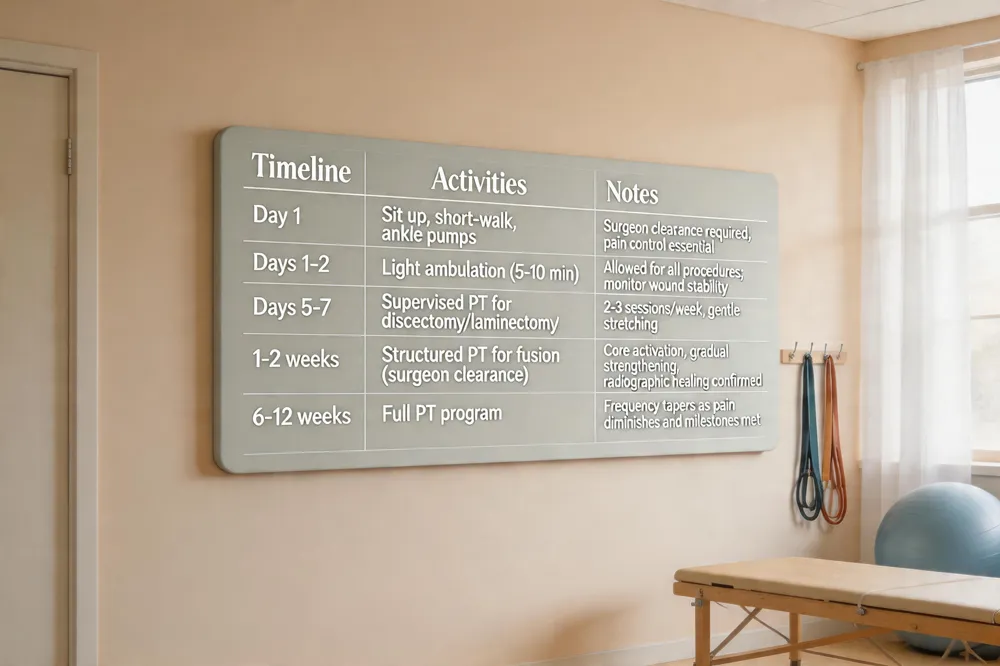 Surgeon clearance and safety checks are the first step; patients are encouraged to sit up, short‑walk, and perform gentle ankle pumps on day 1, but formal PT only starts after the surgeon confirms wound stability and adequate pain control.
Discectomy and laminectomy (both minimally invasive) usually allow gentle stretching and low‑impact walking within the first week, with supervised sessions beginning 5‑7 days post‑op. Spinal fusion requires a more protective phase—light ambulation starts day 1‑2, but structured PT typically starts 1‑2 weeks after clearance, progressing to core activation and gradual strengthening once radiographic bone healing is evident.
Overall, most back‑surgery patients engage in a structured PT program for 6‑12 weeks (shorter for discectomy, longer for fusion). Therapy frequency is 2‑3 sessions per week initially, tapering as pain diminishes and functional milestones are met. Always follow the surgeon‑therapist team’s individualized timeline for a safe, effective recovery.
Walking and Early Mobility Milestones
| Day/Week | Step Goal | Walking Duration | Comments |
|---|---|---|---|
| Day 1 | 500‑1000 steps | 5‑10 min | Short walks with assistance, focus on circulation |
| Week 1‑2 | ~3,500 steps/day | 10‑15 min | Gradual increase, monitor pain |
| Week 3‑4 (fusion) | 2,000‑3,000 steps/day | 15‑20 min | Progressive, may need walker |
| Week 4‑6 | 3,500‑5,000 steps/day | 20‑30 min | Aim for continuous walking as tolerated |
| 3‑6 months (fusion) | Unassisted ambulation | 30 + min | Full mobility stabilizes, depends on fitness |
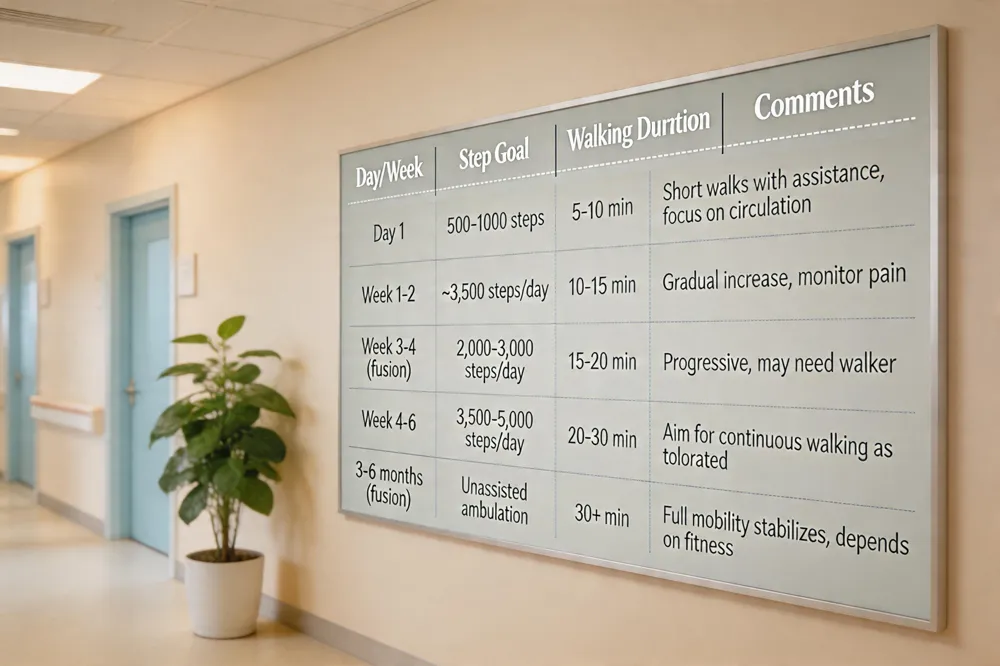 First‑day ambulation and step goals
Most patients are encouraged to get out of bed and take short walks on postoperative day 1, often with a walker or gentle assistance. Early walking improves circulation, reduces the risk of deep‑vein thrombosis, and sets the foundation for later functional gains. A practical target is to achieve roughly 3,500 steps per day during the first two weeks, then gradually extend walks to 20‑30 minutes as pain allows.
Walking progression after fusion
After lumbar fusion, mobility advances more slowly than after a micro‑discectomy. By weeks 3‑4 many patients can walk 15‑30 minutes daily, and by 4‑6 weeks most reach their expected walking ability. Full, unassisted ambulation typically stabilizes between 3‑6 months, depending on age, pre‑operative fitness, and comorbidities such as obesity or diabetes.
Hospital stay and early discharge
Hospitalization after spine surgery averages one to three days. The first 48‑72 hours are the most painful; surgeons monitor pain control, incision healing, and vital signs. Minimally invasive procedures may permit same‑day discharge, whereas open laminectomy or fusion usually requires the full one‑to‑three‑day window before patients are cleared for home and outpatient PT.
Key Q&A
- How long does it take to walk after spinal surgery? Patients generally start walking the day after surgery; full mobility is usually achieved by four to six weeks for minimally invasive cases and up to three‑six months after fusion, influenced by health status and pre‑op strength.
- How much walking is too much after spinal fusion? Early guidance suggests 3,500 steps per day, progressing to 20‑30 minutes of continuous walking after two weeks.
- Back surgery recovery time in hospital? Most stays are one‑to‑three days, with shorter stays for minimally invasive surgery and longer stays for extensive open procedures.
Physical Therapy Phases, PDFs, and Structured Protocols
| Phase (Weeks) | Focus | Typical Exercises | Frequency |
|---|---|---|---|
| 0‑2 | Pain control, wound care, ankle pumps, quad sets | Ankle pumps, heel slides, short walks | 2‑3 times/day |
| 2‑6 | Passive stretching, neural glides, pelvic stabilization | Hip hinges, seated marching, low‑impact bike | 2‑3 sessions/week |
| 6‑12 | Multi‑plane core, proprioception, work‑hardening | Bridges, bird‑dog, straight‑leg raises, wall sits | 2‑3 sessions/week |
| Post‑fusion (≥3‑4 weeks) | Gentle core work until clearance | Pelvic tilts, isometric holds | As cleared by surgeon |
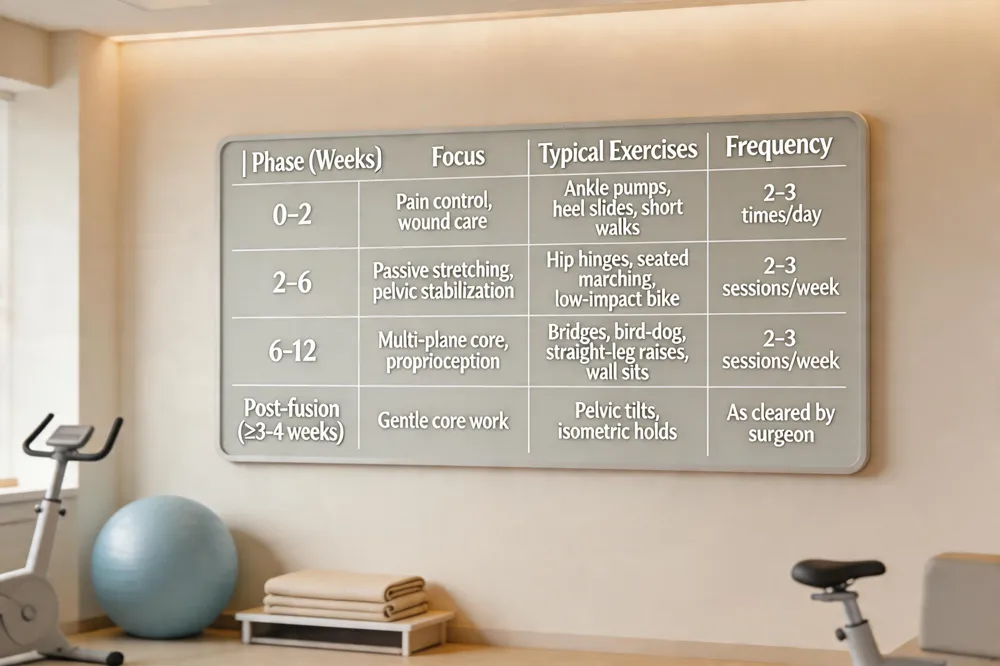 Physical therapy exercises after back surgery pdf
Early‑phase PDFs (0‑6 weeks) focus on gentle mobility, short walks, and neutral‑position core bracing. Mid‑phase guides (6‑12 weeks) add dynamic lumbar stabilization, bridges, and low‑impact resistance, while late‑phase documents (12 weeks +) introduce controlled forward bending, activity‑specific conditioning, and precautions against heavy lifting. Reputable sources such as the LA Hey Hospital rehabilitation packet and Good Man Campbell’s post‑operative spine booklet provide downloadable PDFs.
Spinal surgery physiotherapy PROTOCOL
Weeks 0‑2: pain control, wound care, ankle pumps, quad sets, and 5‑10 min walks 2‑3 times daily. Weeks 2‑6: passive stretching, neural glides, pelvic stabilization, and low‑impact aerobic activity (walking or recumbent bike). Weeks 6‑12: multi‑plane core and pelvic girdle strengthening, proprioceptive drills, and work‑hardening, progressing to 1‑2 miles of walking and safe lifts ≤ 20 lb. For lumbar fusion, core work remains gentle until surgeon clearance at 3‑4 weeks.
Spinal surgery recovery exercises
Start with ankle pumps, heel slides, and abdominal bracing while supine. Progress to countertop squats, heel raises, and wall sits. By 6‑8 weeks add straight‑leg raises, prone press‑ups, and single‑knee‑to‑chest stretches, always respecting pain signals and surgeon guidance.
Lumbar discectomy rehab PROTOCOL pdf
A downloadable protocol outlines Phase 1 (days 1‑21) – mobilization and walking; Phase 2 (weeks 3‑6) – supervised PT 2‑3×/week, core activation; Phase 3 (weeks 6‑12) – advanced strengthening and functional training. Precautions: avoid lifting > 20 lb for 2 months, limit prolonged sitting, and use a brace only if prescribed.
Spinal surgery recovery tips
Create a low‑impact walking and stretching plan with your therapist, eat a protein‑rich diet, stay hydrated, and quit smoking. Prepare the home with clear pathways, non‑slip mats, and reachable items. Monitor for fever, incision redness, or new neurological symptoms and report them promptly. Follow surgeon‑approved activity restrictions and gradually increase intensity as tolerated to regain strength and function.
Exercise Restrictions: What to Avoid After Fusion and Other Back Surgeries
| Category | Restricted Activities | Reason | Typical Duration |
|---|---|---|---|
| Flexion | Forward bending >90°, picking up from floor, sit‑ups | Stress on fusion site | 0‑3 months (full), 3‑6 months (gentle hip‑hinge) |
| Rotation | Russian twists, golf swings, twisting while lifting | Rotational forces on hardware | 0‑6 months |
| High‑impact | Running, jumping, contact sports | Compressive forces, risk of hardware failure | 3‑6 months |
| Heavy lifting | >10 lb (some surgeons 5 lb) | Overloads fused segment | 3‑6 months (up to 12 months for heavy work) |
| Prolonged slouching | Continuous sitting without breaks | Increases disc pressure | Ongoing; use posture breaks |
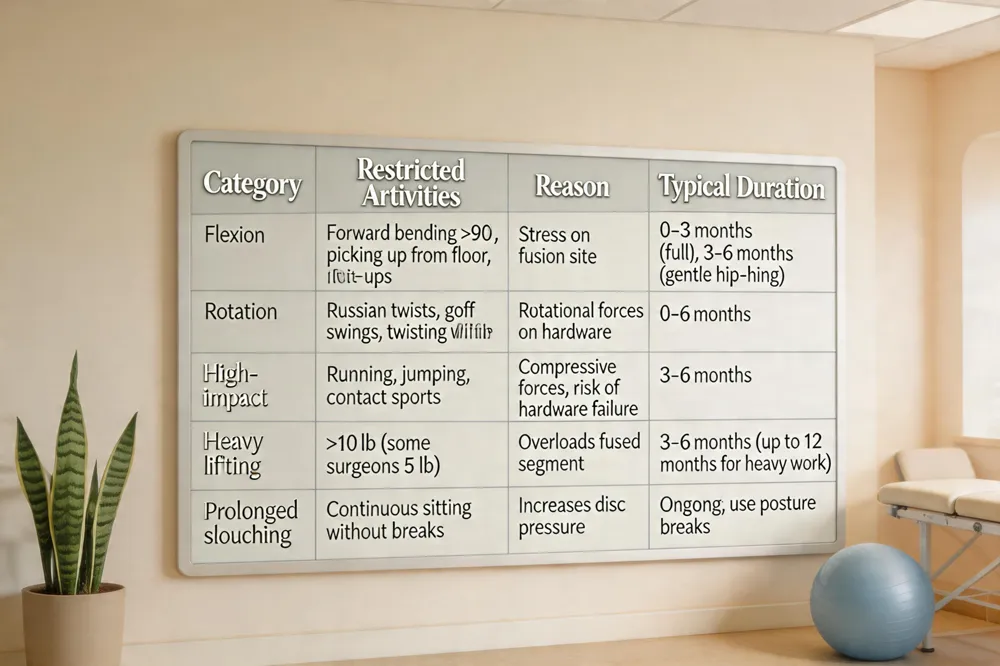 Exercises to avoid after lumbar fusion – During the early healing phase keep the spine neutral. Skip forward‑bending movements such as picking up objects from the floor, deep squats, or full sit‑ups. Twisting actions (Russian twists, golf swings, twisting while lifting) and high‑impact activities (running, jumping, contact sports) place rotational and compressive forces that can jeopardize the fusion and hardware. Heavy lifting (generally >5–10 lb) and any lift‑and‑twist combination should be postponed until surgeon clearance. Prolonged slouched sitting and vigorous core work like leg‑raises or full crunches are also discouraged.
Exercises to avoid after back surgery – In addition to the above, avoid weighted squats, deadlifts, and any resistance exercise that loads the lumbar spine dramatically. Contact sports, sudden‑impact activities, and prolonged sitting without posture breaks should be limited for several months.
How long after back surgery can you bend over? – Most surgeons prohibit forward bending for the first 0–3 months. Limited, gentle hip‑hinge bending may be introduced between 3–6 months if imaging and pain allow, and normal bending usually resumes after 6 months, always under surgeon and therapist guidance.
Hardware Recovery: Rods, Screws, and Fusion Healing
| Time Post‑Op | Activity | Hardware Status | Guidance |
|---|---|---|---|
| 0‑2 days | Gentle walking, ankle pumps | Immediate stability | Monitor incision, pain |
| 4‑6 weeks | Brace (if prescribed) | Initial graft consolidation | Limit bending, lifting <5 lb |
| 3‑4 months | Radiographic check | Hardware appears stable | Increase core work cautiously |
| 6‑12 months | Full bone healing | Fusion solidified | Return to normal activities as tolerated |
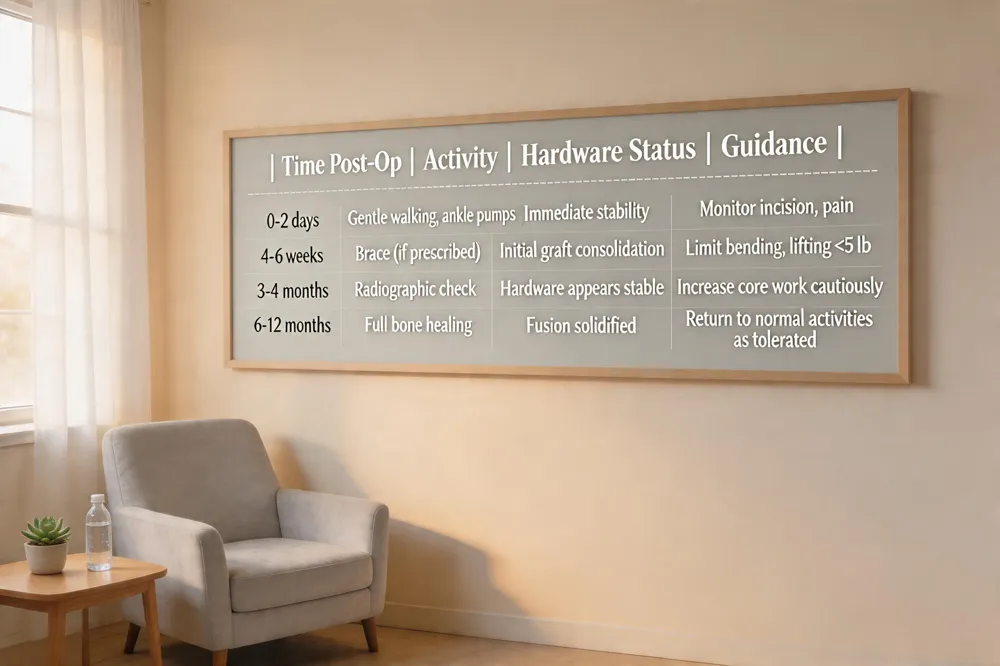 Back surgery rods and screws recovery
Patients stay 2‑4 days in hospital, then begin gentle walking and ankle pumps within 24‑48 h. A back brace may be used for 4‑6 weeks while the bone graft consolidates; hardware stability is usually evident by 3‑4 months, with fusion taking 6‑12 months.
What is the recovery time for lower back surgery
Most resume light activities by 4‑6 weeks and return to desk work around 6 weeks. Heavy lifting and twisting are avoided for at least 3‑6 months; full functional recovery after fusion may require 6‑12 months.
What is the recovery time for back surgery for herniated disc
Micro‑discectomy patients can walk the day of surgery and start PT within the first week. Return to light‑duty work occurs in 2‑4 weeks, while demanding jobs may need 6‑12 weeks. Strength and unrestricted activity are achieved by 3‑6 months.
Pain, Side Effects, and Common Post‑Surgery Complications
| Complication | Typical Onset | Signs | When to Call Surgeon |
|---|---|---|---|
| Infection | 1‑2 weeks | Fever, redness, drainage, increasing pain | Any fever >38 °C or wound drainage |
| DVT | 3‑7 days | Leg swelling, pain, discoloration | New leg pain or swelling |
| Nerve irritation | 1‑12 weeks | Numbness, tingling, weakness | Worsening neurologic symptoms |
| Anesthesia side‑effects | Immediate‑24 h | Nausea, sore throat, drowsiness | Persistent vomiting or airway issues |
| Persistent pain >6 weeks | >6 weeks | Constant sharp pain, not improving | Pain not controlled with meds |
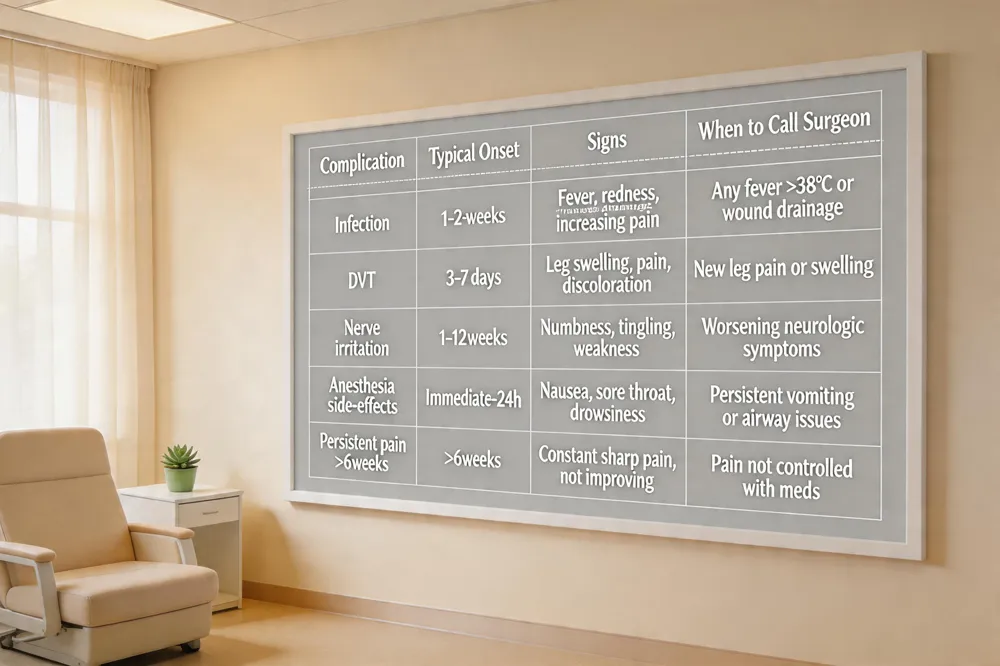 After spine surgery most patients experience postoperative pain, swelling, and stiffness around the incision, which usually improves within a few weeks. Numbness, tingling, or weakness may linger as nerves recover; full nerve healing can take six to twelve weeks or longer, with regeneration occurring at about one millimeter per day. Infection is rare (<1 %) but presents with fever, redness, or drainage and warrants prompt evaluation. Deep‑vein thrombosis may cause leg swelling, pain, or discoloration and requires immediate attention. Anesthesia‑related effects such as nausea or sore throat are typically short‑lived. Monitor for worsening pain, fever, new neurological deficits, or signs of clotting, and contact your surgeon promptly if any occur.
Returning to Work, Bending, and Functional Activities
| Job Type | Return Timeline | Lifting Limits | Bending Guidelines |
|---|---|---|---|
| Desk/Light duty | 2‑4 weeks | ≤10‑15 lb | Avoid forward bending >90° for first 3 months |
| Manual/Physical | 6‑12 weeks | ≤20 lb (gradual) | Use hip‑hinge technique after 3 months |
| Heavy labor (construction) | 12‑24 weeks | ≤30 lb (progressive) | Full bending only after 6 months if imaging clear |
| Driving | 2‑4 weeks (if pain‑free) | N/A | Adjust seat, avoid prolonged driving early |
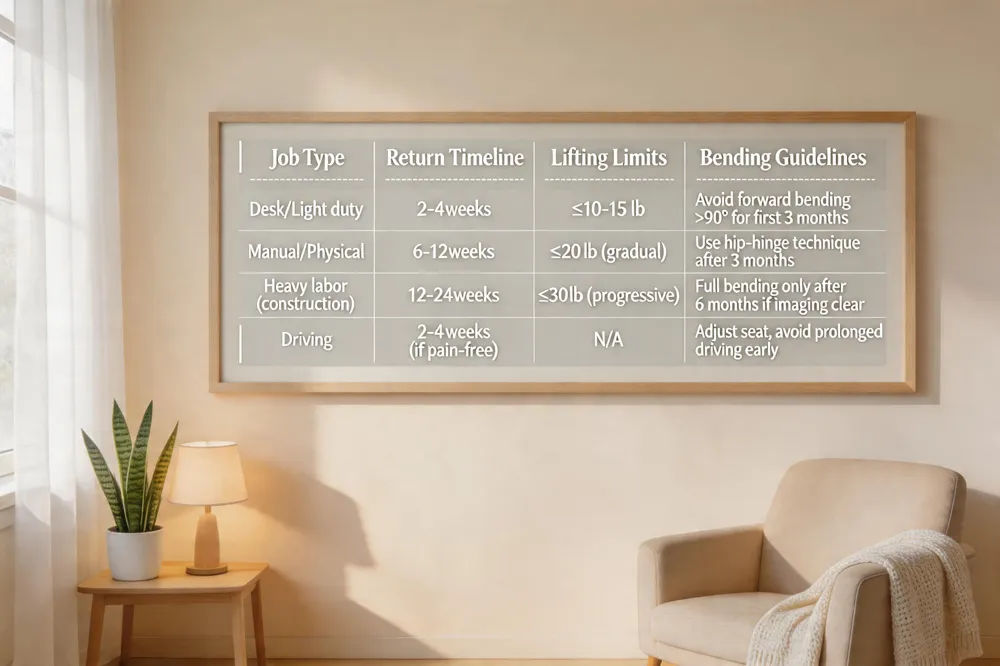 Guidelines for lifting and bending after lumbar surgery emphasize protecting the surgical site while gradually rebuilding strength. Most surgeons restrict forward bending and lifting more than 10–15 lb for the first 0–3 months, especially after fusion, and advise using a hip‑hinge technique when bending is allowed.
Timeline for returning to work varies by job demand: desk‑based or light‑duty roles often resume by weeks 2–4, while physically demanding jobs may require 6–12 weeks or longer, contingent on pain control and therapist clearance.
Activity‑specific conditioning should focus on core activation, low‑impact walking, and progressive resistance once the incision is healed and imaging confirms fusion stability.
How long does it take to walk after spinal surgery? Patients are encouraged to begin walking the day after surgery; unassisted walking typically develops within 3–4 weeks for laminectomy and up to 6 months for fusion, with faster progress in minimally invasive cases.
What is the recovery time for lower back surgery? Most individuals achieve functional independence in 4–6 weeks, but full bone healing after fusion may take 6 months to a year.
How long after back surgery can you bend over? Forward bending is generally avoided for the first 0–3 months; limited gentle bending may begin between 3–6 months, with normal bending often safe after 6 months, guided by surgeon and therapist recommendations.
Optimizing Recovery: Lifestyle, Nutrition, and Speeding Healing
| Factor | Recommendation | Rationale |
|---|---|---|
| Sleep | 7‑9 hours/night | Enhances tissue repair and hormone balance |
| Hydration | ≥2 L water/day | Keeps disc tissue supple, supports metabolism |
| Protein | 1.2‑1.5 g/kg body weight | Provides amino acids for bone and muscle healing |
| Calcium & Vitamin D | 1000‑1200 mg Ca, 800‑1000 IU D | Supports bone mineralization |
| Smoking cessation | Complete quit | Improves circulation, reduces non‑union risk |
| Weight management | Maintain healthy BMI | Reduces stress on spine, improves outcomes |
| Low‑impact aerobic | Walking, swimming 20‑30 min most3‑5 times/week | Improves circulation, cardiovascular health |
| Core strengthening | Pelvic tilts, bird‑dog, bridges (pain‑free) | Stabilizes lumbar spine, protects fusion |
| Home safety | Clear pathways, non‑slip mats | Prevents falls and injury during early rehab |
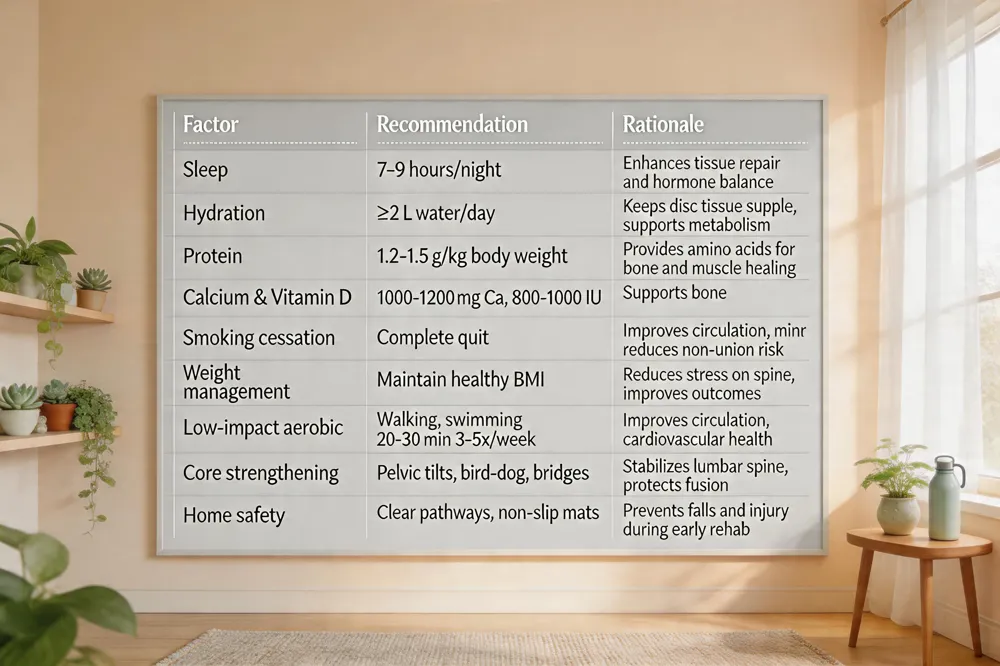 How to speed up spine recovery? Prioritize quality sleep (7‑9 hours) and stay well‑hydrated to keep intervertebral discs supple and support tissue repair. Eat a nutrient‑dense diet rich in protein, calcium, vitamin D, and antioxidants—dairy, leafy greens, lean fish, nuts, and plenty of fruits/vegetables—to strengthen bone and reduce inflammation. Stop smoking and aim for a healthy weight to improve circulation and bone healing. Add low‑impact aerobic conditioning (walking, swimming, gentle yoga) and core‑strengthening moves (pelvic tilts, bird‑dog, bridges) early, always with a warm‑up and cool‑down. Spinal surgery recovery tips: Follow a PT‑prescribed gentle exercise plan, maintain a protein‑rich diet, avoid smoking, and keep your home safe (clear walkways, non‑slip mats). Monitor for fever, wound drainage, or worsening pain, and attend all follow‑up appointments with Dr. David S. Raskas to adjust your rehab program as needed.
Key Takeaways for Successful Spine Rehab Timing
Begin physical therapy only after the surgeon confirms the incision is stable—often within the first 48‑72 hours for minimally invasive discectomy and by day 1‑3 for fusion. Early, low‑impact activities such as short walks, ankle pumps, and diaphragmatic breathing protect the surgical site while promoting circulation.
Follow an evidence‑based, three‑phase progression:
- Immediate (0‑2 weeks) – pain control, gentle range‑of‑motion, and core activation.
- Early (2‑6 weeks) – structured PT sessions 2‑3×/week focusing on mobility, posture, and light strengthening.
- Intermediate/Advanced (6‑24 weeks) – progressive resistance, functional training, and aerobic conditioning once radiographic healing is confirmed.
Adhere strictly to activity restrictions—avoid bending, lifting >10‑15 lb, and twisting until the surgeon clears the hardware (typically 6‑12 weeks for fusion).
Optimize recovery by quitting smoking, maintaining adequate protein and vitamin D intake, getting 7‑9 hours of sleep, and managing stress; these lifestyle factors accelerate tissue repair and improve overall outcomes.