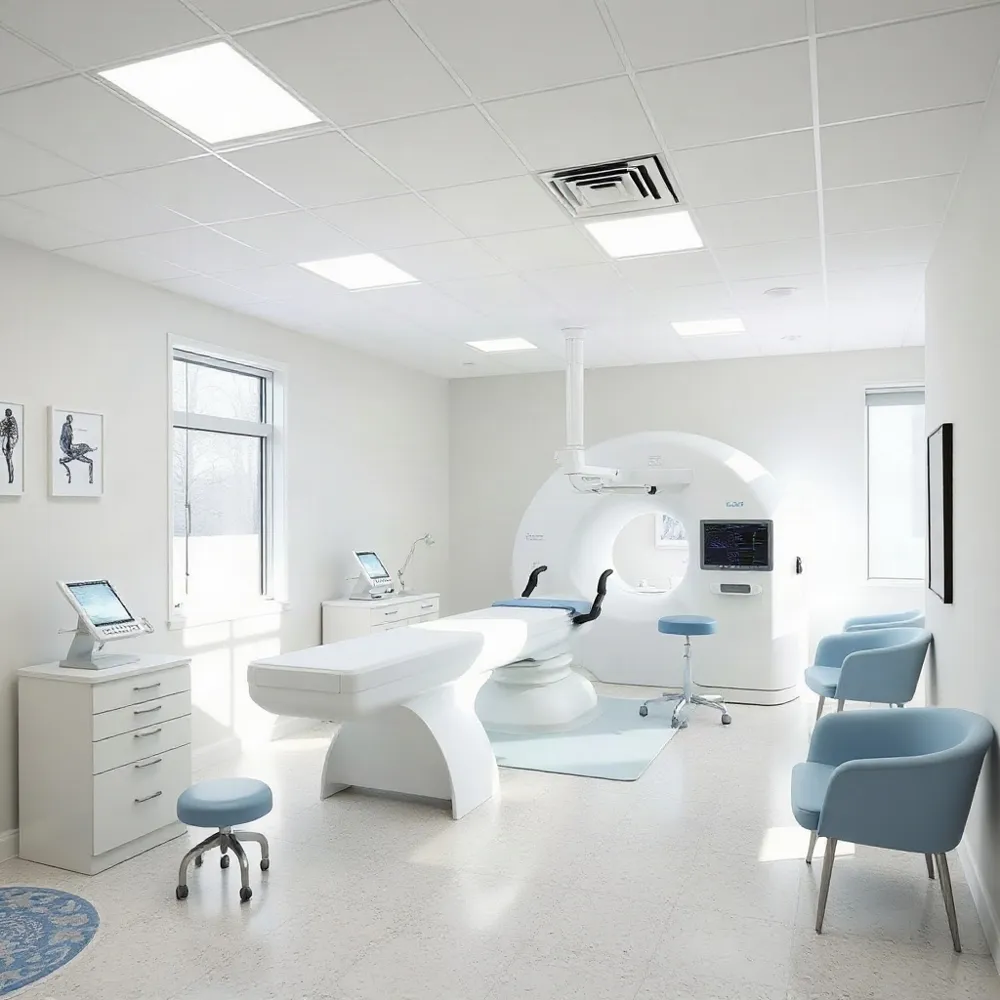
First‑Visit Overview
The initial neck‑pain consultation is the cornerstone of effective care. At the Orthopedic Spine Institute of St. Louis we follow a patient‑first philosophy, listening closely to your story and goals before any treatment. During the visit the clinician reviews your medical history, medications, imaging, and then performs a focused physical exam—checking posture, range of motion, strength, reflexes, and any neurologic signs. This comprehensive assessment guides a personalized plan that may include at‑home therapy, physical therapy, or minimally invasive options if needed.
Preparing for Your First Neck Pain Consultation
Preparation Checklist – Summary Table
| Item | Details | Practical Tips |
|---|---|---|
| Medical records | Past X‑rays, CT, MRI, medication list, prior treatment notes | Request copies from previous providers; bring printed or digital files |
| Symptom timeline | Onset date, intensity (0‑10), radiation, numbness, tingling, aggravating/relieving activities | Use a simple table or app to log daily observations |
| Health goals | Desired outcomes (e.g., return to work, sports, sleep) | Write 2‑3 specific, measurable goals to discuss with clinician |
| Questions list | Diagnosis, imaging needs, non‑surgical options, recovery timeline | Prioritize 3‑5 most important questions; bring a notebook |
| Support person | Companion to aid memory and provide emotional support | Ask a friend/family member to attend or sit nearby |
| Red‑flag awareness | Headache, numbness, weakness, fever, trauma, bladder/bowel changes | If any present, seek immediate evaluation before scheduled visit |
| Referral pathway | Start with primary‑care provider → possible physiatrist or orthopedic spine surgeon | Confirm insurance coverage and referral requirements beforehand |
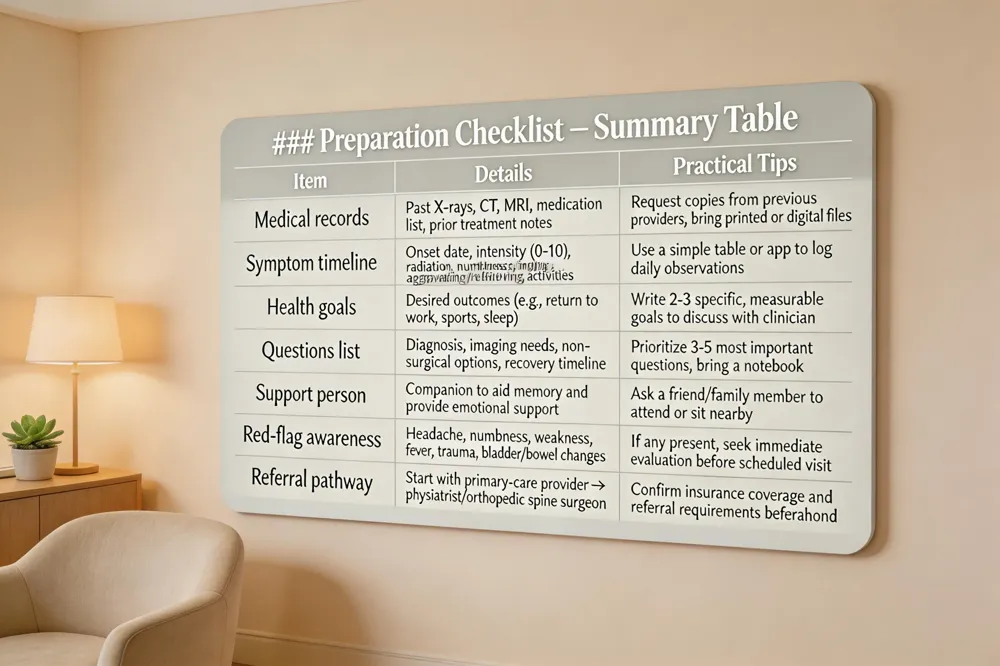 Before your initial appointment, Gather medical records—past X‑rays, CT scans, MRIs, medication lists, and any previous treatment notes. Create a symptom timeline that notes when the pain started, its intensity, radiation, numbness, tingling, and any activities that worsen or relieve it. Define clear personal health goals (e.g., returning to work, resuming sports, improving sleep) so the clinician can tailor a plan. Write down specific questions about diagnosis, imaging, non‑surgical options, and expected recovery. Bring a support person to help remember details and provide emotional aid.
At what point do you go to the doctor for neck pain? If pain persists beyond a few weeks of self‑care, worsens, or spreads to the arms, seek an appointment. Red‑flag signs—headache, numbness, weakness, fever, recent trauma, or loss of bladder/bowel control—require immediate evaluation.
Who should I see first for neck pain? Start with your primary‑care provider; they may refer you to a physiatrist or orthopedic spine surgeon (e.g., Dr. David S. Raskas) if needed.
What kind of doctor should I see for neck and shoulder pain? Begin with a primary‑care physician; persistent cervical issues often go to a spine specialist, while shoulder problems are managed by an orthopedic shoulder specialist.
How long to deal with neck pain before seeing a doctor? Give self‑care up to three weeks, but seek care sooner for worsening symptoms, radiating pain, or any red‑flag signs.
What will my doctor do for neck pain? Expect a detailed history, physical exam, possible imaging, prescription of NSAIDs or muscle relaxants, brief use of a soft collar, targeted injections, and discussion of minimally invasive surgery only after conservative measures have failed.
Quick Self‑Care Techniques for Immediate Relief
Quick Self‑Care Techniques – Summary Table
| Technique | Steps (brief) | Frequency / Duration | Primary Benefit |
|---|---|---|---|
| 10‑second chin‑tuck | Sit tall, pull chin back toward throat, hold 5 s, release | 1‑2 times, repeat 3‑5 times | Re‑aligns cervical spine, reduces tension |
| Shoulder‑blade squeeze + diaphragmatic breath | Pinch shoulder blades together, inhale deeply, exhale slowly | 5‑10 reps, 2‑3 times daily | Improves posture, relaxes upper back |
| Ice → heat protocol (sleep‑related pain) | Ice 15 min (first 24 h), then warm compress 20 min | Twice daily for first 2 days | Decreases inflammation, promotes circulation |
| Gentle neck stretches (side‑to‑side, forward tilt, rotation) | Move slowly, hold 5‑10 s each direction | 5‑10 reps per side, 2‑3 times daily | Increases range of motion, relieves stiffness |
| Shoulder roll + head swing (10‑second fix) | Roll shoulders back‑down twice, then side‑to‑side head swing, deep breath | 1‑2 times, as needed | Quick tension release |
| Slow head turns & side tilts (FAST exercise) | Turn head slowly, tilt side‑to‑side, hold 5‑10 s | 5‑10 reps per side, 2‑3 times daily | Improves mobility, reduces muscle guarding |
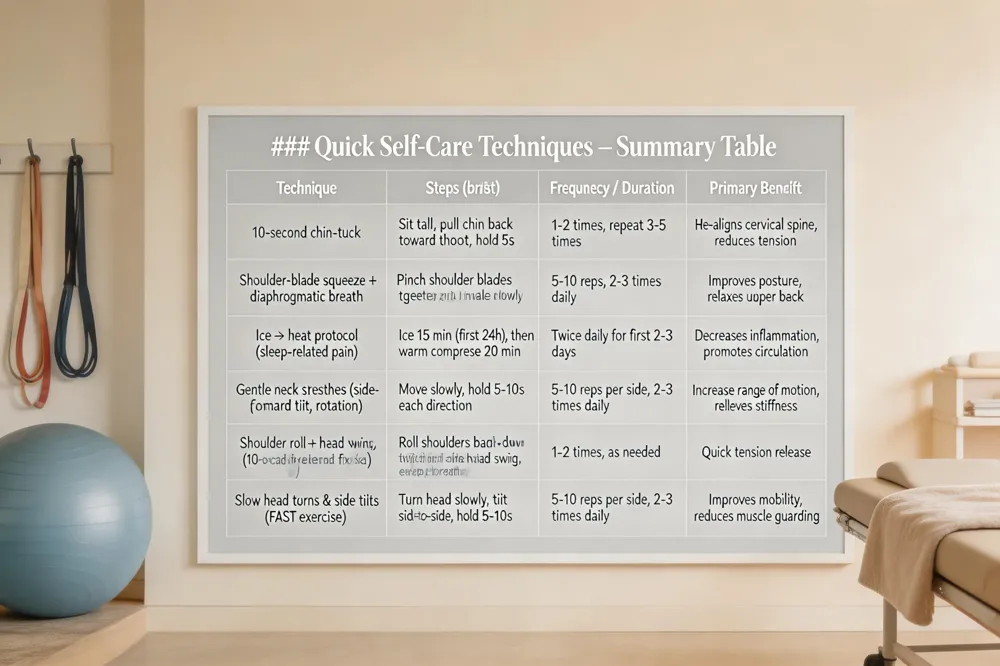 When neck discomfort strikes, a few simple actions can provide almost instant relief. How to fix neck pain in 10 seconds – Perform a 10‑second chin‑tuck: sit tall, pull the chin straight back toward the throat, hold five seconds, then release. Follow with a quick shoulder‑blade squeeze and a deep diaphragmatic breath. This three‑step reset re‑aligns the cervical spine and eases tension.
How to relieve neck pain from sleeping wrong – Apply an ice pack for the first 24 hours, then switch to a warm compress for 20 minutes. Stretch gently side‑to‑side, forward, and rotate. Use a supportive pillow that keeps the neck neutral and avoid stomach‑sleeping. Over‑the‑counter ibuprofen can control inflammation.
How To cure neck pain FAST exercise – Do slow head turns, side tilts, and forward tilts, holding each 5–10 seconds, 5–10 repetitions per side. Add shoulder‑blade squeezes and a brief heat session before stretching. Perform 2–3 times daily with hourly movement breaks.
How to get rid of stiff neck in 10 seconds – Combine the chin‑tuck with a shoulder roll: lift shoulders, roll back, and down twice. Finish with a deep breath and a gentle side‑to‑side head swing.
If pain persists, worsens, or is accompanied by numbness, weakness, or radiating symptoms, schedule an evaluation with [Dr. David S. Raskas] at the [Orthopedic Spine Institute of St. Louis] for personalized care.
Recognizing Neurological Red Flags
Neurological Red‑Flag Checklist – Summary Table
| Red Flag | Description | Immediate Action |
|---|---|---|
| Sudden severe pain after trauma | Sharp, worsening pain following injury | Call emergency services / go to ED |
| New onset bladder or bowel dysfunction | Incontinence, retention, or urgency | Immediate medical evaluation (possible cord compression) |
| Fever with neck stiffness | Systemic infection signs | Seek urgent care (possible meningitis) |
| Progressive limb weakness or loss of coordination | Gradual decline in arm/hand strength or dexterity | Urgent neurologic assessment |
| Electric‑shock sensations (Lhermitte’s sign) when bending chin | Radiating tingling down the spine/limbs | Prompt imaging (MRI) and specialist referral |
| Persistent radiating arm pain >3 weeks | Pain spreading to shoulder, arm, hand with numbness/tingling | Schedule neurology or spine specialist appointment |
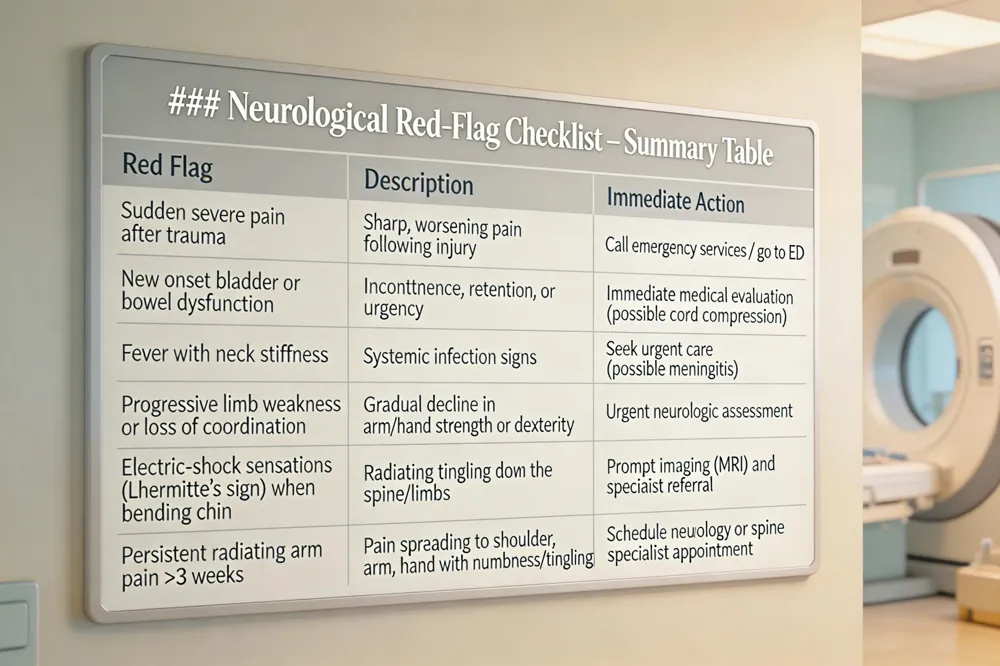 Radiating arm pain, numbness, tingling, or weakness often signals cervical radiculopathy, disc herniation, or bone spurs compressing a nerve root. These neurological symptoms extend from the neck into the shoulders, arms, or hands and should prompt prompt evaluation. Imaging—typically X‑ray, MRI, or CT—is indicated when pain persists beyond three weeks, when neurologic deficits appear, or after a traumatic event, to identify structural causes such as disc degeneration, spinal stenosis, or cord compression. Urgent care is required for red‑flag signs: severe pain after injury, sudden loss of bladder or bowel control, fever with neck stiffness, progressive weakness, or electric‑shock sensations when bending the chin. At the Orthopedic Spine Institute of St. Louis, Dr. David S. Raskas will conduct a detailed exam, order appropriate imaging, and, if needed, nerve‑conduction studies to pinpoint the source. Treatment starts with conservative measures—physical therapy, NSAIDs, posture correction—and escalates to minimally invasive injections or surgery only when nerve compression persists or worsens.
Professional Treatments and Options
Professional Treatment Overview – Summary Table
| Treatment Type | Description | Typical Indications | Typical Duration / Course |
|---|---|---|---|
| Physical therapy (PT) | Structured ROM drills, chin‑tucks, shoulder rolls, deep neck flexor & upper‑back strengthening | Persistent neck pain, post‑injury, post‑surgery rehab | 6‑12 weeks, 1‑2 sessions per week |
| NSAIDs (ibuprofen, naproxen) | Oral anti‑inflammatory medication | Mild‑to‑moderate pain with inflammation | 7‑14 days, as needed |
| Acetaminophen | Analgesic without anti‑inflammatory effect | Pain without significant inflammation | Up to 3 days, as needed |
| Muscle relaxants / oral steroid taper | Short‑term pharmacologic muscle spasm control | Acute flare‑ups, severe spasms | 5‑10 days (muscle relaxant) or 1‑2 weeks (steroid) |
| Targeted injections (corticosteroid epidural, facet‑joint) | Direct delivery of steroids to inflamed nerves/joints | Radiculopathy, facet joint pain refractory to meds | 1‑2 sessions, 4‑6 weeks apart |
| Minimally invasive surgery (endoscopic discectomy, RF ablation, percutaneous decompression) | Small‑incision procedures preserving motion | Persistent nerve compression, failed conservative care | Outpatient or 1‑2 day stay, rehab 4‑6 weeks |
| Assessment tools (Neck Disability Index) | Questionnaire scoring functional impact (0‑100) | Baseline and follow‑up tracking | Administer at intake and periodic intervals |
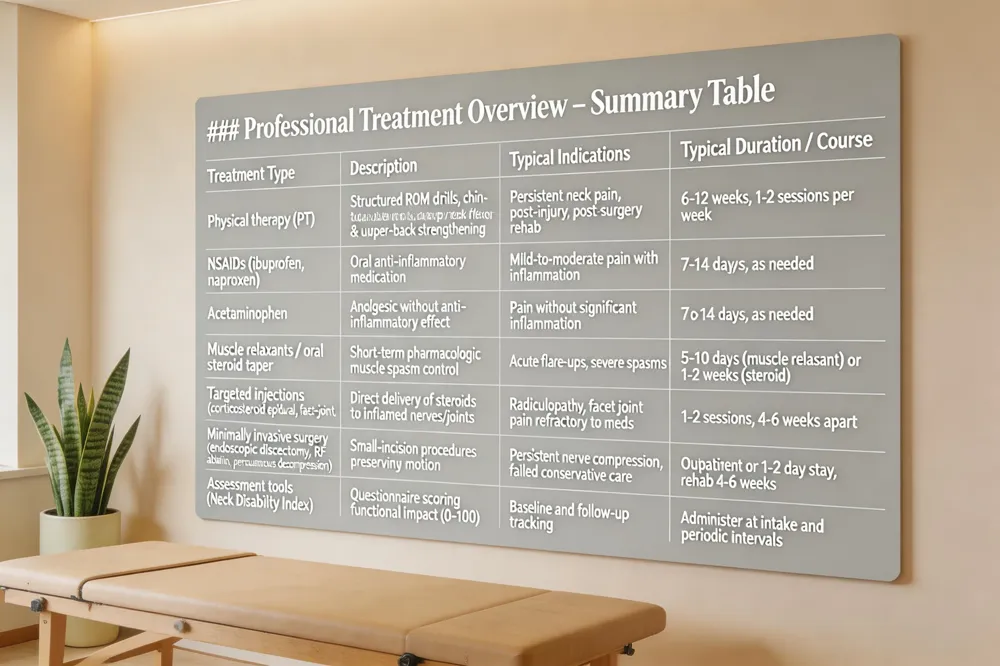 Physical therapy programs form the backbone of neck‑pain care. A structured regimen includes gentle range‑of‑motion drills, chin‑tucks, shoulder rolls and progressive strengthening of deep neck flexors and upper‑back muscles. Therapists also teach ergonomic habits to prevent “tech neck”. Medication strategies begin with over‑the‑counter NSAIDs such as ibuprofen or naproxen to reduce inflammation, while acetaminophen addresses pain when inflammation is low. Short‑term muscle relaxants or a brief oral steroid taper may be added for spasms or severe flare‑ups. Targeted injections—corticosteroid epidural or facet‑joint blocks—provide rapid relief by numbing inflamed nerves and shrinking swelling. When conservative care fails, minimally invasive surgery options like endoscopic discectomy, radiofrequency ablation of facet joints, or percutaneous disc decompression are considered, preserving motion and shortening recovery. Assessment tools include the Neck Disability Index PDF, which scores pain’s daily impact and guides treatment planning. During the first visit the physician will review history, perform a focused exam, and order imaging if needed, then outline a personalized plan that may combine therapy, medication, injections, or surgery.
Long‑Term Prevention and Resources
Long‑Term Prevention Strategies – Summary Table
| Strategy | Implementation | Rationale |
|---|---|---|
| Ergonomic workstation | Monitor at eye level, lumbar‑support chair, phone at eye height | Maintains neutral cervical posture during work |
| Supportive sleep pillow | Medium‑firm, low‑loft pillow that maintains natural curve | Prevents overnight flexion/extension strain |
| Frequent movement breaks | Stand, stretch, or walk every 30‑45 minutes | Reduces static loading on neck muscles |
| Daily neck‑strengthening & stretching routine | 5‑10 minutes of chin‑tucks, shoulder rolls, side tilts | Improves muscular endurance, flexibility |
| Regular cardio & overall fitness | 150 min moderate aerobic activity per week | Enhances blood flow, supports spinal health |
| Stress management (mindfulness, breathing) | 10‑15 min daily relaxation techniques | Lowers muscle tension associated with stress |
| Smoking cessation & healthy weight | Quit smoking, maintain BMI 18.5‑24.9 | Decreases degenerative disc changes and systemic inflammation |
| Patient education tools | Handouts, video tutorials, digital Neck Disability Index app | Empowers self‑monitoring and adherence to care plan |
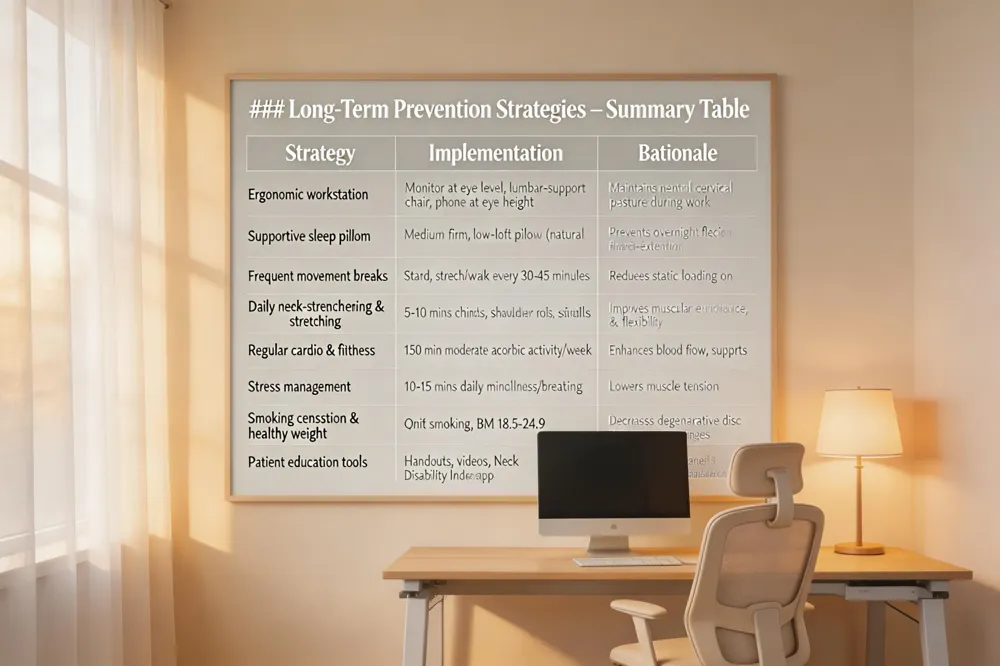 Maintaining a pain‑free neck over the long term starts with an ergonomic workstation: keep your monitor at eye level, use a chair with lumbar support, and hold phones or tablets straight out instead of bending the neck. For sleep, choose a supportive pillow that maintains the natural cervical curve—typically a medium‑firm pillow with a slight loft that cradles the head without pushing it forward. Lifestyle modifications such as taking brief movement breaks every 30‑45 minutes, practicing daily neck‑strengthening and stretching routines, staying active with regular cardio, stress management, quitting smoking, and maintaining a healthy weight further reduce strain on the cervical spine. Patient education tools—including printed neck‑care handouts, video tutorials on proper posture, and interactive digital programs like the Neck Disability Index—help you track progress and stay motivated.
Can gallbladder cause right neck pain? Yes. Irritation of the diaphragm from gallbladder disease can stimulate the phrenic nerve, producing referred pain to the right shoulder and upper neck. While possible, musculoskeletal causes are far more common; sudden, severe pain or accompanying digestive symptoms warrant prompt medical evaluation.
What is the best painkiller for neck pain? Over‑the‑counter NSAIDs (ibuprofen, naproxen) are first‑line because they address both pain and inflammation. If NSAIDs are unsuitable, acetaminophen provides pain relief only. Short‑term prescription opioids are reserved for severe, disabling pain unresponsive to NSAIDs and should be used under close supervision.
How to relieve severe neck pain on left side? Apply gentle heat for 15‑20 minutes, then perform controlled range‑of‑motion exercises (side‑to‑side tilts, shoulder‑blade squeezes). Alternate with brief cold packs if swelling persists. Maintain upright posture, use OTC NSAIDs, and avoid heavy lifting. If pain remains severe or is accompanied by numbness, schedule an evaluation with Dr. David S. Raskas at the Orthopedic Spine Institute of St. Louis for possible minimally invasive treatment.
Key Takeaways & Next Steps
Watch for red‑flag signs like arm weakness, numbness, fever, or loss of bladder control. Apply ice, heat, stretches, and posture fixes for relief. Gather your history, imaging, medication list, and goals before your OSI visit. Use OSI’s portal and staff for care.