Reading Patient Experiences Carefully
What might someone experience after lumbar disc replacement, and what can research actually tell us? The answer depends on separating measured outcomes from personal stories. Patient-reported outcomes are scores about pain, physical function, and quality of life collected directly from patients. They can show how people describe change over time, but they are not the same as a set of representative testimonials.
The educational overviews available for this topic generally explain the procedure and its risks; they do not provide a representative collection of firsthand accounts. Study findings also reflect specific participants, implants, and follow-up methods, so they cannot predict one person’s experience. At Orthopedic Spine Institute of St. Louis, care starts with conservative options and considers surgery when appropriate. An individual assessment helps put research findings in context.
How Lumbar Disc Replacement Works
 Lumbar artificial disc replacement removes a damaged disc in the lower back and places an implant between the vertebrae. The device is generally made of metal or a combination of metal and plastic. Its intended purpose is to ease pain linked to the disc while allowing movement at the treated level. Johns Hopkins Medicine explains the procedure as an alternative to fusion, which joins vertebrae and limits movement at that level.
The surgeon usually reaches the spine through an incision in the abdomen, moves nearby organs and blood vessels aside, removes the damaged disc, and positions the implant. The operation is major surgery and generally requires general anesthesia. Preserving movement does not guarantee greater pain relief or prevent problems in nearby spinal segments, so expected benefits and risks need individual discussion.
A specialist assesses whether the pain source, imaging findings, overall health, and other spinal conditions make replacement a suitable option. At the Orthopedic Spine Institute of St. Louis, care starts conservatively, with surgery considered when appropriate. Learn more about how lumbar disc replacement works and discuss alternatives with a spine specialist.
Who May Be Considered for Surgery
 Lumbar disc replacement may be considered when persistent low-back pain appears to come from one or two degenerative discs and has not improved with appropriate nonsurgical care. That profile describes a starting point for evaluation, not an automatic recommendation. The American Academy of Orthopaedic Surgeons’ overview of artificial disk replacement notes that diagnostic testing and examination are used to identify the likely pain source.
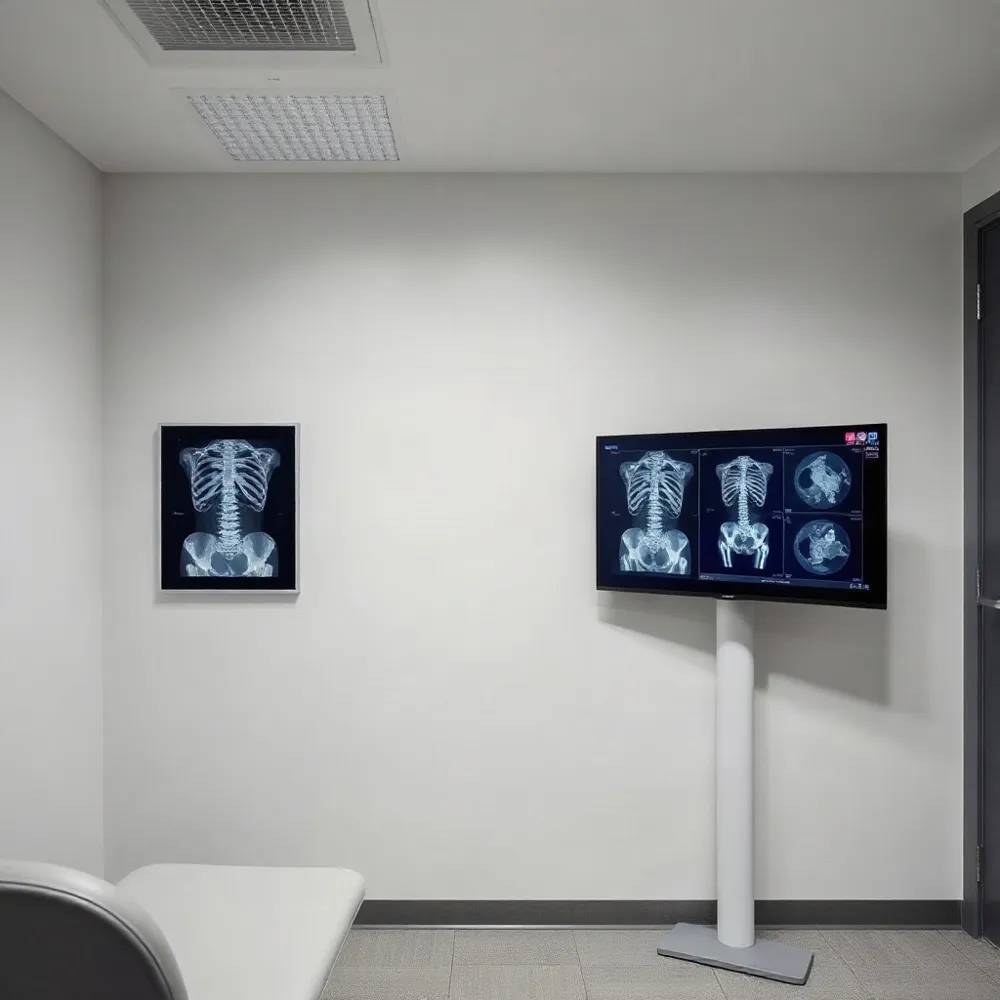
A surgeon may review symptoms and medical history, perform a physical examination, and assess imaging such as MRI, CT scans, or X-rays. These findings help show whether the disc is likely responsible for the pain and whether the surrounding joints, bones, and spinal alignment are suitable for an implant. At Orthopedic Spine Institute of St. Louis, care begins conservatively, with minimally invasive surgery considered when appropriate.
Some findings may weigh against replacement or point toward another treatment. Examples include osteoporosis, significant facet-joint disease, spinal deformity or instability, substantial nerve compression, and prior major lumbar surgery. Their importance depends on the full clinical picture, rather than any one finding in isolation.
These factors are not a self-screening checklist. A spine surgeon weighs the examination, imaging, overall health, and treatment history together to discuss whether replacement, another procedure, or continued nonsurgical care is appropriate. The Johns Hopkins Medicine guide to lumbar disk replacement likewise emphasizes that not everyone with low-back pain is a suitable candidate.
Potential Benefits and Tradeoffs
Lumbar disc replacement is designed to ease disc-related pain while preserving movement at the treated level. The aim differs from fusion, which joins vertebrae and limits movement there. Preserved motion is a treatment goal, not a promise of pain relief or protection from problems elsewhere in the spine. The American Academy of Orthopaedic Surgeons overview notes that research has not established a clear outcome advantage over fusion in every comparison.
Because replacement does not depend on bone joining across the operated level, some sources describe recovery as potentially faster than after certain fusion procedures. That possibility does not predict an individual's recovery. Pain, function, and the pace of returning to daily activities vary, and some patients continue to have symptoms after surgery.
The tradeoffs include the risks of major surgery, persistent or new pain, and implant-related problems such as movement or failure. Additional surgery may sometimes be needed. In a long-term study of a small, selected group with the Charité device, some patients reported lasting improvement while others underwent further surgery; the study cannot predict outcomes for every patient or establish that replacement is better than fusion.
At osistl.com, care for back pain starts conservatively, with minimally invasive surgery considered when appropriate. A spine specialist can weigh the diagnosis, anatomy, overall health, and personal goals when discussing replacement, fusion, and nonsurgical options. Motion preservation alone does not show that adjacent-level problems will be prevented.
What Long-Term Studies Report
What Long-Term Studies Report
Long-term studies can show how pain, daily function, and quality of life change after surgery, but group averages are not a forecast for an individual. Measures such as pain scales and disability questionnaires let researchers track patients’ own assessments over time; they complement clinical findings rather than guarantee a particular result. Patient-reported outcome measures are most useful when interpreted alongside a patient’s diagnosis, treatment history, and follow-up care.
One small retrospective case series followed workers’ compensation patients who received a Charité artificial disc. Of the original group, 16 completed follow-up at a mean of 17.2 years. Their average pain score fell from 9.5 before surgery to 3.1 at follow-up on a 0–10 scale, and 15 said they would choose the procedure again under similar circumstances. These findings describe a specific group treated with one device, not expected results for every patient. The long-term Charité study also had incomplete follow-up and no comparison group.
The same study provides an important counterweight: six of the 16 people followed had additional lumbar surgery, and those who needed further surgery reported worse pain and quality-of-life scores. The small sample, retrospective design, and loss of participants to follow-up limit what researchers can conclude. Without a comparison group, the study cannot establish that disc replacement is better than fusion or predict who will need another operation.
A separate observational cohort followed 57 of 68 patients at a mean of 10.6 years. Average back-pain scores improved, but 19 patients underwent revision fusion, and only 30 of the 57 said they would choose the same treatment again. This variation is one reason the Orthopedic Spine Institute of St. Louis begins with conservative care and considers surgery in the context of an individual evaluation, rather than treating study averages as promises.
Taken together, these studies suggest that some carefully selected patients experience lasting improvement, while others have persistent symptoms or need further treatment. A discussion with a spine specialist can put the evidence in context, including how the study populations and devices differ from a patient’s circumstances.
Risks and Possible Complications
Lumbar disc replacement is major surgery, so risks include infection, bleeding, blood clots, reactions to anesthesia, and injury to nearby nerves, blood vessels, or other structures. The abdominal approach used to reach the spine makes discussion of those approach-related risks part of informed consent. Johns Hopkins Medicine’s overview of lumbar disk replacement describes these potential complications and emphasizes that not everyone is a suitable candidate.
The artificial disc brings additional concerns. It may shift out of position, sink into the vertebral endplate, loosen, wear, or fail. Pain can persist after surgery, or new symptoms may arise; depending on the cause, treatment could include another operation, such as revision or conversion to fusion. The risks for an individual depend on health, spinal anatomy, implant choice, and surgical factors.
A study of the older Charité disc compared it with an older fusion method in a carefully selected group, so its findings should not be treated as a forecast for current procedures or every patient. The study reported approach-related complications in 9.8% of disc-replacement patients and major neurological complications in 4.4%, but its adverse-event reports were not a complete measure of overall recovery or patient satisfaction. The study’s complication findings also reflect that device, comparison, and study design.
At osistl.com, evaluation starts with conservative care and considers minimally invasive surgery when appropriate. A spine surgeon can explain which risks apply to your circumstances, how they compare with alternatives, and what symptoms should prompt follow-up. For a broader discussion of lumbar disc replacement risks, see the practice’s related guidance.
Recovery and What Patients May Notice
How long recovery takes after lumbar disc replacement depends on the procedure, a person’s health, and how healing progresses. A hospital stay commonly lasts at least one night or a few days, and the care team may help patients stand or walk when it is appropriate. These early steps are not a promise of a set discharge date or recovery pace. Johns Hopkins Medicine’s overview of lumbar disk replacement describes the procedure and typical post-surgery care.
Soreness around the incision and fatigue may occur, and symptoms can vary during recovery. Progress generally unfolds over weeks to months: some people resume light activities sooner, while returning to work, exercise, or full activity may take longer. Follow the surgeon’s instructions on medication, wound care, follow-up visits, and restrictions. Do not resume lifting, bending, or twisting until the treating team says it is safe.
Pain after surgery does not by itself show whether a complication has occurred. In one study of a selected patient group, postoperative pain-related adverse-event reports were recorded for 52.7% of disc-replacement patients and 52.5% of fusion patients. The authors noted that reporting guidance was inconsistent, and some people had multiple reports, so these figures do not mean that half of patients had confirmed complications. The study examined a specific device and population, not every current procedure. The study’s complication findings should be interpreted in that context.
Clinicians may track progress with pain scales, the Oswestry Disability Index, which measures back-related disability, and broader quality-of-life questionnaires. These patient-reported measures help show how symptoms and function change over time, but they are considered alongside examination findings and other clinical information. They cannot predict exactly how one person will feel or replace a discussion with the care team. Common patient-reported measures in spinal surgery include pain and function assessments.
Contact the surgeon promptly if pain is severe, worsening, or not improving as expected, or if new or increasing leg pain, numbness, tingling, or weakness develops. Fever, increasing incision redness, swelling, or drainage also warrants prompt medical advice. Sudden severe symptoms, rapidly progressing weakness, or loss of bowel or bladder control require urgent medical care. Follow the treating team’s specific instructions, since appropriate activity and recovery support vary by patient.
At osistl.com, care for back and sciatica pain starts conservatively, with minimally invasive surgery considered when appropriate. A spine specialist can help patients discuss their symptoms, recovery concerns, and safe next steps.
When Two Levels Are Involved
Can a patient have more than one lumbar disc replaced? In some cases, surgeons may consider replacement at two levels, but suitability depends on which discs appear to cause pain, the condition of the bones and facet joints, and overall spine health. The Hospital for Special Surgery overview of disc replacement notes that lumbar procedures may be approved for one or two levels, but approval does not mean every patient is a candidate.
More than one degenerated disc does not automatically mean each level should be replaced. The diagnosis, anatomy, and evidence supporting treatment at each level matter. At osistl.com, care starts conservatively, with surgery considered when appropriate; a specialist can assess whether one-level or two-level replacement, another treatment, or continued nonsurgical care fits the individual case.
Discuss alternatives and insurance coverage before making a decision, since coverage can vary by plan. Questions about candidacy when two levels are involved can help guide a conversation with a spine specialist.
Costs and Coverage Questions
 How much does lumbar disc replacement cost, and does insurance cover it? There is no single standard price established by the available evidence. The total can vary with the number of levels treated, the implant, surgeon and facility fees, anesthesia, hospital stay, and related services.
Coverage also varies by insurer and plan. Some insurers may not approve lumbar disc replacement, so confirm your benefits and any prior authorization requirements before scheduling. Approval can depend on the plan’s criteria and the clinical information submitted.
Ask the insurer and the surgeon’s billing team for a written estimate based on the recommended procedure. Check whether it includes the implant, facility and professional fees, anesthesia, hospital services, and any expected follow-up care. Clarify your deductible, copays, coinsurance, and potential out-of-pocket responsibility.
Because estimates and coverage rules can differ, compare the insurer’s written benefit information with the billing team’s estimate, and ask who to contact if the procedure requires additional review. Patients considering care at osistl.com can discuss treatment planning with the practice, which begins with conservative care and considers minimally invasive surgery when appropriate. See cost and coverage questions for lumbar disc replacement for related planning considerations.
A Personal Decision With Measurable Outcomes
Study averages can help frame expectations, but they cannot predict one person’s result. Some patients report lasting improvement, while others continue to have pain or need further treatment. Long-term findings from a small group treated with the Charité disc illustrate both possibilities and should be read in light of the study’s limits.
A spine specialist can review the likely source of your pain, whether you may be a candidate, and how disc replacement compares with alternatives. Ask about risks, recovery, and insurance coverage, as well as what outcomes are realistic for your diagnosis and health. Patient-reported outcome measures can help track pain and function, but need clinical context.
At Orthopedic Spine Institute of St. Louis, care starts with conservative options, with minimally invasive surgery considered when appropriate. An evaluation with Dr. David S. Raskas can help clarify which next steps fit your situation, without assuming surgery is the right choice.