Understanding the Treatment
Back pain can make everyday movement difficult, so it is understandable that people look for options that do not involve medication, injections, or surgery. Class IV laser therapy is one treatment they may encounter. It applies higher-power light to the skin over an affected area, with the aim of influencing cellular activity linked to pain and tissue response.
The proposed process, called photobiomodulation, is a treatment rationale, not proof that every device or protocol will help. Research on a particular low-level laser for chronic musculoskeletal lower-back pain should not be treated as evidence for all Class IV systems. Devices, treatment settings, diagnoses, and study methods differ, so claims and results need to be considered in that context.
Laser therapy may be considered as one part of a broader care plan, but it does not diagnose the source of pain or correct every underlying problem. A patient-first spine evaluation, such as the conservative assessment offered at osistl.com before considering minimally invasive surgery when appropriate, can help clarify which options fit a person’s condition.
How Light Is Intended to Work
 Class IV laser therapy applies light to tissue without an incision. A clinician moves the device over the area being treated, with settings selected for the patient and target tissue. The proposed process is called photobiomodulation: cells absorb light energy, which may influence signaling involved in inflammation, pain, and tissue repair. The mechanism is a rationale for treatment, not proof that it will relieve a particular person’s back pain. Learn more about photobiomodulation.
Researchers have also examined whether laser exposure can affect local blood flow and cellular activity. A study of limb blood flow after Class IV treatment offers relevant background, but it does not establish that the treatment improves back-pain symptoms or function. The study of limb blood flow after Class IV laser therapy illustrates why a biological response should not be confused with a proven clinical outcome.
The effect of light depends on the device and its settings, including how energy is delivered, as well as the tissue being targeted and the diagnosis. Findings about low-level or “cold” lasers cannot automatically be applied to Class IV treatment. For example, a review of the Erchonia FX 635 concerns a specific low-level device and musculoskeletal lower-back pain, not every Class IV laser or cause of back pain. The CADTH review of the Erchonia FX 635 describes that limited evidence base.
At osistl.com, back and neck pain care starts conservatively, with minimally invasive surgery considered when appropriate. That patient-first approach underscores why laser therapy, if considered, belongs within an individualized plan rather than serving as a substitute for identifying the source of symptoms. A clinician can assess whether the treatment fits the diagnosis and how progress should be judged.
What the Evidence Can Tell Us
 Does Class IV laser therapy help relieve back pain? It may help some people, but the supplied research does not establish that Class IV laser therapy reliably relieves back pain. Results from one type of laser cannot automatically be applied to another: devices differ in power, design, and treatment protocols.
A 2021 systematic review is identified as examining Class IV laser therapy for musculoskeletal pain, but the available page does not report the review’s conclusions or establish whether its findings specifically address back pain. The existence of a review alone is not enough to show that the treatment works for a particular diagnosis. For an overview of how cautious interpretation matters, see what the evidence can tell us about Class IV laser therapy for back pain.
A separate 2023 CADTH review of the Erchonia FX 635 concerns a low-level laser for chronic low-back pain of musculoskeletal origin. It is not evidence about Class IV devices generally. In the trial, 58 participants received either active treatment or sham treatment in eight 20-minute sessions over four weeks. Clinically significant pain improvement was reported for 72.4% of the active-treatment group, compared with 27.6% of the sham group.
Those results are promising for that specific device and study population, but they have limits. The trial was small, the evidence was associated with the manufacturer, and the 12-month follow-up tracked the same participants rather than providing an independent, large-scale replication. The report calls for larger studies and comparisons with active treatments.
For patients considering care at osistl.com, the practice’s patient-first approach starts with assessing back, neck, or sciatica symptoms and considering conservative options before minimally invasive surgery when appropriate. A spine specialist can help determine whether a treatment fits the likely cause of pain and how to assess progress, rather than assuming findings from a low-level laser apply to Class IV treatment.
Fit Within a Back Pain Care Plan
Laser therapy may be one conservative option to discuss with a clinician, but it is not a cure or a stand-alone treatment. Its role depends on what is causing the pain and whether it fits the person’s broader care plan.
Treatment may help manage symptoms for some people, potentially making movement or rehabilitation more tolerable. That possibility is not a promise of improved function, and laser therapy does not realign the spine or reverse structural problems such as a disc bulge or spinal stenosis.
A plan may include other nonpharmacologic approaches, such as exercise, physical therapy, mindfulness-based stress reduction, yoga, or acupuncture. These options are identified alongside low-level laser therapy in a 2023 CADTH review, which examines a specific low-level laser device, not Class IV laser therapy generally.
At osistl.com, care for back, neck, and sciatica pain starts conservatively, with minimally invasive surgery considered when appropriate. That approach reflects why identifying the cause of pain matters before choosing a treatment. A clinician can assess symptoms and recommend an individualized plan rather than relying on a device or modality alone.
If laser therapy is being considered, ask how it relates to the diagnosis, what other care may be needed, and how progress will be assessed. Decisions should account for symptoms, examination findings, and goals for daily activity.
Safety and Possible Side Effects
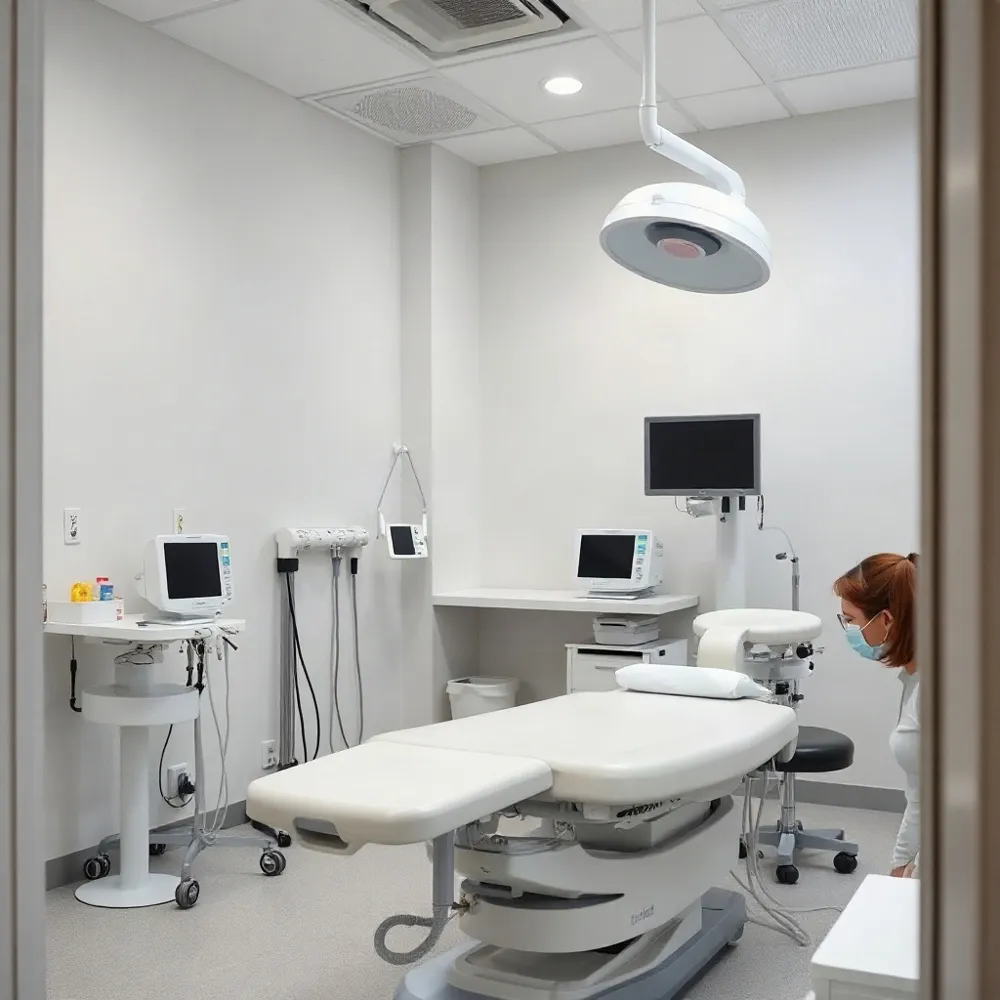 Possible effects depend on the laser device, its settings, the treatment area, and how it is used. Background reports describe temporary warmth, tingling, or redness, but these should not be treated as a verified risk profile for every Class IV device.
Evidence about safety is limited. A CADTH report on the low-level Erchonia FX 635 found no safety concerns in the included studies, while also noting that safety information was not identified or otherwise reported. This finding concerns that specific device, not all laser treatments, and does not prove treatment is risk-free. The report also calls for more research.
Laser equipment can cause harm if used incorrectly. Ask the clinician what device is being used, how its settings are selected, and what training the operator has. Protective eyewear for the patient and operator is an important precaution during treatment. A broader review of laser applications describes potential tissue injury from improper use, though it does not establish the risk profile of Class IV treatment for back pain. The review provides general context, not a specific safety estimate.
Before treatment, discuss the target area and relevant health concerns with your clinician, and report unexpected or worsening symptoms promptly. Safety considerations for laser therapy can help you prepare questions. At osistl.com, care for back, neck, and sciatica pain starts conservatively, with treatment choices considered in the context of an individual assessment.
When Clinical Screening Matters
Class IV laser therapy may not be appropriate for everyone. Before recommending it, a clinician should consider your health history, medications, symptoms, and the area proposed for treatment. At osistl.com, care for back and neck pain begins with assessment and conservative options, with minimally invasive surgery considered when appropriate.
Tell the clinician about pregnancy, active cancer, photosensitivity, reduced sensation or circulation, open wounds, tattoos in the treatment area, and implanted devices. These are screening considerations raised in general laser-treatment discussions, not a universal list of contraindications established for every device or protocol. The review of laser effects on the human body also emphasizes that effects and risks depend on the laser and how it is used.
The right precautions depend on the device’s instructions and the clinician’s assessment. An implanted device, tattoo, or skin concern does not automatically determine whether treatment is suitable, but each should be discussed before a session. Do not stop prescribed medication on your own; ask the prescribing clinician whether any medication affects the treatment plan.
Seek medical evaluation before treating an unexplained lump, suspected infection, or active bleeding. These findings call for assessment rather than an assumption that laser treatment is suitable. Screening helps a clinician decide whether laser therapy fits your circumstances or whether another approach should come first.
Comparing Laser and Light Devices
How does Class IV laser therapy differ from red-light or cold-laser therapy? The devices differ in how they produce and deliver light. Class IV lasers use higher power than low-level or cold-laser devices, but higher power alone does not show that one treatment will work better for a particular person.
“Red light” describes a color range, not a single device type. Some red-light products use LEDs, while a laser produces focused light. Even when devices appear similar, their wavelengths, power, dose, treatment area, and protocols can differ. These factors affect how energy reaches tissue, so results from one device or treatment plan should not be assumed to apply to another.
Research on low-level laser therapy illustrates why the distinction matters. A 2023 review examined the Erchonia FX 635, a specific cold-laser system studied for musculoskeletal lower-back pain. Its findings do not establish the effectiveness of Class IV lasers or red-light devices generally. The review also describes treatment protocols for that system, not a schedule that applies to every device. Read the review of the Erchonia FX 635.
Nor is there a universal penetration depth or session length for all lasers and light devices. A clinician can consider the diagnosis, target tissue, device settings, and treatment area when discussing whether a particular approach fits. At osistl.com, back and sciatica care starts with conservative options and an assessment by a spine clinician, with minimally invasive surgery considered when appropriate.
Safe use matters regardless of the device category. Laser treatment should be applied by a trained professional who can select appropriate settings, and protective eyewear should be used as directed. Patients can ask which device is being used, what evidence applies to it, and what precautions are needed for their treatment.
For a broader comparison of device categories, see Class IV and cold laser therapy.
Device Clearance and Its Limits
Is Class IV laser therapy FDA-cleared or FDA-approved for back pain? The available information does not establish FDA clearance for Class IV laser therapy as a general treatment for back pain. Clearance applies to a particular device and its labeled indication, not automatically to other devices or uses.
A 2023 report from the Canadian Agency for Drugs and Technologies in Health describes the low-level Erchonia FX 635 as cleared for low-back pain of musculoskeletal origin. That device-specific statement is not evidence that Class IV lasers have the same clearance, and research on the FX 635 should not be treated as proof of Class IV effectiveness. The CADTH report on the FX 635 also does not establish that clearance guarantees a cure or benefit for any individual.
Before treatment, ask the provider which device will be used and what indication appears in its labeling. Clearance alone does not determine whether treatment fits your diagnosis or personal circumstances. At the Orthopedic Spine Institute of St. Louis, care for back pain starts conservatively, with minimally invasive surgery considered when appropriate. This patient-first approach keeps a device claim in context: it is one part of a clinical discussion, not a substitute for assessment. For more on the distinction, see device clearance and its limits.
Home Devices and Clinical Treatment
Can laser therapy devices used at home provide the same treatment as clinical Class IV laser therapy? Not necessarily. Home products can differ from clinic systems in power, wavelength, and dosing, so their effects should not be assumed to match. A device label or a similar light-based mechanism does not establish that it delivers the same treatment.
Clinical treatment involves a provider choosing the target area and settings in light of the patient’s symptoms and care plan. A clinician can also explain precautions and monitor how treatment is tolerated. Research on one device should not be treated as proof that another device, including a home product, has the same effects; the CADTH review of the Erchonia FX 635 concerns that specific low-level laser system, not Class IV lasers generally.
At the Orthopedic Spine Institute of St. Louis, back and neck pain care begins with a clinical assessment and conservative options are considered before minimally invasive surgery when appropriate. Ask a clinician whether a home device is suitable for your situation, and do not let it delay evaluation or replace recommended care. The practice’s patient-first approach centers treatment decisions on the cause of symptoms and the person’s needs, rather than assuming one device fits every case.
Costs and Insurance Questions
What factors affect the cost of laser therapy for back pain, and is it covered by insurance? The total can depend on the device used, the treatment area, provider fees, and how many visits are recommended. A background source gives an estimate of $50 to $150 per session, but that is not a local quote or a guaranteed current price. The 2023 CADTH report includes different U.S. cost estimates for a specific low-level laser device; those figures may not reflect current prices in St. Louis or the cost of Class IV treatment.
Coverage varies by insurer and plan, and laser therapy may not be covered. Before scheduling, ask the provider for a written estimate for the full recommended course, including any evaluation fees. Then contact your insurer to confirm benefits, documentation requirements, visit limits, and your expected out-of-pocket costs. Ask whether the estimate could change if the clinician recommends a different number of visits.
At the Orthopedic Spine Institute of St. Louis, care starts conservatively and treatment options are considered in the context of an individual evaluation. That can help patients discuss whether a proposed course fits their diagnosis and budget before committing. For more on planning expenses, see costs and insurance questions.
Discuss Your Options With a Clinician
Class IV laser therapy may be worth discussing as one possible part of back-pain care, but it is not a proven cure or a substitute for finding out what is causing your symptoms. Research on the Erchonia FX 635 concerns a specific low-level laser device, so its findings should not be assumed to apply to Class IV lasers.
Before starting treatment, ask which device and protocol would be used, what evidence applies to your diagnosis, and what safety precautions matter for you. It is also reasonable to ask about expected costs and how the clinician will track progress, including changes in daily activities as well as pain.
An evaluation can help identify appropriate options, whether that means conservative care, further testing, or another treatment. At osistl.com, care for back, neck, and sciatica pain starts conservatively, with minimally invasive surgery considered when appropriate. If back pain is affecting your routine, discuss your symptoms and treatment choices with a spine-care clinician.