Understanding the Link Between Inflammation and Back Pain
Back pain is one of the most common health complaints worldwide, affecting up to 23% of adults globally, according to some studies, and nearly 65 million Americans. At the root of most of these cases lies a common culprit: inflammation.
Inflammation is the body's natural response to injury or irritation. In acute situations, it is a necessary part of healing. When inflammation becomes chronic, however, it can lead to persistent pain, reduced mobility, and muscular guarding. This cycle often underlies conditions like muscle strains, arthritis, disc herniations, and degenerative disc disease.
This article explores a non-invasive treatment that targets and reduces back inflammation at the cellular level: laser therapy. By using a process called photobiomodulation, specific wavelengths of light can stimulate healing and calm the inflammatory response, offering a patient-first, conservative option for pain relief. The Orthopedic Spine Institute of St. Louis provides this science-backed approach as part of a comprehensive care plan.
The Science of Photobiomodulation
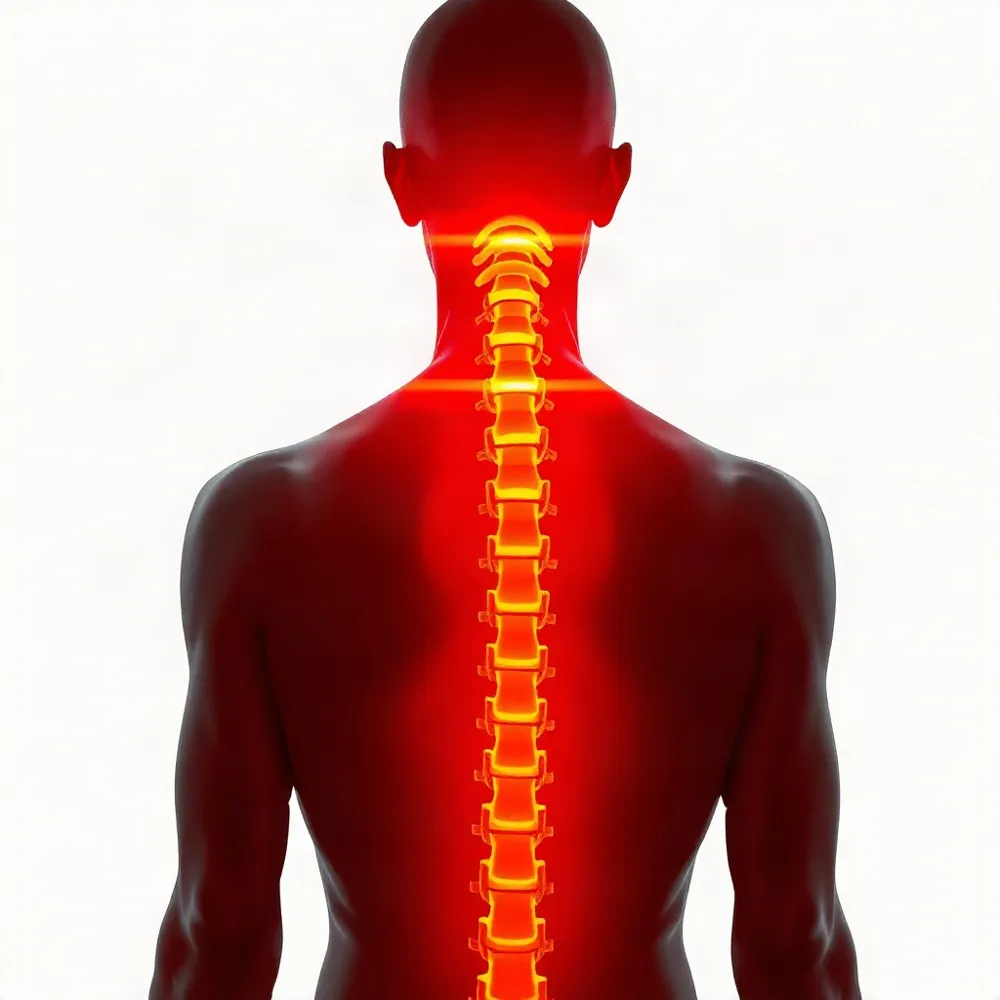 Photobiomodulation (PBM) is the scientific process behind laser therapy for inflammation. It uses specific wavelengths of light, primarily in the red to near-infrared range (roughly 600 nm to 1200 nm), to trigger biological changes within cells. This is the same mechanism utilized in laser therapy for back pain relief, where light energy penetrates the skin to reach damaged tissues.
At the cellular level, photons of light are absorbed by the mitochondria, often called the cell's power supply. This absorption boosts the production of adenosine triphosphate (ATP), the primary energy currency of the cell. A key part of this process involves reversing the inhibition of cytochrome c oxidase (COX) by nitric oxide, which frees the cell's respiratory chain to function more efficiently and enhances the cell's repair capacity.
A distinctive feature of PBM is that the light energy primarily targets abnormally functioning or damaged cells, not healthy ones. This selectivity limits potential side effects and makes the treatment safe. Unlike thermal lasers, PBM uses non-thermal light energy, meaning no heat is produced, which keeps the procedure painless and non-invasive.
The result is a cascade of beneficial effects, including reduced inflammation, increased local blood flow, and enhanced tissue repair. At the Orthopedic Spine Institute of St. Louis, this science is applied through treatments that support the body's natural healing process, offering a conservative first step for managing back pain.
Three Pathways to Reduce Inflammation
 Laser therapy uses photobiomodulation to address back pain through three distinct biological pathways: pain modulation, circulatory support, and tissue recovery. Each pathway works together to reduce inflammation at its source without the side effects associated with medication.
Pain Modulation. The light energy stimulates the nervous system to calm overactive pain pathways. It reduces Substance P, the main chemical that transmits pain signals, and triggers a temporary blockade of nerve impulses. This effect starts at the epidermal nociceptors (superficial pain receptors) within 10 to 20 minutes of application.
Circulatory Support. Laser energy stimulates local blood flow and alters inflammatory signaling in the treated area. It reduces edema and swelling by improving lymphatic vessel function and microcirculation, delivering fresh oxygen and nutrients to damaged tissues while flushing out waste products.
Tissue Recovery. By enhancing cellular metabolism and ATP production, laser therapy accelerates the repair process. It promotes fibroblast activity, collagen synthesis, and the formation of new capillaries (neo-angiogenesis). This cascade effect can also suppress synaptic activity in second-order neurons, preventing the brain from registering pain signals.
When choosing a provider for this type of care, look for one that offers clinic-grade equipment rather than an underpowered at-home device. The Orthopedic Spine Institute of St. Louis uses professional laser systems that are calibrated for the power and wavelength requirements needed to reach deep spinal tissues effectively.
These three pathways work together to reduce inflammation quickly and with minimal discomfort. Because only damaged cells absorb the light energy, healthy tissue remains unaffected, making the treatment both safe and targeted.
FDA-Cleared Success: Clinical Evidence
 The strongest evidence for low-level laser therapy in back pain management comes from a specific device: the Erchonia FX 635. This is the first low-level laser system cleared by the FDA for treating lower back pain of chronic, musculoskeletal origin. Unlike heat-based treatments, it uses 635 nm light energy to stimulate cellular repair without generating heat.
A randomized, double-blind, sham-controlled study of 58 participants found that 72.4% of those treated with the Erchonia FX 635 reported a clinically significant improvement in pain, compared to only 27.6% in the sham group. The treated group also showed a continual progressive reduction in pain and disability, as measured by the Oswestry Disability Index, while the sham group did not.
These results were not temporary. A 12-month follow-up study confirmed that the therapeutic effects were maintained, with pain scores and disability levels remaining significantly lower than baseline. All participants treated with the laser were "satisfied" or "very satisfied" with their pain improvement at the one-year mark.
A 2022 systematic review and meta-analysis further concluded that both low-level and high-intensity laser therapy can reduce pain severity and improve function for nonspecific chronic low back pain. However, it is worth noting that one author of the 2020 Erchonia study was employed by the device manufacturer, introducing a high risk of bias. Larger independent studies are needed to validate these outcomes.
| Study | Design | Key Result |
|---|---|---|
| Erchonia FX 635 (2020) | RCT, 58 participants | 72.4% pain improvement vs. 27.6% sham |
| 12-Month Follow-up | Maintenance study | Satisfaction, sustained pain/disability reduction |
| 2022 Meta-analysis | Systematic review | LLLT/HILT effective for chronic LBP |
The Treatment Experience: Safe and Painless
Laser therapy for back inflammation is a noninvasive, painless experience. During a session, the patient reclines comfortably while the device arms of a system like the FDA-cleared Erchonia FX 635 are adjusted over the lower back. The procedure is fully automated, typically lasting about 20 minutes, and staff can attend to other duties while treatment proceeds.
Patients typically feel a soothing, localized warmth or no sensation at all. The Erchonia FX 635 uses light energy, not thermal energy, so it produces no heat. This is in contrast to Class IV lasers, which deliver significantly more power (up to 40 Watts) to penetrate several centimeters of muscle and fat for deeper targets. Both approaches, however, are gentle and avoid surgical incisions or the side effects of medication.
The recommended protocol involves at least 8 sessions for effective treatment, with biological effects being cumulative; a full trial of 6 to 8 sessions is advised. Low-level laser therapy has a good safety record, with no safety concerns identified in the studies reviewed. Minimal side effects may include mild, temporary redness or a slight warming sensation. Contraindications include avoiding application to the eyes (always wear protective spectacles), careful screening for pacemakers and neurostimulators, and avoiding use in patients on injectable or oral steroids.
Cost, Coverage and Practical Considerations
For many people considering laser therapy for back pain, the first practical question is cost. The price of a single session in the United States typically ranges from $50 to $150, depending on the type of laser and the clinic's location. Advanced Class IV deep-tissue laser therapy sessions often fall between $75 and $125. The FDA-cleared Erchonia FX 635 system, a low-level cold laser, offers a per-session range between $30 and $200. Current treatment protocols suggest at least eight sessions for effective results, bringing the total minimum cost to around $300 at the lower end or up to $1,200.
Most private insurance plans and Medicare do not currently cover laser therapy for back pain, often classifying it as elective or investigational, though coverage varies by policy. Some clinics offer lower prices when laser sessions are bundled into a comprehensive physical therapy plan. At Orthopedic Spine Institute of St. Louis, we focus on providing transparent, patient-first care to help you understand all costs before beginning treatment.
Why At-Home Devices Fall Short
A natural question is whether less expensive at-home laser devices can provide the same benefits. The answer is no. Home-use cold lasers are generally underpowered compared to professional clinic-grade equipment. They lack the power and precision needed to deliver a therapeutic dose to the deeper spinal tissues where back pain originates. For deep lumbar targets, a clinic-grade Class IV laser is typically required to reach several centimeters of muscle and fat to effectively reach the nerve root. At-home devices are not considered worth the investment for treating deep spinal issues and may be ineffective or unsafe without professional oversight.
A Recommended Nonpharmacologic Option
The value of laser therapy extends beyond its price tag. The 2022 CDC guidelines recommend maximizing nonpharmacologic and nonopioid interventions for pain, listing low-level laser therapy alongside exercise, physical therapy, yoga, and acupuncture. For patients seeking a conservative, drug-free approach to managing back inflammation, laser therapy represents a safe and effective alternative to pharmacotherapy, which carries risks of adverse effects and addiction.
Laser vs. Red Light Therapy
Both laser therapy and red light therapy use similar wavelengths in the red to near-infrared range, but they are not interchangeable. The difference lies in how the light is delivered.
Red light therapy uses low-powered light-emitting diodes (LEDs) that produce scattered, non-coherent light. This type of light is useful for surface-level benefits, such as skin care or general wellness, but it lacks the energy density to reach deep spinal structures. For treating back inflammation and deep-seated pain in the joints, muscles, and tendons, a more powerful clinical tool is needed.
Laser therapy, particularly Class IV high-intensity laser therapy, delivers coherent, collimated light with a much higher energy density. This focused beam can penetrate several centimeters of muscle and fat, making it the appropriate choice for reaching deep lumbar targets and providing effective photobiomodulation for inflammation and tissue repair.
Some research has explored combining specific wavelengths to enhance outcomes. A 2017 double-blind randomized controlled trial published in the medical literature found that combining 850-nm and 650-nm lasers was more effective at improving spinal flexibility and reducing disability in chronic low back pain than using either wavelength alone.
For patients dealing with chronic back pain, choosing the right treatment depends on the specific condition. The team at the Orthopedic Spine Institute of St. Louis can provide a consultation to determine whether advanced laser therapy or another conservative approach is the most appropriate path for your situation.
A Non-Invasive Foundation for Conservative Care
For the estimated 80% of adults who will experience chronic low back pain at least once in their lifetime, the first instinct is often to endure it or seek quick fixes. However, a growing body of clinical guidance recommends starting with non-invasive, non-pharmacologic options before considering more aggressive treatments like surgery.
The 2022 CDC guidelines explicitly list low-level laser therapy alongside exercise, physical therapy, yoga, and acupuncture as recommended nonpharmacologic interventions for pain. This shift in official guidance positions laser therapy not as an alternative to conservative care but as a foundational part of it.
Prolonged inactivity is the worst thing for back pain. Sitting for hours without a break or staying in bed weakens the supporting muscles, increases stiffness, and often intensifies pain. Gentle movement, proper ergonomics, and core-strengthening exercises are essential for protecting the spine.
Laser therapy is not a substitute for structural corrections needed for a disc bulge or spinal stenosis. However, it is an excellent adjunct for inflammation-driven pain. When paired with physical therapy, manual therapy, and exercise, laser therapy helps restore range of motion, rebuild posture, and strengthen the core. For lasting change, lasers should always be part of a broader rehabilitation program.
High Responders. Patients with irritable non-specific low back pain, acute muscle strains, sciatica, arthritis, and degenerative conditions like degenerative joint disease or degenerative disc disease respond best to this combined approach.
Conservative First Approach. At osistl.com, the patient-first philosophy starts with these conservative methods and only considers minimally invasive surgery when appropriate. This mirrors the broader medical consensus that nonpharmacologic options should be maximized before escalating care.
Light as a Path to Healing
Laser therapy, grounded in the science of photobiomodulation, offers a scientifically validated, non-invasive, and painless tool for reducing back inflammation at the cellular level. It uses specific wavelengths of light to stimulate the mitochondria, increasing ATP production and triggering a cascade of healing responses that address the root cause of pain.
The key benefits are well-documented: increased blood flow to injured tissues, reduced edema, calmed pain signals, and accelerated tissue repair, all with few to no side effects. For example, the FDA-cleared Erchonia FX 635 system has shown in clinical studies that 72.4% of participants experienced a significant reduction in back pain, with effects maintained at a 12-month follow-up.
It is important to remember that laser therapy is most effective when it is part of a comprehensive plan that includes rehabilitation, corrective exercise, and good posture. The Orthopedic Spine Institute of St. Louis provides patient-first care for back, neck, and sciatica pain, starting conservatively and offering minimally invasive surgery when appropriate. Their approach ensures that laser therapy is integrated into a broader strategy for lasting relief.
If you are struggling with persistent back pain, exploring laser therapy as a non-invasive foundation for recovery is a logical next step. Understanding how inflammation responds to light empowers you to take an active role in your recovery journey.
To learn if this treatment is right for you, schedule a consultation with the Orthopedic Spine Institute of St. Louis and discover how a conservative, patient-first approach can help you move better and feel better.