Why Patience Matters in Spine Care
At the Orthopedic Spine Institute of St. Louis we place the patient first, offering education, decision‑making, and a plan that begins with non‑surgical options. Patience is a core therapeutic principle because tissue healing, muscle adaptation and fear‑avoidance reversal take weeks to months; rushing to surgery can increase risk and reduce long‑term benefit. Robust evidence supports this approach: randomized trials show cognitive‑exercise programs achieve disability reductions comparable to lumbar fusion, and multidisciplinary conservative care (exercise, CBT, lifestyle change) yields improvements with minimal complications. By embracing patience and a patient‑first mindset, we help patients achieve lasting spine health while avoiding unnecessary invasive procedures.
Quick Home Relief Strategies
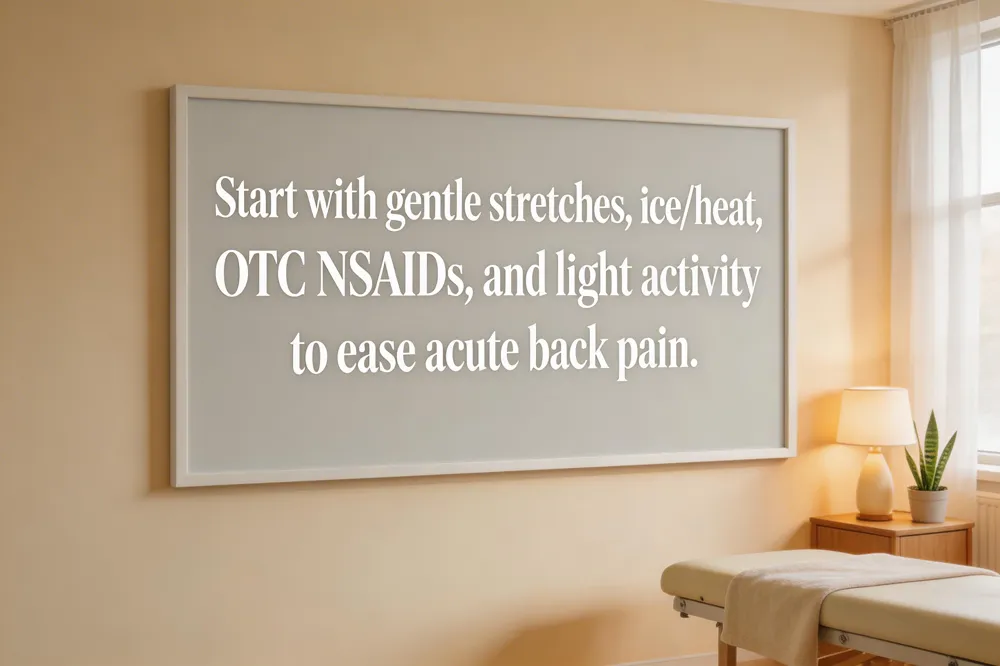 When back pain strikes, start with gentle, low‑impact stretches. The knee‑to‑chest and lower‑back rotational stretches each held 5‑10 seconds, repeated 2‑3 times twice daily, help loosen tight tissue without aggravating symptoms. In the first 48‑72 hours apply an ice pack for 15‑20 minutes to curb inflammation; afterward, switch to a heating pad for 20 minutes to relax muscles. Over‑the‑counter NSAIDs such as ibuprofen, or acetaminophen, relieve pain and reduce swelling when taken as directed. Light activity—short walks or gentle aerobic movement—keeps the spine mobile and prevents de‑conditioning, while maintaining good posture with a small pillow under the lower back or knees provides support.
Core activation exercises like bridges and posterior pelvic tilts (5‑10 reps, building to 30) strengthen the deep stabilizers and improve spinal alignment. If pain persists beyond a few days, worsens, or is accompanied by red‑flag symptoms, schedule a consultation with Dr. David S. Raskas for a personalized, evidence‑based conservative treatment plan.
Finding the Right Spine Specialist in St. Louis
 Spine specialist St louis
Dr. David S. Raskas, MD, is a board‑certified spine specialist at the Orthopedic Spine Institute of St. Louis. He follows a patient‑first, conservative‑first model—starting with physical therapy, medication, and targeted injections—and reserves minimally invasive surgery (microdecompression, fusion, basivertebral nerve ablation) for cases that truly need it. The institute treats the full spectrum of spinal conditions, from degenerative disc disease to complex deformities, and offers online insurance tools, secure forms, and easy appointment scheduling.
Spine institute St louis mo
Located at 10435 Clayton Rd Ste 120, St. Louis, MO 63131, the Orthopedic Spine Institute provides comprehensive spine care that begins with non‑operative treatment and progresses to same‑day outpatient surgery when indicated. The facility is equipped with advanced imaging and a multidisciplinary team, ensuring coordinated, low‑risk care.
What is the first line treatment for acute low back pain (LBP) and why is it preferred?
The first‑line approach is active care—light activity, core‑strengthening, stretching—combined with short‑term NSAIDs or acetaminophen. This regimen relieves pain, addresses inflammation, avoids the risks of opioids or surgery, and leverages the natural self‑limiting course of most acute episodes.
10435 Clayton Rd Ste 120 Saint Louis, MO 63131
This address serves as the primary office for intake, evaluations, and follow‑ups with Dr. Raskas. Parking is available, staff are on‑site Monday‑Friday, and the location is listed on the institute’s website for easy contact and insurance coordination.
Understanding Conservative Management and Its Meaning
 Conservative management is a non‑surgical, patient‑first approach that seeks pain relief and functional recovery while preserving the spine’s natural anatomy. It begins with education and activity modification, followed by a structured physical‑therapy program emphasizing core‑stability, flexibility, and posture, often combined with manual therapy or guided exercises such as McKenzie, Pilates, or high‑intensity aerobic training. Evidence from randomized trials (e.g., Brox et al., 2003/2006; Fairbank et al., 2005) shows that cognitive‑exercise programs achieve disability reductions comparable to lumbar fusion, and multimodal programs (education‑ plus exercise) provide clinically meaningful improvements in the Oswestry Disability Index. Adjunctive treatments include NSAIDs, muscle‑relaxants, targeted injections (epidural steroids, facet blocks), and complementary modalities like acupuncture or mindfulness‑based therapy. The care pathway is progressive: patients are reassessed every 6–12 weeks, advancing only if pain persists or red‑flag signs emerge, thereby minimizing surgical risks and costs.
Tailored Care for Women and Severe Pain
 How to reduce back pain for female
Women can alleviate back pain by engaging in low‑impact aerobic activities such as walking, swimming, or cycling to boost circulation and support core stability without over‑loading the spine. Targeted pelvic‑floor and core‑strengthening moves (bridges, abdominal bracing) counteract hormonal ligament laxity. Daily stretches—knee‑to‑chest, lower‑back rotation, cat stretch—combined with mindful posture, especially during prolonged sitting, keep muscles flexible and reduce disc pressure. Adequate footwear, a supportive sleep position (pillow between knees or under hips), weight management, smoking cessation, and a personalized physical‑therapy program further prevent flare‑ups.
How to reduce back pain for female
Women can alleviate back pain by engaging in low‑impact aerobic activities such as walking, swimming, or cycling to boost circulation and support core stability without over‑loading the spine. Targeted pelvic‑floor and core‑strengthening moves (bridges, abdominal bracing) counteract hormonal ligament laxity. Daily stretches—knee‑to‑chest, lower‑back rotation, cat stretch—combined with mindful posture, especially during prolonged sitting, keep muscles flexible and reduce disc pressure. Adequate footwear, a supportive sleep position (pillow between knees or under hips), weight management, smoking cessation, and a personalized physical‑therapy program further prevent flare‑ups.
Female lower back pain treatment Management begins with a customized PT regimen that blends core strengthening, pelvic‑floor rehab, and gentle stretching. Ergonomic adjustments at work and home, proper lifting techniques, and lifestyle modifications reduce strain. When pain persists, image‑guided injections (epidural steroid or facet joint) provide temporary relief while underlying issues are addressed. If conservative care fails, minimally invasive decompression or micro‑discectomy may be considered, supplemented by mindfulness, anti‑inflammatory diet, and regular low‑impact exercise.
What causes back pain in females Hormonal fluctuations (menstruation, pregnancy, menopause) affect pain sensitivity and joint stability. Pregnancy adds weight and shifts the center of gravity, stressing the lumbar spine and sacroiliac joints. Anatomical differences—wider pelvis, smaller sacroiliac joint—alter load distribution, predisposing women to spondylolisthesis, scoliosis, and sacroiliac dysfunction. Post‑menopausal osteoporosis can cause vertebral fractures. Muscular imbalances, sedentary habits, and poor posture exacerbate strain.
How to relieve severe back pain First, a spine specialist rules out red‑flag conditions. Prescription‑strength NSAIDs or muscle relaxants manage acute pain. Begin a gentle daily routine of core‑strengthening and stretching (knee‑to‑chest, lower‑back rotation, bridge, cat stretch). Maintain ergonomic posture, take frequent short walks, and use supportive pillows. Weight control and smoking cessation lessen disc stress. Persistent pain may require targeted PT, short‑term steroid injections, or minimally invasive surgery, offered by Dr. David S. Raskas at the Orthopedic Spine Institute of St. Louis.
Top Surgeons and Reviews in St. Louis
 Best spine surgeons in St. Louis, MO Dr. David S. Raskas, MD, is frequently cited as one of St. Louis’ top spine surgeons for his expertise in both Conservative care and minimally invasive spine care. Dr. Jacob M. Buchowski, MD MS, a distinguished professor at Washington University, is renowned for complex spinal tumor and reconstructive surgery. Dr. Keith H. Bridwell, MD, leads the pediatric and adult spinal deformity program and excels in revision cases. Surgeons at Barnes‑Jewish Hospital, including the orthopedic spine team, are also highly regarded for comprehensive treatment of degenerative, traumatic, and deformity conditions.
Top 10 back surgeons in St. Louis, MO Leading back surgeons include Dr. David S. Raskas (Orthopedic Spine Institute), Dr. Benjamin Crane (Orthopedic Spine Center), Dr. Ian G. Dorward (Washington University), Dr. Michael J. Reiter (Neurosurgery of St. Louis), Dr. Wilson Ray (HealthGrades‑rated), Dr. Neill Wright, Dr. Lukas Zebala (Washington University Orthopedics), Dr. Brett A. Taylor (Town & Country Crossing Orthopedics), and Dr. Mirkin R. Peter (Tesson Ferry Spine & Orthopedic Center). They offer a blend of surgical and non‑operative options.
Dr. Raskas reviews Patients consistently rate Dr. Raskas highly for thorough examinations, clear communication, and effective treatment plans. On Healthgrades he holds a 3.7‑star rating based on 30 reviews, with many praising his patient‑first approach, attentive staff, and clean environment. Reviewers note his detailed explanations of diagnoses and options, fostering informed decisions about surgical or Conservative care.
Best orthopedic doctors in St. Louis Dr. David S. Raskas, MD, leads orthopedic spine care. Dr. Ryan Nunley, MD, and Dr. Andrew Thome Jr., MD, excel in joint replacement and sports injuries. Dr. Robert Morgan, MD, focuses on spine reconstructive surgery, while Dr. Charles Goldfarb, MD, is a top hand‑and‑wrist surgeon. Dr. Jonathan Koscso, MD, receives perfect‑rated reviews at Barnes Jewish Hospital. Together they represent the premier orthopedic talent in the region.
Medication, Injections, and Advanced Options
 Pain‑relieving drugs start with NSAIDs or acetaminophen; if relief is insufficient, short‑course opioids such as oxycodone, hydrocodone, or tramadol may be prescribed, together with muscle‑relaxants like cyclobenzaprine, always monitored for drowsiness, constipation, and dependence. Targeted injections—epidural steroids, facet joint blocks, or medial‑branch radiofrequency ablation—provide temporary inflammation control and can bridge patients to active therapy. Strong analgesics are used sparingly; the Orthopedic Spine Institute of St. Louis emphasizes rapid pain control while quickly transitioning to non‑pharmacologic care.
Strong painkillers for lower back pain: When over‑the‑counter options fail, physicians may prescribe brief opioid courses and muscle‑relaxants, monitor side‑effects, and move patients toward physical therapy and minimally invasive procedures.
Orthopedic spine Center Dr Crane: Dr. Benjamin P. Crane, MD, is a board‑certified orthopedic spine surgeon in St. Louis who practices a patient‑first, evidence‑based approach, beginning with thorough evaluation before any surgery.
Which of the following is considered a conservative treatment for CLBp? Education, psychological intervention, therapeutic exercises, and bracing that lead to an independent home‑exercise program.
Four types of back pain: Mechanical (muscle/ligament strain), discogenic (damaged disc irritation), radicular (nerve root compression/sciatica), and inflammatory (systemic arthritis or spondylitis).
Maintaining Spine Health with Patience and Professional Guidance
Conservative, non‑surgical care not only eases current pain but also builds a foundation for lasting spine health. Structured exercise, education, and lifestyle changes reduce fear‑avoidance beliefs, improve core stability, and lower the risk of future degeneration, often preventing the need for surgery. At the Orthopedic Spine Institute of St. Louis, Dr. David S. Raskas guides patients through a patient‑first, evidence‑based pathway that begins with targeted physical therapy, pain‑modulating injections when appropriate, and progressive home‑exercise programs. After an initial evaluation, a customized plan is reviewed every 4–6 weeks to track progress and adjust treatment. To start your journey toward stronger, pain‑free living, call (314) 569‑0616 or visit https://www.osil.com to request an appointment online. Our team is ready to answer questions, verify insurance, and coordinate care so you can achieve lasting relief.