Understanding Spine Conditions and the Importance of Conservative Care
Spine anatomy and common conditions
The spine is a crucial structure supporting the head and upper body. It allows essential movements like walking, standing, twisting, and balancing while protecting the spinal cord and nerves. The spine is made up of vertebrae separated by shock-absorbing discs, supported by ligaments and muscles.
Common spine conditions include disk degeneration, osteoarthritis, sciatica, pinched nerves, spinal stenosis, and osteoporosis. These issues can lead to symptoms like chronic pain, weakness, or numbness.
Prevalence and impact of back pain
Back pain affects up to 80% of people during their lifetime and is a leading cause of missed work and disability. Chronic back pain—lasting over three months—can significantly reduce quality of life, affecting sleep, mental health, and daily function.
Role of conservative, non-surgical treatment in spine care
Conservative care is the foundation for managing most spine conditions and focuses on reducing pain while restoring mobility and function. Treatments include:
- Physical therapy with exercises tailored to strengthen core muscles and improve posture
- Medications like NSAIDs, muscle relaxants, and nerve pain agents designed for short-term relief
- Psychological approaches such as mindfulness and cognitive behavioral therapy to manage chronic pain stress
- Lifestyle changes including activity pacing, quitting smoking, and maintaining a healthy weight
- Injection therapies to target inflammation or nerve irritation when necessary
Minimally invasive surgery is reserved for cases unresponsive to these methods, with most patients achieving significant improvement through these conservative approaches.
Comprehensive Non-Surgical Treatment Options for Spine Conditions
Medications used for spine pain management
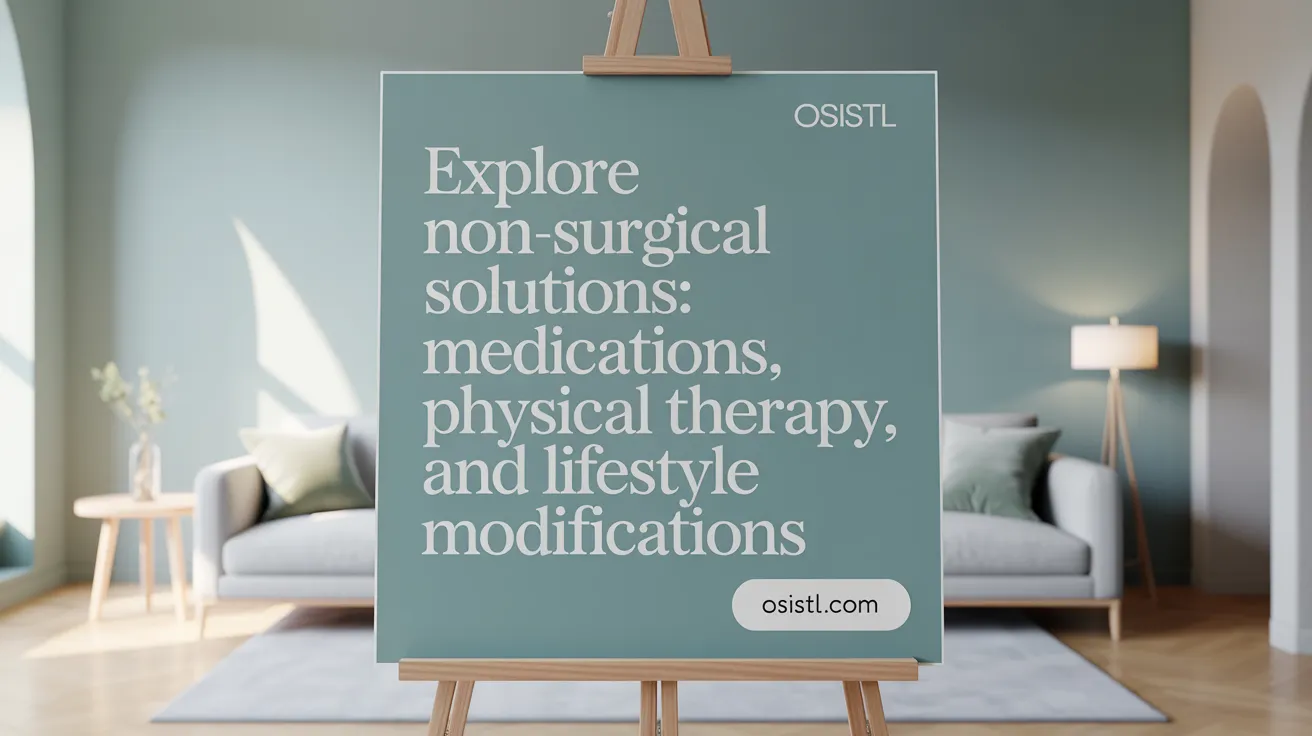
Managing spine-related pain often begins with medications for chronic back pain tailored to the individual's symptoms. Commonly used drugs include nonsteroidal anti-inflammatory drugs (NSAIDs) to reduce inflammation, muscle relaxants for back pain for spasms, and nerve pain medications such as gabapentin. Antidepressants for pain management may also be prescribed to address chronic pain, especially when pain profoundly impacts mood. Opioids are generally reserved for short-term use due to the risk of dependence and side effects.
Physical therapy focusing on core strengthening and posture
Physical therapy for back pain is a cornerstone of non-surgical spine care. Programs emphasize core muscle strengthening, stretching, posture retraining, and aerobic exercises to enhance flexibility and spinal support. These exercises are customized to the patient's condition and are essential for restoring function and preventing pain recurrence. Maintaining a consistent home exercise routine further improves outcomes.
Psychological and lifestyle interventions for chronic pain
Chronic back pain affects more than just physical health; psychological factors play a crucial role. Interventions such as mindfulness, meditation, yoga, and cognitive behavioral therapy help patients manage the emotional aspects of chronic pain. Lifestyle modifications—including pacing activity, quitting smoking, following anti-inflammatory diets, and weight management—also meaningfully reduce pain and improve quality of life.
What treatment approaches does the Orthopedic Spine Institute of St. Louis use for back and neck pain?
The Orthopedic Spine Institute of St. Louis follows a comprehensive, patient-focused approach that starts with conservative treatments like physical and occupational therapy, medications, injections, bracing, and posture education. When necessary, advanced minimally invasive spine surgery procedures are employed. Their multidisciplinary team combines orthopedic and neurological expertise to restore function, control pain, and promote activity, ensuring personalized care effective for a range of spine conditions.
Advanced Minimally Invasive Techniques as a Complement to Conservative Care
Types of minimally invasive surgeries offered
The Orthopedic Spine Institute of St. Louis provides several Minimally invasive spine surgery procedures tailored to various spinal conditions. Procedures include microdiscectomy to address herniated discs, Minimally invasive spine surgery for precise visualization and reduced tissue damage, and Minimally invasive spine surgery for cases requiring vertebral stabilization. They also perform microdecompression and spinal osteotomies for complex deformities, alongside newer treatments such as basivertebral nerve ablation to relieve chronic back pain.
Benefits and outcomes of minimally invasive spinal procedures
Minimally invasive spine surgery offers significant advantages over traditional open surgery. Smaller incisions cause less muscle and tissue damage, resulting in reduced postoperative pain and lower risk of infection. Patients typically experience less blood loss and scarring. Recovery times are shorter, with many returning to normal activities within weeks. These procedures often allow outpatient treatment or brief hospital stays, enhancing convenience and patient comfort. Additionally, precise tools and imaging guidance improve surgical accuracy and reduce complications.
Situations requiring surgical intervention after non-surgical treatments
Surgery becomes a consideration when Conservative treatment options for back pain like physical therapy, medications, injections, and lifestyle modifications fail to control symptoms. Red flag symptoms for surgery such as worsening neurological deficits, new limb weakness, bowel or bladder dysfunction, or confirmed spinal instability on imaging necessitate surgical evaluation. Persistent severe pain impacting quality of life despite exhaustive Non-surgical spine treatments may also prompt Minimally invasive spine surgery to restore function and relieve nerve compression. Orthopedic spine specialists carefully assess candidacy to ensure surgery is appropriate, aiming to balance treatment efficacy with minimally invasive approaches whenever possible.
Common Spine Conditions Treated at the Orthopedic Spine Institute of St. Louis
What conditions related to back, neck, and sciatica pain does the Orthopedic Spine Institute of St. Louis treat?
The Orthopedic Spine Institute of St. Louis offers expert care for a broad spectrum of Common spine conditions. Their treatment covers degenerative diseases such as degenerative disc disease treatment and spinal stenosis specialists, common culprits behind chronic back and neck pain. They manage disc herniations management, which often cause Sciatica causes and treatments and nerve pain.
Range of conditions including degenerative disc disease, spinal stenosis
Patients with spinal stenosis specialists, a narrowing of the spinal canal that may cause leg pain and weakness, receive tailored Minimally invasive spine surgery overview and surgical treatments. Degenerative disc disease treatment, a frequent cause of chronic discomfort, is addressed through Physical therapy for back pain and Medications for back pain, alongside Benefits of minimally invasive spine surgery when needed.
Treatment of fractures, scoliosis, kyphosis, and spinal tumors
The institute is also skilled in treating traumatic spinal fractures and spinal deformities including scoliosis treatment and surgery and kyphosis surgical care. These complex conditions often require specialized surgical techniques, including Minimally invasive spine surgery overview, to restore spinal alignment and stability. For patients with spinal tumor treatment, the center offers advanced surgical options combined with comprehensive postoperative care.
Approach to complex and pediatric spinal conditions
The center's multidisciplinary team manages congenital deformities and complex spinal disorders in both adults and children. Emphasizing a blend of conservative care and innovative surgical methods, the institute prioritizes patient-centered spine care plans that focus on pain relief and functional restoration.
The Orthopedic Spine Institute’s comprehensive approach ensures individualized care for a range of spinal disorders, making it a trusted choice for patients in the St. Louis area seeking expert Comprehensive spine care.
Insurance and Access: Navigating Care at the Orthopedic Spine Institute
Does the Orthopedic Spine Institute of St. Louis accept insurance, and how can patients verify coverage?
Yes, the Orthopedic Spine Institute of St. Louis accepts various insurance plans, including Medicare. Before any procedure, their medical staff verifies insurance benefits and carefully reviews patient charts to ensure coverage details are clear. Typically, patients are responsible for co-insurance and deductibles, which are collected at the time of service registration. To confirm if a specific insurance plan is accepted, patients can visit the Institute’s website or directly contact their office for personalized assistance.
How can patients access secure forms and book an appointment at the Orthopedic Spine Institute of St. Louis?
The Institute’s official website provides a secure portal where patients can fill out necessary forms safely and schedule appointments online. For those experiencing urgent spine-related issues, the TOC FIRST program offers same-day appointments to address pressing concerns promptly. Additionally, patients can call the office to schedule visits or ask questions. This streamlined access ensures that obtaining comprehensive spine care is both convenient and secure for the St. Louis community.
Meet Dr. David S. Raskas: Expert Spine Care Specialist in St. Louis
Who is Dr. David S. Raskas, and what is his role at the Orthopedic Spine Institute of St. Louis?
Dr. David S. Raskas, MD is a highly experienced, board-certified orthopedic spine surgeon, with over two decades in the field. He practices at the Orthopedic and Spine Institute of St. Louis, located in Des Peres, Missouri. His affiliation with top-ranked regional hospitals, including Mercy Hospital St. Louis and Missouri Baptist Medical Center, underscores his commitment to delivering expert spine care.
What qualifications and hospital affiliations does Dr. Raskas hold?
Dr. Raskas completed his medical education at Saint Louis University School of Medicine, followed by residencies at UCLA and the University of Michigan. His extensive training equips him to manage complex spinal conditions using both minimally invasive and traditional surgical techniques. His hospital affiliations bolster access to cutting-edge treatments and comfort of care for patients in the St. Louis area.
How does Dr. Raskas approach spine care and patient treatment?
Focused on a patient-centered philosophy, Dr. Raskas emphasizes thorough diagnosis and conservative management before surgery. His approach prioritizes minimizing pain and restoring active lifestyles for patients. Advanced Minimally-Invasive Spine Surgery is offered when necessary, aiming for quicker recovery and reduced discomfort.
What is his connection to the local St. Louis community?
As a staple of orthopedic spine care in the region, Dr. Raskas serves the St. Louis community through the Orthopedic and Spine Institute, providing accessible expert care. He is well-regarded by patients for his personalized and compassionate treatment style.
This trusted combination of experience, comprehensive care philosophy, and commitment to minimally invasive techniques makes Dr. Raskas a leading spine care specialist in St. Louis.
Integrating Emerging Non-Surgical Therapies and Holistic Approaches in Spine Care
What are recent advances like neuromodulation and targeted drug delivery?
Recent innovations in spine care have introduced therapies like neuromodulation for nerve pain, which uses electrical impulses to directly reduce nerve pain by modulating nerve signals. This technique can provide relief when conventional treatments fall short, especially in cases of chronic or post-surgical pain. Targeted drug delivery systems represent another advancement, utilizing pumps to administer medications directly around the spinal cord. This targeted approach improves medication effectiveness while reducing systemic side effects.
How do psychological treatments including cognitive behavioral therapy support spine health?
Chronic spine pain involves complex physical and emotional components. Psychological treatments for chronic pain, particularly cognitive behavioral therapy (CBT), have become integral in managing these aspects. CBT helps patients develop coping strategies that reduce pain perception and improve emotional wellbeing. Mindfulness and meditation for back pain, yoga, and tai chi also complement physical recovery by addressing stress and enhancing mental resilience in chronic pain sufferers.
What lifestyle and alternative therapies support long-term spine health?
Lifestyle modifications for pain management are vital for sustaining spine health. Anti-inflammatory diets that minimize processed foods, trans fats, and sugars help reduce systemic inflammation linked to pain. Maintaining a healthy weight decreases mechanical stress on the spine. Incorporating low-impact exercises like Pilates, yoga, and tai chi promotes flexibility and core strength. Additionally, alternative treatments for back pain such as acupuncture, massage, biofeedback, and electrical nerve stimulation offer low-risk options that can alleviate symptoms and enhance overall function.
Together, these emerging non-surgical spine treatments and holistic approaches form an integrated comprehensive spine care plan aimed at reducing pain, improving function, and enhancing quality of life without surgery.
The Path to Lasting Relief: Embracing Conservative Spine Care Before Surgery
Importance of conservative management as first-line treatment
Conservative spine care is widely recognized as the preferred initial approach for managing back and neck pain. Most spinal issues respond well to non-surgical methods, reducing the need for invasive procedures. These treatments include medications such as NSAIDs and muscle relaxants, physical therapy focused on core strengthening and posture correction, and lifestyle modification. Emphasizing conservative care helps prevent surgery-related risks and supports natural healing.
Role of multidisciplinary teams in personalized care
Effective spine care involves a collaborative effort among specialists including physiatrists, orthopedic surgeons, pain management physicians, and physical therapists. This team approach ensures a comprehensive evaluation and development of individualized treatment plans that address the unique needs of each patient. Combining modalities like physical therapy, injections, medication, and behavioral strategies enhances outcomes and accelerates recovery.
Encouragement for patients to seek expert evaluation and tailored non-surgical plans
Patients experiencing back or neck pain are encouraged to seek expert evaluation promptly. Early assessment allows clinicians to identify specific causes and rule out serious conditions. Tailored non-surgical plans maximize symptom relief while maintaining function and quality of life. Adhering to these conservative strategies before considering surgery empowers patients to explore safer, effective avenues for lasting relief in a supportive environment.