Why High‑Power Laser Matters in Modern Spine Care
Class IV laser devices deliver 5‑90 W of red and near‑infrared light that penetrates 5‑10 cm into muscle, tendon, facet joints and intervertebral discs. The photons are absorbed by mitochondrial cytochrome c oxidase, triggering photobiomodulation that boosts ATP production, reduces oxidative stress, and releases nitric‑oxide and endogenous opioids. This cascade improves microcirculation, dampens inflammation, and accelerates collagen synthesis, providing rapid analgesia and tissue repair. For patients with low‑back, cervical, or sciatica pain, the deep‑tissue reach of Class IV lasers targets the exact source of nociceptive signaling, delivering 30‑60 % pain‑score reductions in 6‑12 sessions while preserving a non‑invasive, drug‑free profile.
Frequency of Treatments for Back and Neck Pain
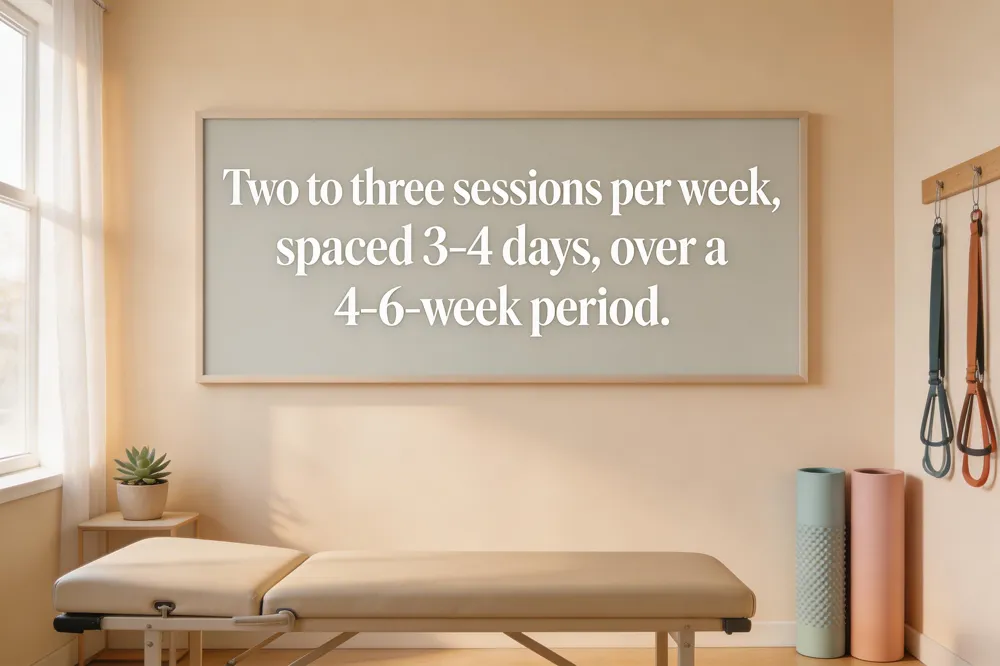 Class IV laser therapy is typically administered two to three times per week for patients with back or neck pain. A common protocol schedules sessions on non‑consecutive days—e.g., Monday, Wednesday, and Friday—leaving at least three to four days between treatments. This spacing allows the deep‑tissue biostimulation to trigger cellular repair, improve microcirculation, and reduce inflammation without overstimulating the mitochondria.
Rationale for spacing – The photobiomodulation effect peaks within minutes after exposure, but the downstream healing cascade (ATP production, collagen synthesis, nitric‑oxide release) continues for hours to days. Giving tissues a recovery window maximizes the therapeutic dose while minimizing the risk of temporary heat buildup or excess oxidative stress.
Adjustment based on patient response – After the first two to three weeks, clinicians reassess pain scores, range of motion, and functional improvement. If pain drops rapidly, the frequency may be tapered to twice weekly; if progress is slower, a third weekly session can be added.
Q: How often should I use a Class 4 laser for back or neck pain? A: Most clinicians schedule Class IV laser therapy two to three times per week, with at least three to four days between sessions. A typical course lasts four to six weeks (8–12 treatments) and is adjusted based on how quickly pain and stiffness improve. Patients begin with a conservative regimen, are reassessed after the first few weeks, and the frequency is fine‑tuned under the guidance of a qualified spine specialist such as Dr. David S. Raskas.
How Many Sessions Are Needed?
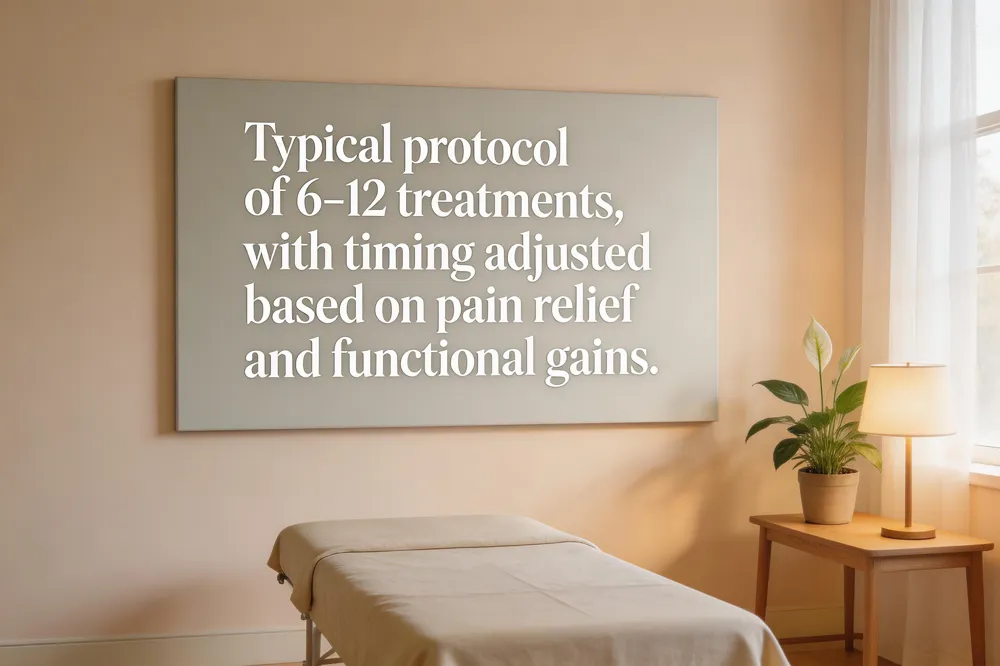 Class IV laser therapy is usually administered in a short, intensive course of 6 to 12 sessions. Most clinicians begin with weekly treatments for the first three to four weeks, allowing rapid assessment of pain reduction, range‑of‑motion gains, and functional improvement. If a patient reports swift relief, the schedule may be tapered to bi‑weekly or monthly visits; more refractory cases often complete the full 12‑session protocol.
Factors influencing the total number of sessions include the severity and chronicity of the musculoskeletal condition, depth of the targeted tissue, laser power setting (5‑15 W is common), wavelength selection (e.g., 650 nm red vs. 810 nm near‑infrared), and individual biological response (ATP production, inflammation reduction). Co‑existing therapies such as physical therapy or shock‑wave treatment can also affect dosing needs.
Monitoring progress involves regular pain‑score checks (VAS or NRS), functional assessments (Oswestry Disability Index, range‑of‑motion testing), and observation of any mild skin warmth or tingling. Clinicians adjust energy density (5‑30 J/cm²) or session length (5‑15 minutes) based on these metrics, ensuring each patient receives the optimal dose while avoiding unnecessary exposure. The final session count is therefore personalized, aiming for maximal pain relief and functional recovery.
Cost and Insurance Realities
 Class IV laser therapy, a high‑intensity, FDA‑cleared modality for musculoskeletal pain, is typically priced at roughly $100 per visit in the United States. Most clinics quote a range of $75‑$125 for a single treatment, and many offer package deals that bring the total to $500‑$1,500 for a full course of five to ten sessions. These bundled rates often appeal to patients who want to spread out the cost and secure a predictable out‑of‑pocket expense.
Insurance coverage for Class IV laser therapy remains limited. Private insurers usually consider the treatment investigational or experimental, so it is not listed as a covered service. When coverage is offered, it hinges on a medical‑necessity determination and the use of a specific CPT code that the payer recognizes. Medicare and most Medicaid programs typically exclude Class IV laser therapy unless it is part of a broader, evidence‑based protocol that receives prior authorization. Because policies differ by state, employer, and individual plan, patients should verify coverage with their insurer and may need to rely on flexible‑spending accounts or out‑of‑pocket payment.
Overall, the average cost per session is about $100, package pricing can reduce the per‑session rate, and insurance reimbursement is uncommon, making direct payment the norm for most recipients.
Safety Profile, Side Effects, and Drawbacks
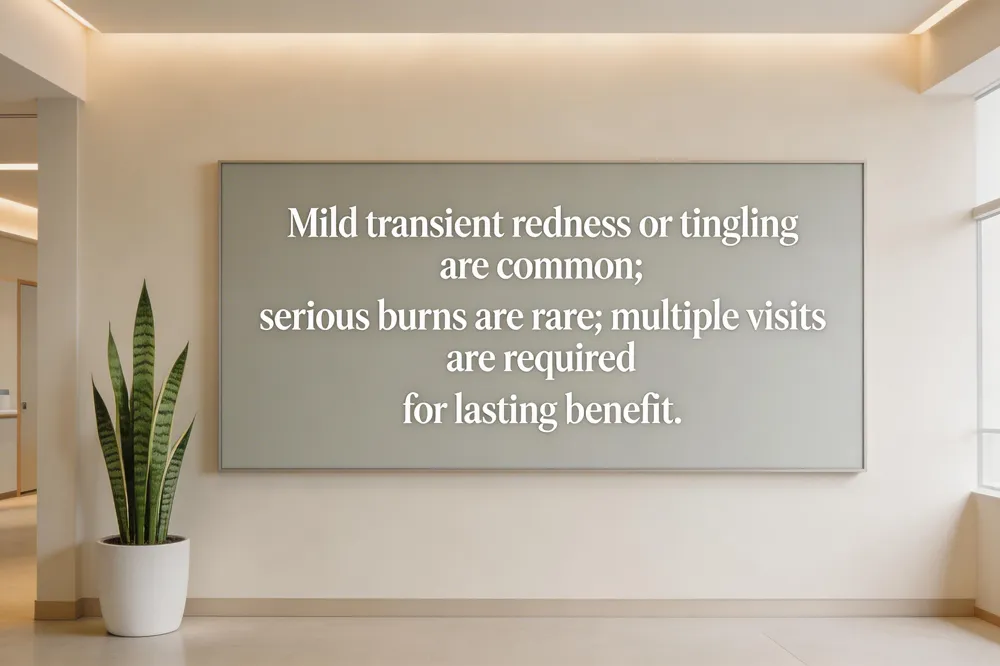 Class IV laser therapy is generally safe when administered by trained clinicians. The most common mild adverse events are transient skin redness (erythema), mild swelling, a brief tingling sensation, or occasional bruising at the treatment site; these effects resolve quickly and do not require intervention. Rare serious complications—such as burns, pigment changes, or scarring—are uncommon and typically occur only with improper dosing or lack of eye protection. Two main limitations of the modality are the need for multiple treatment sessions (often 6–12) before lasting relief is seen, which can increase total cost and time commitment, and the variability in patient response; some individuals experience significant pain reduction while others achieve little benefit, making outcomes less predictable than some pharmacologic or surgical options. Finally, Class IV lasers are high‑power medical devices regulated by the FDA and must be operated in a clinical setting under professional supervision. They are not cleared for unsupervised home use because improper handling can cause eye or skin injury. Patients should seek treatment from qualified providers who follow established safety protocols and dosing guidelines.
Conditions Treated in Orthopedic Spine Care
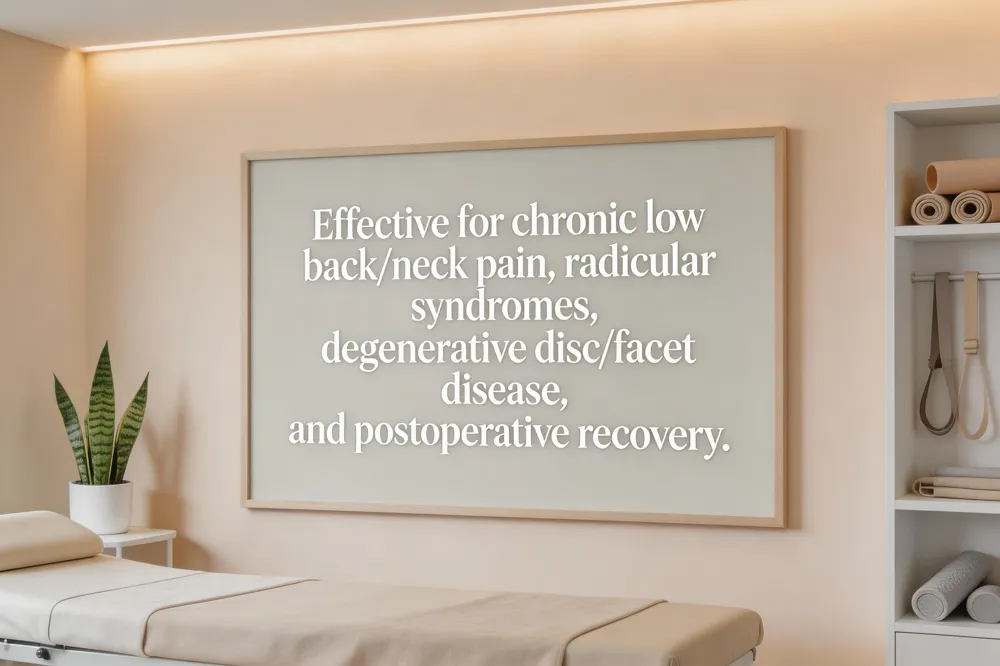 Class IV laser therapy is a high‑power, FDA‑cleared modality that penetrates 5‑10 cm into deep musculoskeletal structures, making it ideal for a broad spectrum of spine‑related problems.
Chronic low back and neck pain – Photobiomodulation boosts ATP production, reduces oxidative stress and dilates local blood vessels, which together lower inflammation and provide rapid analgesia. Clinical trials report 30‑60 % pain‑score reductions after 6‑12 sessions, with immediate improvements in range of motion.
Radicular syndromes such as sciatica – By modulating nociceptive pathways and increasing nitric‑oxide release, Class IV lasers diminish nerve irritability and edema around the affected nerve root, delivering relief for lumbar and cervical radiculopathy.
Degenerative joint and disc disease – Multi‑wavelength devices (e.g., 650 nm, 810 nm, 915 nm) stimulate collagen synthesis and accelerate disc‑ and facet‑joint repair, addressing facet‑arthritis, disc degeneration, and herniated disc tissue.
Post‑operative pain and recovery – Non‑invasive, drug‑free treatment accelerates wound healing, reduces postoperative swelling, and shortens opioid reliance, supporting faster return to function after spine surgery.
Regulatory status – The FDA has cleared several Class IV laser systems (e.g., REMY FX Elite 90 W Quad, Medray QuantumX, LightForce) for therapeutic use in musculoskeletal pain, neuropathy and wound healing. These clearances include specific indications, output power ranges (5‑90 W), and mandatory safety labeling, allowing clinicians to employ the devices legally and safely.
In summary, Class IV laser therapy addresses the key orthopedic spine conditions of chronic pain, radiculopathy, degenerative disease, and post‑surgical recovery, offering a non‑invasive, evidence‑based option that integrates seamlessly into a conservative, patient‑first care pathway.
Finding a Trusted Provider in the St. Louis Area
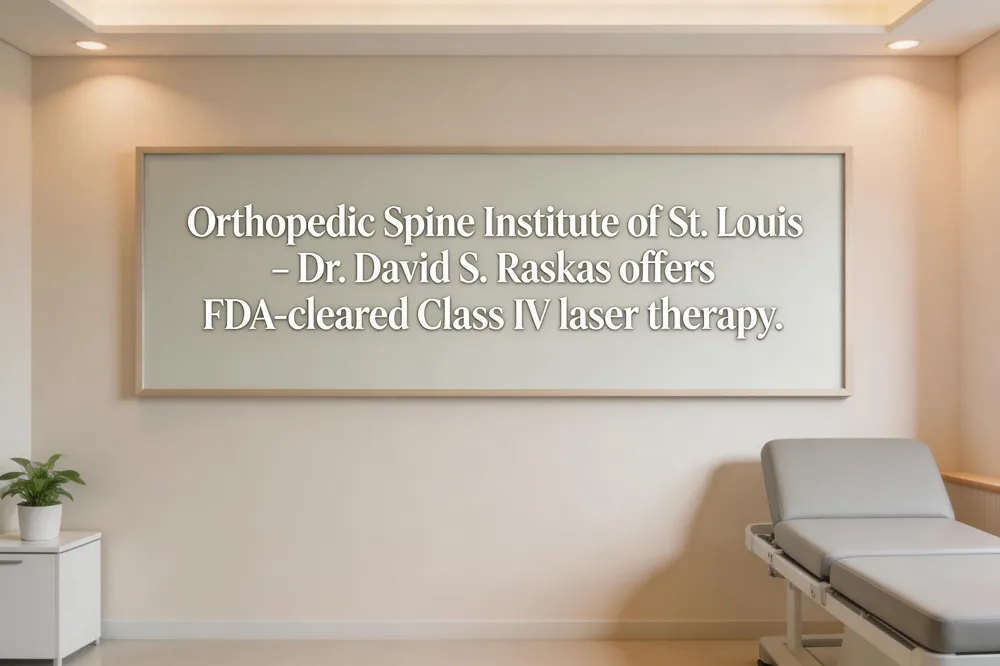 Orthopedic Spine Institute of St. Louis is a patient‑first, conservative spine‑care center that integrates Class IV laser therapy into its multimodal treatment pathways. Led by Dr. David S. Raskas, MD, the institute combines high‑power photobiomodulation with physical therapy, manual techniques, and education to address back, neck, and sciatica pain before considering minimally invasive surgery. During a first visit, patients can expect a thorough history and imaging review, followed by a personalized treatment plan that typically includes 5‑10 minute Class IV laser sessions (650 nm, 810 nm, 915 nm, or 980 nm wavelengths) to boost ATP production, reduce inflammation, and accelerate tissue repair. Dr. Raskas’ expertise in orthopedic spine medicine ensures that laser therapy is safely applied under physician guidance, with eye protection and calibrated dosing. For anyone asking, “Where can I find a reputable provider of Class 4 laser therapy near me (St. Louis area)?” the answer is the Orthopedic Spine Institute of St. Louis, where Dr. Raskas and his team deliver FDA‑cleared, evidence‑based laser care in a supportive, non‑invasive environment.
Putting It All Together: A Patient‑First Path to Pain Relief
Class IV laser therapy delivers high‑powered photobiomodulation that penetrates 5‑10 cm to boost ATP, reduce inflammation and accelerate tissue repair. Clinical data show 30‑60 % pain reduction, faster return of motion, and lower reliance on opioids after 6‑12 sessions. Because the treatment is non‑invasive, drug‑free and can be combined with physical therapy, it fits a patient‑first, conservative pathway that prioritizes individualized dosing, wavelength selection and session length. At the Orthopedic Spine Institute of St. Louis we tailor each protocol to your specific spine or joint issue. Call today to schedule a consultation with Dr. David S. Raskas and start your personalized pain‑relief journey.