Why Cervical Disc Replacement Is Gaining Attention
Cervical disc disease – most often seen at C5‑C6 and C6‑C7 – causes neck pain, arm numbness, weakness, and limited motion when the intervertebral disc degenerates or herniates. Conventional management begins with a thorough history, physical exam, and imaging (MRI, CT, dynamic X‑rays), followed by ‑care measures such as NSAIDs, physical therapy, posture correction, and, if needed, steroid injections. When these measures fail for 6–12 weeks and imaging shows a single‑level disc with nerve compression, surgery is considered. Historically, anterior cervical discectomy and fusion (ACDF) was the gold standard, eliminating motion at the treated segment but increasing stress on adjacent levels. Since the FDA cleared the first artificial disc in 2007, motion‑preserving cervical disc replacement (CDR) has emerged as an alternative. CDR restores disc height, maintains natural neck movement, shortens recovery (often same‑day discharge), and reduces the risk of adjacent‑segment degeneration, making it an increasingly popular option for well‑selected patients.
The Procedure, Candidates, and Available Devices
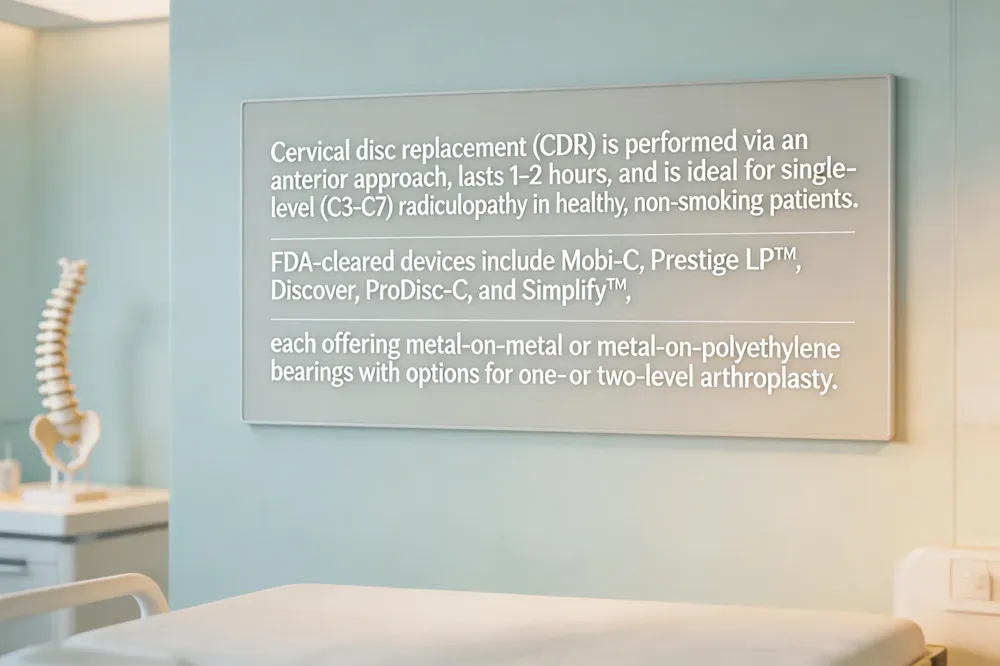 Cervical disc replacement (CDR) received FDA approval in 2007 and is performed via an anterior approach, removing the diseased disc and inserting the prosthetic disc. The operation typically lasts 1–2 hours. The surgeon removes the diseased disc and implants an artificial disc that preserves motion at the treated level. Ideal candidates have a single‑level problem between C3 and C7, radicular symptoms, no major instability or advanced arthritis, and are in good health (non‑smokers). Major FDA‑cleared cervical disc brands include Mobi‑C (Zimmer Biomet), Prestige LP™ (Medtronic), Discover (Globus Medical), ProDisc‑C (Synthes), and NuVasive’s Simplify™ platform, which uses a PEEK‑titanium endplate and a ceramic core. The Prestige cervical disc is a titanium‑carbide, two‑piece articulating device approved for single‑level use. Simplify™ differs from Mobi‑C by employing a metal‑on‑polyethylene design with a low‑profile height, while Mobi‑C offers a metal‑on‑metal bearing with a keel for added stability. Both Simplify™ and Mobi‑C are FDA‑cleared for one‑ and two‑level arthroplasty, providing surgeons with motion‑preserving options that reduce adjacent‑segment degeneration compared with fusion.
Recovery Timelines and Return to Activity
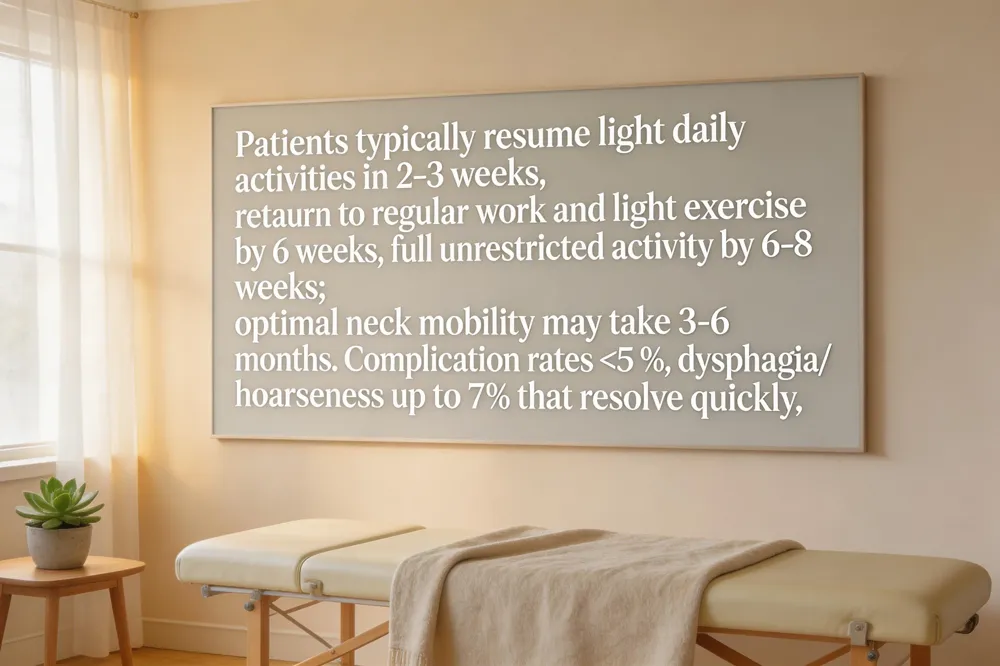 Post‑operative expectations after cervical disc replacement are generally optimistic. Most patients begin light daily activities within 2–3 weeks and are cleared for regular work and light exercise by the 6‑week mark; full unrestricted activity and vigorous exercise usually return around 6–8 weeks, although optimal neck mobility may take 3–6 months. For a C5‑C6 artificial disc replacement, symptom relief and functional improvement are reported in 85 %–95 % of patients, with long‑term success near 81 % at ten years—significantly higher than ACDF. The procedure’s total cost at the Orthopedic Spine Institute of St. Louis ranges from $30,000 to $50,000, with most major insurers covering the majority of expenses. Risk is low: serious complications occur in fewer than 5 % of cases, with temporary dysphagia or hoarseness affecting up to 7 % and resolving quickly. Physical‑therapy milestones start with gentle range‑of‑motion exercises within the first week, progressing to neck‑strengthening, posture training, and gradual cardio or yoga by week 4–6, ensuring a safe return to normal activities.
Managing Neck Pain Non‑Surgically
 Effective neck‑pain relief often begins with medication strategies, home‑care techniques, and lifestyle adjustments. First‑line non‑surgical meds: OTC NSAIDs (ibuprofen, naproxen) and acetaminophen. If pain persists, Prescription options if needed: NSAIDs, muscle relaxants (cyclobenzaprine), neuropathic agents (gabapentin, pregabalin, duloxetine) may be used for nerve‑related symptoms. For rapid home relief, apply ice for the first 48 hours, then switch to heat for 20‑minute sessions several times daily. Gentle range‑of‑motion stretches (head tilts, chin‑to‑chest, shoulder‑blade squeezes) keep the neck mobile, while a supportive pillow and neutral sleeping position prevent aggravation. Ergonomic adjustments—screen at eye level, phone held up, shoulders rolled back—reduce strain during daily activities. These combined approaches often alleviate neck pain within days and can delay or avoid the need for surgery.
When Conservative Care Fails: Surgical Options and Outcomes
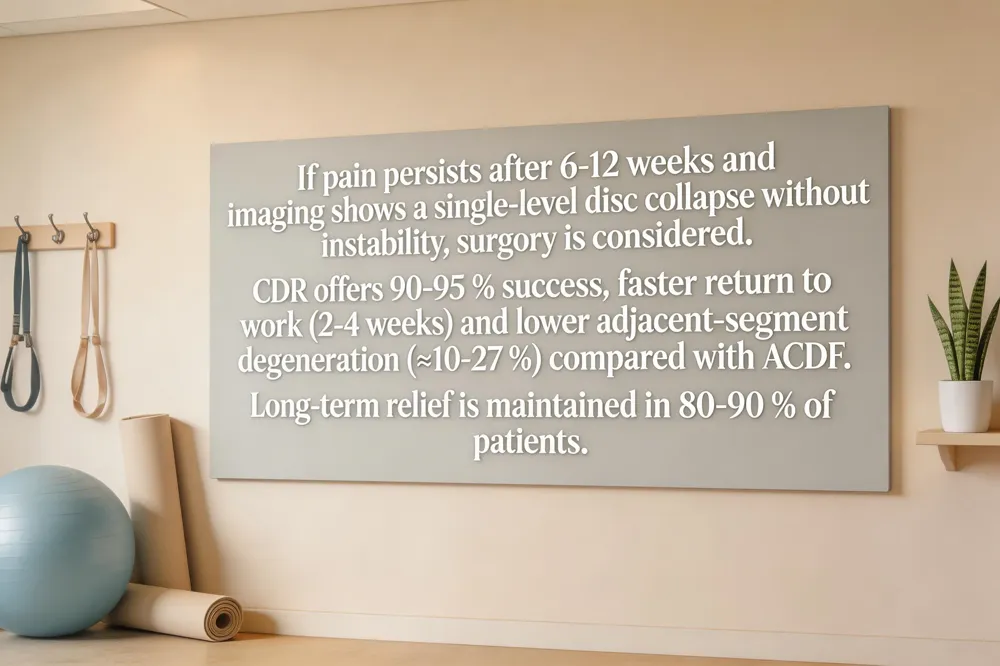 Cervical degenerative disc disease is first managed with physical therapy, activity modification, NSAIDs, and cervical traction. When pain persists after 6‑12 weeks, imaging confirms a single‑level disc collapse without instability, and surgery is considered. Cervical disc replacement (CDR) has become the preferred operation for many patients because it preserves motion, reduces stress on adjacent levels, and avoids bone grafts. Clinical studies report a success rate of 90‑95 % for CDR, comparable to anterior cervical discectomy and fusion (ACDF) but with faster return to work (2‑4 weeks) and lower adjacent‑segment degeneration (≈10‑27 % vs 23‑44 % for fusion). Long‑term data (up to 10 years) show 80‑90 % of patients maintain pain relief and functional improvement. Complications are rare (<5 %) and include dysphagia, hoarseness, device migration, and heterotopic ossification; failed discs present with persistent neck pain, radiculopathy, or limited motion.
Specific Clinical Scenarios and Emerging Treatments
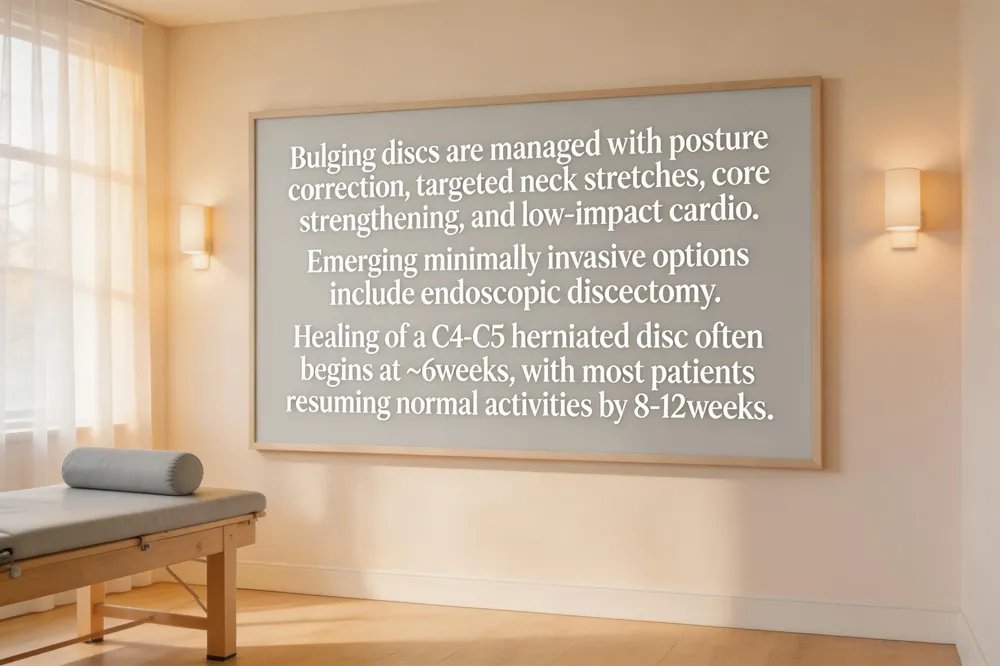 Bulging disc management focuses on posture correction, gentle neck stretches, strengthening exercises, and low‑impact aerobic activity (walking, swimming) to improve disc nutrition without stress.
How to heal a cervical bulging disc naturally? Improve posture, avoid forward‑head positions, perform targeted neck‑flexion/extension stretches, strengthen core and cervical muscles, and engage in low‑impact cardio to boost blood flow.
What is the new treatment for cervical disc herniation? Ultra‑minimally invasive endoscopic discectomy (Arthrex) uses a sub‑centimeter incision and a tiny endoscope to remove the herniated fragment while sparing muscle and bone, yielding minimal blood loss and rapid recovery.
How long does it take for a C4‑C5 herniated disc to heal? Relief often begins around six weeks of conservative care; most patients resume normal activities by 8–12 weeks, though mild discomfort may linger.
How do you treat chronic neck pain? A multimodal plan: structured PT, NSAIDs or neuropathic agents, muscle relaxants, targeted injections, and when needed, minimally invasive options such as cervical disc replacement or endoscopic decompression.
How to relieve neck pain from sleeping wrong? Use a supportive pillow to maintain neutral cervical alignment, avoid stomach‑sleeping, apply ice for 24 hours then heat to relax muscles.
How to cure neck pain fast? Ice 15‑20 min several times daily, then heat; take OTC NSAIDs; perform gentle range‑of‑motion exercises.
Practical Guidance for Patients Considering Surgery
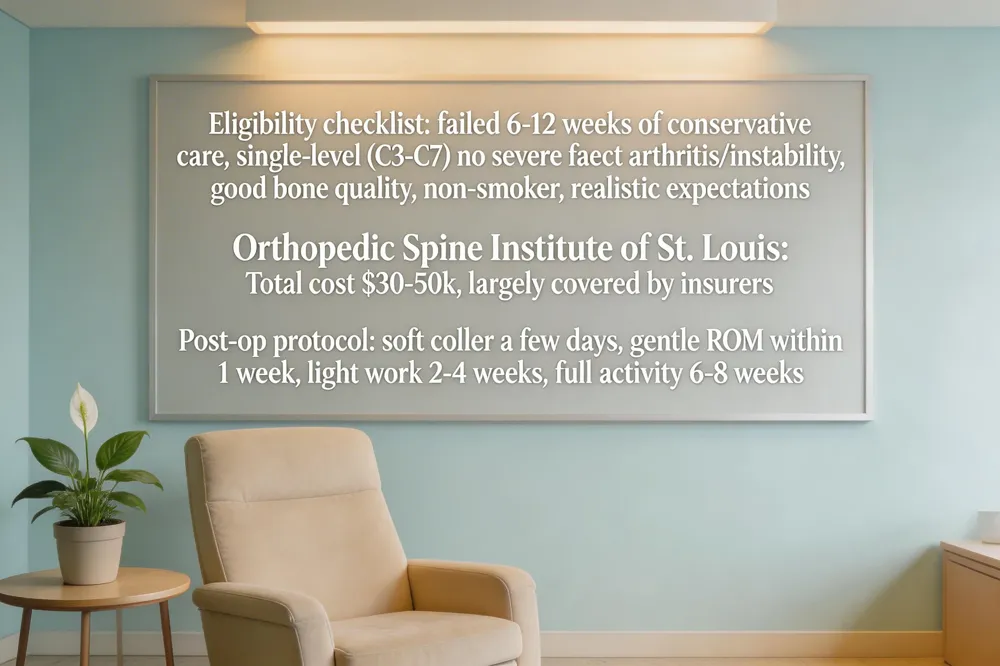 Cervical disc replacement (CDR) costs between $30,000‑$50,000 at the Orthopedic Spine Institute of St. Louis, covering surgeon fees, hospital charges, anesthesia and the artificial disc; most major insurers provide coverage when criteria‑based medical necessity is documented. Before deciding, use a checklist: (1) failed 6‑12 weeks of conservative care, (2) single‑level disease at C3‑C7 without severe facet arthritis or instability, (3) good bone quality and overall health (non‑smoker), and (4) realistic expectations of motion preservation and faster recovery. Post‑op, patients usually wear a soft collar for a few days, begin gentle range‑of‑motion exercises within a week, return to light work in 2‑4 weeks and full activity by 6‑8 weeks. CDR is worth it for eligible patients because it relieves pain, maintains neck motion, and lowers risk of adjacent‑segment disease.
Putting It All Together – A Patient‑First Path Forward
At the Orthopedic Spine Institute we begin every case with an individualized decision‑making process. After a thorough history, physical exam, and imaging (MRI, dynamic X‑rays, CT), we determine whether a patient’s neck pain stems from a single‑level cervical disc disease that is amenable to motion‑preserving surgery. Cervical disc replacement (CDR) preserves natural neck motion, reduces stress on adjacent levels, and typically offers a faster return to daily activities compared with fusion. For eligible patients—those with one or two diseased discs between C3‑C7, radiculopathy, good bone quality, and no severe facet arthritis—we can often discharge the same day or after an overnight stay, with light activities resumed within days and work in 2‑4 weeks. To start your evaluation, call the Institute at (314) 995‑3990 or schedule an online appointment; our team will review your imaging, discuss conservative options, and determine if CDR is the right‑ formotion and‑focused care.