Introduction
At the Orthopedic Spine Institute of St. Louis, a patient‑first philosophy drives every decision—especially after traumatic spine injuries. Most trauma patients begin with non‑surgical care because it avoids anesthesia, infection, and the long recovery associated with surgery, while still delivering rapid pain relief and functional restoration. Our multidisciplinary team offers a suite of conservative modalities: targeted physical‑therapy programs that rebuild core strength and flexibility; epidural steroid and facet‑joint injections to quell inflammation; spinal manipulation and chiropractic adjustments for alignment; lifestyle counseling on posture, weight, and activity pacing; and advanced options such as spinal decompression, regenerative injections, and bracing when appropriate. This evidence‑based, step‑wise approach maximizes recovery, minimizes risk, and respects each patient’s goals before any surgery is considered.
Understanding Pain Relief Strategies
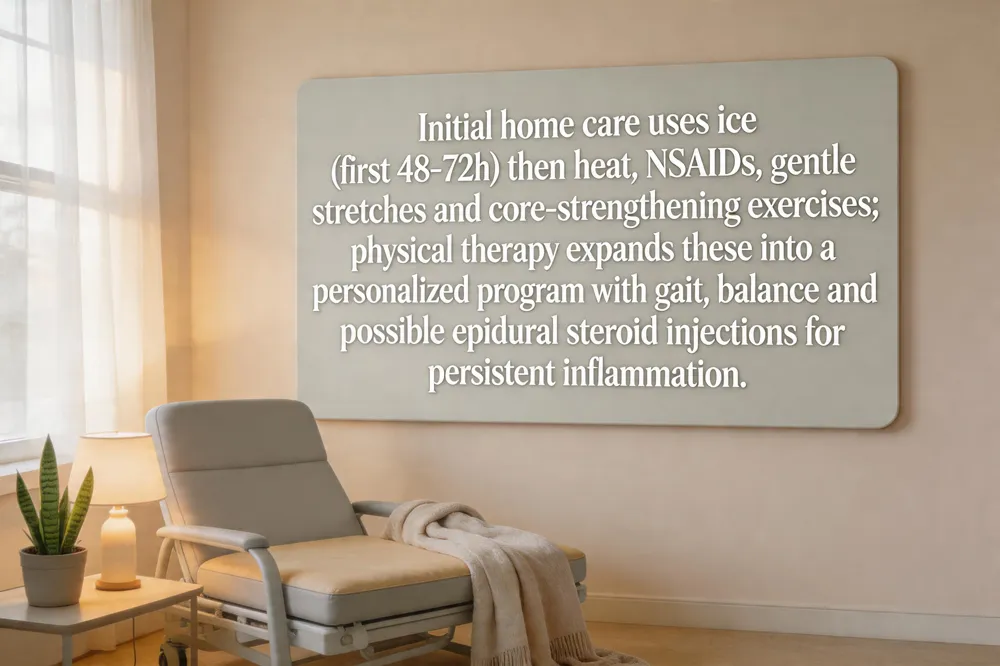 After a traumatic back injury, the first line of defense is a short‑term home care plan that quickly reduces inflammation and restores movement. Ice for 20 minutes during the first 48‑72 hours cuts swelling; once the acute phase subsides, a heating pad relaxes tight muscles. Over‑the‑counter NSAIDs provide additional pain control while the body heals. Gentle stretches—knee‑to‑chest, lumbar rotation, cat‑stretch—performed 2‑3 times daily improve flexibility and prevent stiffness. Core‑strengthening exercises such as bridges, bird‑dogs, and planks rebuild the muscular support that stabilizes the spine and reduces load on injured discs.
Physical therapy takes these principles further, delivering a personalized program that combines strengthening, balance, gait training, and posture education. Therapists also guide safe activity progression, monitor response, and integrate minimally invasive injections (e.g., epidural steroids) when inflammation persists.
How can severe lower back pain be relieved? Apply ice, then heat; use NSAIDs; perform gentle stretches and core‑strengthening; engage a physical therapist for a tailored program; consider targeted injections if needed.
What is the most common non‑surgical treatment for back pain? A structured physical‑therapy and home‑exercise regimen that builds core stability, improves flexibility, and teaches proper posture.
How can back pain be relieved quickly at home? Ice for the first 48‑72 hours, then heat; NSAIDs as directed; gentle daily stretches; maintain good posture with lumbar support; stay lightly active with short walks.
Surgical Alternatives That Preserve Motion
 Preserving natural spinal movement is a key goal for many patients after trauma or degenerative disease. The Total Posterior Spine (TOPTOPS system) is a minimally invasive alternative to lumbar fusion. After decompressing the affected level, a titanium‑plastic device is anchored with pedicle screws, allowing controlled flexion, extension, lateral bending and rotation while keeping the vertebrae unfused. It is FDA‑approved for moderate‑to‑severe lumbar stenosis and grade‑I degenerative spondylolisthesis, offering pain relief without the loss of motion that accompanies fusion.
Dynamic stabilization devices, such as Dynesys, work on a similar principle but use flexible implants—often hinged screws or polymer‑coated rods—to limit abnormal motion yet preserve a degree of physiological movement. These systems are used for degenerative disc disease, facet arthritis, and mild spondylolisthesis, and can be placed through small incisions, reducing tissue disruption and recovery time.
Both TOPS and Dynesys differ from traditional fusion by avoiding permanent bone grafts and hardware that lock the segment, thereby lowering stress on adjacent levels and maintaining spinal flexibility. This motion‑preserving approach aligns with a patient‑first, conservative philosophy that prioritizes functional recovery while minimizing long‑term complications.
Emergency Care and Immobilization After Trauma
 When a spinal injury is suspected, the first priority is to stabilize the spine while emergency services are en route. Step‑wise first‑aid for suspected spinal injury follows a five‑step protocol: 1) Call emergency services immediately. 2) Keep the person immobile, supporting the head and neck with rolled towels or sheets; avoid any movement. 3) Do not adjust the head or neck; if breathing or circulation stops, begin CPR without tilting the head. 4) Leave helmets in place unless the face mask must be removed for airway access. 5) If rolling is necessary, use a second rescuer to keep the head, neck, and spine aligned throughout the maneuver.
When to apply a cervical collar and backboard – Immobilization is indicated for high‑energy blunt mechanisms with any of the following: altered consciousness, intoxication, neck pain or tenderness, neurological deficits, obvious deformity, or distracting injuries. In these cases a cervical collar and, if needed, a long backboard are placed. Low‑risk patients per NEXUS or Canadian C‑spine rules generally do not require immobilization; penetrating trauma is immobilized only when clear spinal‑injury signs exist.
Guidelines for safe immobilization – Ensure the collar is snug but not restrictive, pad pressure points on the board, and maintain a neutral head‑neck position. Re‑evaluate the patient’s airway, breathing, and circulation frequently, and document any changes.
What are the five general care steps for a suspected spinal injury?
- Call emergency services immediately.
- Keep the person immobile by supporting the head and neck with rolled towels or sheets; avoid any movement.
- Do not adjust the head or neck; if breathing or circulation stops, begin CPR without tilting the head.
- Leave helmets in place unless the face mask must be removed for airway access.
- If rolling is necessary, use a second rescuer to keep the head, neck, and spine aligned throughout the maneuver.
When should spinal immobilization be applied to a trauma patient? Immobilization is indicated for high‑energy blunt mechanisms with any sign of cervical spine injury—altered consciousness, intoxication, neck pain or tenderness, neurological deficits, obvious deformity, or distracting injuries. Low‑risk patients per NEXUS or Canadian C‑spine rules generally do not require immobilization. For penetrating trauma, immobilization is reserved only for those with clear spinal‑injury signs.
The Body’s Memory of Trauma and Gender‑Specific Strategies
 What trauma is stored in the spine?
The spine can retain the physiological imprint of both emotional and physical trauma. When a threat is perceived, the body launches a fight‑flight‑freeze response, flooding muscles with adrenaline. Hip flexors, gluteals, and deep spinal stabilizers tighten to protect the spine, creating a bracing pattern that may persist long after the original stressor has passed. This chronic tension appears as lower‑back pain, stiffness, limited range of motion, and trigger points, and it can also impair diaphragmatic breathing, further reducing core stability. Releasing this stored trauma requires a combination of targeted physical‑therapy exercises, breath‑work, movement education, and stress‑management techniques that reset the nervous system.
How can females reduce back pain?
Women can mitigate back pain by incorporating daily core‑strengthening and flexibility routines—such as bridges, cat‑stretches, and knee‑to‑chest stretches—to support the lumbar spine. Maintaining ergonomic posture while sitting or standing, using supportive chairs, and keeping the spine neutral during sleep (pillow under knees when supine or between knees when side‑lying) are essential. A balanced diet and low‑impact cardio (walking, swimming) help maintain a healthy weight, reducing spinal load. Quitting smoking improves disc nutrition, and proper lifting mechanics—bending at the hips and knees and using leg muscles—prevent strain. These gender‑specific lifestyle modifications, combined with patient‑first, non‑surgical care, promote faster recovery and long‑term spinal health.
Broad Spectrum of Non‑Surgical Alternatives
 What are non‑surgical alternatives for spondylolisthesis? Management begins with activity modification and a supervised physical‑therapy program emphasizing core strengthening, flexion‑based exercises, and posture correction to reduce stress on the slipped vertebra. NSAIDs or muscle‑relaxants control inflammation; epidural steroid injections provide short‑term relief, enabling faster rehab. A lumbar brace may stabilize the segment during daily tasks. Lifestyle measures—weight management, smoking cessation, low‑impact aerobic conditioning—support spinal health and lessen symptoms without surgery.
What spinal fusion alternatives does Mayo Clinic recommend? An initial trial of structured PT, oral anti‑inflammatory medication, epidural steroid injections, and complementary therapies (chiropractic, massage) is advised. When surgery is needed but fusion is undesirable, decompression procedures (laminectomy or discectomy) preserve motion. Minimally invasive cortical‑trajectory screw fixation can provide stability without full fusion.
Can spine surgery be avoided? Yes. Lifestyle changes, proper posture, and staying active, combined with conservative treatments—core‑strengthening PT, flexibility work, NSAIDs, and minimally invasive injections—often yield lasting relief. Surgery is reserved for severe, progressive, or unresponsive cases.
What non‑surgical alternatives exist for spinal fusion? Comprehensive PT focused on core strength, flexibility, and posture; NSAIDs, muscle‑relaxants, heat/cold therapy, TENS, epidural steroid injections, selective nerve blocks, and lifestyle modifications (weight control, smoking cessation, low‑impact exercise) together enable many patients to avoid fusion altogether.
Conclusion
At our practice we put the patient at the center of every decision, beginning with a conservative‑first approach that uses physical therapy, lifestyle changes, targeted injections and other non‑invasive modalities to address the root cause of spinal pain. Only after a thorough evaluation and a trial of these evidence‑based treatments do we consider minimally invasive surgery, reserving procedures such as endoscopic discectomy or percutaneous stabilization for cases where persistent neurological deficits, structural instability or failure of non‑operative care are clearly present. This step‑wise model ensures safety, quicker return to daily activities and lower overall costs. If you are dealing with a recent spinal trauma or chronic back pain, schedule a personalized consultation with Dr. David S. Raskas to explore the most appropriate, patient‑first treatment plan.