Introduction
Telehealth has become a cornerstone of modern spine care because it removes geographic barriers, cuts travel time, and lowers exposure to infectious disease—making timely evaluation possible for patients who might otherwise delay care. Key benefits include rapid access to specialist expertise, the ability to share digital imaging (X‑ray, MRI, CT) ahead of the visit, and a structured video‑based exam that can assess gait, range of motion, and functional strength using everyday items such as water jugs or rubber bands. Limitations stem from the lack of hands‑on assessment; clinicians must rely on patient‑reported neurological symptoms (weakness, numbness, bowel/bladder changes) and may need an in‑person follow‑up for detailed neurologic testing or surgical planning. Overall, telehealth offers a safe, efficient, and patient‑friendly pathway to spine diagnosis and treatment.
Preparing for Your Telehealth Visit
 A smooth spine telehealth appointment starts with a reliable technical setup. Use a smartphone, tablet, laptop, or desktop with a working webcam and microphone, and ensure a stable broadband connection (minimum 3 Mbps). Test your video and audio at least 15 minutes before the call, position the camera at eye level to capture your head, shoulders, and, if needed, your gait, and close any unnecessary programs that could slow your device.
Documentation is crucial. Before the visit, upload digital copies of recent spine imaging (X‑ray, MRI, CT) to the patient portal or have them ready to screen‑share. Complete any online intake forms, and keep a concise list of your current medications, allergies, past surgeries, and a brief written description of your pain (location, duration, associated symptoms). Prepare a list of questions so you can make the most of the limited time.
Create an environment that mimics a clinical exam room: choose a quiet, private space with good lighting, wear clothing that allows easy movement (e.g., shorts and a shirt), and have everyday items like a water jug or rubber band nearby for strength testing if the surgeon requests it.
How do I prepare for a telehealth visit? Before your telehealth visit, confirm the cost and any insurance coverage, and let the clinic know if you need accommodations such as captioning or a screen reader. Choose a quiet, private space with good lighting, and set up your device so the camera is steady at eye level and shows your head and shoulders. Test your internet connection, camera, microphone, and any required apps at least 15 minutes early, and close unrelated programs to avoid slow‑downs. Have a list of your current medications, medical history, and any questions or symptoms ready, and keep any relevant documents or devices (e.g., a scale or flashlight) nearby. Log in promptly, follow any pre‑visit instructions from the provider, and be prepared to use the chat or video controls as needed during the appointment.
What You’ll Discuss During the Visit
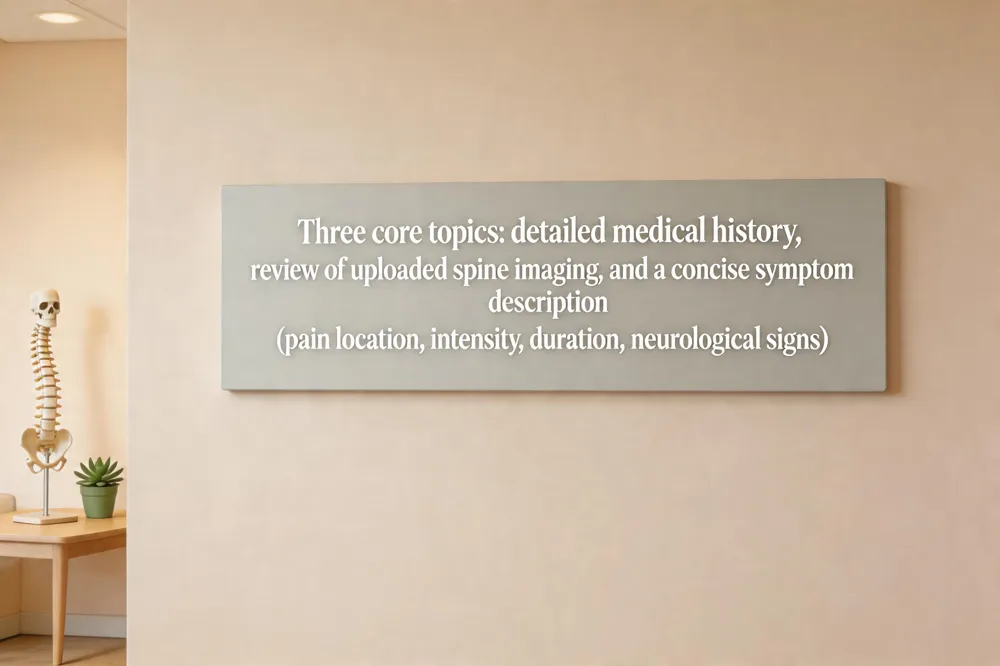 During a first spine‑specialist telehealth appointment the conversation is structured around three core topics: a thorough medical history review, uploading and reviewing diagnostic imaging, and a detailed symptom description.
Medical History Review – The surgeon will ask about past injuries, surgeries, medications, allergies, smoking/alcohol use, and any prior treatments. This background helps frame your current complaint and guides the virtual exam.
Imaging Upload – Before the call you should have digital copies of all recent X‑rays, MRIs, or CT scans ready to upload via the secure patient portal or screen‑share during the visit. The specialist reviews these images in real time, correlating findings with your history and reported symptoms.
Symptom Description – Be prepared to describe pain location, intensity, duration, and any associated neurological signs such as weakness, numbness, tingling, or bowel/bladder changes. A concise written summary sent ahead of time speeds the discussion.
What to expect at your first visit with a spine specialist? You will spend the first 15‑30 minutes reviewing your medical history and uploaded imaging, followed by a modified physical exam using household items (e.g., a water jug for strength testing). The surgeon may provide a provisional diagnosis, outline a patient‑first treatment plan—starting with conservative options—and explain when minimally invasive surgery might be considered.
Can I do a telehealth visit for sciatica? Yes. A telehealth consult allows the spine specialist to evaluate sciatica by reviewing your history, imaging, and guided movement tests. If additional testing or an in‑person exam is needed, the doctor will arrange it, but many patients receive medication adjustments, home‑exercise instructions, and a clear care pathway without leaving home.
Physical Examination and Red‑Flag Symptoms
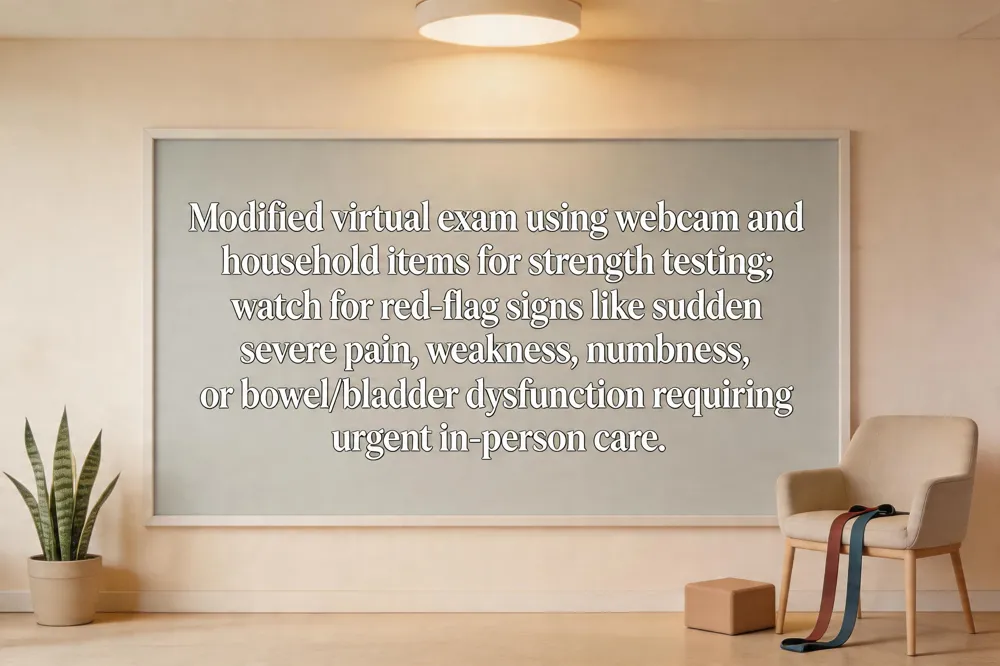 Modified Virtual Exam
During a first spine telehealth visit the surgeon conducts a focused exam using the webcam. The patient is asked to sit, stand, and walk a few steps so the clinician can assess posture, gait, and overall alignment. Range‑of‑motion tests for the cervical, thoracic, and lumbar spine are performed while the provider asks about pain provocation. Strength Testing with Household Items
Because a hands‑on exam is not possible, patients use common objects to demonstrate strength. A jug of water or orange‑juice can serve as resistance for arm or leg lifts, rubber bands can be used for shoulder abduction, and a heavy book can provide a load for trunk flexion. The clinician observes the quality of movement and notes any asymmetry or pain. Red‑Flag Signs
Red‑flag symptoms signal a potentially serious spinal condition that requires urgent in‑person evaluation. These include sudden severe back or neck pain, new weakness or loss of coordination in the limbs, numbness, tingling, or loss of sensation, and especially bowel or bladder dysfunction (possible cauda equina syndrome). Sudden onset of incontinence, loss of feeling, or inability to move a body part after trauma should be treated as an emergency. If any of these appear, seek immediate medical attention.
Modified Virtual Exam
During a first spine telehealth visit the surgeon conducts a focused exam using the webcam. The patient is asked to sit, stand, and walk a few steps so the clinician can assess posture, gait, and overall alignment. Range‑of‑motion tests for the cervical, thoracic, and lumbar spine are performed while the provider asks about pain provocation. Strength Testing with Household Items
Because a hands‑on exam is not possible, patients use common objects to demonstrate strength. A jug of water or orange‑juice can serve as resistance for arm or leg lifts, rubber bands can be used for shoulder abduction, and a heavy book can provide a load for trunk flexion. The clinician observes the quality of movement and notes any asymmetry or pain. Red‑Flag Signs
Red‑flag symptoms signal a potentially serious spinal condition that requires urgent in‑person evaluation. These include sudden severe back or neck pain, new weakness or loss of coordination in the limbs, numbness, tingling, or loss of sensation, and especially bowel or bladder dysfunction (possible cauda equina syndrome). Sudden onset of incontinence, loss of feeling, or inability to move a body part after trauma should be treated as an emergency. If any of these appear, seek immediate medical attention.
What are the signs of a serious spine issue? Serious spine problems often present with red‑flag symptoms that require prompt evaluation. These include sudden, severe back or neck pain that is not relieved by rest, weakness or loss of coordination in the arms or legs, and numbness, tingling, or loss of sensation in the limbs. New loss of bladder or bowel control, or difficulty breathing, are warning signs of spinal cord or cauda equina involvement. Sudden onset of incontinence, loss of feeling, or inability to move a part of the body after a fall or trauma should be treated as an emergency. If any of these signs appear, seek immediate medical attention from a spine specialist.
What is not appropriate for a telehealth appointment? Telehealth is not appropriate when a patient requires a hands‑on physical exam, such as for new‑patient evaluations or acute injuries. It should be avoided for anyone experiencing fever, difficulty breathing, vomiting, confusion, agitation, or other abnormal mental states that need in‑person assessment. Conditions that involve visible skin lesions requiring direct inspection—like eczema, acne, or minor trauma (lacerations, abrasions, animal bites)—are also unsuitable for remote visits. Situations that demand immediate diagnostic testing or procedural intervention, such as suspected infections with systemic signs, fall outside telehealth’s scope. In short, any scenario where a clinician must physically examine, treat, or intervene should be scheduled as an in‑office appointment.
Can telehealth do anything for back pain? Yes—telehealth can be a valuable first step in managing back pain. Through a video visit a spine specialist can review your medical history, observe your range of motion, and perform guided at‑home physical tests to narrow down the likely cause. Based on that assessment they can prescribe pain‑relieving medication, recommend targeted physical‑therapy exercises, and arrange any necessary imaging or labs without you leaving home. This rapid, remote evaluation gets you treatment sooner, reduces travel and time away from work, and helps determine whether a face‑to‑face appointment or minimally invasive procedure will be needed later. In short, telehealth streamlines the initial care pathway, providing convenient, evidence‑based guidance while you wait for any in‑person follow‑up.
Treatment Planning and Follow‑Up
 After the initial telehealth visit, the spine surgeon creates a personalized treatment plan that begins with conservative care options such as targeted physical‑therapy exercises, posture education, and activity modification. If medication is warranted, the provider may prescribe NSAIDs, muscle relaxants, or neuropathic agents while also recommending evidence‑based supplements—turmeric (curcumin) with black‑pepper for its anti‑inflammatory effect, omega-3 fatty acids, vitamin D, magnesium, calcium, and, when appropriate, glucosamine/chondroitin—to support bone density and reduce chronic pain. The surgeon explains surgical considerations only when imaging and the virtual exam suggest structural issues that have not responded to conservative measures; minimally invasive techniques, robotics, or augmented‑reality‑guided procedures are discussed, and an in‑person evaluation is scheduled for a hands‑on exam and final planning.
Best supplements for lower back pain: Turmeric (curcumin) with black‑pepper, omega‑3s, vitamin D, magnesium, calcium, and glucosamine/chondroitin can help reduce inflammation and support spinal health, but always confirm with your doctor.
Can telehealth diagnose back pain? Yes—through a detailed history, visual inspection, and guided movement tests a spine can identify,‑muscle strain, sciatica, disc irritation, or early stenosis and start treatment, reserving in‑person visits for complex cases or imaging.
Can I see a spine specialist without a referral? Most U.S. insurers require a primary‑care referral for a spine surgeon, though some plans allow direct access; verify your coverage before scheduling.
Understanding the Telehealth Process
 Telehealth visits for spine care follow a structured workflow that begins with Planning – patients gather imaging, medication lists, and a brief symptom summary. Preparing involves securing a quiet, well‑lit space, testing a camera‑enabled device, and uploading digital X‑rays, MRIs, or CT scans to a HIPAA‑compliant portal. During the appointment, the surgeon Provides a comprehensive history, a modified physical exam using household items, and reviews the imaging, while insurance details and billing are verified in real time. After the session, the provider conducts a Performance evaluation to confirm the plan and schedule any needed in‑person follow‑up. This patient‑first approach ensures convenience, safety, and transparent billing.
Q: What are the four P's of telehealth? A: The four P’s are Planning, Preparing, Providing, and Performance evaluation, which guide a successful telehealth encounter.
Conclusion
Key takeaways: Telehealth spine visits are safe, efficient, and patient‑friendly, allowing surgeons to review imaging, take a detailed history, and conduct a modified physical exam using household items. They improve access, reduce travel, and can deliver accurate provisional diagnoses, with studies showing >90% agreement with in‑person plans. Next steps: Patients should gather digital copies of X‑rays, MRIs or or CT scans, prepare a concise symptom summary, and secure a quiet, well‑lit space with a reliable internet connection. Upload imaging before the appointment, then join the secure video session to discuss findings, receive a treatment plan, and schedule any needed follow‑up imaging or in‑person evaluation.