Understanding the Basics
The sacroiliac (SI) joint is a weight‑bearing synovial joint that links the sacrum to the ilium of the pelvis and moves only a few millimeters. In contrast, the lumbar and cervical spine are composed of vertebral bodies and intervertebral discs that allow far greater motion and bear the bulk of spinal loads. Traditional spinal fusion targets these vertebral segments—often to treat degenerative disc disease, spondylolisthesis, or stenosis—by placing pedicle screws, rods, cages and bone grafts to create a solid bony bridge across the interspace. Minimally invasive SI joint fusion, however, focuses solely on the SI joint. Using percutaneous, image‑guided placement of triangular titanium or porous‑coated implants through a 1‑2 cm incision, the procedure eliminates painful micro‑movement while preserving surrounding tissue. Because it avoids large muscle dissection, blood loss is typically <100 mL, hospital stays are often outpatient, and patients return to normal activities within 2–4 weeks—much faster than the 6–12‑week recovery after open lumbar fusion.
Recovery Timeline and Driving Clearance
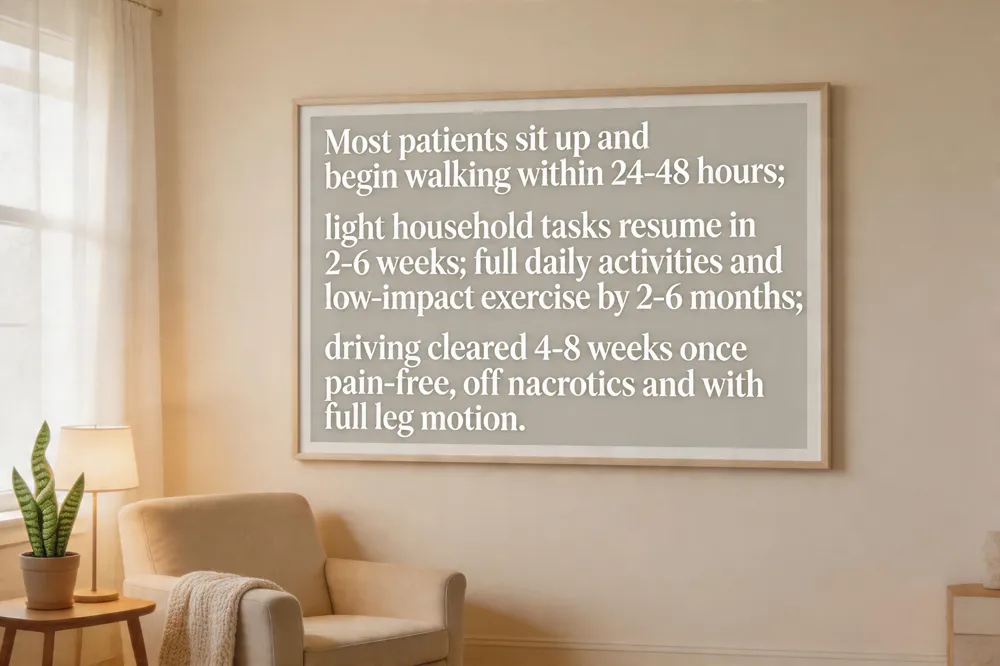 After a minimally invasive sacroiliac (SI) SI joint fusion, most patients are able to sit up and begin walking within the first 24‑48 hours, often the procedure is performed as an outpatient or with a one‑day hospital stay. Light household activities typically resume between 2 and 6 weeks, and formal physical‑therapy programs start early to protect the joint while promoting bone growth. Full return to normal daily activities and low‑impact exercise occurs by 2–6 months, with high‑impact activities and the maximal pain‑free state often taking up to six months.
Driving clearance is usually granted once the patient is pain‑free, off narcotic pain medication, and can make rapid leg movements with full range of motion. In practice, most surgeons allow patients to drive between 4 and 8 weeks after fusion, although some may be cleared as early as 2 to 4 weeks if pain is well controlled and leg strength is adequate. Before returning to the road, the surgeon will test the ability to perform an emergency stop without discomfort and ensure there is no lingering soreness, stiffness, or weakness in the back or legs.
Factors that can speed or slow healing include age, overall health, smoking status, bone quality, adherence to post‑operative instructions, and any prior lumbar spine surgery. Patients who follow weight‑bearing restrictions, avoid heavy lifting, and engage in prescribed physical therapy typically experience a smoother and faster recovery.
Procedural Visuals and Implant Technology
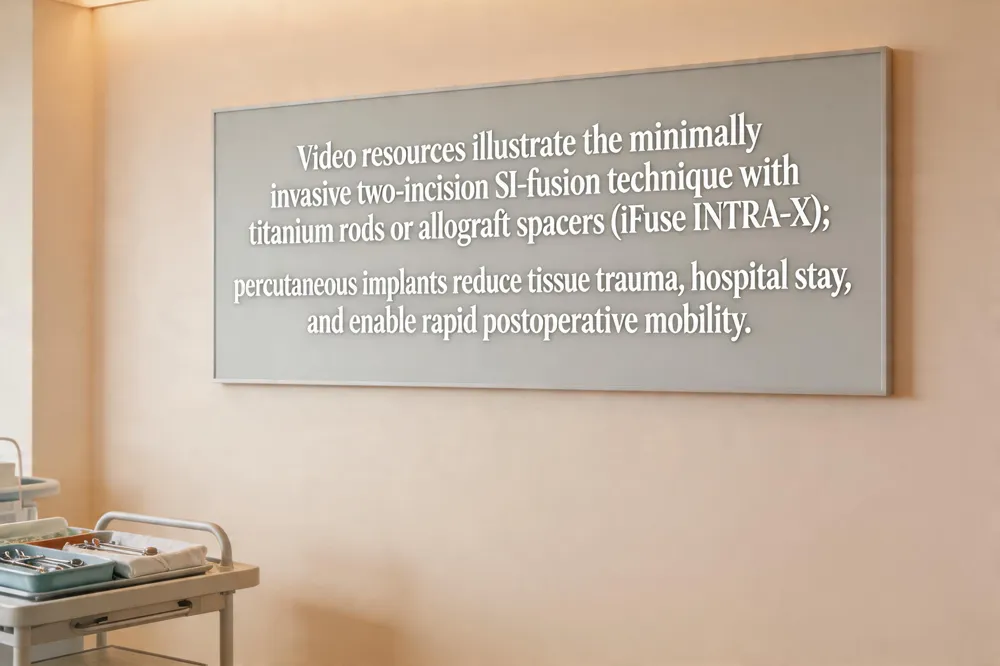 Educational video resources: A short, patient‑focused video of minimally invasive SI‑joint fusion is hosted on the Orthopedic Spine Institute of St. Louis website and its YouTube channel. The clip, narrated by Dr. David S. Raskas, shows patient positioning, the two‑incision approach, and placement of titanium rods that fuse the sacrum to the ilium, helping prospective patients understand the steps and recovery expectations.
iFuse INTRA‑X allograft system: iFuse INTRA‑X is a percutaneous, needle‑size solution that delivers two cylindrical bone‑allograft implants into the SI joint. The allograft promotes natural bone growth, eliminating motion and providing rapid postoperative mobility. Clinical data demonstrate high pain‑relief rates and strong satisfaction, while the single‑use instrument set minimizes tissue trauma and shortens hospital stay.
SI joint fusion implant types: Implants fall into two categories—titanium‑based cages and screws (e.g., iFuse 3D, iFuse TORQ, iFuse INTRA Ti, LinQ) and allograft spacers (**iFuse INTRA, iFuse INTRA‑X. All are placed percutaneously through small incisions and rely on bone growth to achieve solid arthrodesis within months.
Long‑Term Outcomes, Complications, and Mobility
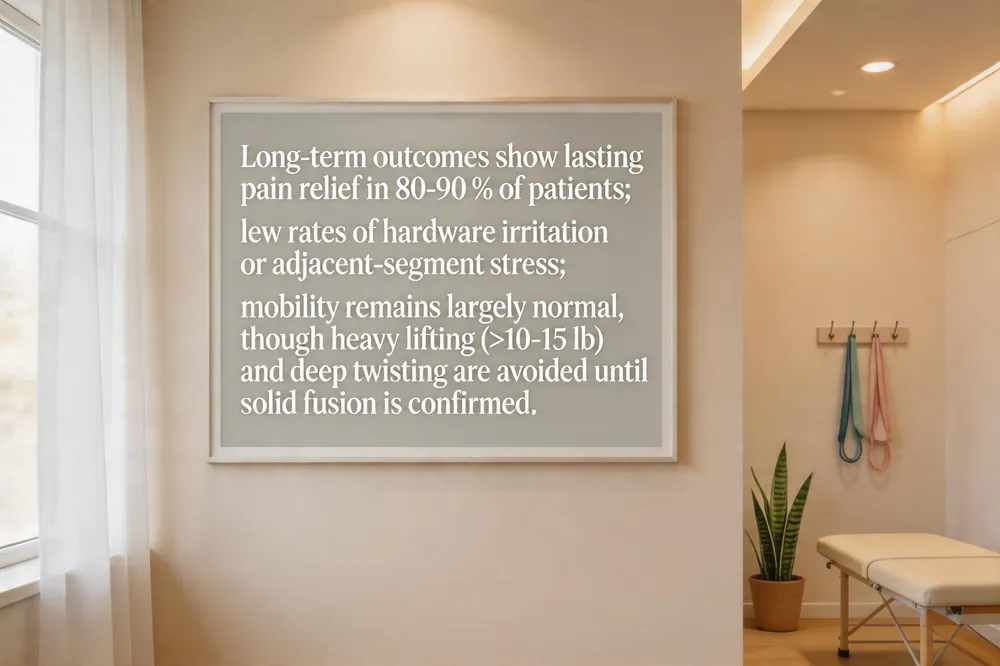 Long‑term outcomes after sacroiliac joint fusion are generally favorable. Most patients enjoy lasting pain relief and a stable construct that prevents the return of SI‑related symptoms, with only rare adjacent‑segment stress or hardware irritation. Signs of a failed fusion include persistent low‑back or deep buttock pain that does not improve after surgery, a feeling of instability, grinding or clicking sensations, swelling, or radiating pain down the posterior thigh. Imaging may reveal implant loosening, fracture, or non‑union (pseudarthrosis). Mobility loss is minimal; normal walking, sitting, and standing remain unrestricted. Temporary restrictions involve deep twisting, aggressive bending, and heavy lifting for several months while bone graft heals. Once solid fusion is confirmed (typically 6–12 weeks), most daily activities are allowed, though patients are advised to avoid repeatedly lifting more than 10–15 lb and high‑impact sports. Permanent functional limitations are uncommon, focusing mainly on protecting the fused joint from excessive load.
Weighing Benefits, Risks, and Alternatives
 Pros and cons of SI joint fusion
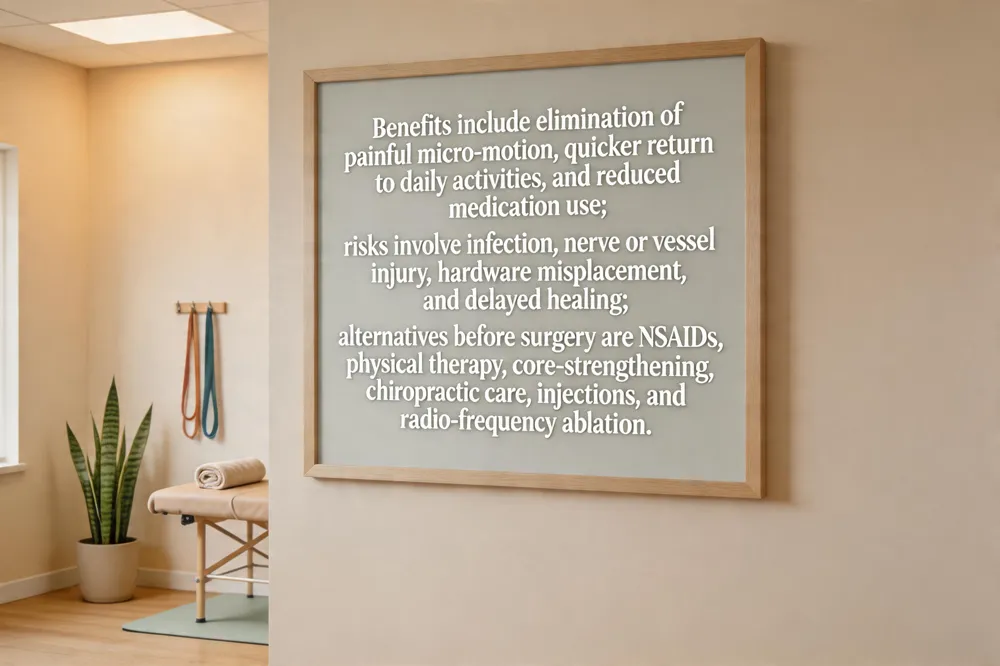
Minimally invasive SI joint fusion eliminates painful micro‑motion, offering long‑term relief, faster return to daily activities, and reduced medication use. Success rates are 80‑90 % for solid arthrodesis, with shorter hospital stays and less blood loss than open surgery. Risks include infection, nerve or vessel injury, hardware misplacement, and delayed bone healing; a recovery period of several weeks to months with activity restrictions is required.
Alternatives to SI joint fusion
Conservative care starts with NSAIDs or short‑term opioids, targeted physical therapy, and core‑strengthening exercises. Chiropractic adjustments, therapeutic yoga, massage, and SI‑band bracing can improve alignment and reduce strain. Injectable options—corticosteroid or anesthetic injections—and radio‑frequency ablation provide temporary pain control. These measures are pursued before surgical referral.
What can you no longer do after SI joint fusion?
Patients must avoid lifting >8‑10 lb early, limit twisting and deep bending, and refrain from high‑impact sports for 3‑4 months. Driving is postponed until pain‑free and cleared, typically 4‑8 weeks post‑op. Once fused, most daily activities are safe, but heavy or contact sports may still need physician approval.
Comparisons, Fusion Timeline, and Life After Surgery
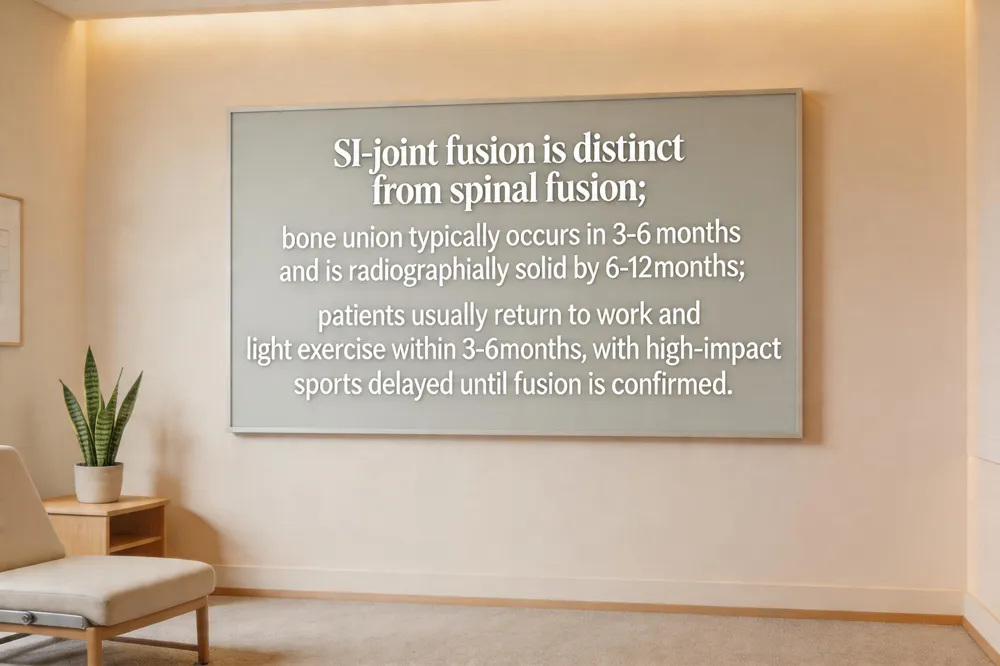 SI joint fusion is not the same as spinal fusion. Both are arthrodesis procedures, but they target different anatomy and use distinct hardware. SI joint fusion joins the sacrum and ilium using triangular titanium or porous implants placed percutaneously, while spinal fusion stabilizes two or more vertebrae with pedicle screws, rods, cages, and bone grafts. The goal of each is to eliminate painful motion, yet the indications, surgical approach, and postoperative care differ.
Bone union after an SI joint fusion typically takes 3–6 months, with most patients reporting relief within months and radiographic evidence of solid arthrodesis by 6–12 months, varying by health, bone regimen, and adherence to rehabilitation. Early mobilization and guided physical therapy support optimal healing.
Life after SI joint fusion is generally marked by significant pain reduction and a return to normal daily activities within 3–6 months. A structured physical‑therapy program helps restore core strength and pelvic stability, enabling patients to resume work, walking, and light exercise. High‑impact sports, heavy lifting, and prolonged bending are usually limited for the first 6–12 months, but once fusion is confirmed most individuals can engage in moderate‑intensity activities such as swimming, cycling, or yoga without lasting restrictions. Long‑term outcomes are favorable, with low complication rates and a permanent stabilizing effect that prevents recurrent SI joint pain.
Key Takeaways
SI joint fusion targets the sacroiliac joint—a single, weight‑bearing pelvic articulation—rather than stabilizing multiple vertebral levels as traditional spinal fusion does. Minimally invasive, percutaneous techniques use small incisions and image‑guided triangular titanium or allograft implants, resulting in markedly less blood loss, shorter hospital stays (often outpatient), and faster return to normal activities (2–6 weeks versus 6–12 weeks for open lumbar fusion). Radiographic success rates are high (80‑90 % solid arthrodesis at 12 months), providing durable pain relief while preserving most natural spinal motion. Post‑operative care should include early mobilization, core strengthening, and adherence to activity restrictions (no lifting >10 lb, limited prolonged sitting) to optimize outcomes.