Why Understanding Spine Care Matters
Understanding spine care begins with a patient‑first philosophy that places your goals, symptoms and overall health at the center of every decision. At the Orthopedic Spine Institute of St. Louis we focus on back, neck and sciatica pain, which can limit daily activities, cause weakness or numbness in the legs or arms, and diminish quality of life. Our approach starts with conservative, non‑surgical treatments—education, physical therapy, targeted injections and medication management—to relieve pain while preserving function. Only when these measures fail to provide adequate relief do we consider minimally invasive surgical options, such as micro‑discectomy, endoscopic decompression or spinal fusion, performed with image‑guided technology to reduce tissue trauma and speed recovery. By progressing step‑by‑step, we ensure that surgery is reserved for cases where it is truly necessary, offering a balanced pathway toward lasting relief and personalized after‑care support for long‑term spinal health and improved functional outcomes.
The Core Role of a Spine Specialist
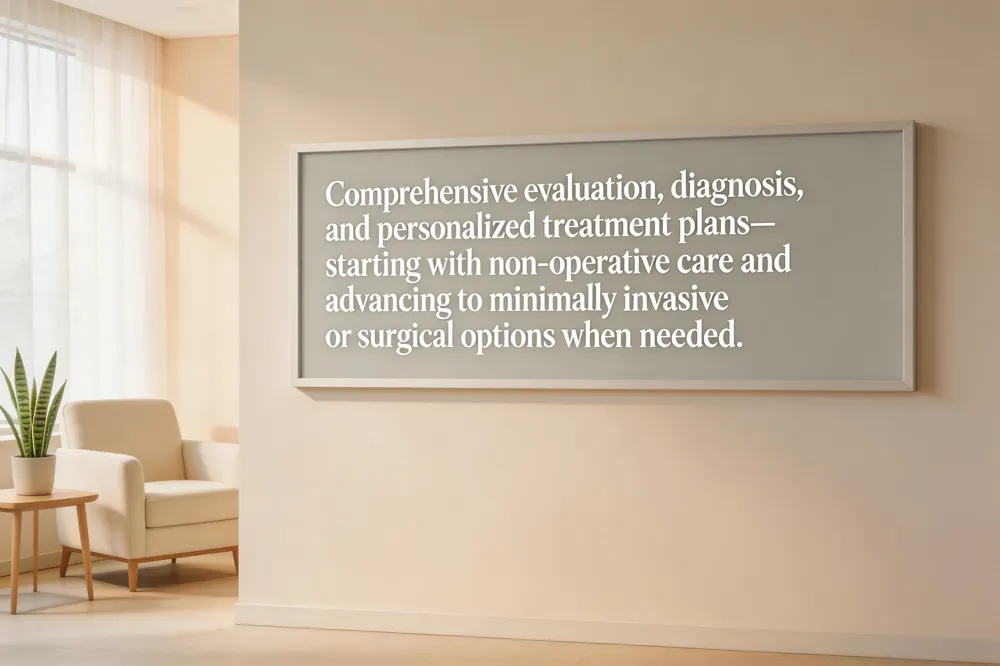 A spine specialist’s primary responsibility is the thorough evaluation and diagnosis of spinal disorders across the cervical, thoracic, and lumbar regions. During the initial visit the clinician reviews a detailed medical history, performs a focused physical exam, and interprets imaging studies such as X‑rays, MRI, and CT scans to pinpoint the source of pain, weakness, or numbness.
Based on this assessment, the specialist creates an individualized treatment plan that starts with non‑operative options—targeted physical therapy, medication management, injection therapies, and lifestyle counseling. Only when conservative care fails or when structural instability or neurologic compromise is present does the specialist consider minimally invasive or traditional surgical procedures, always aiming to preserve tissue and accelerate recovery.
Collaboration is essential: spine specialists coordinate with physiatrists, pain‑management physicians, physical therapists, and radiologists to ensure a patient‑first, multidisciplinary approach.
What is the typical role of a spine specialist?
A spine specialist evaluates and diagnoses disorders of the cervical, thoracic and lumbar spine, including back, neck, leg and arm pain, as well as structural problems such as herniated discs, stenosis, scoliosis, fractures, tumors and infections. They develop and implement treatment plans that begin with non‑operative options—medication, physical therapy, injections, and lifestyle counseling—resorting to surgery only when those measures fail. When surgery is indicated, they perform both traditional open procedures and minimally invasive techniques such as decompression and spinal fusion, aiming to relieve nerve compression while preserving surrounding tissue. They also manage pre‑ and post‑operative care, monitor healing, and guide rehabilitation to restore function and reduce pain. In addition to patient care, many spine specialists teach, conduct research, and contribute to advancing spinal medicine.
Red Flags: When You Should See a Spine Specialist
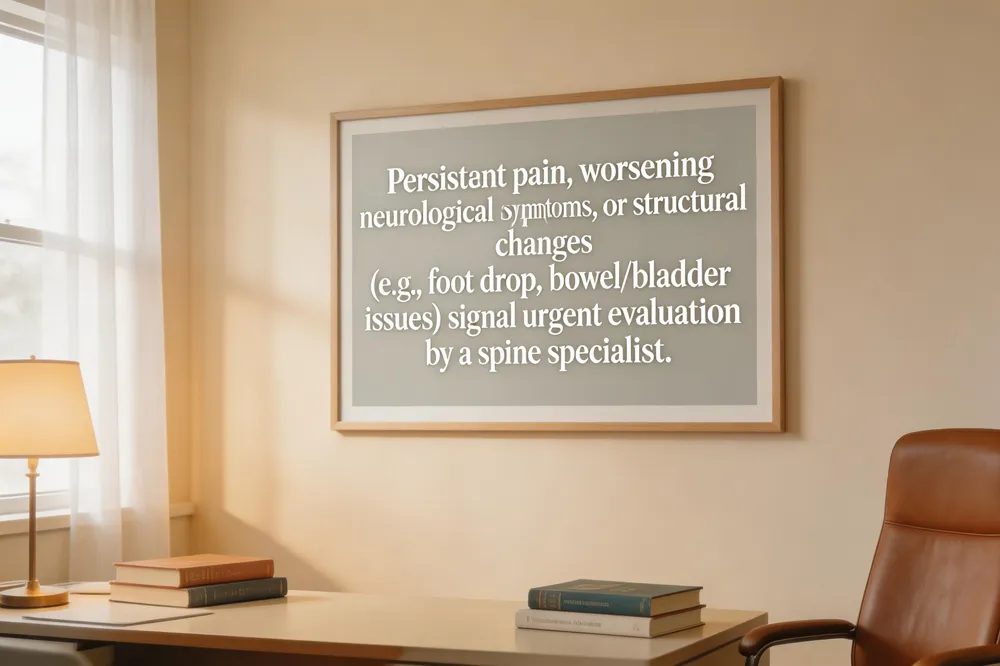 Patients often wonder what signals warrant a referral to a spine specialist. The most important red flags are persistent pain that does not improve with weeks of conservative care—such as rest, over‑the‑counter medications, physical therapy, or chiropractic treatment. When pain continues despite these measures, it may indicate an underlying structural problem that requires advanced imaging (X‑ray, MRI, CT) and a detailed evaluation by an orthopedic spine surgeon or neurosurgeon.
Neurological symptoms are another critical warning sign. New or worsening numbness, tingling, or weakness in the arms, hands, legs, or feet—especially if you notice foot drop, a leg giving out, or loss of fine motor control (difficulty buttoning shirts or typing)—suggests nerve compression or spinal cord involvement. These symptoms should prompt an immediate appointment, as they may signal radiculopathy, spinal stenosis, or even cauda equina syndrome, which requires urgent care.
Structural changes and radiating pain also demand attention. Visible misalignment, such as uneven shoulders, a hump on the back, or a curvature of the spine, may indicate scoliosis or other deformities. Pain that radiates down a limb (sciatica or cervical radiculitis) or is accompanied by bowel or bladder dysfunction is a red flag for serious pathology. Bringing imaging studies, a medication list, and a written symptom log to your first visit helps the specialist craft a personalized, patient‑first treatment plan that may include physical therapy, targeted injections, or minimally invasive surgery when appropriate.
Your First Appointment: What to Expect and How to Prepare
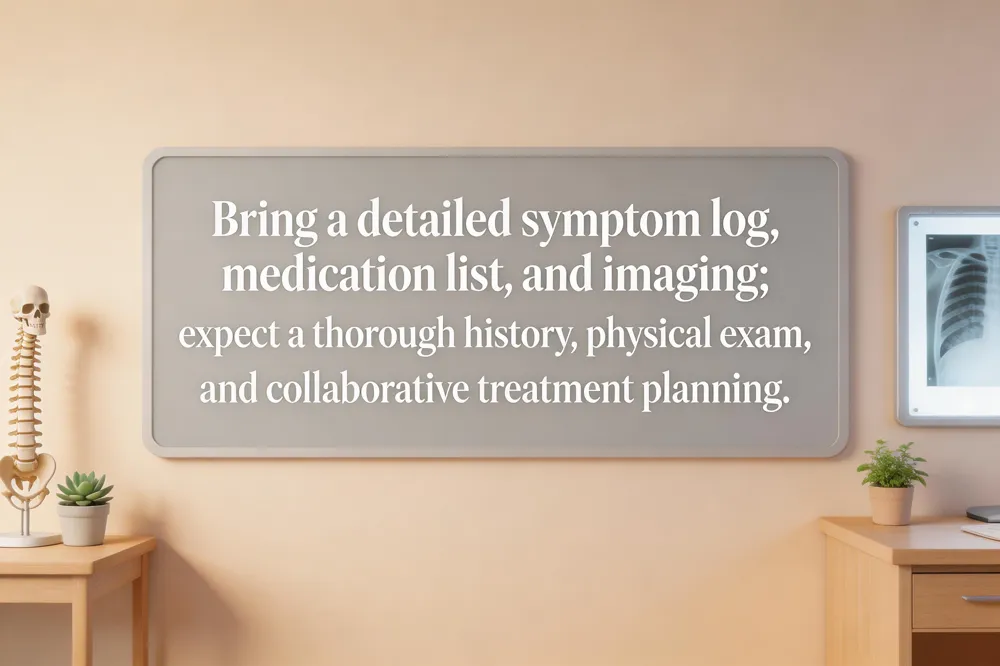 When you walk into your initial consultation with a spine specialist, the visit will be longer than a routine check‑up because the doctor needs a complete picture of your spinal health.Medical history and symptom log – Expect the specialist to ask detailed questions about the onset, location, intensity, and duration of your pain, as well as any weakness, numbness, or loss of function you’ve noticed. Bring a written list of current medications, previous surgeries, family spine history, and a daily symptom diary to help the clinician understand patterns and triggers.
Physical and neurological exam – The doctor will perform a focused physical exam, testing strength, reflexes, sensation, and range of motion in the neck, back, and limbs. This exam helps identify nerve involvement and assesses spinal stability.
Imaging review and treatment planning – Any X‑rays, MRIs, CT scans, or nerve studies you have should be brought to the appointment. The specialist will review these images, order additional studies if needed, and explain what the findings mean. Based on the combined history, exam, and imaging, a personalized treatment plan is developed—ranging from physical therapy, medication, and injection therapies to minimally invasive surgical options when conservative care is insufficient.
The clinician will also answer your questions, outline next steps, and schedule any follow‑up testing or appointments, ensuring you leave with a clear roadmap for relief and recovery.
Choosing the Right Doctor: Orthopedic Spine Surgeon vs Neurosurgeon
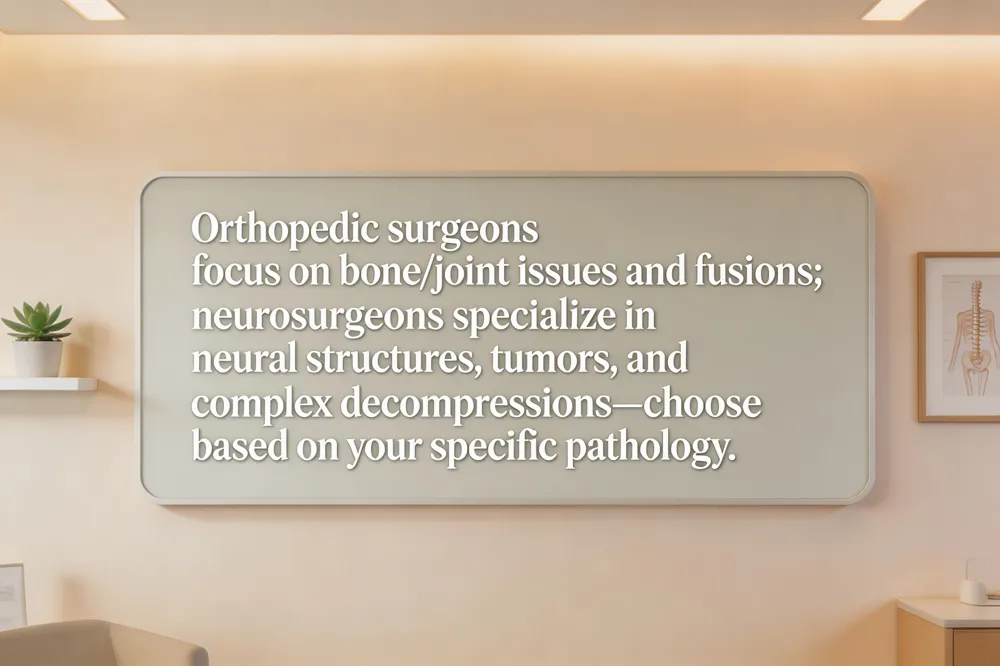 When deciding between an orthopedic spine surgeon and a neurosurgeon, understanding their training, focus, and typical procedures helps patients make an informed choice.
Training and focus areas – Orthopedic spine physicians complete a 5‑ to‑7‑year orthopedic residency followed by a fellowship in spine surgery, giving them deep expertise in the musculoskeletal system—bones, joints, ligaments, and discs. Neurosurgeons finish a 6‑to‑7‑year neurosurgery residency and often add a spine‑focused fellowship, concentrating on the central and peripheral nervous systems, spinal cord, and nerve roots.
Typical procedures performed by each – Both specialists can address common spine problems such as degenerative disc disease, spinal stenosis, herniated discs, and fractures. Orthopedic spine surgeons frequently perform spinal fusions, deformity corrections, and joint‑related surgeries, while neurosurgeons excel at procedures involving neural structures, including tumor resections, complex spinal cord decompressions, and minimally invasive laminotomies.
When to prefer one over the other – For most mechanical issues—degenerative disease, instability, or routine fusion—either surgeon is qualified; the decision often hinges on the physician’s experience with a specific technique. If the case involves spinal cord tumors, intradural pathology, or intricate nerve‑root pathology, a neurosurgeon is usually the preferred specialist. Conversely, for severe scoliosis, spondylolisthesis, or extensive bony reconstruction, an orthopedic spine surgeon may be the better fit.
Frequently asked questions
What is the difference between an orthopedic spine doctor and a neurosurgeon? Both specialize in spine care, but orthopedic spine doctors focus on the musculoskeletal aspects (bones, joints, discs) and manage conditions like degenerative disease and fractures, while neurosurgeons concentrate on the nervous system (spinal cord, nerve roots) and treat tumors, spinal cord injuries, and complex nerve pathology. The choice depends on the specific diagnosis and required procedure.
Can a neurosurgeon treat spinal stenosis? Yes. Neurosurgeons are fully qualified to diagnose and treat spinal stenosis, offering both conservative options (physical therapy, pain‑management injections) and surgical decompression techniques such as laminectomy, laminotomy, or minimally invasive endoscopic procedures.
By reviewing a physician’s subspecialty training, procedural experience, and the nature of the spinal condition, patients can confidently select the specialist best suited to their needs, ensuring a spine‑first evidence‑based approach to back, neck, or sciatica pain.
Specific Concerns: Risks, Costs, and Common Conditions
 How risky is L4‑L5 disc replacement surgery? L4‑L5 disc replacement is considered a relatively safe, motion‑preserving alternative to spinal fusion, with overall complication rates comparable to other lumbar surgeries. The most common risks include surgical site infection, bleeding, anesthesia‑related issues, and implant‑specific problems such as wear, loosening, migration, or dislocation of the artificial disc. Nerve irritation or injury can cause temporary numbness, weakness, or leg pain. Rarely, re‑operation may be needed if the device fails or adjacent‑level degeneration occurs. Your surgeon will evaluate your health and spinal anatomy to give a personalized risk profile.
How much does it cost to see a spine specialist? A first‑visit consultation typically ranges from $150 to $300 out‑of‑pocket for insured patients; uninsured patients may pay $200‑$500. Insurance usually covers most of the visit after the deductible, leaving only a modest copay. Imaging fees (X‑ray $50‑$150, MRI $400‑$3,500) and labs add costs. High‑deductible plans may require full payment until the deductible is met, but many clinics offer financing or payment plans. The Orthopedic Spine Institute of St. Louis provides clear estimates and insurance verification before your appointment.
Can an orthopedic surgeon treat scoliosis? Yes. Orthopedic spine surgeons diagnose and manage all forms of scoliosis, using braces and physical therapy for growing patients and surgical options—fusion, rod‑and‑screw instrumentation, or minimally invasive techniques—when curves progress or cause pain. They also address associated back pain and disc degeneration. Dr. David S. Raskas’s team at the Orthopedic Spine Institute of St. Louis offers comprehensive, patient‑first scoliosis care.
What is a spine specialist called? A spine specialist is commonly called a spine surgeon. Depending on training, they may be an orthopedic spine surgeon or a neurosurgeon, both board‑certified. Non‑surgical practitioners are often physiatrists or pain‑management physicians. Patients typically refer to them as spine doctors or spine specialists.
What specialist treats a bulging disc? A bulging disc is evaluated and treated by a spine specialist—orthopedic spine surgeon, neurosurgeon, or physiatrist. The specialist conducts a physical and neurological exam, orders MRI or CT imaging, and begins with conservative care (physical therapy, medication, injections). Surgery is reserved for persistent or worsening symptoms. At the Orthopedic Spine Institute of St. Louis, Dr. David S. Raskas provides this comprehensive, patient‑first approach.
Patient‑First Care at the Orthopedic Spine Institute of St. Louis
 At the Orthopedic Spine Institute of St. Louis we put you first. Your journey begins with a conservative‑first approach—detailed history, physical exam, and review of any X‑rays, MRIs or CT scans you bring—followed by evidence‑based non‑surgical options such as physical therapy, medication management and injection therapies. Only when these measures fail do we consider minimally invasive surgery, using small incisions, image‑guided tools and advanced techniques that reduce tissue trauma, shorten hospital stays and speed recovery. To make care seamless, our staff handles insurance verification and offers secure online forms for new‑patient paperwork, so you can focus on healing instead of paperwork. Scheduling an appointment with board‑certified spine specialist Dr. David S. Raskas is quick and convenient—online requests or a simple call can secure a slot within a week, ensuring timely access to our patient‑first, multidisciplinary team.
Take the Next Step Toward a Pain‑Free Life
Begin by reviewing your symptoms and any red‑flag signs—persistent back or neck pain, weakness, numbness, tingling in the arms or legs, loss of bladder or bowel control, or sudden loss of motion. Prompt identification of these warning signals helps the specialist prioritize urgent care. Next, gather all relevant imaging studies (X‑rays, MRI, CT scans) and a complete list of current medications, past surgeries, and family medical history. Having these documents ready enables a thorough, accurate diagnosis during your first visit. Finally, contact the Orthopedic Spine Institute of St. Louis to schedule a personalized evaluation. Our patient‑first team will review your information, discuss treatment options—from conservative care to minimally invasive surgery—and create a tailored plan aimed at restoring function and achieving lasting pain relief.