Why Sleep Posture Matters
A neutral spine while you sleep keeps the S‑curves of the cervical, thoracic and lumbar regions aligned, reducing strain on discs and ligaments. Mattress firmness matters: a medium‑firm surface supports the body without excessive sinking, preventing the spine from sagging or hyper‑extending. Pillow choice completes the picture—thin pillows for back sleepers maintain cervical lordosis, while thicker, contoured pillows for side sleepers fill the gap between head and mattress and a firm pillow between the knees keeps hips and pelvis in line. Together these simple adjustments promote healthier sleep and lessen morning back or neck pain.
Foundations of a Neutral Spine
| Mattress type | Pillow type | Recommended sleep position | Primary benefit |
|---|---|---|---|
| Medium‑firm | Shoulder‑width, cervical‑support pillow | Back – pillow under knees | Preserves natural S‑shaped curves, evenly distributes weight |
| Medium‑firm | Firm pillow between knees (side) | Side – pillow between knees + neck pillow | Keeps pelvis and spine neutral, reduces hip/lumbar strain |
| Medium‑firm | No pillow (stomach) | Stomach – not recommended | Hyper‑extends lumbar spine and twists neck, increases strain |
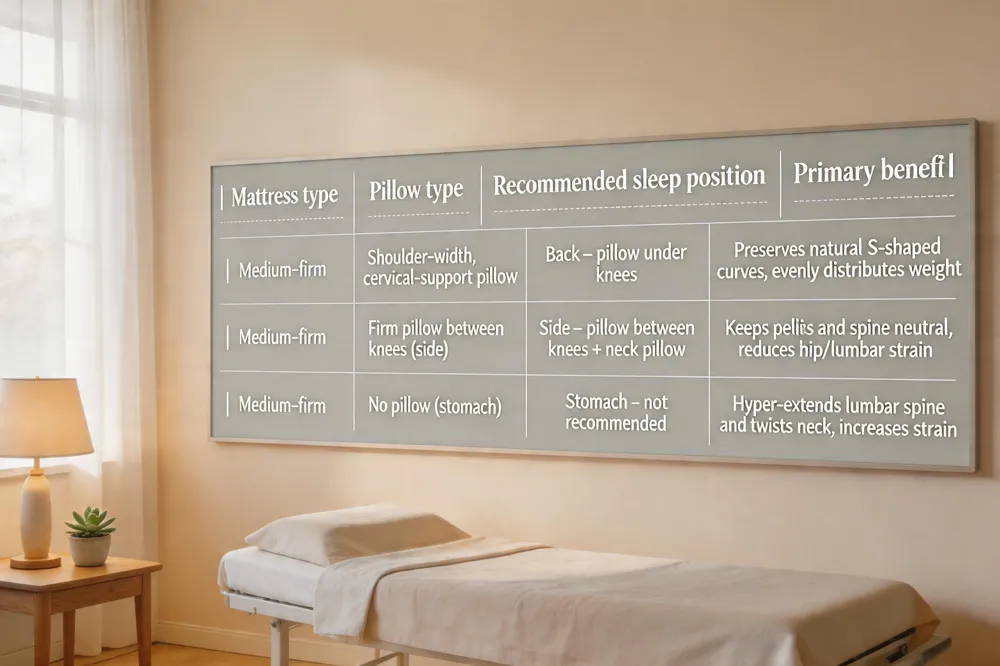 A medium‑firm mattress supports the body’s S‑shaped curves without excessive sinking, spreading weight evenly across shoulders, hips and lumbar region. Replace a sagging mattress every 7‑10 years.
Spine alignment sleeping pillow – A pillow that matches your shoulder width and sleeping position maintains cervical lordosis and promotes spinal alignment.
Best sleeping position for spine alignment – The posture is on your back with a pillow under the knees to flatten lumbar curve. For side sleepers, place a firm pillow between the knees and a neck pillow to keep pelvis and spine neutral. Avoid stomach sleeping, which hyper‑extends lower back and twists neck.
Side‑By‑Side: Left vs. Right and Back Sleep
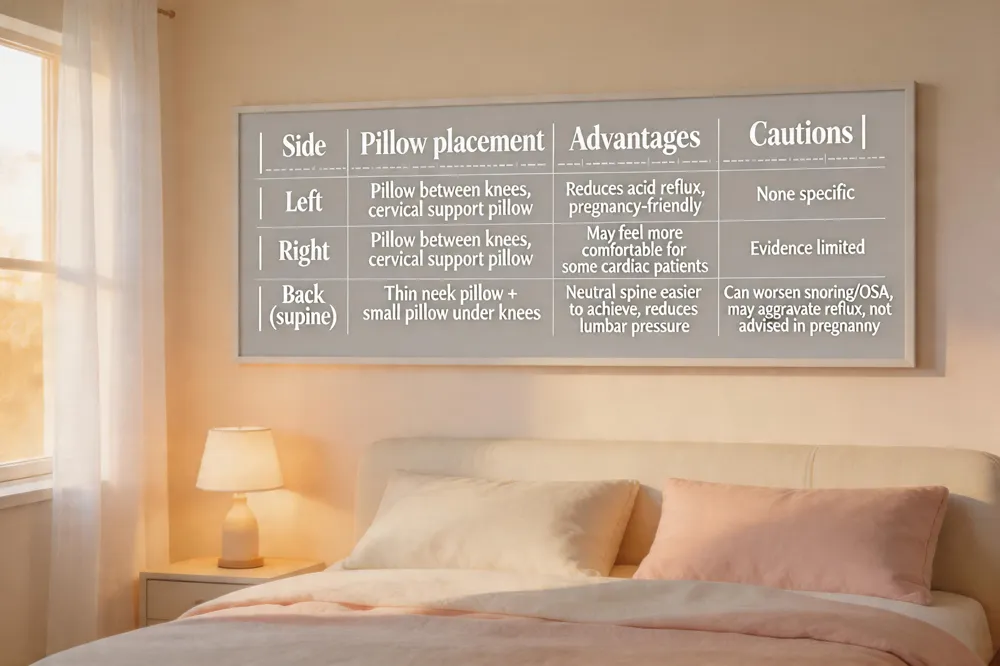
| Side | Pillow placement | Advantages | Cautions |
|---|---|---|---|
| Left | Pillow between knees, cervical support pillow | Reduces acid reflux, pregnancy‑friendly | None specific |
| Right | Pillow between knees, cervical support pillow | May feel more comfortable for some cardiac patients | Evidence limited |
| Back (supine) | Thin neck pillow + small pillow under knees | Neutral spine easier to achieve, reduces lumbar pressure on medium‑firm mattress | Can worsen snoring/OSA, may aggravate reflux, not advised in pregnancy |
 Best position to sleep left or right
Both sides can maintain a neutral spine when paired with a supportive pillow and a medium‑firm mattress. Left‑side sleeping eases acid reflux and is recommended during pregnancy because gravity keeps the stomach lower. Right‑side may feel more comfortable for some cardiac patients, though evidence is limited. A pillow between the knees reduces hip and lumbar strain on either side.
Best position to sleep left or right
Both sides can maintain a neutral spine when paired with a supportive pillow and a medium‑firm mattress. Left‑side sleeping eases acid reflux and is recommended during pregnancy because gravity keeps the stomach lower. Right‑side may feel more comfortable for some cardiac patients, though evidence is limited. A pillow between the knees reduces hip and lumbar strain on either side.
Disadvantages of sleeping on your back Back sleeping can worsen snoring and sleep‑apnea, increase lumbar pressure (especially on soft mattresses), and cause neck hyper‑extension if the head pillow is incorrect. It may aggravate acid reflux and is discouraged in pregnancy due to reduced fetal blood flow.
Can you fix posture by sleeping on your back? Yes, a neutral spine is easier to achieve supine. Use a thin neck pillow and a small pillow under the knees to preserve lumbar curvature. However, posture improvement also requires daytime ergonomics, stretching, and strengthening.
Why is sleeping on your back bad for sleep‑paralysis? Supine position narrows the airway, leading to brief breathing interruptions during REM. This can trigger micro‑awakenings while the body remains in REM‑related muscle atonia, increasing the likelihood of sleep‑paralysis episodes.
Targeted Strategies for Upper, Middle, and Lower Back Pain
| Back region | Best position | Pillow strategy | Key tip |
|---|---|---|---|
| Upper (cervical) | Back or side | Cervical‑support pillow + rolled towel under knees (back) or pillow between knees (side) | Keep neck aligned, avoid twisting |
| Middle (thoracic) | Back or side | Same as upper; pillow between knees for side sleepers | Prevent hips from pulling spine out of alignment |
| Lower (lumbar) | Back | Small pillow under knees (flatten lumbar curve) or pillow between knees for side sleepers | Flattens lumbar curve, reduces strain |
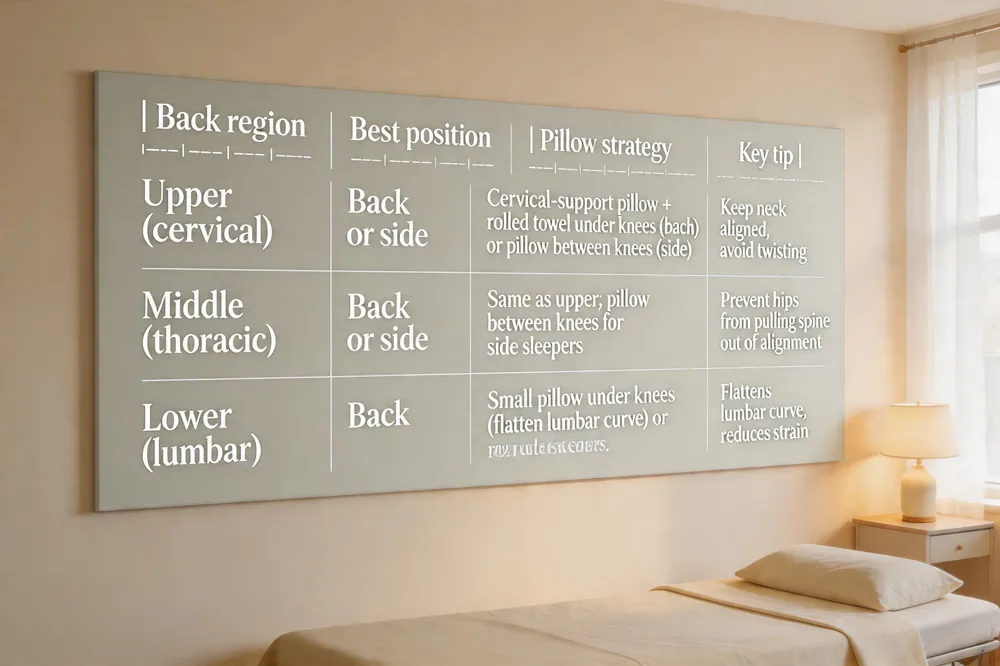 Maintaining a neutral spine while you sleep is the single most effective way to reduce pain in any region of the back. For upper‑back discomfort, lie on your back with a small pillow or rolled towel under the knees and a cervical‑support pillow that keeps the neck aligned; a side‑sleeper should place a firm pillow between the knees to keep the pelvis and thoracic spine straight. Middle‑back (thoracic) pain benefits from the same back‑sleep setup or, if you prefer side sleeping, a pillow between the knees to prevent the hips from pulling the spine out of alignment. Lower‑back pain is best relieved by a pillow under the knees in the supine position, which flattens the lumbar curve, or by a knee‑between‑knees pillow for side sleepers. Stomach sleeping is the worst for all three zones because it forces the neck to twist and flattens the natural curves, increasing strain on the upper, middle, and lower back. Switch to back or side positions, use a medium‑firm mattress, and consider a lumbar‑support pillow for added comfort.
Evidence‑Based Links Between Sleep Posture and Low‑Back Pain
| Posture | LBP risk (relative) | Recommended pillow | Supporting evidence |
|---|---|---|---|
| Supine (back) | Lowest | Thin neck pillow + pillow under knees | Systematic review (2005‑2024) shows neutral alignment and lower LBP prevalence |
| Side‑lying (neutral) | Moderate‑low | Firm pillow between knees + supportive head pillow | Protective when pelvis kept neutral |
| Side‑lying (twisted) | Higher | N/A | Twisted posture worsens LBP |
| Prone (stomach) | Highest | N/A | Hyper‑extends lumbar spine, increases pain risk |
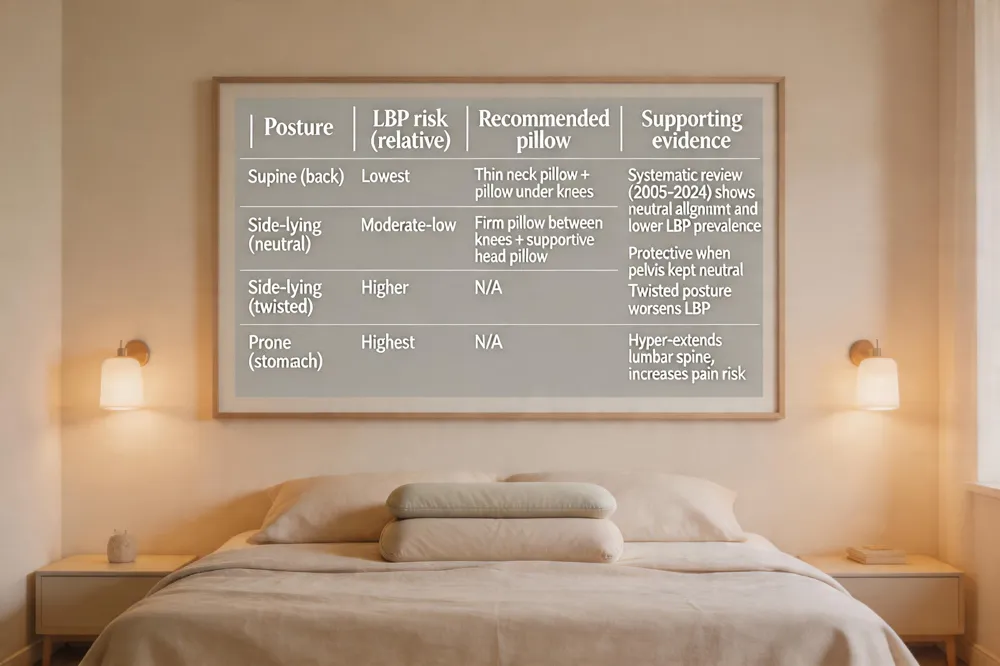 A systematic review of six observational studies (2005‑2024) found that supine sleeping promotes neutral spinal alignment and correlates with lower low‑back pain (LBP) prevalence whereas prone sleeping hyper‑extends the lumbar spine and raises pain risk. Side‑lying can be protective when a pillow keeps the pelvis and spine neutral, but a twisted posture worsens LBP; frequent position changes show little effect.
The most spine‑friendly posture for LBP is lying on the back with a thin pillow or rolled towel under the knees to flatten the lumbar curve. Side sleepers should place a firm pillow between the knees (and a supportive head pillow) to maintain pelvic alignment. Stomach sleeping is discouraged because it forces the neck to rotate and the lower back into an exaggerated arch.
Insufficient sleep heightens pain‑modulating pathways, lowers pain thresholds, and increases inflammatory markers, creating a vicious cycle of worsening back pain and poorer sleep. Improving sleep hygiene, using a medium‑firm mattress, and proper pillow placement can break this cycle. If pain persists, schedule a consult with Dr. David S. Raskas at the Orthopedic Spine Institute of St. Louis for personalized conservative or minimally invasive care.
Practical Tips for a Spine‑Friendly Night
| Action | Description | Why it helps |
|---|---|---|
| Choose mattress | Medium‑firm mattress | Supports natural curves without excessive sink |
| Pillow selection | Low‑profile for back sleepers; firmer, higher for side sleepers | Maintains cervical lordosis and pelvic alignment |
| Knee support | Thin pillow/rolled towel under knees (back) or pillow between knees (side) | Flattens lumbar curve, reduces strain |
| Pre‑sleep stretch | 5‑10 min: knee‑to‑chest, child’s pose, cat‑cow | Relaxes back muscles, improves flexibility |
| Sleep hygiene | Cool, dark, quiet room; limit screens; bed for sleep only | Improves sleep quality, reduces pain‑modulating pathway activation |
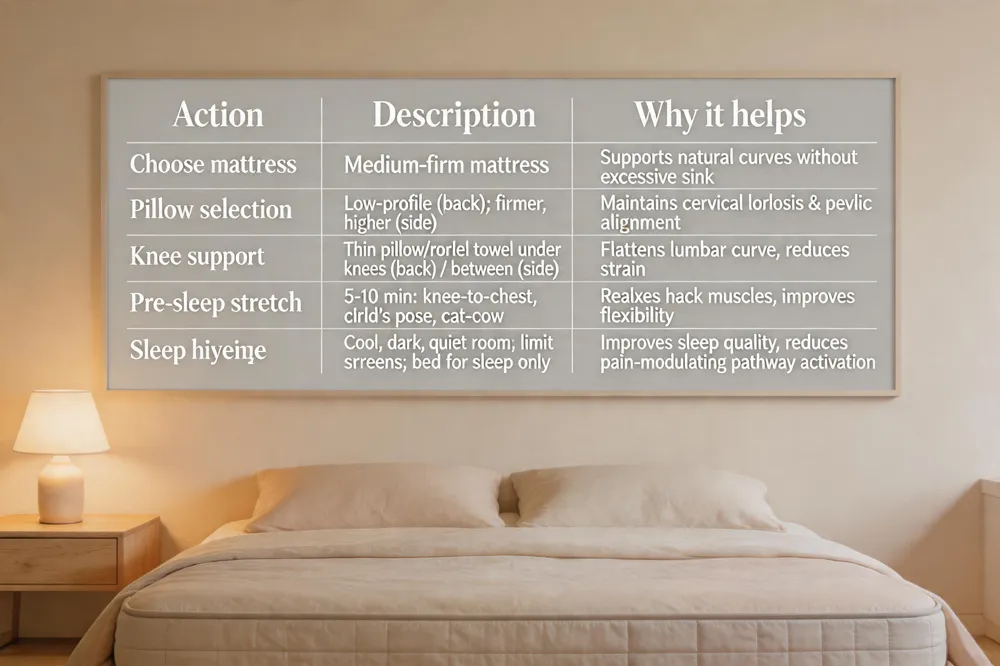 Choosing the right sleep surface is the foundation of spinal health. A medium‑firm mattress that supports the body’s natural curves without excessive sinking keeps the spine in a neutral alignment. For back sleepers, a low‑profile pillow that fills the gap between head and mattress maintains cervical lordosis, while a thin pillow or rolled towel under the knees flattens the lumbar curve. Side sleepers benefit from a firmer, higher pillow for the neck and a firm pillow between the knees to keep the pelvis and spine aligned.
Before bedtime, spend 5–10 minutes on gentle stretches such as knee‑to‑chest, child’s pose, and cat‑cow to relax the back muscles and improve flexibility.
Good sleep hygiene and a cool, dark, quiet bedroom, limiting screens, and reserving the bed for sleep only enhance sleep quality and allow the spine to repair overnight.
Poor sleeping posture symptoms: Neck and upper‑back pain, shoulder stiffness, lower‑back ache, tingling or numbness in limbs, morning headaches, grogginess, and worsening of sciatica or other spinal conditions.
Putting It All Together for a Pain‑Free Morning
Choosing the right pillow and mattress is the foundation of a pain‑free morning. A medium‑firm mattress supports the spine’s natural curves, while pillow height should match shoulder width: thin for back sleepers, thicker for side sleepers, and a firm pillow between the knees to keep hips aligned. Consistent sleep hygiene—7‑9 hours nightly, a dark cool room, and pre‑bed stretching—helps muscles recover and reduces pain. If pain persists despite these adjustments, consult an orthopedic spine specialist for an evaluation and invasive treatments.