Why Food Matters for Spinal Healing
A growing body of research shows that the nutrients you eat directly influence the spine’s ability to repair after injury or surgery. Protein supplies the amino acids needed for collagen synthesis and muscle regeneration, while vitamin C, zinc, and vitamin K support wound closure and proper blood clotting. Anti‑inflammatory omega‑3 fatty acids from fatty fish, flaxseed, or walnuts reduce postoperative swelling, and calcium together with vitamin D maintains bone density for spinal fusion or disc health. Complex carbohydrates from whole grains provide steady energy for rehabilitation, and fiber‑rich fruits, vegetables, and legumes prevent constipation caused by pain medications. Adequate hydration keeps intervertebral discs hydrated and facilitates nutrient transport. Evidence‑based guidelines recommend 1.5–2 g protein per kilogram body weight daily, 10–12 kcal per pound of ideal body weight, and a balanced intake of vitamin C, zinc, calcium, vitamin D, magnesium, and omega‑3s to accelerate healing and lower infection risk.
Essential Nutrients for Tissue Repair and Bone Health
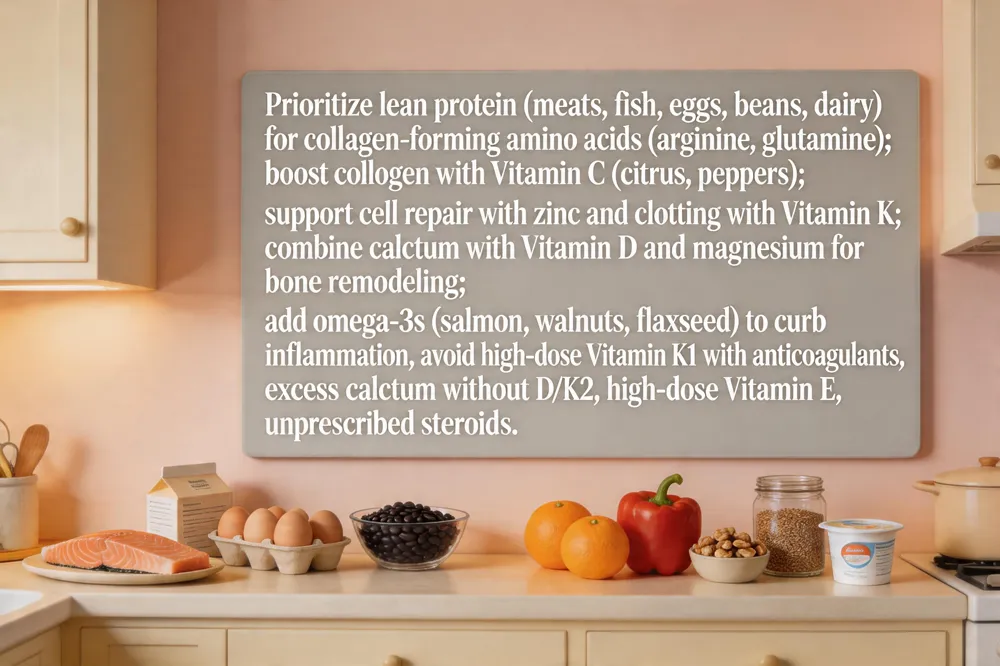 Protein & Amino Acids for Collagen – Lean meats, fish, eggs, beans and dairy supply the essential amino acids (including arginine and glutamine) needed for collagen synthesis, wound repair, and muscle preservation after spine surgery.
Vitamin C, zinc & vitamin K – Vitamin C (citrus, bell peppers) drives collagen formation; zinc (meat, seeds, legumes) promotes cell proliferation and immune defense; vitamin K (leafy greens, fermented foods) supports proper clotting and directs calcium to bone rather than soft tissue.
Calcium and Vitamin D & Magnesium – Calcium and vitamin D (fatty fish, fortified milks, sunlight) work together for bone remodeling and spinal fusion; magnesium (nuts, seeds, whole grains) enhances calcium absorption, relaxes muscles, and aids nerve signaling.
Omega‑3 fatty acids – EPA/DHA from salmon, mackerel, walnuts, flaxseed reduce postoperative swelling and systemic inflammation, supporting faster tissue healing.
Supplements to Avoid After Fusion – High‑dose vitamin K1 (especially with anticoagulants), herbal blood‑thinners (ginger, garlic, turmeric extracts), excess calcium without vitamin D/K2, high‑dose vitamin E, and any steroid or anabolic agents unless prescribed.
Best Vitamins & Supplements Post‑Surgery – Vitamin D + K2, calcium, magnesium, Vitamin C, B‑complex (especially B12), omega‑3 fish oil, and modest vitamin E provide the optimal blend for bone mineralization, collagen repair, nerve health, and anti‑inflammatory protection.
Anti‑Inflammatory Diet Strategies for Back Pain Relief
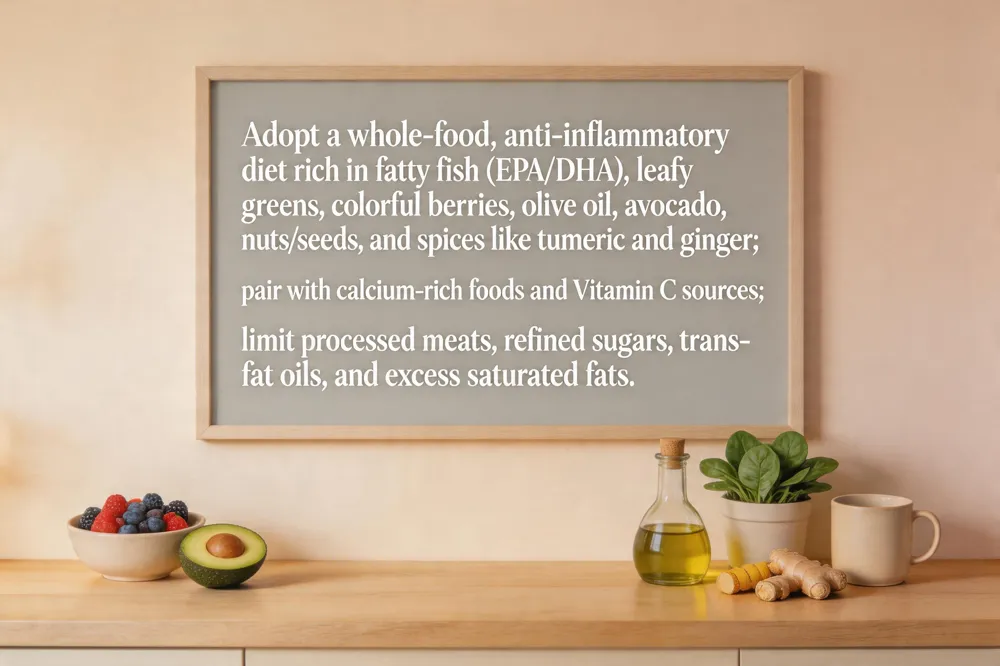 Anti‑inflammatory diet for back pain – Focus on whole, nutrient‑dense foods that curb systemic inflammation and support spinal health. Prioritize fatty fish (salmon, mackerel, sardines) for omega‑3s, leafy greens (kale, spinach, Swiss chard) for antioxidants and magnesium, and colorful berries for anthocyanins. Include olive oil, avocado, nuts and seeds (walnuts, flax, chia) for monounsaturated fats and additional omega‑3s, and add turmeric or ginger with a pinch of black pepper to boost curcumin and gingerol bioavailability. Pair with calcium‑rich options (dairy or fortified plant milks, tofu, broccoli) and vitamin C‑rich citrus for bone strength and tissue repair. Limit processed meats, refined sugars, trans‑fat‑laden oils, and excess saturated fats.
Which food is best for back pain relief? – Fatty fish (salmon, mackerel, sardines, tuna) provide the most effective omega‑3s, actively reducing spinal inflammation and supporting tissue repair. Aim for two wild‑caught servings weekly and pair with leafy greens, berries, or extra‑virgin olive oil.
Best food for spine pain – Combine omega‑3‑rich fish, walnuts, chia/flax seeds, olive oil, dark leafy greens, colorful berries, and spices like turmeric and ginger. Whole‑grain staples and adequate hydration further lower inflammation.
What foods flush out inflammation? – Antioxidant‑packed fruits/vegetables, fatty fish, nuts, seeds, olive oil, whole grains, legumes, and spices (ginger, turmeric, garlic, cinnamon) help clear inflammatory compounds. Water, green tea, and herbal teas support detoxification.
Fruits for back pain relief – Berries (strawberries, blueberries, raspberries, cherries) supply anthocyanins; citrus fruits provide vitamin C; pineapple offers bromelain; papaya contributes papain. Variety targets inflammation from the inside out.
Dry fruits for back pain – Unsweetened dried dates, apricots, and figs are rich in antioxidants, magnesium, and potassium, supporting muscle function and reducing inflammation. Enjoy a modest ¼‑cup serving daily, avoiding added sugars or sulfites.
Post‑Surgery Nutrition Plans for Optimized Healing
 Recovery from spinal fusion hinges on a nutrient‑dense diet. Best foods to eat after spinal fusion surgery: lean proteins (chicken, fish, eggs, tofu, legumes, low‑fat dairy) supply amino acids for tissue repair; colorful vegetables and fruits provide vitamin C, vitamin K and antioxidants; omega‑3 sources (salmon, walnuts, flaxseed) curb inflammation; calcium‑rich dairy or fortified plant milks with vitamin D support bone fusion; and plenty of water keep discs hydrated. Foods to avoid after spine surgery: processed snacks, sugary drinks, excess alcohol, high‑saturated‑fat meats, fried foods and large caffeine doses, all of which heighten inflammation and delay healing. How to get comfortable after back surgery: use a firm mattress or recliner, pillow under knees (back sleeper) or between knees (side sleeper), change positions every 30 minutes, and follow prescribed pain‑management protocols. What to eat to recover from a back injury: anti‑inflammatory omega‑3s, leafy greens, berries, nuts, seeds, avocado, olive oil, turmeric, ginger, and whole grains; limit red/processed meats, refined sugars, trans fats. Food for spine health: calcium, vitamin D, magnesium, potassium, lean protein, omega‑3s, and antioxidant‑rich fruits/vegetables; avoid processed, high‑salt, and high‑sugar foods.
Special Populations and Targeted Dietary Patterns
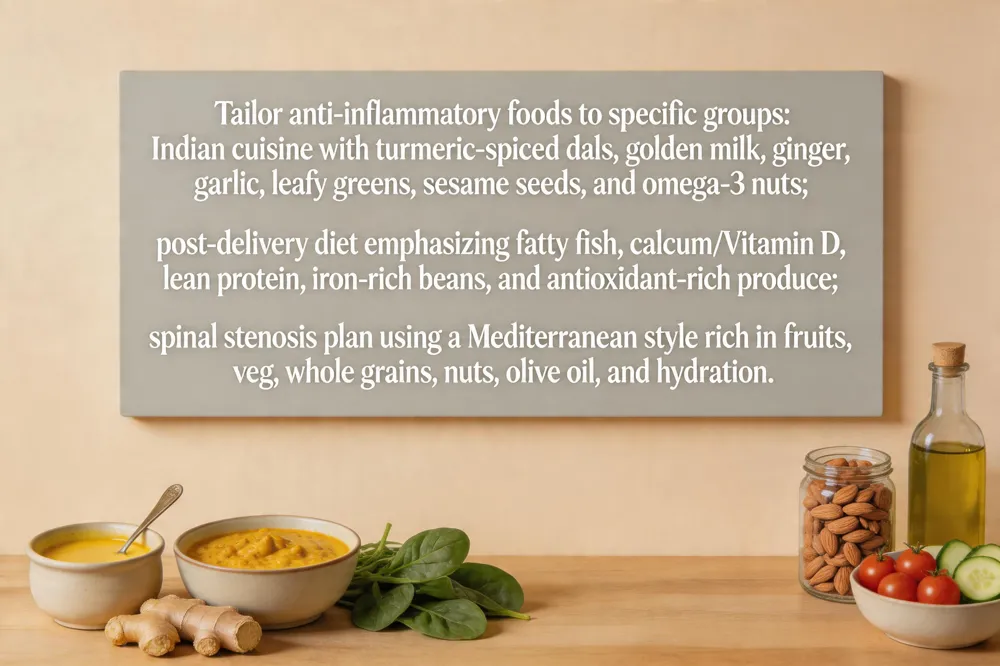 Indian food for back pain: A diet rich in Indian anti‑inflammatory foods can help reduce back‑pain inflammation and support spinal health. Include turmeric‑spiced dals or golden milk with black pepper to boost curcumin absorption, add fresh ginger, garlic and cumin to meals, and eat plenty of leafy greens such as spinach and kale. Choose calcium‑dense options like sesame seeds, ragi or low‑fat dairy, and omega‑3 sources such as almonds, walnuts and flax‑seed‑enhanced roti. Limit fried foods, excess ghee and sugary sweets that can aggravate Vata imbalance and inflammation. Consistently following these foods together with regular gentle exercise can often lessen pain within a few weeks.
Food for back pain after delivery: After delivery, focus on anti‑inflammatory nutrient‑dense foods that support muscle and bone recovery and reduce pain. Include fatty fish such as salmon (or a low‑mercury source) for DHA and omega‑3s, which can lessen inflammation and improve mood. Add calcium‑rich low‑fat dairy or fortified plant milks, and vitamin‑D‑rich foods to help rebuild bone density and support healing. Eat plenty of lean protein (e.g., lean beef, legumes) and iron‑rich beans to keep energy up and prevent fatigue that can worsen back strain. Finish meals with a colorful variety of fruits and vegetables—especially blueberries and oranges—for antioxidants, vitamins, and hydration, while limiting caffeine and processed snacks.
Spinal stenosis diet: An anti‑inflammatory, Mediterranean‑style diet is ideal for spinal stenosis because it reduces systemic inflammation and helps you maintain a healthy weight, easing pressure on narrowed spinal canals. Fill your plate with fruits, vegetables, whole grains, nuts, seeds, olive oil, and fatty fish such as salmon for omega‑3s, while limiting refined sugars, trans fats, and highly processed foods. Adequate hydration supports disc health, so aim for at least eight glasses of water daily and avoid dehydrating drinks like excess caffeine and alcohol. Include calcium‑rich foods (leafy greens, fortified plant milks, dairy) and get enough vitamin D from sunlight or supplements to strengthen bone and prevent osteoporosis.
Supplements, Hydration, and Lifestyle for Faster Healing
 Key supplements and what to avoid: Favor high‑quality protein, vitamin C, zinc, calcium‑vitamin D, and omega‑3s from fish, flaxseed, or walnuts. Skip excess vitamin E, high‑dose fish‑oil before surgery, and any supplement that interferes with blood clotting (e.g., large curcumin doses with NSAIDs).
Hydration guidelines for disc health: Aim for at least half your body weight in ounces of water daily (e.g., 75 oz for a 150‑lb adult). Include hydrating foods such as watermelon, cucumber, and citrus.
Weight management and belly‑fat reduction post‑surgery: Adopt a calorie‑controlled, protein‑rich diet, limit refined carbs and added sugars, and incorporate anti‑inflammatory foods (omega‑3s, leafy greens, berries). Pair nutrition with low‑impact cardio (walking, stationary‑bike) and surgeon‑approved core work (bridges, pelvic tilts).
Lifestyle factors that influence recovery: Maintain good posture, avoid prolonged sitting, quit smoking, limit alcohol, and get 7‑9 hours of sleep.
How to speed up healing from a back injury? Engage in low‑impact aerobic activity, apply ice then heat, use OTC pain relievers as needed, stay hydrated, and start gentle physician‑approved stretching and core strengthening once pain eases.
How to lose belly fat after back surgery? Follow a protein‑rich, anti‑inflammatory diet, add 20‑30 minutes of low‑impact cardio several times a week, and perform surgeon‑cle core exercises.
What to avoid after spine surgery? No forward bending, twisting, heavy lifting (>5‑10 lb), high‑impact sports, prolonged slouching, smoking, excess alcohol, and high‑sugar foods.
What foods/supplements help with a back injury? Fatty fish, leafy greens, berries, olive oil, turmeric, ginger, green tea, calcium‑vitamin D, magnesium, collagen, and glucosamine/chondroitin support tissue repair and reduce inflammation.
Key supplements and what to avoid: Favor high‑quality protein, vitamin C, zinc, calcium‑vitamin D, and omega‑3s from fish, flaxseed, or walnuts. Skip excess vitamin E, high‑dose fish‑oil before surgery, and any supplement that interferes with blood clotting (e.g., large curcumin doses with NSAIDs).
Hydration guidelines for disc health: Aim for at least half your body weight in ounces of water daily (e.g., 75 oz for a 150‑lb adult). Include hydrating foods such as watermelon, cucumber, and citrus.
Weight management and belly‑fat reduction post‑surgery: Adopt a calorie‑controlled, protein‑rich diet, limit refined carbs and added sugars, and incorporate anti‑inflammatory foods (omega‑3s, leafy greens, berries). Pair nutrition with low‑impact cardio (walking, stationary‑bike) and surgeon‑approved core work (bridges, pelvic tilts).
Lifestyle factors that influence recovery: Maintain good posture, avoid prolonged sitting, quit smoking, limit alcohol, and get 7‑9 hours of sleep.
How to speed up healing from a back injury? Engage in low‑impact aerobic activity, apply ice then heat, use OTC pain relievers as needed, stay hydrated, and start gentle physician‑approved stretching and core strengthening once pain eases.
How to lose belly fat after back surgery? Follow a protein‑rich, anti‑inflammatory diet, add 20‑30 minutes of low‑impact cardio several times a week, and perform surgeon‑cle core exercises.
What to avoid after spine surgery? No forward bending, twisting, heavy lifting (>5‑10 lb), high‑impact sports, prolonged slouching, smoking, excess alcohol, and high‑sugar foods.
What foods/supplements help with a back injury? Fatty fish, leafy greens, berries, olive oil, turmeric, ginger, green tea, calcium‑vitamin D, magnesium, collagen, and glucosamine/chondroitin support tissue repair and reduce inflammation.
Practical FAQs: Everyday Choices for a Pain‑Free Spine
 Yogurt and dairy options: Low‑fat or Greek yogurt supplies calcium, high‑quality protein and probiotics that support bone density, muscle health and reduce systemic inflammation. Choose plain, no‑sugar varieties and combine with fresh berries for extra antioxidants.
Foods to limit or eliminate: Avoid trans‑fat‑rich processed snacks, fried foods, refined‑grain carbs, sugary drinks and excessive alcohol or caffeine. These items raise inflammatory markers, promote weight gain and can dehydrate spinal discs, worsening back pain.
Simple meal ideas: Breakfast – Greek yogurt with sliced banana and walnuts; Lunch – spinach salad topped with grilled salmon, avocado and olive‑oil vinaigrette; Snack – carrot sticks with hummus; Dinner – quinoa bowl with roasted broccoli, chickpeas, turmeric-spiced chicken and a side of berries.
Monitoring and adjusting diet: Track pain levels and energy after meals, increase water intake to half your body weight in ounces, and gradually add anti‑inflammatory foods (omega‑3 fish, leafy greens, turmeric, ginger). Review progress with your spine‑care team to fine‑tune nutrition for optimal healing.
Putting Nutrition Into Action for a Stronger Back
Key take‑aways for meals: Fill each plate with lean protein (chicken, fish, beans) for tissue repair, add a vitamin‑C source (citrus, bell pepper, berries) to boost collagen, and include omega‑3s (salmon, walnuts, flaxseed) to curb swelling. Pair calcium‑rich foods (low‑fat dairy, leafy greens) with vitamin D (sun‑exposed foods, fortified milk) for bone healing. Choose whole‑grain carbs and fiber‑filled fruits, vegetables, and legumes to sustain energy and prevent constipation. Finish with olive oil or avocado for fat aiding vitamin absorption.
When to seek professional guidance: Consult a dietitian or spine specialist if pain lingers beyond recovery period, wound healing is delayed, or you have conditions (diabetes, kidney disease) that alter nutrient needs. They can customize calorie targets, protein levels, and supplements.
Long‑term benefits of a spine‑friendly diet: Intake of calcium, vitamin D, magnesium, vitamin K, and omega‑3s maintains vertebral density, reduces chronic inflammation, and supports disc hydration. Keeping weight lessens stress on spine, lowering future degeneration and recurrent back pain.