Setting the Stage: What to Expect When You Meet Your Spine Surgeon
When you walk into the Orthopedic Spine Institute of St. Louis, the first thing you’ll notice is the patient‑first philosophy that guides every interaction. The team will start by reviewing all of the conservative care you’ve already tried—physical therapy, medications, injections, lifestyle changes—and will explain why surgery is being considered only after those options have been exhausted or are unlikely to provide lasting relief. Dr. David S. Raskas, a board‑certified, fellowship‑trained spine surgeon, will discuss your specific diagnosis, the minimally invasive technique most suited to your condition, and how that approach can reduce incision size, blood loss, and recovery time. You’ll leave the appointment with a clear, personalized roadmap for the next steps, whether that means continuing non‑surgical management or moving forward with a targeted, minimally invasive operation.
Pre‑Surgery Essentials: The Top Questions Every Patient Should Ask
 When you’re preparing for spine surgery, a focused ten‑question checklist helps ensure you understand the procedure, risks, and recovery. Ask about the expected outcome, alternative treatments, the surgeon’s recent experience with this specific operation, potential complications, hospital‑stay length, recovery timeline, pain‑management plan, activity restrictions, insurance coverage, and when you can return to work.
For degenerative disc disease, clarify the exact cause of your symptoms, non‑surgical options, success rates of each surgical choice, pre‑op health optimization (weight, blood sugar, smoking), and insurance details.
With spinal stenosis, request a clear description of the stenosis type and location, progression expectations, all treatment paths (including minimally invasive surgery), surgeon’s annual case volume, recovery milestones, and cost coverage.
If you have a herniated disc, ask the neurosurgeon to detail the herniation’s size and location, why conservative care failed, step‑by‑step surgical technique, risk of re‑herniation or nerve injury, and post‑op activity limits.
For cervical spine surgery, inquire about the vertebral levels involved, whether a fusion or disc replacement is planned, specific risks, surgeon’s success rates, postoperative rehab, anesthesia options, and insurance paperwork. This structured dialogue empowers you to make informed, patient‑first decisions.
Your First Visit: What to Ask and Prepare

What should I ask a spine specialist during my first visit?
Begin by confirming the surgeon’s board certification – fellowship training, and how many similar procedures they have performed in the past month. Ask about the specific cause of your pain and why a particular surgery (diskectomy, laminectomy, fusion, etc.) is recommended. Request a discussion of non‑surgical options—physical therapy, injections, lifestyle changes—and the criteria for moving to surgery. Clarify expected benefits, risks, anesthesia type, hospital stay, and timeline for returning to work. Finally, verify insurance coverage, out‑of‑pocket costs, and any pre‑operative preparations such as smoking cessation, weight loss, or diabetes control.
What are common post‑operative concerns after spine surgery?
Patients worry about wound care, pain management, and when they can resume daily activities like driving, bathing, and work. Ask about the schedule for medication tapering, signs of infection or nerve injury, and the timing of follow‑up visits and imaging. Understanding activity restrictions and the need for a brace or assistive devices eases anxiety.
What activities must I avoid after back surgery?
Avoid bending, twisting, and lifting more than 5‑10 pounds for the first 6‑12 weeks. High‑impact sports, heavy lifting, and prolonged sitting in a slouched position should be limited. Follow the surgeon’s specific timeline for resuming driving, sexual activity, and occupational tasks.
Recovery, Rehabilitation, and Long‑Term Success
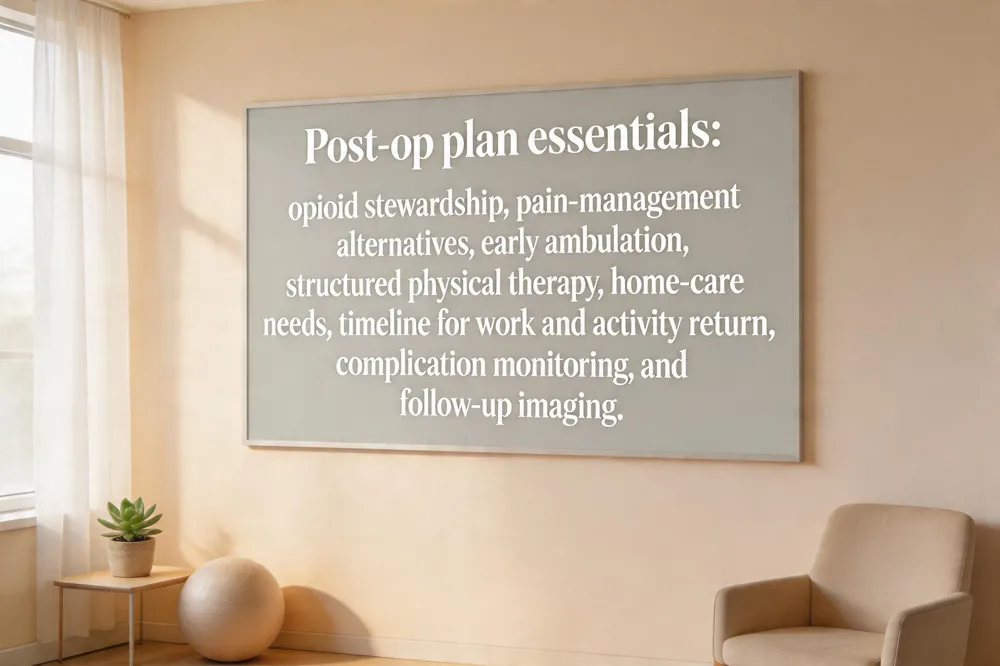 After spinal surgery, a clear post‑operative plan is essential for pain control, safe mobilization, and lasting results.
Pain‑management strategies and opioid stewardship – Surgeons typically prescribe a short course of opioids for breakthrough pain and then transition to non‑opioid analgesics, NSAIDs (as allowed), and nerve‑block techniques. Ask the surgeon how long opioids will be needed, what tapering schedule is recommended, and which non‑drug options can be used to minimize dependence.
Physical therapy and home‑care planning – Early ambulation, usually the day of or the day after surgery, reduces clot risk and promotes healing. A structured physical‑therapy program will focus on core strengthening, flexibility, and gait training. Discuss home‑care needs (assistive devices, bathroom safety modifications, wound‑dressing supplies) and arrange a “coach” to assist during the first weeks.
Timeline for returning to work and normal life – Most patients resume light desk work within 2–4 weeks and more demanding jobs after 6–12 weeks, depending on the procedure (e.g., discectomy vs. fusion). Confirm specific activity restrictions—lifting limits, bending, twisting—and when driving, sexual activity, and sports are safe.
Monitoring for complications and follow‑up imaging – Know the red‑flag signs (fever, increasing swelling, drainage, new numbness or weakness) that require immediate attention. Ask about the schedule for wound checks, laboratory tests, and imaging (X‑ray, CT, MRI) to assess fusion or hardware integrity.
What should I ask my surgeon after back surgery? Ask about brace wear duration, activity limits, pain‑management plan, infection signs, wound‑care steps, follow‑up imaging timing, and the expected return‑to‑work timeline.
What are common post‑operative concerns after spine surgery? Patients worry about incision care, pain control, when they can drive or work, and early complications such as fever, swelling, drainage, or new neurological symptoms. Clarifying these points helps set realistic expectations and supports a smooth recovery.
Putting It All Together: The One Question That Guides Everything
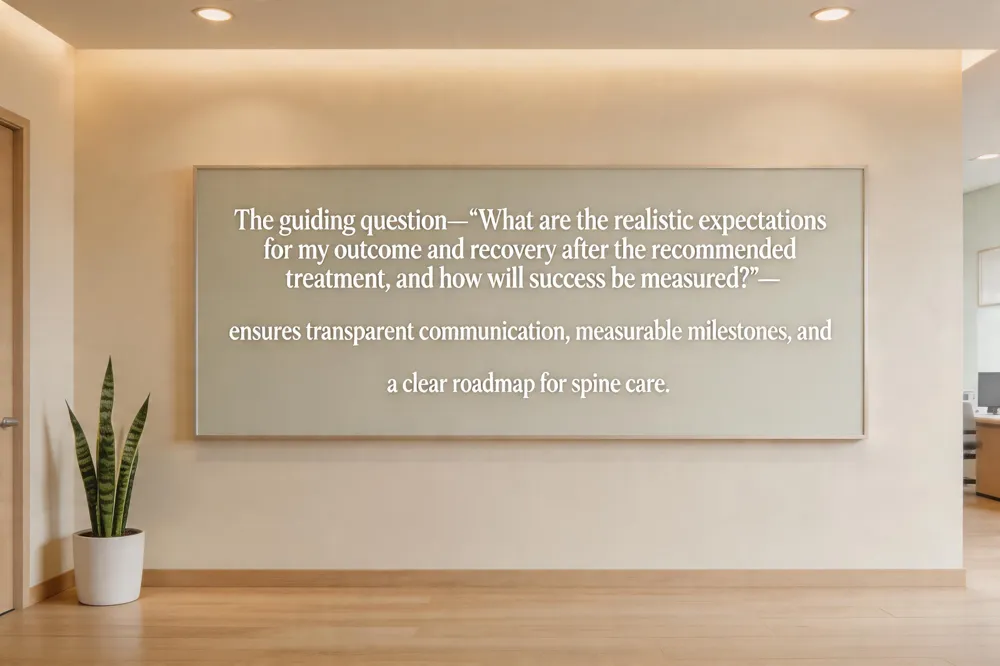 A single, focused question drives shared decision‑making by forcing the surgeon to spell out the diagnosis, why a particular operation is recommended, the realistic benefits and risks, and how success will be measured. At the Orthopedic Spine Institute of St. Louis, this aligns perfectly with the patient‑first model that emphasizes transparent communication and evidence‑based choices. When you sit down for your appointment, write down the question, “What are the realistic expectations for my outcome and recovery after the recommended treatment, and how will success be measured?” and ask the surgeon to answer it in plain language. Record the response, note any milestones (pain control, mobility, return to work), and confirm the plan for follow‑up and rehabilitation. This simple step ensures you leave the visit with a clear roadmap for your spine care.
Take Control of Your Spine Journey with One Simple Question
At the Orthopedic Spine Institute of St. Louis we put you first. Our team starts with conservative care—physical therapy, medication, injections—and only recommends minimally invasive surgery when it truly fits your condition. Before surgery, gather imaging, medication list and symptom diary, then write down the questions that matter most. Ask the surgeon why the proposed procedure is the best option, what the realistic recovery timeline looks like, and how risks will be minimized. Record every answer, bring a coach to the appointment, and let us guide you toward relief. Schedule a consultation with Dr. David S. Raskas today.