Why Your Weight Matters Before and After Spine Surgery
Obesity affects more than a third of U.S. adults and is a major driver of disc degeneration, low back pain, and the need for spine surgery. Excess body mass increases mechanical load on the vertebrae, accelerates wear, and creates chronic inflammation that impairs healing. In the operating room, higher BMI prolongs operative time, raises blood loss, and triples the odds of surgical‑site infection and deep‑vein thrombosis. Even modest weight loss of 5‑10 % before surgery can cut infection rates by up to 30 % and shorten hospital stays. Structured pre‑operative programs that combine nutritional counseling, supervised aerobic and resistance exercise, and management of diabetes or sleep apnea improve blood flow, reduce complications, and enhance postoperative functional recovery.
Understanding BMI and Surgical Eligibility
 Weight limit for spine surgery
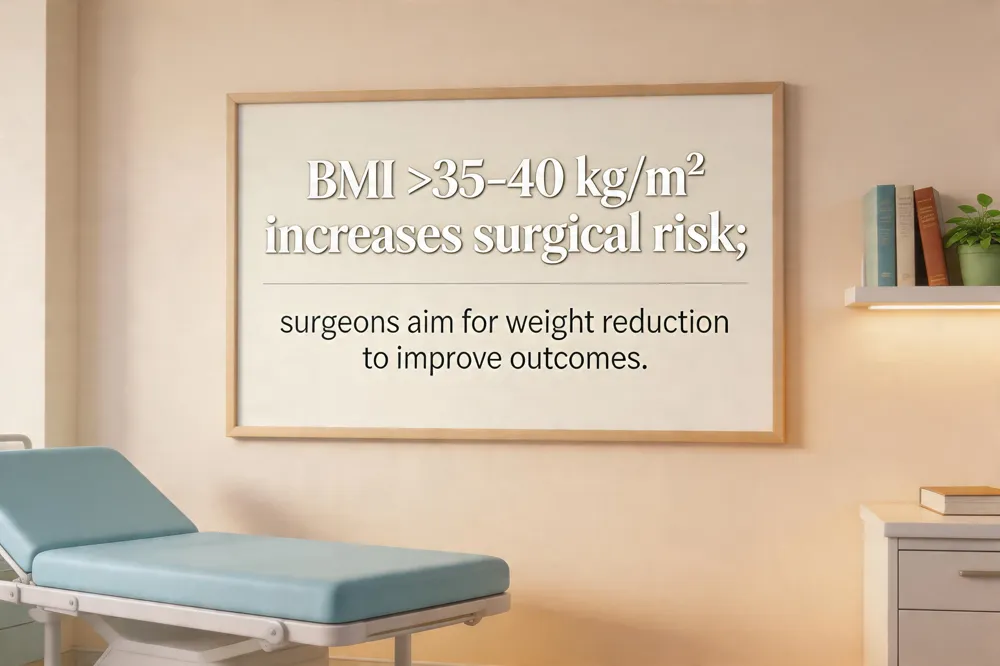
There is no universal limit; eligibility is based on BMI, comorbidities, and overall health. A BMI >35‑40 kg/m² raises complication risk, so surgeons typically recommend weight reduction to improve outcomes.
Weight limit for spine surgery
There is no universal limit; eligibility is based on BMI, comorbidities, and overall health. A BMI >35‑40 kg/m² raises complication risk, so surgeons typically recommend weight reduction to improve outcomes.
BMI calculator Enter height and weight into any online BMI calculator to obtain your index and see which category you fall into. Discuss any abnormal result with Dr. David S. Raskas at the Orthopedic Spine Institute of St. Louis for personalized risk assessment and optimization planning.
Why Pre‑operative Weight Loss Matters
 Weight management before spine surgery is a critical component of peri‑operative care. Excess adipose tissue increases mechanical load on the spine and impairs microcirculation, which slows wound healing and raises surgical site infection rates. Obesity also complicates anesthesia: airway access can be difficult, drug dosing is less predictable, and the cardiovascular system endures greater stress, leading to higher rates of intra‑operative hypertension, arrhythmias, and postoperative pulmonary complications.
In addition, obese patients have a markedly higher propensity for venous thromboembolism. The combination of prolonged operative times (often 30–45 minutes longer) and reduced mobility after surgery promotes deep‑vein thrombosis, which may progress to pulmonary embolism. Even modest pre‑operative weight loss of 5–10 % of body weight can reduce infection risk by up to 30 % and shorten hospital stays by 1–2 days.
Answers to common questions:
- Why do doctors want you to lose weight before surgery? Because excess fat raises infection risk, complicates anesthesia, and increases clot formation, all of which jeopardize safety and prolong recovery.
- Should you lose weight before back surgery? Yes. A gradual plan of balanced nutrition (adequate protein, micronutrients) and low‑impact aerobic exercise (walking, swimming) can safely lower BMI and improve outcomes.
- Is obesity a contraindication for back surgery? Not absolute, but a high BMI significantly raises complication rates. Surgeons often aim for a BMI below 35 and may prefer minimally invasive techniques when weight reduction is limited.
Post‑operative Weight‑Loss Strategies
 After spine surgery, patients can lose excess weight without formal exercise by adopting a nutrient‑dense, calorie‑controlled diet that supplies roughly 15‑20 calories per pound of current weight. Prioritize high‑quality protein (lean meats, fish, eggs, dairy, legumes) to preserve muscle, include plenty of vegetables, whole grains, healthy omega‑3 fats, stay well‑hydrated (≈8 cups water/day), and limit sugary, high‑fat, processed foods. For abdominal fat, combine a high‑protein, low‑carbohydrate diet rich in antioxidant fruits, vegetables, and omega‑3s with surgeon‑approved core‑strengthening moves (pelvic tilts, seated marching, bridges) and low‑impact aerobic activity such as short walks or stationary‑bike, progressing as healing allows. Guidelines for a safe calorie deficit after surgery recommend a modest 250‑500 kcal daily reduction, aiming for ~0.5 kg (1 lb) loss per week, while still meeting the hyper‑metabolic demand of healing (10‑12 kcal per pound of ideal body weight). Monitor weight, energy, and wound healing closely, and adjust the plan with your surgeon, dietitian, and physical therapist to avoid muscle loss or delayed recovery.
Nutrition, Foods to Avoid, and Unexpected Weight Changes
 After spine surgery, what you eat directly influences wound healing and recovery speed.
Inflammatory foods and wound healing – Foods high in saturated fats, refined sugars, and trans‑fats (fried items, processed snacks, fatty red meat, pastries, and sugary drinks) fuel systemic inflammation, impair collagen synthesis, and increase the risk of surgical site infection. Limiting these triggers helps keep the post‑operative inflammatory response in check, supporting tissue repair and fusion success.
Hydration and fiber for recovery – Adequate fluid intake (≈64 oz of water or non‑alcoholic beverages daily) maintains perfusion and kidney function, while a fiber‑rich diet (whole grains, fruits, vegetables, legumes) promotes regular bowel movements, reducing constipation risk from opioid use. Proper hydration and fiber also aid in nutrient transport to the surgical site.
Understanding postoperative weight loss – Mild weight loss (1–5 lb) is common as metabolic demand rises and appetite may be suppressed by pain medication or nausea. However, rapid or significant loss can signal infection, poor pain control, or malnutrition. Maintaining balanced, protein‑dense meals and staying hydrated are essential.
FAQs
- Foods to avoid after spine surgery: Skip fried foods, processed snacks, sugary drinks, high‑sodium items, trans‑fat laden meals, and excessive alcohol.
- Why am I losing weight after surgery?: Healing raises metabolic needs; pain meds and nausea can curb appetite. Gradual loss may be normal, but rapid loss warrants medical review.
- Is it normal to lose weight after spinal surgery?: A modest loss of 1–5 lb is typical, but excessive loss requires attention to ensure adequate nutrition for bone fusion and overall recovery.
Activity Restrictions and Safe Mobility
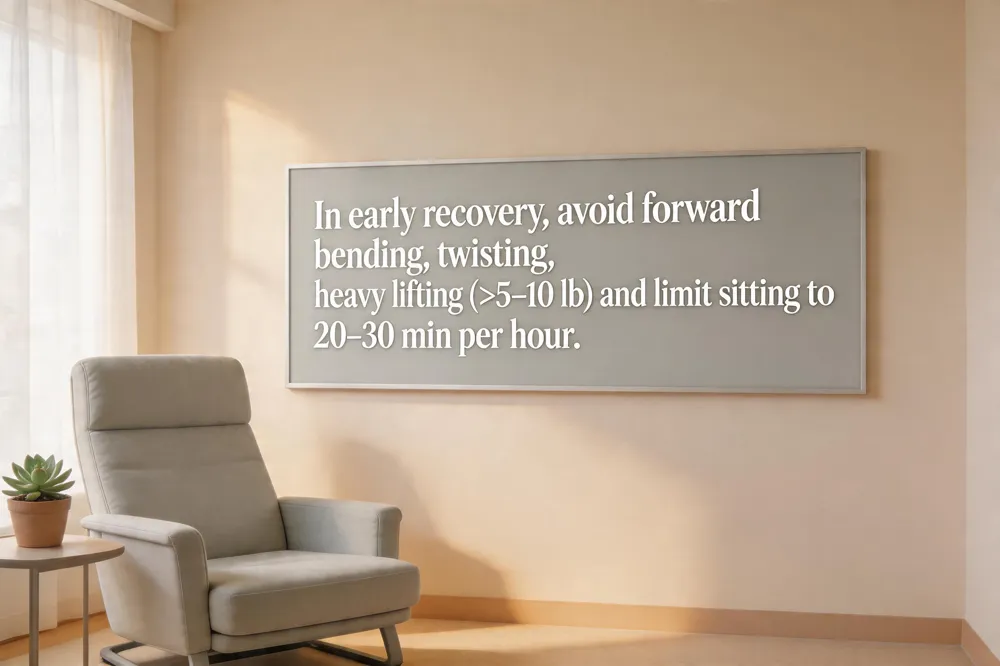 After spine surgery, early healing requires protecting the operative site from excessive stress. Movements to avoid in early healing include forward bending, twisting, and heavy lifting (>5–10 pounds); high‑impact activities such as running, jumping, or contact sports should be postponed until the surgeon clears you, usually after 6–12 weeks. Rough‑water riding, martial arts, and other activities that expose the spine to sudden jolts or vibration also need to be avoided for several months.
Guidelines for sitting and reclining: Prolonged sitting increases disc pressure, so limit initial sitting to 20–30 minutes per hour. Use lumbar support and maintain an upright posture. A recliner is acceptable in the first three weeks, but avoid bending or twisting at the waist. Gradually increase sitting time as tolerated.
Progressive return to daily activities: Begin with gentle walking and light, supervised exercise. Increase activity duration by 5–10 minutes each day, aiming for 30 minutes of ambulation by week 4. Delay long‑distance travel (car or plane) for at least 2–4 weeks to allow incisions to heal and reduce complication risk.
Answers to common questions:
- What activities should be avoided after back surgery? Bending forward, twisting, heavy lifting, high‑impact sports, contact sports, and prolonged sitting without support.
- Can you sit in a recliner after a laminectomy? Yes, for about 20 minutes per hour during the first three weeks, avoiding waist bending or twisting.
Surgical Options for Common Disc Problems
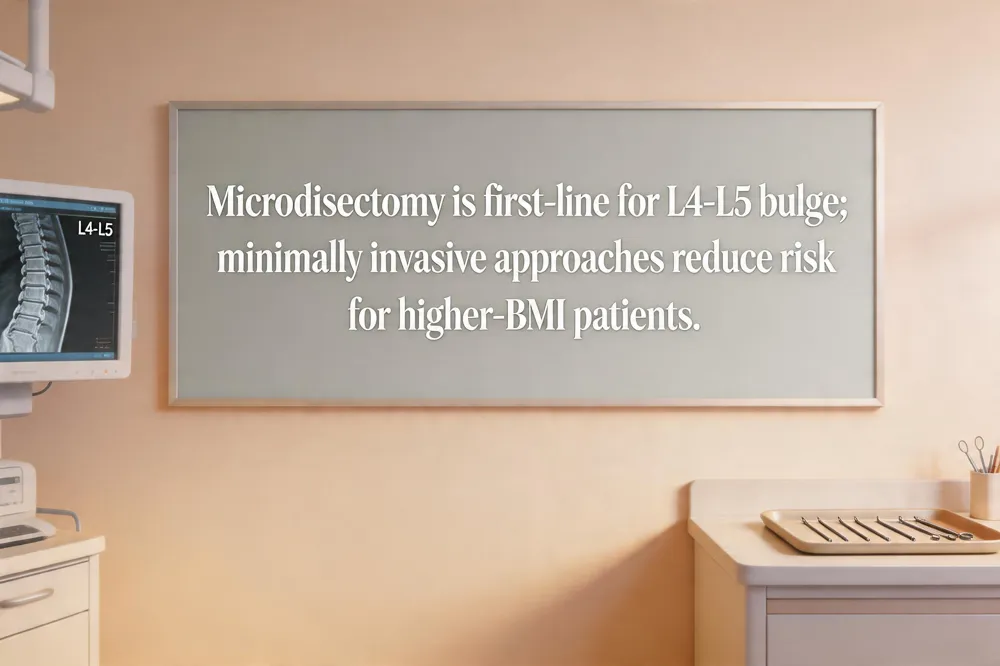 When a patient presents with a symptomatic L4‑L5 disc bulge that has failed conservative care, the surgeon typically chooses a microdiscectomy because it removes the offending fragment while preserving most of the spinal anatomy. If the bulge is accompanied by severe canal stenosis, facet arthropathy, or multilevel compression, a laminectomy—often combined with a foraminotomy—may be required to achieve broader neural decompression. Fusion or artificial‑disc replacement is reserved for cases with disc instability, advanced degeneration, or recurrent herniation after previous surgery; these procedures restore segmental stability but are more invasive.
Minimally invasive techniques (tubular microdiscectomy, endoscopic decompression) offer smaller incisions, reduced blood loss, shorter operative times, and faster recovery—benefits that are especially valuable for patients with higher BMI, as obesity is linked to longer surgeries, greater blood loss, and higher infection rates. Pre‑operative weight‑loss programs (5‑10% body‑weight reduction) further lower the risk of wound complications, deep‑vein thrombosis, and readmission, improving overall outcomes.
For an L4‑L5 disc bulge, a microdiscectomy—performed via a minimally invasive approach when appropriate—remains the first‑line surgical choice, with laminectomy, fusion, or disc replacement considered only when specific an or stability issues are present.
Long‑Term Weight Management and Spinal Health
 Obesity accelerates intervertebral disc degeneration across cervical, thoracic, and lumbar segments, with odds ratios ranging from 1.60 to 3.12, and each unit rise in BMI adds roughly a 5 % odds of needing a revision spine operation. The excess mechanical load imposed by adipose tissue increases axial stress on the spinal column, hastening disc wear and facet‑joint arthropathy. Simultaneously, chronic low‑grade inflammation driven by adipokines such as leptin, coupled with atherosclerotic reductions in disc nutrition, creates a hostile micro‑environment that impairs healing and predisposes to non‑union after fusion. For patients with a BMI ≥ 40 kg/m², staged surgical strategies—initial bariatric procedures followed by a 12‑month stabilization period—have been shown to normalize BMI and bring postoperative infection, venous thromboembolism, and revision‑surgery rates closer to those of non‑obese cohorts. Multidisciplinary pre‑operative programs that combine nutritional counseling, supervised aerobic and resistance training, and behavioral therapy can achieve the 5‑10 % weight loss shown to cut surgical site infections by up to 30 % and improve functional scores, providing a durable foundation for long‑term spinal health.
Take Control of Your Weight for Better Spine Surgery Results
Obesity raises the odds of surgical site infection, deep vein thrombosis, longer operative times, and poorer fusion rates, while even modest weight loss (5‑10% of body weight) can cut infection risk by up to 30% and shorten hospital stays. Before surgery, enroll in a multidisciplinary weight‑management program that includes nutrition counseling, high‑protein anti‑inflammatory foods, and supervised low‑impact exercise such as walking or water aerobics. Aim for a steady loss of 1‑2 lb per week and preserve muscle with light resistance work. After the procedure, continue the balanced diet, stay hydrated, and resume activity early to support healing and prevent readmission. Partner with the Orthopedic Spine Institute of St. Louis to receive personalized guidance, ensuring optimal BMI, comorbidity control, and a smoother recovery.