Why Early Back Pain Matters
About 80 % of U.S. adults will experience back pain at some point, yet many dismiss the first ache as a minor strain. Early symptoms often signal underlying issues—disc degeneration, spinal stenosis, or nerve compression—that can evolve into chronic pain, loss of function, and costly surgeries if left untreated. The economic toll is stark: delayed care contributes to $100 billion‑plus in annual medical expenses, lost productivity, and higher disability claims. The Orthopedic Spine Institute of St. Louis embraces a patient‑first philosophy that prioritizes conservative, evidence‑based therapies—physical therapy, targeted exercises, ergonomic education, and minimally invasive interventions when necessary. By intervening promptly, the Institute helps patients avoid progression to severe pathology, reduces the likelihood of extensive surgery, and lowers both personal and societal costs. Early, proactive care restores function faster, preserves quality of life, and keeps healthcare spending in check.
The Hidden Economic Toll of Ignored Back Pain
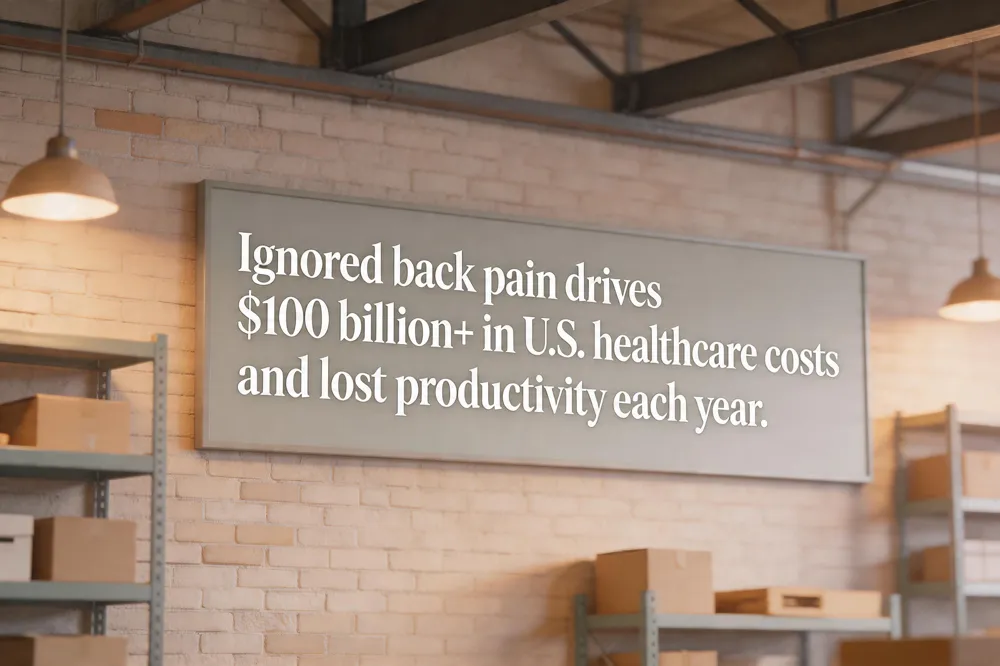 Ignoring back pain is not just a personal health risk—it creates a massive economic burden for the nation. Persistent pain that is left untreated can progress to shooting pain radiating down the legs or arms, muscle weakness, numbness, and tingling. When early symptoms are missed, serious spinal conditions such as compression fractures, cervical radiculopathy, spondylolisthesis, or herniated discs often develop, frequently requiring invasive treatments like surgery. These delays drive up U.S. healthcare spending, which now exceeds $100 billion annually in medical expenses and lost productivity.
The financial impact of low back pain alone is staggering. Between 1996 and 2013, it accounted for roughly $87.6 billion in health‑care spending, making it the third‑highest spending condition among 155 conditions studied. This figure includes physician visits, imaging, surgeries, rehabilitation, and the indirect cost of missed work days, contributing to more than 17 % of total U.S. health‑care expenditures.
In addition to direct medical costs, untreated back pain leads to lost productivity, higher rates of disability claims, and increased reliance on expensive long‑term care. Early, conservative interventions—physical therapy, targeted exercises, and patient education—can dramatically reduce these hidden costs by preventing the progression to chronic pain and the need for costly surgeries.
Addressing back pain promptly not only protects individual health but also eases the financial strain on the healthcare system and the broader economy.
Red‑Flag Symptoms and When to Seek Immediate Care
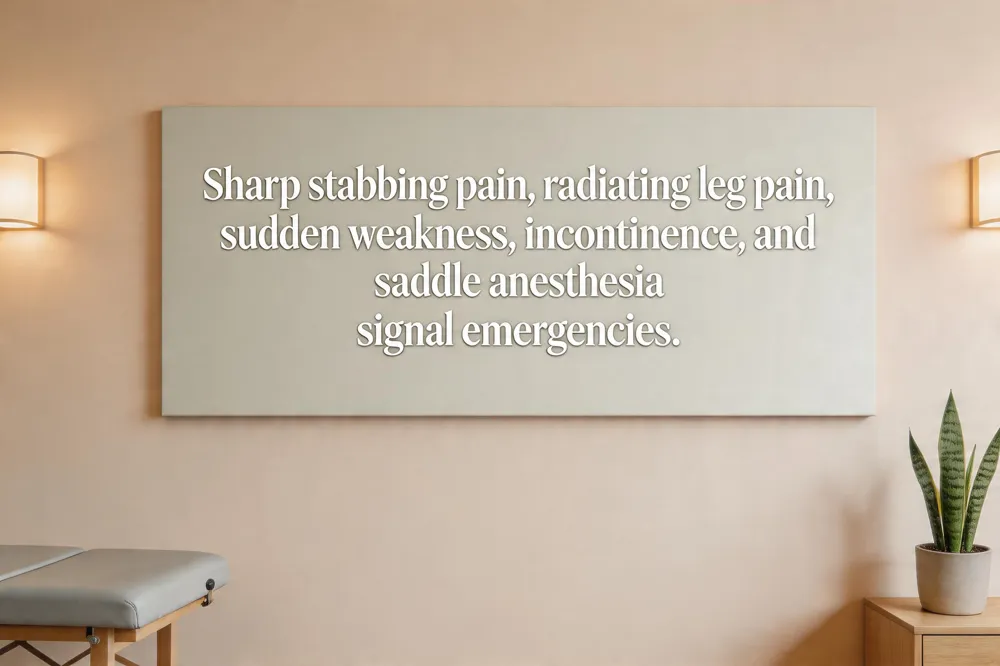 Back pain is common, but certain red‑flag signs signal a medical emergency that requires prompt evaluation. According to multiple clinical sources, five key emergency indicators are:
- Sharp, stabbing pain that differs from a dull ache, suggesting a torn muscle, ligament injury, or internal organ problem.
- Radiating pain that shoots to the glutes or down a leg, a classic sign of nerve compression such as sciatica or spinal stenosis.
- Sudden leg weakness, which may stem from compressed spinal nerves or, in rare cases, a stroke.
- Loss of bladder or bowel control (incontinence), a hallmark of cauda equina syndrome—a severe nerve compression that can cause permanent damage if not treated immediately.
- Numbness or pins‑and‑needles in the groin or buttocks (saddle anesthesia), also pointing to cauda equina syndrome or serious spinal infection.
Early identification of lumbar L4‑L5 compression often begins with a persistent, dull lower‑back ache that worsens with activity and eases with rest, intermittent tingling or numbness down the buttocks, hips, and back of the leg, and stiffness after prolonged sitting. Symptoms typically intensify when standing or walking and improve when sitting or leaning forward. Recognizing these signs early enables timely conservative care—physical therapy, anti‑inflammatory medication, and lifestyle adjustments—potentially averting the need for invasive surgery and reducing long‑term healthcare costs.
Classifying Back Pain: From Mechanical to Referred
 Back pain is not a single entity; it falls into four primary categories. Mechanical pain is the most common and arises from strain or injury to muscles, ligaments, or joints, typically worsening with movement. Inflammatory pain stems from immune‑mediated conditions such as arthritis; it produces stiffness that eases with activity. Neuropathic pain occurs when spinal nerves are irritated or damaged, producing sharp, shooting sensations that may radiate down the limbs. Referred pain is felt in the back but originates from another organ—like the kidneys, pancreas, or gallbladder—so treating the source relieves the back discomfort.
For low‑back pain, clinicians use a multifactorial classification system that considers underlying impairment (mobility deficits, coordination problems, referred lower‑extremity pain, radiating nerve‑root pain), psychosocial factors, and clinical course (acute, subacute, recurrent, chronic). This nuanced approach guides early conservative care—physical therapy, targeted exercise, lifestyle changes—and helps determine when minimally invasive procedures may be needed, ultimately reducing the risk of chronic disability and costly surgery.
Conservative Care First: Treatments That Save Money
 Early, non‑surgical care is the cornerstone of back‑pain management and can dramatically cut the hidden costs of chronic disability. Physical therapy and a personalized home‑exercise program—focused on core strengthening, mobility drills, and low‑impact cardio—improve spinal alignment and reduce the need for surgery by up to 40 % (Journal of the American Medical Association). When therapy is combined with chiropractic adjustments and mindfulness practices such as yoga or meditation, patients report up to a 60 % reduction in pain intensity within six weeks, and health‑care spending can fall by 40 % compared with surgical pathways (Journal of Manipulative and Physiological Therapeutics).
How to relieve severe back pain – Begin with short‑term rest, alternating 20‑minute ice and heat cycles for the first 48‑72 hours, and take OTC NSAIDs or acetaminophen as needed. Gentle movement—short walks, cat‑cow, bridge stretches—keeps blood flowing and prevents stiffness. If pain persists beyond a few days, schedule a spine‑specialist evaluation to determine whether targeted physical therapy, injections, or minimally invasive surgery is warranted.
How to relieve back pain fast at home – Start with light walking or low‑impact activity, then perform targeted stretches (knee‑to‑chest, lower‑back rotational, cat‑stretch) holding each for 5‑10 seconds. Apply ice for the first 48‑72 hours, then switch to heat for 20 minutes. Use an OTC NSAID if needed, maintain good posture, and stay active throughout the day to avoid stiffness.
How to reduce back pain for females – Women benefit from daily core‑strengthening drills (bridges, cat‑stretches, pelvic tilts) performed 5‑10 minutes, plus regular flexibility work (knee‑to‑chest, seated twist). Ergonomic seating, weight management, and smoking cessation further lessen disc pressure and improve spinal blood flow. Persistent symptoms should prompt a consult with a spine specialist for a personalized, conservative‑first plan.
Early intervention not only preserves function and quality of life but also saves billions in medical expenses and lost productivity, making conservative care the smartest first step for anyone experiencing back pain.
Choosing the Right Specialist in St. Louis
 When back pain first appears, the choice of clinician can determine whether you stay on a conservative, cost‑effective path or move quickly toward surgery. A spine specialist is an orthopedic physician who has completed a fellowship focused exclusively on the spine’s anatomy, diseases, and surgical options. While all spine specialists are orthopedists, many orthopedists concentrate on knees, shoulders or hips, and do not treat complex spinal disorders.
In St. Louis the Orthopedic Spine Institute of St. Louis, led by Dr. David S. Raskas, exemplifies a patient‑first care model. The team begins with non‑invasive treatments—physical therapy, targeted exercises, and education on proper body mechanics—because early intervention reduces the need for invasive procedures by up to 40 % (American Physical Therapy Association, 2021). Only when symptoms persist do they offer minimally invasive surgery, which shortens hospital stays and lowers overall costs.
Top surgeons in the region include Dr. David S. Raskas, Dr. Wilson Ray, Dr. Neil Wright, Dr. Benjamin Crane, Dr. Michael Reiter, Dr. Ian G. Dorward, Dr. Mirkin R. Peter, Dr. Brett A. Taylor, Dr. Lee Thomas, Dr. Lukas Zebala, and Dr. Jacob Buchowski. These board‑certified spine specialists are known for high patient‑satisfaction scores and expertise in minimally invasive techniques. For broader musculoskeletal care, the Washington University Orthopedic team and Signature Orthopedics physicians such as Dr. Christopher W. Palmer, Dr. William Behrens Jr., and Dr. Aleksander C. Ferbet also follow a patient‑first, conservative‑first philosophy.
Take Action Early—Protect Your Health and Wallet
Back pain isn’t just a nuisance; it carries hidden financial and health penalties. Delaying care can add $5,000‑$10,000 per year in medications, injections, and missed work, while chronic pain raises U.S. healthcare spending by over $100 billion annually and increases the risk of depression, anxiety, and disability. Early evaluation catches red‑flag signs—sharp radiating pain, sudden weakness, or loss of bladder/bowel control—before nerve damage becomes permanent. A prompt exam, often completed with a focused physical assessment and, when needed, targeted imaging, guides conservative treatment that can keep surgery out of the picture. To protect your health and wallet, call the Orthopedic Spine Institute of St. Louis at (314) 555‑1234 or visit our website to request an online appointment. Our patient‑first team will schedule you for a same‑day evaluation, start a personalized, non‑surgical plan, and keep you on track toward a pain‑free life. Start today and regain confidence.