Why Small Incisions Make a Big Difference
Minimally invasive spine surgery (MISS) uses 1–2 cm incisions and tubular retractors, preserving muscles and ligaments. At the Orthopedic Spine Institute we follow a patient‑first model, recommending MISS only when it provides benefit. Compared with open surgery, MISS results in less blood loss, shorter stays, faster recovery, and significantly smaller scars.
Understanding MISS: Techniques, Levels, and Indications
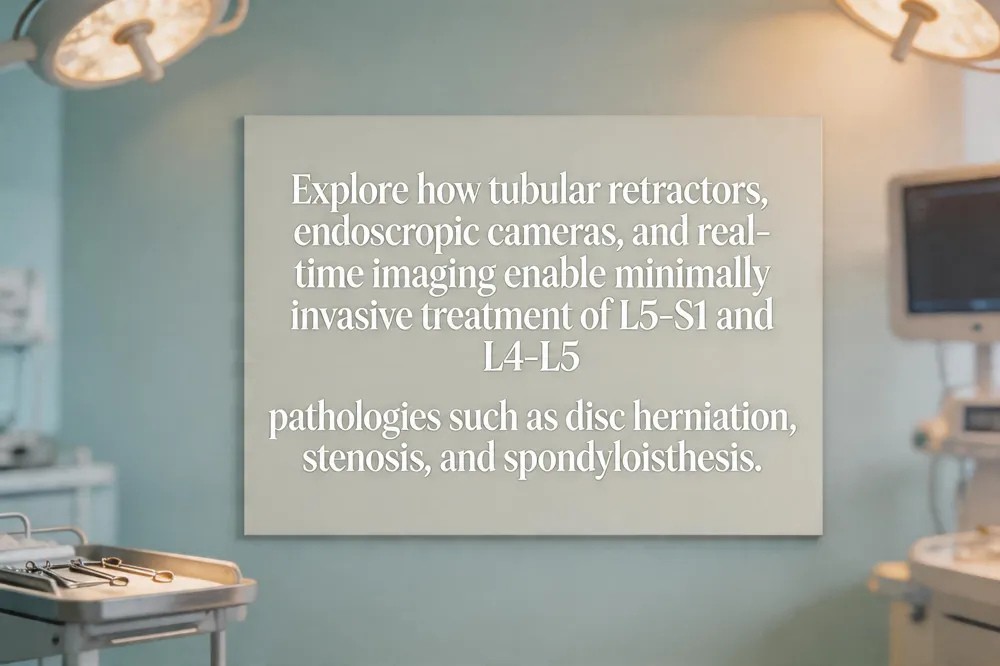 Minimally invasive spine surgery (MISS) treats L5‑S1 and L4‑L5 lesions through 1‑2 cm incisions, tubular retractors, and endoscopic cameras. At L5‑S1 the approach addresses herniated discs, stenosis, degenerative disease and spondylolisthesis via micro‑discectomy, endoscopic decompression or trans‑sacral interbody fusion, while L4‑L5 MISS employs similar tools for disc bulges, stenosis and instability, often adding percutaneous pedicle screws for fusion. Common pathologies across the lumbar spine include herniated discs, spinal stenosis, degenerative disc disease and spondylolisthesis; MISS preserves muscles and ligaments, resulting in less pain, blood loss and scarring. Advanced imaging—pre‑operative MRI/CT and intra‑operative fluoroscopy or CT navigation—pinpoints the exact segment, guides instrument placement and confirms decompression, minimizing nerve irritation.
Minimally invasive spine surgery L5‑S1: Uses small incisions, tubular retractors and real‑time imaging to treat disc herniation, stenosis, degenerative disease and spondylolisthesis, offering reduced pain, shorter stays and faster return to activity.
Minimally invasive spine surgery L4‑L5: Addresses the same conditions at L4‑L5 with micro‑decompression or fusion, preserving muscle, lowering blood loss and enabling rapid rehab.
Which surgery is best for L4‑L5 disc bulge?: A minimally invasive micro‑discectomy is the first‑line option; if instability or severe stenosis exists, a laminectomy/foraminotomy or fusion may be added.
Minimally invasive spine surgery near me: The Orthopedic Spine Institute of St. Louis, led by Dr. David S. Raskas, offers patient‑first MISS with online scheduling and broad insurance acceptance.
Minimally invasive spinal stenosis: Percutaneous lumbar decompression (MILD) or ultra‑mini‑endoscopic surgery removes ligamentous tissue through a tiny incision, providing same‑day discharge and quick functional recovery.
Recovery Pathways: What to Expect After MISS
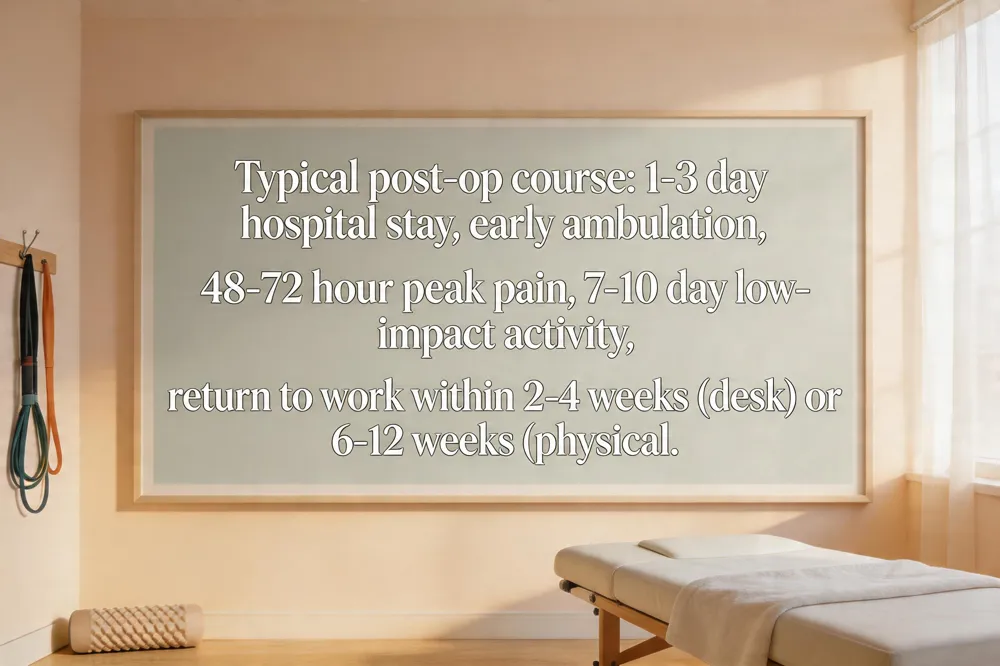 Minimally invasive spine surgery (MISS) is designed to get you home quickly and moving sooner. Most patients stay in the hospital for 1–3 days; during this time nurses encourage early ambulation—often walking the day after surgery—with a walker or assistance. The first 48‑72 hours are usually the most painful, as inflammation peaks and you transition from IV to oral pain meds. After discharge, the initial 7–10 days focus on low‑impact activity (short walks, gentle stretching) while protecting the incision and avoiding lifts over 5 lb.
Pain management relies on a tapering schedule of prescribed analgesics, often allowing many patients to reduce opioid use within the first week. By 2–4 weeks, most can climb stairs gently (using a rail and leading with the good leg) and progress to normal walking without aid.
A typical timeline for returning to work is 2–4 weeks for desk or light‑duty jobs; more physically demanding roles may need 6–12 weeks. Physical‑therapy sessions usually begin within the first week, guiding you from rest to safe mobility.
Expect the worst discomfort during days 1‑3, followed by gradual improvement. Full nerve healing can take 3‑12 months, but most functional milestones—walking, stairs, and light work—are achieved within the first month after a successful MISS procedure.
Patient Selection, Risks, and Contraindications
 Choosing a patient for minimally invasive spine surgery (MISS) begins with confirming that conservative care—physical therapy, medications, or injections—has failed to relieve back or neck pain. Ideal candidates are individuals whose imaging (MRI, CT, or X‑ray) shows a localized problem that can be accessed through a small corridor, such as a herniated disc, lumbar spinal stenosis, degenerative disc disease, spondylolisthesis, or a compression fracture. Good overall health is essential; younger, non‑obese, non‑smoking patients without severe comorbidities are best suited.
Patients who are not candidates include those who achieve adequate relief with non‑surgical measures, those with advanced frailty, uncontrolled diabetes, severe cardiovascular disease, active infection, osteoporosis, prior extensive spine surgeries, severe obesity, or who continue to smoke. The surgeon must evaluate each case individually to ensure the benefits of a less invasive approach outweigh the risks.
Although MISS reduces tissue disruption, it still carries downsides: anesthesia reactions, blood clots, intra‑operative blood loss, infection, pneumonia, nerve or spinal cord injury, cerebrospinal‑fluid leaks, and the possibility of converting to an open procedure. Outcomes depend heavily on surgeon experience and the availability of specialized equipment.
Emerging, experimental options—such as motion‑preserving devices (e.g., TOPS) or novel percutaneous implants—are being studied in limited trials. These techniques aim to further reduce scar tissue and preserve spinal motion, but long‑term data are still pending. At the Orthopedic Spine Institute of St. Louis, Dr. David S. Raskas reviews the latest evidence and discusses experimental choices only after thorough evaluation and when conservative therapy has been exhausted.
Practical Considerations: Costs, Lifestyle Adjustments, and Long‑Term Care
 Financial aspects of MISS – Because minimally invasive spine surgery (MISS) uses smaller incisions, less anesthesia time and shorter hospital stays, the overall procedural cost is typically lower than that of traditional open surgery. Operating times are often shorter, which reduces operating‑room expenses, and many insurers cover MISS at rates comparable to open procedures. Patients’ out‑of‑pocket costs depend on deductibles, copays and coverage limits, and financing options such as health‑care credit cards or payment plans are frequently offered.
What patients can’t do after back surgery – After any spine operation, activities that place excessive stress on the healing segment should be avoided permanently. This includes deep forward bending, vigorous twisting, heavy lifting, high‑impact sports, and prolonged poor‑posture sitting. Even everyday motions such as tying shoes or picking items from the floor should be modified to eliminate excessive flexion.
Outpatient versus inpatient options – Most MISS procedures—lumbar micro‑diskectomy, decompression, laminectomy, and even select fusion techniques—can be performed on an outpatient basis with same‑day discharge. Inpatient admission is reserved for more extensive fusions or patients with significant comorbidities.
Must‑haves after back surgery – Keep loose clothing, a supportive recliner, a grabber tool, a shower chair, and ice/heat packs within easy reach. Stock high‑protein, high‑fiber meals, stay hydrated, and organize medications and refills. Clear walkways and keep frequently used items at waist height to minimize bending or twisting during the early recovery phase.
Your Path to Faster Relief Starts Here
Discover the hidden benefits of minimally invasive spine surgery—smaller incisions, less pain, quicker discharge, and faster return to daily activities. Begin your patient‑first journey at the Orthopedic Spine Institute by scheduling a consultation, reviewing insurance online, and completing secure medical forms. Contact Dr. David S. Raskas at 1‑314‑442‑4452 or visit the institute’s website to start your personalized treatment plan.