Introduction: Why Early Motion Matters
Early postoperative mobilization triggers several physiological benefits: it enhances venous return, lowers the risk of deep‑vein thrombosis and pulmonary embolism, and promotes lung expansion that prevents atelectasis and pneumonia. These circulatory and respiratory improvements translate into better patient outcomes—shorter hospital stays (average 1‑2 days less), reduced pain and opioid use, faster return to daily activities, and higher satisfaction scores. Early ambulation is a core component of Enhanced Recovery After Surgery (ERAS) pathways, which mandate out‑of‑bed activity within 6‑12 hours to accelerate functional recovery, lower complications, and lower overall healthcare costs.
Evidence‑Based Benefits of Early Ambulation
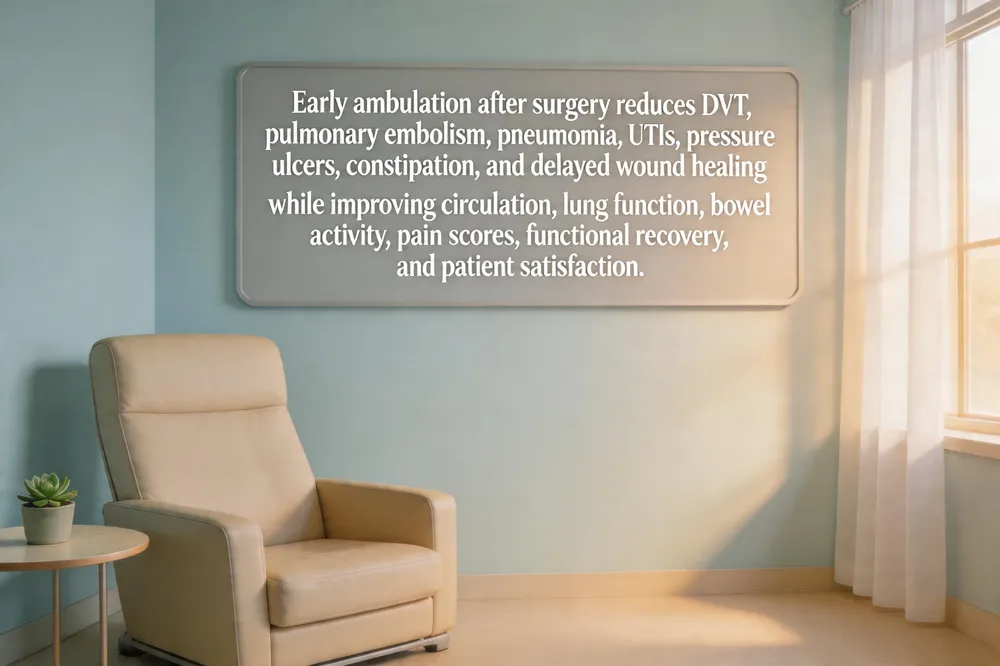 Early ambulation after surgery prevents Deep‑vein thrombosis, pulmonary embolism, pneumonia, urinary tract infection, pressure ulcers, constipation, and delayed wound healing. Gentle movement promotes venous return, lung expansion, gastrointestinal motility, and local blood flow, preserving muscle tone and bone density.
Early ambulation after surgery benefits Circulation, respiratory function, and bowel activity, leading to lower postoperative pain, faster functional recovery, and higher patient satisfaction. Patients typically experience a shorter hospital stay and earlier return to daily activities.
Why is early mobility important after surgery? It mitigates clot‑related and respiratory complications, maintains musculoskeletal strength, and shortens length of stay, which reduces healthcare costs and improves mood and independence. Early movement also supports enhanced recovery pathways and prepares patients for minimally invasive procedures.
Early ambulation after surgery – evidence‑based practice Randomized trials and ERAS protocols consistently show reduced rates of atelectasis, DVT, and pneumonia, with hospital stays shortened by 0.5–2 days. Early walking accelerates functional milestones and improves satisfaction without increasing complications.
Early ambulation after surgery – scholarly articles Multiple peer‑reviewed studies across spine, orthopedic, and general surgery report lower complications, faster discharge, and better functional scores when patients mobilize within 24‑48 hours post‑op.
Guidelines and Protocols for Early Mobilization
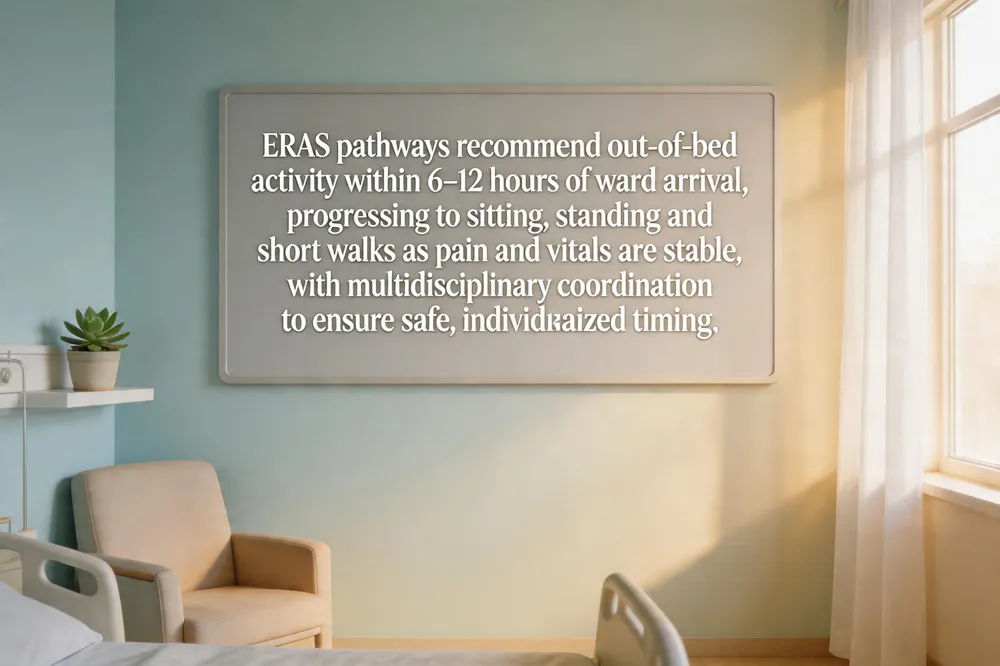 Early mobilization is a cornerstone of Enhanced Recovery After Surgery (ERAS) pathways for both orthopedic and spine procedures. ERAS protocols recommend that patients begin out‑of‑bed activities within the first 6–12 hours after arrival to the ward, progressing to sitting, standing, and short walks as soon as pain and hemodynamics are stable. Multidisciplinary coordination—surgeons, anesthesiologists, nurses, and physical therapists—ensures safe progression and individualized timing.
Early mobilization after orthopedic surgery Patients are encouraged to sit up and ambulate within 24–48 hours, which improves circulation, reduces deep‑vein thrombosis and pneumonia, and limits joint stiffness and muscle atrophy. Structured protocols that include gentle range‑of‑motion exercises and progressive weight‑bearing have been shown to shorten hospital stays by 1–2 days and lower opioid use.
Early mobilization after spine surgery For minimally invasive lumbar and cervical cases, walking within the first 24–48 hours lowers the risk of pulmonary complications, deep‑vein thrombosis, and surgical‑site infection, while accelerating functional milestones such as sitting unassisted and walking 50 m. Evidence from randomized trials shows a median length‑of‑stay reduction of 1–2 days without increased complications.
Clinical practice guidelines Guidelines advise initiating ambulation as soon as medically feasible—often within 12–24 hours—followed by incremental activity every 2–4 hours, guided by pain scores, vital signs, and surgeon orders. This approach consistently yields lower pain scores, faster bowel return, and higher patient satisfaction.
Multidisciplinary coordination A nurse‑driven protocol with 87 % compliance, combined with early physical‑therapy involvement, has demonstrated reductions in length of stay and opioid consumption. Collaboration across the care team is essential to tailor activity intensity to each patient’s health status and surgical approach, ensuring safety while maximizing the benefits of early mobilization.
Recovery Timelines and Functional Milestones
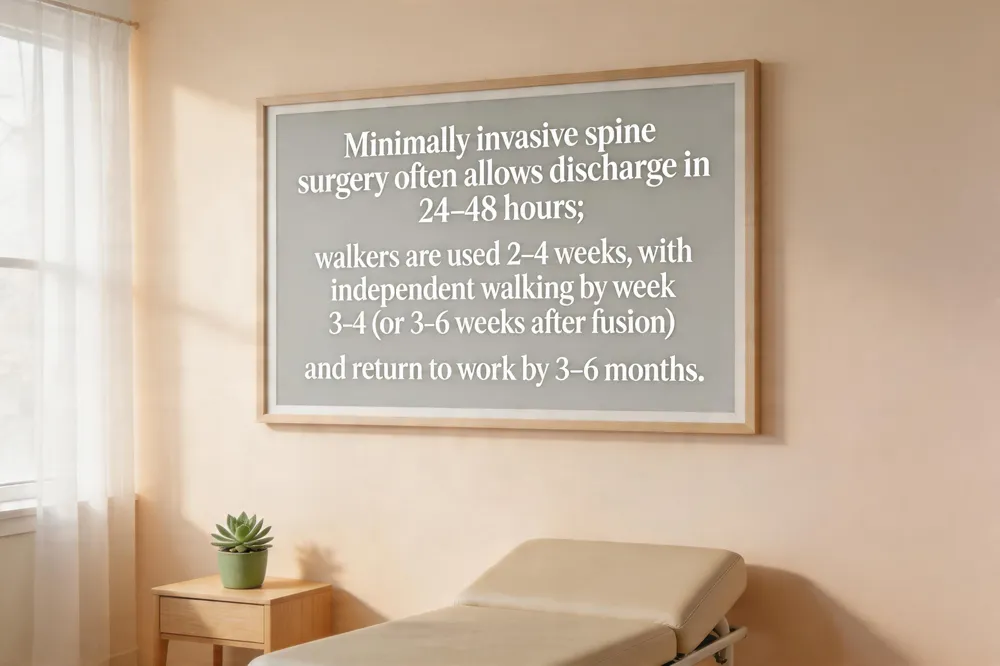 Hospital stay after back surgery varies with procedure type. Minimally invasive micro‑discectomy or endoscopic decompression often allows discharge within within 24‑48 hours, whereas multi‑level fusion or extensive decompression typically requires 2‑4 days for pain control and early ambulation. Patients usually rest strictly for the first 48‑72 hours, then begin short walks; full rest from heavy lifting is advised for 5‑7 days.
A walker is generally needed for the first 2‑4 weeks after spinal fusion to protect the incision and prevent falls. Transition to a cane or independent walking occurs once gait is stable, core strength improves and the fusion site shows healing.
Recovery week‑by‑week: Week 1 focuses on pain, wound care and brief supervised walks with a brace. Weeks 2‑4 increase walking distance and introduce gentle core work while avoiding twisting. Weeks 5‑8 add more active PT and light daily tasks. By months 3‑6 most patients return to work and low‑impact cardio; full fusion consolidation occurs by 6‑12 months.
Walking after surgery usually starts the day after operation; most patients ambulate comfortably by week 2, with full unassisted walking by week 3‑4 for minimally invasive cases and 3‑6 weeks after fusion.
Travel by car can resume after 2‑3 weeks for short trips and after 4‑6 weeks for longer drives, once pain is controlled and the incision healed.
Managing Pain, Side Effects, and Complications
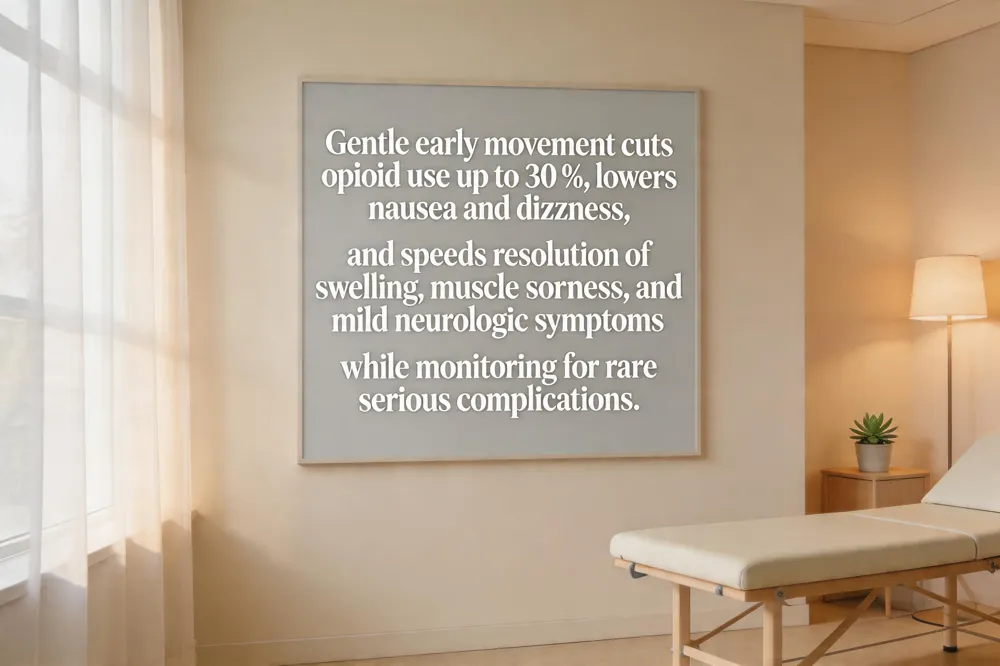 Early mobilization after minimally invasive spine surgery is a cornerstone of enhanced recovery. Gentle out‑of‑bed activity and sitting improves gait, keeps circulation up, lowers swelling, and cuts opioid needs by up to 30 % (see early mobilization reducing opioid consumption for details), which translates into less nausea and dizziness.
After spine surgery side effects – Most patients experience mild, short‑term effects such as swelling, muscle soreness, temporary numbness or tingling, and occasional dizziness or nausea after anesthesia wears off. In the first few weeks throbbing incision pain, limited mobility, and stiffness are common but improve with activity and physical therapy. Serious complications—deep‑vein thrombosis wound infection, dural tears, or persistent neurologic deficits—are rare with minimally invasive techniques. Promptly report fever, leg swelling, or new weakness.
How long does it take for nerves to heal after back surgery – Nerve recovery is gradual, ranging from several weeks to a year. Most patients feel relief of radiating pain within 3‑6 months; full sensation, strength, and function may require up to 12 months, especially after fusion. Early ambulation and targeted rehab, good nutrition, and chronic‑disease control accelerate healing.
Loss of leg strength after back surgery – Early postoperative weakness is usually due to swelling, inflammation, or anesthesia effects and resolves as edema subsides. Structured physiotherapy typically restores strength within 4‑6 weeks. Persistent or worsening weakness warrants evaluation for nerve irritation, hematoma, or muscle atrophy. Early, gentle range‑of‑motion exercises and progressive strengthening help prevent chronic deficits.
Practical Patient Guidance and FAQs
 Early mobilization after minimally invasive spine surgery is a cornerstone of enhanced recovery. Patients often wonder about walking difficulties, activity restrictions, essential items, the toughest postoperative days, and safety precautions.
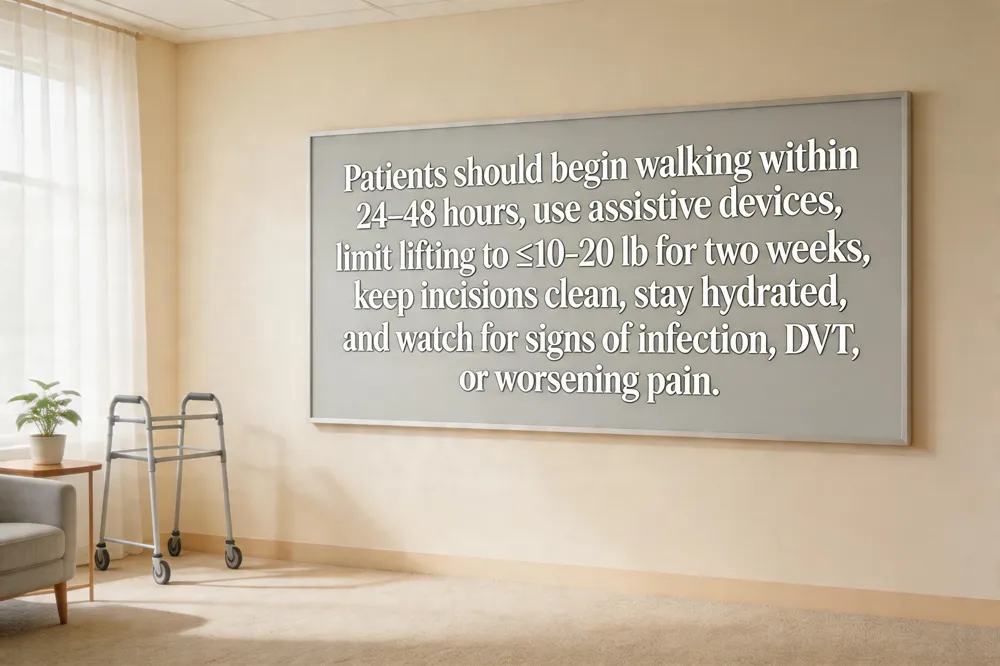
Difficulty walking after back surgery – Pain, temporary muscle weakness, swelling, or nerve irritation can make gait unsteady for the first few weeks. A structured walking program, started within 24‑48 hours, combined with physical therapy, usually restores strength and coordination by six months. Use assistive devices and proper body mechanics to avoid setbacks; seek evaluation if pain, numbness, or limited walking persists beyond expectations.
Activity restrictions – Limit lifting, pushing, or pulling to ≤10‑20 lb for the first two weeks; avoid heavy bending, twisting, and strenuous exercise. Begin early walking early to promote circulation, increasing distance as tolerated. Keep incisions clean, avoid driving until off opioids, and report any new severe pain, fever, or bladder/bowel changes.
Must‑have recovery items – Supportive cushion or wedge, loose slip‑on clothing, water bottle, prescribed pain meds, lumbar brace (if ordered), walker or cane, reacher grabber, shower chair, raised toilet seat, non‑slip socks, ice packs, and a bedside pillow.
Worst postoperative days – The first 48‑72 hours are the most painful; day 3 often brings peak swelling and stiffness as oral meds transition. Pain usually begins to decline after day 4‑5.
Safety precautions – Keep activity light, avoid heavy lifting/twisting for several weeks, walking frequently but stop if pain worsens, follow wound‑care instructions, take medications as directed, maintain good posture, and attend all follow‑up visits.
Conclusion: Embracing Early Movement for Better Outcomes
Early postoperative mobilization after minimally invasive spine surgery delivers a cascade of benefits: it cuts the risk of deep‑vein thrombosis, pulmonary embolism, and pneumonia; shortens hospital stays by one to two days; lowers pain scores and opioid use; preserves muscle strength and spinal stability; and accelerates the return to daily activities and work. Patients who follow a structured, surgeon‑approved mobilization plan report higher satisfaction and a stronger sense of control over their recovery. At the Orthopedic Spine Institute, our multidisciplinary team—from surgeons to physical therapists—creates personalized early‑movement protocols, monitors progress, and provides the education and support needed to turn these evidence‑based advantages into real‑world results for every patient.