A Patient‑First Path to Pain Relief
At the Orthopedic Spine Institute of St. Louis we put the patient’s goals at the center of every treatment plan. Epidural steroid injections (ESIs) are used as a targeted, minimally invasive way to reduce nerve‑root inflammation and break the pain‑spasm cycle, creating a short‑term “pain‑free window.” Within that window we launch a structured physical‑rehabilitation program that focuses on core stabilization, flexibility, and posture correction. Physical rehab not only consolidates the relief gained from the injection but also addresses the muscular imbalances that often underlie chronic back and sciatica pain. By integrating ESIs with early, supervised therapy we accelerate functional recovery, lower reliance on opioids, and reduce the likelihood of surgery—delivering the patient‑first, conservative‑first care that our patients expect.
The Science Behind the Synergy
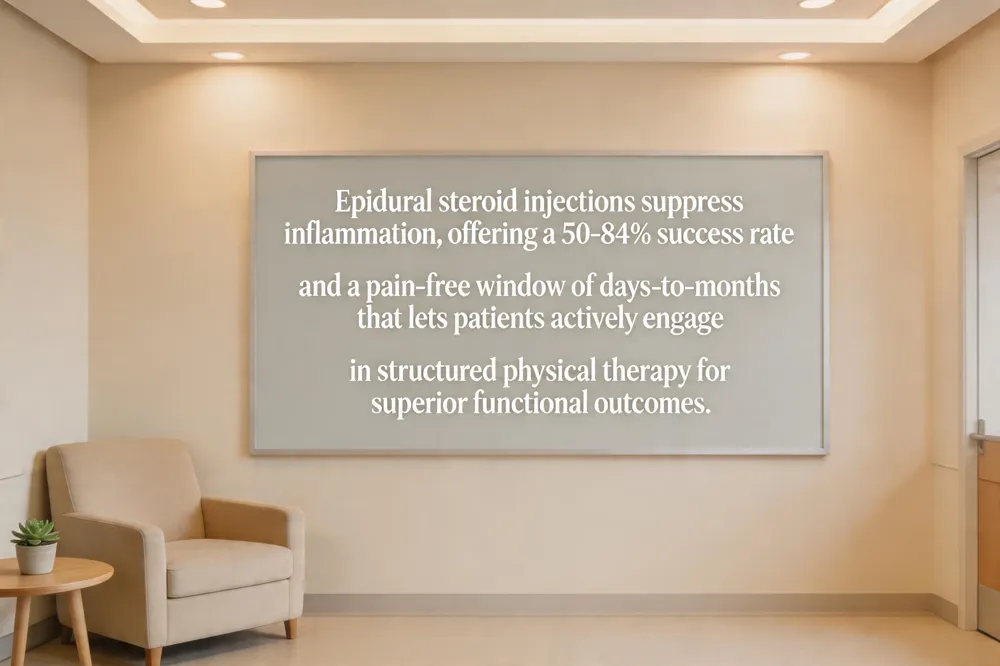 Epidural steroid injections (ESIs) work by delivering high‑dose anti‑inflammatory corticosteroids directly to the irritated nerve root. The steroid suppresses cytokine activity, reduces edema, and quickly lowers nerve‑root irritation, creating a pain‑free therapeutic window that lasts from a few days to several months. During this window patients can engage in structured physical therapy, which builds core stability, restores range of motion, and corrects posture, leading to improved functional outcomes that far exceed either treatment alone.
What is the success rate of L4‑L5 lumbar epidural steroid injections? Clinical studies show meaningful pain relief in 50 %–84 % of patients, especially in acute inflammatory cases. The benefit typically lasts weeks to a few months, after which a repeat injection or a focused rehab program may be needed.
Can epidural for L5 herniated disc make nerve pain worse? A short‑term flare can occur as the injected fluid temporarily raises pressure on the inflamed nerve, but this is usually brief and resolves as the steroid’s anti‑inflammatory effect sets in.
Sciatica pain worse after steroid injection? A brief increase in radicular pain is common for the same reason—volume effect in a crowded epidural space—but patients usually feel improvement within 24‑48 hours.
What not to do after an epidural steroid injection? Avoid driving while numb, do not apply heat for three days, and refrain from heavy lifting, twisting, high‑impact activity, or vigorous exercise for the first week. Smoking and excessive alcohol should also be avoided.
How soon can I exercise after epidural steroid injection? Light walking can start within 24 hours. Low‑impact cardio (stationary bike, swimming) and gentle stretching are appropriate after about five days; heavier work should be delayed 1‑2 weeks.
Do cortisone shots help sciatica? They reduce inflammation around the sciatic nerve and can provide short‑term relief, but only 20‑30 % achieve long‑lasting improvement. ESIs are best used as a bridge to physical therapy.
The truth about epidural steroid injections ESIs are minimally invasive, safe under fluoroscopic guidance, and effective in 50‑84 % of patients. Benefits are temporary; risks include rare infection, nerve injury, and systemic steroid effects. They should be part of a multimodal plan.
Pros and cons of cortisone injections for sciatica Pros: rapid pain reduction, outpatient setting, enables rehab participation. Cons: relief often short‑lived, does not correct structural problems, potential steroid‑related side effects, and may require repeat injections.
Physical Rehab: The Missing Piece
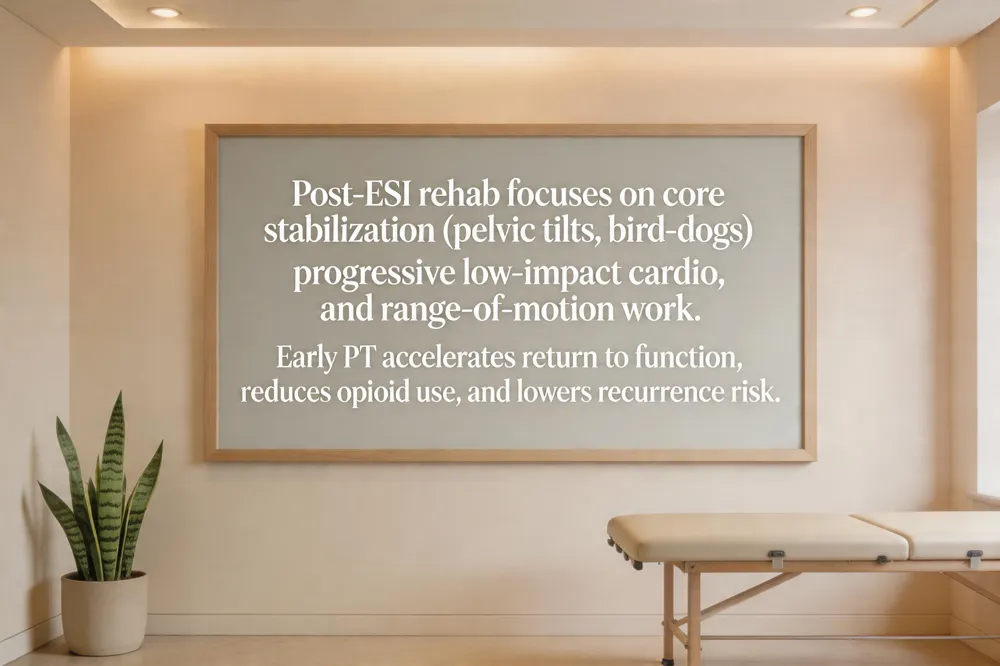 Epidural steroid injections create a short‑term pain‑free window that lets patients engage in a structured physical‑rehab program. The key to lasting relief is moving from gentle activity to progressive exercise that stabilizes the core, corrects posture, and restores range of motion.
Core stabilization and posture – After the injection, start with low‑impact walking and ankle pumps to promote circulation. Introduce pelvic tilts, bird‑dogs, and modified planks to awaken the deep abdominal and multifidus muscles. As pain diminishes, add wall squats, bridges, and lumbar extension drills that reinforce spinal alignment and reduce future nerve irritation.
Progressive exercise programming – A typical protocol begins with short walks and gentle stretches (knee‑to‑chest, hamstring). Within the first week, patients can safely increase intensity, avoiding twisting or heavy lifting. By weeks two‑four, supervised PT focuses on core‑strengthening circuits, hip‑gluteal activation, and gait training, always respecting the post‑injection window.
Benefits beyond pain relief – Combining epidural steroids with rehab improves functional scores, lowers disability indices, and reduces opioid use. Early PT (within 1‑2 weeks) accelerates return to work and daily activities, while core stabilization helps prevent recurrence and may diminish the need for repeat injections or surgery.
Frequently asked questions
- How to strengthen back after epidural? Begin with gentle walking and low‑impact activity, then add core‑strengthening moves like pelvic tilts, bird‑dogs, and modified planks. Progress to wall squats, bridges, and lumbar extension as pain permits, always respecting the post‑injection window.
- Best exercises after epidural steroid injection – Short walks, ankle pumps, knee‑to‑chest and hamstring stretches, wall squats, and pelvic tilts. Increase intensity gradually; avoid twisting or heavy lifting for the first week.
- Can I do physical therapy after an epidural steroid injection? Yes. Rest 24 hours, then resume low‑impact activity. PT usually starts ~one week post‑injection, focusing on gentle stretches, stabilizing drills, and range‑of‑motion work.
- How to relieve severe lower back pain – Alternate hot/cold packs, OTC NSAIDs, and gentle movement. If pain persists, seek a spine specialist for targeted PT, injections, or minimally invasive procedures.
- What is the best treatment for spine pain? Start with conservative care (activity modification, NSAIDs, structured PT). If pain persists, consider epidural steroid injections or radiofrequency ablation. Surgery is reserved for cases where conservative care fails and imaging shows a clear structural problem.
- Non surgical surgical pain treatment near me – The Orthopedic Spine Institute of St. Louis offers personalized PT, chiropractic, osteopathic manipulation, targeted injections, and regenerative‑medicine options such as PRP, all covered by most insurance plans.
Patient‑First Care at the Orthopedic Spine Institute
 At the Orthopedic Spine Institute of St. Louis, every patient begins with a comprehensive evaluation that includes detailed imaging, a neurologic exam, and a review of prior conservative treatments. Our multidisciplinary team—pain specialists, orthopedic spine surgeons, and board‑certified physical therapists—collaborates to design a personalized plan that often starts with Epidural steroid injections (ESIs) followed by targeted rehabilitation. This coordinated approach maximizes the pain‑free window created by the injection, allowing patients to engage fully in core‑stabilization, flexibility, and ergonomic training.
Insurance and cost transparency are core to our patient‑first philosophy. A single‑level ESI typically costs $1,000‑$1,500 before insurance; most plans cover 70‑90 % after the deductible, leaving an out‑of‑pocket range of $150‑$500. Costs vary by facility, imaging guidance, and number of levels treated, and our staff provides clear estimates before any procedure.
Frequently Asked Questions
- Epidural steroid injection cost: $1,000‑$1,500 (pre‑insurance); $150‑$500 out‑of‑pocket after typical coverage.
- Epidural injection in normal delivery: Safe for mother and baby, providing pain relief within 15‑20 minutes without increasing C‑section rates when guidelines are followed.
- Epidural recovery time after birth: Leg sensation returns in 4‑6 hours; avoid vigorous activity for 24 hours, then begin light walking and gentle postpartum exercises.
- How to live with constant lower back pain? Adopt daily spine‑protective habits: core strengthening, gentle stretching, proper posture, ergonomic workstations, weight management, smoking cessation, and regular follow‑ups.
- Success rate of L4‑L5 lumbar epidural steroid injections: 50‑84 % across studies, higher in acute inflammation and lower in chronic stenosis.
Managing Common Concerns and Side Effects
 Epidural steroid injections (ESIs) are designed to reduce inflammation around irritated nerve roots, but patients often have questions about what to expect after the procedure and how to handle any discomfort.
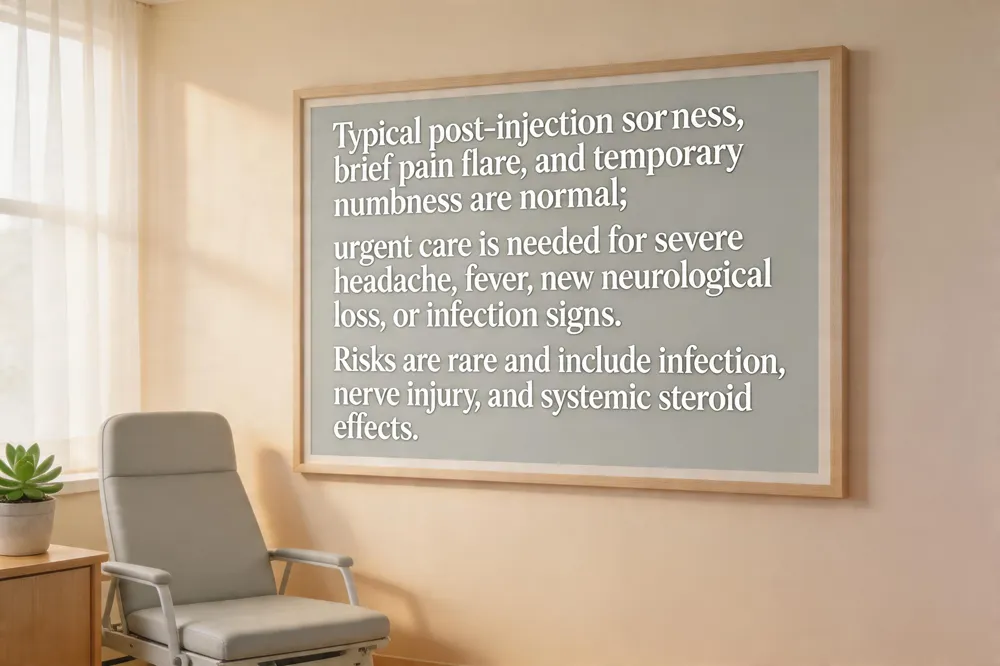
Typical post‑injection symptoms – Most people experience mild soreness at the injection site, a temporary increase in pain within the first 24 hours, and occasional numbness that resolves quickly. Light aerobic activity such as walking or gentle stretching is encouraged after the first day to keep circulation moving and prevent stiffness. Heat can be added after the initial 48‑72 hours to relax muscles, while ice in the first few days helps control swelling.
When to seek urgent care – Although serious complications are rare, contact your provider immediately if you develop a severe, worsening headache, fever, new neurological deficits (e.g., weakness, loss of sensation), or signs of infection (redness, drainage). These could indicate a wet‑tap headache, epidural abscess, or nerve injury that requires prompt evaluation.
Addressing fears about worsening pain – Some patients worry that pain will return or intensify. Early pain relief from the steroid often creates a therapeutic window, allowing more effective participation in physical therapy. If pain does not improve by day 4‑7, up to 40 % of patients report little or no relief—often due to non‑inflammatory pathology or suboptimal needle placement. In such cases, clinicians may consider a repeat injection, a targeted PT program, or alternative minimally invasive options.
Common concerns
- No pain relief after epidural steroid injection: Review imaging and technique; consider a repeat injection or switch to a structured rehab plan.
- Dark side of epidural steroid injection: Rare but serious risks include nerve damage, infection, bleeding, and systemic steroid effects (blood‑sugar spikes, bone density loss). Limits of 2‑3 injections per year help mitigate these.
- How to relieve back pain fast at home: Ice for 48‑72 hours, then heat; OTC NSAIDs; gentle stretches (knee‑to‑chest, cat‑cow); short walks; maintain good posture.
- Exercising too soon: Early vigorous activity can stress weakened ligaments and tendons, leading to micro‑tears. Most providers advise a gradual return after 1‑2 weeks.
- How to relieve severe lower back pain: Combine ice/heat, NSAIDs, gentle movement, and posture correction; if pain persists, seek a spine specialist for a comprehensive rehab plan.
By understanding these points and maintaining open communication with your pain‑management team, you can safely navigate the post‑injection period and maximize the benefits of both the injection and subsequent physical therapy.
Putting It All Together: A Step‑by‑Step Path to Recovery
 A successful recovery begins with a thorough initial evaluation and a trial of physical therapy (PT). During the first visit the physician assesses the level of nerve irritation, rule out contraindications, and prescribes a short course of core‑strengthening, flexibility, and posture‑correction exercises. If pain persists despite 4–6 weeks of PT, medication, and activity modification, the next step is a scheduled epidural steroid injection (ESI).
When should you get an injection for sciatica? An injection is considered after conservative measures have failed, when pain significantly limits daily activities, or as a bridge before surgical consultation. The evaluation confirms the appropriate injection level and ensures the patient is a safe candidate.
Timing of the first epidural injection The optimal window is 1–2 weeks before intensive PT begins, allowing the steroid to reduce inflammation and muscle guarding. Post‑injection, patients rest until numbness resolves (typically 4–6 hours) and avoid heavy lifting for 24–48 hours. Gentle walking and light aerobic activity can start the same day to keep tissues mobile.
Coordinated rehab program Within the first week, patients start a supervised PT program that builds on the pain‑free window: core stabilization (pelvic tilts, bird‑dog), lumbar flexion/extension, gait training, and ergonomic education. This combined approach yields greater functional improvement, higher satisfaction scores, and lower opioid use compared with injection or PT alone.
Monitoring progress and next steps Clinicians track pain scores, disability indices (Oswestry, Neck Disability Index), and functional milestones at 2‑week, 6‑week, and 6‑month intervals. If goals are met, PT continues to a maintenance phase; if not, a repeat ESI (limited to 2–3 per year) or referral for minimally invasive surgery may be considered.
Can you get a shot for sciatica pain? Yes—epidural steroid injections are a common outpatient treatment that provides rapid, temporary relief, enabling patients to engage more fully in PT.
Epidural and physical therapy The synergy of ESIs and PT creates a therapeutic window that maximizes functional gains, reduces the need for repeat injections, and aligns with a patient‑first, conservative‑first philosophy.
Your Path Forward
At the Orthopedic Spine Institute of St. Louis we empower patients by pairing the anti‑inflammatory power of epidural steroid injections with a personalized physical‑therapy program. The injection quickly reduces nerve‑root swelling, creating a pain‑free window that lets patients safely engage in core‑stabilization, flexibility and gait‑training exercises. Our multidisciplinary team tailors each rehab plan to the individual’s diagnosis, functional goals and schedule, ensuring a smooth transition from pain relief to active recovery. Within one‑to‑two weeks after the injection, most patients begin supervised PT, accelerating return to work and daily activities while lowering reliance on opioids. If you’re ready to start this patient‑first, conservative pathway, call us today to schedule a consultation and take the first step toward lasting spinal health and a brighter future with our expert guidance for lasting results.