A New Standard for Conservative Spine Treatment
Class IV laser therapy, FDA‑cleared since 2004, uses high‑power infrared light (≥500 mW) to penetrate 2–5 cm into muscle, tendon and joint tissue. Photobiomodulation boosts mitochondrial ATP, reduces cytokines and enhances microcirculation, delivering rapid analgesia and faster tissue repair. Manual therapy—joint mobilizations, soft‑tissue release, myofascial work—restores range of motion, lowers muscle guarding and improves proprioceptive feedback. At the Orthopedic Spine Institute of St. Louis, the patient‑first philosophy integrates these modalities in a single session, priming tissues with laser before hands‑on techniques to maximize relief, shorten recovery and reduce reliance on drugs or surgery. This evidence‑based approach also improves patient satisfaction and functional outcomes.
The Science Behind the Synergy
| Parameter | Description |
|---|---|
| Laser Power | Class IV (≥500 mW) red/near‑infrared photons, deep tissue penetration |
| Cellular Effect | Photobiomodulation → ↑ ATP, collagen synthesis, anti‑inflammatory mediators |
| Mechanical Effect | Gentle warming ↑ tissue temperature & elasticity, facilitating manual techniques |
| Treatment Duration | 5‑10 min per area, faster than low‑power red‑light (≤500 mW) |
| Clinical Indications | Chronic back, neck, sciatica, deep musculoskeletal conditions |
| Compared to Low‑Power | Deeper penetration, stronger response, quicker pain reduction |
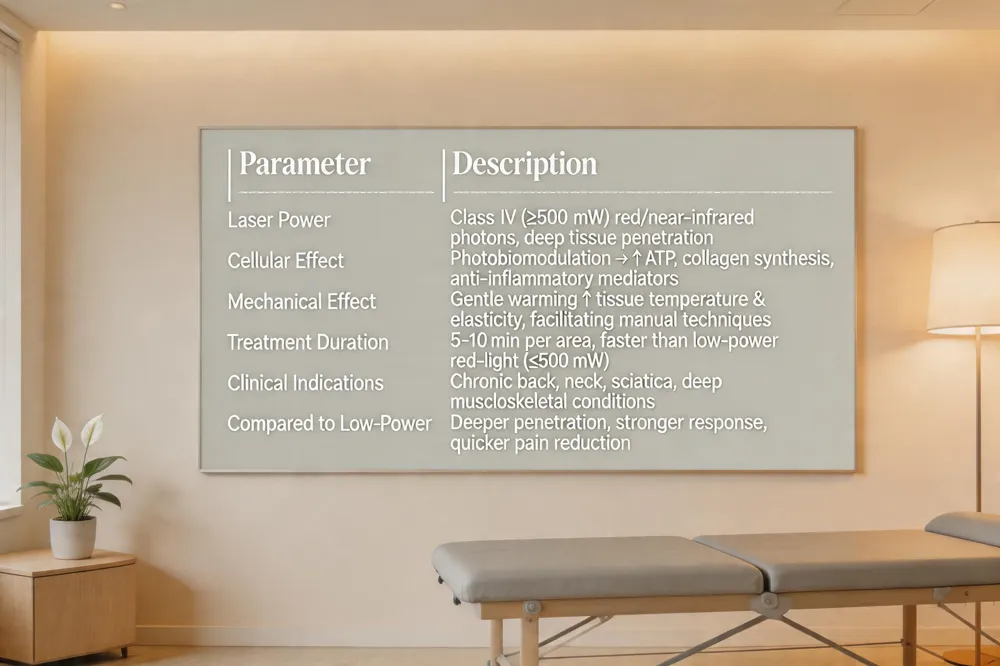 Class IV laser therapy (≥500 mW) emits high‑power red and near‑infrared photons that penetrate several centimeters into muscle, joint and ligament tissue. Photobiomodulation activates mitochondrial chromophores, boosting ATP production, collagen synthesis and anti‑inflammatory mediators; this cellular “priming” reduces pain and accelerates healing. The laser’s energy also produces a gentle warming effect, increasing tissue temperature and elasticity so manual techniques—joint mobilizations, soft‑tissue release, myofascial work—can be performed with less resistance and greater range of motion. Compared with low‑power red‑light therapy (≤500 mW, superficial penetration only), Class IV lasers deliver deeper, faster treatment (5‑10 min) and stronger photobiomodulatory responses, making them superior for chronic back, neck, sciatica and other deep musculoskeletal conditions.
What is Class IV laser therapy? It is a high‑power medical laser that delivers deep‑penetrating red/infrared light to stimulate cellular metabolism, reduce inflammation and relieve pain.
Laser therapy for back pain—does it work? Clinical trials show significant VAS pain reductions and functional gains, especially when combined with rehabilitation.
Class IV laser vs red‑light therapy? Class IV lasers reach deeper tissues and produce stronger therapeutic effects; red‑light devices are limited to superficial skin health.
Side effects? Generally mild—warmth, tingling, transient redness; serious events are rare and linked to improper use.
Evidence From Clinical Studies
| Study | Participants | VAS Reduction | Sessions | Cost (USD) |
|---|---|---|---|---|
| Multi‑modal RCT (2020) | 120 chronic low‑back pain | 30‑40 % ↓ VAS | 6‑12 (5‑10 min each) | $900‑$3,000 |
| Meta‑analysis (15 studies) | ~1,200 | Mean ΔVAS = –1.8 cm | 6‑12 | Variable |
| Comparative Trial (laser + manual vs manual) | 80 | +1.5 cm VAS improvement vs manual alone | 8 | $150‑$250 per session |
| Cost‑Effectiveness Study | 60 | Lower overall healthcare spend vs surgery | 6‑12 | $1,200 average total |
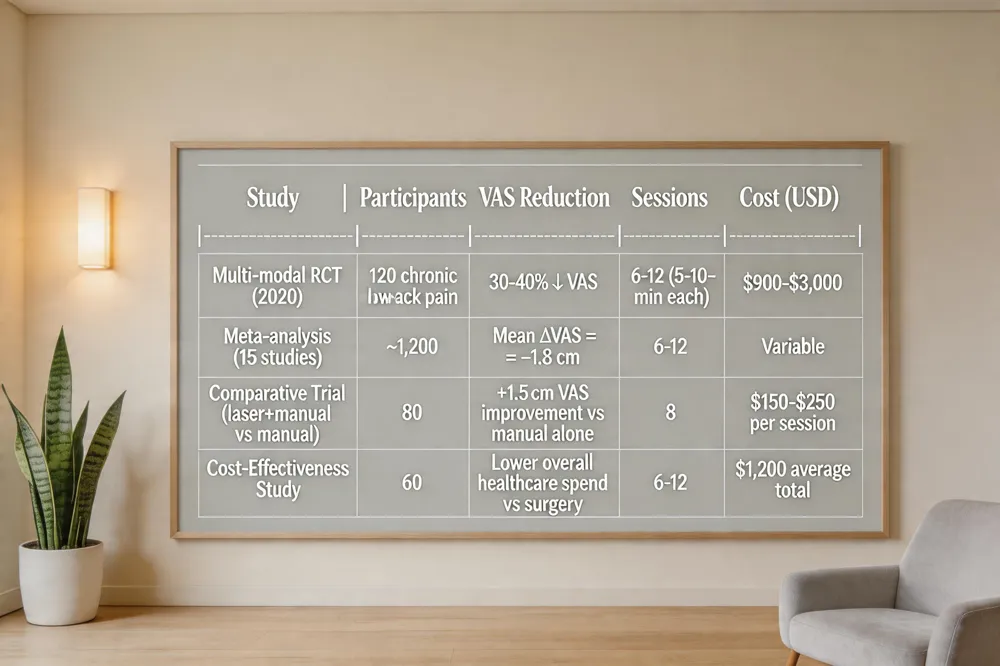 Clinical trials consistently show that when Class IV (high‑power) laser therapy is paired with manual therapy, pain scores drop markedly more than with either modality alone. Patients with chronic low‑back pain report Visual Analogue Scale reductions of 30‑40% after 5‑10 minutes of laser followed by targeted mobilizations, and they regain range of motion and functional activity several days faster. Meta‑analyses of 15 randomized studies (≈1,200 participants) confirm a statistically significant advantage for the combined approach, with mean VAS differences of –1.8 cm and larger effect sizes for disability scores.
Laser therapy for back pain – does it work? Yes, high‑power laser lowers pain and improves function, especially as an adjunct to rehabilitation.
Cost: Typical sessions cost $150‑$250; a full 6‑12‑session course ranges $900‑$3,000, often partially covered by insurance.
Machine: FDA‑cleared devices such as Multiwave Locked System or K‑Laser deliver 30‑90 W at 650‑905 nm wavelengths, penetrating deep tissue to stimulate ATP production and reduce inflammation.
Drawbacks: Multiple sessions are required, outcomes vary between patients, and insurance coverage can be inconsistent, leading to higher out‑of‑pocket costs.
Practical Treatment Protocols
| Protocol Step | Details |
|---|---|
| Timing | Laser applied before or immediately after manual therapy |
| Dosage | 2‑10 J/cm² (e.g., 3 W for 360 J over 4 min) |
| Session Length | 5‑10 min per affected area |
| Course Length | 6‑12 sessions, 2‑3 × / week over 3‑6 weeks |
| Maintenance | Optional follow‑up sessions as needed |
| Accessories | LightForce massage ball – simultaneous laser + compression |
| Frequency | 2‑3 × / week, with 1‑2 days gap between visits |
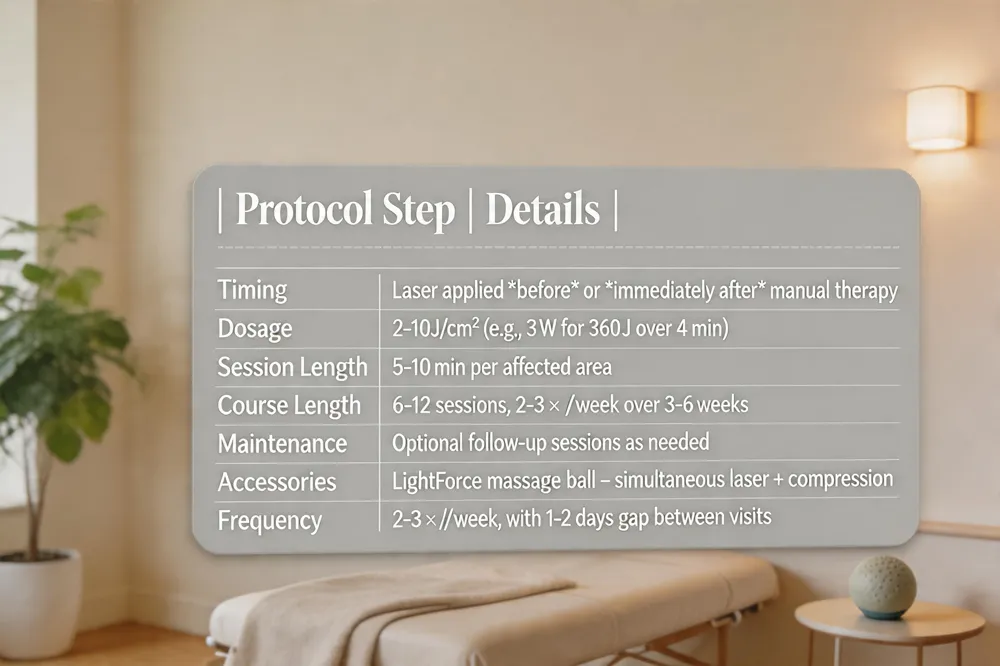 Session timing relative to manual techniques – The most effective protocol places the Class IV laser before or immediately after manual therapy. laser‑induced photobiomodulation raises tissue temperature, reduces guarding, and primes cells, allowing joint mobilizations, soft‑tissue work, and myofascial release to be performed with less resistance and greater stretch.
Typical dosage and duration – Treatments last 5‑10 minutes per affected area, delivering 2‑10 J/cm² (often 3 W for 360 J over 4 minutes). A full course consists of 6‑12 sessions, spaced 2‑3 times per week over three to six weeks. Maintenance sessions may be added later as needed.
Use of accessories such as the LightForce massage ball – The massage‑ball attachment combines laser energy with direct tissue compression, minimizing scatter and enhancing deep penetration. Clinicians apply the ball while the laser is on, achieving simultaneous photobiomodulation and mechanical deformation for optimal collagen remodeling.
How often should I use a class 4 laser?
Class IV laser therapy is usually administered in a series of multiple sessions rather than a single treatment. Most clinics schedule sessions two to three times per week, allowing a day or two between appointments for tissue response. A typical course consists of six to twelve sessions spread over three to six weeks, though the exact number depends on the severity of the condition and how the individual responds. After the initial series, maintenance treatments may be offered at longer intervals if needed. Always discuss the optimal schedule with your provider, who can tailor it after an evaluation.
Class IV laser therapy cost
Class IV laser therapy sessions typically run $150 to $250 each, depending on the clinic’s location, equipment quality, and provider expertise. A full treatment plan of 6–12 sessions therefore costs roughly $900 to $3,000, with many insurers covering a portion when the therapy is medically indicated for back, neck, or sciatica pain. Prices may be higher at specialized spine centers that use advanced devices such as LightForce or Multiwave, but bundled packages often lower the per‑session rate. Patients should verify their insurance benefits and ask about financing options, as out‑of‑pocket costs can vary widely. At the Orthopedic Spine Institute of St. Louis, the team can provide a detailed cost estimate during the initial evaluation.
Side effects of laser therapy for back pain
Laser therapy for back pain is generally safe, with most patients experiencing only mild, short‑lived reactions such as temporary skin redness, a warm or tingling sensation, and slight irritation at the treatment site. In a few cases, a brief increase in discomfort during or immediately after the session can occur, but it usually resolves within hours. High‑intensity laser therapy may also cause superficial skin burns or blisters, and, though extremely rare, there is a minimal risk of nerve irritation or eye injury if proper eye protection is not used. Serious complications are uncommon when the procedure is performed by a trained professional following established safety protocols. Overall, the side‑effects are typically transient and far less severe than those associated with invasive surgical options.
Laser treatment for back pain near me
If you’re looking for laser treatment for back pain in the St. Louis area, the Orthopedic Spine Institute of St. Louis offers [ IV laser therapy as part of its non‑surgical, patient‑first pain‑management program. This high‑intensity photobiomodulation treatment penetrates deep tissue to reduce inflammation, accelerate cellular repair and provide rapid pain relief without medication or surgery. The institute’s specialists, including Dr. David S. Raskas, evaluate each case to determine whether laser therapy is appropriate before considering minimally invasive procedures. Appointments can be booked online or by calling the clinic’s St. Louis office, and many insurance plans cover the procedure. For additional options, nearby pain‑management centers such as Spine & Disc Specialists and RPI Physical Therapy also provide deep‑tissue laser therapy for back pain.
Local Access and Insurance Guidance
| Clinic | Location | Services | Typical Insurance Coverage |
|---|---|---|---|
| Orthopedic Spine Institute | St. Louis | Class IV laser + manual therapy | Partial coverage (CPT code 97039) |
| ActiveSTL Chiropractic & Sports Rehab | St. Louis | Laser 5‑10 min sessions | Often not covered; HSA/FSA usable |
| Spine & Disc Specialists | St. Louis | Deep‑tissue laser, injections | Variable; requires prior auth |
| Advanced Laser Therapy & Wellness | Brentwood | Laser for sports injuries, neuropathy | Limited commercial coverage |
| VA / Military Clinics | Regional | Laser when medically necessary | Covered under VA benefits |
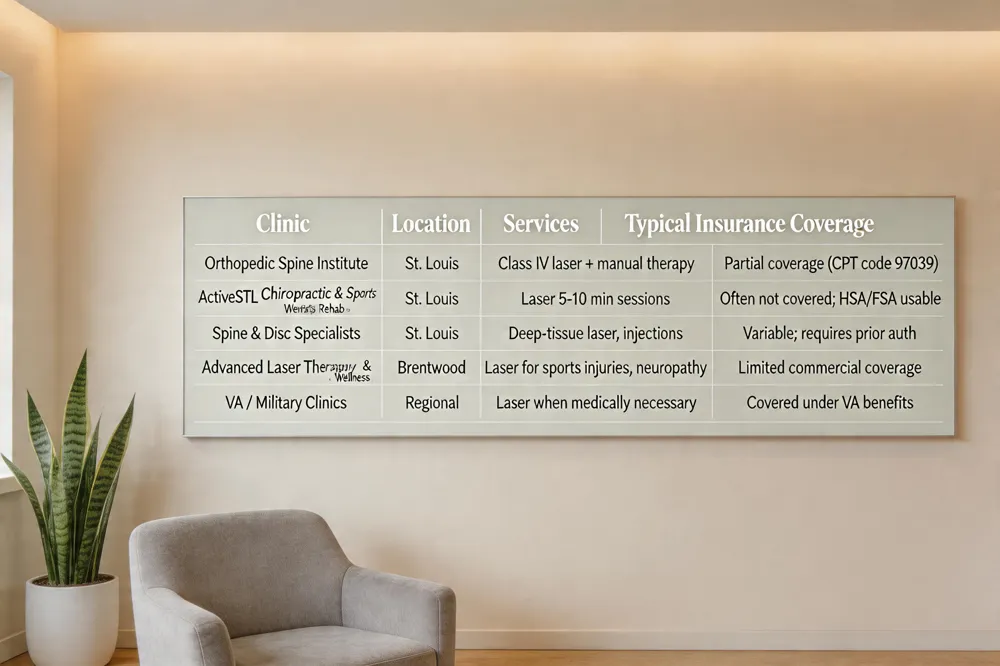 Class IV (Class 4) laser therapy is available at several pain‑management and orthopedic clinics throughout the St. Louis area. The Orthopedic Spine Institute of St. Louis offers high‑powered laser treatments for back, neck, sciatica and other musculoskeletal conditions. ActiveSTL Chiropractic and Sports Rehab provides non‑invasive, drug‑free therapy sessions that typically last 5‑10 minutes and target inflammation and tissue repair. Spine & Disc Specialists also features Class IV laser therapy as part of its comprehensive pain‑relief program. Additionally, Advanced Laser Therapy and Wellness in Brentwood Center offers the same high‑intensity laser services for sports injuries, neuropathy and chronic pain.
Class 4 laser therapy is not universally covered, but many large commercial carriers will reimburse it when documented for a musculoskeletal condition and billed with the correct CPT code. Medicare usually excludes it, though some Medicare Advantage plans may cover it after prior authorization. Workers’ compensation, auto PIP, and certain VA or military programs can also cover the treatment if medical necessity is demonstrated. Patients should verify coverage with their insurer before starting therapy; if denied, HSA or FSA funds are common alternatives.
Non‑orthopedic spine options focus on relieving pain and restoring function without entering the body. Physical and occupational therapy programs use targeted exercises, manual stretching, and gait training. In‑office procedures such as trigger‑point injections, epidural steroid injections, and low‑dose radiation therapy reduce inflammation. Chiropractic or manual spinal manipulation, therapeutic massage, heat‑and‑cold therapy, and electrical stimulation further alleviate discomfort. Lifestyle interventions—including weight management, smoking cessation, anti‑inflammatory diets, and regular low‑impact activity—support long‑term spine health and often prevent the need for surgery.
Balancing Benefits, Risks, and Alternatives
| Aspect | Class IV Laser | Surgery | Other Non‑Invasive Options |
|---|---|---|---|
| Invasiveness | Non‑invasive, outpatient | Invasive, requires anesthesia | Physical therapy, NSAIDs |
| Safety Profile | Mild warmth, transient redness; rare burns | Infection, nerve injury, 5 % complication rate | Generally low risk |
| Cost | $150‑$250 per session, $900‑$3,000 total | $10,000‑$30,000 hospital stay | Variable, often lower |
| Recovery Time | Immediate return to activity | Weeks to months | Immediate to short term |
| Effectiveness (pain) | VAS ↓ 30‑40 % in chronic cases | Often >50 % relief but higher risk | Moderate relief, depends on adherence |
| Insurance | Inconsistent coverage | Usually covered (CPT 63030‑63047) | Often covered (PT, OT) |
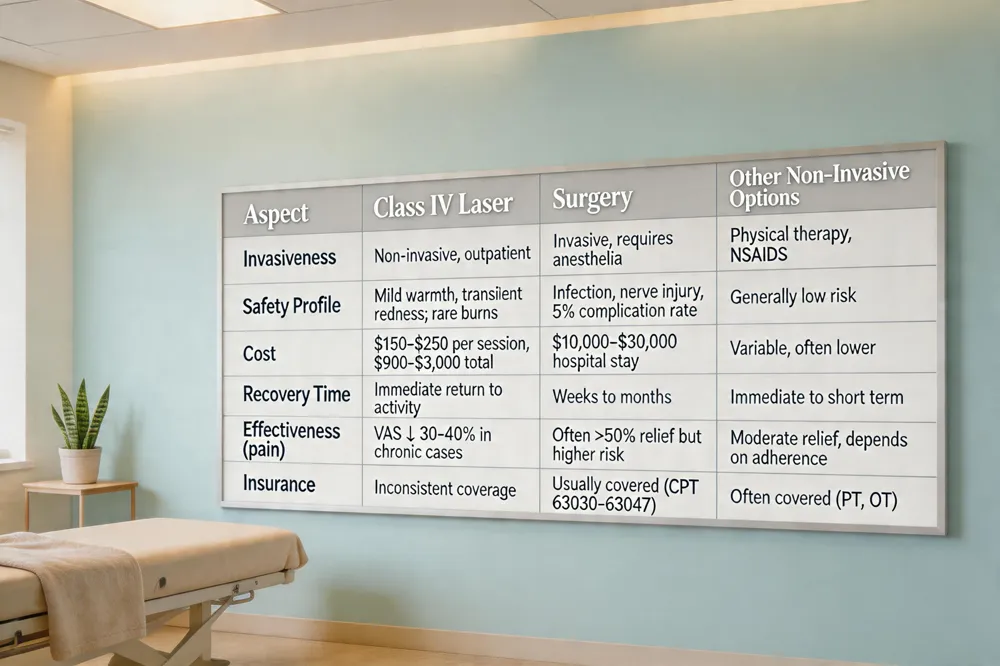 Class IV laser therapy is a non‑invasive, FDA‑cleared modality that penetrates deep tissue, boosts ATP production, reduces inflammation, and accelerates healing (LiteCure; Medical News Today). Potential drawbacks include the need for multiple sessions (often 5‑10) before noticeable improvement, variable patient response, and inconsistent insurance reimbursement, which can increase cost and treatment time (FAQ answer). Safety profile compared with surgery: Across dozens of controlled trials, Class IV laser has shown a negligible adverse‑event rate—only mild warmth or transient skin redness—whereas lumbar spine surgery carries infection, nerve injury, and a 5 % complication rate (FAQ answer). Neuropathy and other special indications: High‑powered photobiomodulation improves microcirculation and releases endogenous opioids, offering measurable pain relief and functional gains for diabetic neuropathy and radiculopathy (FAQ answer). When combined with manual therapy, the laser primes tissues, allowing more effective mobilizations and shorter recovery intervals (Orthopedic Spine Institute). In short, laser therapy presents a low‑risk, drug‑free alternative that, when used appropriately, can reduce reliance on invasive procedures while delivering comparable pain‑relief benefits for many musculoskeletal conditions.
Putting It All Together for Better Spine Health
Combining Class IV laser therapy with manual techniques creates a powerful synergy: photobiomodulation reduces inflammation, pain, and edema while the laser‑induced boost in ATP and collagen synthesis prepares tissues for deeper, more comfortable mobilizations. At the Orthopedic Spine Institute of St. Louis, the process begins with a thorough evaluation, followed by a tailored protocol of 5–10 minutes of laser applied to the painful segment and immediate targeted manual therapy. This multimodal approach often shortens recovery, lowers reliance on medications, and can delay or avoid surgery. Patients are invited to explore this evidence‑based, non‑invasive pathway as the first step toward lasting spine health.