Understanding When Back Pain Warrants a Specialist Evaluation
Common Causes of Back, Neck, and Sciatica Pain
Back pain is a widespread issue often caused by muscle strain, degenerative disc disease, herniated discs, spinal stenosis, or arthritis. Sciatica results from nerve compression, typically from a herniated disc pressing on the sciatic nerve.
Distinguishing Normal Pain from Red Flags
Most back pain improves within weeks with rest and over-the-counter remedies. However, certain symptoms — known as red flags — require prompt medical evaluation. These include severe or worsening pain, pain that radiates below the knee, numbness or weakness in limbs, bowel or bladder dysfunction, unexplained weight loss, fever, or pain after trauma.
Initial Conservative Management
For typical back pain, initial treatment involves home care such as maintaining activity, applying heat or cold, and taking pain medications. Bed rest is generally discouraged. Physical therapy and lifestyle modifications are also helpful before considering advanced interventions.
When Persistent Symptoms Need Attention
If pain persists beyond 4–6 weeks without improvement or neurological symptoms like numbness and weakness develop, it's important to see a spine specialist. Early evaluation helps diagnose underlying conditions such as nerve compression or spinal deformities and guides further treatment, including possible surgical options.
Identifying Red Flags in Back Pain That Require Urgent Medical Attention
What Are Red Flag Symptoms in Back Pain?
Red flag symptoms in back pain refer to warning signs that suggest a serious underlying medical condition requiring urgent evaluation and treatment. Unlike typical back pain that often improves with time and conservative care, red flags indicate potentially life-threatening or disabling problems.
Examples of Red Flag Symptoms
- Severe or progressive back pain lasting more than 6 weeks, especially if unrelieved by rest
- Pain after trauma such as a fall or car accident
- New or worsening neurologic symptoms like numbness, tingling, or weakness in arms or legs
- Loss of bowel or bladder control, or urinary retention
- Unexplained weight loss accompanied by night pain or fatigue
- Fever or chills alongside back pain
- Inability to perform daily activities due to pain
Serious Underlying Conditions Associated with Red Flags
Back pain with red flags can be a symptom of serious disorders including:
- Infections: such as spinal osteomyelitis or discitis, which may present with fever and severe pain
- Tumors: primary or metastatic spinal cancers causing persistent night pain and weight loss
- Fractures: especially after trauma or in patients with osteoporosis
- Nerve Compression: conditions like herniated discs, spinal stenosis, or epidural hematoma resulting in neurological deficits
(For more on these Red Flags of Low Back Pain)
Recognizing Cauda Equina Syndrome
A particularly urgent condition to identify is cauda equina syndrome, caused by compression of nerve roots in the lower spine. Signs include:
- Sudden bladder or bowel incontinence
- Saddle anesthesia (numbness around the groin area)
- Severe weakness or numbness in one or both legs
- Difficulties with walking or standing
Cauda equina syndrome is a surgical emergency that requires immediate medical attention to prevent permanent disability. (Learn more about Signs you may need to see a spine specialist and Red Flag Symptoms of Back Pain).
When to Seek Emergency Care
Emergency medical care should be sought if back pain is:
- Associated with trauma
- Accompanied by new bowel or bladder dysfunction
- Progressively worsening neurological symptoms
- Associated with fever or unexplained weight loss
(Refer to Emergency medical care for back pain and When to See a Doctor for Back Pain).
Common Causes of Back, Neck, and Sciatica Pain
Common triggers include herniated discs, spinal stenosis, degenerative disc disease, muscle strains, and nerve compression. Sciatica results from nerve root compression, often due to herniated discs or bone spurs, causing leg pain along the sciatic nerve. While many cases improve with conservative care, persistent or severe symptoms necessitate specialist evaluation.
(For details see Back, Neck, and Spine Care Guide and Signs you need a spine specialist)
Conservative Management Strategies Before Considering Surgery
What conservative treatments are available for managing back and neck pain before considering surgery?
Before considering surgery, many effective conservative treatments exist to manage back and neck pain. Physical therapy plays a major role, with techniques like the McKenzie Method helping to reduce pain and improve function typically within 4-6 weeks. This method emphasizes active patient participation, ergonomic adjustments, and specific exercises tailored to individual needs.
Medication options include nonsteroidal anti-inflammatory drugs (NSAIDs) to reduce inflammation, muscle relaxants to ease tightness, corticosteroids for severe inflammation, and nerve agents to address nerve irritation. These medications help control symptoms and improve mobility.
In addition, injections such as epidural steroid injections and facet joint injections offer targeted delivery of anti-inflammatory drugs to affected spinal structures, providing relief especially in cases of nerve root irritation or arthritis.
Complementary therapies including chiropractic care, massage, and acupuncture can supplement traditional treatments, often benefiting muscular pain and mild to moderate cases by promoting relaxation and improving circulation.
Clinical guidelines strongly recommend starting with these conservative approaches as the first line of management. Surgery is generally reserved for patients with persistent severe symptoms, neurological deficits, or red flag indications when conservative measures have not led to improvement.
Recognizing the Signs That Indicate a Need for Spine Surgery Consultation
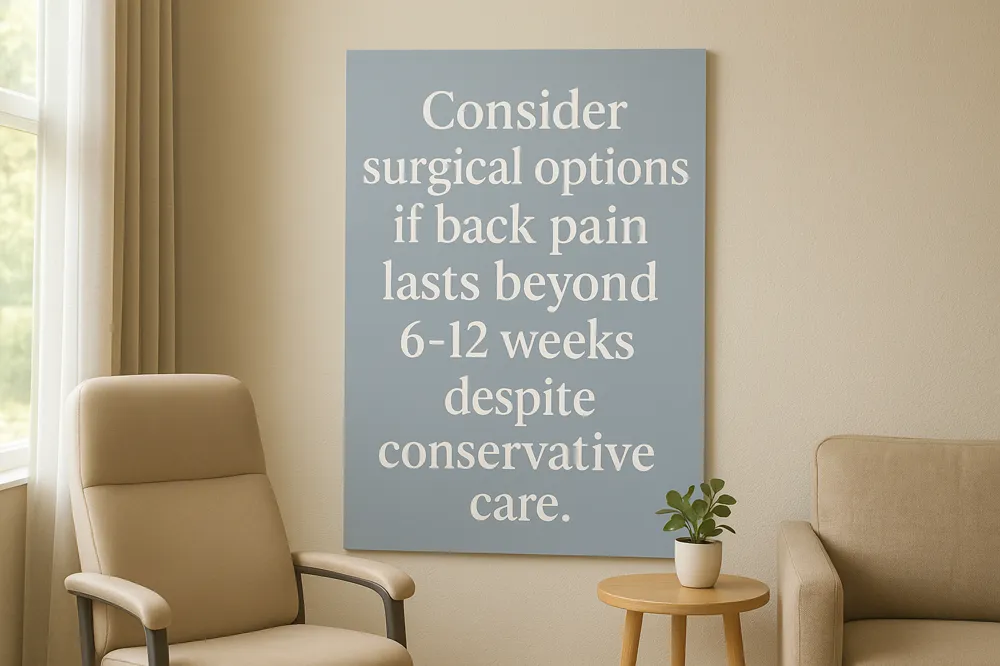
Persistent severe pain beyond 6-12 weeks
Back pain that does not improve after 6 to 12 weeks of conservative treatment such as physical therapy, medications, or injections may indicate the need for surgical evaluation. This ongoing pain can interfere with sleep, work, and daily activities, highlighting a need for advanced intervention to prevent chronic disability.
Neurological symptoms such as numbness, tingling, weakness
Symptoms like numbness, tingling, or weakness in the arms, hands, legs, or feet suggest nerve compression or damage. Conditions such as herniated discs or spinal stenosis often cause these signs and require medical attention to prevent permanent nerve damage. When these neurological deficits worsen or become persistent, spine surgery might be necessary.
Loss of bladder or bowel control (cauda equina syndrome)
Sudden loss of bladder or bowel control, combined with numbness in the groin area, is a medical emergency called cauda equina syndrome. This serious condition requires immediate surgical intervention to relieve nerve compression and prevent lasting disability.
Structural deformities like scoliosis and spinal instability
Visible spinal deformities such as scoliosis or spinal instability can progressively cause pain and limit function. Surgery may be required to correct these deformities, especially when they worsen with age or cause significant impairment in mobility and quality of life. Recognizing spinal deformities like scoliosis and surgery is crucial.
Progressive symptoms affecting mobility and daily function
When symptoms such as difficulty standing, walking, or performing daily tasks rapidly worsen or persist despite non-surgical care, it signals severe spinal pathology. This progression often necessitates surgical treatment to relieve nerve or spinal cord pressure and restore function.
When is minimally invasive spine surgery recommended?
Minimally invasive spine surgery is advised when conservative care fails to adequately address back, neck, or sciatica pain. It is especially suited for patients with structural problems like herniated discs, spinal stenosis, scoliosis, fractures, or tumors that can be accessed with smaller incisions. The approach reduces tissue damage and promotes faster recovery. A specialist assessment is essential to determine if this surgical option fits the patient's condition and overall health, particularly when to see a spine specialist.
This understanding of signs and symptoms can empower patients to seek timely consultation with a spine specialist, ensuring appropriate care and improved outcomes.
Comprehensive Patient-Centered Care at the Orthopedic Spine Institute
How does the Orthopedic Spine Institute approach patient care for spine-related conditions?
The Orthopedic Spine Institute takes a patient-first approach that prioritizes conservative treatments for back pain such as physical therapy, medications, and lifestyle adjustments initially. This ensures many patients can find relief without surgery, supporting recovery with minimal risk.
Advanced imaging and diagnostic tools, including MRI and digital X-rays, are utilized to accurately diagnose spine conditions and tailor treatment plans. This helps detect issues like herniated discs, spinal stenosis, or structural deformities at an early stage.
Their multidisciplinary team consists of fellowship-trained surgeons, physical therapists, and other spine specialists who collaborate closely on individualized care plans. This team approach allows personalized treatments that address each patient's unique needs and goals.
For patients requiring surgery, minimally invasive procedures are offered. Techniques like robotic-assisted spine surgery reduce tissue damage, enhance precision, and shorten recovery times, improving patient outcomes. Learn more about types of back surgery and consultation.
Patient education is a cornerstone of care, with thorough explanations of conditions, treatment options, and recovery expectations. Continued follow-up ensures safe progression and adjustment of therapies as necessary, promoting long-term health and mobility. For comprehensive resources, see the Online Guide to Back, Neck, and Spine Care.
Navigating Insurance and Patient Intake for Spine Care
What insurance options are typically accepted for spine treatments at specialized orthopedic centers?
Specialized orthopedic centers generally accept a broad range of insurance plans, including Medicare and Medicaid, alongside most major private insurers. This wide acceptance ensures that many patients can access specialized spine care while minimizing financial strain. Since coverage details can vary, patients are encouraged to verify their insurance benefits with both the center and their provider before scheduling treatments or surgeries. Additionally, some centers may offer financing solutions to assist with costs not fully covered by insurance. Confirming coverage ahead of time helps streamline the treatment process and avoid unexpected expenses.
What types of patient forms are usually required before spine treatment appointments?
Patients typically complete several important forms prior to spine care appointments. These include detailed medical history forms, consent forms authorizing care, and insurance documentation to verify coverage. Patients are advised to bring prior spinal imaging and reports to aid diagnosis. Many centers also require signing arbitration agreements or legal documents to facilitate smooth administrative processing and dispute resolution. These forms support a comprehensive, informed approach to patient care by ensuring thorough evaluation and clear communication regarding treatment plans and expectations.
How do patient education and legal agreements assist in the care process?
Comprehensive patient education about spine conditions, treatment options, and expected outcomes is integral to effective care. Educating patients on the conservative and surgical treatments available empowers them to make informed decisions. Legal agreements like consent forms and arbitration clauses clarify responsibilities and protect both patients and providers, contributing to a seamless and trustworthy care experience.
| Aspect | Details | Benefit |
|---|---|---|
| Insurance Accepted | Medicare, Medicaid, major private insurers | Broad patient accessibility |
| Patient Forms | Medical history, consent, insurance, arbitration | Streamlined care and legal compliance |
| Verification | Confirm coverage before appointments | Avoids unforeseen costs |
| Patient Education | Information on conditions and treatment | Informed decision-making and better outcomes |
| Legal Agreements | Consent and arbitration agreements | Clear communication and dispute prevention |
Navigating insurance and patient intake efficiently lays the foundation for effective spine care, aligning administrative steps with clinical excellence to help patients receive timely and tailored treatments.
Empowering Patients Through Early Recognition and Specialist Care
Recognizing Red Flags Early Can Make a Difference
Timely detection of warning signs like severe pain, numbness, weakness, or loss of bladder control is critical. These symptoms may signal serious spine conditions that need prompt medical attention to prevent complications.
When to Seek Specialist Care
Consulting a spine specialist is essential if pain persists beyond weeks, worsens, or comes with neurological symptoms. Early expert evaluation helps identify underlying issues and guide treatment decisions effectively.
Starting With Conservative Treatments
Most back pain improves with simple measures such as rest, medications, heat, or physical therapy. These less invasive options often provide relief without the need for surgery.
Considering Surgery for Persistent Problems
Surgery may be a necessary step if pain is chronic, disabling, or associated with nerve damage after trying conservative care. Surgical options can restore function and improve quality of life when carefully planned by a specialist.