Understanding Heat and Cold Therapy for Spine Health
Thermal therapy—both cold (cryotherapy) and heat (thermotherapy)—is a cornerstone of conservative spine care because it directly targets the two main drivers of back pain: inflammation and muscle tension. In the first 24‑48 hours after an acute spinal injury, cold packs cause vasoconstriction, limiting swelling, bruising, and nerve irritation; they also dull pain signals and curb muscle spasms. Once the acute phase subsides, heat promotes vasodilation, delivering oxygen, nutrients, and waste‑removal to tight muscles, improving flexibility and reducing chronic stiffness.
Cryotherapy works by lowering tissue temperature, slowing metabolic activity, and numbing nerve endings, while thermotherapy raises tissue temperature by 9‑12 °F, raising pain thresholds and relaxing fibers. Both modalities should be applied through a thin cloth barrier, limited to 10‑20 minutes per session, with at least a two‑hour gap between applications. Avoid direct skin contact, never fall asleep with a pack in place, and discontinue use if you notice numbness, redness, or worsening pain. Patients with diabetes, peripheral vascular disease, open wounds, or impaired sensation should obtain medical clearance before beginning any heat or cold regimen.
Acute Phase: When Ice Is the First Line of Defense
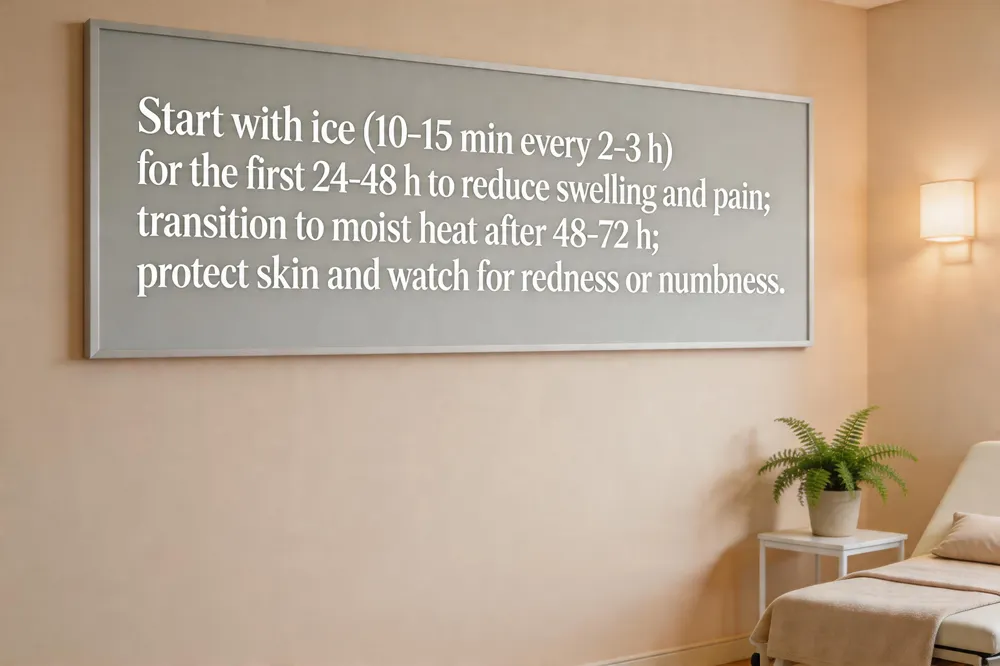 When a new back injury strikes, the first therapeutic weapon is cold therapy. Ice (vasoconstriction) limits swelling, numbs pain, and curbs muscle spasms during the first 24‑48 hours. The evidence‑based protocol is to wrap a frozen gel pack in a thin towel and apply it 10‑15 minutes every 2‑3 hours (or 15‑20 minutes up to four times a day) while the injury is fresh. Always protect the skin, keep a 1‑hour interval between sessions, and stop if redness, numbness, or worsening pain appears.
Transition to heat: After the acute swelling subsides (typically after 48‑72 hours), switch to moist heat for 15‑20 minutes to relax tight muscles, improve blood flow, and restore flexibility. Heat should never be applied to inflamed or bruised tissue, and a cloth barrier is required.
Alternating therapy (contrast therapy) can be used later in the day: 15‑20 minutes of moist heat followed by 10‑15 minutes of cold, repeated up to three cycles. Alternating therapy (contrast therapy) combines anti‑inflammatory benefits of ice with the circulatory boost of heat. Specialist evaluation is recommended if pain persists or neurologic symptoms appear.
Quick reference:
- Acute lower‑back pain (<4 weeks): start with ice.
- Sub‑acute/chronic pain (>4 weeks) or after swelling: use continuous low‑level heat.
- Warm‑up before activity, cold‑down after exercise.
- Preferred ice pack: Magic Gel Ice Pack (flexible, reusable, cloth‑covered).
Chronic Phase: Harnessing Heat for Long‑Term Relief
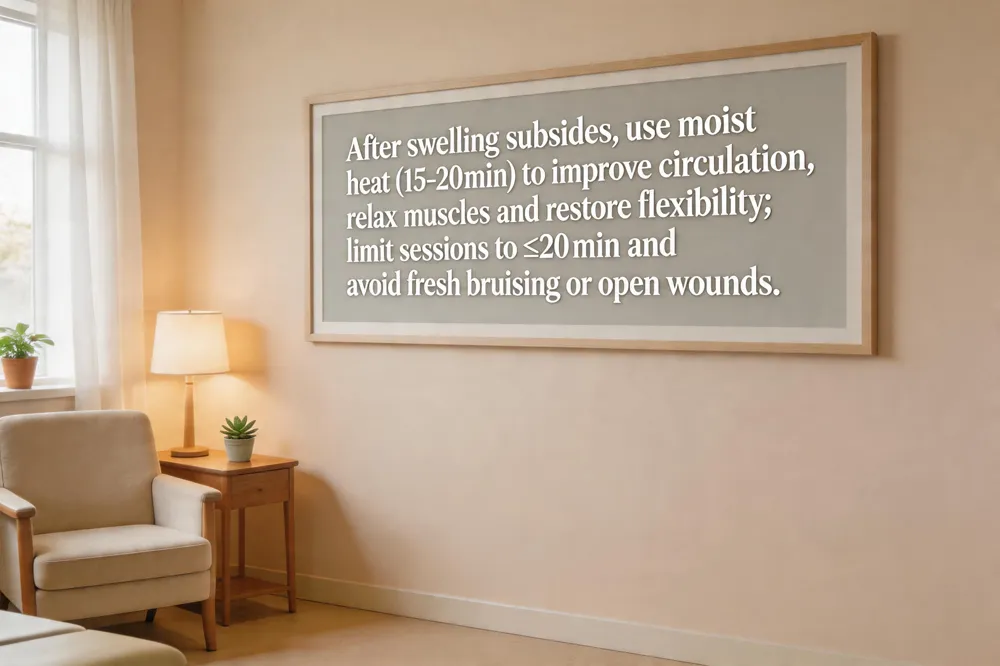 After the first 48‑72 hours of an acute back injury, swelling has usually subsided and the therapeutic focus shifts from reducing inflammation to restoring flexibility and easing muscle tension. Heat therapy is preferred in this chronic phase because vasodilation improves circulation, delivering oxygen, nutrients, and immune cells that promote tissue repair. Moist heat (warm damp towels, water‑filled packs, or heating‑pad with steam) penetrates deeper than dry heat and is especially effective for stubborn stiffness; a 15‑20‑minute session, with a thin cloth barrier, is safe and soothing. Heat should never be applied to fresh bruising, open wounds, or areas of active swelling, as it can worsen inflammation. For muscle pain or spasms, apply ice for the initial 24‑72 hours (10‑20 minutes, wrapped, 3‑4 times daily) to numb pain and limit swelling, then transition to heat for 15‑30 minutes to relax tight fibers and improve range of motion. In sciatica flare‑ups, start with ice for the first 48‑72 hours and switch to gentle heat once the acute phase ends; alternating both modalities can combine anti‑inflammatory and soothing benefits. Always protect the skin with a barrier, avoid exceeding 20 minutes per session, and discontinue use if burning, tingling, or worsening pain occurs. If symptoms persist beyond a few days or are accompanied by numbness, weakness, or bowel/bladder changes, seek evaluation from a spine specialist such as Dr. David S. Raskas.
Contrast (Hot‑Cold) Therapy: Protocols and Practical Tips
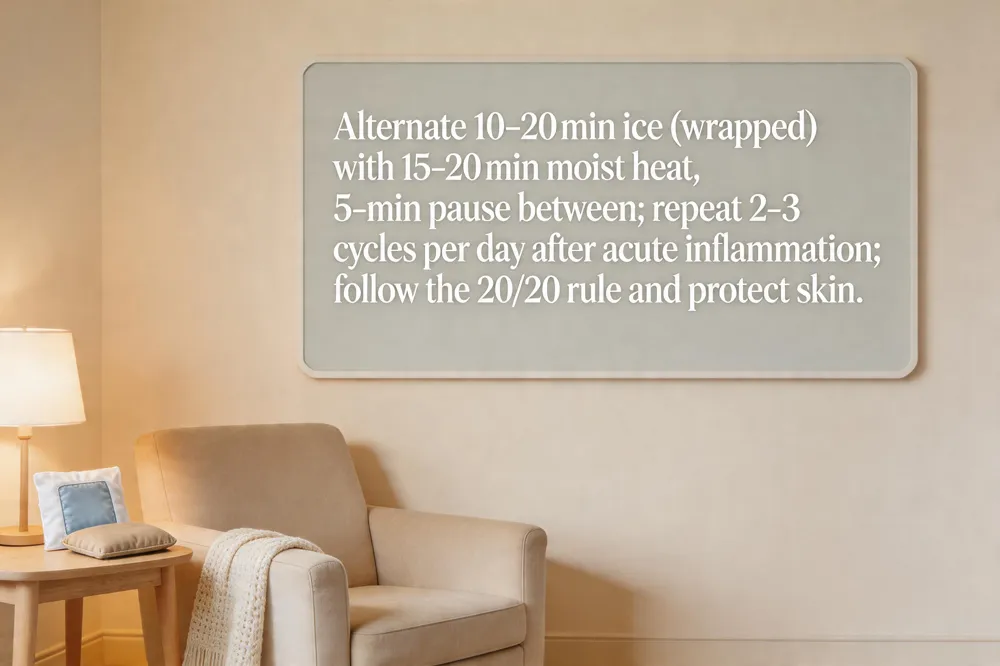 Contrast, or alternating hot‑cold therapy, leverages the anti‑inflammatory power of ice followed by the muscle‑relaxing effect of heat. A standard cycle begins with a 10‑20‑minute ice application (wrapped in a thin cloth) to trigger vasoconstriction, numb pain, and limit swelling. After a brief 5‑minute pause, switch to a 15‑20‑minute heat session—using a heating pad, moist towel, or warm pack—to induce vasodilation, improve circulation, and ease muscle spasms. Repeat the cold‑heat sequence 2‑3 times per day, allowing the tissue to return to normal temperature between cycles.
Timing and safety: During the first 48‑72 hours after an acute back injury, use ice only; heat can worsen inflammation. After swelling subsides (usually after three days), introduce heat and then alternate. Always protect the skin with a barrier, never exceed 20 minutes per application, and observe the 20/20 rule—20 minutes on, 20 minutes off—to prevent frostbite or reactive vasodilation.
When to use contrast: Ideal for mixed‑type spinal issues such as acute strain with lingering muscle tightness, post‑exercise soreness, or sciatica flare‑ups. It is less appropriate for open wounds, infection, severe circulatory disorders, or neuropathy.
Key Q&A:
- In what order should you do hot and cold therapy? Start with cold (10‑20 min), then heat (10‑20 min), repeating 2‑3 cycles with short breaks.
- Hot and cold therapy which first? Cold first for the first 48‑72 hours; heat after swelling resolves.
- How to alternate heat and ice for pain? Ice 15‑20 min, 5‑minute pause, then heat 15‑20 min; 3‑4 cycles per day.
- What is the 20/20 rule for ice? Apply ice ≤20 min, then wait ≥20 min before re‑application.
- Side effects of heating pad on back? Burns, increased swelling if used during acute inflammation, dehydration, or nerve irritation; limit sessions to 15‑20 min with a protective barrier.
Injury‑Specific Guidance and Rehabilitation Pathways
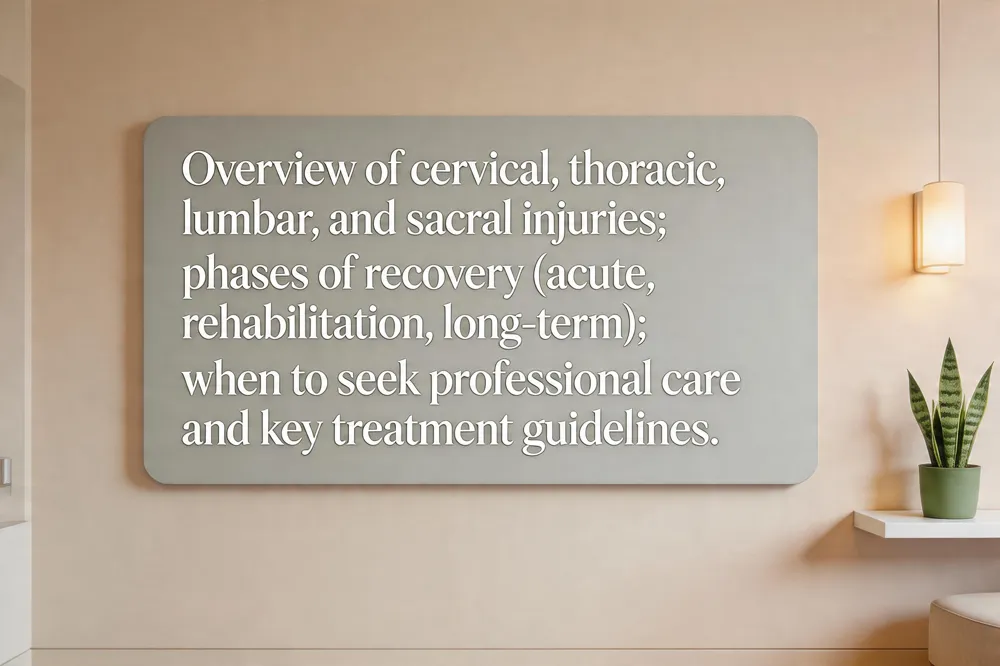 Cervical, Thoracic, Lumbar, and Sacral Overview
Cervical injuries occur in the neck and may affect arm, leg, and trunk function, sometimes resulting in quadriplegia. Thoracic injuries involve the upper‑to middle back, typically leading to loss of trunk and leg control and occasional respiratory compromise. Lumbar injuries affect the lower back, often causing leg weakness or paralysis while preserving upper‑body strength. Sacral injuries are near the tailbone and primarily impact bowel, bladder, and sexual function, usually allowing ambulation but with loss of pelvic organ control.
Recovery Stages and Timelines
Recovery follows three main phases: an acute phase (first few weeks) focused on spinal stabilization, pain control, and neurological assessment; a rehabilitation phase (weeks‑to‑months) of intensive PT/OT to restore movement, sensation, and daily‑living skills; and a long‑term adaptation stage emphasizing independent living, assistive devices, and health maintenance. Progress is gradual and non‑linear, with small gains in sensation and motor function marking milestones.
When to Seek Professional Care
Seek immediate evaluation if pain persists beyond a few days, worsens, or is accompanied by numbness, tingling, weakness, loss of bladder/bowel control, or respiratory difficulty. Prompt imaging, specialist assessment, and early rehabilitation improve outcomes, especially for cervical and thoracic injuries where neurological compromise is common.
Key Q&A
- What are the four types of spinal injury? Cervical, thoracic, lumbar, and sacral injuries, each defined by the spinal region affected and distinct functional impacts.
- Spinal cord injury recovery stages? Acute (stabilization), rehabilitation (intensive therapy), long‑term adaptation (independence).
- Spinal cord injury treatment guidelines? Rapid assessment, early imaging, surgical decompression within 24 hrs when indicated, MAP 85‑90 mm Hg for 5‑7 days, VTE prophylaxis, and multidisciplinary rehab.
- Cervical spine injury treatment? Immobilization, pain control, conservative bracing or minimally invasive surgery (e.g., ACDF) with tailored rehab.
- Spinal cord injury symptoms? Chronic pain, numbness/tingling, weakness, loss of bladder/bowel control, limited ROM, breathing or swallowing difficulty.
Early, guideline‑based care and structured rehabilitation are essential for optimal recovery.
Putting It All Together: Practical Home‑Care Plan
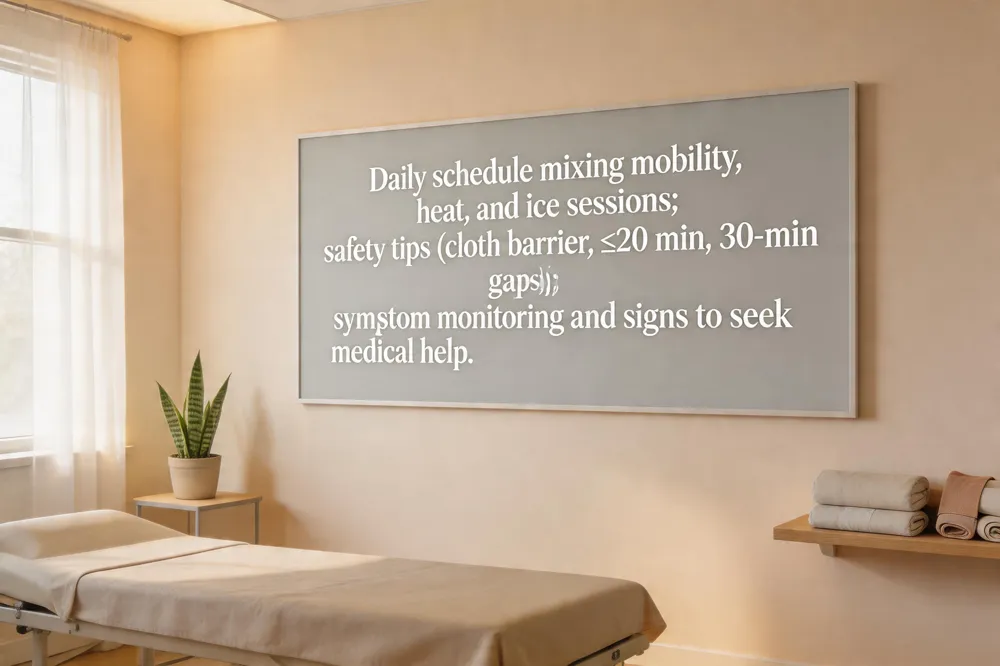 A balanced daily routine can keep mixed‑type back pain under control while you heal.
Step‑by‑step schedule
- Morning (7‑9 am): Gentle mobility – 5 min of light stretching, then a moist‑heat pack for 15 min (protect skin with a thin towel).
- Mid‑day (12‑2 pm): If you experience any swelling or post‑exercise soreness, apply a wrapped ice pack for 10‑15 min, repeat every 2‑3 hours while you’re up.
- Afternoon (4‑5 pm): Light activity (walk or seated core work) followed by a second 15‑minute heat session to loosen muscles.
- Evening (8‑9 pm): Finish with a 10‑minute ice application if the day’s activity left you stiff, then a short 5‑minute warm towel before bed to promote relaxation.
Monitoring & safety
- Always place a cloth barrier between skin and pack.
- Limit each session to ≤20 minutes; wait at least 30 minutes between heat and cold.
- Watch for skin redness, numbness, or increased pain – stop immediately if these occur.
- Keep a symptom log: note pain level, swelling, and any neurological changes.
When to seek help
- Pain persisting > 5 days despite home care,
- New numbness, tingling, weakness, bladder/bowel changes,
- Fever or worsening swelling.
Resources & professional support
- Local spine‑care clinics (e.g., Orthopedic Spine Institute of St. Louis).
- Evidence‑based guides: Mayo Clinic, Healthline, NIH.
- Physical‑therapy programs that teach proper heat/cold use.
FAQ
- Worst thing to do? Staying still for long periods – inactivity weakens muscles and prolongs pain.
- Heat or ice after a fall? Ice for the first 48‑72 hours, then switch to gentle heat once swelling subsides.
- Side effects of heating pads? Burns, increased swelling if used too early, dehydration of tissues.
- Heat therapy for lower back pain? Ideal for chronic stiffness; 15‑20 min moist heat relaxes muscles and improves circulation.
- How to alternate heat and ice? 15‑20 min ice → 5‑min pause → 15‑20 min heat; repeat 3‑4 cycles daily, respecting the 48‑72‑hour acute window for ice.
Putting Knowledge Into Practice
When you start treating back pain at home, remember the safety basics: always place a thin cloth between skin and the pack, limit each session to 10‑20 minutes, and give the tissue at least two hours to return to normal temperature before re‑applying. Ice is your first‑line ally for the initial 24‑72 hours after an acute strain or flare‑up—use it every 2‑3 hours to curb swelling and numb pain. Switch to moist heat after that window (or when stiffness dominates) to boost blood flow, relax tight muscles, and improve flexibility, applying it for 15‑20 minutes a few times a day. If pain persists beyond a few days, worsens, or is accompanied by numbness, weakness, radiating symptoms, or bladder/bowel changes, seek a spine specialist promptly. At the Orthopedic Spine Institute of St. Louis (OSISTL) we tailor a plan that blends your home‑based thermal therapy with targeted physical therapy, exercises, and, when needed, minimally invasive procedures. Following a personalized OSISTL protocol maximizes recovery, reduces reliance on medications, and gets you back to the activities you love.