Understanding Laser Back Pain Therapy
Laser back‑pain therapy uses low‑level (photobiomodulation) or high‑intensity lasers to deliver specific wavelengths of light into soft tissue. The photons stimulate cellular metabolism, reduce inflammation, and promote tissue repair, often resulting in faster pain relief than rest alone. Patients choose this minimally invasive option when chronic low‑back pain, disc degeneration, or post‑surgical stiffness has not improved with physical therapy, medication, or injections, because it offers non‑drug pain control and a short recovery time. Insurance basics you to know include deductibles (the amount you pay before the plan starts covering services), co‑pays (a fixed fee per visit), and co‑insurance (a percentage of the allowed amount after the deductible). Most plans require pre‑authorization—formal approval from the insurer—back the physician submits a diagnosis, prior‑treatment history, and a letter of medical necessity. Verifying coverage, understanding out‑of‑pocket limits, and securing any required referrals can prevent unexpected bills and ensure smoother access to laser therapy.
Insurance Basics for Laser Therapy
 Understanding how insurance handles laser therapy can prevent surprise bills and help you get the care you need.
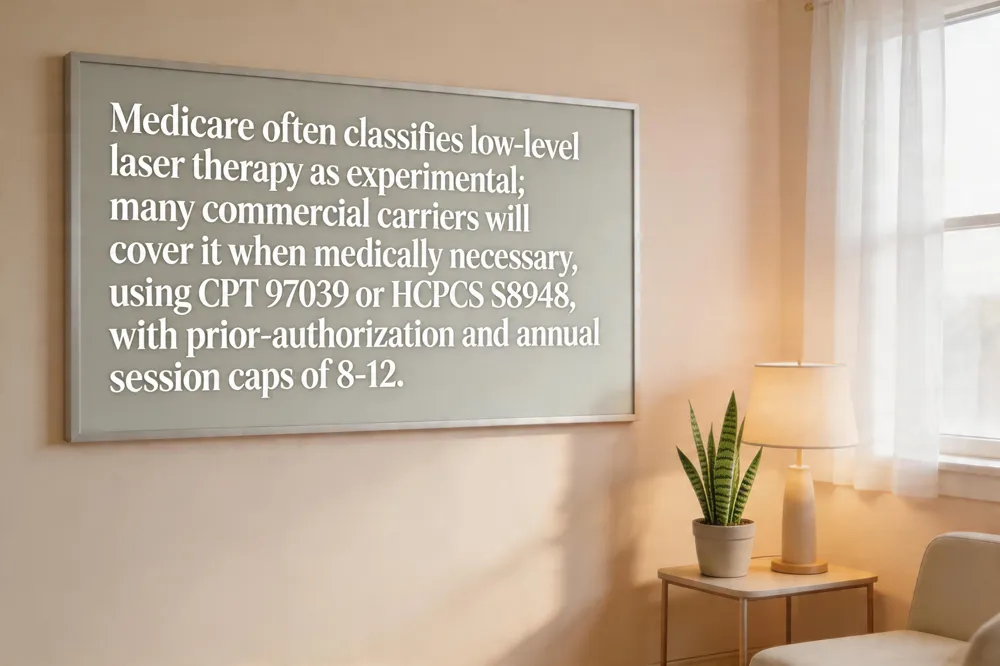
Medicare (Part A, B, C) and experimental status – Original Medicare (Parts A & B) usually classifies low‑level laser therapy (LLLT) as experimental or investigational, so it is not covered for most musculoskeletal indications. Medicare Advantage (Part C) plans must match Original Medicare’s baseline but may add benefits; many private Medicare Advantage carriers will reimburse laser therapy if it is documented as medically necessary, the device is FDA‑cleared for the diagnosis, and a physician’s order is provided. Pre‑authorization and proper coding (e.g., CPT 97039 or HCPCS S8948) are essential.
Commercial carrier policies – Large commercial insurers such as Aetna, Cigna, UnitedHealthcare, Anthem Blue Cross Blue Shield and MedCost often cover laser therapy for back pain when it is deemed medically necessary and billed under the correct codes. Coverage typically requires a prior‑authorization, a physician’s prescription, and documentation of failed conservative treatments. Some plans cap the number of sessions per year (often 8–12) and apply co‑pays or co‑insurance. Insurers often limit coverage to 8–12 sessions per year.
Workers’ compensation, auto injury, and VA coverage – Claims arising from workplace injuries, auto accidents, or service‑related conditions frequently receive full (up to 100 %) reimbursement because laser therapy is seen as a cost‑effective, non‑invasive rehabilitation tool. Personal injury, auto accident, and workers’ compensation claims frequently cover laser therapy. VA facilities may cover photobiomodulation for service‑related musculoskeletal pain, but coverage varies by location. VA health system covers laser therapy for service‑related musculoskeletal conditions.
Is laser therapy for back pain covered by insurance? – Yes—most major insurers will cover laser therapy for back pain when it’s deemed medically necessary and billed under the appropriate therapy codes. Laser therapy for back pain is a minimally invasive procedure that many private health insurance plans will cover when it is deemed medically necessary. Medicare and Medicare Advantage plans generally include low‑level laser (photobiomodulation) as a reimbursable pain‑management service, and many commercial carriers such as Aetna, Anthem Blue Cross Blue Shield, Cigna, UnitedHealthcare and MedCost have similar benefits. Medicare and Medicare Advantage plans typically include low-level laser therapy (LLLT) as part of their pain management benefits. Coverage typically requires a physician’s prescription, documentation of necessity, and often pre‑authorization; some plans may limit the number of sessions per year or apply a co‑pay. If your provider is in‑network and the treatment is coded correctly (e.g., CPT 97039 or HCPCS S8948, you can expect at least partial reimbursement. Always verify the specific details with your insurer before starting treatment.
Why is laser treatment sometimes not covered by insurance? – Insurance may deny coverage because many plans consider laser therapy experimental or not medically necessary for certain conditions, requiring prior authorization or additional documentation. The Centers for Medicare & Medicaid Services (CMS) classifies many laser therapy applications as “experimental” or “investigational”, which is a primary reason for denial of coverage under Original Medicare.
Common Drawbacks of Laser Therapy
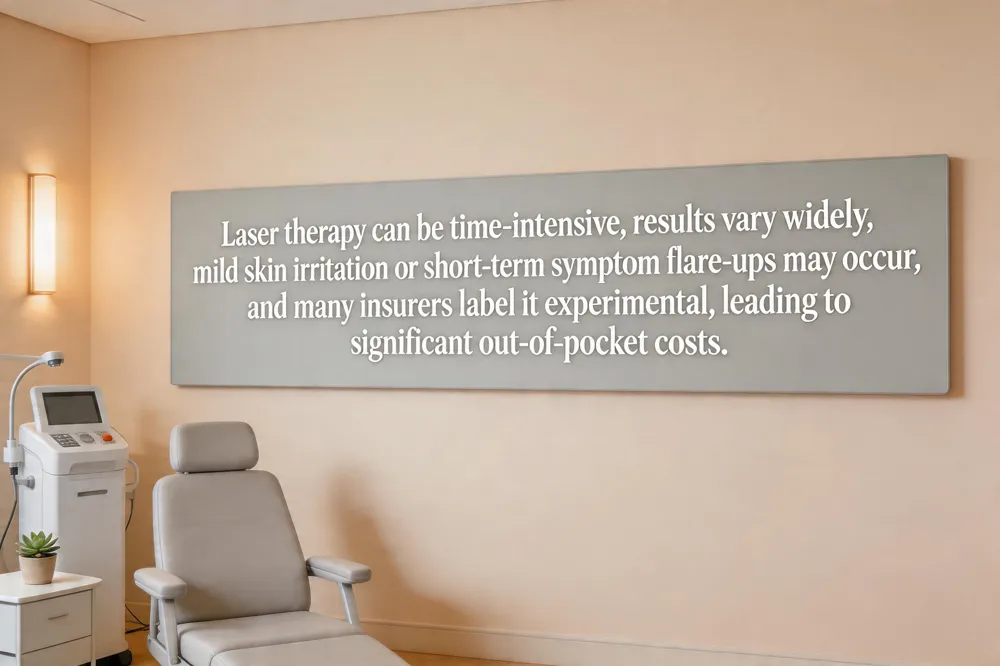 Laser therapy often requires a series of appointments, making it a time‑consuming investment that can add up financially. Effectiveness varies widely—some patients report rapid relief, while others see little change, because outcomes depend on the condition, device, and individual biology. A minority of users experience mild skin irritation or a temporary flare‑up of symptoms after a session. Finally, insurance reimbursement is limited; many carriers label the treatment “experimental” or “investigational”, so out‑of‑pocket costs can be significant.
What are two drawbacks of laser therapy?
Laser therapy can be time‑intensive, needing multiple visits before improvement, and its results are not guaranteed, differing from person to person. Some patients may also notice mild skin irritation or a brief worsening of symptoms, and limited insurance coverage can increase out‑of‑pocket expenses.
How much does laser therapy for back pain cost?
Typical session fees range from $30 to $200. Coverage varies—some insurers cover a portion of the cost, while others require full out‑of‑pocket payment.
Financial Aspects of Laser Spine Surgery
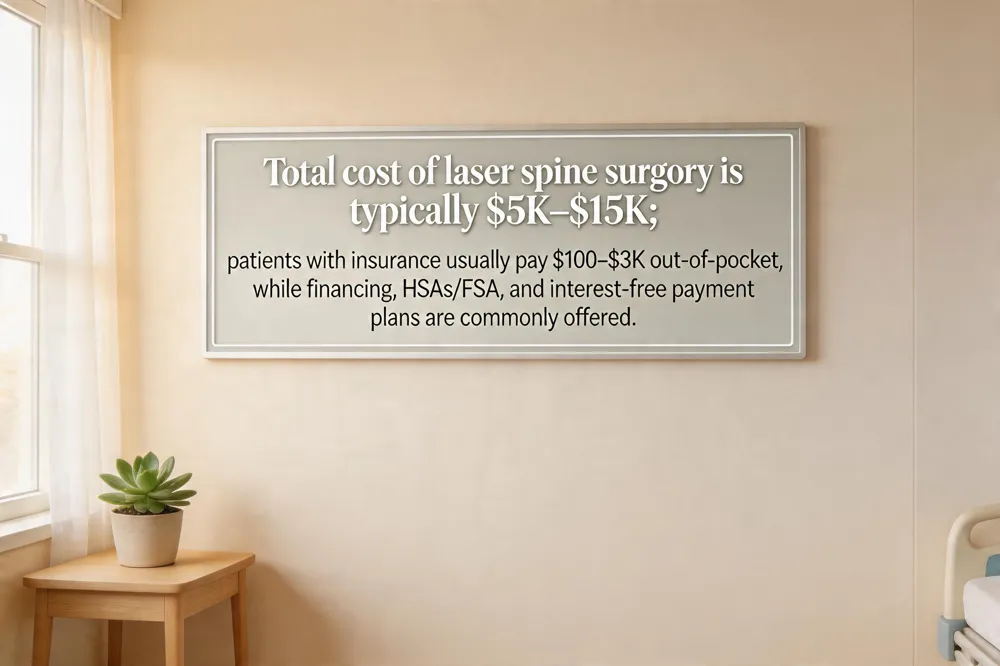 Laser spine surgery is generally less expensive than traditional open back surgery because it is minimally invasive and often performed with twilight anesthesia, and requires a shorter hospital stay. For patients with insurance, the out‑of‑pocket portion typically ranges from a few hundred dollars up to several thousand dollars, depending on the specific procedure, surgeon fees, deductible, and co‑pay. Without insurance, the total bill can run into the low‑to‑mid‑thousands of dollars, although many clinics offer interest‑free financing or payment plans or allow payment through HSAs/FSA/HRAs.
Comparison to traditional open surgery costs: Conventional open spine surgery usually involves a full‑night hospital admission, higher operating‑room fees, and longer recovery time, which together can push total costs well above $15,000–$20,000. Laser procedures, by contrast, often avoid overnight stays and use fewer disposable instruments, keeping the overall bill lower.
Financing options and payment plans: Many practices partner with medical‑credit providers, offer interest‑free financing or payment plans, or allow payment through HSAs/FSA/HRAs.
Factors that influence final billing: Local cost of living, the complexity of the spinal condition, any additional imaging or pre‑operative testing, and the patient’s insurance deductible and co‑insurance percentages all affect the final amount. Our team at the Orthopedic Spine Institute of St. Louis works closely with major insurers and strives to keep laser spine surgery costs as affordable as possible.
Spinal Fusion and Workers’ Compensation
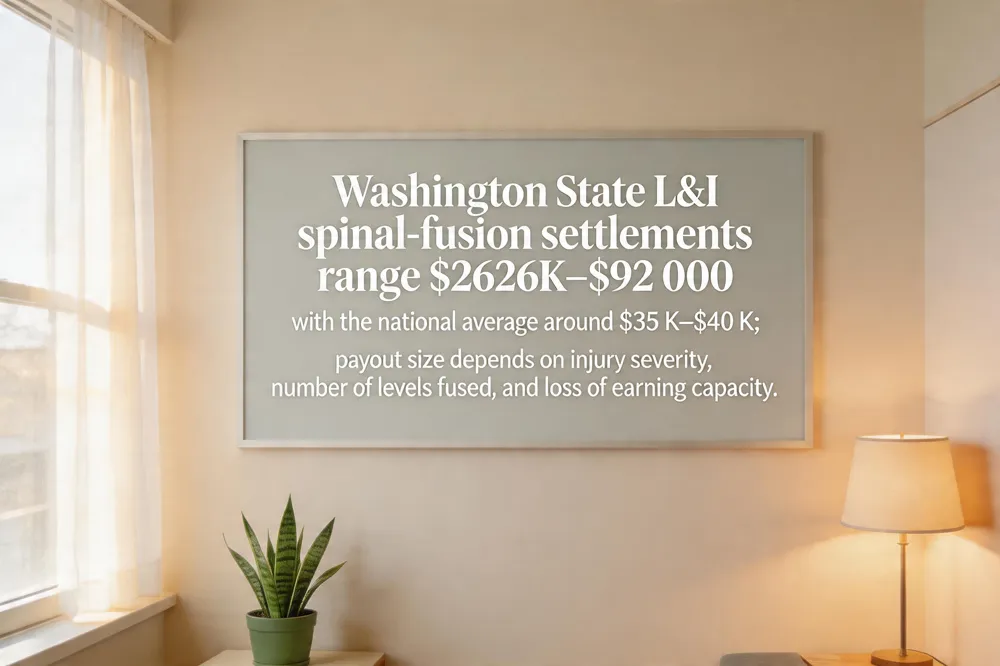 Typical settlement ranges for spinal‑fusion claims vary by injury severity. In Washington State L&I cases, awards usually fall between $26,000 and $92,000, with many clustering around the national back‑injury average of $35,000‑$40,000. Higher payouts are common when multiple levels are fused, functional loss is severe, or a career change is required.
State‑specific rules can affect the formula—Washington, for example, caps certain benefits and may offer a lump‑sum permanent partial disability (PPD) payment instead of ongoing wages. Because each case is unique, a thorough medical evaluation and wage analysis are essential to determine your exact compensation.
Risks of L4‑L5 Surgery and Coverage for Stenosis
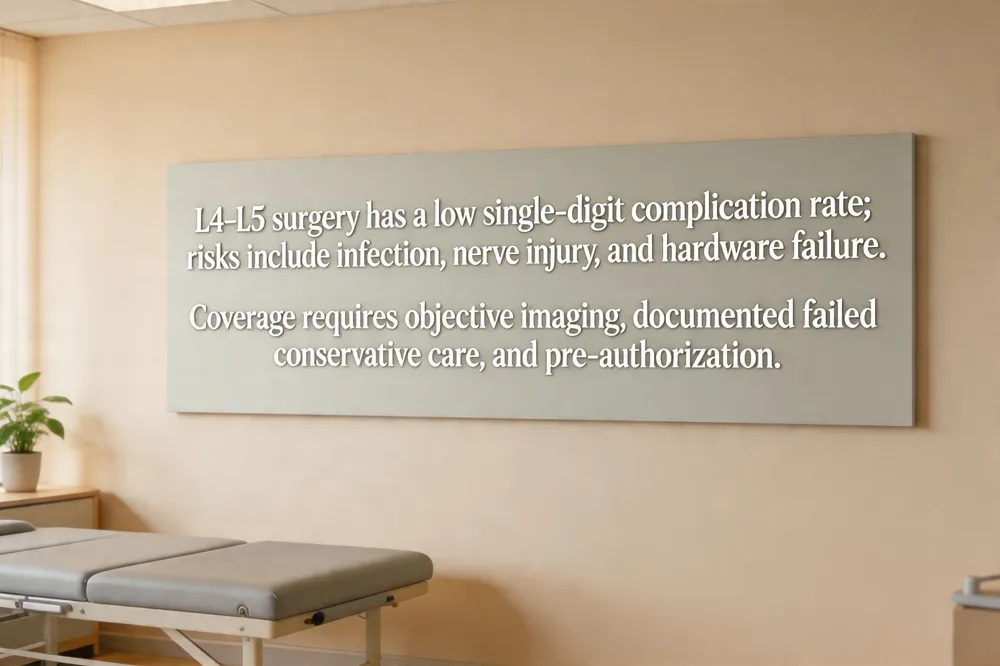 L4‑L5 surgery—whether a lumbar fusion or an artificial disc replacement—has a low‑single‑digit overall complication rate. The most frequent adverse events are infection, bleeding, nerve irritation or injury, and implant‑related problems such as loosening, wear, or migration. Fusion carries a slightly higher risk of hardware failure or non‑union, whereas disc replacement preserves motion and may reduce adjacent‑segment degeneration but can still require revision after many years.
Insurance coverage for spinal stenosis surgery hinges on medical necessity. Payers (Medicare, Medicare Advantage, major commercial plans) require objective imaging (MRI/CT) that demonstrates nerve compression, documentation that conservative therapy (physical therapy, medications, injections) has failed, and a physician’s order. Pre‑authorization is typically mandatory; providers submit CPT codes (e.g., 97032, 97033, 97034 for adjunctive laser therapy) along with ICD‑10 diagnoses and a letter of medical necessity. Coverage limits, deductibles, copays, and network status vary by plan, so patients should verify benefits and obtain a clear cost estimate before scheduling. If a claim is denied, an appeal with additional clinical justification is permitted.
Navigating Prior Authorization & Documentation
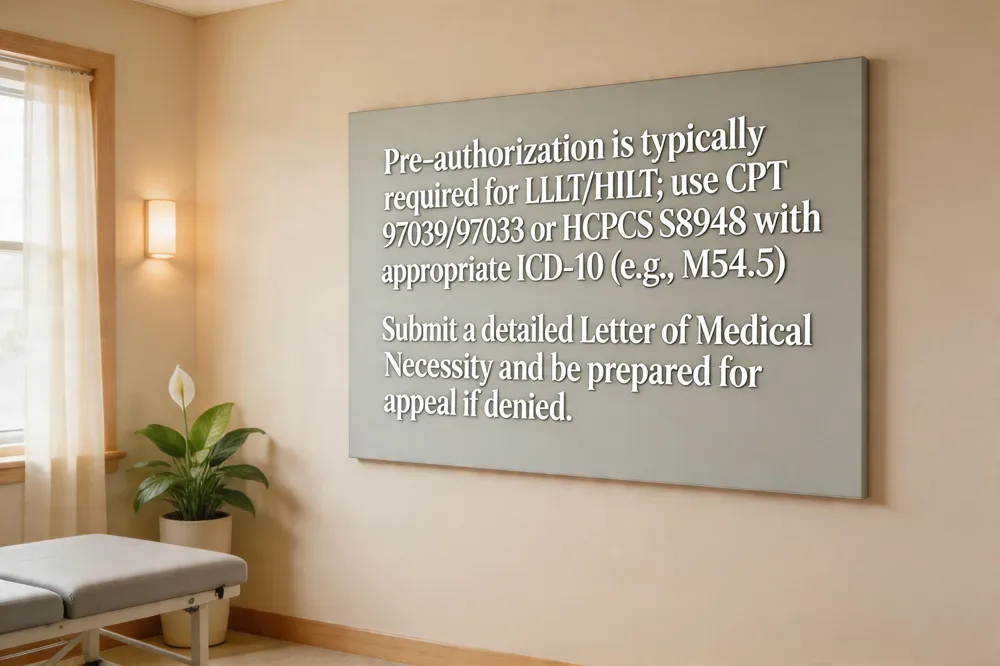 Why pre‑authorization is often required: Most insurers label low‑level laser therapy (LLLT) and high‑intensity laser therapy (HILT) as experimental or investigational unless a physician proves medical necessity. This triggers a pre‑authorization step to ensure the service meets the plan’s clinical criteria and to control costs.
Key codes: CPT 97039 (unlisted therapeutic laser), CPT 97022 (infrared laser), CPT 97033 (low‑level laser), HCPCS S8948 (15‑minute laser session), and Category III code 0552T are the most frequently used billing identifiers. Accurate code selection, paired with the correct ICD‑10 diagnosis (e.g., M54.5 for low back pain), is essential for claim acceptance.
How to build a Letter of Medical Necessity: Include patient’s diagnosis, duration of symptoms, prior conservative treatments (physical therapy, NSAIDs, injections), objective findings (imaging, pain scores), and a clear rationale for choosing laser therapy over alternative options. Attach supporting clinical studies and specify the expected number of sessions.
Appeal process if a claim is denied: Request a written denial statement, then submit a Letter of Medical Necessity, additional documentation, and peer‑reviewed evidence. If the internal appeal fails, pursue an external review under the Affordable Care Act.
Why is laser treatment sometimes not covered by insurance? Insurance may deny coverage because many plans consider laser therapy experimental or not medically necessary for certain conditions, requiring prior authorization or additional documentation.
Final Takeaways
When pursuing laser back‑pain treatment, the most reliable path to insurance coverage starts with confirming that your plan lists laser therapy as a reimbursable service and that the device is FDA‑approved for your diagnosis. Next, obtain a written physician order and compile a detailed medical‑necessity packet that includes ICD‑10 codes (e.g., M54.5 for low back pain), CPT/HCPCS codes such as 97039, 97032 or S8948, imaging results, and documentation of failed conservative care (physical therapy, NSAIDs, injections). Many carriers—Medicare Advantage, major PPOs, and workers’‑compensation plans—require pre‑authorization, so submit the packet early and keep a copy of the authorization number. Finally, let the Orthopedic Spine Institute of St. Louis handle verification, coding and appeals on your behalf; our staff will contact your insurer, confirm in‑network status, and provide cost estimates, ensuring you receive the maximum benefit with minimal out‑of‑pocket surprise.