Why Evaluating SI Joint Fusion Matters
The sacroiliac (SI) joint is a pain generator in up to 30 % of chronic low‑back cases, yet non‑surgical therapies often fall short—70‑90 % of patients fail to achieve a clinically important pain reduction after months of physical therapy, injections, or radiofrequency ablation. Minimally invasive SI joint fusion addresses this gap with small incisions, immediate weight‑bearing, and rapid recovery, while delivering robust outcomes: radiographic fusion rates rise from 61 % at six months to 96 % at twelve months, and mean VAS scores drop from 7.5 ± 1.3 pre‑op to 1.4 ± 1.2 post‑op (p < 0.05). Objective metrics—CT‑confirmed bone bridging, VAS, Oswestry Disability Index, and patient‑reported satisfaction—are essential to verify true arthrodesis, quantify pain relief, and justify the procedure’s growing use in clinical practice.
Success Rate & Pros/Cons of SI Joint Fusion
 Clinical success after minimally invasive sacroiliac (SI) joint fusion is defined by a combination of patient‑reported and radiographic outcomes. Most trials use a ≥20‑mm (or ≥30‑50 reduction reduction in Visual Analog Scale (VAS) pain scores, along with no serious device‑related adverse events, no neurological worsening, and no need for revision surgery. Functional improvement is typically measured by a 20‑30‑point drop in the Oswestry Disability Index (ODI) and gains in quality‑of‑life scores such as the SF‑36 or EQ‑5D.
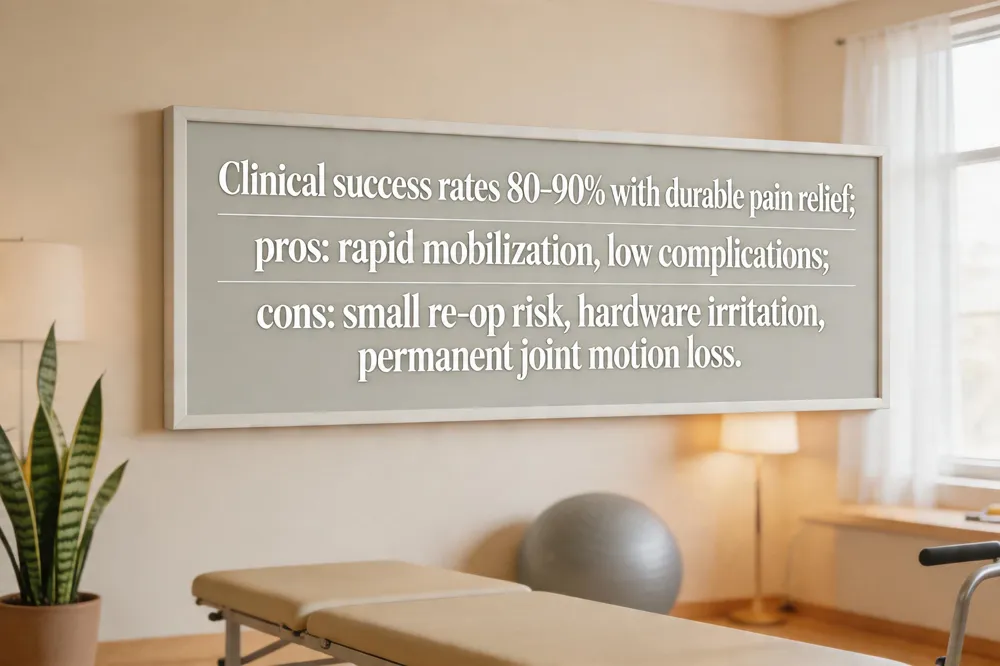
Across high‑quality studies, 80‑90 % of patients achieve clinically meaningful pain relief, with the INSITE randomized trial reporting an 81.4 % primary‑success rate at six months and 82 % achieving substantial clinical benefit at 24 months. Radiographic fusion rates reach 96 % at 12 months and 100 % by 18 months in series using navigation or robotic guidance. Patient satisfaction is high, with 88‑90 % willing to recommend the procedure.
Pros include durable pain reduction, rapid mobilization (immediate weight‑bearing is allowed), low overall complication rates (<5 %), and a short hospital stay. Cons involve a small re‑operation risk (≈4‑5 % for screw loosening), hardware‑related irritation, permanent loss of SI‑joint motion, and the need for a structured rehabilitation program. Careful patient selection—confirming SI‑joint pain with diagnostic blocks, avoiding active smokers or severe osteoporosis, and ensuring adherence to postoperative protocols—optimizes the benefit‑risk balance.
Pain Relief, Functional Recovery & Driving After Surgery
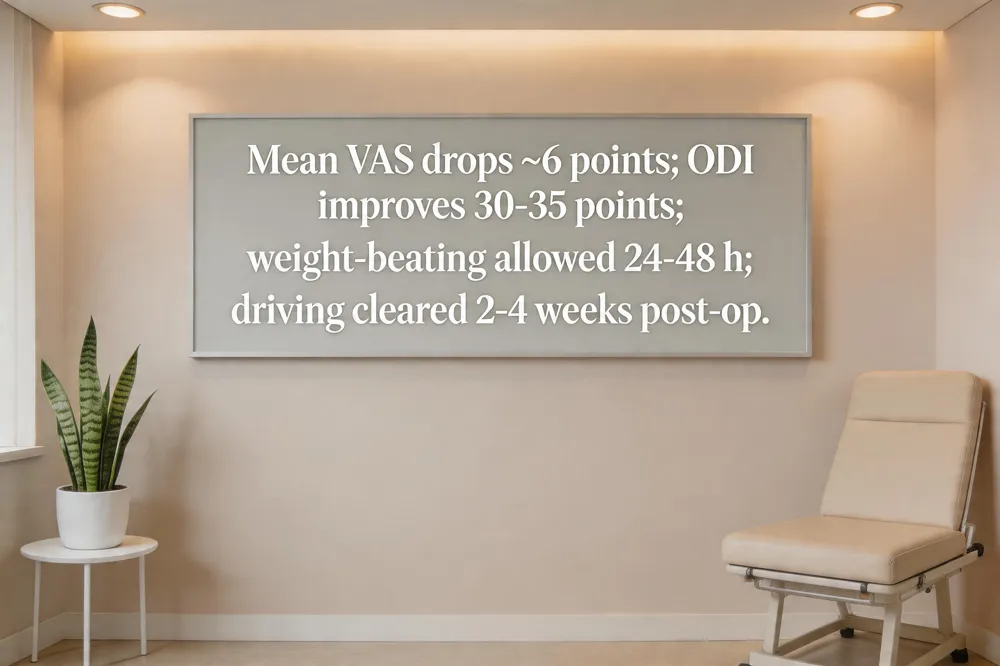 Minimally invasive sacroiliac (SI) joint fusion yields rapid and durable pain relief. In a 43‑patient series, Mean VAS pain reduced from 7.52 ± 1.3 pre‑op to 1.43 ± 1.22 at 12 months (p < 0.05) and functional disability improved by roughly 30‑35 ODI points on the Oswestry Disability Index (ODI). Radiologic fusion rates: 61% at 6 months, 96.4% at 12 months, 100% at 18 months support the clinical gains.
Recovery follows a staged pathway. Within the first 24‑48 hours patients can bear weight and ambulate with a walker or crutches; light household tasks are tolerated by week 2‑4. Heavy lifting, twisting, and high‑impact activities are avoided for 6‑8 weeks. Most surgeons clear patients to drive after 2‑4 weeks once narcotics are stopped, leg strength is adequate, and reaction time is normal. By 6‑12 weeks normal daily activities resume, and by 3‑4 months most patients return to work and low‑impact recreation. Full bone fusion and maximal pain relief may continue to evolve up to six months, after which activity levels can be further increased under the surgeon’s guidance.
Mobility Changes After Fusion
 The sacroiliac (SI) joint normally moves only a few degrees – roughly 2‑4° of rotation and 1‑2° of tilt – to transmit weight between the spine and pelvis. Because this range is already minimal, fusion does not noticeably affect everyday tasks such as walking, sitting, bending, or climbing stairs. What changes is the joint’s ability to perform extreme motions (deep hip rotation, hyper‑extension, or heavy lifting that place the SI joint under high shear forces). Patient‑reported functional limitations are therefore modest: most patients return to normal activities within weeks, while high‑impact sports or very deep squats may feel slightly restricted during the early healing phase. Physical therapy plays a crucial role, emphasizing core stabilization, gradual weight‑bearing, and tailored strengthening to compensate for the lost micro‑motion and to protect the fusion site.
Does SI joint fusion limit mobility? SI joint fusion permanently joins the sacrum and ilium. The procedure does reduce the joint’s ability to perform extreme rotational or hyper‑extension movements, but these motions are rarely needed for everyday tasks. Most patients can resume normal walking, sitting, bending, and routine activities without noticeable loss of function. Temporary activity restrictions—such as avoiding heavy lifting or high‑impact sports—are common during the early healing phase, after which mobility usually returns to pre‑surgery levels. Overall, the fusion’s benefit of pain relief outweighs the modest limitation in extreme joint motion.
How much mobility do you lose with a SI joint fusion? Patients typically lose only a very small amount of motion because the sacroiliac joint’s normal range of motion is already minimal—primarily a few degrees of rotation and tilting that aid weight transfer rather than everyday movement. Fusion stabilizes the joint and eliminates the painful micro‑movements that cause discomfort, so most daily activities such as walking, sitting, bending, and climbing stairs remain unchanged. High‑impact or extreme hip‑rotation actions (e.g., deep squats, certain sports twists, or heavy lifting) may feel slightly restricted, but these motions are rarely needed for normal life. Physical therapy after surgery helps patients adapt and restore strength, further minimizing any perceived loss of function.
Recognizing a Failed Fusion
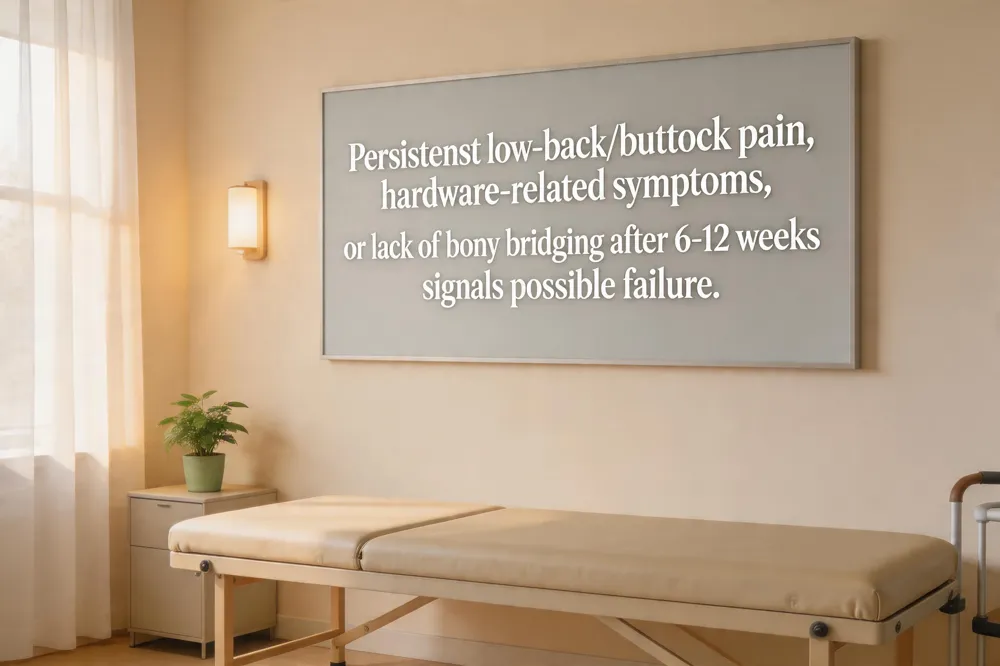 A failed sacroiliac (SI) joint fusion usually presents with persistent, unilateral low‑back and buttock pain that feels deep, dull, and often centered over the "dimples of Venus". The discomfort typically worsens with prolonged sitting, standing up, or transitioning between positions, and may radiate down the posterior thigh into the calf. Patients often describe a sensation of the joint being "stuck" or unstable, sometimes accompanied by a grinding or clicking feeling under the skin. Inflammation may manifest as swelling, warmth, or localized tenderness over the SI region, and many patients continue to rely on oral narcotics without meaningful relief.
Hardware‑related symptoms include new or worsening pain that is sharp or radiating, a feeling of clicking, grinding, or instability, and any audible movement during activity—suggesting screw loosening, breakage, or migration. Clinical red flags are fever, increasing redness, drainage, or neurologic deficits such as numbness or weakness, which may indicate infection or nerve irritation.
When these signs persist beyond the expected postoperative recovery window (typically 6–12 weeks) or if imaging shows lack of bony bridging (pseudarthrosis), patients should be evaluated for revision surgery. Early referral for repeat CT or X‑ray, assessment of implant integrity, and discussion of revision options can prevent chronic disability and improve outcomes.
Patient Stories Highlighting Recovery
 Real‑world experiences after minimally invasive sacroiliac joint fusion consistently show a rapid pain drop and a swift return to daily life. In clinical series, the average pre‑operative Visual Analog Scale (VAS) pain score of 7.5 fell to 1.4 at 12 months (p < 0.05) and 88 % of patients say they would recommend the surgery.
Dawn, a pharmacist from Ohio, went from being unable to stand for ten minutes to walking pain‑free the surgery with Dr. Tobler; she resumed full work duties within weeks. Trish, who endured severe SI‑joint pain during pregnancy, ran a 5K and lifted her toddler again eight months after receiving the Rialto fusion system. Deborah reported getting out of bed the same day of her iFuse procedure and spent the summer gardening without discomfort.
These stories illustrate early mobility, reduced reliance on medication, and restored quality of life. Emotional impact is profound—patients describe relief, renewed confidence, and optimism about returning to work, hobbies, and family activities, mirroring the high satisfaction rates reported in the literature.
Surgical Technique, Video Guide & LinQ System Review
 Minimally invasive sacroiliac (SI) joint fusion is now the preferred surgical option because it limits tissue disruption, allows immediate weight‑bearing, and yields high fusion rates—up to 96 % at 12 months and 100 % by 18 months in recent series of 43 patients (60 joints). Modern procedures are frequently guided by intra‑operative 3‑D CT (O‑Arm) with either Medtronic’s Stealth navigation or Globus Medical’s ExcelsiusGPS robotic platform, which improve screw trajectory accuracy without increasing postoperative pain scores. Implant choices include cannulated, slotted threaded screws (Rialto or SI‑LOK) packed with allograft and INFUSE rhBMP‑2, as well as triangular titanium rods (iFuse) and the newer PainTEQ LinQ system that uses a single allograft‑filled screw through a posterior approach. The LinQ system has been praised in clinical reviews for precise placement and durable pain relief, reporting an average 66.5 % VAS reduction at 20 months and a low complication profile. For patients seeking a clear visual explanation, the Orthopedic Spine Institute of St. Louis offers a concise (3‑4 minute) procedural video of minimally invasive SI joint fusion—available on its website and YouTube—showing patient positioning, the small buttock incision, insertion of titanium implants, and closure, along with pre‑ and fasting and post‑operative recovery instructions. This patient‑first video resource reinforces the institute’s conservative‑first, education‑driven approach while highlighting the safety and efficacy of navigation‑ or robot‑assisted SI joint fusion.
Long‑Term Outcomes, Quality of Life & Economic Impact
 Five‑year follow‑up studies of minimally invasive sacroiliac (SI) joint fusion consistently show durable clinical and radiographic success. Fusion rates of intra‑articular osseous bridging reach 87 %–100 % at 5 years, with no evidence of implant loosening or migration. Patients experience sustained pain relief: mean VAS scores fall from the high‑7 range pre‑operatively to around 2–3 points, and 88 % achieve Substantial Clinical Benefit (SCB) with Oswestry Disability Index scores indicating only minimal‑to‑moderate disability. Reoperation is rare; revision surgery rates stay below 5 % (≈3 % in large trials), and complications such as infection, nerve irritation, or hardware failure remain infrequent. Economically, successful fusion reduces long‑term healthcare utilization—opioid use declines by ~30 % and the need for repeat imaging or additional interventions drops—making the procedure cost‑effective for insurers and patients alike.
Long‑term effects of SI joint fusion – Long‑term outcomes after sacroiliac joint fusion are generally favorable, with most patients experiencing lasting pain relief and improved functional stability. Studies show a high fusion‑rate and a low incidence of serious complications, making the procedure a durable solution for chronic SI‑joint pain. Occasionally, patients may develop adjacent‑segment stress or irritation from the titanium hardware, which can manifest as new discomfort in nearby joints. Most individuals are able to return to normal daily activities after the initial recovery period, although high‑impact sports or heavy lifting may remain limited. Overall, the permanent stabilization of the SI joint provides sustained benefits, while vigilant follow‑up helps manage the rare late‑onset issues.
Key Takeaways for Patients Considering Fusion
 Summary of success metrics – Modern minimally invasive sacroiliac (SI) joint fusion consistently delivers high radiographic fusion rates (96‑100% by 12‑18 months) and dramatic pain relief, with mean VAS scores dropping from ~7.5 pre‑op to ~1.4 at 12 months. Clinical studies report 70‑90% of patients achieving ≥50% pain reduction and 80‑90% reporting functional improvement on the Oswestry Disability Index.
Patient‑focused decision points – Ideal candidates have confirmed SI‑joint pain (diagnostic block ≥50% relief) and have exhausted 6‑12 months of conservative therapy. Key risk factors that may lower success include smoking, uncontrolled diabetes, and poor bone quality. Patients should expect immediate weight‑bearing after surgery, a brief rehab period, and a high satisfaction rate (≈85‑90% would choose the procedure again).
When to seek evaluation – If low‑back or buttock pain worsens with standing, sitting, or walking and does not improve with physical therapy, injections, or NSAIDs, a referral for SI‑joint assessment is warranted. Early imaging and diagnostic injections can identify the joint as the pain generator before considering surgery.
Future outlook – Ongoing trials are refining navigation and robotic assistance, aiming to shorten fusion time and further reduce complications. Long‑term data (5‑year follow‑up) already show durable pain relief and low re‑operation rates, suggesting that SI‑joint fusion will remain a cornerstone treatment for refractory SI‑joint dysfunction.
Putting the Pieces Together
Successful sacroiliac joint fusion hinges on marrying objective imaging with the patient’s subjective experience. Radiographic confirmation of bony bridging—typically seen on CT or X‑ray at 12 months—provides objective evidence of arthrodesis, while pre‑operative VAS and ODI scores track pain and functional limitation. By reviewing both data streams, clinicians can pinpoint patients whose imaging lag behind clinical relief and adjust rehabilitation or consider adjunctive bone‑growth strategies. Care plans are then tailored: patients with poor bone quality may receive BMP‑enhanced grafts, while those with isolated pain benefit from early mobilization and core‑stabilization therapy. Throughout, transparent discussion of expected outcomes, potential complications, and alternative non‑surgical options empowers patients to participate in shared decision‑making, aligning treatment with their goals and improving satisfaction. This comprehensive, data‑driven approach fosters confidence and long‑term functional gains for every patient.