The Cost of Delay
When spine care is postponed, acute injuries often evolve into chronic pain syndromes. Studies across multiple health systems show that each week of delayed imaging or specialist evaluation raises the odds of requiring surgery by 5‑10 percent and increases the likelihood of persistent radiculopathy, spinal stenosis, or failed‑back‑surgery syndrome. This progression drives a steep economic burden: the Social Security Administration reports that long‑term disability benefits replace 50‑80 % of earnings, while workers’‑ and private insurers spend an estimated $1,200 per patient per week in lost productivity and medical costs. Early, same‑week appointments break this cycle. Prompt MRI, targeted physical therapy, and minimally invasive procedures allow most patients to return to light duties within 1‑2 weeks, cutting claim durations by up to 30 % and saving employers roughly $4,200 per case. Ultimately, rapid intervention preserves function, reduces pain chronic, and prevents the costly, lifelong disability cascade.
Why Same‑Week Spine Appointments Matter
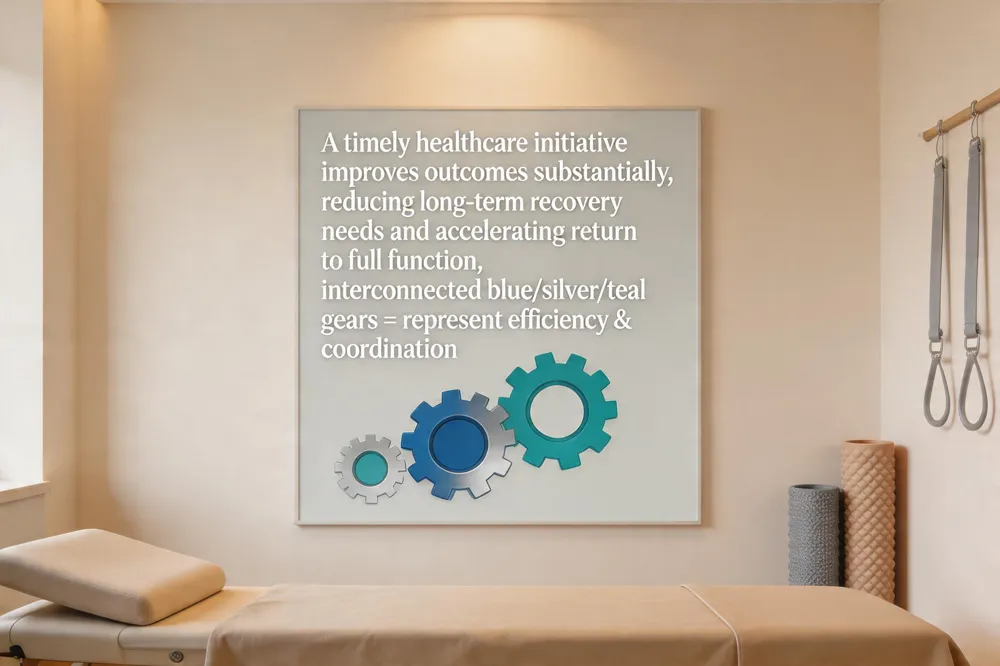 Rapid diagnosis and imaging are the cornerstones of a patient‑first care model. When a spine specialist sees a patient within the first week of symptom onset, MRI, CT or X‑ray can be ordered and interpreted while the inflammatory cascade is still reversible, allowing early identification of herniated discs, spinal stenosis, spondyloristhesis, or red‑flag conditions such as cauda equina syndrome. This prompt assessment reduces the risk of chronic disability: multiple studies show a 30‑40 % lower odds of filing long‑term disability claims when treatment begins within seven days, and patients return to work an average of 12‑15 days sooner. Economic savings follow naturally—insurers and employers avoid weeks imaging, prolonged medication use, and costly workers’ compensation payouts, with each week of delayed care estimated to cost $1,200 in lost productivity.
Spine specialist St. Louis: Dr. David S. Raskas, board‑certified at the Orthopedic Spine Institute of St. Louis, follows a conservative‑first protocol and offers minimally invasive surgery when needed. Call (314) 514‑3500 or schedule online.
Spine institute St. Louis MO: The Orthopedic Spine Institute of St. Louis provides same‑day outpatient surgery, transparent billing, and online pre‑registration, focusing on back, neck and sciatica pain.
Spine surgeon near me: For patients in the St. Louis area, OSIS offers Dr. Raskas’s expertise, robotic‑assisted navigation, and a full suite of conservative therapies before surgery.
Spine specialist Orange County: Dr. S. Samuel Bederman at Restore Orthopedics & Spine Center and Dr. Vivek Babaria in Newport Beach combine early evaluation with minimally invasive techniques, accepting most insurance plans and emphasizing rapid return to activity.
Conservative Care Strategies for Immediate Relief
 Early, evidence‑based self‑care can break the pain cycle and keep you functional while you arrange a specialist visit.
How to get rid of back pain instantly – Apply a cold pack for 15‑20 minutes to curb inflammation, then switch to a heating pad to relax tight muscles and improve circulation. Perform a quick stretch such as knee‑to‑chest or cat stretch, holding 5‑10 seconds. Sit upright, engage your core, and avoid slouching; a brief walk or gentle torso rotation can interrupt stiffness. An over‑the‑counter NSAID (ibuprofen or acetaminophen) provides fast symptom relief when taken as directed.
How to relieve back pain fast at home – Begin with ice for the first 48‑72 hours, followed by heat. Gentle stretches (knee‑to‑chest, lower‑back rotational, cat‑stretch) 2‑3 times twice daily keep muscles supple. Low‑impact activity—walking, swimming, or a short yoga routine—prevents stiffness and promotes blood flow. Maintain good posture and support the lower back with a pillow while lying down.
How to relieve severe back pain – Combine gentle core‑strengthening moves (bridge, plank) with the stretches above. Ice then heat, good posture, and short hourly walks help manage severity. OTC anti‑inflammatory medication can control pain, but a physical therapist can tailor a safe program. Persistent pain warrants a professional evaluation at the Orthopedic Spine Institute of St. Louis.
How to reduce back pain for females – Focus on core‑strengthening (bridges, planks, pelvic tilts) and daily flexibility stretches. Use ergonomic supports, maintain proper posture, and consider a pillow between the knees when side‑sleeping. Weight management and smoking cessation protect disc health. If symptoms continue, schedule an appointment with Dr. David S. Raskas for personalized conservative or minimally invasive treatment.
Understanding Disability Benefits and Eligibility
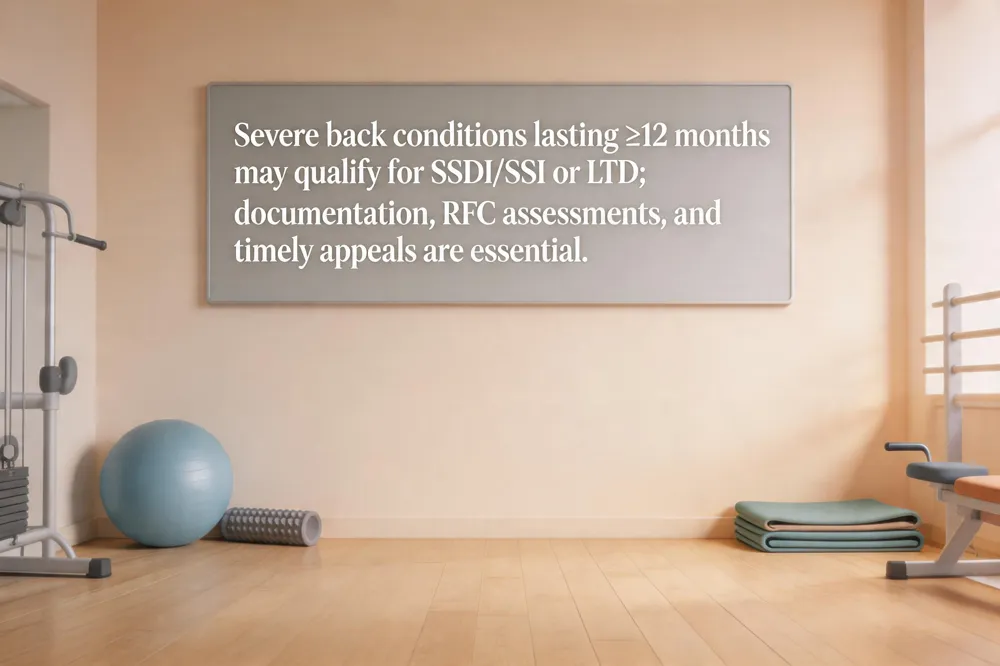 A severe back condition that keeps you from working for at least 12 months can qualify for Social Security Disability Insurance (SSDI) or Supplemental Security Income (SSI). The SSA relies on a Residual Functional Capacity (RFC) assessment and the “Blue Book” spinal listings (e.g., degenerative disc disease, spinal stenosis). Objective evidence—MRI, CT, X‑ray, specialist notes—must show the disorder and its functional limits.
If the pain originated at work, state workers’ compensation rules require a prompt report and a clear causal link to job duties. Benefits can cover medical costs and a portion of lost wages, but eligibility and amounts vary by state.
Employer‑provided long‑term disability (LTD) policies replace 50‑80 % of income when a claimant can no longer perform the essential duties of any occupation. Insurers demand detailed Attending Physician Statements, RFC forms, and often lay statements to substantiate limitations.
Severe back pain disability allowance – Eligibility hinges on documented inability to work for a year, backed by imaging, specialist reports, and a clear RFC showing no capacity for even sedentary work.
Can you go on long‑term disability for back pain? – Yes. Provide objective imaging, a physician‑written functional limits, and consistent daily‑activity logs. An attorney can help gather expert opinions if denied.
Do you have to pay back long‑term disability? – Generally no, unless the policy contains an offset for SSDI or you return to work and receive other benefits; overpayment errors may also trigger repayment.
Best orthopedic doctors in St. Louis – The Orthopedic Spine Institute of St. Louis led by Dr. David S. Raskas, offers conservative and minimally invasive spine care. Other top surgeons include Dr. Ryan Nunley, Dr. Robert Morgan, and Dr. Andrew Thome Jr., all highly rated on Healthgrades.
Documentation and appeal strategies – Keep a chronological record of all imaging, therapies, medications, and pain‑diaries. Submit complete APS/RFC forms, obtain second‑opinion specialist reports, and file appeals within the insurer’s deadline (often 180 days). An experienced disability attorney can streamline the record and represent you before an administrative law judge.
When Surgery Is Necessary and What to Expect
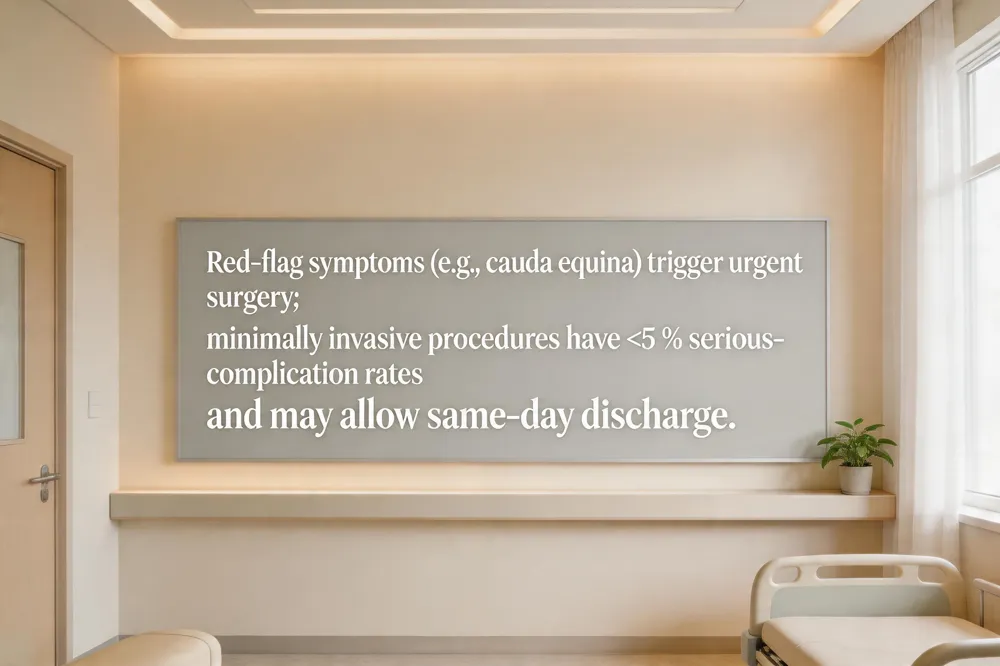 Urgent red‑flag symptoms such as sudden, weakness, loss of bowel or bladder control, acute numbness, or worsening radiculopathy signal that spinal surgery may be required immediately. These signs point to possible cauda‑equina syndrome, spinal epidural abscess, or destabilizing fracture that, if untreated, can cause permanent neurologic damage.
How risky is L4‑L5 surgery? L4‑L5 disc replacement is a minimally invasive procedure with a low serious‑complication rate—generally under 5 % when performed by experienced surgeons. Risks include infection, bleeding, anesthesia reactions, implant wear or loosening, and potential nerve irritation that may cause temporary numbness or pain. Individual risk varies with age, bone quality, and overall health, so a detailed discussion with a spine specialist is essential.
Can you go home the same day of spinal fusion? Same‑day discharge is possible after minimally invasive fusion when blood loss is minimal and pain is well‑controlled. Traditional open fusions typically require an overnight stay for monitoring and graft stability. Patient health, number of levels fused, and anesthesia type dictate discharge timing.
What is the best hospital in the US for spinal surgery? Cedars‑Sinai Hospital in Beverly Hills, CA consistently ranks at the top for spinal‑surgery outcomes, with cutting‑edge minimally invasive technology and a celebrated team led by Dr. Ehsan Saadat. Its reputation makes it the premier choice for patients seeking the highest level of spine care.
Choosing the Right Spine Center and Provider
 When back or neck pain threatens your ability to work, selecting a spine center that blends rapid access, evidence‑based care, and strong patient outcomes is critical. Below are concise answers to the most common queries that help you compare regional specialists and navigate insurance.
Hoag Spine Institute The Hoag Spine Institute in Orange County, CA, is a multidisciplinary hub that starts with conservative therapy and escalates to minimally invasive surgery when needed. Board‑certified neurosurgeons, pain specialists, and rehab experts provide advanced imaging, interventional pain management, and specialized programs for scoliosis and tumors. Online portals streamline insurance capture and symptom reporting, emphasizing a patient‑first, results‑driven approach.
Restore Orthopedics and Spine Center Located in Orange, CA, Restore offers urgent orthopedic care, on‑site EOS imaging, and a full spectrum from non‑operative treatment to minimally invasive surgery. The practice’s patient‑first philosophy is supported by a state‑of‑the‑art outpatient surgery center and acceptance of most major insurance plans.
UCI Spine Center An academic‑affiliated center, UCI unites neurosurgery, orthopaedics, neuroradiology, physiatry, and rehabilitation. Leaders Dr. Nitin Bhatia and Dr. Michael Oh oversee minimally invasive, robot‑assisted procedures and comprehensive non‑surgical options, all coordinated through a single multidisciplinary team.
Dr. Raskas reviews Dr. David Raskas, MD, holds a 3.7‑star Healthgrades rating (30 reviews). Patients commend his communication, conservative‑first strategy, and quiet clinical environments, though isolated negative experiences remind us to assess fit personally.
Orthopedic spine specialist An orthopedic spine specialist has extensive training in spine surgery and conservatively treats disc disease, stenosis, radiculopathy, and deformities. At the Orthopedic Spine Institute of St. Louis, Dr. Raskas’s team uses a patient‑first model, starting with physical therapy and injections before minimally invasive surgery, and offers robust insurance navigation.
Spine specialist Orange County Orange County boasts experts like Dr. S. Samuel Bederman (Restore Orthopedics) and Dr. Vivek Babaria (Newport Beach), both offering cutting‑edge minimally invasive and regenerative therapies, extensive insurance acceptance, and streamlined scheduling portals.
Patient Success Stories and Practical Tips for Long‑Term Health
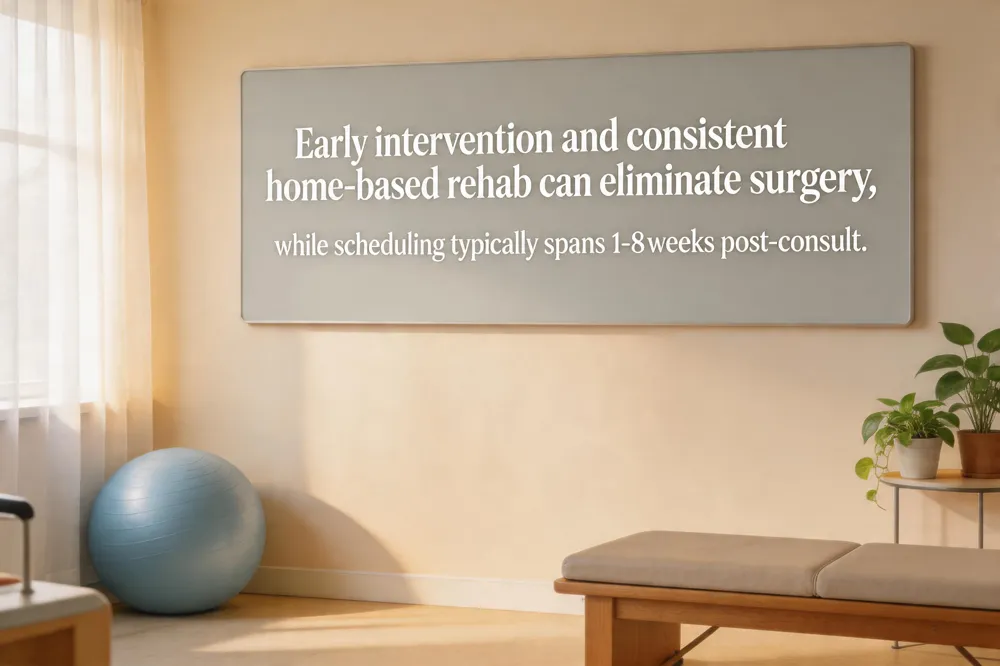 Early, same‑week spine appointments, as the St. Louis Orthopedic Spine Institute and Providence Saint John’s Health Center demonstrate, cut the risk of chronic disability by 30‑40% and get patients back to work faster.
How I cured my lower back pain at home – I began a twice‑daily routine of knee‑to‑chest, rotational, bridge, and cat‑stretch exercises, added daily walking and gentle yoga, and used posture supports (a rolled towel under the pelvis). Alternating 20‑minute ice and heat packs and occasional OTC NSAIDs kept inflammation in check. Within weeks the pain receded, and I avoided surgery.
How far out are orthopedic surgeries scheduled? – After the initial consult, surgery is typically booked 2 weeks to 2 months later, depending on surgeon availability and insurance authorization. The care team submits a surgery order reviewed in 1‑3 business days; once approved, the scheduling team offers the next open date, often resulting in a total wait of 1‑8 weeks.
How many days a week does an orthopedic doctor work? – Most orthopedic surgeons work five days a week, splitting time between clinic (3‑4 days) and operating room or on‑call duties (1‑2 days).
Top 10 back surgeons in St. Louis, MO – Dr. Brian Neuman, Dr. Robert Morgan, Dr. Michael Reiter, Dr. Swastik Sinha, Dr. Ian Dorward, Dr. Munish Gupta, Dr. Diana Douleh, Dr. Mark Lambrechts, Dr. Tobias Mattei, and Dr. R Adams Cowley II are board‑certified specialists known for comprehensive evaluation, minimally invasive techniques, and high patient satisfaction.
Take the First Step Today
Taking action now can prevent a painful back condition from becoming a disabling, long‑term problem. Schedule a same‑week spine appointment at our center and receive rapid diagnostic imaging, a focused physical exam, and a personalized treatment plan within days of symptom onset. Early evaluation lets us determine whether conservative care—targeted physical therapy, NSAIDs, injections, and activity modification—will relieve your pain, or if minimally invasive surgery such as microdiscectomy or robot‑assisted fusion is indicated. By addressing the issue promptly, you protect your ability to work and avoid the costly, prolonged disability benefits that can erode your income and savings. Our multidisciplinary team coordinates with workers’ compensation, Social Security, and long‑term disability insurers to document your condition and support your claim. Don’t wait for the pain to dictate your future; contact us today and secure both your health and financial stability. Call now to start your path toward pain‑free living and peace of mind.