Why Selecting the Right Spine Clinic Matters
Choosing a spine clinic is not just about finding a surgeon; it is about entering a care ecosystem that puts the patient’s goals at the center of every decision. A patient‑first philosophy means the team listens to your concerns, explains the diagnosis in plain language, and tailors a treatment plan that aligns with your lifestyle and recovery expectations. This approach is reinforced by a conservative‑first treatment strategy—most clinics, including the Orthopedic Spine Institute of St. Louis, begin with activity modification, physical therapy, medication management, and injections before suggesting surgery. When surgery becomes necessary, it is performed by board‑certified, fellowship‑trained surgeons who have completed a dedicated year of spine‑focused training and regularly perform high‑volume, minimally invasive procedures, which are linked to lower complication rates and faster returns to function. The multidisciplinary team—spine surgeons, physiatrists, pain specialists, physical and occupational therapists, and social workers—coordinates care so that imaging, diagnostics, and postoperative rehabilitation occur seamlessly under one roof. Access to advanced diagnostic tools such as high‑resolution 3‑D MRI, 3‑D modeling, and electro‑diagnostic studies ensures an accurate diagnosis, while minimally invasive technologies (robotic guidance, endoscopic techniques, percutaneous fusion) reduce incision size, blood loss, and hospital stay. Together, these elements create a safer, more efficient, and ultimately more satisfying spine‑care experience that maximizes the chance of lasting pain relief and functional recovery.
Evaluating Clinic Reputation and Surgeon Expertise
 National rankings and honors
Mayo Clinic consistently ranks among the top U.S. hospitals for spine care, earning a place on U.S. News & World Report’s Honor Roll. Cedars‑Sinai, Emory, UCSF, and Brigham and Women’s also lead national rankings, reflecting superior outcomes, research activity, and patient safety.
National rankings and honors
Mayo Clinic consistently ranks among the top U.S. hospitals for spine care, earning a place on U.S. News & World Report’s Honor Roll. Cedars‑Sinai, Emory, UCSF, and Brigham and Women’s also lead national rankings, reflecting superior outcomes, research activity, and patient safety.
Surgeon volume and specialty focus High‑volume surgeons—those performing >150 spine cases annually—show lower complication rates. At Orthopedic Spine Institute (OSI) in St. Louis, Dr. David S. Raskas and his team regularly conduct minimally invasive procedures, achieving outcomes comparable to elite academic centers.
Multidisciplinary collaboration Best practices involve coordinated teams of spine surgeons, neuroradiologists, pain specialists, and therapists. Mayo Clinic’s multidisciplinary model and OSI’s integrated care pathway ensure that every patient receives a personalized, evidence‑based plan.
Advanced imaging and technology State‑of‑the‑art 3‑D MRI, robotic guidance, and electrodiagnostic labs enable precise diagnosis and targeted surgery. Board‑certified neuroradiologists at Mayo interpret high‑resolution images, while OSI offers on‑site MRI and CT for rapid treatment planning.
Patient‑first care models Both Mayo and OSI prioritize conservative care first, reserving surgery for cases that fail non‑surgical measures. Early mobilization, transparent billing, and secure online portals empower patients throughout recovery.
Spine Centers of america Spine Centers of America operates a network of patient‑first clinics across FL, MO, and KS, offering conservative therapies and minimally invasive surgery with free MRI reviews and easy online scheduling.
Best Hospital for spine Cedars‑Sinai leads U.S. News rankings; however, the Orthopedic Spine Institute of St. Louis provides comparable minimally invasive expertise close to home.
Top rated neurosurgeons in St Louis MO Castle Connolly lists Dr. Joshua L. Dowling, Dr. Jennifer M. Strahle, and others as elite neurosurgeons; OSISTL’s private team also delivers high‑quality spine care.
Best spine surgeons in St Louis MO Dr. David S. Raskas (OSI), Dr. Jacob M. Buchowski (Washington Univ.), and Dr. Benjamin Crane are among the region’s most respected surgeons.
Spine surgical Center OSI’s Orthopedic Spine Institute offers board‑certified, minimally invasive surgery within a fully accredited, patient‑first framework, guiding patients from diagnosis to recovery with coordinated support.
Preparing for Your First Consultation
 Gather imaging and medical records – Before your appointment, bring any recent MRI, CT, or X‑ray studies (within the past two years) and a complete list of past treatments, medications, and health conditions. This lets the specialist pinpoint the problem quickly.
Create a symptom diary – Document pain location, intensity, triggers, numbness, and how symptoms affect daily activities. A diary helps the clinician match your experience to imaging findings.
Discuss insurance and costs – Verify that the clinic accepts your plan, ask about pre‑authorization, and request an estimate of out‑of‑pocket expenses. Most centers, including the Orthopedic Spine Institute of St. Louis, have billing staff to guide you.
Key questions to ask the specialist
Questions to ask before visiting a spine specialist near Naperville, IL – Ask what is causing your pain, whether imaging is needed, all treatment options (including non‑surgical), the surgeon’s experience and success rates, insurance coverage, and pre‑operative steps such as weight loss or smoking cessation.
Questions to ask before visiting a spine specialist near Chicago, IL – Inquire if your symptoms match a specific condition, what non‑surgical therapies have been tried, the surgeon’s volume and outcomes for your diagnosis, the recommended plan, risks, costs, and preparatory measures (medication adjustments, lifestyle changes).
Questions to ask a spine specialist – Clarify the pain source, compare non‑surgical and surgical options, learn the surgeon’s procedural experience, understand risks and recovery timeline, and discuss insurance, total costs, and post‑operative support.
Pre‑operative optimization steps – Achieve a healthy weight, manage diabetes (A1C ≤ 7.5), quit smoking, and engage in pre‑hab exercises to lower complications and improve surgical success.
Understanding Treatment Options and Surgical Risks
 Choosing between conservative care and surgery begins with a trial of activity modification, physical therapy, pain medication and injections; only when these fail and symptoms threaten neurological function do most spine surgeons recommend an operation. Minimally invasive techniques—micro‑discectomy, endoscopic decompression, percutaneous fixation—use small incisions, less blood loss and faster mobilization, but they are suitable for specific diagnoses such as herniated discs, lumbar stenosis or degenerative spondylolisthesis. Each procedure has its own indications, success rates and potential complications (infection, nerve injury, blood clots, hardware failure). Surgeons mitigate risks by optimizing body weight, A1C ≤ 7.5, and smoking cessation, and by planning early ambulation to shorten hospital stays. Recovery timelines vary: discectomy may allow light activity in weeks, while fusion often requires 3‑4 months before full return to work. Activity restrictions include limited lifting, twisting, and stair climbing until cleared.
Questions to ask a neurosurgeon about herniated disc
- How many discectomies have you performed and your success/complication rates?
- Which nonsurgical treatments have we exhausted and why is surgery next?
- Describe the step‑by‑step, minimally invasive discectomy plan.
- What common risks (infection, nerve injury, re‑herniation) and how can I lower them?
- What is the chance of repeat herniation and preventive postoperative measures?
Things I wish I knew before spinal fusion surgery
- Most back pain can be managed conservatively; surgery is a last resort.
- Smoking, obesity and diabetes dramatically affect candidacy and healing.
- Recovery includes short walks, strict medication schedules, and avoiding baths until incisions heal.
- Ask detailed questions about procedure, complications and realistic timelines.
After spine surgery Q&A
- Discectomy heals in weeks; fusions need 3‑4 months.
- Avoid driving for ≥2 weeks; arrange home help, clear hazards.
- Pain meds taper after 1‑2 weeks; monitor for constipation.
- Follow surgeon‑approved activity restrictions and wound‑care.
Can you walk up stairs after spinal stenosis surgery?
- Avoid stairs for 4‑6 weeks; use a handrail; resume gradually once cleared.
Can you sit in a recliner after a laminectomy?
- Limit sitting to 20 min/hr for first 3 weeks; no bending/twisting.
What can you never do again after back surgery?
- No heavy lifting (>10‑15 lb), repetitive twisting, high‑impact sports, or prolonged poor‑posture sitting.
Insurance, Costs, and Financial Planning
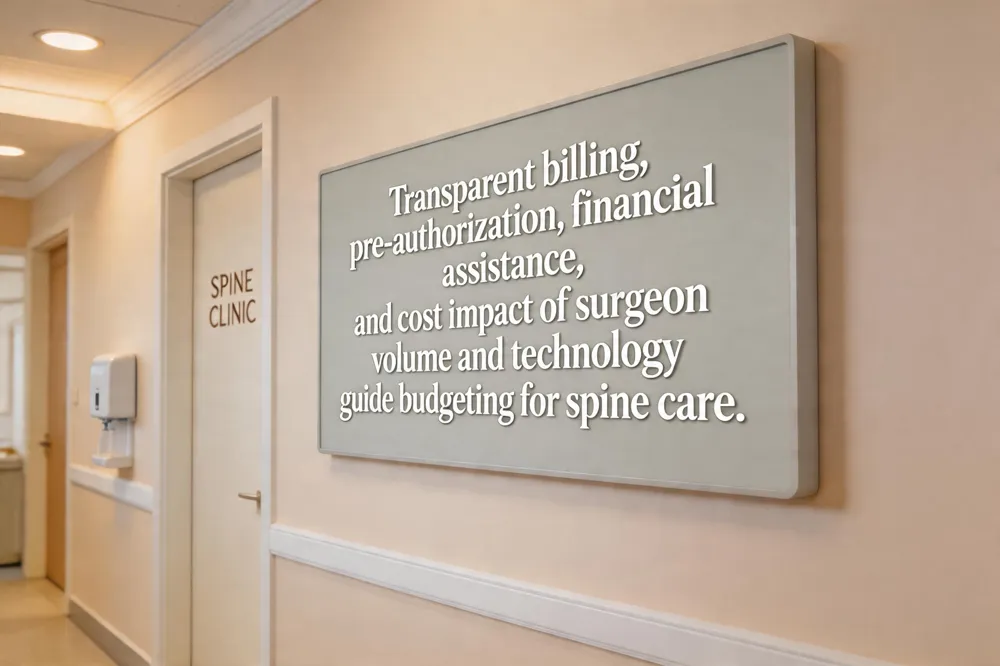 Insurance verification and pre‑authorization
Before any procedure, our billing team confirms that your health plan covers the recommended imaging, physical‑therapy trials, and the potential surgery. We handle all prior‑authorization paperwork so you won’t face surprise denials.
Insurance verification and pre‑authorization
Before any procedure, our billing team confirms that your health plan covers the recommended imaging, physical‑therapy trials, and the potential surgery. We handle all prior‑authorization paperwork so you won’t face surprise denials.
Transparent billing and out‑of‑pocket estimates We provide a clear, itemized estimate that separates the costs of conservative care (therapy, injections, imaging) from surgical fees. This lets you compare the financial impact of a non‑surgical pathway versus a minimally invasive operation.
Financial assistance programs For patients who qualify, we offer sliding‑scale discounts, payment plans, and referrals to charitable assistance programs that can offset co‑pays and deductible expenses.
Cost considerations for conservative vs surgical care While conservative treatment may require multiple visits and therapies, it often avoids the higher upfront costs of surgery. However, when surgery is indicated, minimally invasive techniques—such as those performed by Dr. David S. Raskas—reduce hospital stays and postoperative expenses.
Impact of surgeon volume and technology on cost High‑volume surgeons who specialize in a specific spine condition and use advanced robotics or 3‑D imaging achieve better outcomes with fewer complications, ultimately lowering overall costs.
Spine surgical Center The Orthopedic Spine Institute of St. Louis is a premier spine surgical center that puts patients first, beginning with conservative, non‑operative treatments and progressing to minimally invasive surgery only when necessary. Our board‑certified team, led by Dr. David S. Raskas, utilizes state‑of‑the‑art technology to address back, neck, and sciatica pain with precision and safety. We offer personalized care plans, comprehensive follow‑up, and a seamless, coordinated experience from diagnosis through recovery. The center is fully accredited, ensuring that every procedure meets the highest national standards for quality and patient outcomes. Schedule an appointment today to discover how our expertise can restore your spine health and improve your quality of life.
Mayo clinic spine referral Mayo Clinic accepts spine referrals through its Referring Physician Service. Physicians can call the regional referral line—Phoenix/Scottsdale, AZ: 866‑629‑6362 (or 480‑301‑7085), Jacksonville, FL: 800‑634‑1417 (or 904‑953‑0321), or Rochester, MN: 800‑533‑1564—to arrange a telephone consultation or send a fax. International providers may use +1 507‑738‑4021. Referrals are accepted Monday‑Friday during normal business hours for each time zone. Patients do not need a referral to schedule an appointment directly with a Mayo Clinic spine specialist.
Best back and spine doctors The best back and spine doctors are board‑certified orthopedic specialists who blend conservative, patient‑first care with expertise in minimally invasive surgery. At the Orthopedic Spine Institute of St. Louis, Dr. David S. Raskas is widely recognized for his comprehensive treatment of back, neck, and sciatica pain. He emphasizes personalized, evidence‑based plans, starting with physical therapy and medication before recommending surgery only when it will improve outcomes. His extensive experience in both non‑surgical and advanced surgical techniques, combined with a reputation for compassionate communication, makes him a top choice for spine care in the region. Patients consistently report high satisfaction and successful recovery under his guidance.
Spine Group Alabama Spine Group Alabama is a conservative comprehensive spine center located at 10 Old Montgomery Hwy #200 in Homewood, Alabama. It is led by board‑certified physiatrist Dr. Mark Downey (along with Dr. Alex Cotter), who specialize in diagnosis, non‑surgical treatment and fluoroscopic spinal injections for cervical, thoracic and lumbar conditions. The facility offers advanced diagnostics, hands‑on spine therapy, and a variety of nonsurgical options such as physical therapy, epidural steroid injections and regenerative medicine. Patients appreciate the comfortable setting, ample parking and the practice’s partnership with Fyzical Therapy for conservative care. Appointments can be scheduled by calling the office or through their website, and the clinic accepts most insurance plans.
Ortho Sports Trussville doctors OrthoSports Associates in Trussville, Alabama, is staffed by a team of orthopedic specialists covering sports medicine and joint care. The physicians include Dr. Jerry V. Ambrosia, Dr. Michael Clark, Dr. Yvonne Conway, Dr. F. Spain Hodges, Dr. Grady E. Maddox, Dr. Michael G. Martin, Dr. James Thomas, Dr. Gwen V. Williams, and Dr. David Woods. Each doctor focuses on areas such as sports‑related injuries, shoulder and knee reconstruction, foot and ankle surgery, minimally invasive spine procedures, and peripheral nerve care. Patients can schedule appointments by calling the office at 205‑838‑3090. The clinic’s address is 5850 Valley Road, Suite 110, Birmingham, AL 35235.
Local Clinics and Specialty Providers: Matching Your Needs
 Ortho Alabama Spine & Sports
OrthoAlabama Spine & Sports serves Birmingham, Hoover, Pell City and surrounding areas with a patient‑focused, multidisciplinary team of board‑certified specialists (e.g., Dr. Bradly Goodman, Dr. Srinivas Mallempati). They offer conservative treatments, advanced reparative therapies such as PRP and stem‑cell injections, and minimally invasive options like Intracept® low‑back pain. A walk‑in clinic handles acute orthopedic injuries, and a 24/7 virtual scheduling assistant simplifies appointment booking. Call (205) 228‑7600 or schedule online for a personalized, evidence‑based plan.
Ortho Alabama Spine & Sports
OrthoAlabama Spine & Sports serves Birmingham, Hoover, Pell City and surrounding areas with a patient‑focused, multidisciplinary team of board‑certified specialists (e.g., Dr. Bradly Goodman, Dr. Srinivas Mallempati). They offer conservative treatments, advanced reparative therapies such as PRP and stem‑cell injections, and minimally invasive options like Intracept® low‑back pain. A walk‑in clinic handles acute orthopedic injuries, and a 24/7 virtual scheduling assistant simplifies appointment booking. Call (205) 228‑7600 or schedule online for a personalized, evidence‑based plan.
Ortho Alabama Trussville The Trussville office (5850 Valley Road, Suite 110, Birmingham, AL 35235) provides the same full‑service orthopedic and sports‑medicine care, including same‑day acute injury treatment and minimally invasive spine procedures. Fellowship‑trained physicians tailor care plans, and patients can request appointments online or by phone (205) 228‑7600.
Ortho Spine and Sports Trussville, AL In Trussville, the practice delivers comprehensive orthopedic and sports‑medicine services, ranging from physical therapy and pain management to innovative Intracept® and minimally invasive spine surgery. A virtual assistant (24/7) and walk‑in service ensure convenient access. Call (205) 228‑7600 to start the treatment journey.
St. Louis Spine and Orthopedic Surgery Center This center offers same‑day outpatient spine procedures using minimally invasive techniques (microdiscectomy, endoscopic decompression, lumbar fusion) for degenerative disc disease, spinal stenosis, and more. Board‑certified surgeons—Dr. Robert A. Morgan, Dr. Kurt Eichholz, Dr. Peter Sylvester, Dr. Todd Stewart—provide personalized care with transparent billing and pre‑registration to eliminate overnight hospital stays.
Ortho Sports Photos The OrthoAlabama website showcases professional headshots of doctors like Dr. Bradly Goodman, patient images, and vibrant photos of physical‑therapy areas, highlighting modern facilities, expert staff, and a commitment to active recovery.
Your Next Steps Toward Better Spine Health
Choosing the right spine clinic is a critical first move toward lasting relief. A practice that prioritizes a patient‑first philosophy, offers a multidisciplinary team, and uses the latest minimally invasive technology—such as the Orthopedic Spine Institute of St. Louis—provides the safest, most effective pathway to recovery. Use the checklist of essential questions—ranging from your exact diagnosis and non‑surgical alternatives to the surgeon’s experience with the specific procedure, realistic outcomes, and postoperative support—to gauge whether a clinic meets these high standards. The Institute’s resources, including secure online intake forms, a dedicated Spine Journey Guide, on‑site advanced imaging, and a coordinated care team that handles insurance navigation, physical‑therapy referrals, and home‑care planning, make the entire process transparent and convenient. When you’re ready, schedule a confidential consultation either through the Institute’s secure patient portal or by calling their dedicated line. Taking these steps now puts you in control of your spine health, ensures you receive evidence‑based care, and moves you closer to a pain‑free future.