
Why SI Joint Pain Needs Careful Assessment
Pain in the lower back, buttock, or hip can sometimes come from the sacroiliac (SI) joints, which connect the base of the spine to the pelvis. But these symptoms can also arise from the hip, lumbar spine, or other conditions, so pain location alone cannot confirm the cause.
A careful assessment considers your symptoms, medical history, and physical examination. The clinician may also check for other possible sources of pain before recommending treatment. This matters because an approach suited to one cause may not help another.
Care often starts with conservative measures, such as guided exercise or medication when appropriate. At osistl.com, care for back and related pain begins conservatively, with minimally invasive surgery considered when appropriate. The right plan depends on the diagnosis, symptoms, and response to care; no single treatment is best for everyone.
Recognizing Symptoms and Possible Causes
 SI joint pain often feels like an ache or sharper pain near the lower back or buttock, usually on one side but sometimes on both. It may spread toward the hip, groin, thigh, or leg. Stiffness can also occur, particularly after staying in one position.
Stairs, prolonged sitting or standing, lying on the affected side, and turning in bed may aggravate symptoms. These patterns are clues, not proof: SI joint pain can resemble problems involving the hips, spine, or surrounding muscles. A clinical review notes that these overlapping symptoms make assessment important, and that pain location alone does not establish the source. American Family Physician’s review of SI joint dysfunction discusses these patterns and possible look-alike conditions.
Possible contributors include a fall or other injury, repeated loading or twisting, pregnancy-related changes, osteoarthritis, and inflammatory disorders such as ankylosing spondylitis. Joint movement may also be too limited or too great, affecting how forces pass between the spine and pelvis. Infections are a less common possibility and need medical assessment.
Because similar symptoms can arise from several conditions, clinicians consider the person’s history and examine the spine, hips, and pelvis rather than assuming the SI joint is responsible. At osistl.com, care for back and sciatica pain starts conservatively, with minimally invasive surgery considered when appropriate. For more on how symptoms may present, see common SI joint syndrome symptoms.
How Clinicians Identify the Pain Source
 Because SI joint symptoms can resemble problems in the lower back or hips, clinicians look for evidence rather than relying on pain location alone. At osistl.com, care begins conservatively and includes evaluation by a spine specialist, with attention to the spine, pelvis, and hips.
A medical history and physical examination help assess when symptoms began, what movements affect them, and whether another condition could explain the pain. Clinicians may also check for warning signs, such as fever, unexplained weight loss, a history of cancer, or changes in bowel or bladder function. The American Family Physician review of SI joint dysfunction emphasizes considering other possible causes as part of assessment.
The review describes a cluster of five maneuvers that stress the SI joint: Gaenslen, thigh thrust, distraction, compression, and sacral thrust. If three or more reproduce a person’s familiar pain, that supports SI joint dysfunction, but does not prove it. The tests depend on proper technique and should be interpreted alongside the rest of the examination.
Imaging has a supporting role, not a definitive one. X-rays may show joint damage, and MRI, CT, or bone scans may help assess other conditions, but these scans do not reliably establish the SI joint as the source of pain.
When appropriate, an image-guided injection of local anesthetic into the joint can provide further diagnostic evidence: temporary pain relief supports the SI joint as a likely source. Clinicians may consider this when conservative care has not helped or before planning an intervention. For an overview of the SI joint injection procedure, see Cedars-Sinai’s patient guidance.
Conservative Care and Everyday Movement
When the SI joint is identified as a likely pain source, care commonly starts with a plan tailored to the person rather than a single standard exercise routine. Education, adjusting activities that trigger symptoms, physical therapy, and suitable stretching and strengthening can work together as conservative care. The American Family Physician review of SI joint dysfunction describes this multimodal approach.
A physical therapist can assess movement and strength, then choose exercises to address pelvic stability, flexibility, posture, and the muscles supporting the lower back and hips. Depending on the person, that may include core and glute strengthening, gentle stretches, and practice moving through daily tasks with less strain. At Orthopedic Spine Institute of St. Louis, care begins conservatively, with minimally invasive surgery considered only when appropriate.
Walking may help some people stay active, but it is not automatically right for every cause or level of pain. If comfortable, try a short, easy walk on even ground and increase gradually only if symptoms do not worsen. Do not push through increasing pain. A clinician or physical therapist can help set safe activity goals.
At home, consider modifying painful activities, maintaining a comfortable posture, resting when needed, and alternating ice and heat. Sitting and sleeping adjustments are personal: supportive seating, regular position changes, or a pillow between the knees may feel helpful, but stop any change that aggravates symptoms. These measures do not replace an assessment when pain persists.
Ease off or change an exercise if it worsens pain or causes new symptoms; seek professional guidance if symptoms are severe or continue. The Kaiser Permanente SI joint exercise guide also advises starting slowly and following a clinician’s direction about which movements are suitable.
Adapting Activities and Medicines
If a movement reliably worsens SI joint pain, modify it or pause it temporarily rather than pushing through. The right adjustments depend on the person and the cause of pain, so there is no universal list of exercises everyone must avoid.
High-impact activity, heavy lifting, or twisting may be triggers for some people. A clinician or physical therapist can help identify aggravating movements and suggest suitable alternatives. Return to activity gradually as symptoms allow, and seek an assessment if pain persists or limits daily tasks. This approach also applies when adapting activity during back-pain recovery.
Medication may be one part of a broader plan. Nonsteroidal anti-inflammatory drugs (NSAIDs) may be appropriate for some people, but a clinical review does not establish them as superior to other treatments for SI joint dysfunction. A clinician can weigh possible benefits against health history and medication risks (American Family Physician review).
When muscle spasms accompany sacroiliitis, a clinician may consider a muscle relaxant such as cyclobenzaprine. It may ease spasms, but it does not address every possible cause of SI joint pain. Medication choices should be discussed with a healthcare professional, especially when other medicines or health conditions are involved (Mayo Clinic guidance on sacroiliitis treatment).
At Orthopedic Spine Institute of St. Louis, care starts conservatively and may include medication management and tailored physical therapy before minimally invasive surgery is considered when appropriate.
When an SI Joint Injection Is Considered
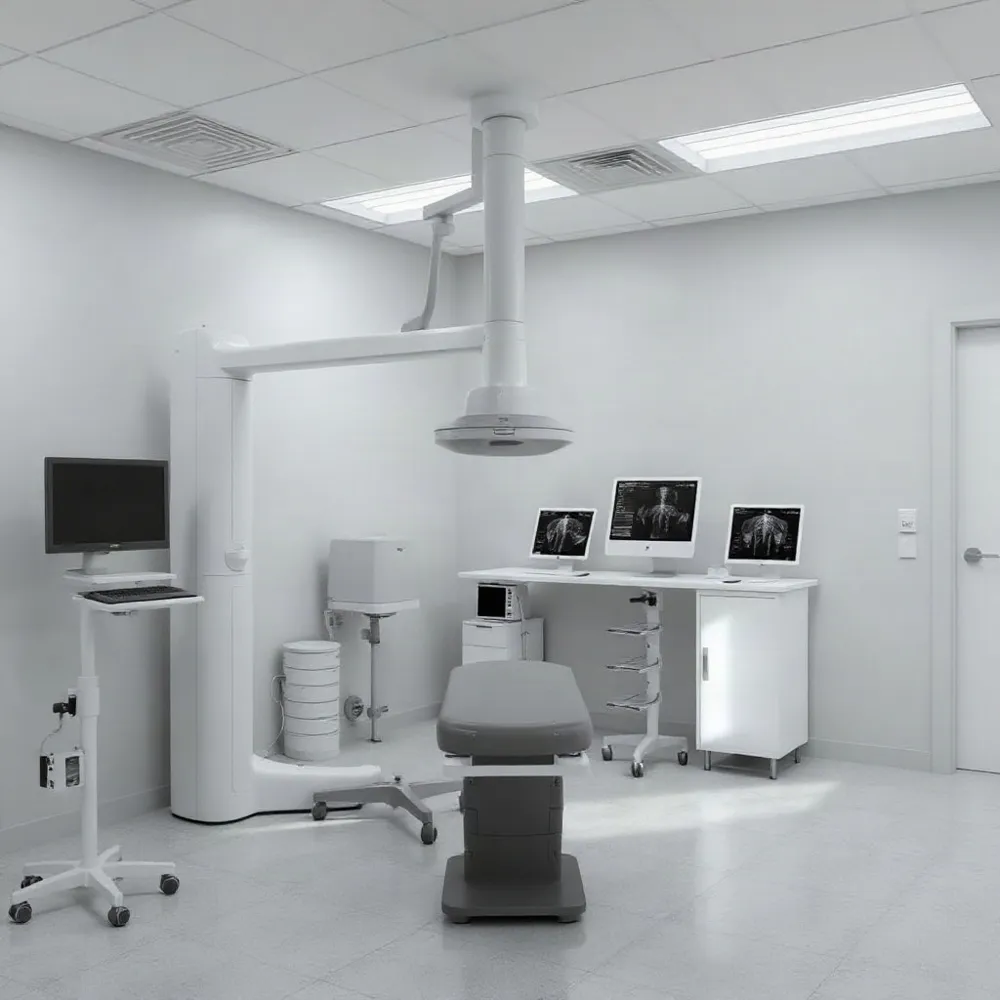 An injection may be discussed when examination and other findings point to the sacroiliac (SI) joint, particularly if conservative care has not helped enough. It can serve two different purposes: a diagnostic injection uses local anesthetic to test whether numbing the joint eases familiar pain, while a therapeutic injection may add corticosteroid to reduce inflammation. These are related but distinct goals, so ask which type is being proposed and what the result would mean for your care. You can read more about when an SI joint injection is considered.
For the procedure, you usually lie face down while the skin is cleaned and numbed. The clinician guides a thin needle toward the joint using imaging, such as X-ray guidance, and may use contrast dye to check its position before injecting medication. You may feel a brief sting from the numbing medicine or pressure during the injection. Monitoring follows; Cedars-Sinai describes a typical observation period of about 30 to 60 minutes. Follow your clinician’s instructions about preparation, medicines, activity, and arranging a ride home, especially if sedation is planned. Cedars-Sinai’s SI joint injection guide explains the steps and precautions.
The anesthetic may ease pain for a short time, then wear off. If the injection includes a steroid, its effect may take several days to begin, and relief varies in both degree and duration. A small observational study reported improvements in pain and function after injection, including at six-month follow-up, but its limited size means those results cannot predict an individual response. An injection is one option, not a guaranteed cure. The study’s findings and limitations are worth discussing with your clinician.
Temporary soreness, a brief pain flare, or short-lived leg numbness or weakness can occur. Steroids may also briefly raise blood sugar or cause facial flushing. Less common risks include infection, bleeding, nerve injury, and an allergic reaction. Tell the clinician about diabetes, allergies, infection, and blood-thinning medicines, and do not change medications unless instructed. Seek medical advice for fever, worsening redness or drainage, or significant new weakness.
At Orthopedic Spine Institute of St. Louis, care starts conservatively, with minimally invasive surgery considered when appropriate. A discussion of injection risks, possible benefits, and alternatives can help place the procedure within an individualized plan.
Options When Symptoms Persist
If an injection brings little or no relief, that is a reason to revisit the diagnosis, not proof that the SI joint needs a more invasive treatment. An evaluation may reconsider the injection findings and check for other sources, including lumbar-spine or hip conditions. The American Family Physician review of SI joint dysfunction notes that these conditions can produce similar symptoms.
Care may return to or adjust physical therapy, activity changes, and medication when appropriate. At Orthopedic Spine Institute of St. Louis, treatment begins conservatively, with minimally invasive procedures considered when appropriate. Radiofrequency ablation may be discussed for selected patients after the SI joint has been identified as the likely source and less invasive care has not provided enough relief.
SI joint fusion is a later option, not a first step. A spine specialist may discuss it when the diagnosis is supported and symptoms persist despite conservative care and less invasive interventions. The decision depends on examination findings, overall health, and previous treatment.
Some people recover fully, while others have ongoing or recurring pain. The outlook depends on the underlying cause and whether the SI joint is truly responsible, so follow-up with a clinician can help guide the next treatment choice.
Choose Care Based on the Cause
SI joint pain can resemble problems in the spine or hip, so treatment should follow careful assessment rather than symptoms alone. Care at osistl.com begins conservatively, with minimally invasive surgery considered when appropriate.
For persistent or activity-limiting pain, seek a clinician’s evaluation to review possible causes and discuss options suited to your health and goals. No single treatment fits everyone, and outcomes vary.