Introduction to Epidural and Facet Injections
Overview of Epidural and Facet Injections
Epidural and facet injections are minimally invasive treatments aimed at alleviating spine-related pain. Epidural injections deliver steroids and anesthetics into the epidural space around spinal nerves to reduce inflammation. Facet injections target small facet joints in the spine, injecting steroids and anesthetics to relieve joint pain.
Purpose in Back and Neck Pain Management
Both injections serve diagnostic and therapeutic roles. Epidural injections primarily address nerve-related pain from conditions like sciatica and spinal stenosis, while facet injections focus on pain caused by arthritis or injury to the facet joints.
Common Conditions Treated
Epidural injections are used for herniated discs, spinal stenosis, and nerve compression. Facet injections treat arthritis, degenerative disc disease, and inflammation within facet joints. These procedures help reduce pain, improve mobility, and may delay or avoid surgery.
Key Facts: Spinal Injections and Pain Management
- Facet injections precisely target small spinal joints and treat joint-related pain.
- Epidural injections deliver steroids into the epidural space to reduce nerve inflammation.
- Success rates for facet joint injections reach up to 80%, especially with proper patient selection.
- Duration of pain relief from facet injections typically lasts 3 to 6 months, depending on individual factors.
- Epidural steroid injections effectively decrease nerve inflammation and improve mobility in conditions like sciatica.
- Facets injections have both diagnostic and therapeutic roles, confirming source of pain and providing relief.
- Pain relief from facet injections generally lasts several months, often around 3 to 4 months.
- Epidural anesthesia during labor is safe, providing effective pain relief without harming mother or baby.
- Patients on blood thinners like Eliquis must be carefully evaluated to minimize bleeding risks during spinal injections.
- Common side effects of spinal injections are mild and temporary, with rare serious risks like infection or nerve injury.
1. Epidural Injections Target Nerve Pain, While Facet Injections Address Joint Pain
What is the difference between facet injections and epidural injections?
Facet injections are specialized treatments directed into the facet joints, the small synovial joints that connect spinal vertebrae. They primarily treat pain related to arthritis, joint degeneration, or trauma in these joints. This option is often chosen when pain is localized to the spine and does not radiate into the limbs.
In contrast, epidural injections are administered into the epidural space — the area between the dura mater and vertebrae — to directly target inflammation affecting spinal nerves. These injections are indicated for conditions such as sciatica, herniated discs, or spinal stenosis causing nerve compression and resulting in radiating pain down the limbs.
How do treatment choices depend on pain type and location?
Choosing between facet injections and epidural injections depends on the patient's specific symptoms and diagnosis. Facet injections are most effective for axial back or neck pain caused by facet joint problems, while epidurals benefit those with nerve root irritation and radicular symptoms. Neither injection type is universally better; rather, the choice must align with whether the pain stems from joint inflammation or nerve compression to maximize relief and functional improvement.
2. High Success Rates Make Facet Joint Injections a Valuable Option

What is the success rate for facet joint injections?
Facet joint injections boast a success rate of up to 80%, especially when patients are carefully selected based on diagnostic imaging and symptom profiles. This high success rate underscores the effectiveness of these injections in managing spinal pain related to facet joint arthritis and degeneration. For more information, see Facet joint injection treatment.
Patient selection criteria for optimal outcomes
Optimal outcomes are most commonly seen in patients with axial back or neck pain related directly to facet joint issues confirmed through imaging such as MRI or CT scans. Patients who do not have nerve compression symptoms radiating down the limbs are ideal candidates. Proper diagnosis combined with targeted injections increases both pain relief and functional improvements. Additional details on diagnostic facet joint injections and facet joint injection preparation guidelines can be helpful.
Duration of pain relief from facet injections
Pain relief duration varies, with diagnostic injections providing short-term relief around 48 hours. Therapeutically, many patients experience relief lasting 3 to 6 months or longer, which can significantly improve quality of life. For sustained benefit, repeated injections or complementary treatments like radiofrequency ablation for facet pain may be considered. Refer to Duration of pain relief from injections for more information.
3. Epidural Steroid Injections Reduce Nerve Inflammation and Improve Mobility
What are the uses of epidural injections?
Epidural injections are primarily used to reduce pain and inflammation caused by nerve compression from conditions like herniated discs, sciatica, or spinal stenosis.
Mechanism of action of epidural steroid injections
These injections deliver corticosteroids directly into the epidural injections near the spinal cord, surrounding the spinal cord and nerve roots. Steroids reduce inflammation pressing on the nerves, which is often the source of pain.
Conditions treated such as sciatica and spinal stenosis
They effectively treat radicular pain from sciatica pain treatment, lumbar or cervical Treatment for spinal stenosis, disc herniation, and related nerve compression issues.
Role of steroids in decreasing inflammation around nerves
The injected steroids target local inflammation to reduce nerve irritation and swelling. This relief can last from several weeks to months, allowing improved mobility and aiding physical therapy.
Epidural injections are a Minimally invasive epidural space injections guided by imaging techniques such as fluoroscopy and CT scans in epidural injections to ensure precision and safety. Many patients experience significant pain reduction, which can delay or avoid the need for surgery.
4. Facet Injections Provide Both Diagnostic and Therapeutic Benefits
What is the difference between facet joint injections and steroid injections?
Facet joint injections are specifically designed to target the small facet joints in the spine, which are prone to arthritis, inflammation, and injury. These injections combine local anesthetics and corticosteroids to both numb the joint and reduce inflammation directly within the facet joint itself. This approach not only alleviates joint pain but also plays a crucial diagnostic role. When a patient experiences pain relief shortly after the injection, it confirms the facet joint as the pain source.
In contrast, epidural injections focus on reducing inflammation in the epidural space surrounding spinal nerves. This helps relieve nerve-related pain caused by conditions like herniated discs or spinal stenosis.
How do local anesthetics and corticosteroids work in facet joint injections?
Local anesthetics provide immediate, though temporary, pain relief by numbing the affected facet joint area. Corticosteroids, such as cortisone, have a longer-acting effect by decreasing inflammation and swelling in the joint, which helps extend pain relief over weeks or months.
Role in guiding further treatment strategies
Because facet injections can confirm the facet joint as the source of pain, they guide physicians in tailoring further treatment options. For example, if injections provide only temporary relief, patients might proceed to radiofrequency ablation to achieve longer-term pain control. Thus, these injections are valuable tools within a comprehensive pain management plan, helping both diagnose and treat spinal joint conditions effectively.
5. Pain Relief from Facet Injections Typically Lasts Several Months
How long does pain relief from facet joint injections typically last?
Pain relief from facet joint injections generally lasts several months, with many patients experiencing relief for about 3 to 4 months. This duration can vary depending on individual factors and the extent of spinal issues.
When does the relief begin after the procedure?
Relief commonly starts within 3 to 4 days after receiving the injection, though some patients may notice initial effects sooner. Full therapeutic benefits may take up to a week as corticosteroids reduce inflammation in the facet joints.
How can combining injections with physical therapy help?
Pairing facet injections with physical therapy can improve and extend pain-free periods. Physical therapy helps strengthen supporting muscles, improves spinal mobility, and addresses biomechanical factors contributing to pain. This combination supports functional improvement beyond the relief provided by injections alone.
6. Epidural Anesthesia During Labor is Safe and Provides Effective Pain Control
What is the effect of epidural anesthesia during labor?
Epidural anesthesia uses offer effective pain relief during labor by numbing sensations from the belly button down to the legs.
This is achieved by delivering local anesthetics through a catheter placed near the spinal cord. The medication typically begins working within 15 minutes, allowing the mother to remain awake and aware but free from the intense pain of contractions.
Onset and scope of numbness
Epidurals block pain without causing complete numbness or paralysis. This means mothers can move their legs to some extent and participate actively during labor. The anesthetic effect focuses on the lower body region, providing targeted relief from labor pain without affecting other parts of the body.
Safety for mother and baby during labor
Epidural anesthesia is among the safest pain relief methods during childbirth. Research shows it does not harm the baby or increase risks of cesarean delivery. Most women are eligible unless they have specific conditions like bleeding disorders. Side effects for the mother are minimal, and serious complications are extremely rare, making epidurals a trusted choice for managing labor pain effectively.
7. Blood Thinners Like Eliquis Require Special Consideration Before Spinal Injections
Can people take spinal injections while on Eliquis (a blood thinner)?
Blood thinners such as Eliquis (apixaban) increase the risk of bleeding complications during spinal injections. This heightened bleeding risk can lead to hematoma formation near the spinal cord or nerve roots, potentially causing nerve compression and serious neurological issues.
Risks of bleeding complications with anticoagulants
Patients on anticoagulants face a greater chance of bleeding at the injection site. Even minor bleeding can result in pressure on sensitive spinal nerves, increasing the risk of complications, including nerve damage and paralysis. For detailed risks and side effects, refer to Epidural injections and Facet joint injections safety and complications.
Precautions and consultation needed before injection
Before administering a spinal injection, it is crucial to thoroughly evaluate the patient's use of blood thinners. Coordination between the prescribing physician and the injection specialist is essential. Often, Eliquis must be temporarily discontinued following specific guidelines to minimize bleeding while maintaining protection against blood clots. Guidance on epidural steroid injection contraindications discusses use restrictions with blood thinners.
Impact on safety and timing of spinal procedures
The timing of spinal injections relative to the last Eliquis dose is carefully planned to enhance patient safety. A delay between stopping the blood thinner and the procedure reduces bleeding risk, while resuming the medication afterward is timed to avoid clot formation. This balancing act demands strict medical oversight. For further information on epidural injection procedure steps and precautions and precautions after epidural administration, please see these resources.
Overall, spinal injections in patients taking Eliquis require individualized treatment plans, expert consultation, and adherence to safety protocols to ensure effective pain relief without compromising patient safety. For a comprehensive overview, see resources on epidural injections for pain relief and facet injections for arthritic spine conditions.
8. Side Effects Are Generally Mild but Awareness is Important for Both Injection Types

Common minor side effects of epidural and facet injections
Both epidural injections and facet joint injections are generally well tolerated, with most patients experiencing only mild and temporary side effects. Common minor reactions include localized soreness, tenderness, swelling, or bruising at the injection site. Facet injections may cause numbness or a steroid flare, where pain temporarily increases for a few days before improvement occurs. Epidural injections sometimes lead to facial flushing, slight appetite increase, or elevated blood sugar, especially in diabetic patients. These minor effects usually resolve without intervention.
Rare but serious risks to watch for
While serious complications are uncommon, they can arise and require prompt attention. For facet injections, risks such as infection, nerve injury, or hematoma are rare when performed under strict sterile conditions and imaging guidance. Epidural injections carry risks like dural puncture, bleeding, nerve damage, or infections, although the likelihood is very low with experienced clinicians. Patients must immediately report severe, prolonged, or unusual symptoms to their healthcare provider to ensure safety.
Importance of sterile technique and imaging guidance
Both procedures rely heavily on sterile technique and the use of imaging tools such as fluoroscopy or CT guidance to precisely target injection sites and minimize complications. Imaging not only improves accuracy but also enhances safety by avoiding critical structures. Adherence to strict procedural protocols and performed by trained specialists significantly reduces risks, ensuring that side effects remain mild and manageable for most patients.
Understanding Treatment Options When Facet Injections Are Ineffective
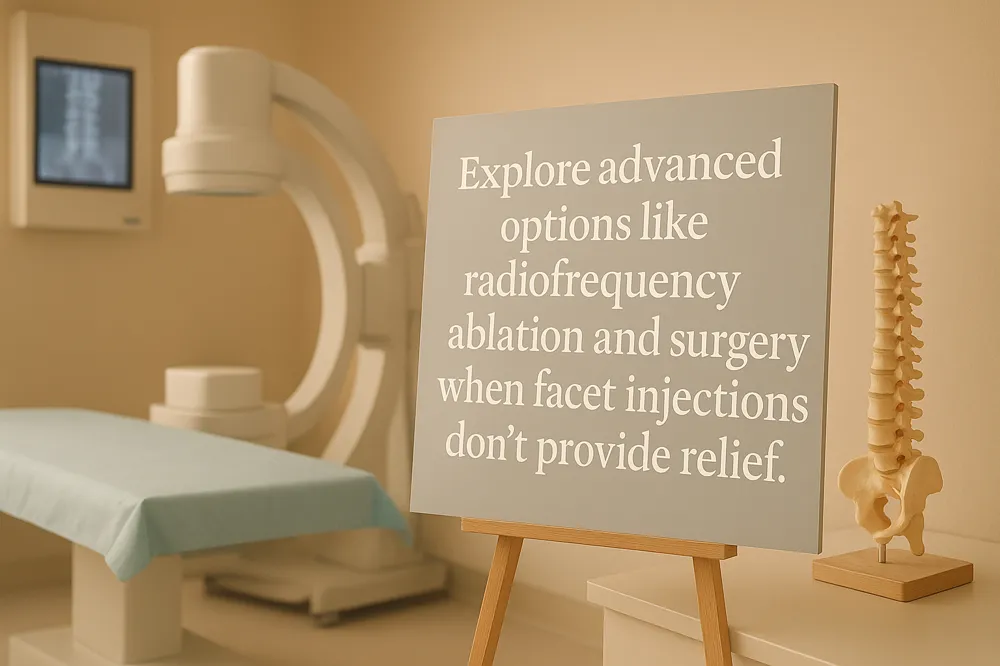
What treatment options are available if facet joint injections do not provide sufficient relief?
When facet joint injections fall short in managing pain, several alternative therapies can be considered to improve patient comfort and function.
Alternative therapies including radiofrequency ablation
Radiofrequency ablation (RFA) is a minimally invasive procedure that targets specific nerves associated with facet joint pain. By applying heat through radio waves, RFA disrupts nerve signals responsible for transmitting pain, often providing relief lasting 6 to 12 months. This option is frequently recommended when injections offer only short-term benefits.
Physical therapy and regenerative medicine options
Physical therapy plays a vital role in recovery by strengthening spine-supporting muscles and improving flexibility, which can reduce stress on facet joints and alleviate pain. Additionally, regenerative medicine approaches, such as platelet-rich plasma (PRP) injections, are emerging treatments aimed at promoting healing of damaged tissues around the joints.
When surgical intervention may be necessary
In cases where nonsurgical treatments including facet injections, RFA, and physical therapy do not adequately control pain or when structural spine issues worsen, surgical options may be considered. Procedures like spinal decompression, or decompression aim to stabilize the spine or relieve nerve compression, and they are typically reserved for severe or progressive cases.
Selecting the appropriate treatment requires careful evaluation by a spine specialist to tailor strategies based on individual patient conditions and goals.
Conclusion: Tailoring Spine Pain Treatments With Epidural and Facet Injections
Understanding the Effectiveness and Safety
Both epidural and facet injections play vital roles in managing spine-related pain, each with proven efficacy for specific conditions like nerve compression and facet joint arthritis. Safety is high when procedures are performed by skilled specialists using image guidance, minimizing risks.
Personalized Treatment is Essential
Choosing the right injection depends on individual patient diagnosis, pain source, and treatment goals. Personalized care plans ensure the best pain relief outcome, considering patient history and imaging results.
Emphasizing Education and Research
Continuous research enhances injection techniques and medication efficacy. Patient education about treatment options and realistic expectations fosters informed decisions and active participation in managing spine health.