Understanding the Value of a Second Look
A spine second opinion is an independent review of a patient’s diagnosis, imaging studies (MRI, CT, X‑ray) and proposed treatment plan by another qualified spine surgeon. The specialist examines the records, may ask additional questions, and provides a written report that confirms, refines, or suggests alternative options, including non‑surgical therapies or minimally invasive procedures.
The Orthopedic Spine Institute of St. Louis embraces a patient‑first philosophy: care starts with conservative measures, and a second‑opinion team of orthopedic surgeons, neurosurgeons and pain specialists reviews each case in depth. Multidisciplinary collaboration ensures that every patient receives a personalized plan that matches their lifestyle, goals and health status.
In modern spine care, second opinions are integral. They reduce unnecessary surgeries, uncover newer technologies such as artificial disc replacement or robot‑assisted techniques, and give patients confidence and peace of mind before committing to a major procedure, supporting long‑term outcomes for a healthier future.
Beyond Confirmation: How Second Opinions Expand Treatment Horizons
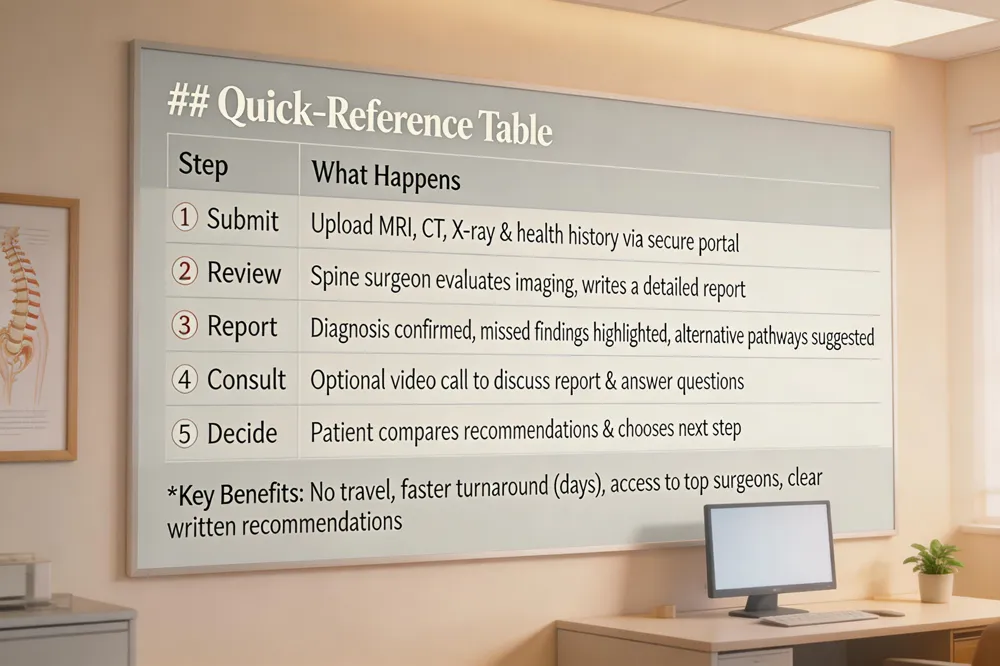
Quick‑Reference Table
| Step | What Happens |
|---|---|
| 1️⃣ Submit | Upload MRI, CT, X‑ray & health history via secure portal |
| 2️⃣ Review | Spine surgeon evaluates imaging, writes a detailed report |
| 3️⃣ Report | Diagnosis confirmed, missed findings highlighted, alternative pathways suggested |
| 4️⃣ Consult | Optional video call to discuss report & answer questions |
| 5️⃣ Decide | Patient compares recommendations & chooses next step |
Key Benefits: No travel, faster turnaround (days), access to top surgeons, clear written recommendations.
 Specialized virtual access lets patients consult top spine surgeons from anywhere, eliminating travel and waiting‑room stress. Through the Orthopedic Spine Institute of St. Louis’ dedicated Second Opinion Program, a specialist reviews your imaging, medical history, and diagnosis to confirm the condition and discuss all treatment options—including conservative care and minimally invasive surgery.
Comprehensive imaging review is central: after you submit MRI, CT, and X‑ray files, the reviewing surgeon evaluates every detail and prepares a written report that outlines the diagnosis, highlights any missed findings, and suggests alternative pathways.
Alternative treatment pathways often emerge, such as physical‑therapy regimens, targeted injections, or minimally invasive procedures that may avoid major surgery altogether.
Convenience of remote consultations means you can schedule a secure video call, receive the expert report within days, and ask follow‑up questions without leaving home.
Second opinion program: The Institute offers a no‑obligation, patient‑first second opinion where Dr. David S. Raskas or another spine expert reviews your case and presents all viable options.
Virtual 2nd opinion: Submit your health history and imaging online; a specialist prepares a detailed written report and optional video discussion for peace of mind.
Virtual second opinion program: Complete a simple intake, have records securely collected, and receive a comprehensive report plus a video consult, all done remotely.
Remote second opinion: Contact the Institute by phone or secure email, provide imaging, and get a written recommendation within a few business days, confirming diagnosis and evaluating non‑surgical options.
Financial and Practical Advantages of a Second Opinion
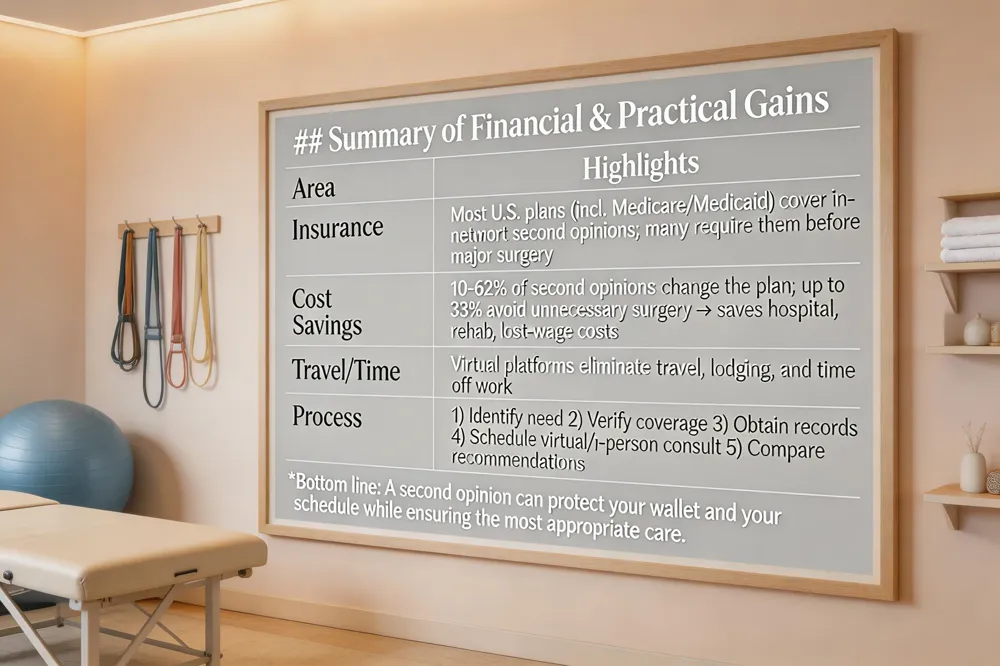
Summary of Financial & Practical Gains
| Area | Highlights |
|---|---|
| Insurance | Most U.S. plans (incl. Medicare/Medicaid) cover in‑network second opinions; many require them before major surgery |
| Cost Savings | 10‑62 % of second opinions change the plan; up to 33 % avoid unnecessary surgery → saves hospital, rehab, and lost‑wage costs |
| Travel/Time | Virtual platforms eliminate travel, lodging, and time off work |
| Process | 1) Identify need 2) Verify coverage 3) Obtain records 4) Schedule virtual/in‑person consult 5) Compare recommendations |
Bottom line: A second opinion can protect your wallet and your schedule while ensuring the most appropriate care.
 Insurance coverage and pre‑authorization: Most U.S. health‑insurance plans, including Medicare and Medicaid, will cover a spine second opinion when it is obtained from an in‑network provider. Many insurers even require a second opinion before approving major surgery. Verify whether a referral or pre‑authorization is needed and confirm that the specialist (e.g., an orthopedic spine surgeon at a high‑volume center) is in‑network. If only out‑of‑network options exist, ask for a network‑gap exception to preserve coverage.
Cost savings from avoided surgery: Studies show that [10‑62 % of spine‑surgery second opinions] change the treatment plan, and up to 33 % prevent unnecessary operations. By revealing non‑surgical alternatives—physical therapy, injections, bracing—patients avoid the high direct and indirect costs of surgery, including hospital stays, postoperative care, and lost wages.
Travel and time reduction: [Virtual second‑opinion] platforms let patients upload imaging and records from home, eliminating travel, accommodation, and time off work. This convenience is especially valuable for those in remote areas or with mobility challenges.
Step‑by‑step process for patients: 1) Determine the need for a second opinion (complex diagnosis, recommended surgery, etc.). 2) Review your insurance benefits and identify in‑network spine specialists. 3) Request your medical records and imaging from your primary physician. 4) Schedule a virtual or in‑person consultation, bringing a list of questions and any prior treatment notes. 5) Compare the new recommendation with the original plan before deciding on the next steps.
Will insurance cover 2nd opinion? Most plans do when the service is medically necessary and provided by an in‑network doctor; verify pre‑authorization requirements and keep all records for billing.
How to get a second opinion orthopedic doctor? Confirm the need, check coverage, obtain records, secure a referral if required, schedule the appointment, and bring all imaging and questions for review.
Clinical Insights: Red Flags, Early Signs, and the Impact of Scoliosis
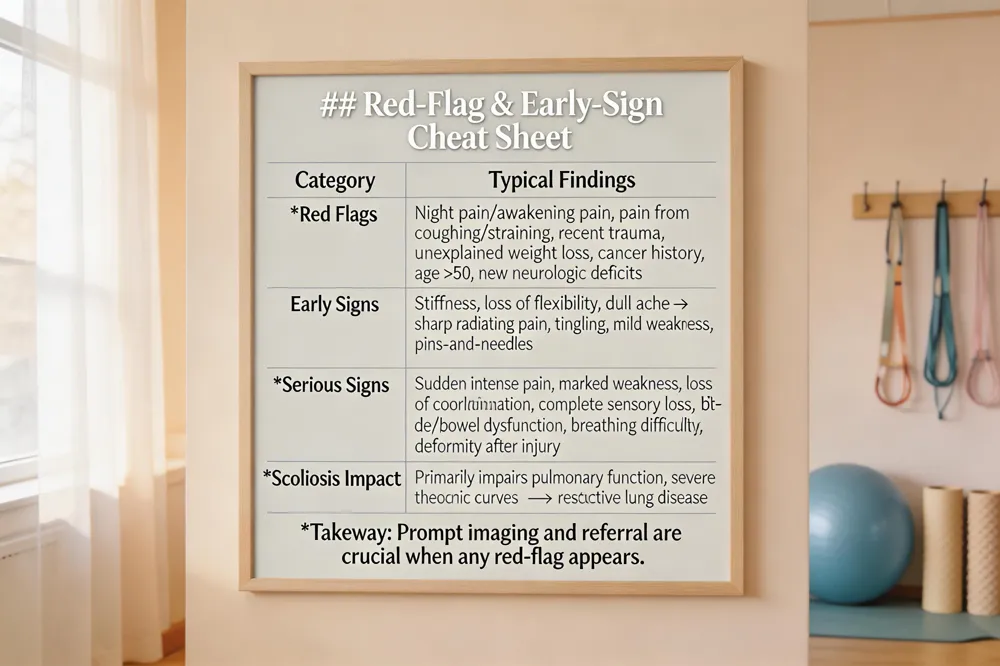
Red‑Flag & Early‑Sign Cheat Sheet
| Category | Typical Findings |
|---|---|
| Red Flags | Night painawaking pain, pain worsened by coughing/straining, recent trauma, unexplained weight loss, cancer history, age > 50, new neurologic deficits (weakness, numbness, bladder/bowel loss) |
| Early Signs | Stiffness, loss of flexibility, dull ache → sharp radiating pain, tingling, mild weakness, pins‑and‑needles |
| Serious Signs | Sudden intense pain, marked weakness, loss of coordination, complete sensory loss, bladder/bowel dysfunction, breathing difficulty, deformity after injury |
| Scoliosis Impact | Primarily impairs pulmonary function; severe thoracic curves → restrictive lung disease |
Takeaway: Prompt imaging and referral are crucial when any red‑flag appears.
 What is a red flag for spine pain?
Red‑flag signs suggest a serious underlying condition and require urgent evaluation. They include severe, unremitting pain that awakens the patient at night, pain worsened by coughing or straining, localized tenderness, recent major trauma, unexplained weight loss, cancer history, age > 50, or new neurologic deficits such as weakness, numbness, or loss of bladder/bowel control. Prompt imaging and specialist referral are indicated.
What is a red flag for spine pain?
Red‑flag signs suggest a serious underlying condition and require urgent evaluation. They include severe, unremitting pain that awakens the patient at night, pain worsened by coughing or straining, localized tenderness, recent major trauma, unexplained weight loss, cancer history, age > 50, or new neurologic deficits such as weakness, numbness, or loss of bladder/bowel control. Prompt imaging and specialist referral are indicated.
What are the first signs of spine problems? Early clues often begin with stiffness or loss of flexibility, followed by a dull ache that may become sharp and radiate down an arm or leg (sciatica). Tingling, numbness, or pins‑and‑needles sensations, and mild weakness in the extremities can also appear. In rare cases, sudden bowel or bladder changes signal urgent attention.
What are the signs of a serious spine issue? Serious problems present with sudden, intense back or neck pain, marked weakness, loss of coordination, or inability to move a limb. Numbness or complete loss of feeling in hands or feet, loss of bladder/bowel control, difficulty breathing, or a twisted‑looking spine after injury are emergency signs.
What organ is most affected by scoliosis? Pulmonary function is most impacted; severe curves can cause restrictive lung disease by compressing the thoracic cavity, limiting rib motion and compromising respiratory mechanics.
Surgical Decision‑Making: When to Operate and What to Expect
Decision‑Making Highlights
| Consideration | Insight |
|---|---|
| Before Fusion | Exhaust PT, injections, lifestyle changes first; smoking, obesity, uncontrolled comorbidities raise complications |
| L4‑L5 Disc Bulge | Conservative care first (NSAIDs, PT, epidural steroids); surgery (micro‑discectomy, endoscopic decompression) only if pain/weakness persists or neuro‑emergency |
| Second Opinion Value | 10‑62 % change diagnosis/treatment; confirms need, reveals non‑operative options, builds confidence |
| Emotional Link | Chronic spine issues can affect mood, anxiety, and even heart function; addressing spinal health supports emotional balance |
Bottom line: Surgery is reserved for refractory cases; a second opinion ensures the right path.
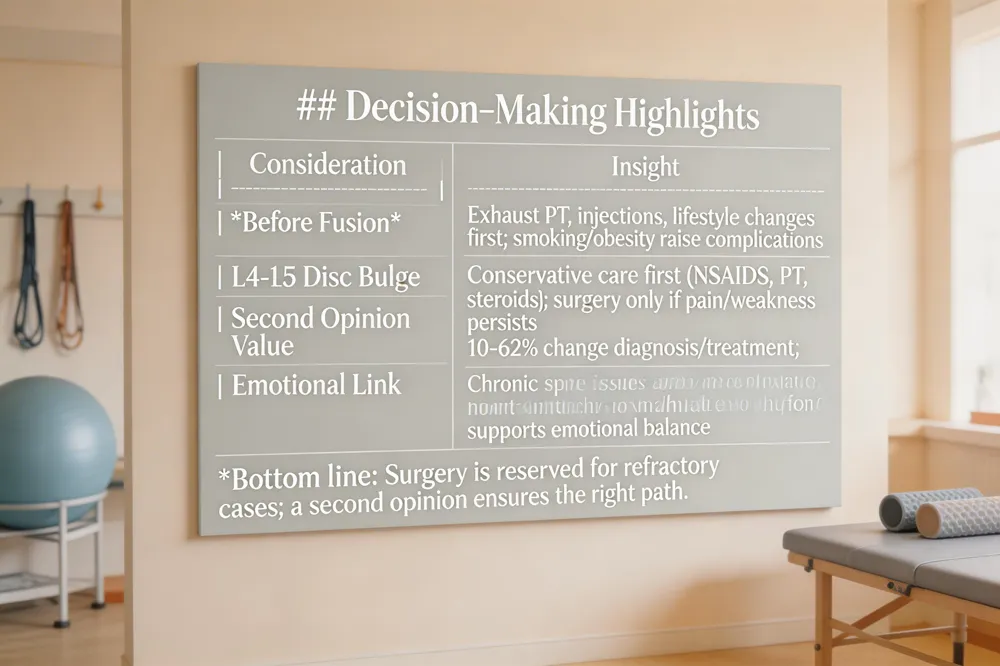 Things I wish I knew before spinal fusion surgery – Most back pain can be managed without fusing the spine; exhausting physical therapy, injections and and lifestyle changes first can spare you a major operation. Smoking, obesity, and uncontrolled medical conditions dramatically raise complication rates, so optimizing health before surgery is essential. Fusion decisions are driven by symptom severity and quality‑of‑life impact, not just MRI findings, and many nerve‑compression problems can be treated with motion‑preserving minimally invasive techniques. Being prepared for a structured recovery—short walks, proper positioning, a balanced diet, and disciplined medication use—helps avoid setbacks.
Is surgery good for L4‑L5 disc bulge? – Conservative care (NSAIDs, PT, chiropractic, epidural steroids) is the first line. Surgery is considered only when pain, numbness or weakness persist despite these measures or when a neurological emergency develops. Modern micro‑discectomy or endoscopic decompression can address the bulge while preserving tissue and shortening recovery, but the benefits must outweigh the inherent risks.
Should you get a second opinion for spine surgery? – Yes. Studies show 10‑62 % of second opinions change diagnosis or treatment plan. A second specialist can confirm the need for surgery, highlight non‑operative options, and boost confidence in the chosen path, often preventing unnecessary procedures.
What emotions are connected to the spine? – The spine houses the nervous system; misalignments can trigger stress, anxiety, and depressive symptoms. Chronic back pain often correlates with low mood, while thoracic or cervical issues may affect heart function and irritability. Maintaining proper spinal health through exercise, posture, and stress‑management supports emotional balance.
Long‑Term Outcomes and Lifestyle Integration
Long‑Term Success Blueprint
| Pillar | Action |
|---|---|
| Personalized Plan | Combine second‑opinion insights with tailored therapy (PT, core‑strengthening, ergonomic adjustments) |
| Lifestyle Habits | Maintain healthy weight, regular exercise, proper posture, activity modification |
| Follow‑Up | Structured check‑ins, education, and monitoring to catch recurrence early |
| L4‑L5 Prognosis | Many conditions can be permanently managed with early non‑surgical care; minimally invasive surgery offers durable relief when needed |
Key Message: Integrating expert recommendations into daily life yields lasting, pain‑free function.
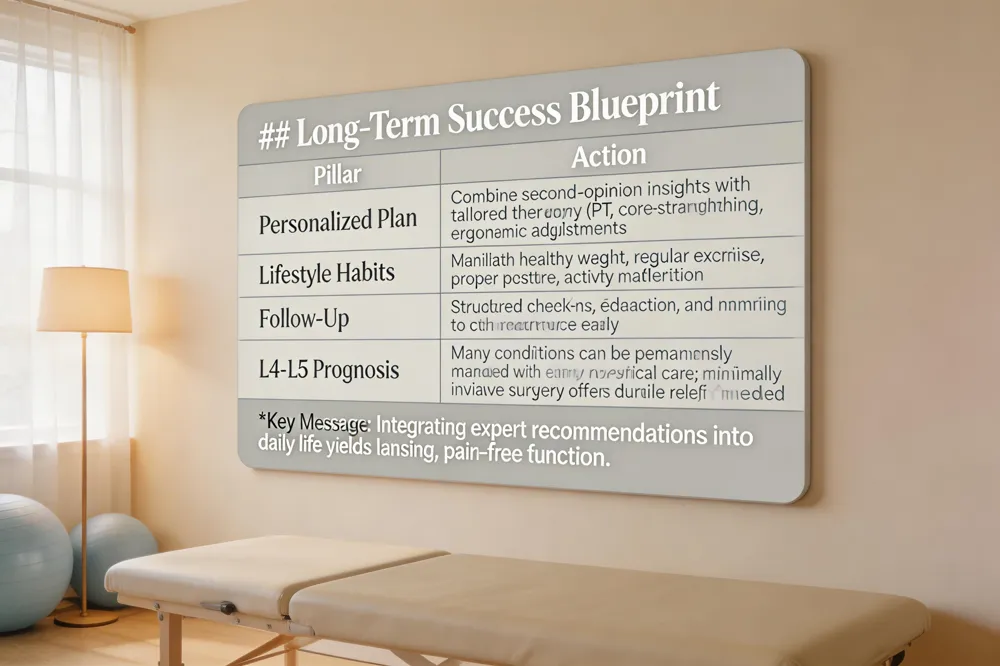 Patients who seek a second opinion often discover a broader range of treatment options that can improve the durability of L4‑L5 results. Studies show that when a diagnosis is confirmed and a personalized plan—whether conservative therapy, minimally invasive surgery, or fusion—is implemented, many individuals enjoy lasting, pain‑free function. The key to long‑term success is integrating the second‑opinion insights into daily life: regular core‑strengthening exercises, weight management, ergonomic workstations, and activity modification help preserve spinal health and prevent recurrence. At the Orthopedic Spine Institute of St. Louis, the patient‑first philosophy means every recommendation is paired with clear education and a structured follow‑up schedule, empowering patients to maintain their progress.
Can L4 and L5 be cured permanently? L4‑L5 problems such as disc bulges, herniations, or facet arthritis can often be managed so effectively that patients experience lasting, pain‑free relief, but a true “permanent cure” depends on the underlying pathology and the treatment chosen. Early, non‑surgical interventions—physical therapy, core‑strengthening exercises, weight control, and ergonomic adjustments—can restore function and prevent recurrence for many individuals. When conservative care fails, minimally invasive procedures (e.g., micro‑discectomy, endoscopic decompression) or spinal fusion can provide durable symptom relief, though some patients may still develop future spinal changes. Ongoing lifestyle habits, regular exercise, and periodic follow‑up are essential to maintain the results and minimize the chance of a new disc issue. In short, while many L4‑L5 conditions can be resolved permanently with appropriate, individualized care, long‑term success relies on both proper treatment and continued self‑maintenance.
Take the Next Step Toward Informed Spine Care
Experience peace of mind, uncover hidden treatment options, save time and money, and receive personalized, evidence‑based guidance. Schedule your virtual spine second opinion today—our patient‑first team is ready to empower your informed decision‑making for a healthier future.