Why Informed Decisions Matter
At the Orthopedic Spine Institute of St. Louis we place the patient at the center of every conversation. Our patient‑first philosophy means that before any incision is made we take the time to understand each individual’s pain history, lifestyle goals, and concerns. A thorough, step‑by‑step evaluation begins with a detailed physical exam, high‑resolution MRI or CT imaging, and bone‑density testing to confirm that the disc, facet joints, and vertebrae are suitable for a motion‑preserving procedure. We also screen for psychosocial factors such as untreated depression or substance use that can affect outcomes. Once the clinical picture is clear, Dr. David S. Raskas engages the patient in shared decision‑making. He explains the benefits and risks of lumbar artificial disc replacement versus fusion, discusses implant designs, and reviews the expected recovery timeline—typically 3–5 weeks for light duties and up to three months for full activity. By presenting evidence‑based options and answering every question, we empower patients to choose the treatment that best aligns with their health, expectations, and long‑term quality of life.
Who Is a Candidate? Indications, Contra‑indications, and the L4‑L5 Bulge Dilemma
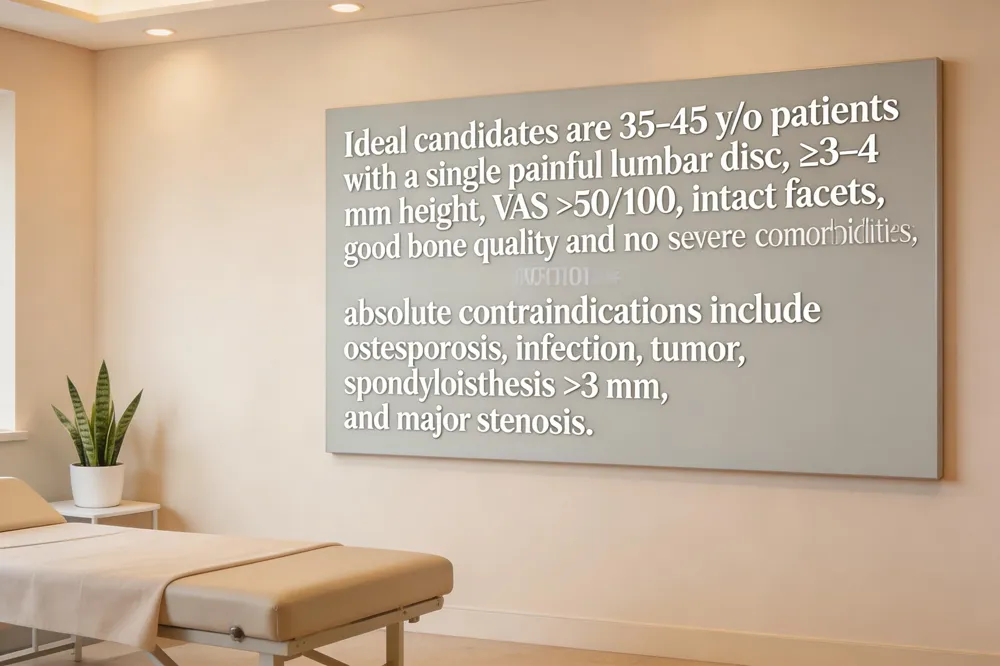 Lumbar total disc replacement (TDR) is primarily indicated for patients with a single painful lumbar disc that has failed at least six months of non‑operative care—typically those with symptomatic degenerative disc disease, a disc height of ≥3–4 mm, and a VAS back pain score > 50/100. Ideal candidates are aged 35‑45, have a stable segment with intact facet joints (grade II or lower), good bone quality (DEXA T‑score >‑1.0), and no major comorbidities.
Absolute contraindications include severe osteoporosis, active infection, tumor, spondyloristhesis > 3 mm, and significant spinal stenosis. Relative contraindications are prior abdominal surgery, vascular abnormalities, advanced age, or psychosocial factors such as untreated depression. Facet joint degeneration (grade III+) and spinal instability are also disqualifying because TDR cannot address them.
Prior lumbar surgery does not necessarily preclude TDR; studies show comparable outcomes when the previous procedure (e.g., discectomy) did not destabilize the segment and facet health remains preserved.
For an isolated L4‑L5 disc bulge, the choice between micro‑discectomy and disc replacement hinges on patient age, activity level, and facet integrity. Micro‑discectomy offers a quick, low‑risk fix but leaves the degenerated disc in place, whereas TDR removes the entire disc, preserves motion, and may reduce adjacent‑segment disease, making it attractive for younger, active patients with healthy facets. Careful pre‑operative imaging, bone‑density testing, and psychosocial screening are essential to select the optimal candidates.
Disc Replacement vs. Fusion: Benefits, Risks, and Costs
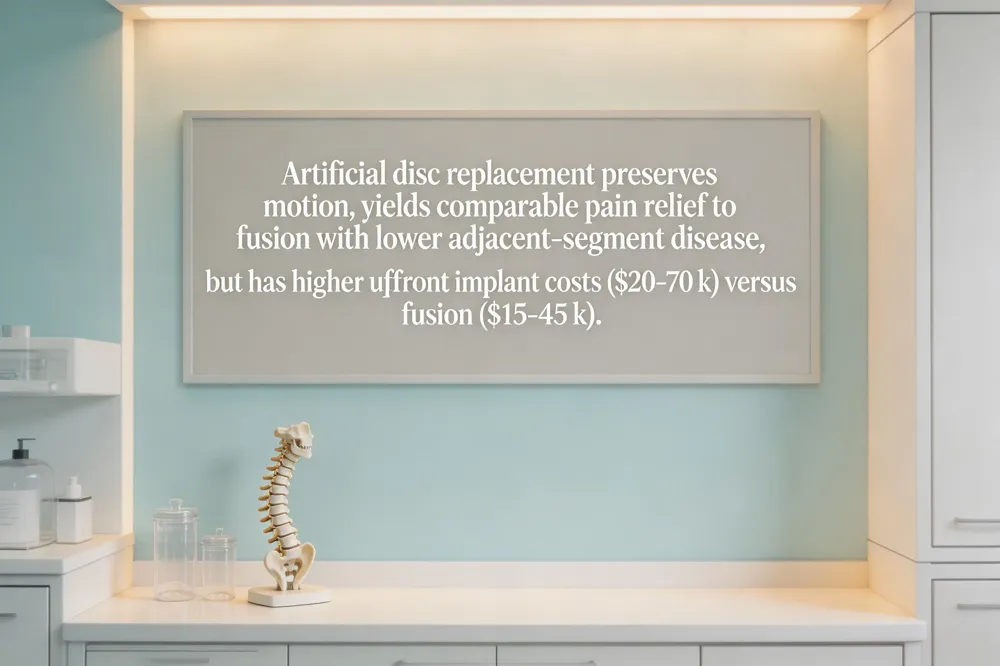 When it comes to treating degenerative disc disease, the choice between artificial disc replacement (ADR) and spinal fusion hinges on motion preservation, recovery speed, and long‑term economics.
Clinical outcomes – Large‑scale registry and meta‑analyses show ADR delivers pain relief and functional improvement comparable to fusion, with lower adjacent‑segment disease rates and a modest advantage in back‑pain scores (≈‑7 VAS points). Long‑term studies (up to 10 years) report sustained VAS reductions of ~50 points and ODI improvements of ~30 points, with high patient‑satisfaction (>80 %).
Cost and insurance – In the United States, ADR implants cost $20‑70 k (average ≈ $30 k) versus $15‑45 k for fusion. While ADR’s upfront price is higher because of the prosthesis, faster return to work (3‑5 weeks vs. 8‑12 weeks) and lower revision rates can offset expenses over time. Most private insurers cover both procedures when conservative care fails for Medicare coverage varies, especially for patients >60 y.
Cervical vs. lumbar – At C6‑C7, cervical disc arthroplasty preserves motion and shows similar pain relief to ACDF, with fewer re‑operations. Lumbar L5‑S1 ADR maintains segmental rotation, shortens hospital stay (≈ 2 days), and reduces adjacent‑level surgery versus lumbar fusion, which is preferred when facet arthritis or instability is present.
Discectomy role – Micro‑discectomy removes only a herniated fragment and is ideal for isolated nerve compression, offering a quick recovery. ADR replaces the entire disc, preserving motion and preventing future degeneration, making it suitable for younger, active patients with single‑level disease and healthy facet joints.
Bottom line – Disc replacement is generally better for patients who need motion preservation and can meet strict selection criteria (good bone quality, limited facet disease, no severe instability). Fusion remains the go‑to for multi‑level degeneration, significant instability, or deformity. Discuss your anatomy, pain pattern, and lifestyle goals with Dr. David S. Raskas to determine the optimal approach.
Recovery Timelines: From Hospital Bed to Full Activity
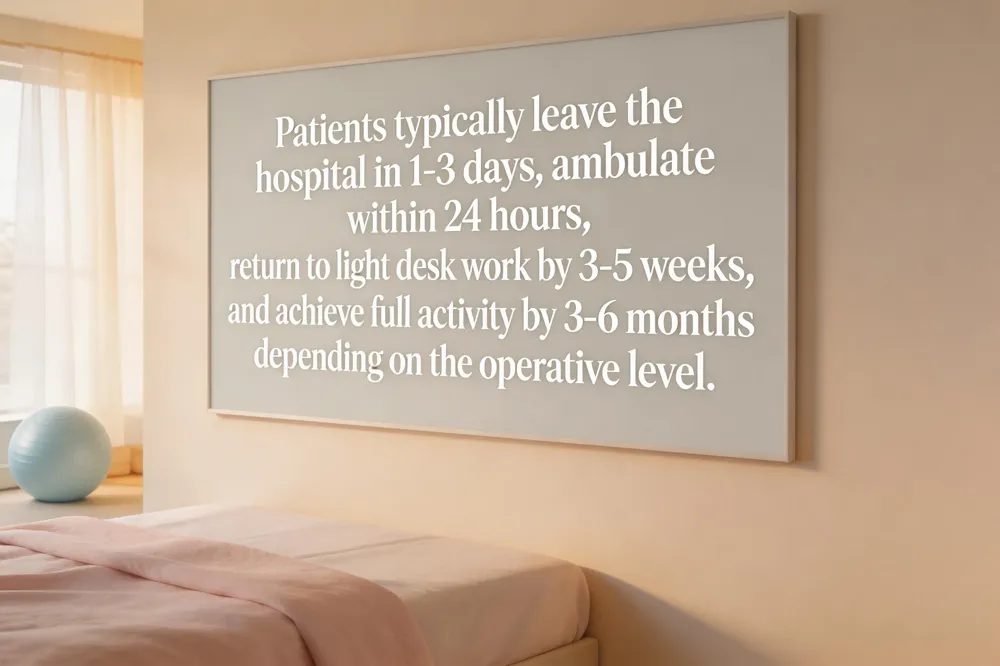 After lumbar or cervical artificial disc replacement, most patients leave the hospital within 1‑3 days. Early ambulation begins within the first 24 hours—short assisted walks reduce swelling and promote circulation. By the end of the first week many can return to light desk work or household chores, while heavy lifting and twisting are avoided for at least 2‑4 weeks.
Level‑specific milestones
- L5‑S1: Assisted walking starts day 1; light‑activity tasks by 3‑4 weeks; full strength and unrestricted exercise by 6‑12 weeks, with many reaching their final functional level around three months.
- L4‑L5: Similar to L5‑S1; most patients resume desk duties in 3‑5 weeks and achieve full activity by 3 months.
- C6‑C7: Hospital stay 1‑3 days; gentle arm‑leg movement first 24‑48 hours; physical therapy begins 2‑4 weeks; most return to normal daily activities by 3 months and full recovery by 6 months.
- C5‑C6: 1‑3 day stay; early walking and light activity in week 1; PT starts 1‑2 weeks; progressive neck mobility achieved by 3‑6 months.
Pain and activity restrictions: Post‑operative pain is modest and managed with over‑the‑counter analgesics; a soft brace or collar may be used for the first 2‑3 weeks. Avoid lifting >10 lb, bending, and twisting until cleared.
Physical‑therapy schedule: PT usually begins 4‑6 weeks post‑op, with sessions 1‑2 times per week for 6‑12 weeks, focusing on core strength, flexibility, and gradual return to normal motion. Follow‑up visits at 1‑2 weeks, 4‑6 weeks, 3 months, and 6 months monitor wound healing, implant position, and functional progress.
Overall, most patients achieve a return to normal daily activities within 3‑4 weeks and full functional recovery by 3‑6 months, provided they adhere to postoperative guidelines and therapy protocols.
Success Rates, Longevity, and Long‑Term Outcomes
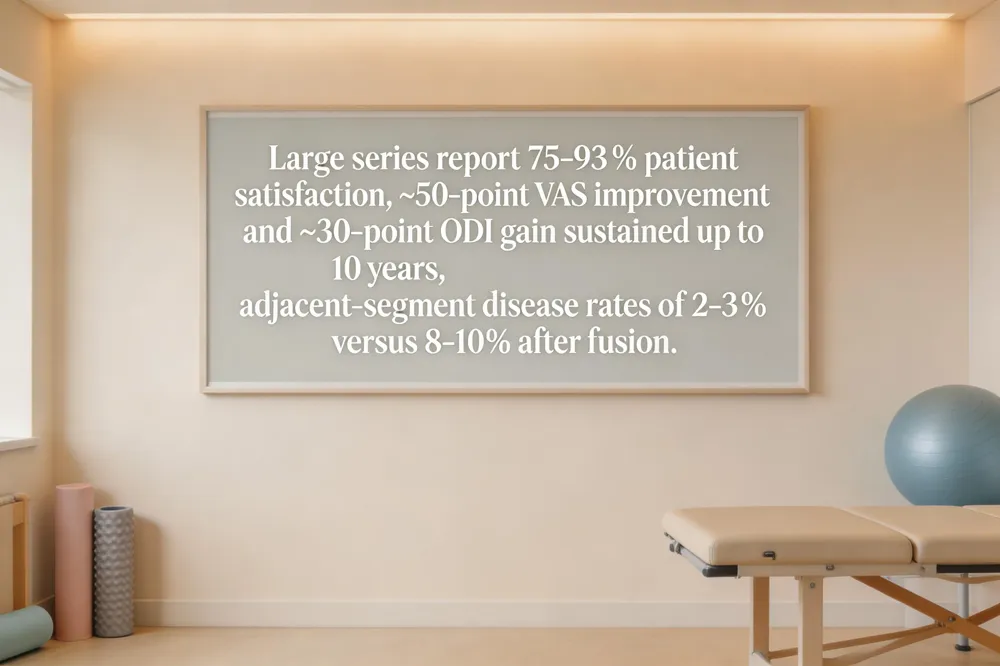 Lumbar artificial disc replacement (ADR) consistently achieves high clinical success. Large series of nearly 1,000 patients report satisfaction rates between 75.5 % and 93.3 %, reflecting marked pain relief and functional gains. Specifically, L5‑S1 disc replacement yields an 80 %‑90 % success rate, with about 85 % of patients meeting a ≥30 % reduction in back‑pain scores at two years and complication rates under 5 %.
Long‑term data reinforce durability. A systematic review of 2,284 patients (mean follow‑up ≈ 10 years) showed mean VAS pain improvement of 50.7 points, ODI improvement of 30.4 points, clinical success ≈ 74.8 %, and patient satisfaction ≈ 86.3 %. Complication and re‑operation rates remained stable from mid‑term (5 years) to long‑term (≥10 years) follow‑up, indicating sustained safety.
Predictors of favorable outcomes include younger age, pre‑operative VAS‑back pain > 50/100, ODI > 30 %, and no pre‑operative narcotic use. Patients who wean off opioids, work full‑time without restriction, and have decreasing disc height pre‑operatively tend to achieve better VAS and ODI scores at 7 years. Negative predictors are older age, higher baseline leg pain, higher ODI, female sex, and prior manual labor.
Adjacent‑segment disease (ASD) rates are lower after ADR than after fusion, owing to motion preservation. Meta‑analyses show ASD incidence of ≈ 2 %–3 % after disc replacement versus ≈ 8 %–10 % after fusion, supporting the long‑term advantage of motion‑preserving surgery.
Cost, Insurance, and Medicare Coverage
 Does Medicare cover lumbar disc replacement surgery?
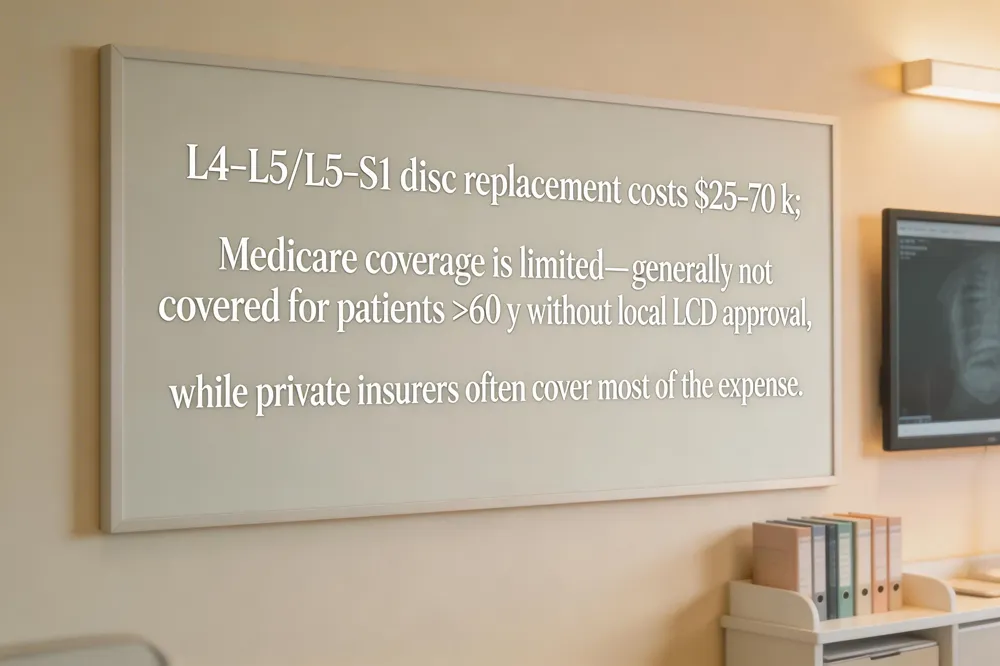
Medicare does not have a national coverage determination that routinely covers lumbar disc replacement surgery. For beneficiaries older than 60, CMS issued a national noncoverage determination for the Charité lumbar artificial disc, meaning the procedure is considered not reasonable and necessary for that age group. For patients 60 years of age or younger, there is no national policy, so coverage decisions are made on a local basis through State Medicare Determinations (LCDs) or local coverage articles. In practice, many Medicare contractors will deny the procedure unless a patient meets specific, locally defined criteria. Therefore, coverage is limited and depends on age, the specific device used, and the local Medicare policies.
L4‑L5 disc replacement surgery cost
The cost of an L4‑L5 lumbar artificial disc replacement in the United States typically ranges from about $25,000 to $70,000, depending on the implant used and the surgeon’s fees. Hospital or ambulatory surgery‑center charges, anesthesia, and pre‑ and post‑operative imaging are bundled into this estimate, while additional expenses such as physical‑therapy or a longer inpatient stay can increase the total. Insurance usually covers a large portion of the procedure, but patients should expect to pay deductibles, co‑pays, or any non‑covered services out‑of‑pocket.
L5‑S1 disc replacement surgery cost
The cost of an L5‑S1 artificial disc replacement similarly falls between $25,000 and $70,000. Insurance plans typically cover a large portion, yet patients remain responsible for deductibles, co‑pays, and post‑operative care such as imaging and therapy.
Disc replacement vs fusion cost
Artificial disc replacement typically costs between $20,000 and $70,000 (average ~$30,000), while lumbar fusion ranges from $15,000 to $45,000. Fusion may be less expensive initially, but disc replacement can be more cost‑effective over time because of faster return to work and fewer complications.
Post‑Operative Care: Activity Restrictions and Physical Therapy
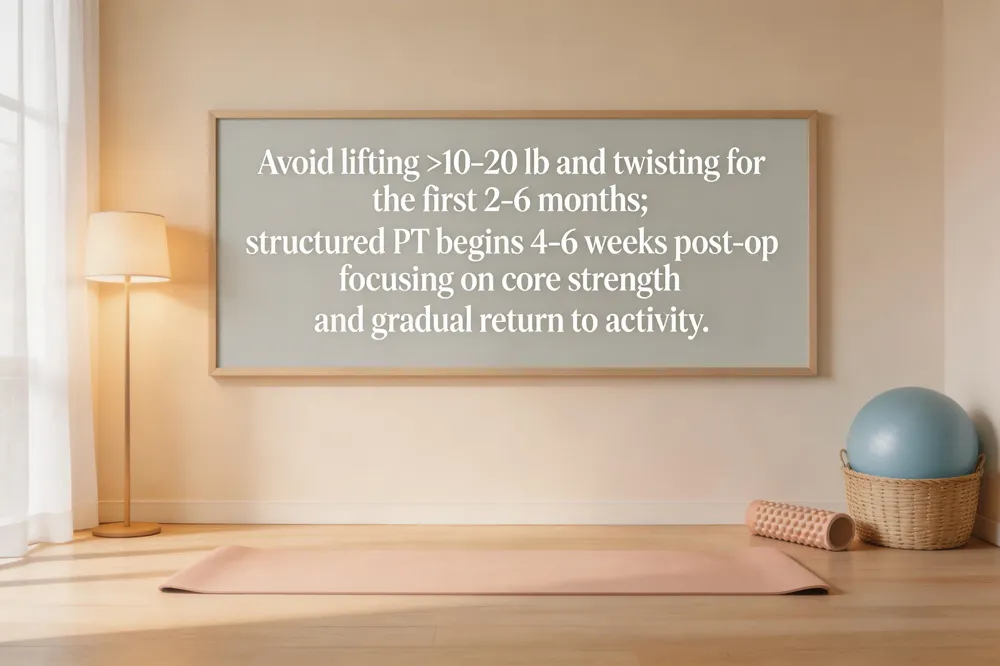 After lumbar disc replacement, patients must avoid lifting, pushing, or pulling objects heavier than 10‑20 pounds for the first two weeks and refrain from twisting, bending, or rotating the spine for the initial four‑to‑six months. High‑impact sports and prolonged sitting or bending should be limited until the surgeon clears you to increase activity.
Early ambulation is encouraged ; most individuals can begin short, assisted walks within 24 hours, which promotes circulation and reduces stiffness. Light‑desk work or gentle household chores are generally tolerated by 3–4 weeks, while a full return to normal strength, flexibility, and vigorous exercise often takes 6–12 weeks (sometimes up to three months).
A structured rehabilitation program starts a few weeks after surgery and includes core‑strengthening, flexibility, and progressive conditioning sessions 1‑2 times per week for 4‑8 weeks. Physical therapists focus on restoring proper spinal mechanics, protecting the artificial disc, and preventing excessive loads.
Monitoring for complications involves regular follow‑up visits at 1–2 weeks, 4–6 weeks, and 3 months , during which wound healing, incision appearance, and X‑ray confirmation of disc position are assessed. Any signs of infection, new leg pain, or neurological changes should be reported promptly.
Returning to work depends on job demands: most patients resume light desk duties within 2–4 weeks, while those with heavy‑lifting occupations may need 6–12 weeks. Full sports participation is typically cleared after 3–4 months, provided the rehabilitation milestones are met and the surgeon gives approval.
Patient Stories and Shared Decision‑Making
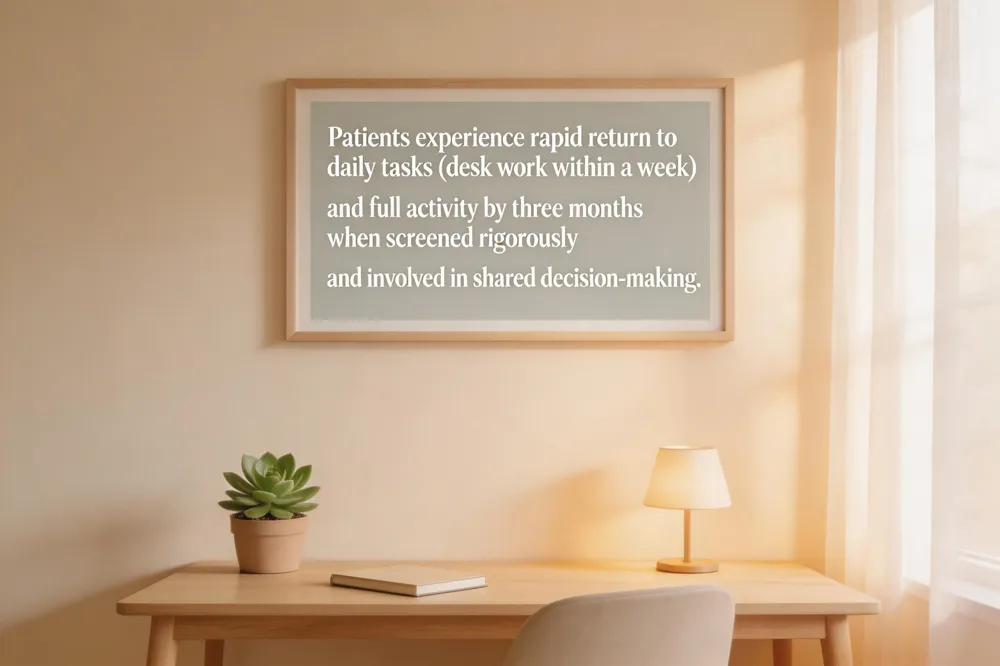 Real‑world experiences of Dr. Raskas’ patients illustrate the impact of a patient‑first approach in lumbar disc replacement. Many patients report a rapid return to daily activities—light desk work within a week and full activity by three months—after a 45‑75‑minute outpatient procedure that preserves motion and reduces chronic pain. These outcomes align with studies showing 75‑93 % success rates and sustained pain relief up to ten years](https://pmc.ncbi.nlm.nih.gov/articles/PMC11268302/), with low complication and revision rates. The patient‑first model emphasizes thorough screening (MRI, DEXA, psychosocial factors) and shared decision‑making, ensuring candidates meet strict criteria: symptomatic degenerative disc disease, VAS pain > 50/100, ODI > 30 %, good bone quality, and minimal facet joint degeneration. By discussing expectations, implant design options (ball‑and‑socket vs. viscoelastic), and recovery timelines (early ambulation, structured physical therapy starting 4‑6 weeks), patients feel empowered to choose the best path.
To schedule a consultation with Dr. Raskas, patients can call the office directly or request an online appointment through the practice website. The initial visit includes a comprehensive history, imaging review, and a personalized treatment plan that balances surgical benefits with the patient’s lifestyle goals.https://www.savillespine.com/recovery-timeline-after-lumbar-disc-arthroplasty/
Putting It All Together
Review of key take‑aways
- Lumbar disc replacement (LDR) is indicated for symptomatic degenerative disc disease that has failed at least six months of non‑operative care, typically in patients aged 35‑45 with VAS back pain >50/100 and ODI >30 %.
- Successful candidates have good bone quality (DEXA T‑score > ‑1.0), minimal facet joint arthritis, and no spinal instability, severe scoliosis, infection, or advanced osteoporosis.
- The procedure preserves motion, shortens hospital stay (average 2½ days), and allows return to light work within 2‑4 weeks and full activities by 3‑4 months.
- Long‑term data (up to 10 years) show sustained pain relief (VAS ↓ ≈ 50 points), ODI improvement (≈ 30 points), high patient satisfaction (>90 %), and low revision rates (≈ 4 %).
The importance of individualized care Each patient’s anatomy, psychosocial status, and comorbidities must be evaluated. Imaging must confirm disc height ≥3‑4 mm and healthy endplates; psychosocial screening for untreated depression, anxiety, or substance abuse is essential because these factors can diminish outcomes. Prior lumbar surgery does not preclude LDR, provided destabilizing bone resection is absent. Design selection (ball‑and‑socket vs. visco‑elastic) is based on surgeon experience and patient anatomy, not on proven superiority.
Next steps for interested patients
- Schedule a comprehensive evaluation (history, physical, MRI/CT, DEXA, and,‑sectional pain).22. Discuss expectations, activity goals, and postoperative rehab with a spine specialist.
- Verify insurance coverage and pre‑authorizations; many plans require documentation of failed conservative therapy.
- Begin pre‑operative optimization (quit smoking, control diabetes, wean off opioids).
- Plan for a structured post‑operative rehab program to achieve the best functional recovery.