Introduction: The Shift Toward Less Invasive Spine Care
At the Orthopedic Spine Institute of St. Louis, a patient‑first philosophy drives every decision, placing the individual’s goals, lifestyle, and health status at the core of the treatment plan. We begin with a conservative‑first approach, exhausting non‑surgical options such as physical therapy, medication optimization, and targeted injections before considering surgery. When conservative care fails, minimally invasive spine surgery (MISS) becomes the logical next step. MISS employs small skin incisions, tubular retractors, high‑resolution cameras, and real‑time imaging to address conditions like herniated discs, spinal stenosis, and spondylolisthesis while preserving surrounding muscle and ligament. Compared with traditional open surgery, MISS offers several clear benefits: markedly lower blood loss, reduced postoperative pain, smaller or absent scars, shorter hospital stays—often same‑day discharge—and a faster return to daily activities, typically within weeks instead of months. By integrating advanced technology with a patient‑centered, stepwise treatment algorithm, we achieve outcomes that match or exceed open‑surgery results while minimizing the physical and emotional toll of spinal surgery.
Core Surgical Options and Their Minimally Invasive Evolution
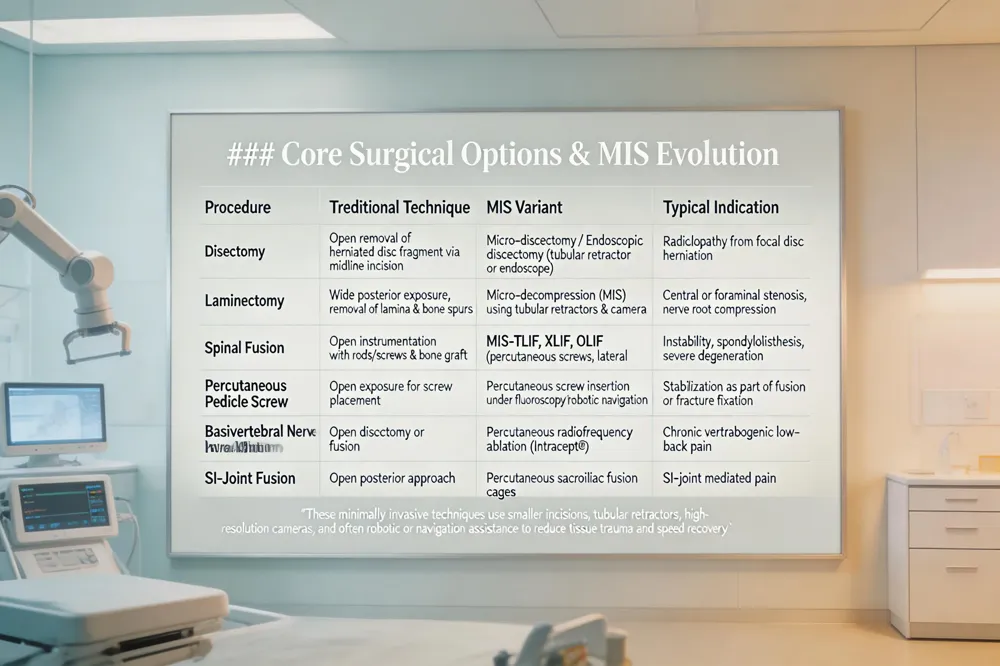
Core Surgical Options & MIS Evolution
| Procedure | Traditional Technique | MIS Variant | Typical Indication |
|---|---|---|---|
| Discectomy | Open removal of herniated disc fragment via midline incision | Micro‑discectomy / Endoscopic discectomy (tubular retractor or endoscope) | Radiculopathy from focal disc herniation |
| Laminectomy | Wide posterior exposure, removal of lamina & bone spurs | Micro‑decompression (MIS) using tubular retractors & camera | Central or foraminal stenosis, nerve root compression |
| Spinal Fusion | Open instrumentation with rods/screws & bone graft | MIS‑TLIF, XLIF, OLIF (percutaneous screws, lateral approaches) | Instability, spondylolisthesis, severe degeneration |
| Percutaneous Pedicle Screw | Open exposure for screw placement | Percutaneous screw insertion under fluoroscopy/robotic navigation | Stabilization as part of fusion or fracture fixation |
| Basivertebral Nerve Ablation | Open discectomy or fusion | Percutaneous radiofrequency ablation (Intracept®) | Chronic vertebrogenic low‑back pain |
| SI‑Joint Fusion | Open posterior approach | Percutaneous sacroiliac fusion cages | SI‑joint mediated pain |
These minimally invasive techniques use smaller incisions, tubular retractors, high‑resolution cameras, and often robotic or navigation assistance to reduce tissue trauma and speed recovery.
 What are the three types of back surgery
The three most common surgical options are discectomy, laminectomy, and spinal fusion. A discectomy removes the portion of a herniated disc that compresses a nerve root, relieving radicular pain. A laminectomy removes part of the vertebral lamina (the bony "roof") and any bone spurs to decompress the spinal canal or nerve roots. Spinal fusion joins two or more vertebrae together, typically using bone graft material and metal rods or screws, to stabilize the spine after disc removal or when severe degeneration is present. These core procedures are employed when conservative care—medication, physical therapy, and injections—fails to provide relief.
Types of back surgery laminectomy
Laminectomy can be performed at lumbar, cervical, or thoracic levels. Modern surgeons often use a minimally invasive (MIS) micro‑decompression technique that employs small incisions, tubular retractors, and high‑resolution cameras or microscopes. This approach reduces muscle disruption, blood loss, and postoperative pain while achieving the same neural decompression as traditional open surgery. In many cases the laminectomy is combined with a discectomy, foraminotomy, or fusion to address concurrent disc disease or instability.
Different types of spine surgery
Spine surgery is broadly divided into decompression (discectomy, laminectomy) and stabilization (fusion). MIS extensions include percutaneous pedicle screw placement, endoscopic discectomy, and minimally invasive lumbar fusion (MIS‑TLIF, XLIF, OLIF). Emerging options such as basivertebral nerve ablation (Intracept®) and SI‑joint fusion further expand the minimally invasive armamentarium for chronic back pain.
Lower back surgery types
For lumbar pathology the most common MIS procedures are endoscopic or micro‑discectomy, percutaneous decompression (MILD®), and minimally invasive fusion techniques that preserve muscle integrity and enable same‑day discharge. These techniques consistently yield less postoperative pain, lower infection rates, and faster return to daily activities compared with open surgery.
What is the easiest spine surgery?
The least complex and frequently performed MIS procedure is a minimally invasive lumbar discectomy. Using a small incision and tubular retractor, the surgeon removes only the herniated disc fragment, resulting in short operative times (often under one hour), minimal blood loss, and rapid recovery.
Which surgery is best for an L4‑L5 disc bulge?
A microdiscectomy is typically the first‑line choice for a focal L4‑L5 disc bulge causing radiculopathy. If significant stenosis, facet degeneration, or segmental instability is present, a combined laminectomy/foraminotomy with instrumented fusion may be indicated. Individual factors such as age, activity level, and overall health guide the final recommendation, which Dr. David S. Raskas will determine after thorough imaging review.
Can L4 and L5 be cured permanently?
While surgery can provide durable relief, long‑term success depends on the underlying pathology and patient factors. Conservative care remains the first line; when surgery is needed, MIS techniques aim to preserve motion and minimize tissue trauma, offering the best chance for lasting symptom resolution.
Outcomes, Success Rates, and Patient Selection
Outcomes & Patient Selection Summary
| Metric | Open Surgery | Minimally Invasive Spine Surgery (MISS) | Comments |
|---|---|---|---|
| Overall Success (pain relief) | 60 % – 80 % | 90 % – 95 % (specific techniques) | Success defined as ≥50 % pain reduction |
| Complication Rate | Higher (infection, blood loss) | Lower (≈10 % lower overall) | MIS reduces muscle disruption |
| Hospital Stay | 3‑5 days (average) | 0‑1 day (outpatient for many procedures) | Faster discharge with MIS |
| Return to Work | 6‑12 weeks | 2‑6 weeks (discectomy) – 8‑12 weeks (fusion) | Depends on procedure complexity |
| Ideal Candidate | Clear anatomic pain source, good health, non‑smoker | Same plus suitability for small‑incision corridor | Age <70, BMI <35, controlled comorbidities |
| Contra‑indications | Severe osteoporosis, uncontrolled infection | Same + anatomy that blocks percutaneous access | Prior extensive lumbar surgery may limit MIS |
Patient selection hinges on imaging that shows a treatable lesion, failure of conservative care, and overall health status.
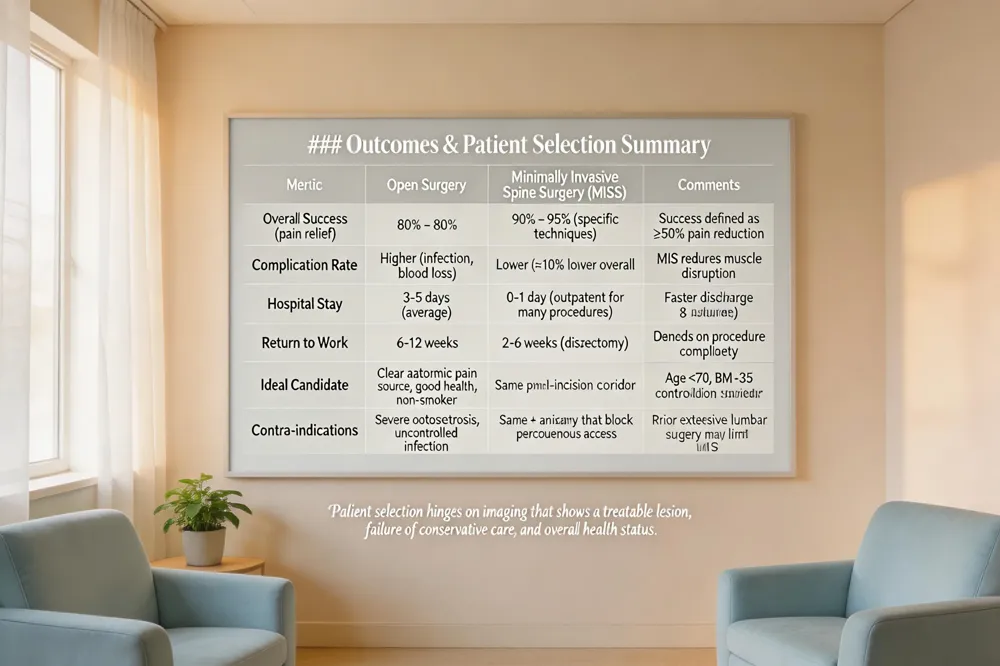 Lower‑back surgery, whether traditional open or minimally invasive, generally provides relief for most patients. Open procedures report 60 %‑80 % success, while minimally invasive spine surgery (MISS) shows even higher rates—up to 92 % positive outcomes in large multi‑center trials and 90‑95 % pain‑reduction success for specific techniques such as transforaminal lumbar endoscopic discectomy. The best results occur in patients with a clear anatomic source of pain (e.g., a single herniated disc), younger age, good overall health, and strict adherence to post‑operative guidelines.
Who is a candidate for MISS? Ideal candidates have chronic back, neck, or sciatica pain that has failed conservative care (medication, physical therapy, injections) and imaging that shows a treatable condition—herniated disc, lumbar spinal stenosis, degenerative disc disease, or a compression fracture—accessible through a small surgical corridor. They should be free of severe comorbidities, uncontrolled diabetes, extreme obesity, or active infection, and be willing to quit smoking and follow a structured rehabilitation plan.
Who is NOT a candidate? Patients who achieve adequate relief with non‑surgical measures, those with severe osteoporosis, uncontrolled medical disease, or anatomy that cannot be safely accessed through minimally invasive corridors are unsuitable. Prior failed spinal surgeries and poor bone quality also limit eligibility.
Potential downsides Although minimally invasive spine surgery (MISS) reduces blood loss, infection risk, and scarring, complications can still occur: nerve injury, dural tears, hardware misplacement, infection, bleeding, and cerebrospinal‑fluid leaks. The steep learning curve and reliance on fluoroscopy increase radiation exposure for the surgical team.
Recovery timeline Most patients begin gentle ambulation within days, resume light daily activities within a week, and start a tailored physical‑therapy program early. By 4‑8 weeks, core strength improves and many return to normal work; full recovery—especially after fusion—typically takes 8‑12 weeks, with some cases extending to 3‑6 months. At the Orthopedic Spine Institute of St. Louis, Dr. David S. Raskas provides individualized post‑operative guidance to optimize healing.
Emerging Technologies and Cutting‑Edge Procedures
Emerging & Cutting‑Edge MIS Technologies
| Technology | Description | Clinical Application |
|---|---|---|
| Endoscopic (uni‑/bi‑portal) spine surgery | Sub‑centimeter portal, high‑definition camera, flexible instruments | Disc removal, foraminotomy, laminectomy with ultra‑minimal tissue trauma |
| Robotic‑Assisted Navigation | 3‑D intra‑operative imaging + robotic arm for instrument guidance | Precise pedicle screw placement, cage insertion, reduced radiation exposure |
| Augmented‑Reality (AR) Headsets | Real‑time overlay of patient anatomy on surgeon’s view | Enhances orientation during complex decompression or fusion |
| AI‑Driven Implant Design | Machine‑learning models generate patient‑specific interbody cages | Optimizes fit, load distribution, and fusion rates |
| Basivertebral Nerve Ablation (Intracept®) | Percutaneous radiofrequency ablation of vertebral endplate nerve | Chronic vertebrogenic low‑back pain resistant to other therapies |
| Ultra‑Minimally Invasive Endoscopic Laminectomy | <1 cm portal, robot‑assisted navigation, bone‑preserving technique | Lumbar spinal stenosis with minimal postoperative pain |
| Percutaneous Tumor Ablation | Catheter‑based laser or radiofrequency energy delivery | Palliative treatment of metastatic spine lesions without open surgery |
These innovations aim to further shrink incision size, improve precision, and shorten recovery.
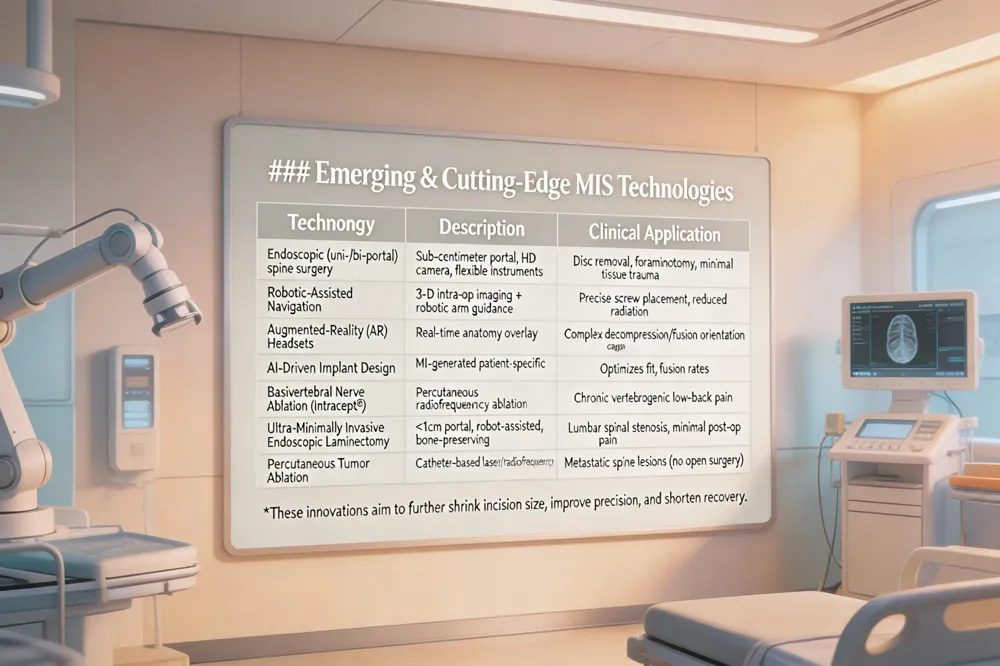 [Minimally invasive spine surgery (MISS)] now encompasses a spectrum of ultra‑small‑portal techniques that preserve muscle and reduce recovery time.
What are the latest MIS techniques? Endoscopic and keyhole approaches use high‑definition cameras and flexible instruments inserted through sub‑centimeter incisions, while natural‑orifice endoscopy accesses the spine through existing pathways. Robotic‑assisted platforms combine 3‑D navigation and augmented‑reality overlays to guide miniature tools with sub‑millimeter precision, and percutaneous catheters treat tumors or vascular lesions without skin cuts.
What is the most minimally invasive spine surgery? Endoscopic spine surgery, often called “ultra‑minimally invasive,” uses incisions as small as a third of an inch. Uni‑ or bi‑portal endoscopes provide direct visualization for disc removal or nerve decompression, resulting in minimal blood loss and rapid return to activity.
What is the newest procedure for spinal stenosis? Ultra‑minimally invasive endoscopic laminectomy or decompression, performed through a <1 cm portal and sometimes assisted by robot‑guided navigation, relieves canal pressure while preserving bone and muscle, offering less pain and shorter recovery than open laminectomy.
What is the latest technology in spine surgery? AI‑driven imaging creates patient‑specific 3‑D models that predict optimal implant trajectories. Robotic arms translate these plans into precise instrument movements, while augmented‑reality headsets project anatomy and implant pathways onto the surgeon’s view, reducing radiation exposure and enhancing accuracy.
Types of minimally invasive spine surgery Include discectomy, foraminotomy, laminectomy, minimally invasive TLIF fusion, kyphoplasty, endoscopic tumor removal, anterior cervical discectomy and fusion, and spinal cord stimulator implantation—all performed through small incisions with tubular retractors or endoscopes.
Minimally invasive spine surgery L4‑L5 Addresses disc herniation, stenosis, instability, or spondylolisthesis using micro‑discectomy, endoscopic foraminotomy, or MIS‑TLIF fusion under real‑time imaging. Patients experience less postoperative pain, reduced blood loss, shorter hospital stays, and faster return to daily life. Schedule a consultation with Dr. David S. Raskas at the Orthopedic Spine Institute of St. Louis to determine eligibility.
Cost, Access, and Practical Considerations
Cost, Access & Practical Considerations
| Procedure | Approx. Cost (USD) | Typical Insurance Coverage | Expected LOS (Days) |
|---|---|---|---|
| Minimally Invasive Discectomy | $15,000 – $35,000 | 70‑90 % (varies by plan) | Outpatient / <24 h |
| MIS TLIF Fusion | $80,000 – $150,000 | 60‑80 % (often with pre‑authorization) | 1‑2 days |
| Endoscopic Laminectomy | $20,000 – $45,000 | 70‑85 % | Outpatient or overnight |
| MILD (Minimally Invasive Lumbar Decompression) | $8,000 – $12,000 | Medicare & many private insurers | Same‑day discharge |
| Basivertebral Nerve Ablation | $5,000 – $9,000 | 50‑70 % (depends on CPT coding) | Outpatient |
| Robotic‑Assisted Fusion | $100,000 – $180,000 | 55‑75 % (higher due to technology) | 1‑3 days |
Lower LOS and reduced complication rates often offset higher upfront procedural costs.
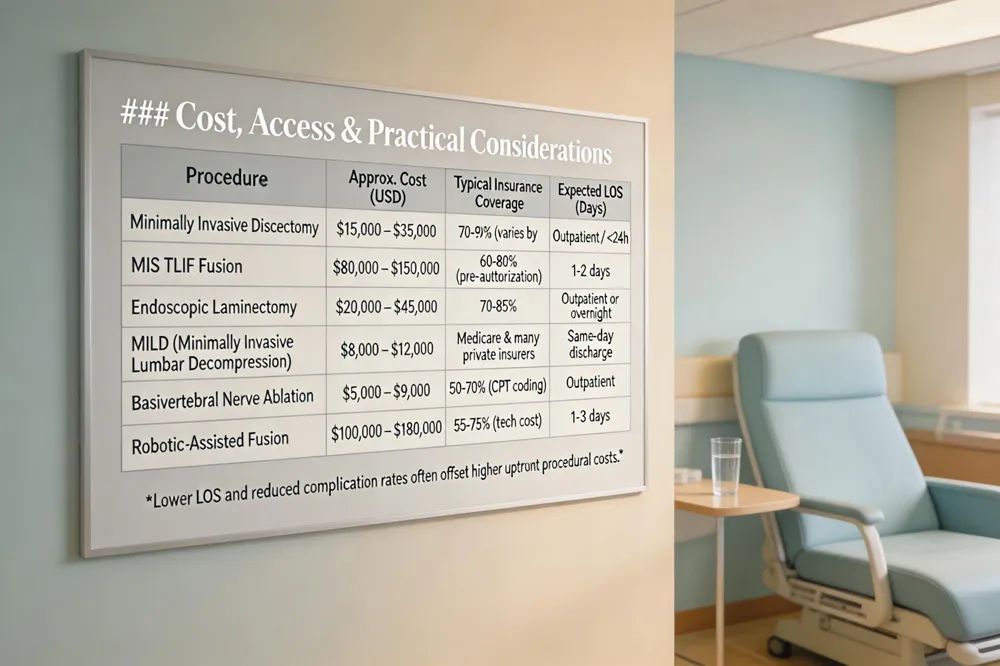
Minimally invasive spine surgery cost
MISS generally costs less than open surgery, but fees vary by procedure and insurance. A minimally invasive discectomy runs roughly $15,000‑$35,000, while a lumbar fusion ranges $80,000‑$150,000 for uninsured patients. Studies show lower hospital stays and complications can reduce overall expenditures, and most insurers cover a substantial portion of these costs.
Minimally invasive spine surgery near me
In the St. Louis area, the Orthopedic Spine Institute of St. Louis offers advanced, patient‑first MISS for herniated discs, stenosis, spondylolisthesis and more. Dr. David S. Raskas and his team use tubular retractors and endoscopic cameras to minimize tissue damage, and they accept most insurance plans. Online intake forms streamline the pre‑appointment process.
Minimally invasive spine surgery PDF
A comprehensive, free PDF titled “Fundamental Concepts of Minimally Invasive Spine Surgery (MISS) and Purpose to Pursue” is available at http://www.jmisst.org/upload/pdf/jmisst-2017-00227.pdf. It covers core principles, pre‑operative planning, benefits, and evidence supporting reduced morbidity and faster recovery.
Why back surgery should be avoided
Surgery carries infection, bleeding, nerve injury, and unpredictable outcomes, often requiring weeks to months of limited activity and high out‑of‑pocket costs. Non‑surgical options—physical therapy, lifestyle changes, and targeted injections—can provide comparable relief with far fewer risks.
Open spine surgery recovery period
Open procedures such as laminectomy need 3‑6 weeks for basic recovery and 2‑4 months to resume full activities; spinal fusion may require 3‑6 months before solid healing and 6‑12 months for complete recovery. Recovery is typically longer than with MISS.
Specialized Treatments for Specific Conditions
Specialized Treatments Overview
| Treatment | Indication | Candidate Criteria | Pros | Cons |
|---|---|---|---|---|
| MILD (Minimally Invasive Lumbar Decompression) | Ligamentum flavum hypertrophy causing lumbar stenosis | Persistent neurogenic claudication, failed PT/meds, MRI shows ligament‑based stenosis | Outpatient, <5 mm incision, rapid recovery | Not for large disc herniations, severe bony overgrowth |
| Basivertebral Nerve Ablation (Intracept®) | Vertebrogenic low‑back pain | Chronic pain >6 months, MRI/CT shows Modic changes, no major instability | Minimal invasion, pain relief without fusion | Limited to Modic‑type pain, variable long‑term data |
| Percutaneous Pedicle Screw Placement | Stabilization for fracture or fusion | Adequate bone quality, accessible pedicle corridor | Reduced muscle trauma, faster ambulation | Requires fluoroscopy/robotic guidance, learning curve |
| Endoscopic Tumor Removal | Metastatic vertebral lesions | Small‑to‑moderate tumor burden, palliative intent | Minimal blood loss, short stay | Not curative, may need adjuvant radiation |
| SI‑Joint Fusion (Percutaneous) | Sacroiliac joint pain | Positive diagnostic block, refractory to injections | Small incision, rapid return to activity | May need bilateral procedure, hardware‑related complaints |
Each specialized option is tailored to the underlying pathology and patient health status.
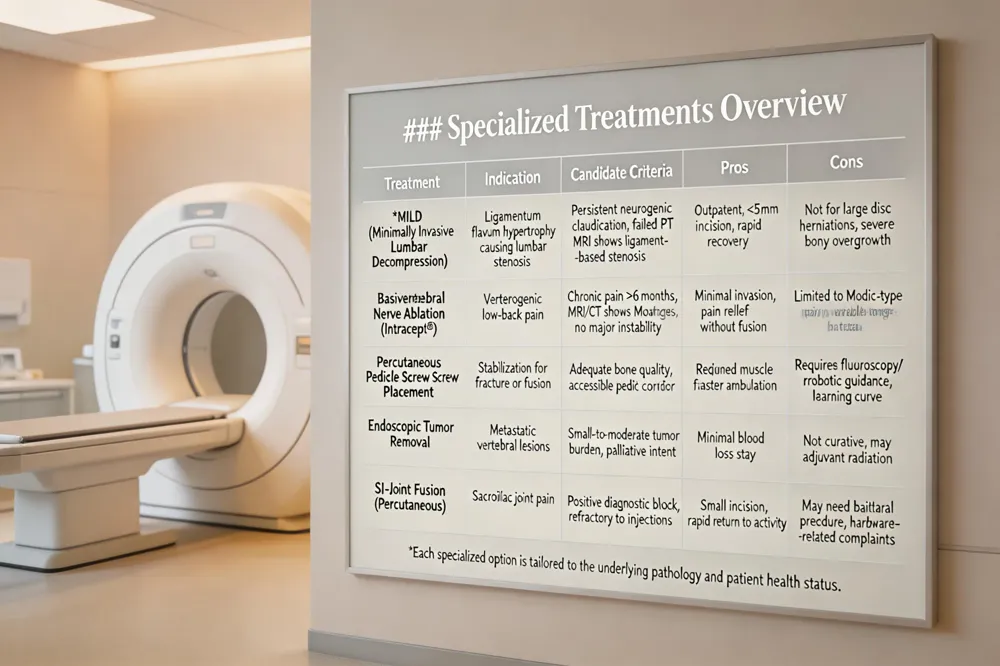 Mild minimally invasive lumbar decompression procedure
The MINIMALLY INVASIVE LUMBAR DECOMPRESSION (MILD) is an outpatient, image‑guided treatment that removes small pieces of thickened ligamentum flavum and bone through a ~5 mm incision under local anesthesia and mild sedation. It enlarges the lumbar canal, relieving nerve pressure for patients with spinal stenosis who have failed physical therapy, medications, or epidural steroid injections. Most patients go home the same day and resume normal activities within 24 hours. The FDA‑cleared kit is covered by Medicare and many insurers.
Mild minimally invasive lumbar decompression procedure
The MINIMALLY INVASIVE LUMBAR DECOMPRESSION (MILD) is an outpatient, image‑guided treatment that removes small pieces of thickened ligamentum flavum and bone through a ~5 mm incision under local anesthesia and mild sedation. It enlarges the lumbar canal, relieving nerve pressure for patients with spinal stenosis who have failed physical therapy, medications, or epidural steroid injections. Most patients go home the same day and resume normal activities within 24 hours. The FDA‑cleared kit is covered by Medicare and many insurers.
Failed mild procedure A “failed” MILD means persistent or recurrent leg pain, numbness, or neurogenic claudication despite the ligamentum‑flavum debulking. In such cases the surgeon reassesses imaging, optimizes medical therapy, and may consider repeat injections, targeted physical therapy, spinal cord stimulation, or more definitive surgical decompression.
Who is not a candidate for the mild procedure? Candidates are excluded if they have prior spine surgery at the target level, active infection, stenosis caused mainly by large disc herniations, tumors, or severe bony overgrowth, or uncontrolled medical conditions that make even minimal anesthesia unsafe. Adequate MRI/CT confirmation of amenable stenosis is required before proceeding.
Side effects of MILD procedure Most patients experience only mild bruising or soreness. Rare complications include epidural hematoma, infection, dural tear, spinal instability, or nerve injury. These events occur in a very small percentage of cases and are promptly managed.
Mild procedure pros and cons Pros: outpatient, tiny incision, local anesthesia, rapid recovery, low infection and blood‑loss risk, effective for ligament‑based stenosis. Cons: limited to specific pathology, may be ineffective for severe or complex disease, requires specialized surgeon expertise and may have variable insurance coverage.
Mild procedure patient reviews Patients report dramatic pain relief and quick return to daily activities. One patient described pain dropping from a near‑10 to zero after a 25‑minute procedure, enabling walking, climbing stairs, and resuming hobbies within days. Overall satisfaction is high, highlighting the minimally invasive nature and rapid recovery.
Rehabilitation, Lifestyle, and Long‑Term Management
Rehabilitation & Lifestyle Timeline
| Phase | Timeline | Allowed Activities | Restrictions |
|---|---|---|---|
| Immediate Post‑Op (Days 0‑3) | 0‑3 days | Bed‑to‑chair transfer, gentle walking, deep‑breathing exercises | No lifting >5 lb, no twisting, avoid driving |
| Early Recovery (Weeks 1‑4) | 1‑4 weeks | Light housework, short walks, stationary cycling (low resistance) | No heavy lifting >10 lb, no bending >90°, no prolonged sitting |
| Intermediate (Weeks 4‑8) | 4‑8 weeks | Return to desk work (if cleared), pool therapy, gradual core strengthening | Avoid high‑impact sports, limit stair climbing to 2‑3 flights per day |
| Advanced (Weeks 8‑12) | 8‑12 weeks | Full return to office work, light jogging, controlled resistance training | No heavy weightlifting (>25 lb) until surgeon approval |
| Full Return (3‑6 months) | 3‑6 months | Full occupational duties, high‑impact sports, heavy lifting | None, provided fusion (if performed) shows radiographic healing |
Adherence to the “no BLT with 2 pickles” rule (no heavy lifting or twisting) until cleared is critical for long‑term success.
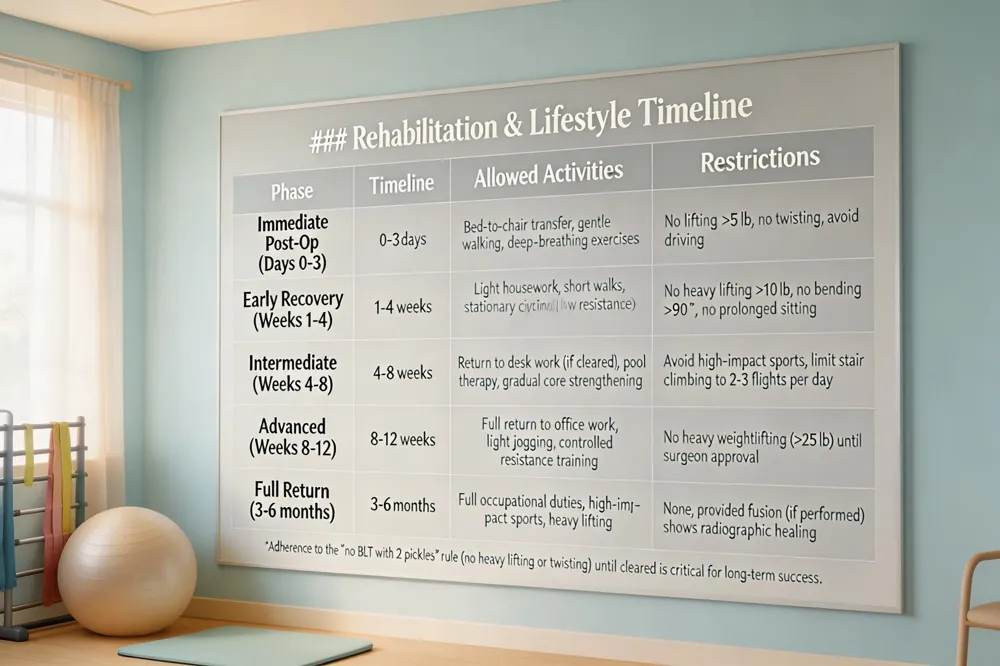 After minimally invasive spine surgery, patients typically feel less pain and can start gentle movement within the first few days. Light activities such as walking and simple chores are usually possible within a week, and a structured physical‑therapy program begins early to restore mobility and core strength. By weeks 4‑8, most patients can drive safely and return to normal work duties; full recovery for microdiscectomy or laminectomy occurs around 8‑12 weeks, while minimally invasive lumbar fusion may require 3‑6 months.
Stair use is permitted after fusion, but limit full flights to once or twice daily initially and increase gradually. Avoid bending at the waist or neck and follow the “no BLT with 2 pickles” rule—no heavy lifting or twisting until cleared.
After a laminectomy, strenuous activities (biking, jogging, weight lifting) should be avoided until the surgeon approves. Driving is restricted for 2‑4 weeks, and car rides longer than 30 minutes should be avoided during that period.
Conclusion: The Future of Spine Care at the Orthopedic Spine Institute
Future Vision – Key Pillars
| Pillar | Description |
|---|---|
| Patient‑First Conservative First | Rigorous non‑surgical trial before offering surgery |
| Multidisciplinary Collaboration | Surgeons, pain specialists, PT, imaging experts co‑manage each case |
| Technology Integration | Robotic navigation, AI‑driven implants, AR visualization become standard |
| Minimally Invasive Expansion | Ultra‑mini endoscopic approaches for disc, stenosis, and tumor cases |
| Outcome‑Driven Care | Continuous data collection, patient‑reported outcomes, and rapid feedback loops |
| Education & Access | Streamlined online intake, tele‑pre‑op counseling, broad insurance participation |
The Orthopedic Spine Institute of St. Louis commits to evolving these pillars to deliver safer, faster, and more effective spine care.
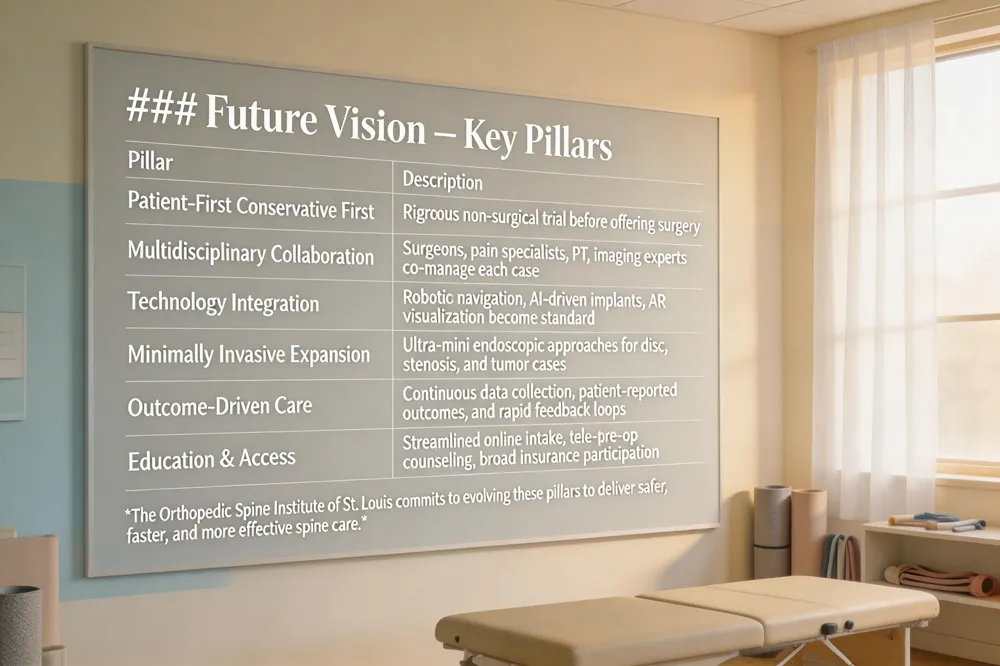 At the Orthopedic Spine Institute of St. Louis, the patient‑first model drives every decision—from rigorous conservative‑first evaluation to offering minimally invasive surgery only when it promises the greatest benefit. A multidisciplinary team of spine surgeons, pain specialists, physical therapists, and imaging experts collaborates to create individualized treatment plans that integrate the latest technologies, such as tubular retractors, high‑definition endoscopes, robotic navigation, and AI‑guided implant design. Continuous innovation ensures that patients receive cutting‑edge procedures like percutaneous decompression, basivertebral nerve ablation, and AI‑personalized interbody cages, all while minimizing tissue trauma, hospital stay, and recovery time. This seamless blend of compassionate care, expert teamwork, and relentless advancement defines the Institute’s vision for the future of spine health.
Conclusion: Embracing Innovation While Keeping the Patient First
Over the past two decades, minimally invasive spine surgery has evolved from tubular retractors to robot‑assisted navigation, endoscopic cameras, and AI‑driven patient implants. These technologies allow surgeons to treat herniated discs, spinal stenosis, spondylolisthesis, vertebral fractures and even tumors through incisions smaller than a centimeter, resulting in less blood loss, lower infection risk, shorter hospital stays and a faster return to daily activities. At Orthopedic Spine Institute of St. Louis we place patients at center of decision, beginning with care and advancing to minimally invasive options only when imaging confirms a clear target and the individual’s health profile supports it. Schedule a consultation today and discover how our team can restore function while honoring recovery goals.