Introduction: A Patient‑First, Value‑Based Approach
Over the past two decades spine care has shifted from large open incisions toward minimally invasive techniques that preserve muscle and reduce tissue trauma. The Orthopedic Spine Institute of St. Louis exemplifies this evolution with a patient‑first, multidisciplinary pathway that begins with conservative therapy, uses advanced imaging, navigation, and robotic assistance for precise tunnel‑based procedures, and transitions to surgery only when structural disease persists. Economic incentives reinforce this model: bundled payments, accountable care organizations, and shared‑savings arrangements reward lower‑cost, high‑value care, while outcome measures such as PROMIS, ODI, and VAS demonstrate that minimally invasive surgery delivers comparable or superior pain relief, faster mobilization, and shorter hospital stays. Together, clinical benefits and value‑based reimbursement make minimally invasive spine surgery a cornerstone of modern, cost‑effective spine care.
Foundations of minimally In Invasive Surgery (MISS)
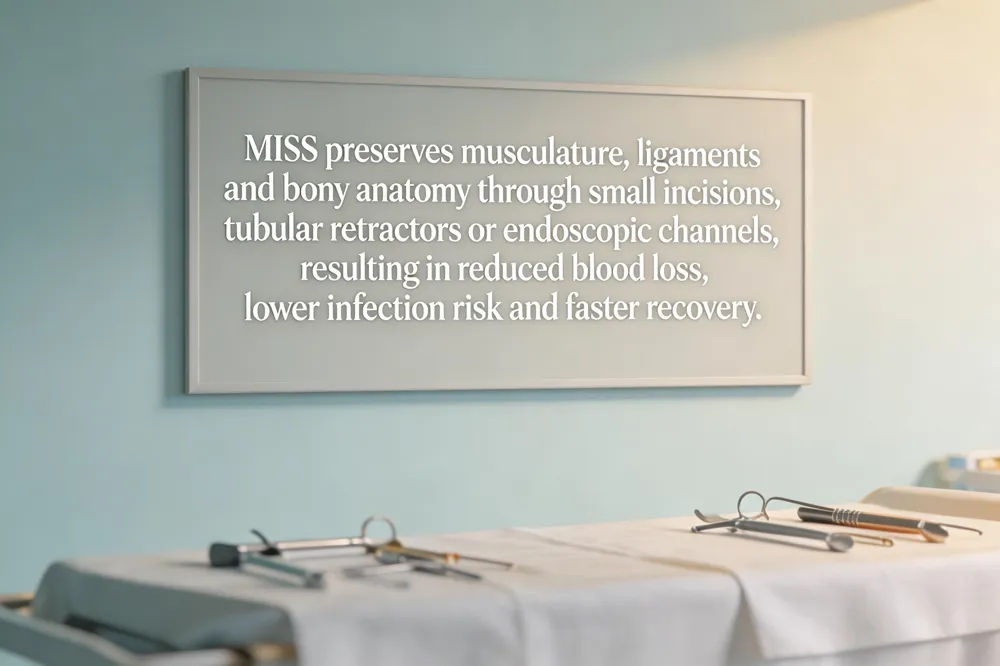 Minimally invasive spine surgery (MISS) is built on a tissue‑sparing philosophy that preserves the musculature, ligaments and and bony architecture around the spine. By creating a narrow corridor through tubular retractors or endoscopic channels, surgeons avoid the extensive muscle stripping required in open procedures, which translates into less intra‑operative blood loss, lower infection risk, and a faster return to daily activities.
Core principles of tissue‑sparing approaches
- Small incisions (often 1‑2 cm) that minimize skin and soft‑tissue trauma.
- Dilating, rather than cutting, muscle fibers to maintain the natural muscle‑plane.
- Targeted removal of pathology (disc fragment, bone spur, tumor) while preserving healthy structures.
- Early mobilization and multimodal pain control to reduce opioid use.
Key technologies
- Tubular retractors create a protected tunnel to the target site
- Endoscopic cameras provide high‑definition, magnified visualization through a 1‑cm working channel
- Robotic assistance (e.g., Mazor X, ROSA) improves pedicle‑screw accuracy by up to 1.7‑fold and reduces radiation exposure.
- Augmented reality / virtual reality overlays pre‑operative imaging onto the surgical field for real‑time navigation and rehearsal.
- Intra‑operative imaging (CT‑navigation, O‑arm, fluoroscopy) serves as a 3‑D GPS, ensuring precise implant placement.
Advantages over traditional open surgery
- Blood loss reduced by 30‑70 % (average 5 ± 3 mL for percutaneous discectomy).
- Hospital stay shortened to 0‑2 days; many procedures are performed outpatient.
- Post‑operative pain scores and opioid requirements are significantly lower.
- Infection rates drop to 1‑2 % versus 5‑10 % in open cases.
- Faster functional recovery—patients often resume light activities within 2‑4 weeks and full duties by 6‑8 weeks.
How to keep a healthy spine for life Stay active with low‑impact cardio (walking, swimming, cycling) and core‑strengthening exercises. Maintain a healthy weight, practice good posture, take regular breaks from prolonged sitting, and prioritize flexibility through daily stretching. Proper sleep alignment and supportive footwear further protect spinal structures.
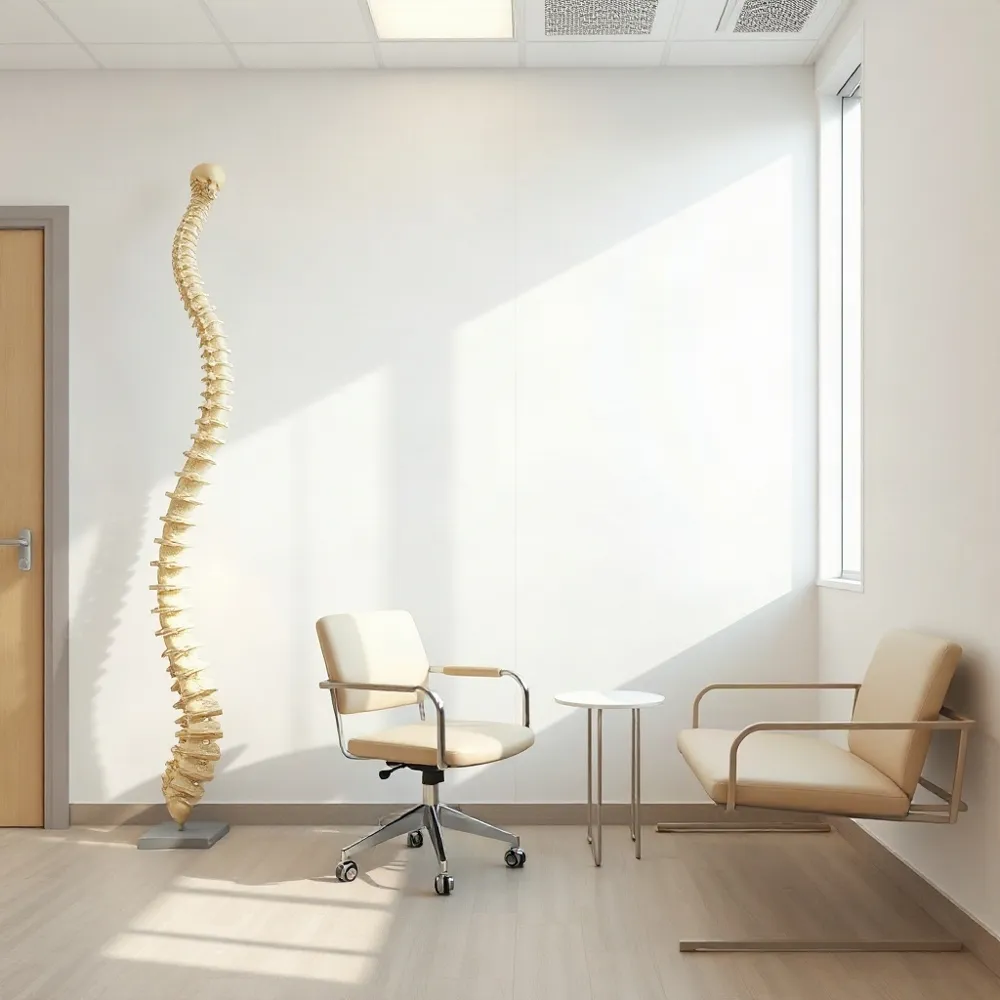
Healthy spine vs. unhealthy spine A healthy spine displays balanced cervical lordosis, thoracic kyphosis, and lumbar lordosis with neutral posture, allowing pain‑free movement. An unhealthy spine shows misalignment, loss of curvature, or degeneration, leading to pain, stiffness, and functional limitation. Restoring alignment through conservative care and, when necessary, minimally invasive surgery can reverse symptoms and preserve long‑term spinal health.
Clinical Evidence and Patient Selection
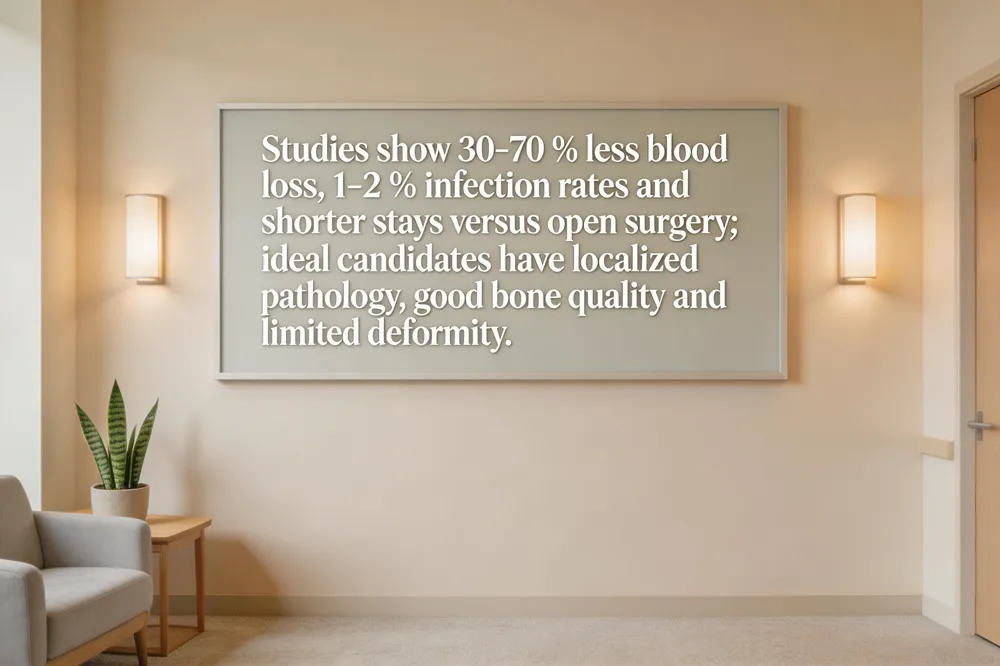 Clinical studies consistently show that minimally invasive spine surgery (MISS) reduces intra‑operative blood loss by 30‑70 % and lowers surgical‑site infection rates to 1‑2 % versus 5‑10 % for open procedures. Hospital stays are shortened to 1‑2 days, many patients being discharged the same day, and opioid consumption drops markedly, accelerating return to daily activities.
Appropriate candidates are patients with localized pathology such as a contained disc herniation, focal stenosis, or a single‑level vertebral fracture, who have adequate bone quality, limited spinal deformity, and no severe osteoporosis. Age, comorbidities, lesion size, and ability to tolerate anesthesia are also weighed. Multidisciplinary evaluation—including imaging, physiatrists, pain specialists, and surgeons—ensures that conservative care has failed before proceeding.
Compared with open surgery, MISS achieves comparable radiographic decompression and fusion rates while preserving muscle integrity, resulting in less postoperative pain and faster functional recovery. The trade‑off is a learning curve and the need for advanced imaging, navigation, or robotic assistance.
How to make my spine healthy again? Begin with a regular program of core‑strengthening and flexibility exercises, maintain a healthy weight, quit smoking, and follow an anti‑inflammatory diet. Practice good body mechanics, take frequent movement breaks, and seek evaluation at the Orthopedic Spine Institute of St. Louis where Dr. David S. Raskas can design a personalized conservative plan and discuss minimally invasive options when needed.
Strong painkillers for lower back pain Opioids such as hydrocodone, oxycodone, morphine, or tramadol are reserved for short‑term use after NSAIDs and physical therapy fail. They carry risks of dependence, constipation, respiratory depression, and must be prescribed and monitored by a spine specialist. At our institute, Dr. Raskas evaluates each patient, considers alternatives, and uses opioids only when absolutely necessary.
Conservative First, Surgical Second: The Care Pathway
 At the Orthopedic Spine Institute of St. Louis, patients begin with a structured, patient‑first algorithm that emphasizes conservative care before any surgery. First, physiatrists conduct a comprehensive evaluation, order MRI or CT imaging, and coordinate with physical therapists to design a personalized exercise and posture program. Pain specialists add targeted injections or radiofrequency ablation when needed, while nutritionists and psychologists support overall wellness. If the patient’s pain, radiculopathy, or functional limitation persists after 3–6 months of these non‑operative measures, the team discusses minimally invasive spine surgery (MISS) as the next step. Transition criteria include localized pathology confirmed on imaging, adequate bone quality, and failure of conservative therapy to achieve meaningful relief.
How to relieve back pain fast at home – Apply an ice pack for 15‑20 minutes, then switch to a heating pad. Perform gentle stretches (knee‑to‑chest, lower‑back rotation, cat stretch) twice daily, add a short core‑strengthening routine (bridge, shoulder‑blade squeeze), stay active with low‑impact exercise, and use OTC NSAIDs or acetaminophen as needed. Consult Dr. David S. Raskas for a tailored plan.
How to get rid of back pain instantly – For sharp pain, cold for 15‑20 minutes, then warm compress. Do a quick knee‑to‑chest or cat‑stretch, sit upright, engage core, and take an OTC NSAID per label. If pain persists or is accompanied by neurological signs, schedule an appointment with Dr. David S. Raskas promptly.
Advanced Imaging and Navigation in MISS
 Modern minimally invasive spine surgery (MISS) is driven by high‑definition imaging and navigation that turn a small tunnel into a precise operating theater. MRI‑guided cryoablation and intra‑operative ultrasound‑MRI fusion allow surgeons to target tumors, disc tissue, or painful facet joints while sparing surrounding structures, reducing collateral damage and postoperative pain. Robotic‑assisted pedicle screw placement now achieves roughly 1.7‑fold higher perfect‑placement rates than freehand techniques and cuts radiation exposure, thanks to real‑time 3‑D navigation and O‑arm imaging. Augmented reality overlays CT‑based anatomy onto the surgical field, giving the surgeon a virtual roadmap that enhances screw trajectory accuracy and speeds up the procedure.
Spine health foods: A diet rich in calcium and vitamin‑D sources—dairy, leafy greens, fortified tofu, salmon, sardines—supports vertebral strength. Plant‑based proteins (beans, lentils, quinoa, chia) reduce inflammation, while omega‑3s from fish and nuts, turmeric, ginger, and rosemary protect spinal tissues. Magnesium‑rich foods (nuts, seeds, avocados, whole grains) aid calcium absorption, and vitamin‑C‑packed fruits and vegetables promote collagen for discs and ligaments.
Spine health supplements: Calcium + vitamin D, magnesium, glucosamine, chondroitin, MSM, and anti‑inflammatory turmeric can fill nutritional gaps and support bone, muscle, and cartilage health. Always discuss supplements with your spine specialist before starting.
Economic Impact and Value‑Based Care
 Spinal care today is moving toward value‑based models that reward high‑quality, cost‑effective treatment. Bundled payments, accountable care organizations (ACOs) and shared‑savings arrangements encourage providers to streamline pathways, reduce unnecessary utilization, and focus on outcomes that matter to patients. Minimally invasive spine surgery (MISS) fits this paradigm perfectly. Although the equipment cost is higher, MISS consistently shortens hospital stays, lowers blood loss, and cuts postoperative opioid use, which translates into lower overall episode costs and faster return to work. Economic analyses show that the reduction in readmissions and complications offsets the upfront technology investment, making MISS cost‑effective in bundled‑payment contracts. The AAPM&R Spine Care Toolkit recommends specific outcome metrics to demonstrate value: PROMIS‑ Physical Function, Oswestry Disability Index (ODI), Visual Analog Scale for pain, Short Form‑36, and Euro‑QOL‑5D. By capturing these patient‑reported outcomes, clinics can prove clinical benefit, justify reimbursement, and align with APM incentives. In practice, a physiatrist‑led, multidisciplinary team evaluates each patient, selects appropriate minimally invasive techniques when indicated, and tracks these measures to ensure that spinal care delivers both clinical excellence and financial sustainability.
Specific Clinical Scenarios and Practical Guidance
 Managing severe or chronic back pain
To ease severe back pain, begin with gentle stretching and strengthening moves such as the knee‑to‑chest stretch, cat stretch, and bridge exercise, performing them two to three times daily to improve flexibility and core support. Apply heat or cold packs for 15‑20 minutes to reduce muscle spasms and inflammation, and consider over‑the‑counter pain relievers like ibuprofen or acetaminophen as directed. Maintain good posture, take frequent short walks, and avoid heavy lifting or twisting motions. If pain persists beyond a few days, worsens, or is accompanied by numbness or weakness, schedule an evaluation with Dr. David S. Raskas at the Orthopedic Spine Institute of St. Louis. A conservative‑first plan—physical therapy, medication, and targeted injections—will be outlined, and minimally invasive spine surgery (MISS) will be discussed if structural disease remains untreated.
Managing severe or chronic back pain
To ease severe back pain, begin with gentle stretching and strengthening moves such as the knee‑to‑chest stretch, cat stretch, and bridge exercise, performing them two to three times daily to improve flexibility and core support. Apply heat or cold packs for 15‑20 minutes to reduce muscle spasms and inflammation, and consider over‑the‑counter pain relievers like ibuprofen or acetaminophen as directed. Maintain good posture, take frequent short walks, and avoid heavy lifting or twisting motions. If pain persists beyond a few days, worsens, or is accompanied by numbness or weakness, schedule an evaluation with Dr. David S. Raskas at the Orthopedic Spine Institute of St. Louis. A conservative‑first plan—physical therapy, medication, and targeted injections—will be outlined, and minimally invasive spine surgery (MISS) will be discussed if structural disease remains untreated.
Female‑specific considerations Women should incorporate daily gentle stretches (knee‑to‑chest, lower‑back rotational, cat) 2‑3 times a day, and strengthen core and gluteal muscles with bridges and seated twists. Ergonomic seating, regular walking breaks, a healthy weight, and smoking cessation further lessen disc loading and improve circulation. When conservative measures fail, the Institute’s patient‑first approach evaluates eligibility for MISS procedures such as endoscopic discectomy or percutaneous vertebroplasty, which preserve surrounding tissue and reduce recovery time.
Vitamins for spine health Vitamin D enhances calcium absorption for strong vertebrae; calcium provides the bone’s structural foundation. Magnesium supports muscle relaxation and nerve signaling, while vitamin C aids collagen synthesis for intervertebral disc and ligament integrity. A balanced diet rich in these nutrients, combined with regular exercise and clinician guidance, promotes optimal spine health and may reduce the need for surgical intervention.
Future Directions: AI, Robotics, and Augmented Reality
 These advances also reshape training. The steep learning curve of MISS—typically 30‑50 cases—can be shortened through virtual‑reality simulations and AI‑guided feedback, enabling new surgeons to achieve proficiency while maintaining patient safety. As technology integrates into everyday practice, outcome measures such as PROMIS, ODI, and opioid consumption are expected to improve further.
Can chronic back pain go away on its own? Chronic back pain (≥3 months) rarely resolves without intervention; early movement, structured rehab, and professional care—including minimally invasive options—are essential for lasting relief.
How to live with chronic lower back pain? Take frequent short breaks, use a symptom diary, engage in low‑impact core‑strengthening exercises, apply heat or mindfulness techniques, and stay connected with a spine specialist to adjust treatment and consider minimally invasive procedures when needed.
Conclusion: Integrating MISS into a Comprehensive Spine Care Toolkit
Minimally invasive spine surgery (MISS) consistently delivers lower blood loss, reduced postoperative pain, shorter hospital stays and faster return to daily activities, with clinical studies showing fusion rates above 90 % for lateral lumbar interbody fusion and opioid use drop of 30‑50 % after endoscopic discectomy. When patient selection aligns with localized pathology, good bone quality and limited instability, these outcomes translate into higher satisfaction and lower overall costs. The Orthopedic Spine Institute of St. Louis embraces a patient‑first philosophy: we begin with conservative therapy, use advanced imaging and navigation to plan the optimal MIS approach, and involve a multidisciplinary team to support recovery. Schedule a personalized evaluation today to discover how MISS can fit your spine‑care plan and improve your quality of life.