Why Choosing the Right Spine Clinic Matters
A patient‑first approach is the cornerstone of modern spine care. Clinics that begin with conservative, evidence‑based therapies—physical therapy, targeted injections, and regenerative medicine—ensure that surgery is only considered when truly necessary, reducing unnecessary risk and cost. Multidisciplinary teams further enhance outcomes: neurosurgeons, orthopedic spine surgeons, pain specialists, physiatrists, and rehabilitation experts collaborate to create a unified, personalized plan. This collective expertise allows for precise diagnosis, seamless transition between non‑surgical and minimally invasive surgical options, and coordinated postoperative rehabilitation. When treatment pathways are grounded in the latest clinical guidelines and supported by high‑volume, technology‑rich programs, patients experience faster recovery, lower complication rates, and higher satisfaction. Choosing a clinic that embodies these principles means accessing comprehensive, safe, and effective spine care tailored to each individual’s needs.
Multidisciplinary Teams and a Patient‑First Philosophy
 Top‑tier spine clinics bring together a broad spectrum of specialists to create a seamless, patient‑first experience. The team typically includes board‑certified orthopedic spine surgeons, neurosurgeons, neurologists, pain‑management physicians, physiatrists, physical‑ and occupational‑therapy therapists, rehabilitation experts, and support staff such as nurse managers and social workers (e.g., Mount Sinai Spine, HSS, Stanford Medicine). This multidisciplinary composition enables precise diagnosis, coordinated treatment planning, and the ability to address complex pathologies—from herniated discs to spinal tumors—under one roof. A conservative‑first pathway is the cornerstone of care: patients start with non‑surgical options such as physical therapy, targeted injections, acupuncture, and regenerative medicine. Only when these measures fail does the team move to minimally invasive surgery, employing robotic navigation, intra‑operative imaging, and endoscopic techniques to reduce tissue trauma and shorten recovery. The patient experience is reinforced through transparent communication, shared decision‑making, easy online scheduling, secure portals for forms and insurance verification, and dedicated post‑operative rehabilitation programs. High satisfaction scores (often >4.5/5) and same‑day or next‑day appointments further demonstrate the commitment to a personalized, efficient, and compassionate spine‑care journey.
Meet Dr. David S. Raskas – The Surgeon Behind the Institute
 Dr. David S. Raskas, M.D., is the board‑certified orthopedic spine surgeon who leads the Orthopedic Spine Institute of St. Louis (OSISTL). He earned his medical degree from Saint Louis University School of Medicine, completed an orthopedic surgery residency at the University of Michigan Medical Center, and finished a spine‑surgery fellowship at UCLA Medical Center. Dr. Raskas holds board certification from the American Board of Orthopaedic Surgery and the American Board of Medical Specialties, confirming his expertise in both traditional and minimally invasive spine procedures. His hospital affiliations include St. Luke’s Hospital, Missouri Baptist Medical Center, and Memorial Hospital Belleville, allowing seamless coordination of surgical care and postoperative rehabilitation. OSISTL follows a patient‑first, conservative‑first model—starting with physical therapy, injections, and pain‑management programs before offering minimally invasive surgery when needed. The practice accepts a broad array of insurance plans and provides secure online intake forms, making it easy for new patients to schedule appointments. Dr. Raskas’s extensive training, certifications, and hospital partnerships position him as a trusted leader in back, neck, and sciatica treatment.
Comprehensive Services Offered at OSISTL
 Orthopedic Spine Institute of St. Louis (OSISTL) delivers a patient‑first, multidisciplinary approach for back, neck, and sciatica pain. Conservative treatment options begin the care pathway and include physical‑therapy programs, medication management, targeted epidural and facet‑joint injections, and regenerative therapies such as platelet‑rich plasma. When symptoms persist, OSISTL moves to minimally invasive surgical techniques—including endoscopic discectomy, micro‑discectomy, percutaneous kyphoplasty, and robotic‑assisted lumbar fusion—to reduce tissue trauma, shorten hospital stays, and accelerate recovery. The institute’s diagnostic imaging suite provides digital X‑ray, high‑resolution MRI, CT, and on‑site intra‑operative navigation, ensuring precise diagnosis and surgical planning. A dedicated Injury Access Clinic offers rapid, expert evaluation for work‑related and acute spine injuries, streamlining workers’‑work and delivering timely, coordinated care. All services are overseen by fellowship‑trained orthopedic spine surgeons, pain‑management specialists, and rehabilitation experts, guaranteeing individualized treatment plans that balance conservative care with advanced minimally invasive options.
How to Book an Appointment and Navigate Insurance
 The institute accepts most major plans—Medicare, Medicaid, Aetna, Anthem/Blue Cross Blue Shield, Cigna, and other regional carriers. Patients without insurance can pay by cash, check, Visa, or Mastercard on the day of service. Co‑payments, deductibles, and co‑insurance are typically collected at the visit, with any remaining balance billed after claim processing. Staff can help confirm network participation and answer billing questions.
For ongoing care, patients can log into the clinic’s patient portal to complete intake forms, view test results, and communicate securely with the care team.
Minimally Invasive Surgical Options Available
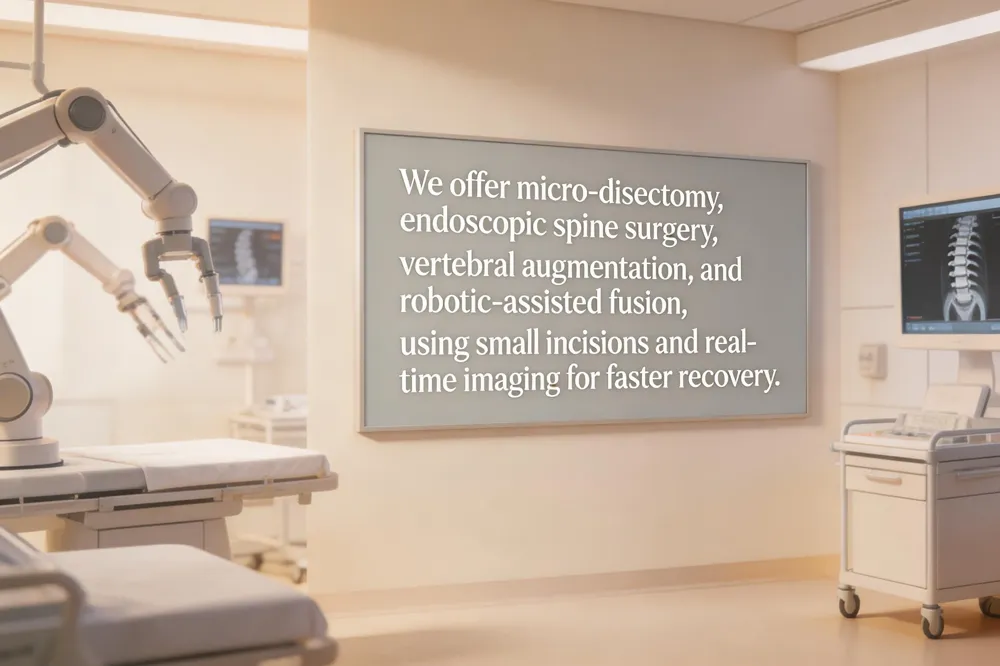 The Orthopedic Spine Institute of St. Louis follows a patient‑first, conservative‑first philosophy, but when non‑operative therapies fail, it offers a full suite of minimally invasive spine procedures. The institute’s repertoire includes micro‑discectomy, endoscopic spine surgery, and vertebral augmentation (such as kyphoplasty). Using small incisions, tubular retractors, and real‑time imaging (CT‑CT, O‑arm, robotic navigation), these techniques preserve muscle tissue, limit blood loss, and shorten hospital stays, enabling many patients to return home the same day. They are ideal for herniated discs, spinal stenosis, compression fractures, and selected cases of instability or spondylolisthesis. Dr. David S. Raskas evaluates each case individually, confirming that a minimally invasive approach is appropriate before proceeding. This commitment to advanced, evidence‑based surgery aligns with national standards and the institute’s high‑volume, board‑certified team.
Technology, Volume, Research, and Quality Accreditations
 Top‑tier spine centers distinguish themselves through cutting‑edge technology, high procedural volume, robust research, and nationally recognized safety standards. Robotic navigation systems such as ExcelsiusGPS, Mazor X Stealth, and intra‑operative imaging platforms (O‑arm, intra‑operative CT) enable millimeter‑precise screw placement and real‑time anatomy verification, reducing tissue trauma and shortening hospital stays. High surgical volume—exemplified by >4,000 procedures annually at Hospital for Special Surgery and >3,700 at BayCare Health System—signals deep surgeon expertise and the ability to manage complex pathology with low complication rates. Leading programs also embed research into everyday practice; Banner Health leverages $400 million NIH funding, while UCSF Spine Center runs >200 active trials, granting patients access to novel biologics, motion‑preserving implants, and AI‑driven planning tools. National recognitions such as U.S. News & World Report rankings, Healthgrades awards, Blue Distinction Center+ and DNV Advanced Orthopedic and Spine Center of Excellence validate these clinics' commitment to evidence‑based care, patient safety, and superior outcomes. Together, advanced technology, volume, research, and accreditation create a patient‑first environment where innovative, high‑quality spine care thrives.
Putting It All Together – Choosing a Top‑Tier Spine Clinic
A top‑tier spine clinic is defined by a multidisciplinary team of board‑certified orthopedists, neurosurgeons, pain specialists, physiatrists and rehabilitation experts who work together to create individualized, evidence‑based treatment plans. Key attributes include high surgical volume, advanced imaging and robotic navigation, minimally invasive surgical options, and a conservative‑first philosophy that prioritizes physical therapy, injections and regenerative medicine before surgery. National recognitions (U.S. News, Healthgrades, Blue Distinction), robust research participation, and accreditation by bodies such as The Joint Commission further signal quality and safety.
For patients, empowerment begins with transparent communication: understand your diagnosis, ask about non‑operative alternatives, and request outcome data. Use online portals to complete intake forms, verify insurance, and schedule appointments. Seek clinics that offer tele‑health visits, clear post‑op rehabilitation pathways, and patient‑education resources. By aligning your goals with a clinic that meets these standards, you can confidently navigate the spine‑care journey and achieve optimal, long‑term relief.