Why a Second Opinion Is Worth Considering
When a spine surgeon recommends an operation, patients often feel a mix of hope and anxiety. A second opinion can turn that uncertainty into confidence by confirming the diagnosis, outlining all viable treatment paths, and highlighting any less‑invasive options. Studies show that 10‑30 % of surgery recommendations change after a second review, reducing the chance of unnecessary procedures and the associated complications.
Insurance companies recognize the value of this safety net; most U.S. plans cover a second‑opinion consult when the initial recommendation involves major surgery, and many virtual services—such as Cedars‑Sinai’s Tele‑Spine program—are billed at in‑network rates. This financial support removes a barrier for patients who might otherwise forego a second look.
Beyond cost, a second opinion grants access to top‑tier specialists who may not be available locally. Through video visits, patients can connect with board‑certified orthopaedic surgeons, neurosurgeons, and pain physicians who use 3‑D imaging, neuro‑navigation, and minimally invasive techniques. By involving a multidisciplinary team early, patients gain a clearer picture of their condition, a realistic recovery timeline, and the peace of mind that comes from an informed, collaborative decision.
Understanding the Value of a Second Opinion
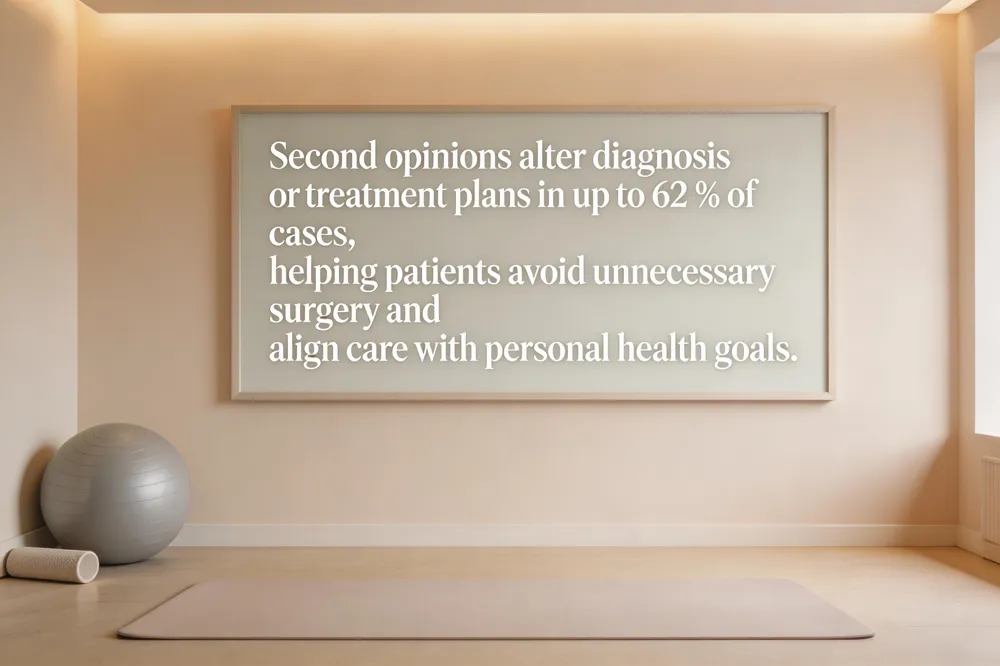 A second opinion from an experienced spine specialist can either confirm your diagnosis or uncover alternative explanations, giving you a clearer picture of all treatment pathways. Research consistently shows that 10‑62 % of second opinions result in a major change to the diagnosis or recommended plan, often shifting patients from invasive surgery to conservative care—or vice‑versa. At the Orthopedic Spine Institute of St. Louis, Dr. David S. Raskas and his multidisciplinary team review every MRI, CT, and X‑ray, discuss minimally invasive options such as endoscopic discectomy or artificial‑disc replacement, and outline realistic recovery timelines. This patient‑first approach ensures that your unique health goals, lifestyle, and comorbidities guide the decision‑making process.
Second opinions – By obtaining a second opinion you gain confidence that the proposed intervention is truly necessary, avoid unnecessary procedures, and benefit from the latest technology and evidence‑based guidelines.
Should you get a second opinion for spine surgery? – Absolutely. A second review can confirm the need for surgery, suggest less invasive alternatives, and provide peace of mind. Studies indicate that up to 62 % of patients experience a significant change in their treatment plan after a second opinion, underscoring its impact on outcomes and satisfaction. Secure your records, upload your imaging, and schedule a personalized, collaborative consultation today.
Preparing for Spine Surgery: What You Should Know
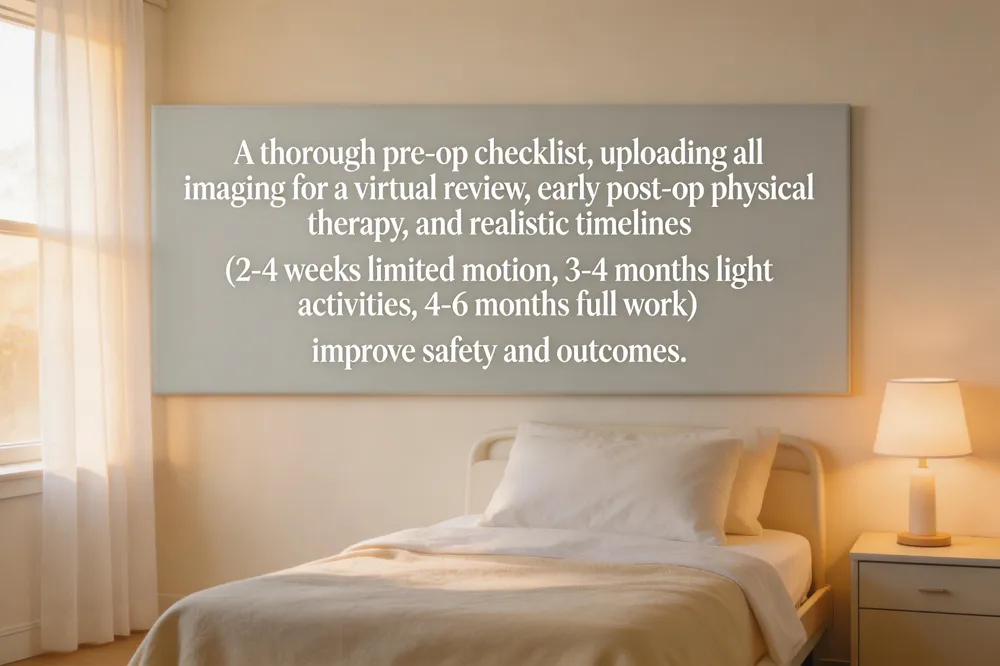 A successful spine operation starts long before the incision. Pre‑operative checklist includes stopping blood thinners, completing labs, confirming insurance, and arranging a caregiver for at least one to two weeks after discharge. Cedars‑Sinai and other top centers stress that uploading all imaging (MRI, CT) and medication lists for a virtual second‑opinion can verify the diagnosis and prevent unnecessary surgery.
Post‑operative physical therapy is not optional; guided exercises restore strength, protect the fused segment, and reduce stiffness. Most surgeons schedule therapy within 48‑72 hours of discharge and continue for 6‑12 weeks.
Timeline for recovery varies by procedure. Patients typically experience limited motion for the first 2‑4 weeks, gradual pain relief over 6‑12 weeks, and a return to light activities by 3‑4 months. Full return to work may take 4‑6 months, especially after multi‑level fusion.
Potential complications include infection, hardware failure, adjacent‑level disease, and persistent neurologic symptoms. Early reporting of fever, increasing pain, or new numbness is essential.
L4‑L5 treatment outcomes are encouraging: conservative care often resolves symptoms in 6‑12 weeks; micro‑discectomy yields 80‑95 % long‑term leg‑pain relief, while successful fusion can provide lasting stability. Ongoing spine‑healthy habits and adherence to therapy are key to permanent relief.
Things I wish I knew before spinal fusion surgery – the checklist, therapist importance of PT, realistic recovery timeline, and awareness of complications set expectations and improve safety.
Can L4 and L5 be cured permanently? – Many achieve symptom‑free status with proper treatment and lifestyle, but sustained success depends on a partnership with the spine team and adherence to post‑operative guidelines.
Decoding Back Pain: Disc vs Muscle, Strain vs Pull
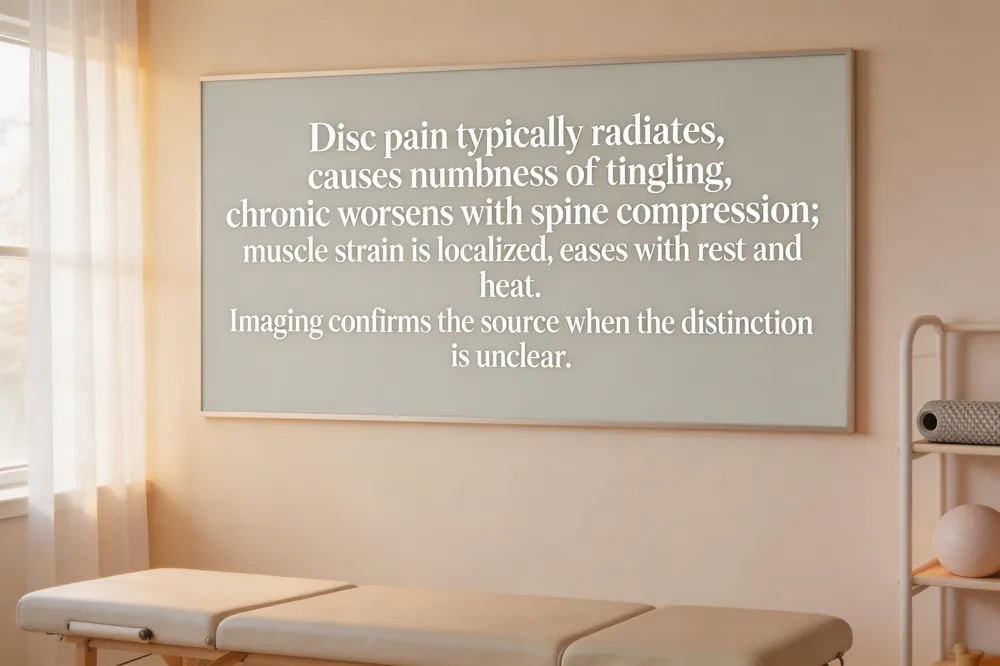 How do I know if my back pain is a disc or muscle? Disc‑related pain often shoots down the leg (sciatica), brings numbness or tingling, and worsens with movements that compress the spine—bending, twisting, or prolonged standing. Muscle strain feels like a localized, tender ache that may be "knotted," improves with rest, gentle stretching, or heat, and is usually confined to a specific spot. Sharp, radiating pain, weakness, or loss of feeling points toward a nerve‑root irritation from a disc, while pain that eases with relaxation and is tender to touch suggests a muscular issue. When the distinction is unclear, a clinical exam and, if needed, MRI or CT imaging can confirm the source—something a second opinion specialist can review to ensure the correct diagnosis.
Lower back strain vs pulled muscle A lower‑back strain is a soft‑tissue injury where muscles or tendons are overstretched or develop microscopic tears, often from lifting or poor posture. A "pulled muscle" describes a more severe tear, producing a sudden pop, noticeable bruising, and a marked loss of strength or range of motion. Both cause pain that worsens with movement and may lead to spasms, but a pulled muscle feels more intense and may show swelling. Initial treatment for either includes rest, ice, compression, and gentle stretching; persistent symptoms warrant physical therapy or further evaluation.
Can you hurt your back without knowing? Yes. Repetitive motions, poor posture, or improper lifting can cause micro‑trauma—tiny muscle strains, ligament sprains, or early disc degeneration—that the body tolerates until inflammation or nerve irritation becomes apparent. Early signs are often vague stiffness or a dull ache. If symptoms evolve into radiating pain, weakness, or numbness, a spine specialist should assess the condition. Obtaining a second opinion can confirm the diagnosis, rule out unnecessary surgery, and present alternative, less‑invasive treatment options, providing peace of mind before committing to any major intervention.
Red Flags and Serious Signs: When to Seek Immediate Care
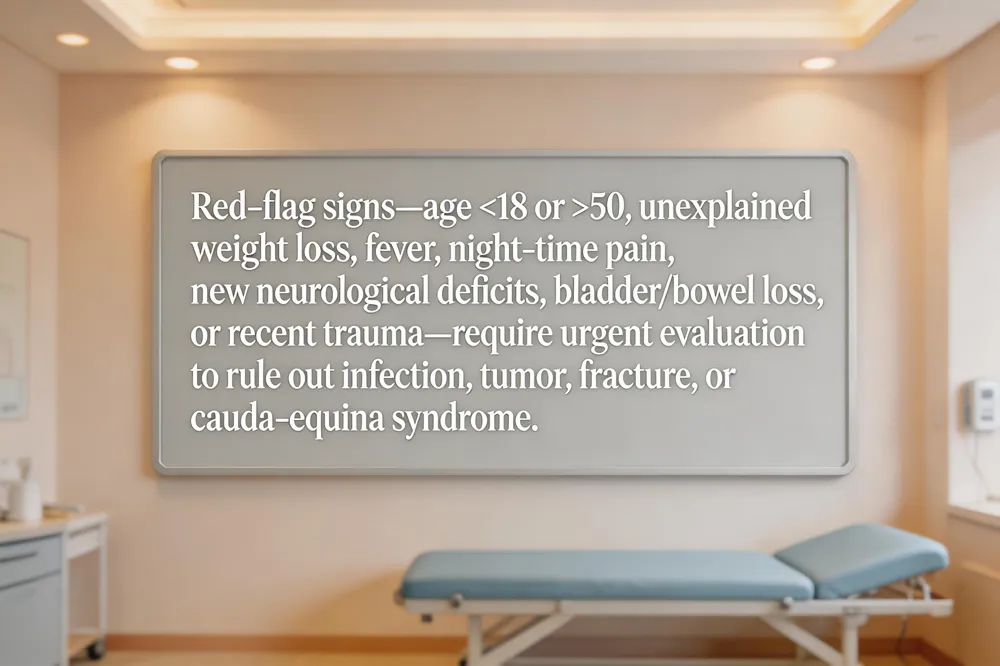 Back pain is common, but certain red‑flag signs signal a possibly dangerous underlying condition that requires prompt evaluation. Age‑related concerns include new‑onset pain in patients younger than 18 or older than 50, especially when the pain is severe or worsening. These age groups are at higher risk for serious pathology such as tumors or fractures. Systemic symptoms—unexplained weight loss, fever, night‑time pain that does not improve with rest, or a recent cancer diagnosis—suggest infection or malignancy involving the spine. Neurological deficits are especially urgent: sudden weakness, numbness, tingling, loss of coordination, or “saddle anesthesia” (numbness in the groin or buttocks) may indicate spinal cord or cauda‑equina compression. Emergency indicators also include loss of bladder or bowel control, severe constipation, or a recent traumatic event (fall, motor‑vehicle accident) that could cause fracture or dislocation.
What are 5 red flags of back pain? Red‑flag signs that should prompt urgent evaluation of back pain include age < 18 or > 50 with new‑onset pain, especially if it is severe or progressive. Unexplained weight loss or pain that worsens at night can indicate infection or malignancy. A personal history of cancer—a a recent diagnosis of a solid tumor—raises suspicion for metastatic spinal disease. Recent trauma, such as a fall or motor‑vehicle accident, or new neurological deficits like weakness, numbness, or gait disturbance suggest possible fracture, cord compression, or cauda‑equina syndrome. Finally, loss of bladder or bowel control, saddle anesthesia, or severe constipation is a medical emergency requiring immediate imaging and neurosurgical consultation.
What are the signs of a serious spine issue? Serious spine problems often present with sudden, severe pain that is sharp rather than a dull ache and may radiate down the legs or arms. Sudden weakness or loss of coordination in the limbs, especially if accompanied by numbness, tingling, or “pins‑and‑needles” in the groin or buttocks (saddle anesthesia), signals possible nerve or spinal cord compression. Loss of bladder or bowel control is a hallmark sign of cauda equina syndrome and requires immediate medical attention. Fever, unexplained weight loss, or pain that worsens at night can indicate an infection or tumor affecting the spine. Any of these red‑flag symptoms after an injury or trauma should prompt urgent evaluation by a spine specialist.
Getting Expert Guidance Remotely: Virtual and Remote Second Opinions
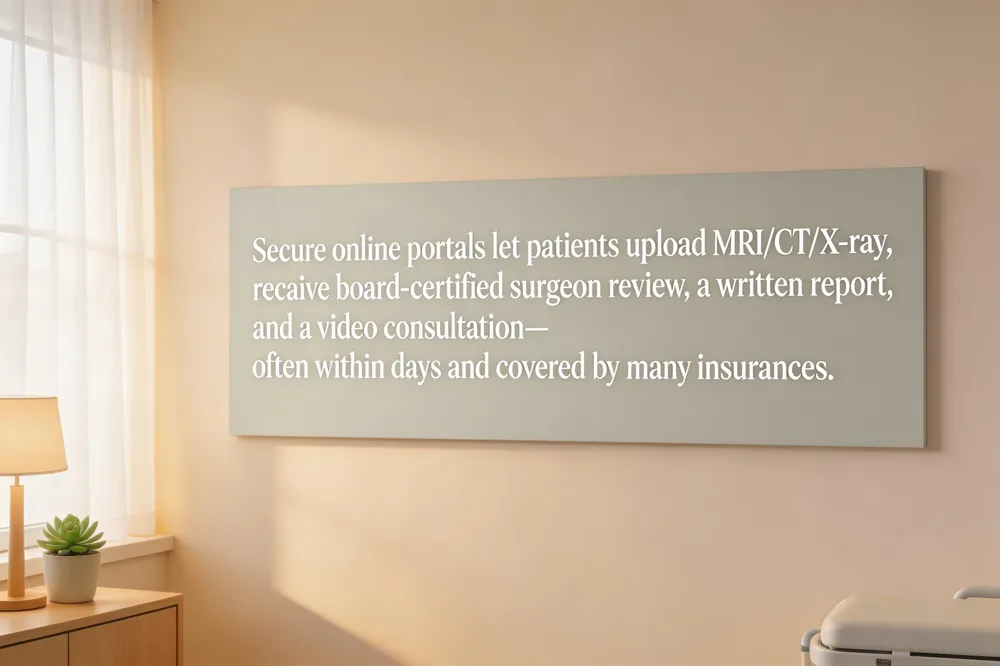 Modern spine care increasingly relies on secure, online platforms that let patients obtain expert second opinions without leaving home.
Remote second opinion – At the Orthopedic Spine Institute of St. Louis you can upload MRI, CT, X‑ray and other records through a HIPAA‑compliant portal. A board‑certified surgeon reviews the imaging and your treatment history during a video visit, confirms or refines the diagnosis, and outlines all viable options—from physical therapy to minimally invasive surgery. A detailed written report is provided, and a follow‑up with Dr. David S. Raskas can be scheduled if you choose to continue care.
Virtual second opinion program – OSI’s service works in a few business days. After the secure upload, the specialist prepares a personalized report and holds a one‑on‑one video consultation. No commitment to surgery is required, and many insurance plans cover the in‑person follow‑up.
Cedars‑Sinai second opinion** – Cedars‑Sinai’s virtual program connects patients nationwide with spine experts such as Dr. Sang D. Kim and Dr. Alexander Tuchman. After a nurse coordinator gathers your records, the specialist delivers a comprehensive report and an optional video education session, helping you weigh surgical versus non‑surgical paths while avoiding unnecessary procedures.
Take the Next Step With Confidence
Before committing to surgery, take time to review every treatment option. Compare conservative care, minimally invasive techniques, and traditional fusion, weighing risks, recovery time, and long‑term outcomes. Scheduling a second opinion is simple: gather recent imaging, medical records, and a list of questions, then contact the Orthopedic Spine Institute of St. Louis. Our board‑certified team will evaluate your case, discuss alternatives, and provide a clear, written recommendation. By partnering with OSI you receive a personalized, patient‑first plan that integrates conservative therapies, state‑of‑the‑art technology, and, when appropriate, minimally invasive surgery—ensuring you move forward with confidence and a healthier future for you today.