Why Immediate Action Matters
A spinal cord injury can be complete or incomplete, and the difference determines how much function can be recovered. Early medical evaluation is essential because swelling can worsen the injury within hours, and timely imaging (X‑ray, CT, MRI) helps doctors decide whether surgery, bracing, or conservative care is needed. From a legal standpoint, New York’s no‑fault insurance will cover initial treatment, but serious injuries often require a personal‑injury claim to recover lost wages, future care costs, and pain‑and‑suffering. Prompt documentation of symptoms and medical records strengthens that claim and prevents insurers from disputing injury severity. In short, rapid response protects both your health—by limiting secondary damage and improving rehabilitation outcomes—and your financial recovery by securing the evidence needed for fair compensation.
First 24 Hours: Emergency Response and Immediate Care
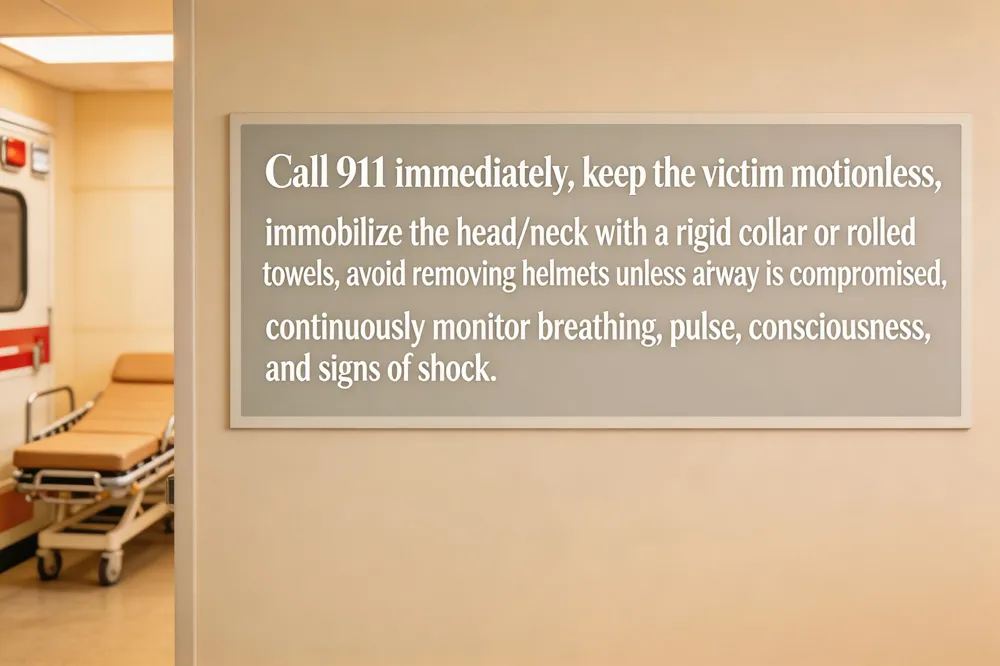 When a spinal injury is suspected after a car crash, the first priority is to summon professional help. Call 911 (or your local emergency number) immediately and keep the victim completely still. Stabilize the head and neck with a rigid cervical collar, rolled towels, or by gently supporting the jaw and lifting the chin forward—avoid any twisting or bending of the spine. If the person is wearing a helmet, leave it in place unless airway access requires removal. While waiting for responders, continuously monitor breathing, heart rate, consciousness, and signs of shock; give CPR only if the victim becomes unresponsive and stops breathing, using a jaw‑thrust technique without tilting the head.
What are the 5 general care steps for suspected spinal injury?
- Call emergency services right away.
- Keep the injured person motionless, especially the head, neck, and spine.
- Provide neutral neck support with a collar or rolled towel.
- Do not remove helmets or other protective gear unless airway access demands it.
- Watch vitals—breathing, pulse, consciousness—and be ready to start CPR if needed.
What is the immediate response to a spinal injury?
Call 911, immobilize the spine, maintain an open airway, and monitor vital signs until EMS arrives. Provide a concise injury report to responders.
What happens immediately after a spinal cord injury?
The body enters spinal shock: sudden loss of sensation, motor function, and reflexes below the injury level, swelling and possible bleeding increase pressure on the cord, and autonomic instability can cause blood‑pressure and heart‑rate fluctuations. Early medical intervention aims to limit secondary damage and set the stage for later rehabilitation.
Assessing and Diagnosing Spinal Injuries
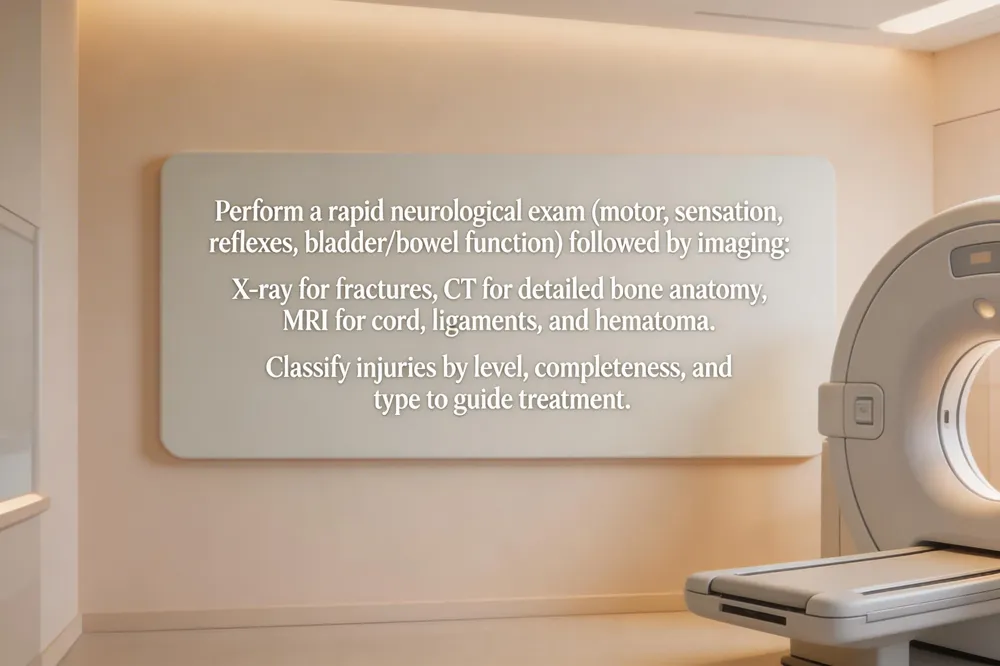 After a crash, the first clinical step is a thorough neurological exam—testing motor strength, sensation, reflexes and bladder/bowel function—to locate the level of deficit and determine completeness (ASIA A‑E). Imaging follows: X‑ray quickly identifies vertebral fractures, CT provides detailed bone and disc anatomy, and MRI visualizes the cord, ligaments, hematoma and compression. Together these studies classify injuries as bony (fractures, compression fractures, dislocations) or soft‑tissue (ligament tears, herniated discs, cord contusion) and as complete or incomplete, guiding treatment.
Types of spinal injuries include fractures, compression fractures, dislocations, ligamentous tears, herniated discs, spinal stenosis and cord contusions; completeness (complete vs. incomplete) and level (cervical, thoracic, lumbar, sacral) determine functional impact.
Treatment guidelines recommend early immobilization, MAP ≥ 85 mm Hg, surgical decompression within 24 h for compression, and multidisciplinary rehab beginning when stable, following ASIA and AO Spine protocols.
Head and neck injuries often signal cervical spine compromise; any neck pain, numbness or weakness mandates cervical collar and imaging. Injury to the head/neck may indicate cervical spinal‑cord involvement.
Four spinal regions are cervical, thoracic, lumbar and sacral, each with distinct neurologic patterns.
Recovery Timelines by Injury Type
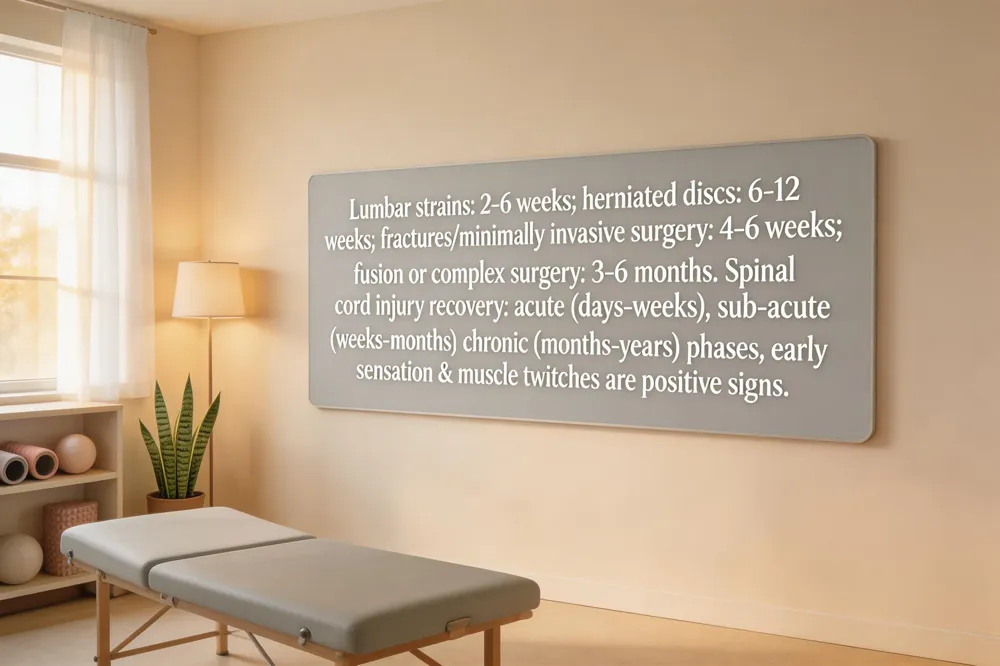 When a car accident results in spinal trauma, the timeline for healing depends on the region injured and the severity of the damage.
Lumbar spine injury recovery time – Mild strains or sprains often improve within 2–6 weeks with gentle activity and basic PT. herniated discs typically require 6–12 weeks of conservative care; fractures or severe disc pathology can take 12–16 weeks. Minimally invasive decompression may allow a return to normal activities in 4–6 weeks, whereas spinal fusion or more complex surgeries often need 3–6 months of rehab. Age, overall health, and adherence to a structured program influence the pace.
Upper‑back pain after hitting head – A jarring head impact can strain cervical or upper‑thoracic structures, causing ache, stiffness, and shoulder‑blade referral. Initial care includes rest, ice for 48 hours, and NSAIDs while avoiding heavy lifting. Persistent, severe, or neurologic symptoms (numbness, tingling, weakness, headache) warrant imaging (X‑ray or MRI). At the Orthopedic Spine Institute of St. Louis, we begin with conservative therapy and progress to minimally invasive procedures only when necessary.
Spinal cord injury recovery stages – Recovery unfolds in three overlapping phases: the acute stage (first 48 hours to weeks) focuses on stabilization, spinal shock management, and possible surgery; the sub‑acute rehabilitation stage (weeks to months) emphasizes intensive PT/OT to regain strength and function; the chronic phase (months to years) centers on long‑term functional restoration, adaptive equipment, pain control, and psychosocial support.
Signs of recovery from spinal cord injury – Early indicators include return of sensation (tingling, pins‑and‑needles), slight muscle twitches, improved range of motion, and reduced spasticity. Decreasing swelling and pain, along with higher scores on functional independence assessments, signal progressing neural healing.
Fall off ladder and landed on back – This mechanism can cause compression fractures, facet sprains, or disc injuries that may be hidden on exam. Immediate imaging (lumbar X‑ray, followed by CT/MRI if needed) is essential. Pain control, activity restriction, and a physician‑guided rehab program focusing on core strengthening and flexibility are the steps toward recovery. Emergency care is required if numbness, weakness, bladder/bowel loss, or instability develop.
Treatment Options: From Conservative to Surgical
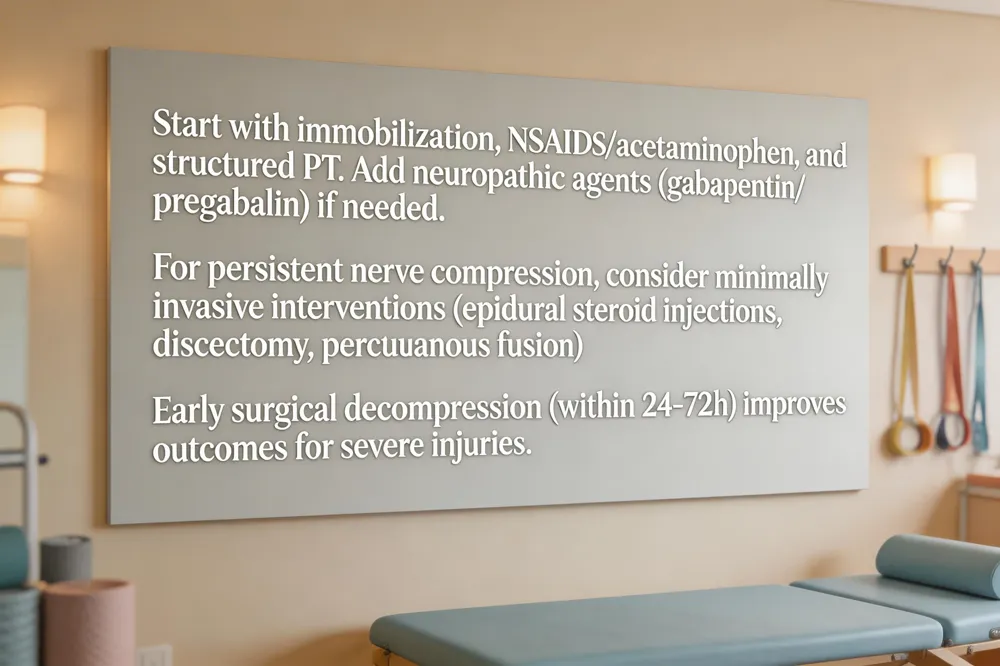 Spine injury treatment begins with a thorough evaluation—X‑rays, CT scans or MRI—to identify fractures, disc herniation, or spinal cord compression. In the acute setting emergency responders immobilize the spine while medical staff maintain airway, breathing and circulation. Most minor injuries improve with rest, activity modification and a structured physical‑therapy program that restores range of motion, strengthens core muscles and promotes tissue remodeling. Pain management starts with NSAIDs or acetaminophen; neuropathic pain often requires gabapentin or pregabalin, and severe pain may need short‑term opioids. When symptoms persist or nerve compression is evident, minimally invasive procedures—epidural steroid injections, discectomy, or percutaneous spinal fusion—can relieve pressure and stabilize the spine while minimizing tissue trauma.
If a neck injury is suspected, call 911, keep the victim still, and immobilize the neck with a cervical collar or rolled towels; do not remove helmets or move the head unless necessary for airway access. High‑dose steroids such as methylprednisolone may be used early for spinal cord injury, though current guidelines advise caution. Early surgical decompression (within 24‑72 hours) improves outcomes for severe injuries while ongoing rehabilitation with physical and occupational therapy restores function and supports a safe return to daily life.
Legal, Insurance, and Compensation Pathways
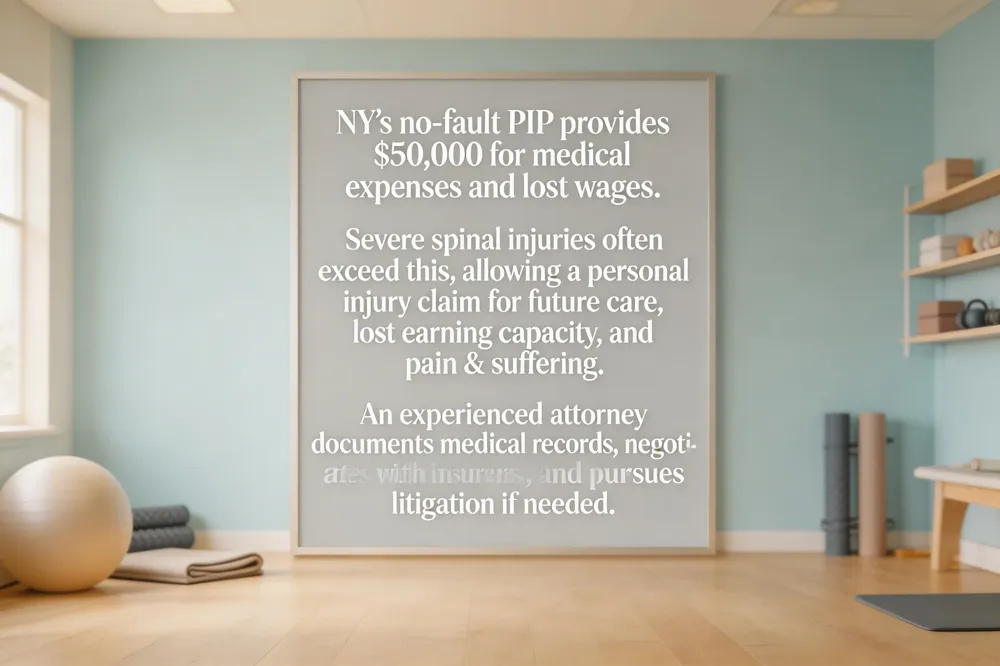 In New York, the no‑fault insurance system provides at least $50,000 in Personal Injury Protection (PIP) to cover medical expenses and lost wages, regardless of who caused the crash. However, serious spinal cord injuries often exceed PIP limits, allowing victims to pursue a personal injury claim against the at‑fault driver for additional damages such as future medical care, diminished earning capacity, pain and suffering. An experienced attorney is essential because insurers frequently dispute injury severity, limit payouts, or try to settle early before the full extent of the spinal injury is known. Attorneys can document the medical record, work with neurologists and spine specialists, and negotiate a fair settlement or take the case to trial, ensuring the victim receives compensation for both current and future expenses. Rubenstein & Rynecki, a Brooklyn‑based firm, offers free consultations to help spinal injury victims navigate these complex legal and insurance pathways.
Psychological and Long‑Term Support
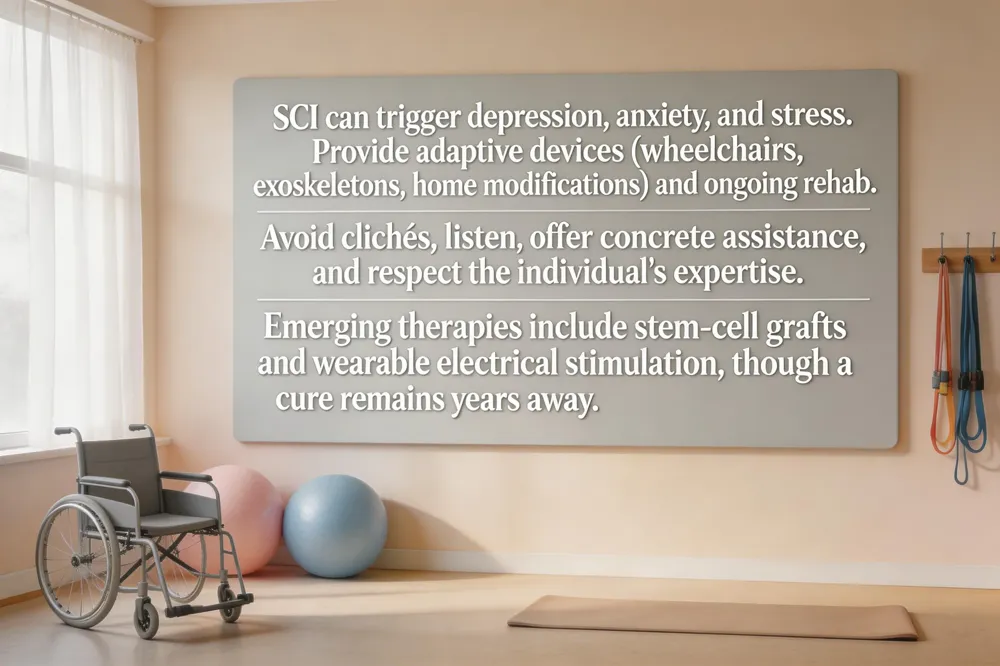 Spinal cord injuries (SCI) profoundly affect emotional health; the disruption of brain‑spinal communication triggers neuroinflammation, altered autonomic signaling, and mood disturbances such as depression, anxiety, and stress. Adaptive devices—wheelchairs, exoskeletons, and home‑modification technologies—help restore independence and mitigate secondary complications, while ongoing rehabilitation reinforces functional gains. Research is advancing rapidly: laboratory organoids, stem‑cell grafts, and wearable electrical‑stimulation systems are delivering meaningful functional improvements, yet a universal cure remains years away. When supporting someone with SCI, avoid clichés (“cheer up,” “you’ll be fine”), inspirational labels, or intrusive remarks about personal life; instead, listen, offer concrete help, and respect their expertise about their condition.
Moving Forward with Confidence
Patient‑first care is at the heart of everything we do. After your initial evaluation, our multidisciplinary team creates a personalized roadmap that blends evidence‑based therapy, adaptive technology, and ongoing education to restore mobility and independence. To start, simply call our office, use the online portal, or tap the 'Schedule' button on our website—our staff will confirm a convenient appointment within 24 hours and guide you through insurance or personal‑injury claim paperwork. From day one through long‑term follow‑up, you’ll receive continuous support: regular check‑ins, tele‑rehab options, mental‑health resources, and a dedicated case manager who ensures every question is answered and every hurdle cleared.