Understanding the Scope of Sacroiliac Joint Syndrome
Sacroiliac (SI) joint syndrome is a surprisingly common source of chronic low‑back pain, accounting for roughly 15 %–30 % of mechanical cases and up to 25 % of all adult patients with persistent lumbar discomfort. The SI joint is a stout synovial articulation that links the sacrum to the ilium, transmitting the body’s weight from the spine to the pelvis and lower limbs while permitting only a few millimetres of motion. This limited mobility is crucial for shock absorption during walking, stair climbing, and lifting, but it also makes the joint vulnerable to abnormal shear, torsion, and ligament strain. When the joint becomes hyper‑ or hypomobile—often after micro‑trauma, pregnancy‑related laxity, or degenerative arthritis—pain can radiate from the buttocks to the posterior thigh, worsen with sitting, forward bending, or climbing stairs, and cause a deep, stabbing quality that interferes with everyday tasks. The resulting functional limitations, chronic discomfort, and sleep disturbances can dramatically reduce quality of life, leading to reduced activity, mood changes, and even depression if left untreated.
Anatomy, Dysfunction, and Core Symptoms
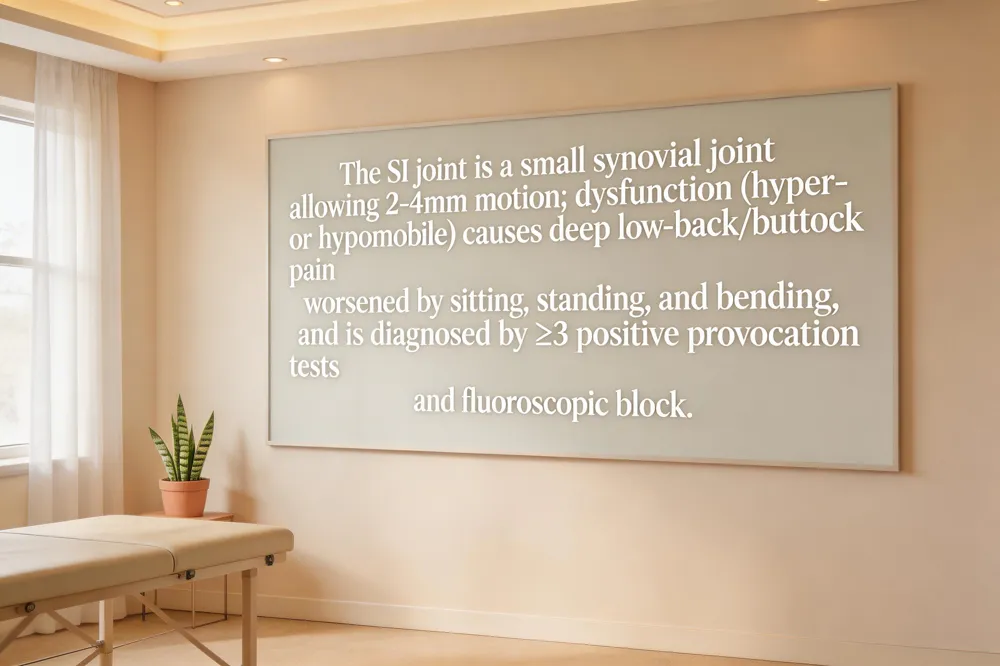 The sacroiliac (SI) joint is a small, synovial joint that links the sacrum to the ilium and permits only 2‑4 mm of motion, acting as a shock absorber for upper‑body forces. Dysfunction occurs when this joint becomes either hypermobile (excessive movement) or hypomobile (stiffness), often after pregnancy‑related ligament laxity, acute or repetitive trauma, osteoarthritis, or inflammatory arthritis. Women are especially prone because their SI joints are naturally more mobile.
Typical pain presents as deep low‑back or buttock discomfort that may radiate to the posterior thigh (usually not past the knee), groin, or hip. Pain worsens with prolonged sitting, standing, forward bending, stair climbing, or lying on the affected side, and may be sharp, stabbing, or a dull ache. The Fortin finger test (pointing within 1 cm of the posterior superior iliac spine) aids localization. Diagnosis relies on a cluster of three or more positive provocation tests (Gaenslen, thigh‑thrust, distraction, compression, sacral thrust) and is confirmed by fluoroscopic anesthetic block.
Management starts conservatively: activity modification, NSAIDs, core‑stability and pelvic‑girdle strengthening (e.g., bird‑dog, glute bridges, clamshells), manual manipulation, and supportive pelvic belts for hypermobility. Corticosteroid or anesthetic SI injections provide short‑term relief and diagnostic confirmation. For refractory cases, minimally invasive radiofrequency ablation or iFuse® triangular titanium implant fusion is considered after ≥6 months of failed conservative care.
Diagnosing SI Joint Pain: From Physical Tests to Imaging
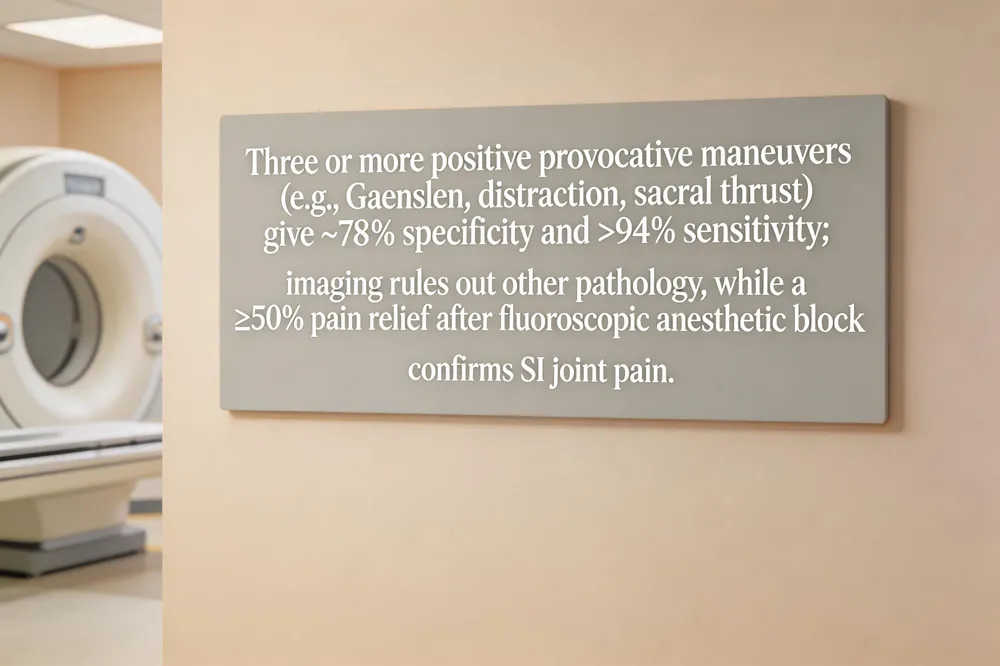 Provocative maneuvers such as distraction, compression, thigh‑thrust, sacral thrust, and Gaenslen’s test are the bedside workhorses for sacroiliac (SI) joint assessment. When three or more of these tests are positive, diagnostic specificity rises to roughly 78 % while sensitivity exceeds 94 %, providing a reliable clinical rule‑in for SI joint dysfunction. Imaging—plain pelvic X‑ray, CT, and MRI—serves mainly to exclude alternative pathology; MRI is most useful for detecting inflammatory sacroiliitis, whereas CT offers detailed osseous anatomy for pre‑procedural planning. The gold‑standard confirmation is an image‑guided intra‑articular anesthetic (± corticosteroid) injection; a ≥50 % reduction in pain after the block pinpoints the SI joint as the pain generator and guides subsequent therapy.
Where is SI joint pain felt? Patients report deep‑seated lower‑back and buttock discomfort, often unilateral, that may radiate to the hip, groin, anterior thigh, or down the leg, worsening with sitting, standing, or hip rotation.
SI joint hypermobility test The Stork (Flamingo) test—standing on one leg with the opposite knee lifted—reveals laxity when pain, excessive pelvic tilt, or alignment change occurs; it is typically combined with other provocation maneuvers for higher confidence.
Sacroiliac joint mobilization PDF A downloadable “SIJ Mobilization Guide” is available on the Orthopedic Spine Institute of St. Louis website under Resources/Patient Forms, offering step‑by‑step therapist‑administered techniques and self‑traction exercises.
Is walking good for sacroiliac joint pain? Yes. Low‑impact walking enhances circulation and engages core/gluteal stabilizers without high joint loads. Maintain upright posture, engage the abdomen, wear supportive shoes, and start with short walks, progressing as tolerated.
First‑Line Conservative Care: Medications, PT, Bracing, and Home Strategies
 NSAIDs and pain‑relief options Over‑the‑counter NSAIDs (ibuprofen, naproxen) are first‑line for reducing inflammation and pain. For persistent symptoms, a short course of prescription NSAIDs or a limited number of corticosteroid injections may be added, respecting the annual injection ceiling to protect bone and tendon health.
Core‑stability and pelvic‑belt programs Physical therapy emphasizes activation of the transversus abdominis and lumbar multifidus, progressing to glute‑strengthening bridges, bird‑dog, and resisted hip abductions. A pelvic (SI) belt worn snugly below the anterior superior iliac spines mimics the stabilizing effect of core muscles, limiting ligament strain for 6‑12 weeks.
Do‑and‑don’t list for daily activities Avoid high‑impact actions (running, jumping), heavy‑load exercises (deep squats, leg press), and twisting motions (full sit‑ups, plyometric twists). Do not cross one knee over the midline, lie with one knee tucked, or maintain poor sleeping postures. Stay active with low‑impact walking and maintain a healthy weight.
What not to do with sacroiliac joint pain
Do not engage in high‑impact activities such as running, jogging, or jumping, because the repeated jarring forces can aggravate the SI joint. Avoid heavy‑load exercises like deep squats, leg presses, and traditional weight‑lifting that compress the pelvis and stress the joint’s ligaments. Refrain from movements that involve intense twisting or bending of the torso, including full sit‑ups and plyometric twist drills, which can misalign the joint. Do not sit with one knee crossed over the midline or lie with the upper knee tucked under the body, as these positions torque the SI joint and increase pain. Finally, steer clear of poor sleeping postures, excessive weight gain, and prolonged sedentary periods, all of which can worsen SI joint discomfort.
How [ SI joint
A sacroiliac (SI) joint belt is a supportive brace that wraps around the hips to compress and stabilize the SI joint, helping to alleviate low‑back, pelvic, hip and sciatica pain caused by SI joint dysfunction. By limiting excessive movement, the belt reduces ligament strain and muscle spasms, which can improve posture and lessen referred leg pain. Most belts are made of lightweight, breathable fabric and are designed to fit discreetly under clothing, with size ranges that accommodate pelvic circumferences from about 30‑60 inches. They are often recommended as a first‑line, conservative treatment before considering injections or surgery, and can be especially useful for pregnancy‑related pelvic girdle pain or post‑injury recovery.
SI joint brace
An SI joint brace, also called a sacroiliac belt or band, is a non‑elastic strap that wraps around the pelvis to stabilize the sacroiliac joint and reduce low‑back, buttock, or leg pain. It works by limiting excessive motion of the joint, allowing inflamed ligaments and surrounding muscles to heal while providing immediate support during daily activities. Bracing is typically recommended as the first line of conservative treatment after a physician diagnoses SI‑joint dysfunction, often in conjunction with physical therapy, medication, or injections.
How to unlock SI joint by yourself
To “unlock” a tight SI joint at home, start with gentle pelvic‑mobility stretches such as a knee‑to‑chest stretch on a bed or mat, holding each side for about 20–30 seconds to flatten the low back and relax the hip flexors. Follow this with the Iron Cross stretch: lie on your back, lift one leg straight, and cross it over the opposite side, holding briefly before swapping sides—many people feel a subtle “pop” as the joint realigns. Add a prone Scorpion stretch by extending your arms out, lifting one leg slightly, and then bringing the foot toward the opposite hip, alternating sides to promote torsional mobility. Incorporate glute bridges with a controlled pelvic tilt, lifting the hips while keeping the core engaged to strengthen the muscles that stabilize the SI joint. Perform these stretches 2–3 times daily, listening to your body and stopping if pain increases.
Sacroiliac joint pain exercises
Effective SI joint pain relief focuses on gentle stretches and strengthening moves that stabilize the pelvis and core. Start with a single knee‑to‑chest stretch, holding each side 15‑30 seconds to mobilize the lower back and then progress to a bridging exercise, lifting the hips while keeping the back flat and holding for six seconds. Incorporate the bird‑dog (alternate arm and leg) to engage the core and glutes without twisting the trunk, and add clamshells on each side to strengthen the hip abductors. A doorway hamstring stretch can improve flexibility in the posterior chain, while a hip‑thrust targets the glutes and hamstrings for deeper pelvic stability. Perform each exercise 8‑12 repetitions, gradually increasing hold times as pain diminishes.
Intermediate Interventional Options: Injections, Radiofrequency, and Regenerative Therapies
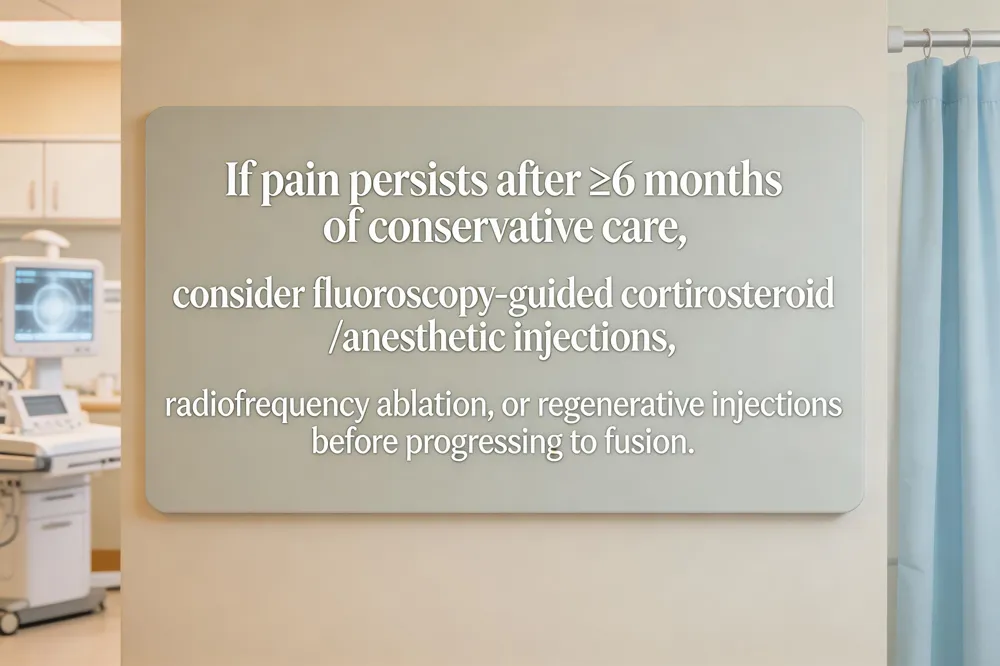 Can SI joint pain be cured? In acute or pregnancy‑related cases, rest, targeted physical therapy, and short‑term anti‑inflammatory medication often resolve symptoms. Chronic etiologies—degenerative arthritis, post‑lumbar‑fusion overload, or persistent overuse—rarely cure spontaneously and require a step‑wise approach: NSAIDs, core‑stabilization exercises, image‑guided corticosteroid or anesthetic injections, radiofrequency denervation, and, when refractory, minimally invasive SI‑joint fusion. Early diagnosis and a personalized, conservative‑first plan give the best chance for lasting relief.
SI joint dysfunction treatment Initial management emphasizes activity modification, ice/heat, and OTC NSAIDs (ibuprofen, naproxen). A structured PT program focuses on gentle stretching, core and gluteal strengthening, and low‑impact aerobic work to restore pelvic stability. Manual manipulation aids hypomobile joints, while pelvic belts support hypermobility. Persistent pain is addressed with fluoroscopy‑guided steroid/anesthetic injections, which also confirm the pain source. Refractory cases may progress to radiofrequency ablation or minimally invasive fusion.
SI joint hypomobility Hypomobility stems from arthritis, scar tissue, or post‑surgical fixation, leading to unilateral buttock or lower‑back pain radiating to the posterior thigh (usually above the knee). Diagnosis combines provocative maneuvers (Fortin finger test, Gaenslen’s, distraction and diagnostic blocks. Treatment is conservative: heat/ice, NSAIDs, gentle stretching, core‑strengthening, and manual mobilization. If pain persists, image‑guided injections, radiofrequency denervation, or fusion are considered.
Sacroiliac joint pain treatment At our institute, we start with NSAIDs and a customized PT regimen that stabilizes the lumbar‑pelvic‑hip complex. Fluoroscopic corticosteroid injections provide rapid symptom relief and diagnostic confirmation. When needed, radiofrequency ablation of the medial and sacral nerves offers medium‑term pain control, and minimally invasive SI‑joint fusion is reserved for refractory, disabling pain. Each plan is tailored to the patient’s diagnosis, activity level, and insurance coverage, ensuring a patient‑first pathway from conservative care to advanced minimally invasive options.
When Surgery Is Needed: Minimally Invasive Fusion and Long‑Term Management
 Indications for SI Joint Fusion
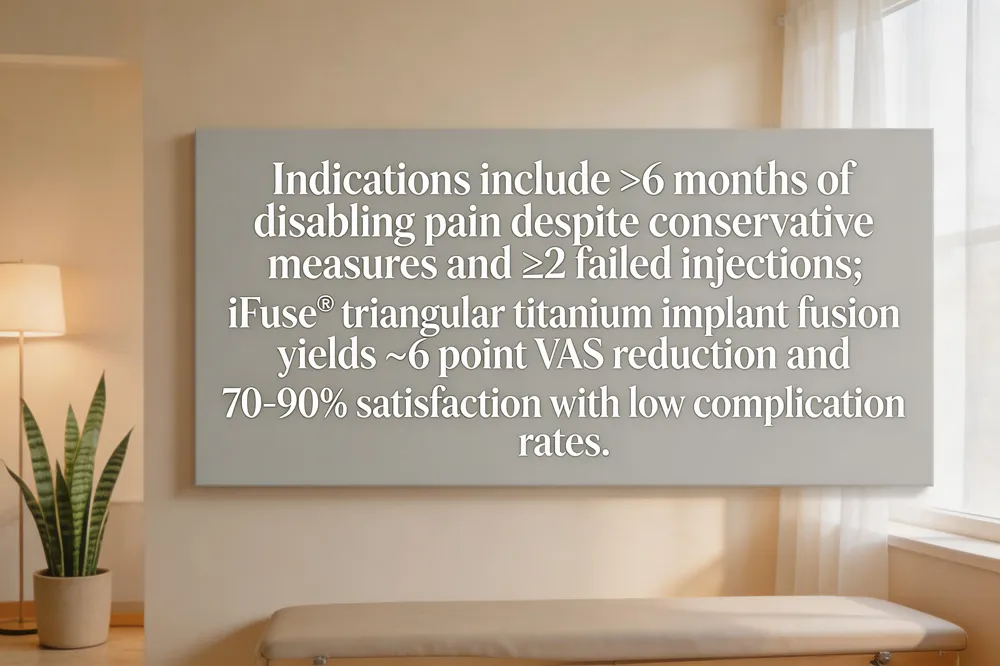
Patients are considered for fusion when they have persistent, disabling pain for >6 months despite comprehensive conservative care—including NSAIDs, targeted physical‑therapy, SI belts, manual manipulation, and image‑guided corticosteroid injections. Failure of at least two therapeutic injections or radiofrequency ablation, and a positive diagnostic block (>50 % pain relief) are typical criteria. Fusion is also reserved for those with joint instability from ligamentous laxity, post‑lumbar‑fusion overload, or refractory sacroiliitis.
iFuse Implant System Outcomes
The iFuse triangular‑titanium implant system is the most widely studied minimally invasive option. Randomized trials demonstrate an average VAS pain reduction of ~6 points and a 70‑90 % patient‑satisfaction rate at 12‑month follow‑up. Compared with continued conservative care, iFuse recipients report lower opioid use and faster return to daily activities. Complication rates are low (~11 %), most often minor wound irritation; serious events such as vascular injury are rare.
Post‑operative Rehab and Lifestyle Modifications
After fusion, patients begin gentle core‑stabilization and gluteal‑strengthening within the first week, progressing to functional tasks and low‑impact aerobic activity by weeks 4‑6. Maintaining a healthy weight, avoiding high‑impact sports, and using ergonomic seating aid long‑term joint health.
What is the treatment for sacroiliac joint pain nhs
On the NHS, treatment starts with OTC NSAIDs (ibuprofen or naproxen) and physiotherapy focusing on core and pelvic‑girdle strengthening. If pain persists, a diagnostic‑therapeutic SI‑joint injection is offered; refractory cases may receive radio‑frequency denervation or, rarely, surgical fusion.
SI joint belt
An SI‑belt wraps around the hips to compress and stabilize the joint, reducing ligament strain and improving posture. It is a first‑line conservative option, especially useful in pregnancy‑related pelvic pain or post‑injury recovery.
How to sit with SI joint pain
Sit with a neutral spine, thighs parallel to the floor, knees at a right angle, and feet flat. Use a lumbar cushion or small seat pad to distribute weight evenly, and take brief standing or stretching breaks every 30‑45 minutes.
Living Well With SI Joint Syndrome: Daily Habits, Sleep, and Exercise
 Keeping sacroiliac (SI) joint pain under control starts with smart daily habits. Low‑impact cardio—especially walking—helps maintain circulation and activates the glutes and core without the jarring forces of running or jumping. Aim for short, steady walks, keep an upright posture, and wear supportive shoes; increase duration only if pain stays low.
Sleep positioning is equally crucial. Back sleepers benefit from a firm pillow under the knees to keep the pelvis neutral, while side sleepers should place a sturdy pillow between the knees in a relaxed fetal pose. Avoid stomach‑lying and use a medium‑firm mattress that supports the spine’s natural curve. Pair these positions with gentle nighttime stretches for optimal relief.
A long‑term exercise program should blend mobility, strengthening, and stabilization. Begin with the single‑knee‑to‑chest stretch (15‑30 seconds each side), then progress to bridging, bird‑dog, and clamshells to fire the glutes, transversus abdominis, and lumbar multifidus. Hamstring doorway stretches and hip‑thrusts further protect the SI joint by improving posterior‑chain flexibility and pelvic alignment.
What not to do with SI joint pain? Skip high‑impact activities, heavy loading (deep squats, leg presses), twisting motions, crossed‑knee sitting, and poor sleeping postures. Excessive weight gain and prolonged sedentary time also worsen symptoms. By respecting these limits and following the movement guidelines above, patients can reduce flare‑ups, preserve function, and enjoy a higher quality of life.
Putting It All Together: A Patient‑First Path to Relief
Sacroiliac (SI) joint pain follows a clear diagnostic and treatment hierarchy. First, a thorough history and targeted provocative tests (at least three of five) identify the joint as a pain generator. If clinical findings are equivocal, imaging (X‑ray, CT, MRI) helps rule out other pathologies, and a fluoroscopy‑guided anesthetic block confirms the SI joint as the source of pain. Once diagnosed, care begins with conservative measures: activity modification, NSAIDs, core‑stability and gluteal‑strengthening programs, pelvic belts, and manual manipulation. Short‑term relief may be achieved with intra‑articular corticosteroid or anesthetic injections; refractory cases progress to radiofrequency ablation or prolotherapy. When pain persists despite exhaustive non‑surgical care, minimally invasive SI joint fusion is considered.
Because each patient’s anatomy, activity level, and underlying conditions differ, an individualized, multidisciplinary approach—combining primary‑care physicians, physical therapists, pain specialists, and orthopedic surgeons—optimizes outcomes. The Orthopedic Spine Institute of St. Louis embraces this patient‑first philosophy, offering comprehensive evaluation and a seamless pathway from conservative therapy to advanced interventions when needed. Schedule a consultation today to start your personalized journey toward lasting relief.