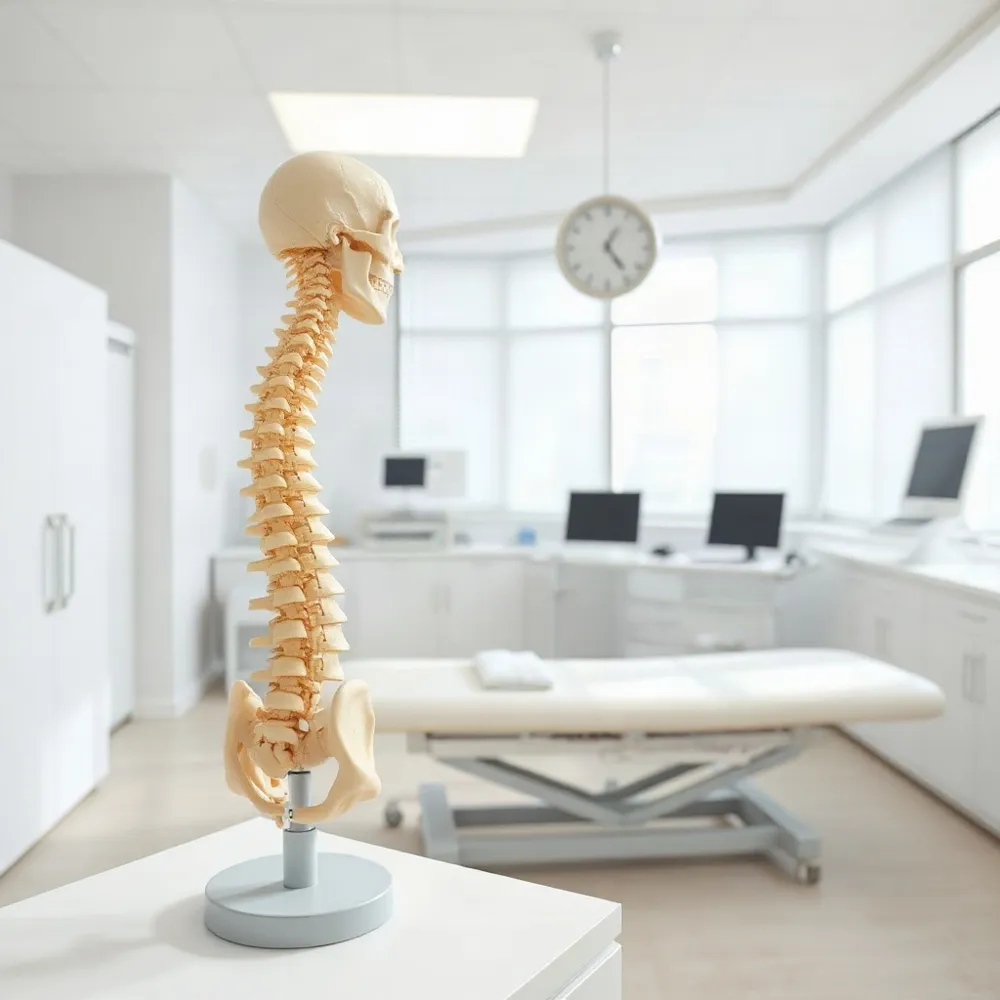
Opening the Conversation
Patients turn to cervical disc replacement when months, arm pain, or numbness persist despite at least six weeks of physical therapy, steroid injections, and other conservative measures. During the initial consultation the spine specialist conducts a detailed history, physical exam, and reviews imaging—X‑ray, MRI, or myelogram—to pinpoint the degenerated level(s). The surgeon also evaluates medical comorbidities, smoking status, and medication use. Candidacy hinges on having 1‑2 symptomatic cervical discs, adequate bone quality, and no active infection, severe facet disease, osteoporosis, or instability. Age, weight, and prior spine surgeries are also weighed. When these criteria are met, the team can discuss the benefits of a motion‑preserving artificial disc and outline the personalized recovery plan.
Pre‑operative Evaluation & Preparation
Before a cervical disc replacement, the surgeon conducts a thorough physical exam and reviews the patient’s medical history to identify any contraindications such as infection, metal hypersensitivity, osteoporosis, or severe facet disease. Imaging studies—including plain X‑rays, MRI, and occasionally a myelogram—pinpoint the degenerated disc(s) and assess alignment, spinal stability, and the health of adjacent joints. A meticulous medication reconciliation is performed; anticoagulants, NSAIDs, and supplements that affect clotting are often paused, and the patient is advised to stop smoking at least four weeks before surgery to improve bone healing and reduce infection risk. Comprehensive patient education outlines the procedural steps, expected hospital stay, activity restrictions, and the timeline for returning to daily activities and work. Setting realistic expectations about pain control, neck motion preservation, and the need for postoperative physical therapy helps patients feel confident and engaged in their recovery journey.
The Surgical Journey: Anterior Approach & Implant Placement
Cervical disc replacement is performed under general anesthesia with the patient positioned supine and the neck slightly extended to expose the anterior cervical spine. A modest transverse incision, usually 2–3 cm in length, is made just above the clavicle on the side of the neck, allowing the surgeon to navigate between the carotid sheath and the esophagus while preserving vital structures. Using fluoroscopic imaging, the surgeon precisely identifies the target vertebral levels and guides the instruments to the diseased disc space. The degenerated disc is then carefully excised, and the adjacent vertebral bodies are prepared by removing cartilaginous end‑plate material and creating a shallow trough to receive the prosthetic device. The artificial disc, constructed from biocompatible metals such as cobalt‑chrome alloy, titanium, or stainless steel, is implanted into the prepared space, restoring motion while maintaining spinal alignment. Throughout the procedure, real‑time imaging ensures accurate placement and minimizes the risk of injury to the spinal cord, nerve roots, or surrounding vessels.
Immediate Post‑operative Care & Hospital Stay
After cervical disc replacement, patients are transferred to a recovery room where nurses monitor vital signs, neurological status, and incision drainage for several hours. Pain is controlled with a combination of short‑acting opioids and non‑opioid analgesics, and the surgical site is kept clean and dry with sterile dressings; nurses assess the incision for redness or swelling before discharge. Within the first few hours, patients are encouraged to sit up and take short, frequent walks to promote circulation, reduce the risk of blood clots, and aid digestion. Most surgeons keep patients overnight for observation, typically a 24‑hour stay, during which they ensure the patient can tolerate oral intake, void a bladder, and ambulate safely. Discharge criteria include stable vital signs, controlled pain on oral medication, ability to walk short distances without assistance, and no signs of infection or neurologic deficit. Once these benchmarks are met, patients return home with instructions for activity restrictions, medication schedule, and follow‑up appointments.
Potential Complications and Early Warning Signs
What problems can occur with artificial disc replacement in the neck?
Like any surgical procedure, cervical disc replacement carries some risks. Understanding these helps you make an informed decision and recognize issues early.
Intra‑operative risks are rare but include dural tears (less than 1% of cases) and nerve injury (0.02% risk of paralysis). Experienced surgeons minimize these through careful technique and fluoroscopic guidance.
Early Postoperative Issues
Temporary dysphagia (difficulty swallowing) is the most common early issue, affecting up to 70% of patients. It usually resolves within days to a week. Hoarseness and sore throat from the anterior neck incision are also common and transient. Bleeding or hematoma formation is rare but requires prompt attention.
Infection at the incision site remains a small risk (under 2%). Watch for redness, purulent drainage, or fever—contact your surgeon immediately if these appear.
Long‑Term Concerns
Heterotopic ossification—bone formation around the implant—can limit its intended motion. Low‑grade ossification occurs in 1%–6% of cases, while higher grades may stiffen the segment. Implant wear over years is possible, though modern prosthetics (cobalt, titanium, or stainless steel) are designed for durability. In some cases, revision surgery may be needed for implant failure or adjacent‑segment degeneration.
| Complication | Occurrence | Typical Timeline | Action Required |
|---|---|---|---|
| Dural tear | <1% | Intra‑op | Immediate repair by surgeon |
| Dysphagia | Up to 70% | First few days | Usually self‑limited; monitor |
| Infection | <2% | 1–2 weeks post‑op | Contact surgeon for culture/antibiotics |
| Heterotopic ossification | 1%–6% (Grade 3‑4) | Months to years | Follow‑up imaging; possible therapy |
| Implant failure / revision | ~4%–5% at 7 years | Years | Surgical evaluation |
Patient factors influence risk: those with osteoporosis, severe facet disease, or prior neck surgery have higher complication rates. Your surgeon will assess these during pre‑operative screening.
Early warning signs that warrant immediate medical attention include continuous wound bleeding, purulent drainage, severe pain unrelieved by medication, fever above 101°F, worsening swallowing difficulty, or new numbness/weakness in arms or legs.
Life After Surgery: Returning to Normal Activities
Cervical disc replacement (CDR) offers rapid pain relief and restored mobility, allowing patients to reclaim everyday life. Most individuals experience a dramatic reduction in neck and arm pain within the first few weeks, and because the artificial disc preserves natural motion, neck rotation, flexion, and extension remain intact—unlike fusion, which locks the segment.
Timeline for driving, work, and recreation
- Days 1‑2: Hospital discharge (often same day) with short walks to promote circulation.
- Week 1‑2: Light activity only; no lifting over 10 lb, no driving, and limited bending.
- Week 2‑4: Follow‑up imaging, start outpatient physical therapy, and resume desk work or light duties.
- Week 4‑6: Gradual return to normal chores, short walks, and light household tasks.
- Week 6‑12: Strengthening and flexibility exercises; most patients can drive, return to full work duties, and engage in low‑impact sports (swimming, cycling).
- 3‑6 months: Full integration of the prosthesis; high‑impact activities remain discouraged, but most recreational pursuits are permissible.
Preservation of neck motion versus fusion CDR maintains motion at the treated level, preventing the loss of rotation that fusion patients often report. This motion preservation reduces the risk of adjacent‑segment degeneration and supports a more natural neck function.
Success rates and patient satisfaction Clinical trials show 75‑93 % pain‑relief success and over 90 % overall patient satisfaction. Patients commonly report being able to lift children, perform household tasks, and enjoy hobbies previously limited by chronic pain. Temporary activity restrictions are only during the healing phase; long‑term, patients achieve an unrestricted lifestyle.
Overall Recovery Timeline for Cervical Disc Replacement
First 24–48 hours: monitoring and gentle movement – After the procedure the patient is observed in a recovery area or short‑stay unit. Vital signs are checked, and the surgeon encourages gentle arm and leg movements to promote circulation and prevent clots. Pain is managed with oral analgesics and, if needed, short‑acting opioids.
Hospital stay (1–3 days) and pain control – Most patients are discharged after an overnight stay, though some may stay up to three days. The focus is on pain control, wound care, and the first short walks.
First week: rest, light walking, activity restrictions – At home, patients rest, keep the incision clean, and take frequent short walks. Heavy lifting, twisting, and driving are avoided; a soft collar may be used for comfort.
Weeks 2–4: gradual return to daily tasks, start of PT – Follow‑up X‑rays assess implant position. Light desk work often resumes, and outpatient physical therapy begins to restore neck mobility and core strength.
Weeks 4–6: increased activity, light exercise – Patients can increase walking distance, perform gentle stretching, and may return to non‑physical work. Light resistance exercises are introduced under therapist guidance.
Months 3–6: full neck strength, motion, and return to work – By three months most individuals resume normal activities, sports (non‑impact), and full work duties. Full neck strength and range of motion are typically achieved by six months.
What is the recovery timeline for a cervical disc replacement? The recovery timeline for cervical disc replacement typically spans 3 to 6 months for most patients. In the first 24–48 hours after surgery, you are monitored for stability and encouraged to move your arms and legs gently. You may stay in the hospital for 1–3 days, focusing on pain management and short walks. During the first week at home, rest and light walking are emphasized, with most patients resuming daily activities within 4 to 6 weeks. Full recovery, including restored neck strength and mobility, is usually achieved between months four and six.
Level‑Specific Recovery: C5‑C6 Disc Replacement
C5 C6 disc replacement recovery time Recovery from a C5‑C6 cervical disc replacement typically spans 3 to 6 months for full healing, though many patients notice significant improvement within the first few weeks. The initial 24‑hour hospital stay is followed by early mobility—short, frequent walks to promote circulation. During the first week patients focus on rest, light activity, and strict avoidance of heavy lifting, driving, or neck twisting.
Early milestones By day 2 most patients can move independently and resume light daily tasks. At 2–3 weeks, under surgeon guidance, patients may increase light activities such as short walks and gentle neck movements. Driving is usually postponed for at least 2 weeks, and lifting is limited to <10 lb.
Physical therapy schedule Physical therapy generally begins around 4–6 weeks post‑op, beginning with gentle range‑of‑motion exercises and progressing to strength‑building and endurance drills through weeks 6–12. By three months most patients return to normal activities, swimming, or cycling, with the artificial disc fully integrated.
Success statistics for the C5‑C6 level Clinical data show C5‑C6 cervical disc replacement has a high success rate—approximately 81 % at 10 years and over 90 % patient satisfaction. Compared with fusion, it offers lower re‑operation rates, preserves neck rotation, and facilitates a quicker return to work and daily life.
Level‑Specific Recovery: C6‑C7 Disc Replacement
C6‑C7 disc replacement follows a predictable healing trajectory that usually spans three to six months. Early post‑operative phase (first 1‑2 weeks) involves a brief hospital stay of 1‑3 days, after which patients rest at home, keep the incision clean, and limit neck movement. Heavy lifting, driving, and vigorous activity are prohibited, and patients are encouraged to take short, frequent walks to promote circulation and prevent blood clots.
Physical therapy progression begins with gentle range‑of‑motion exercises in the first two weeks, advancing to supervised outpatient PT by week 3‑4. Between weeks 4‑6, strengthening of the deep neck flexors and scapular stabilizers is emphasized, followed by more intensive conditioning (flexibility, endurance, low‑impact cardio) through weeks 6‑12.
Return to work and hobbies is typically possible within 2‑4 weeks for desk‑bound jobs, while more physically demanding occupations may require 4‑6 weeks. Most patients resume light hobbies (walking, swimming, cycling) by three months, and full activity, including non‑contact sports, is achieved by six months.
C6‑C7 disc replacement recovery time: Recovery from C6‑C7 disc replacement surgery typically takes about 3 to 6 months for most patients, though many notice significant improvement within a few weeks. The initial phase involves a hospital stay of 1 to 3 days, followed by a focus on rest and light activity during the first week at home. For the first 1 to 2 weeks, patients are advised to avoid heavy lifting, strenuous activities, and driving until off pain medication. By 3 weeks to 3 months, mobility gradually increases with physical therapy, and full recovery of strength and flexibility is often achieved by 3 to 6 months. Individual timelines vary based on overall health, adherence to postoperative guidelines, and the specific surgical approach used.
Visualizing the Procedure: Surgery Videos
A short visual guide shows the anterior surgical approach, the step‑by‑step disc removal and prosthetic placement, and animated models that demonstrate motion preservation. Trusted patient‑education sites such as Veritas Health provide unbiased video resources for informed decision‑making and surgical confidence today.
Cervical disc replacement surgery videos typically illustrate the procedure step‑by‑step, showing how a damaged disc is removed and replaced with an artificial implant to restore motion in the neck. These videos often highlight the anterior surgical approach, where the spine is accessed from the front of the neck, and the use of specialized instruments to place the device. Many animations demonstrate how the artificial disc mimics natural movement, protecting adjacent spinal levels and reducing pain or numbness. Reputable sources, such as Veritas Health and surgeon education libraries, provide peer‑reviewed video content that covers benefits, risks, and recovery expectations. Patients can use these videos to better understand the procedure, visualize the implant’s function, and discuss candidacy with their spine specialist.
Long‑Term Outlook: Success, Adjacent Segments, and Revision Risks
Cervical artificial disc replacement (C‑ADR) provides durable symptom relief, with clinical trials reporting 75‑93 % pain‑relief success rates and high patient‑satisfaction scores (>90 %). The prosthetic discs, typically made of cobalt, titanium or stainless steel, are designed to endure the mechanical demands of the cervical spine for many years; most studies follow patients for at least five years with low rates of device failure.
A notable long‑term concern is heterotopic ossification (HO), the formation of bone around the implant that can limit motion. Two‑year HO grades 3‑4 occur in 1‑6 % of cases, far lower than the pseudofusion rates seen after fusion surgery. When HO does develop, it may modestly reduce the motion‑preserving advantage but rarely necessitates revision.
Adjacent‑segment degeneration (ASD) is a key advantage of C‑ADR compared with fusion. Long‑term data show ASD surgery of 4‑5 % after seven years for disc replacement, versus 11‑12 % after fusion. Preserving motion at the index level appears to protect neighboring discs from accelerated wear.
Revision surgery is infrequent. Re‑operation rates at the index site are lower for C‑ADR than for fusion, and when revisions are required they are often due to prosthetic failure or severe HO, both of which are amenable in modern devices. Economic analyses support cost‑effectiveness: the incremental cost per quality‑adjusted life‑year is roughly $11,600‑$16,800, making C‑ADR a financially viable alternative for eligible patients.
Patient‑Centric Takeaways & Final Thoughts
Cervical disc replacement (CDR) offers rapid pain relief while preserving neck motion, but success hinges on postoperative milestones and active participation in your recovery. Key milestones to remember: by day‑2 most patients resume basic daily activities; light walking and short walks are encouraged from the first hours after surgery. Between weeks 2‑3 you can begin gentle desk work and start outpatient physical therapy; by weeks 4‑6 most patients are off opioid pain meds and performing light household tasks. Full non‑contact activities and a return to normal work usually occur by 4‑6 weeks, with the majority achieving complete functional recovery by 3 months. When to contact your surgeon: call immediately for continuous bleeding, purulent drainage, fever, worsening swallowing difficulty, new weakness, numbness, or severe pain unrelieved by medication. Prompt reporting helps address infection, implant issues, or nerve irritation early. Lifestyle adjustments for optimal healing: quit smoking at least four weeks before surgery and maintain a balanced diet rich in protein and calcium; avoid lifting > 10 lb, twisting, or high‑impact sports for at least six weeks; use ergonomic support when sitting and limit driving for two weeks. Emphasis on shared decision‑making: discuss your activity goals, work demands, and health concerns with your surgeon; together weigh CDR’s motion‑preserving benefits against potential risks such as heterotopic ossification or adjacent‑segment degeneration. Engaging fully in the postoperative plan and follow‑up imaging maximizes long‑term outcomes and satisfaction.
Your Path Forward
From the first consultation through the final follow‑up, cervical disc replacement offers a clear, step‑by‑step pathway to relief and restored motion. After a thorough exam, imaging and a review of your medical history, we identify whether you are a candidate for this motion‑preserving surgery. The anterior procedure, performed under general anesthesia, replaces the damaged disc with a titanium‑or‑cobalt prosthesis, allowing the neck to move naturally while eliminating nerve pain. Post‑operative care emphasizes early ambulation, short walks, and strict lifting limits; most patients resume light desk work within two weeks and begin guided physical therapy by weeks 4‑6. By three months, neck strength, flexibility and daily activities are typically back to normal. Ongoing follow‑up appointments, a balanced diet, smoking cessation, and adherence to therapy protocols ensure lasting success, protect adjacent levels, and keep you on track for a healthier, pain‑free life.