Understanding Injection Therapies
Epidural and facet joint injections are minimally invasive, image‑guided procedures that deliver a corticosteroid and a local anesthetic directly to the site of inflammation. An epidural injection places medication in the epidural space around the spinal cord and nerve roots, targeting radicular pain such as sciatica, herniated discs, or spinal stenosis. A facet injection delivers the same agents into the small synovial joints that connect vertebrae, relieving localized facet‑mediated neck or back pain and often serving as a diagnostic block.
These therapies are offered before considering surgery because they can temporarily reduce pain, decrease inflammation, and enable patients to participate more fully in physical therapy and rehabilitation. By providing symptom relief without an incision, they may delay or even eliminate the need for more invasive procedures.
At the Orthopedic Spine Institute of St. Louis, the patient‑first, conservative‑first philosophy guides every decision. We begin with non‑surgical options—education, activity modification, medication, and targeted injections—reserving surgery for those who do not achieve sufficient relief after a thorough, evidence‑based trial.
Epidural Steroid Injections: Indications, Benefits, and Longevity
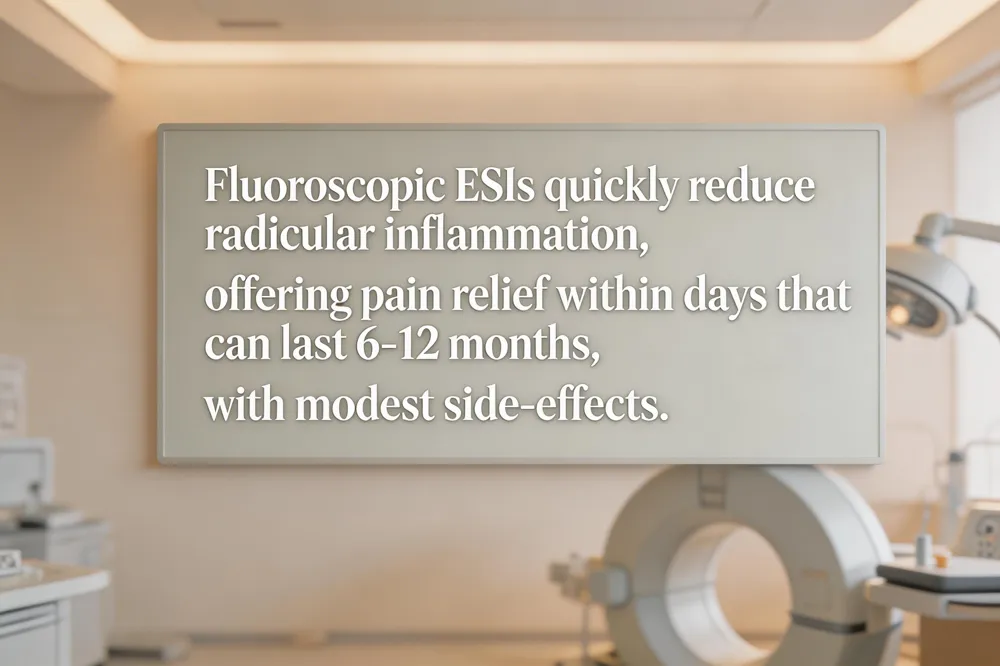 Epidural steroid injections (ESIs) are performed under fluoroscopic (real‑time X‑ray) guidance to ensure the needle tip is placed precisely in the epidural space surrounding the spinal cord and affected nerve roots. After a brief skin‑level anesthetic, the physician advances a fine‑gauge needle through the ligamentum flavum, confirms epidural position with contrast, and then delivers a mixture of a corticosteroid and a local anesthetic.
Pain‑relief timeline – Most patients notice a reduction in pain within 2‑7 days, with the anti‑inflammatory effect lasting several weeks to 3‑6 months; some experience benefit up to a year, especially when the nerve is inflamed rather than compressed.
Advantages for radicular pain – By directly coating inflamed nerve roots, ESIs rapidly diminish swelling and pressure that cause sciatica, lumbar radiculopathy, and cervical radiculopathy. This relief often enables patients to engage more fully in physical therapy, improves mobility, and can postpone or avoid surgery.
Common and long‑term side‑effects – Typical short‑term effects include mild soreness at the injection site, temporary increase in pain, headache, and transient blood‑sugar elevation in diabetics. Rare but serious complications are infection, dural puncture with resulting headache, nerve injury, and, with repeated steroid exposure, bone loss or adrenal suppression. Most clinicians limit ESIs to two‑three per year to minimize these risks.
Key FAQs
- How long does an epidural steroid injection last? Relief usually begins within a few days and can persist from several weeks up to 6‑12 months, depending on the condition and individual response.
- What are the benefits of an epidural injection? Rapid pain reduction, improved function, and the ability to participate in rehabilitation without the need for higher‑dose opioids or immediate surgery.
- What are the side‑effects? Most are mild (injection‑site tenderness, headache, transient hyperglycemia); serious adverse events are uncommon but include infection, bleeding, and nerve damage.
- Will my back ever be the same after an epidural? Permanent back pain from the procedure is rare; any soreness typically resolves within days, and the spine returns to its pre‑procedure state.
Facet Joint Injections: Diagnosis, Therapeutic Effect, and Safety
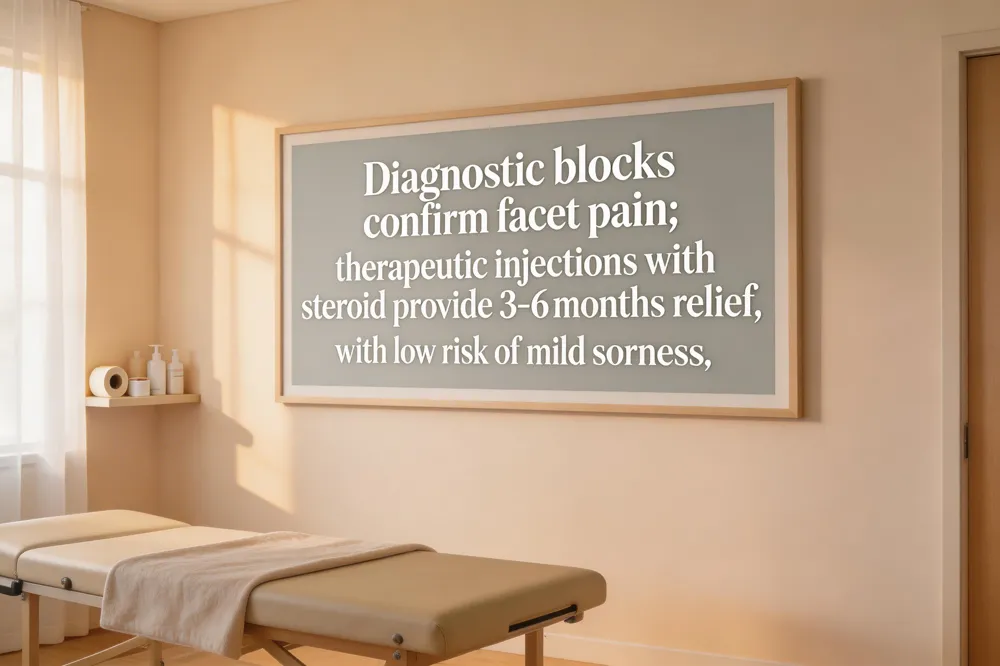 Facet joint injections are performed under fluoroscopic (or occasionally ultrasound) guidance while the patient lies prone. A 22‑25 g needle is advanced to the facet joint capsule, confirmed with contrast then a local anesthetic with or without a corticosteroid is injected.
Diagnostic vs. therapeutic – A diagnostic block uses only anesthetic; rapid pain relief (30‑60 min) confirms the joint as the pain generator. Adding a steroid creates a therapeutic injection that reduces intra‑articular inflammation for weeks to months.
Success rates & duration – Clinical series report 70‑75 % of patients achieve ≥50 % pain reduction after a single lumbar facet injection. Relief typically lasts 3‑6 months, though repeated injections can be given when benefit wanes.
Common side‑effects & post‑procedure care – Most patients experience mild soreness, bruising, or a brief “steroid flare” that resolves in 48 h. Rare complications include infection, bleeding, nerve injury, or systemic steroid effects (e.g., temporary glucose rise or weight gain). After a 20‑30 min observation, patients should avoid heavy lifting, vigorous activity, and driving for 24‑48 h, use ice for swelling, and monitor for fever, worsening pain, or numbness.
If pain worsens after the injection, it usually subsides within a few days; persistent or severe symptoms warrant prompt medical evaluation. When injections fail, options include medial‑branch radiofrequency ablation, targeted physical therapy, or, in refractory cases, minimally invasive surgery.
Choosing Between Epidural and Facet Injections
 Pain pattern and source analysis
Radiating (radicular) pain that follows a nerve distribution – such as sciatica, disc‑herniation or spinal stenosis symptoms – is most often relieved by epidural steroid injections (ESIs). These place corticosteroid and anesthetic into the epidural space surrounding the irritated nerve root. Localized, axial pain that stays in the neck or lower back, especially when imaging shows facet arthritis or degenerative changes, is best addressed with facet‑joint injections that deliver the same medication directly into the joint capsule.
Guidelines for selecting the appropriate injection
Physicians first confirm the pain source with a thorough history, physical exam, and imaging (MRI/CT). When a diagnostic facet block yields >50% pain relief, a therapeutic facet injection is recommended. Conversely, if symptom distribution matches a nerve root and a nerve‑root block is positive, an ESI is chosen. Most experts limit steroid‑containing injections to 2–3 per year per spinal region to reduce systemic steroid effects.
Considerations for radicular vs axial pain
Radicular pain (leg/arm shooting) benefits from epidural delivery, often via transforaminal or interlaminar approaches, providing relief that can last weeks to months. Axial pain (neck or low‑back ache) responds better to facet injections, which may be repeated more frequently and can serve as a diagnostic tool. Both procedures are minimally invasive, performed under fluoroscopic guidance, and aim to enable participation in physical therapy while avoiding unnecessary surgery.
Managing Pain After Injections and Adjunct Therapies
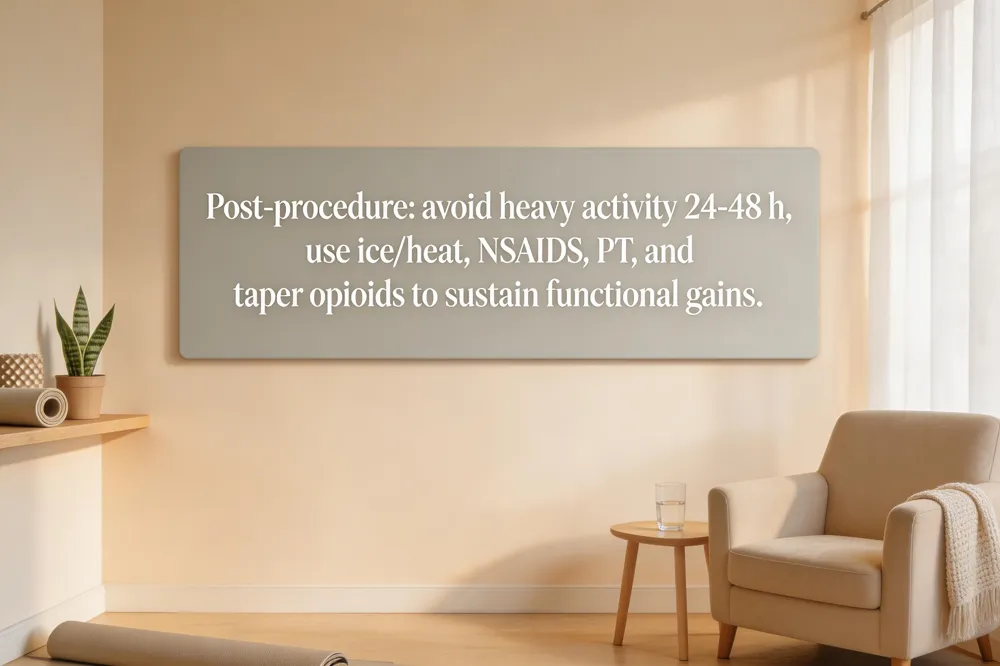 After epidural or facet the patients is should advised to avoid heavy lifting, vigorous exercise, and prolonged sitting for the first 24‑48 hours. Light activity—walking, gentle stretching, and core‑strengthening exercises—helps prevent stiffness and promotes circulation while the anesthetic wears off. Ice for 15‑20 minutes several times daily during the first two days reduces inflammation; thereafter a warm pack can relax musculature. Strong painkillers such as opioid analgesics are reserved for short‑term use when over‑the‑counter NSAIDs or acetaminophen fail to control breakthrough pain, and they should be tapered as soon as the injection’s anti‑inflammatory effect begins. Non‑drug strategies—physical‑therapy integration, posture training, and low‑impact cardio—are essential to translate temporary relief into lasting functional improvement. Women may require special attention to hormonal influences on ligament laxity and bone density; a focus on pelvic‑floor stability, weight‑bearing exercises, and adequate calcium/vitamin D supports spinal health.
How to relieve severe lower back pain – Begin with short‑term rest, OTC anti‑inflammatories, alternating heat/cold, and gentle low‑impact activities (walking, knee‑to‑chest, cat‑cow). If pain persists, schedule a spine‑specialist evaluation for a personalized PT program or minimally invasive options.
How to relieve severe back pain – Combine gentle stretching, core‑building moves, good posture, and heat/ice therapy; avoid heavy lifting and twisting; seek specialist care if pain continues.
How to relieve back pain fast at home – Perform targeted stretches and strengthening, use cold then heat, maintain posture, and consider OTC pain relievers; follow up with a specialist if no improvement.
How to reduce back pain for females – Emphasize core strength, posture, proper lifting, sleep support, weight management, and smoking cessation; consult a spine physician for tailored therapy.
Strong painkillers for lower back pain – Opioids (oxycodone, hydrocodone, morphine, tramadol) are short‑term options when OTC meds fail, but carry risks of dependence and side effects; combine with NSAIDs or muscle relaxants when appropriate and always discuss medical history with your provider.
Female lower back pain treatment – Start with PT, core exercises, posture education, and NSAIDs; if needed, add targeted injections; when conservative care fails, consider minimally invasive procedures such as micro‑discectomy or radiofrequency ablation, all coordinated by a patient‑first spine specialist.
Specific Injection Levels and Procedural Details
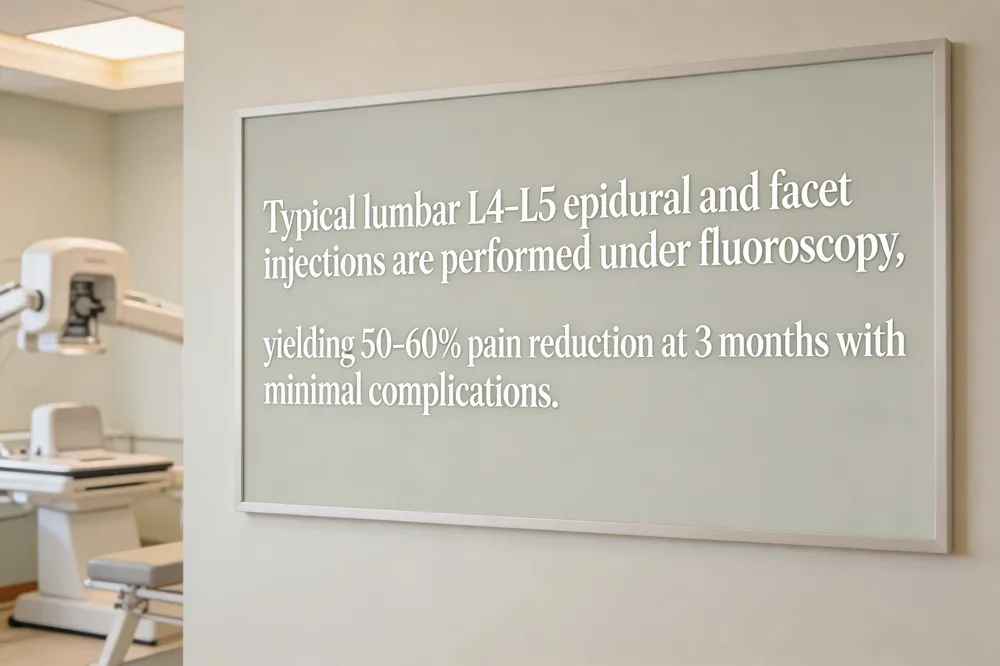 A lumbar epidural steroid injection at the L4‑L5 level delivers a potent anti‑inflammatory medication directly into the epidural space around the nerve roots that exit between the fourth and fifth lumbar vertebrae. Performed under fluoroscopic guidance with a local anesthetic, it is an outpatient procedure that typically provides significant pain reduction within a few days; studies show a ≥50 % pain‑score drop in about 50‑60 % of patients at three months, with short‑term relief lasting up to several months. Common side‑effects include a brief “steroid flush,” facial warmth, temporary swelling, sleep disturbances, and a mild increase in pain that resolves quickly; complications are uncommon such as infection or nerve injury are rare.
A L4‑L5 facet joint injection targets the small synovial joint between the same vertebrae. Using fluoroscopic or CT guidance, a needle delivers a local anesthetic—often combined with a corticosteroid—into the joint capsule. Immediate relief from the anesthetic confirms the facet as the pain source, while the steroid can provide several weeks to months of anti‑inflammatory benefit. Risks are minimal, typically limited to temporary soreness, bruising, or brief pain flare‑ups.
Patient Guidance, Safety, and Long‑Term Planning
 Can I drive myself home after a spinal epidural? No. After an epidural steroid injection the local anesthetic can cause temporary numbness, weakness, or dizziness in the legs and arms for several hours. Even without conscious sedation the medication may impair reaction time. Arrange for a friend, family member, or rideshare driver and stay with you until the effects wear off, usually 2‑4 hours.
What not to do after facet joint injections? Avoid heavy lifting, strenuous activity, and high‑impact motions for at least 48 hours. Do not drive immediately; the anesthetic may affect coordination. Rest, stay hydrated, and follow all post‑procedure instructions. Contact the clinic promptly if you notice unusual pain, swelling, or infection signs.
Side effects of epidural injections – Most patients experience mild soreness at the injection site, a temporary increase in pain, mild headache, or transient fatigue. Numbness or tingling may occur but resolves as the medication wears off. Rare serious complications include dural puncture leading to headache, infection, bleeding, or nerve injury. Seek urgent care for severe pain, fever, new weakness, or loss of bladder/bowel control.
What is the best treatment for spinal pain? A patient‑first step‑wise plan starts with conservative care: active physical therapy, core‑strengthening, and lifestyle modification. When needed, targeted injections (epidural or facet) provide short‑term relief to enable rehabilitation. If conservative measures and injections fail to restore function or address a structural problem (e.g., severe stenosis, disc herniation), minimally invasive surgery is considered as the next step.
Radiofrequency ablation vs. epidural injection – Epidural injections deliver steroids and anesthetic into the epidural space to reduce nerve‑root inflammation, offering relief that typically lasts weeks to a few months and is ideal for radicular pain. Radiofrequency ablation creates a thermal lesion on the medial‑branch nerves that transmit facet‑joint pain, providing longer‑lasting relief (6‑18 months) for joint‑mediated symptoms confirmed by diagnostic blocks. Clinicians often use epidural injections for acute flare‑ups and reserve radiofrequency ablation for chronic, localized joint pain that has not responded to other therapies.
Putting It All Together – A Patient‑First Path Forward
Epidural steroid injections and facet joint injections are both minimally invasive tools that target different pain generators—epidural for radicular, radiating symptoms and facet injections for localized joint‑mediated discomfort. The choice between them hinges on a thorough clinical assessment, imaging studies, and the patient’s specific pain pattern. By identifying the true source of pain, physicians can deliver the most appropriate injection, then promptly transition the patient into a tailored physical‑therapy program to build strength and improve function. Ongoing follow‑up ensures the treatment plan evolves with the patient’s progress. Schedule a personalized consultation at the Orthopedic Spine Institute of St. Louis to start a coordinated, patient‑first approach to back‑pain relief.