What to Expect in the First Days
After a microdiscectomy you’ll spend the first 24‑48 hours in a recovery room where nurses monitor vitals and pain. Analgesics are prescribed—usually a short opioid course plus acetaminophen or NSAIDs—to keep discomfort low; take them before pain peaks. Keep the incision clean and dry: wash gently with warm, soapy water, pat dry, and leave adhesive dressings for a week. Change gauze only if wet or rubbing. Begin walking as soon as possible—short 5‑10 minute walks several times daily—to boost circulation and prevent clots. Avoid bending, twisting, or lifting more than a few pounds until cleared.
First‑Week Recovery and Immediate Concerns
 Going home the same day is usual; most patients leave after a short observation period. In the first 48‑72 hours back soreness, fatigue and drowsiness from anesthesia are common. Pain is controlled with prescribed oral analgesics; take them exactly as directed and avoid heavy meals if they upset your stomach. Short, frequent walks (5‑10 minutes, 3‑4 times daily) are encouraged to promote circulation, but excessive walking can increase pain—stop if discomfort rises. Keep incision clean and dry: wash daily with warm soapy water, pat dry, and leave steri‑strips or tape in place for about a week. Early symptom monitoring includes watching for fever, increasing redness, swelling, drainage, new numbness or weakness, and severe leg pain; contact your surgeon promptly if any occur. Buttock pain is often normal scar tissue‑related and resolves with gentle stretching and massage, but worsening or progressive pain should be evaluated. Avoid heavy lifting (>5–8 lb), bending, twisting, high‑impact activities, and core‑intensive exercises such as deadlifts, full sit‑ups, or rapid twisting until cleared by your surgeon.
Weeks 2‑4: Gradual Activity Increase and Physical Therapy
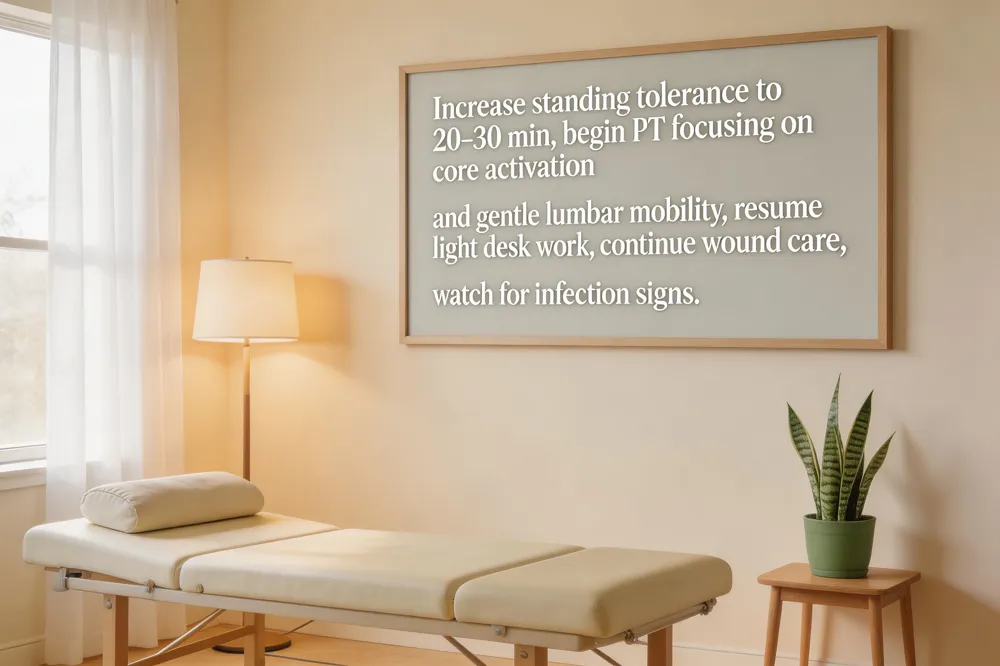 During the second to fourth week after a microdiscectomy patients shift from strict rest to a controlled increase in activity. Standing tolerance is still limited—short bouts of 5‑10 minutes are recommended at first, with gradual extensions every few days, aiming for 20‑30 minutes by week 2‑4 while taking breaks to avoid static strain. Early physical‑therapy programs begin in week 2, focusing on core activation (transversus abdominis, multifidus), gentle lumbar mobility, and low‑impact aerobic work such as walking or stationary cycling. Light, desk‑based work can often be resumed by week 3‑4, provided ergonomic support and frequent position changes are used. The incision should be clean, dry, and showing no signs of infection; dressing changes continue as needed and showers are permissible after 48‑72 hours. Monitoring for complications remains essential—watch for increasing redness, drainage, fever, new leg numbness, or worsening pain and contact the surgeon immediately if these occur. In summary, patients can stand longer, start structured PT, return to light duties, and continue wound care while staying vigilant for any warning signs.
Weeks 5‑8: Return to Light Work and Core Strengthening
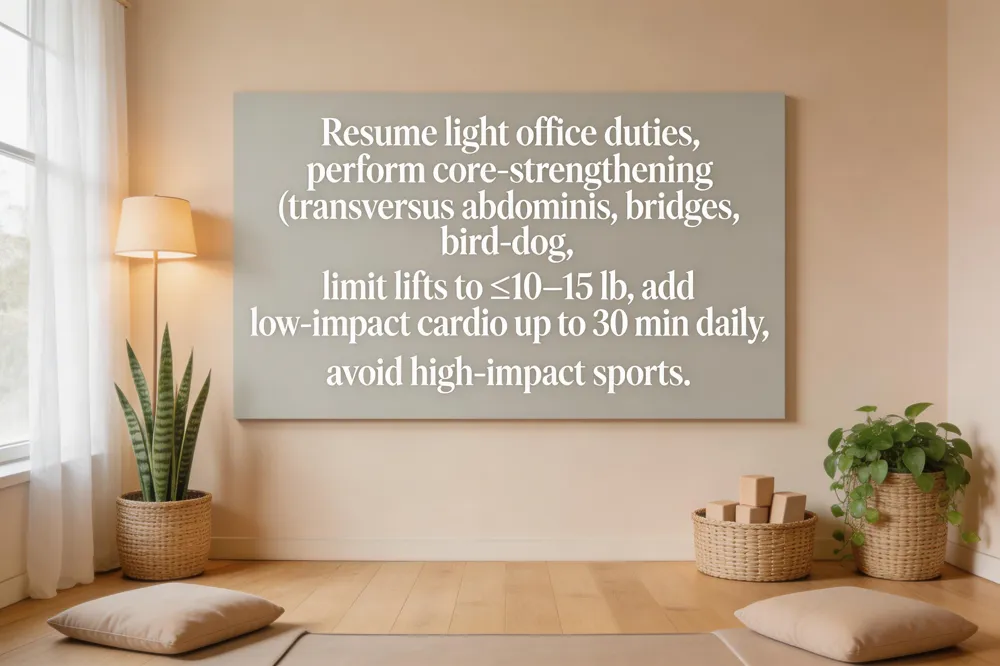 During weeks 5‑8 most patients are ready to resume light, desk‑based work while continuing a structured core‑activation program. Office tasks can be returned to as long as the patient can sit comfortably, change position every 30 minutes, and avoid prolonged forward bending. Core‑strengthening exercises such as transversus abdominis activation, mini‑bridges, bird‑dog, and gentle pelvic tilts are introduced in physical‑therapy sessions to stabilize the lumbar spine and protect the incision site. Lifting limits remain strict – most surgeons advise no more than 10–15 lb (≈ 5 kg) and to use proper mechanics when picking up objects. Low‑impact cardio, including brisk walking, stationary‑b or swimming, can be increased to 30 minutes most day, supporting circulation and endurance without over‑loading the disc. Patient‑specific restrictions may include avoiding high‑impact sports, excessive twisting, and heavy manual labor until cleared by the surgeon, typically after 6‑8 weeks.
What is the recovery time for back surgery for herniated disc? Most patients go home the same day begin short walks within 24‑48 hours, and return to desk work by 2‑4 weeks. Full recovery, including high‑impact activities, usually occurs by 3‑6 months.
Is running good for L4‑L5 disc bulge? Running is high‑impact and can aggravate a bulge; low‑impact cardio (walking, swimming, cycling) plus core strengthening is preferred.
Permanent restrictions after microdiscectomy? Lifelong precautions include avoiding heavy lifts > 10–15 lb, high‑impact sports, and excessive twisting; maintaining good posture and core strength is essential.
Microdiscectomy recovery week by week? First 48 hrs focus on incision care and short walks; weeks 1‑2 limit bending/lifting; week 3 starts PT with core work; weeks 4‑6 allow light office duties; weeks 8‑12 progress to normal activities, with full return by 3‑6 months.
How long does it take to walk after spinal surgery? Patients typically begin assisted walking on day 0‑1 and walk unassisted within a week after a minimally invasive microdiscectomy, advancing to longer distances as tolerated.
Months 2‑3: Strengthening, Core Stability, and Full Activity Resumption
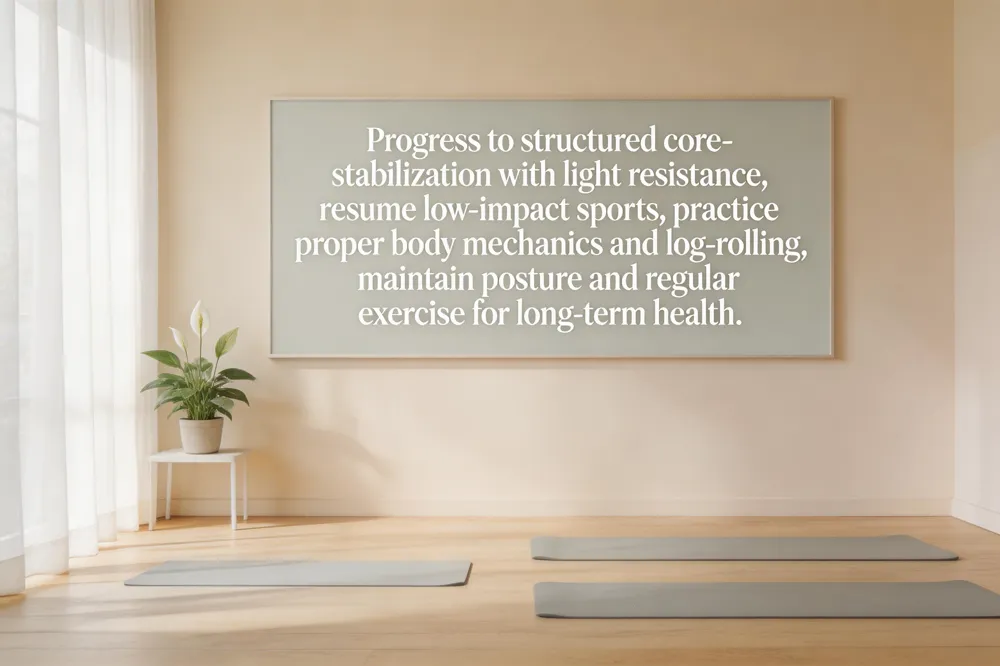 During weeks 5‑12 (approximately months 2‑3) the focus shifts from gentle walking to structured core‑stabilization exercises such as transversus abdominis activation, bridges, bird‑dog, and pelvic tilts. Physical therapists introduce light resistance (5‑15 lb) and multi‑planar movements while maintaining a neutral lumbar spine, preparing patients for safe lifting progression. By week 8 most individuals can resume low‑impact sports (walking, stationary biking, swimming) and begin a gradual return to higher‑impact activities if pain‑free and surgeon‑cleared.
Patient‑education emphasizes proper body mechanics: avoid bending or twisting beyond 30 minutes of sitting, use lumbar support, and practice log‑rolling for transfers. Long‑term health hinges on continued core strength, regular low‑impact exercise, and posture awareness to prevent re‑herniation.
L4‑L5 spinal fusion recovery time – Light daily activities resume in 4‑6 weeks; full healing and return to heavy labor may take 6 months‑1 year.
6 months after microdiscectomy – Most patients report marked sciatic pain reduction, can perform normal daily tasks, and continue core‑strengthening to eliminate residual tingling.
Full recovery from microdiscectomy – Typically achieved by 6‑8 weeks for daily activities, with near‑complete functional recovery by three months.
How to relax after microdiscectomy – Rest in a comfortable position, keep the incision clean, take short walks, perform gentle pelvic‑tilt stretches, stay hydrated, and avoid heavy lifting for 2‑6 weeks.
Will I ever be normal after a microdiscectomy? – Yes. With adherence to a structured rehab plan, core strengthening, and healthy lifestyle habits, most patients return to a normal, active life.
Long‑Term Maintenance, Nerve Healing, and Future Spinal Health
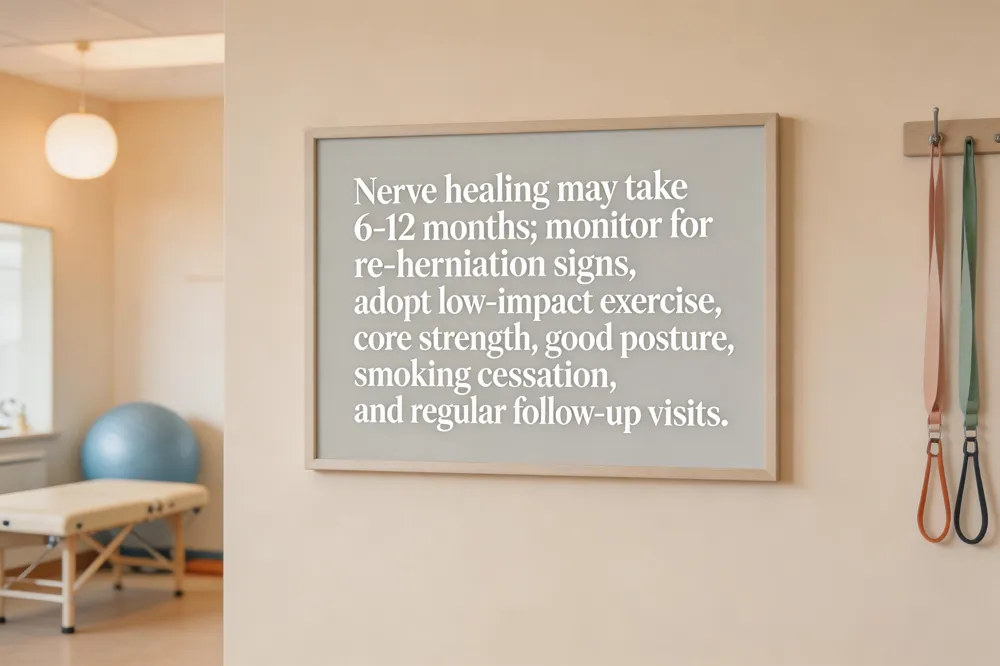 Recovery after microdiscectomy continues long after the incision heals. Nerve regeneration is slow; most patients notice a drop in radicular pain within 2‑4 weeks, but true nerve healing can take 6‑12 months, with lingering tingling that improves gradually. Watch for signs of re‑herniation: return of back pain at the surgical site, new or worsening leg pain, numbness, tingling, weakness, or pain that worsens with sitting, bending, or coughing. Sudden bowel or bladder changes demand urgent care.
Spinal fusion permanently limits motion at the fused levels, yet most individuals regain functional ability within six months to a year. Early post‑op pain is intense, especially the first 48‑72 hours, but mobility is encouraged to prevent complications. Lifestyle modifications—regular low‑impact exercise, core‑strengthening, proper posture, smoking cessation, and a balanced diet—support long‑term spinal health and reduce recurrence risk. Ongoing follow‑up appointments at 2‑6 weeks, 3 months, and 6 months allow surgeons to monitor healing, address lingering symptoms, and adjust therapy. With adherence to these guidelines, patients can expect a gradual return to normal activities and sustained symptom relief.
Specific Rehabilitation Protocols and Patient Resources
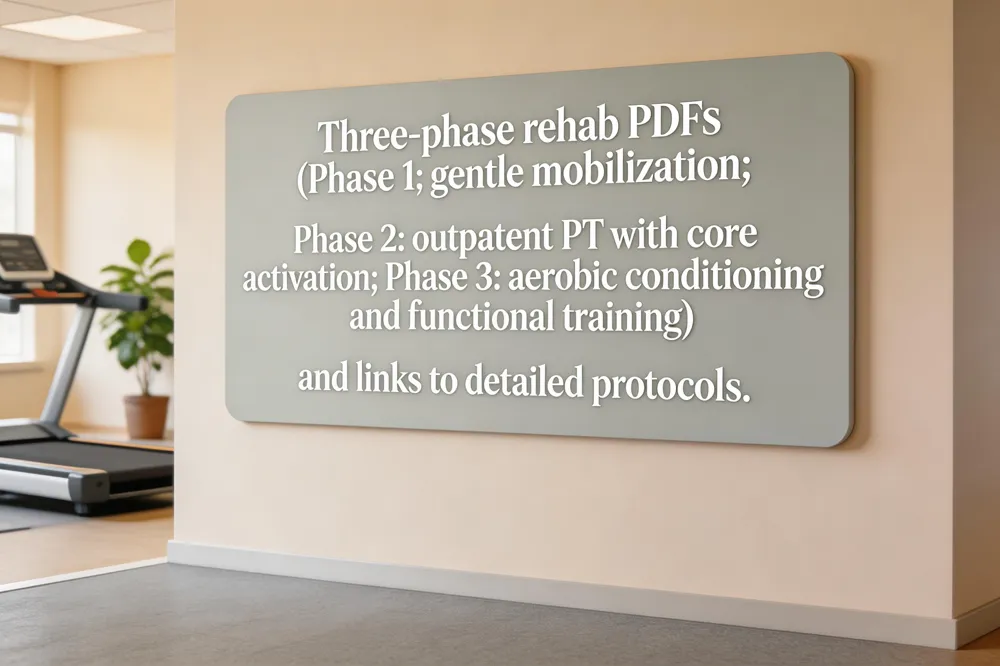 Lumbar Discectomy rehab Protocol pdf – The lumbar discectomy rehabilitation protocol is divided into three phases. Phase 1 (days 1‑3 weeks) emphasizes gentle mobilization, early ambulation (30 min twice daily), correct ADL techniques, and education on precautions; no brace or scar‑mobilization is used. Phase 2 (3‑6 weeks) introduces outpatient PT 2‑3 times per week, focusing on pain control, neutral‑spine posture, core activation (transverse abdominis, multifidus), lower‑extremity strengthening, flexibility, and progressive walking while limiting lifts to ≤20 lb. Phase 3 (6‑8 weeks) advances to aerobic conditioning, more intensive strengthening, balance, gait training, and functional activities, preparing the patient for return to work and sport. A detailed PDF can be downloaded from the Orthopedic Spine Institute of St. Louis website or linked PT prescription PDFs.
L5‑S1 microdiscectomy rehab protocol – Phase 1 (0‑2 weeks) protects the incision, controls pain with ice, limits sitting to ≤30 min, avoids bending/twisting/lifting > 15 lb, and begins gentle walking (10 min, 1‑2 times daily) plus core activation drills. Phase 2 (2‑6 weeks) adds supervised PT 2‑3 times weekly, core/glute strengthening (bridges, bird‑dog, clamshells), progressive lower‑extremity resistance, and aerobic conditioning; lifting restrictions increase to 20 lb. Phase 3 (6‑12 weeks) introduces multi‑planar and functional activities, resistance‑band work, balance drills, and sport‑specific exercises, aiming for full daily and occupational tasks by 8‑12 weeks.
How long does it take for nerves to heal after back surgery? – Nerve healing is gradual, often spanning weeks to months and may continue up to a year. Most patients notice reduced radiating pain within the first few weeks, but numbness or tingling can persist longer. Nutrition, smoking cessation, and physical therapy aid recovery, while conditions like diabetes may delay it. Regular follow‑up with surgeon and therapist is essential.
Will I ever be normal after a microdiscectomy? – Yes. By adhering to a structured recovery plan, strengthening core muscles, and maintaining healthy lifestyle habits, most patients achieve lasting pain relief and return to normal, active lives.
Is the L5‑S1 disc bulge curable? – Non‑surgical options are often first‑line: physical therapy, pain medications, NSAIDs, targeted epidural injections (transforaminal, interlaminar, caudal), and lifestyle modifications can effectively manage an L5‑S1 disc bulge.
Next Steps, Follow‑Up, and Ongoing Support
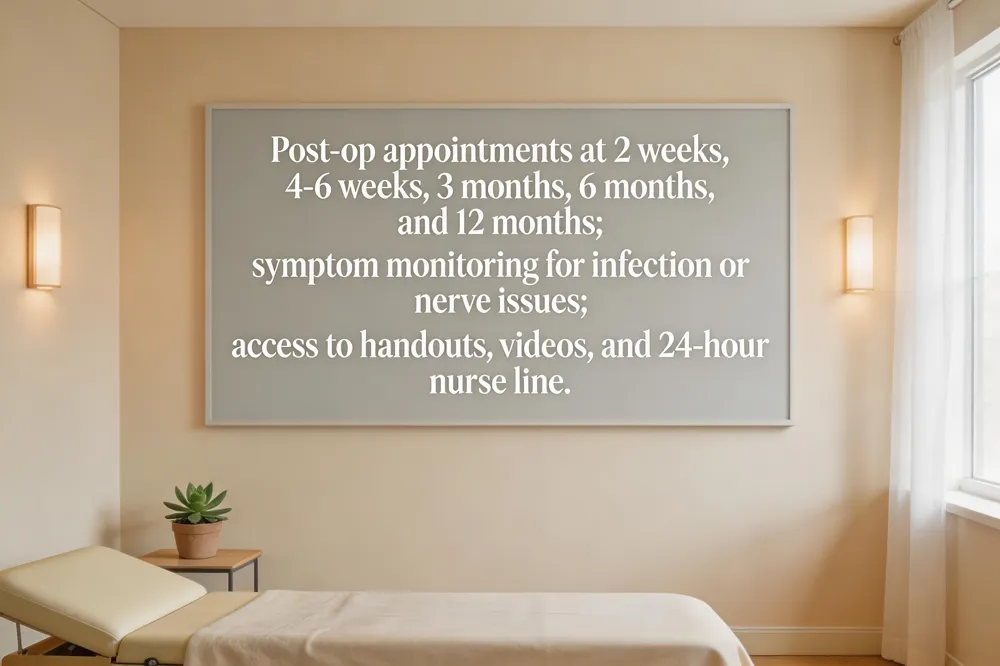 After a microdiscectomy, The first post‑operative follow‑up appointment usually occurs around the two‑week mark to assess the incision, remove sutures or staples, and reinforce wound‑care instructions (e.g., keep incision clean and dry; follow bandage guidelines, and monitor for redness, swelling, or drainage). A second follow‑up at 4–6 weeks evaluates pain control, ambulation progress, and whether the patient can safely resume light work possible or driving. Subsequent visits at 3, 6, and 12 months track longer‑term healing, address any lingering numbness or weakness, and screen for complications such as infection, recurrent herniation, or adjacent‑segment degeneration.
Symptom monitoring is critical: patients should immediately Contact surgeon for severe pain, fever, infection signs, new numbness/weakness if they develop severe or worsening leg pain, fever > 38 °C, new numbness, bladder or bowel dysfunction, or signs of deep‑vein thrombosis (calf swelling, redness).
Patient‑education resources—including written handouts, videos on core‑strengthening exercises, and lifestyle tips for posture, hydration, and smoking cessation—are provided by the Orthopedic Spine Institute and can be accessed via the clinic portal or the office nurse line (e.g., 811 in Canada).
For any concerns, patients may call the surgeon’s office during business hours, use the secure MyChart messaging system, or reach the 24‑hour nurse advice line for urgent questions.
Key Takeaways for a Successful Recovery
Begin walking the day after microdiscectomy—short, frequent strolls boost circulation, prevent clots, and ease stiffness. Start a structured physical‑therapy program in the second week, focusing on core activation (transversus abdominis, multifidus), gentle stretching, and progressive low‑impact cardio. Respect activity restrictions: avoid lifting more than 10‑15 lb, bending, and twisting for the first 4‑6 weeks, and keep driving and high‑impact sports on hold until cleared. Adopt long‑term health habits—maintain a balanced, protein‑rich diet, stay hydrated, quit smoking, use lumbar support when seated, and continue regular low‑impact exercise and proper posture to protect the spine and reduce recurrence risk.