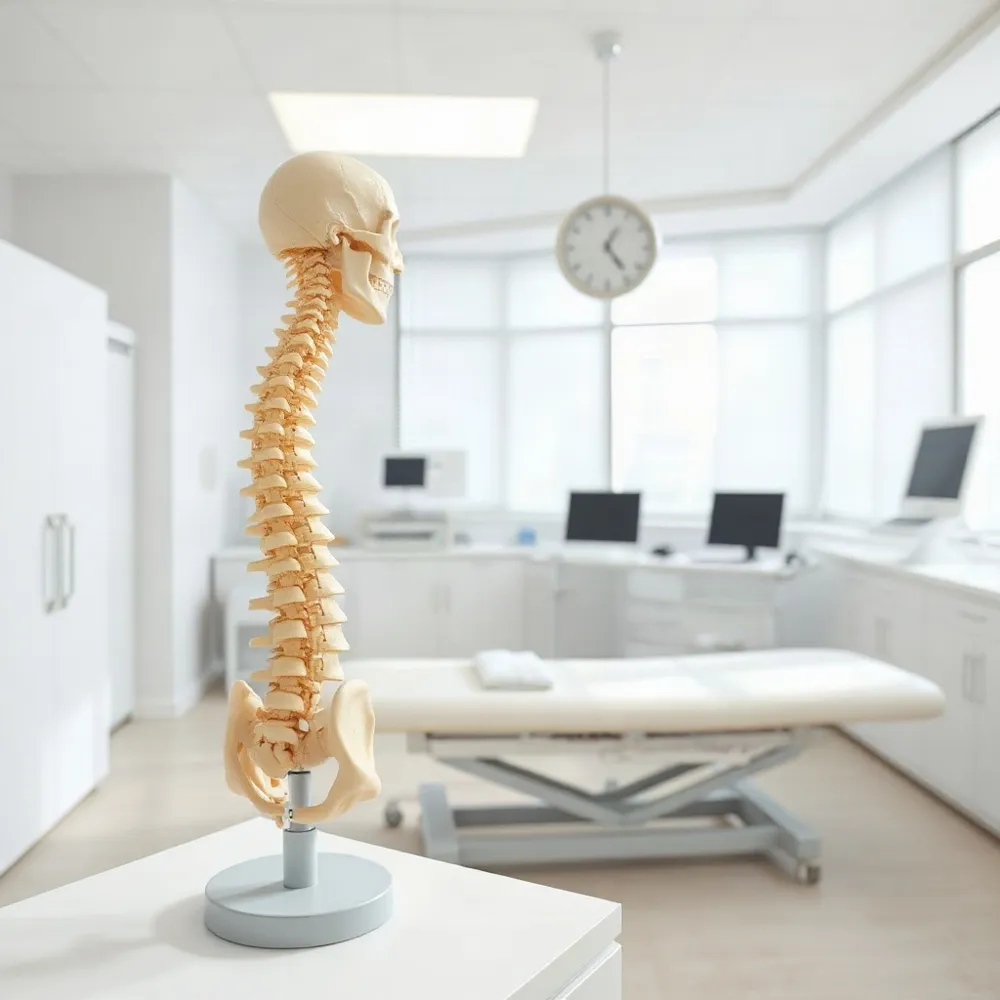
Understanding Sacroiliac Joint Pain
The sacroiliac (SI) joint is a sturdy, weight‑bearing synovial joint that connects the sacrum at the base of the spine to the ilium on each side of the pelvis. Its primary function is to transfer forces between the upper body and the lower extremities while allowing only a few degrees of motion, acting as a shock absorber during walking, standing, and lifting.
Common causes of SI joint dysfunction include traumatic injury, degenerative arthritis, inflammatory sacroiliitis (e.g., ankylosing spondylitis), pregnancy‑related ligament laxity, leg‑length discrepancy, and post‑lumbar‑fusion overload. Repetitive stress, poor core stability, and obesity can also contribute to abnormal joint motion and pain.
Clinicians diagnose SI joint pain through a combination of history, physical‑examination provocation tests (Gaenslen, thigh‑thrust, compression, distraction, and sacral thrust), and imaging studies such as X‑ray, CT, or MRI. A definitive diagnostic step is a fluoroscopic or CT‑guided intra‑articular injection of local anesthetic; a temporary ≥50‑75% pain relief confirms the SI joint as the pain generator before considering further treatment.
From Pain to Diagnosis: How Doctors Identify SI Joint Problems
Key Diagnostic Steps
| Diagnostic Tool | Description | Clinical Significance |
|---|---|---|
| Provocative Maneuvers (Gaenslen, thigh‑thrust, distraction, compression, sacral‑thrust) | Physical exams that stress the SI joint | Positive test helps isolate SI joint as pain source |
| Fortin Finger Sign | Patient points within 1 cm of posterior superior iliac spine | Adds diagnostic confidence when positive |
| Plain X‑ray | Detects gross arthritic changes | Useful for initial assessment and surgical planning |
| CT Scan | Provides detailed bone anatomy | Helps evaluate joint integrity and pre‑operative planning |
| MRI | Detects inflammation, edema, soft‑tissue involvement | Identifies sacroiliitis and other soft‑tissue pathology |
| Diagnostic Injection (fluoroscopically guided) | Local anesthetic ± low‑dose corticosteroid injected into SI joint | ≥50 % temporary pain relief strongly predicts successful surgical outcome |
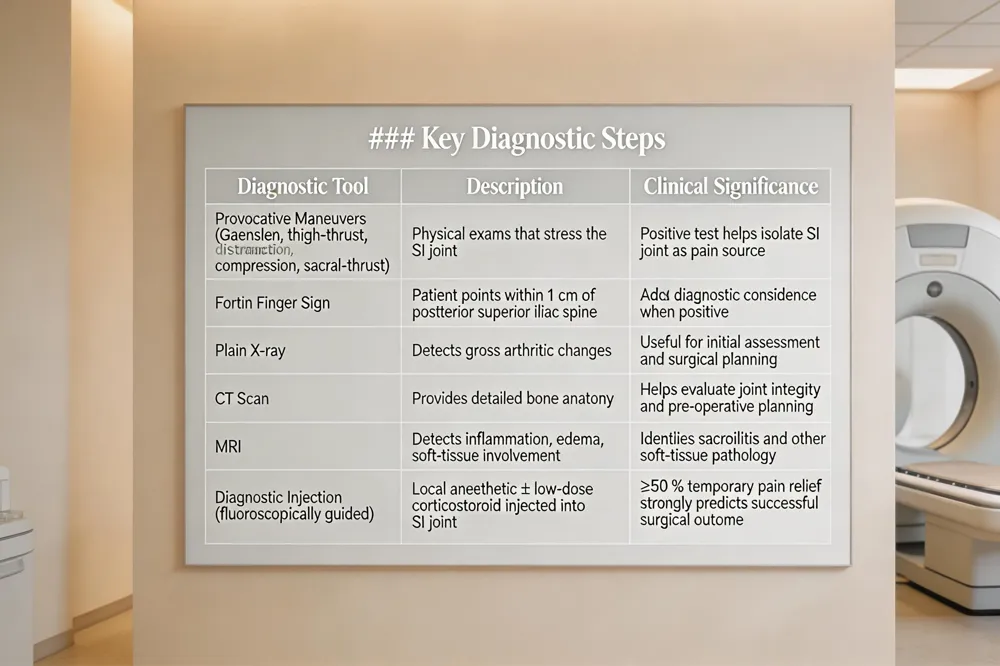 Physical examination is the first step. Physicians use provocative maneuvers—Gaenslen, thigh‑thrust, distraction, compression, and sacral‑thrust—to isolate the sacroiliac (SI) joint. A positive Fortin finger sign, where the patient points to pain within 1 cm of the posterior superior iliac spine, adds diagnostic confidence.
Imaging helps rule out other pathologies and assess joint integrity. Plain X‑rays identify gross arthritic changes; CT provides detailed bone anatomy; MRI detects inflammation, edema, and soft‑tissue involvement. Although imaging alone may appear normal, it is essential for surgical planning and for confirming degeneration or sacroiliitis.
Diagnostic injections are the gold‑standard for confirming the SI joint as the pain generator. A fluoroscopically guided injection of local anesthetic (often combined with a low‑dose corticosteroid) that yields ≥50 % temporary pain relief strongly predicts a successful surgical outcome if fusion is later considered.
Treatment for sacroiliac joint pain (NHS): The NHS begins with conservative care—over‑the‑counter NSAIDs (e.g., ibuprofen, naproxen) and a tailored physiotherapy program emphasizing stretching, strengthening, and posture. If pain persists, a diagnostic/therapeutic SI‑joint injection is offered. Should pain remain despite injections, options such as radio‑frequency denervation or, in selected cases, minimally invasive SI‑joint fusion may be pursued, always in collaboration with the patient and specialist services when needed.
When Conservative Care Fails: Selecting Patients for SI Joint Fusion
Patient Selection Criteria
| Criterion | Details |
|---|---|
| Chronic SI‑Joint Pain | ≥6 months of persistent pain |
| Failure of Conservative Therapy | NSAIDs, PT core strengthening, SI belts, corticosteroid injections, radio‑frequency ablation, activity modification |
| Imaging Confirmation | X‑ray, CT, or MRI showing SI‑joint pathology |
| Diagnostic Block Success | 50‑75 % pain relief after injection |
| Exclusion of Other Sources | Ruling out lumbar disc disease, facet arthritis, etc. |
| Insurance Documentation | Written report detailing symptom duration, therapies tried, imaging, and block results |
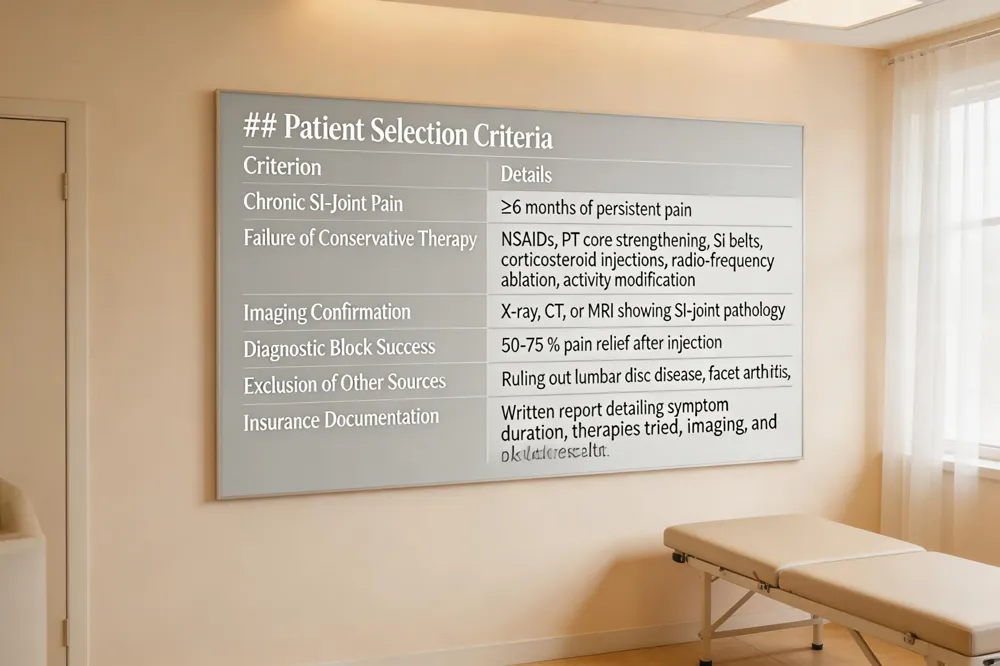 Patient selection hinges on three core criteria: (1) chronic SI‑joint pain lasting at least six months, (2) documented failure of a comprehensive trial of non‑surgical therapy—including NSAIDs, physical‑therapy core, strengthening, SI belts, corticosteroid injections, radiofrequency ablation, and activity modification, and (3) imaging (X‑ray, CT, MRI) or diagnostic block confirming SI‑joint pathology and pain relief of 50‑75% after injection. Before surgery, clinicians must verify that the patient has exhausted these conservative options and that other sources of low back pain (lumbar disc disease, facet arthritis) have been ruled out. Insurance carriers typically require a written report detailing the duration of symptoms, the specific
Surgical Techniques: Minimally Invasive vs. Open SI Joint Fusion
Approach Comparison
| Approach | Incision Size | Muscle Preservation | Typical Implants | Outpatient Status |
|---|---|---|---|---|
| Minimally Invasive (Posterior/Lateral Trans‑iliac) | <2 cm | Preserves muscle tissue; uses fluoroscopic/CT guidance | Triangular titanium (e.g., iFuse) or cylindrical threaded devices | Same‑day discharge or brief observation |
| Open Fusion | Larger incision (≈5‑10 cm) | More muscle dissection | Similar implants but may require larger hardware | Usually inpatient 1‑2 days, but can be outpatient in some centers |
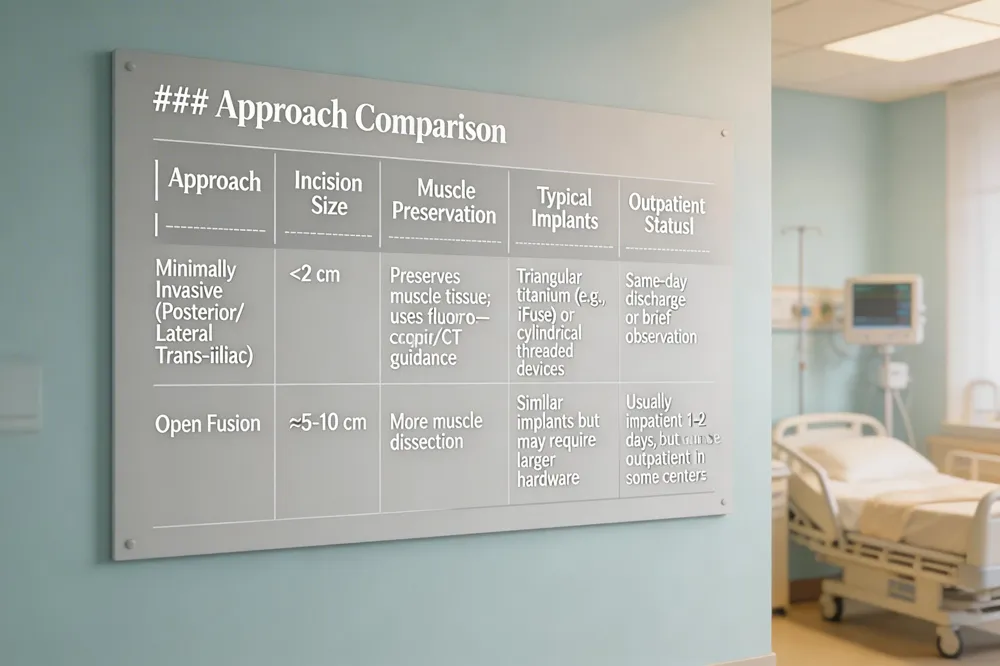 SI joint fusion can be performed through either a minimally invasive or an open approach.
Posterior and lateral trans‑iliac approaches – The posterior (post‑gluteal) route accesses the joint from the back of the buttock, while the lateral trans‑iliac route tunnels through the ilium from the side. Both techniques use fluoroscopic or CT guidance, preserve muscle tissue, and allow placement of implants without large skin incisions.
Implant types – The most widely studied minimally invasive device is the triangular titanium implant (e.g., SI‑Bone iFuse), which achieves immediate stability through an interference‑fit and a porous surface that encourages bone ingrowth. Cylindrical threaded devices, such as the Medtronic Rialto system, are also placed percutaneously and can be packed with autograft or allograft material to promote fusion.
Operating time, anesthesia, and outpatient status – Both minimally invasive and open procedures generally last about one hour and are performed under general anesthesia. Because the incisions are small (often <2 cm) and blood loss is minimal, most patients are discharged the same day or after a brief observation period, making the surgery an outpatient procedure.
Question: What is the most minimally invasive spine surgery?
Answer: The most minimally invasive spine surgery currently available is an endoscopic procedure performed through ultra‑small “keyhole” incisions, often called an endoscopic discectomy or endoscopic decompression. It uses a thin tubular retractor or endoscope that creates a tunnel through muscle without cutting it, allowing the surgeon to visualize and treat the pathology with tiny instruments. These techniques require incisions only a few millimeters wide, cause minimal tissue disruption, and typically eliminate the need for postoperative opioids. Because the approach is “through‑and‑through” rather than open, patients experience dramatically reduced blood loss, shorter hospital stays, and faster return to normal activities. In short, ultra‑minimally invasive endoscopic spine surgery represents the pinnacle of minimally invasive spinal care.
Recovery, Activity Restrictions, and the Role of Walking
Post‑Operative Activity Guidelines
| Phase | Weight‑Bearing Limit | Walking Recommendation | Sitting Limit |
|---|---|---|---|
| Immediate (0‑2 weeks) | Light loads ≤10 lb | Walk within hours of surgery; use walker/cane as needed | <45 minutes continuous |
| Early Recovery (2‑6 weeks) | Continue light loads; avoid heavy lifting | Gradually increase walk duration; supportive shoes | Break up sitting every 30‑45 minutes |
| Consolidation (6‑12 weeks) | Transition to normal activities as tolerated | Low‑impact exercise (walking, swimming, cycling) | Continue to limit prolonged sitting |
| Long‑Term (≥3 months) | No high‑impact loading >10‑15 lb | Maintain regular low‑impact activity, walking emphasized | No specific restrictions beyond comfort |
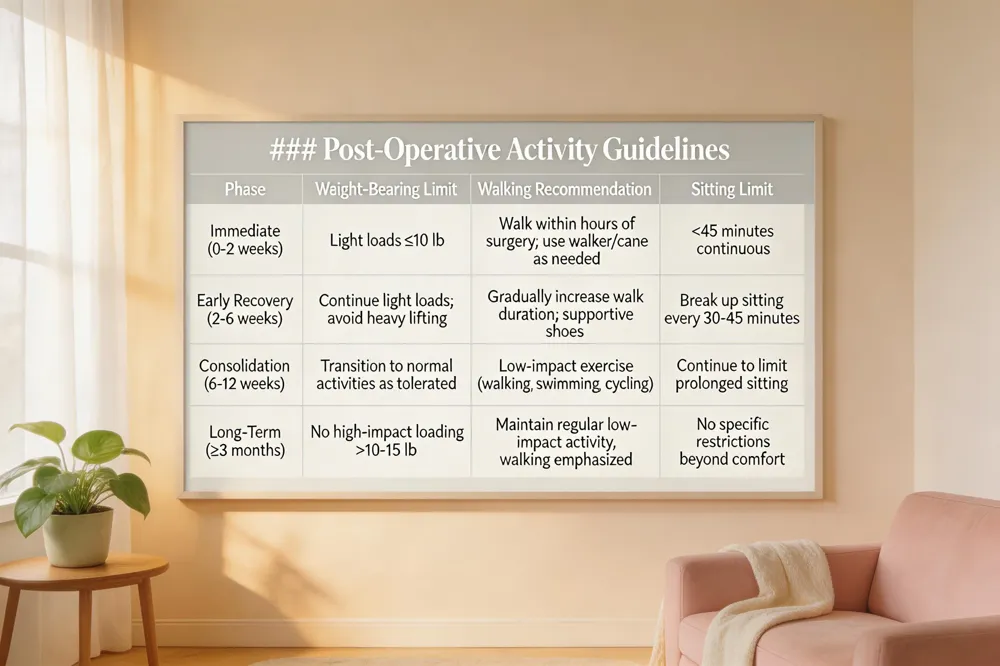 Early mobilization is a cornerstone of sacroiliac (SI) joint fusion recovery. Most patients are discharged the same day and encouraged to walk within hours of surgery, using a walker or cane if needed. Weight‑bearing is limited to light loads—typically no more than 10 pounds—while continuous sitting should stay under 45 minutes during the first few weeks. These guidelines protect the triangular titanium implants (or similar devices) as they integrate and the joint fuses over 3–4 months.
After the fusion is solid, permanent activity limits focus on avoiding high‑impact stress: heavy lifting over 10–15 lb, repetitive twisting, prolonged standing, and contact sports are generally discouraged for life. Low‑impact exercise—walking, swimming, stationary cycling—remains safe and is actively promoted. Walking, in particular, improves circulation, gently activates the core, and supports pelvic stability without overloading the hardware. Short, easy walks with supportive shoes, progressing to longer sessions as pain allows, help maintain mobility and prevent deconditioning.
In summary, early ambulation and cautious weight‑bearing set the stage for healing, while lifelong avoidance of high‑stress motions preserves the fusion. Low‑impact activities, especially walking, provide ongoing pain‑relief benefits and should be incorporated into the postoperative rehabilitation plan.
When Fusion Doesn’t Deliver: Recognizing Failure
Signs of Fusion Failure
| Symptom | Description |
|---|---|
| Persistent Unilateral Low‑Back/Buttock Pain | Worsens after prolonged sitting, improves slightly with standing |
| Pelvic Instability Sensation | Feeling of “stuck” pelvis, uneven gait, perceived leg length discrepancy |
| Red‑Flag Signs | Swelling, redness, warmth, drainage at incision (possible infection) |
| Adjacent‑Segment Pain | New lumbar or hip pain suggesting altered mechanics |
| Continued High Opioid Use | Ongoing reliance on oral narcotics post‑surgery |
| Imaging Findings | Malpositioned hardware, lack of bone bridging, pseudo‑arthrosis |
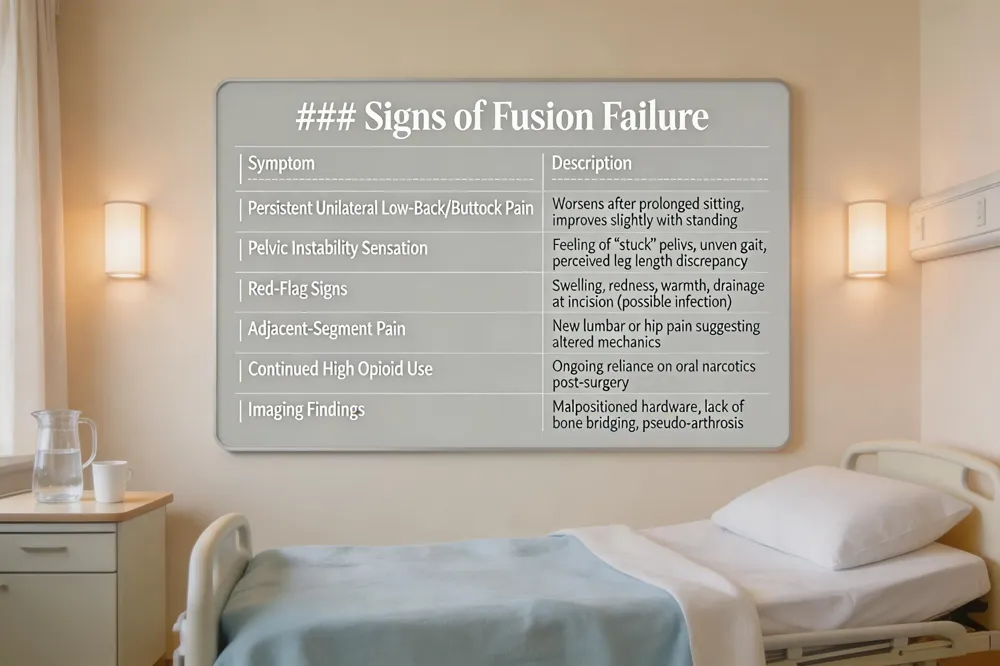 Persistent pain after sacroiliac (SI) joint fusion is the most common clue that the procedure has not succeeded. Patients may still feel unilateral low‑back and buttock ache that worsens after prolonged sitting and improves only slightly with standing, often radiating down the posterior thigh or calf—essentially the original SI‑joint pattern. A sensation of pelvic "stuck" or instability, uneven gait, or a feeling that one leg is longer than the other can also appear. Red flag signs include swelling, redness, warmth, or drainage at the incision, suggesting infection of the hardware or surrounding tissue. New or increasing lumbar or hip pain may point to adjacent‑segment disease caused by altered mechanics after a failed fusion. Continued reliance on oral narcotics or other pain medication after surgery further signals that the joint has not healed properly. In such cases, imaging and clinical evaluation are needed to assess hardware positioning, bone healing, and the need for revision surgery.
Minimally Invasive Spine Surgery at the L4‑L5 Level and Its Broader Landscape
L4‑L5 MISS Overview
| Indication | Technique Summary | Typical Duration | Discharge Timing |
|---|---|---|---|
| Herniated Disc (Radiculopathy) | Tubular retractor, endoscopic discectomy under fluoroscopy | 45‑70 min | Same‑day or brief observation |
| Lumbar Stenosis / Foraminal Narrowing | Percutaneous laminotomy/foraminotomy with endoscope | 50‑80 min | Same‑day |
| Segmental Instability (fusion needed) | Percutaneous screws or cage placement, bone graft augmentation | 60‑90 min | Same‑day or overnight observation |
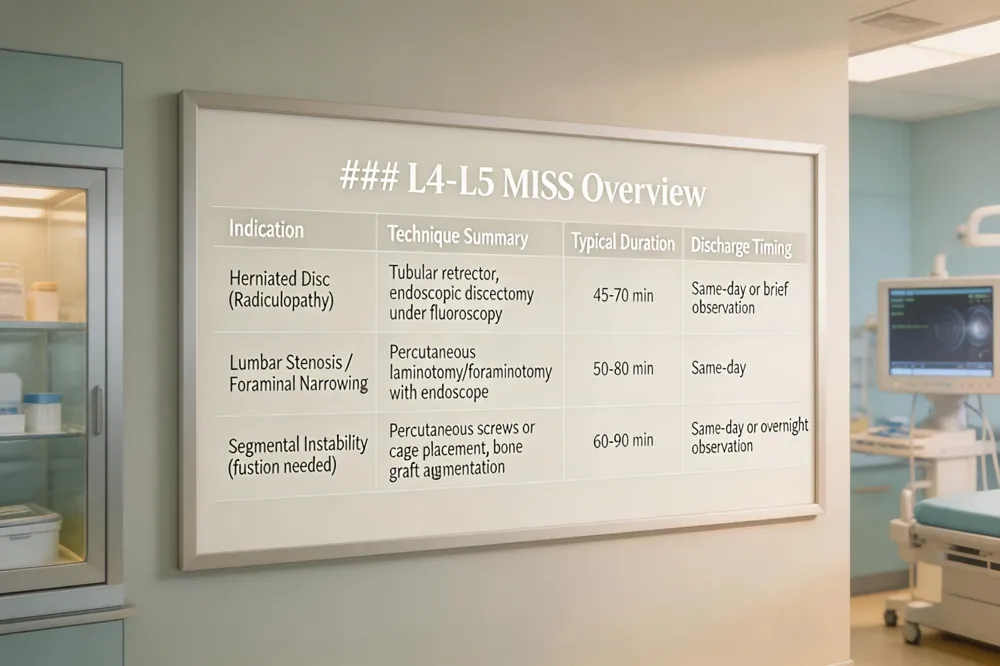 Minimally invasive spine surgery (MISS) for the L4‑L5 level
While the supplied sources focus primarily on sacroiliac (SI) joint fusion, they also describe the broader principles of minimally invasive spine surgery (MISS) that apply to lumbar levels such as L4‑L5. MISS uses small skin incisions (often <2 inches), tubular retractors, endoscopic tools, and fluoroscopic or CT navigation to create a narrow corridor to the target pathology while preserving surrounding muscle and soft tissue. The goal is to decompress nerves, remove herniated disc material, or place fusion hardware with less blood loss, reduced postoperative pain, and a faster return to daily activities compared with traditional open surgery.
Indications for L4‑L5 MISS
- Herniated disc material causing radiculopathy
- Lumbar spinal stenosis or foraminal narrowing
- Segmental instability that may benefit from a percutaneous fusion cage or screw construct
These indications mirror the criteria used for SI joint fusion—persistent pain despite exhaustive conservative care, imaging confirmation of pathology, and a positive response to diagnostic injections—emphasizing a patient‑first, evidence‑based approach.
Technique overview
- Small incision over the affected vertebral level (often 1‑2 cm)
- Placement of a tubular retractor or endoscope under fluoroscopic guidance
- Decompression of neural elements (laminotomy, foraminotomy) or discectomy via specialized instruments
- When fusion is needed, percutaneous screws or a cage are advanced across the disc space; bone graft material may be added to promote arthrodesis
- The entire procedure typically lasts 45–70 minutes and is performed under general anesthesia, with many patients discharged home the same day or after a brief observation period.
Potential drawbacks of MISS
- Although the incision is small, complications such as infection, bleeding, nerve irritation, or hardware malposition can still occur (rates reported as 1‑5% in large series of SI joint fusion, which is comparable to lumbar MISS).
- Limited visual field and reliance on fluoroscopy increase radiation exposure and demand a steep learning curve for the surgeon.
- Rarely, incomplete decompression or pseudo‑arthrosis (failure of fusion) may necessitate revision surgery.
- Patient factors such as smoking, uncontrolled diabetes, or poor bone quality can impair healing and increase the risk of non‑union.
Answers to the specific questions
-
[Minimally invasive spine surgery L4‑L5](https://www.hopkinsmedicine.org/health/treatment-tests-and-therapies/minimally-invasive-spine-surgery) – MISS at L4‑L5 addresses herniated discs, stenosis, or instability using the techniques described above. Patients typically experience less postoperative pain, shorter hospital stays, and a quicker return to daily activities. Selection requires imaging confirmation and a trial of conservative therapy.
-
[Types of minimally invasive spine surgery](https://www.hopkinsmedicine.org/health/treatment-tests-and-therapies/minimally-invasive-spine-surgery) – The spectrum includes discectomy, laminectomy, foraminotomy, spinal fusion with percutaneous screws or cages, kyphoplasty, vertebroplasty, and endoscopic tumor resection. All rely on small incisions, image guidance, and specialized retractors or endoscopes to minimize tissue disruption.
-
[What is the downside of minimally invasive spine surgery?](https://www.hopkinsmedicine.org/health/treatment-tests-and-therapies/minimally-invasive-spine-surgery) – Drawbacks include potential nerve injury, dural tears, misplaced hardware, radiation exposure, a steep learning curve for surgeons, and occasional higher re‑operation rates if the procedure is not performed by an experienced team.
Conclusion Minimally invasive techniques have transformed the treatment of lumbar pathology, offering patients a safer, quicker path to relief. The same patient‑first philosophy that underpins successful SI joint fusion—thorough diagnosis, failed conservative care, and skilled surgical execution—applies to L4‑L5 MISS. When performed by a board‑certified spine specialist with expertise in MISS, the benefits generally outweigh the modest risks.
Patient‑First Care, Outcomes, and Getting Started
Outcomes & Patient‑First Metrics
| Metric | Value | Source |
|---|---|---|
| Success Rate (≥80 % pain relief) | >80 % | Clinical studies of minimally invasive SI‑joint fusion |
| Patient Satisfaction | 82 %–90 % | Randomized trials |
| Typical Operative Time | ≈ 1 hour | Procedure data |
| Outpatient Recovery | Same‑day discharge for most patients | Institutional protocols |
| Insurance Approval Requirement | Documentation of ≥6 months conservative care, imaging, >75 % block relief, Fortin sign | Major insurers |
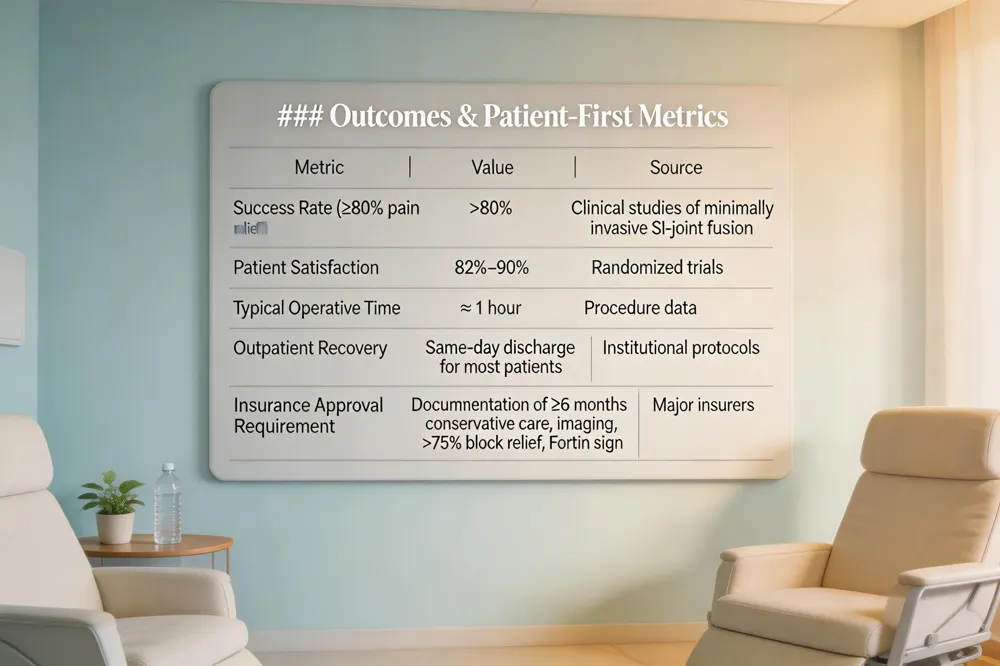 When patients come to the Orthopedic Spine Institute of St. Louis, Dr. David S. Raskas follows a patient‑first philosophy that begins with a thorough evaluation of conservative care and only moves to surgery when it is truly needed.
Success rates and patient satisfaction – Clinical studies of minimally invasive sacroiliac joint fusion report success rates greater than 80 % (more than 4 out 5 patients experience significant, lasting pain relief) and satisfaction rates ranging from 82 % to 90 % in randomized trials. The procedure’s high success is attributed to precise implant placement, short operative time (≈ 1 hour), and rapid outpatient recovery.
Insurance considerations and documentation – Payers typically require proof of failed nonsurgical treatment (≥ 6 months of physical therapy, NSAIDs, injections, and activity modification) and imaging that confirms SI‑joint pathology. A positive diagnostic SI‑joint block (≥ 75 % temporary pain relief) and documentation of the Fortin finger sign are also standard. Once this information is submitted, most major insurers approve coverage for the minimally invasive iFuse or similar implant systems.
How to schedule a consultation – Patients can call the Spine Institute at (555) 123‑4567 or email appointments@spineinstitute.com to request an appointment with Dr. Raskas. The office will collect prior imaging, a list of conservative treatments, and any relevant insurance paperwork before the initial visit.
How to heal a SI joint at home? –
- Rest for a few days during flare‑ups.
- Apply ice (first 48 hours) then heat to reduce muscle tension.
- Use over‑the‑counter NSAIDs or turmeric supplements for inflammation.
- Wear a supportive SI belt when standing or walking.
- Engage in gentle core‑stabilization exercises (e.g., bird‑dog, glute bridge) as advised by a therapist.
- Consider image‑guided corticosteroid injections if pain persists.
- Seek professional physical therapy for targeted strengthening and mobility work.
- Therapeutic massage can relieve surrounding soft‑tissue tension.
Following these steps can bridge the gap between conservative care and surgical evaluation, ensuring patients are prepared for the most effective, evidence‑based treatment.
Balancing Risks and Rewards for a Pain‑Free Future
Sacriliac (SI) joint fusion is reserved for patients whose chronic low‑back or buttock pain persists despite at least six months of dedicated conservative care—physical therapy, NSAIDs, injections, and activity modification—and who have confirmed SI‑joint pathology on imaging or a diagnostic block. Decision‑making must be individualized: the surgeon evaluates pain severity, functional limitation, bone quality, and comorbidities, then discusses the minimally invasive versus open approaches, expected recovery timelines, and the small but real risks of infection, nerve irritation, or failed fusion. Because success rates exceed 80 % and most patients resume normal activities within three to four months, many find the benefits outweigh the risks. Ready to explore whether SI joint fusion is right for you? Book an appointment with our spine specialists today for a personalized evaluation and step toward lasting relief.