Why a Patient‑First Approach Matters
Low back pain touches about 85 % of adults and costs the United States roughly $86 billion each year, yet evidence‑based guidelines advise beginning with non‑surgical care. First‑line recommendations include patient education, staying active, short‑term NSAIDs, heat therapy and spinal manipulation, while discouraging routine imaging, strong opioids and early injections. Starting with conservative treatment reduces unnecessary tests, lowers medication exposure and often prevents progression to chronic pain. Patients who begin care with a primary‑care provider or chiropractor typically undergo fewer imaging studies, receive fewer drugs, and incur lower total costs than those routed directly to specialists. This patient‑first model aligns clinical outcomes with economic value.
Choosing Between Conservative Care and Surgery
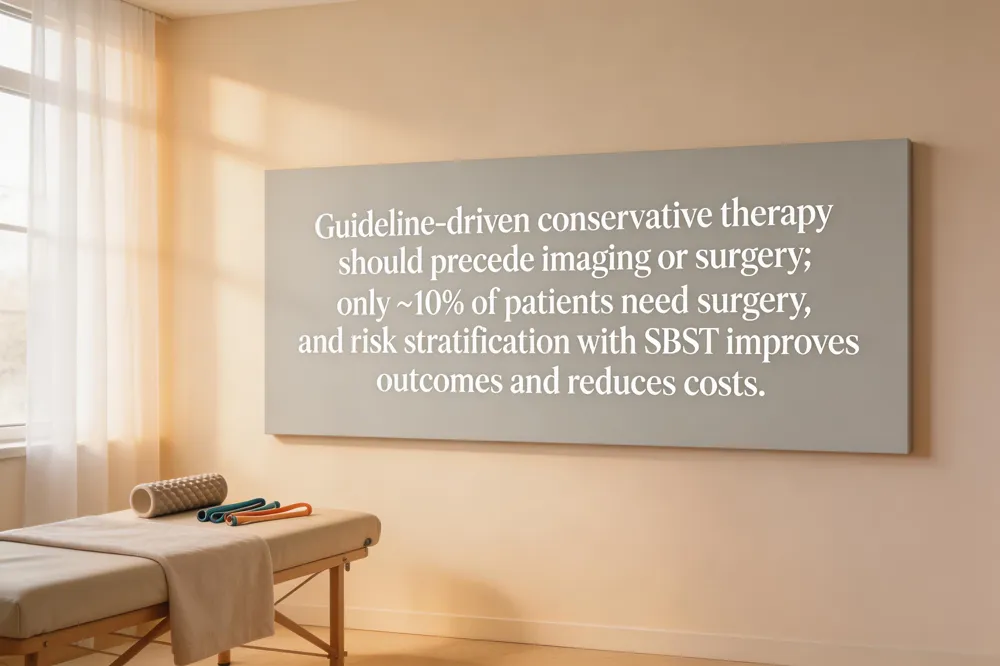 Clinical guidelines from the American College of Physicians and the North American Spine Society place nonspecific low‑back pain first in a structured of ontrial conservative therapy—education, activity modification, NSAIDs, heat, and spinal manipulation—before any imaging or surgical referral.
The STarT Back Screening Tool (SBST) helps clinicians stratify patients into low, medium, and high risk for chronicity, allowing targeted conservative interventions that have been shown to cut 12‑month health‑care costs by 13 % while improving disability scores.
Spine surgery, even when performed minimally invasively, carries significant risks: infection, nerve injury, dural tears, and unpredictable pain‑relief outcomes.
Hospital stays, surgeon fees, and postoperative care often exceed $20,000–$80,000, and recovery can take weeks to months, disrupting work and daily life.
Studies indicate that only about 10 % of back‑pain patients ultimately require surgery, and 20 %–40 % of procedures fail to relieve pain, underscoring the importance of exhausting nonsurgical options first.
Surgery becomes necessary when red‑flag signs appear (progressive neurological deficit, cauda equina syndrome, spinal instability) or when persistent radiculopathy, severe disc herniation, or spinal stenosis does not improve after 6–12 weeks of evidence‑based physical therapy, NSAIDs, and targeted injections.
At that point, minimally invasive techniques—microdiscectomy, endoscopic decompression, percutaneous fusion—offer reduced blood loss, smaller scars, and faster return to activity compared with open surgery, but they still demand careful patient selection and shared decision‑making.
Key take‑away: Begin with guideline‑driven conservative care, use risk‑stratification tools like SBST, and reserve surgery for cases with clear neurologic compromise or refractory pain after an adequate trial of non‑operative treatment.
Effective Conservative Strategies for Immediate Relief
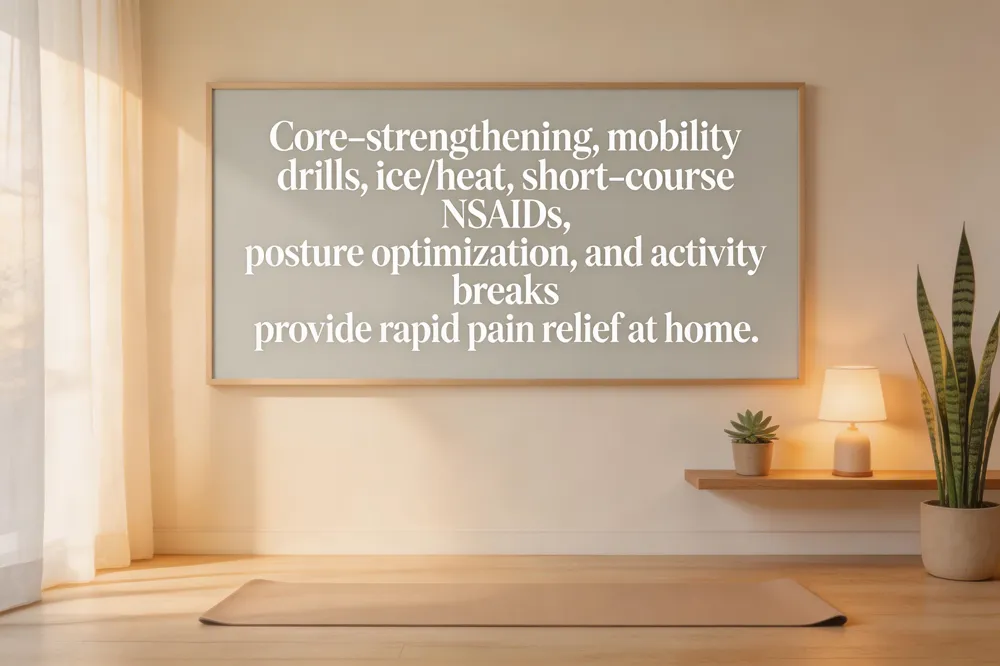 Low‑back pain can often be tamed at home with a structured, evidence‑based approach. First, begin each day with a brief core‑strengthening routine—pelvic tilts, bridges, and belly‑button draws (the "big three" core moves) to support the lumbar spine and reduce pressure. Add gentle mobility drills such as knee‑to‑chest, cat‑cow, and lower‑back rotational stretches; hold each for 5‑10 seconds and repeat 2‑3 times morning and evening. Heat and ice are simple analgesics: apply an ice pack for 15‑20 minutes during the first 24‑48 hours to curb inflammation, then switch to a heating pad for 15‑20 minutes to relax tight muscles and improve blood flow. Over‑the‑counter NSAIDs (ibuprofen or naproxen) or acetaminophen can be used as needed, but only for short courses. Posture and activity modification are essential—keep the spine neutral while sitting, use a pillow under the knees or between the legs when lying down, stand or walk for a few minutes every 30 minutes, and practice proper lifting mechanics. Women should pay special attention to maintaining a healthy weight, avoiding smoking, and incorporating low‑impact activities such as walking or yoga to protect spinal discs and bone health. If pain persists despite these measures, an evaluation by a spine specialist like Dr. David S. Raskas at the Orthopedic Spine Institute of St. Louis can tailor further non‑surgical options (physical therapy, targeted injections, or minimally invasive procedures) before considering surgery.
Structured Conservative Treatment Plans for Chronic Conditions
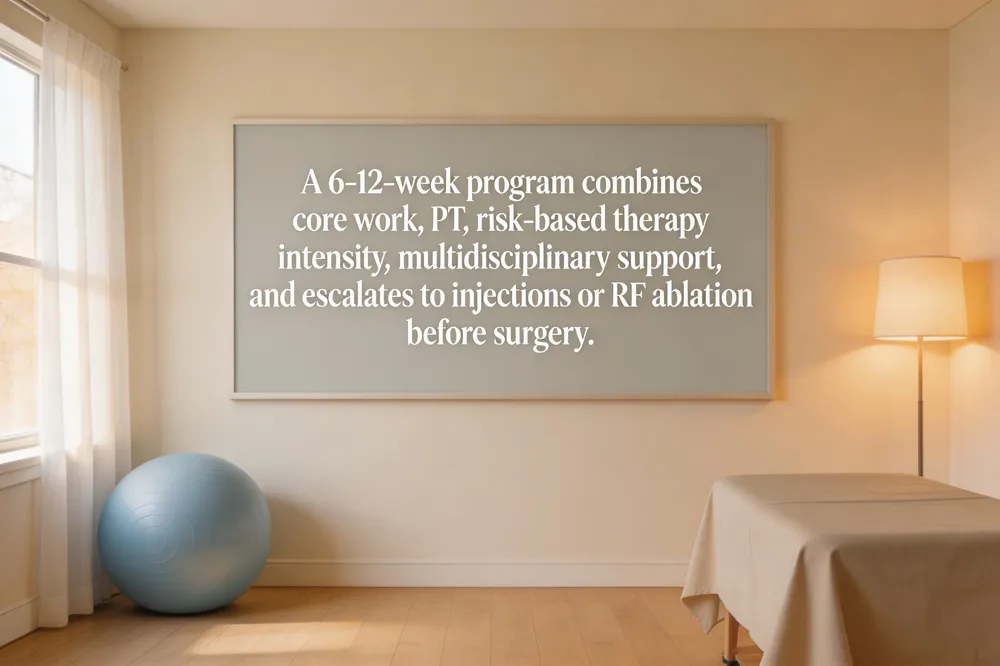 Chronic low back pain is first tackled with evidence‑based conservative care. Patients complete a structured 6‑12‑week program that emphasizes core‑strengthening and flexibility exercises, posture education, and activity modification. Risk stratification using the STarT Back Screening Tool separates low‑, medium‑, and high‑risk patients, allowing clinicians to tailor the intensity of therapy and to introduce early non‑pharmacologic interventions such as spinal manipulation or CBT for high‑risk psychosocial factors. Multidisciplinary teams—physical therapists, pain psychologists, and dietitians—address yellow‑flag issues (fear‑avoidance, catastrophizing) and promote lifestyle changes (weight control, smoking cessation) that reduce inflammation and improve outcomes.
Chronic back pain treatment: Begin with personalized PT, NSAIDs, and mindfulness; progress to targeted injections or radiofrequency ablation if leg pain persists; reserve minimally invasive surgery for confirmed structural pathology.
How I cured my lower back pain at home: Daily 15‑minute core stretches, posture checks, alternating ice/heat, OTC NSAIDs, and supportive cushions led to gradual pain resolution.
Four types of back pain: Axial (muscle/ligament), radicular (nerve root), referred (organ source), and chronic (>12 weeks).
New treatment instead of spinal fusion: Dynamic stabilization systems (e.g., Dynesys) preserve motion while providing support.
Most minimally invasive spine surgery: Endoscopic procedures using <1‑inch incisions and tubular retractors.
Types of minimally invasive spine surgery: Endoscopic discectomy, foraminotomy, MIS laminectomy, percutaneous fusion, kyphoplasty, and spinal cord stimulator placement.
Minimally Invasive Spine Surgery: Options, Benefits, and Recovery
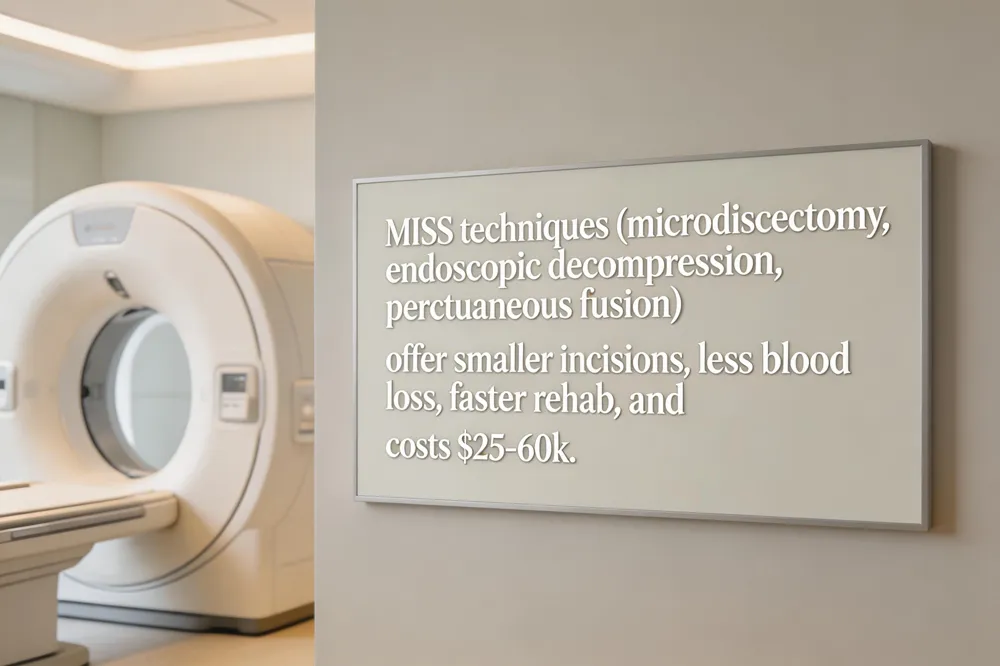 L4‑L5 and L5‑S1 minimally invasive procedures use small incisions, tubular retractors or endoscopes, and real‑time imaging to address herniated discs, spinal stenosis, degenerative disease, and spondylolisthesis. By preserving muscle, these MISS techniques lower blood loss, reduce postoperative pain, and shorten hospital stays. Recovery timelines differ: a microdiscectomy or laminectomy often allows light activity within a few days and full return to normal tasks in 6‑8 weeks, while minimally invasive fusion may need 3‑4 months before strenuous activity. Operative duration ranges from 1–1.5 hours for a discectomy to 2–6 hours for multi‑level fusion, depending on complexity. Cost in the U.S. averages $25,000–$60,000, varying by procedure, facility, and insurance coverage. Ideal candidates are patients with localized pathology unresponsive to six weeks of conservative care, good overall health, and imaging that confirms a small‑corridor approach. Dr. David S. Raskas at the Orthopedic Spine Institute of St. Louis evaluates each case to ensure the right fit for minimally invasive care.
Practical Resources and Next Steps for Patients
 Begin by taking the free “Do I Need Back Surgery?” online quiz, which screens for red‑flag symptoms, duration of pain, and prior therapy to help decide if conservative care or surgical evaluation is appropriate. If you need a specialist, the Orthopedic Spine Institute of St. Louis offers minimally invasive spine surgery and a patient‑first pathway; you can book an appointment with Dr. David S. Raskas online or call (314) 555‑1234. Nationally, Cedars‑Sinai Medical Center in Beverly Hills is consistently ranked the top spine hospital. Verify insurance coverage and complete the institute’s online intake forms before your first visit.
Start Your Spine Journey with Confidence
At the Orthopedic Spine Institute of St. Louis we put you first. Begin with evidence‑based conservative care—personalized physical therapy, targeted NSAIDs, education, and, when needed, guided injections—to reduce pain and restore function without surgery. If symptoms persist beyond 6‑12 weeks, or you develop radiculopathy, neurological weakness, or structural instability, our team evaluates minimally invasive options such as endoscopic discectomy or percutaneous fusion, which limit tissue trauma and speed recovery. Take advantage of decision‑support tools like the STarT Back Screening Tool, patient‑education portals, and shared‑decision‑making sessions to stay informed and confident at every step.