Why Same‑Week Spine Care Matters
The Orthopedic Spine Institute of St. Louis puts patients first by offering same‑week appointments that prevent the pain spirals that come from delayed treatment. Waiting weeks for evaluation can turn mild back, neck, or sciatica discomfort into chronic dysfunction, higher medication use, and lost productivity. Early conservative care—targeted physical therapy, injections, and education—often resolves symptoms before surgery is needed, and when minimally invasive surgery is required, timely scheduling reduces tissue damage, hospital stay, and overall cost. By securing prompt visits, patients experience faster relief, lower expenses, and better long‑term outcomes.
Start with Telemedicine and Virtual Triage
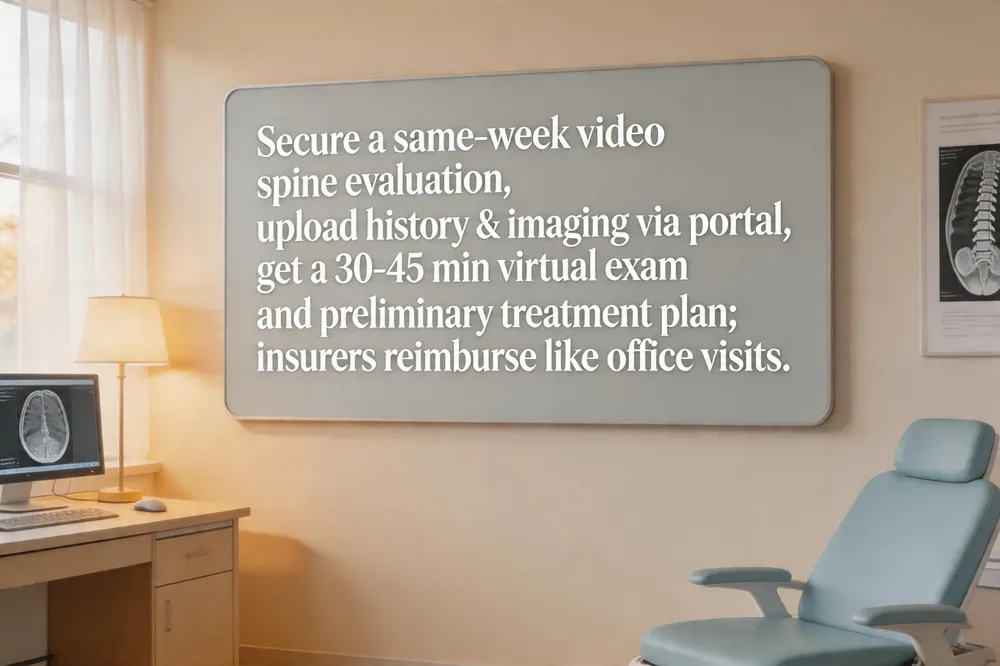 Telemedicine now lets you secure a same‑week video visit for an initial spine evaluation, often within 24‑48 hours of your request. During the virtual consult the specialist can conduct functional tests—range‑of‑motion checks, resistance exercises, and gait observations—through video, gathering data comparable to an in‑person exam. A pre‑appointment online intake form lets you upload your medical history, prior imaging, and symptom details, cutting the video‑call time and accelerating the care pathway. Most insurers reimburse these spine telehealth visits at the same rate as office visits, removing a financial barrier to rapid scheduling.
What to expect at your first visit with a spine specialist? You’ll spend 30‑45 minutes reviewing your history, performing a video‑based physical/neurologic exam, reviewing any uploaded imaging, and receiving a preliminary diagnosis with a personalized treatment plan.
What are the signs you need a spine specialist? Persistent pain >6 weeks, radiating pain with numbness/weakness, sudden severe injury, loss of bladder/bowel control, or failure of conservative therapy.
How to decrease wait time for a doctor appointment? Use the practice’s online portal for same‑day cancellations, request telemedicine slots, and complete intake forms ahead of time.
Spine Institute Patient Portal – a secure hub for scheduling, imaging review, prescription refills, and direct messaging with the care team, integrated with virtual visit capabilities.
Use Urgent Care and Walk‑In Clinics Effectively
 Orthopedic urgent‑care clinics are staffed by board‑certified orthopedic physicians who can evaluate acute back pain within the same day or next day, often eliminating weeks of waiting. Most sites—such as the Orthopedic Spine Institute of St. Louis—offer on‑site X‑ray, MRI, and ultrasound, allowing clinicians to pinpoint the source of pain instantly and start conservative treatment (medication, bracing, physical‑therapy referral, or injections). If red‑flag symptoms (e.g., neurologic deficit, fever, trauma) arise, the urgent‑care team promptly refers the patient to a spine specialist for further work‑up.
Orthopedic urgent care for back pain – Provides rapid imaging, pain‑relieving meds, and a patient‑first, non‑operative approach, with clear referral pathways for surgery when needed.
Can I go to urgent care for spine pain? – Yes, for non‑life‑threatening pain; urgent‑care clinicians can order imaging, prescribe meds, and arrange follow‑up with a spine specialist.
When to go to urgent care for back pain? – When pain is moderate, recent, and not improving with home care, but without red‑flag signs.
Best urgent care for back pain – Choose a center with on‑site imaging, board‑certified staff, same‑day appointments, and a direct link to spine experts like Dr. David S. Raskas.
Identify Red‑Flags and Know When to Seek Immediate Care
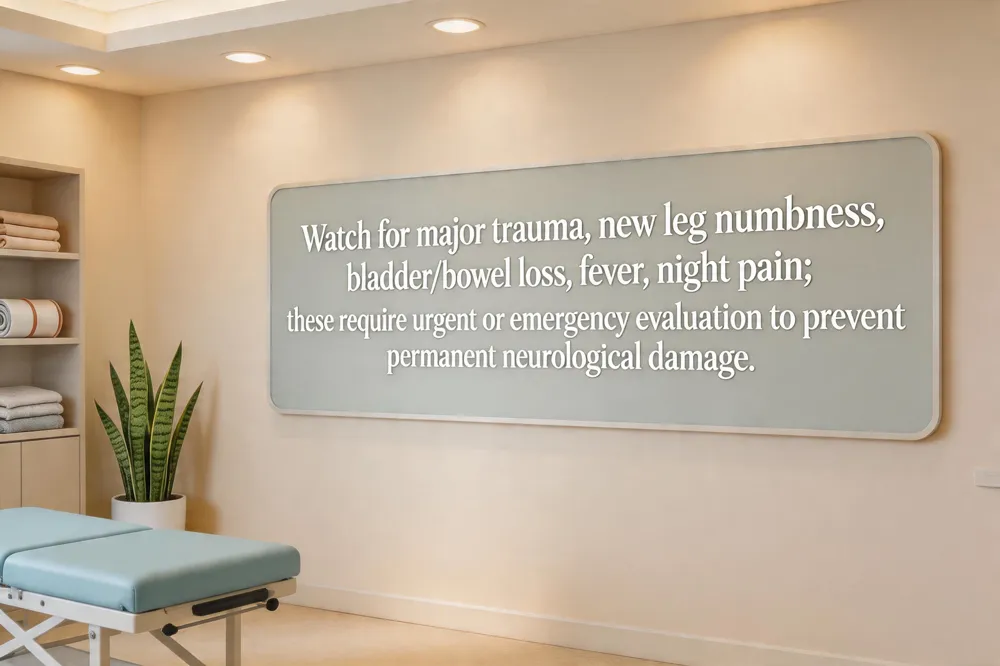 Red‑flag symptoms signal a serious spinal problem and dictate the care pathway—emergency department for life‑threatening signs, urgent‑care or spine clinic for rapid evaluation, and virtual triage to secure same‑week appointments. Surgery becomes urgent when neurological function declines, cauda‑eina compression appears, or an unstable fracture threatens the spine. Muscle strain presents as localized tenderness and pain that improves with rest, whereas nerve compression causes radiating pain, numbness, weakness, and often worsens at night.
Sudden sharp pain in upper back – Often a muscle strain, ligament sprain, or rib fracture; if accompanied by shortness of breath, chest pain, limb numbness, weakness, or bladder/bowel loss, treat as emergency. Otherwise, rest, ice/heat, OTC anti‑inflammatories, and early PT are appropriate. At the Orthopedic Spine Institute of St. Louis, Dr. David S. Raskas can evaluate and discuss conservative or minimally invasive options.
Signs of a serious spine issue – Severe worsening pain, sudden loss of bowel or bladder control, new numbness/weakness, fever/weight loss, or trauma‑related pain are red flags requiring prompt specialist evaluation.
Five red flags of low back pain – 1) Major trauma, 2) New leg numbness or saddle anesthesia, 3) Bladder/bowel incontinence, 4) Unexplained systemic symptoms (fever, weight loss), 5) Persistent night pain unrelieved by rest.
When does spinal surgery become urgent? – Immediate surgery is needed for rapidly progressing neurological deficits, cauda‑eina syndrome, unstable fractures, or severe compression threatening permanent loss.
Accelerate Scheduling Through Direct Contact and Patient Portals
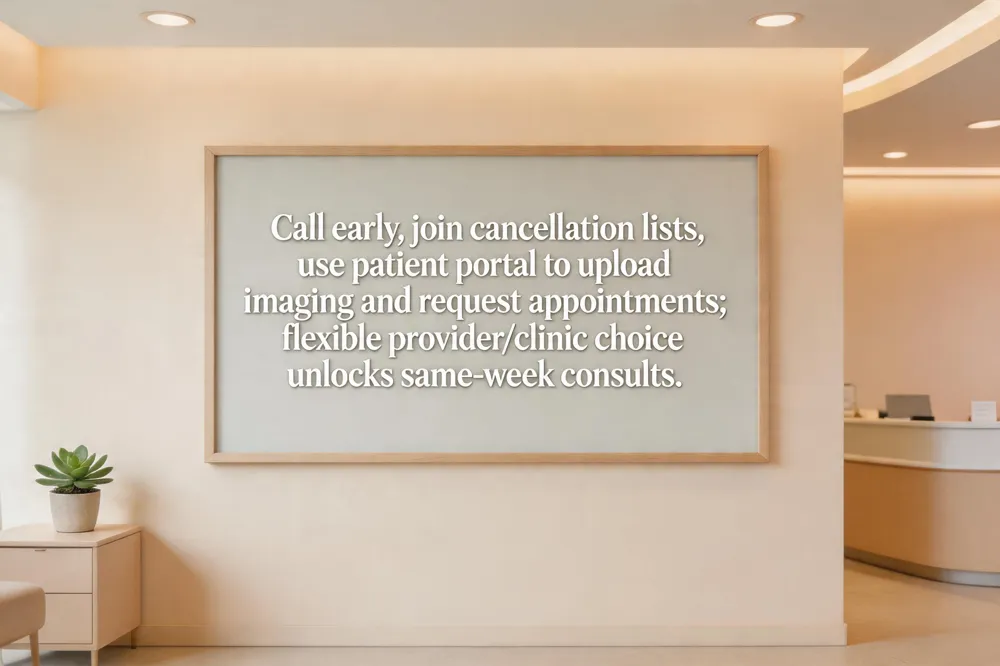 Getting a spine evaluation within a week is easier when you use a phone‑first approach and online portals. Call the clinic early, ask to be placed on a cancellation or standby list, and mention any urgent symptoms; many offices keep same‑week slots for patients who are flexible on time or location. Online patient portals let you upload imaging, complete intake forms, and request the next available appointment, often revealing open slots that phone staff may miss. Being open to seeing a different provider in the same network or visiting a nearby satellite clinic further increases the chance of a rapid consult.
Lower back sore to touch like bruise – This is usually a lumbar strain. Rest, ice for 24‑48 hours, then heat and ibuprofen. Begin gentle core‑strengthening once pain eases; see a spine specialist if tenderness lasts >2 weeks or is paired with numbness or leg pain.
Sharp pain lower back – Often a herniated disc, facet irritation, or muscle spasm. A focused exam plus X‑ray/MRI pinpoints the cause; treatment starts with rest, PT, NSAIDs, and possibly guided injections. Persistent cases may need minimally invasive surgery at the Orthopedic Spine Institute of St. Louis.
Severe lower back pain when walking or standing – Suggests lumbar stenosis, degenerative disc disease, or a herniated disc. Imaging guides therapy; conservative care includes activity modification, PT, NSAIDs, and injections, with surgery reserved for refractory cases.
At what point should I go to urgent care for back pain? – Seek urgent care if pain is new, worsening, or moderate‑to‑severe after a few days of self‑care, especially if accompanied by mild sciatica, muscle tightness, or limited mobility. Red‑flag signs—leg weakness, numbness, loss of bladder/bowel control, fever, or major trauma—require emergency department evaluation.
Conservative Care, Imaging, and Same‑Day Treatment Options
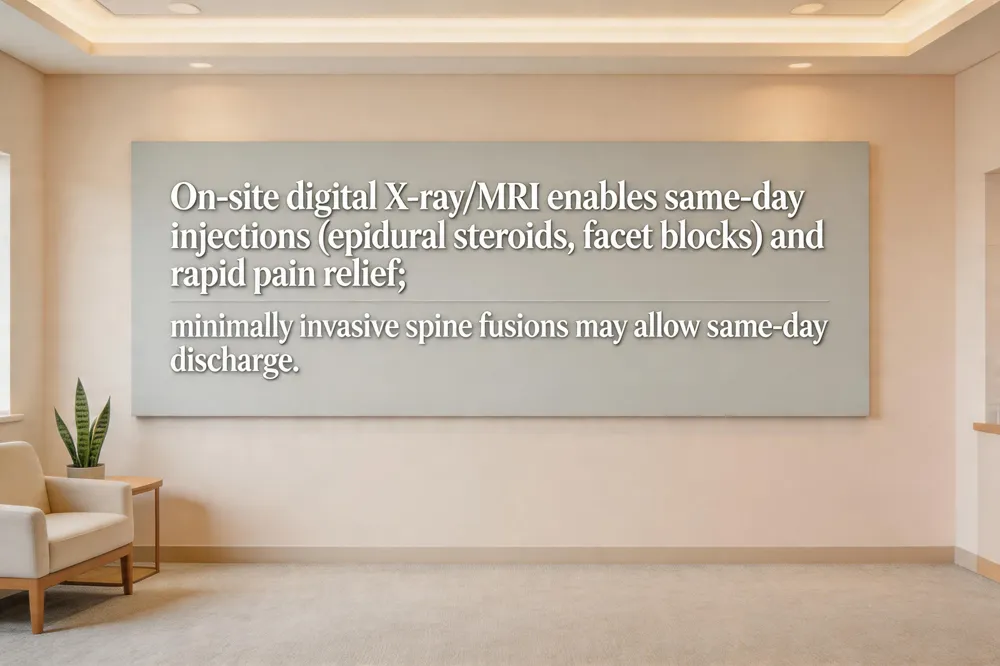 On‑site imaging—digital X‑ray, fluoroscopy, MRI/CT—lets urgent‑care and spine clinics diagnose fractures, disc disease, or stenosis during the same visit, eliminating delays. Same‑day injections such as epidural steroids, facet joint blocks, or radiofrequency ablation can be performed immediately after imaging, providing rapid pain relief and often avoiding surgery. Discharge after spinal fusion depends on the technique: minimally invasive, instrumented fusions may allow same‑day discharge if the patient is medically stable, pain‑controlled, and has home support, whereas traditional open fusions usually require a 2‑4‑day stay for graft monitoring and neurologic assessment. Referral pathways are streamlined through online portals, cancellation lists, and tele‑medicine triage; patients can request urgent slots, upload imaging, and receive fast‑track approvals.
Can you go home the same day of spinal fusion? Only select minimally invasive fusions with stable patients may be discharged same day; most open fusions need at least one night inpatient stay.
What will urgent care do for lower back pain? A brief history, focused exam, on‑site X‑ray, short‑term NSAIDs or muscle relaxants, activity guidance, and referral if red‑flags appear.
How to get a specialist to see you sooner? Call the clinic early, join a cancellation list, be flexible on time/location, use tele‑medicine, and ask your PCP for an expedited referral.
Can I see a spine doctor without a referral? Yes for PPO, POS, or self‑pay plans; HMOs usually require a PCP referral, so verify your insurance and clinic policy before scheduling.
Take the Next Step Today
Call the Orthopedic Spine Institute of St. Louis and ask for a same‑week slot—our dedicated phone line and online portal often confirm appointments within 24‑48 hours. Log in to the patient portal to upload your medical history, imaging, and symptom details; this speeds the intake and lets the doctor see you sooner. If you need immediate triage, schedule a telemedicine visit; clinicians can evaluate your pain, perform virtual functional tests, and arrange an in‑person follow‑up if required. Finally, be aware of red‑flag signs—such as progressive weakness, loss of bladder/bowel control, fever, or severe trauma—and seek urgent care or the ER right away.